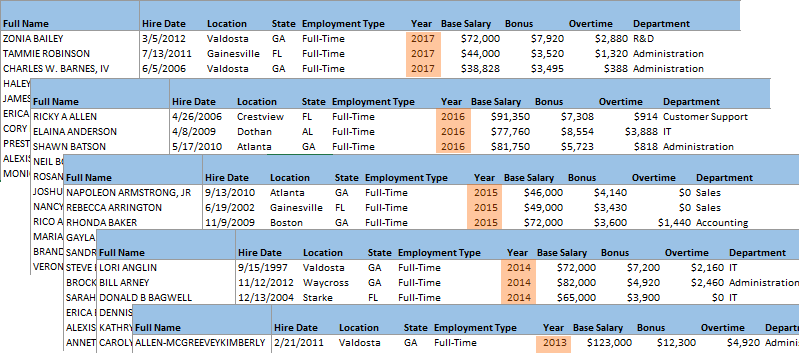
When talking about marketing tools, two words that don’t seem to go together are “marketing” and “Excel” (the Microsoft spreadsheet product). Because I’m in marketing, I encounter images like this all the time.
It’s true that marketing analytics requires a ton of Excel work. I’m not going to talk about marketing analytics here, but if you have an interest in using Excel for marketing analytics, you may want to investigate HubSpot Academy’s free Excel crash course.
As I write this, Bredemarket is neck-deep in a research project for a client. A SECRET research project.
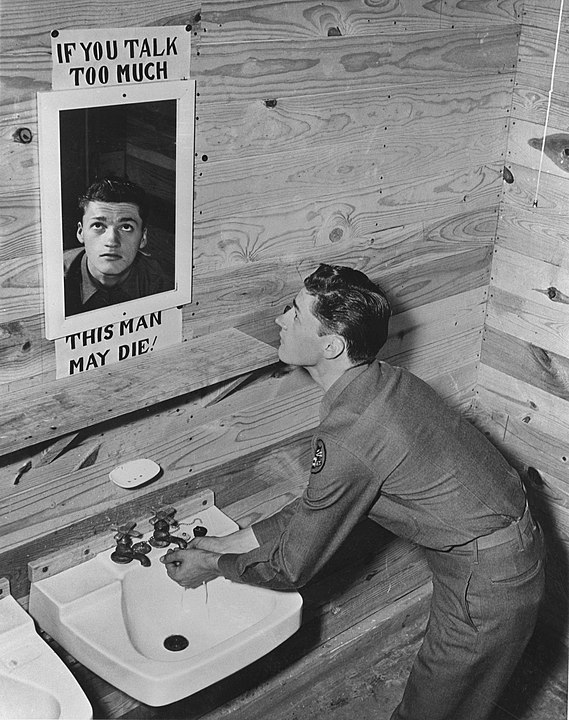
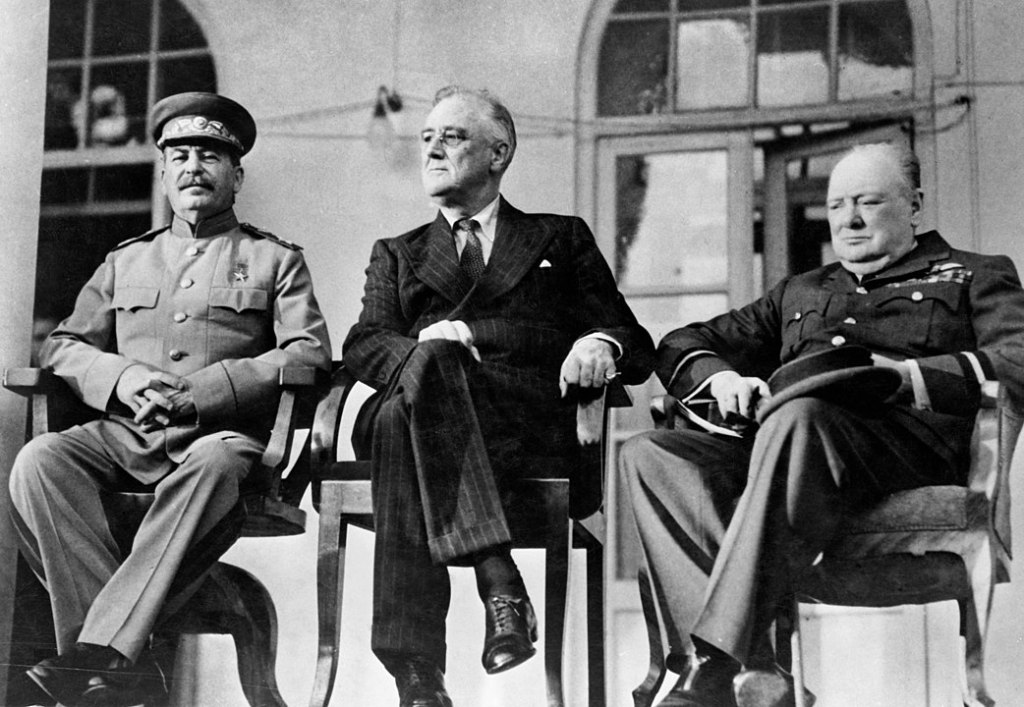
By Unnamed photographer for Office of War Information. – U.S. Office of War Information photo, via Library of Congress website [1], converted from TIFF to .jpg and border cropped before upload to Wikimedia Commons., Public Domain, https://commons.wikimedia.org/w/index.php?curid=8989847
While I won’t reveal the name of the client or the specifics about the research project, I can say that the project requires me to track the following information:
Organization name.
Organization type (based upon fairly common classifications).
Organization geographic location.
Vendor providing services to the organization.
Information about the contract between the vendor and the organization.
A multitude of information sources about the organization, the vendor, and the relationship between the two.
To attack the data capture for this project, I did what I’ve done for a number of similar projects for Bredemarket, Incode, IDEMIA, MorphoTrak, et al.
I threw all the data into a worksheet in an Excel workbook.
I can then sort and filter it to my heart’s content. Ror example, if I want to just view the rows for which I have contract information, I can just look at that.
Bredemarket as an identity/biometric research service
For one organization I created a number of different worksheets within a single workbook, in which the worksheet data all fed into a summary worksheet. This allowed my clients to view data either at the detailed level or at the summary level.
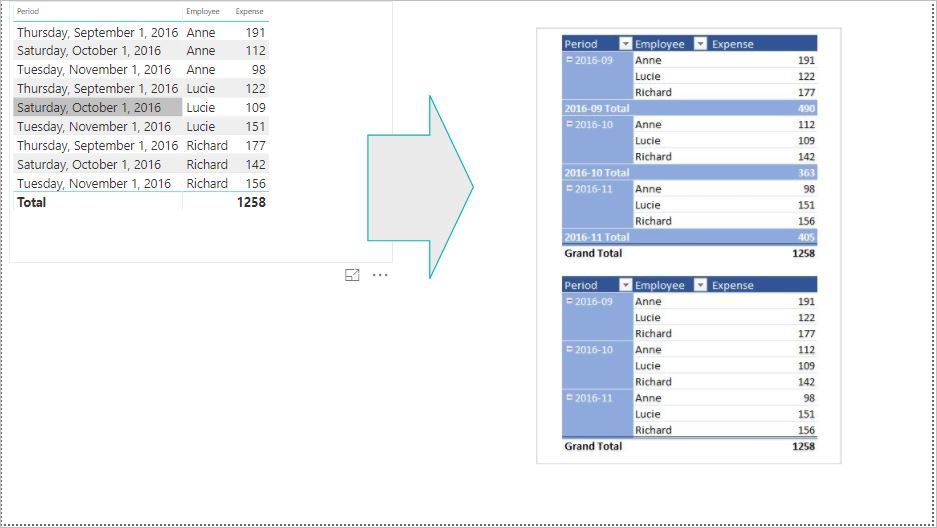
For another organization I collected the data from an external source, opened it in Excel, performed some massaging, and then pivoted the data into a new view so that it could then be exported out of Excel and into a super-secret document that I cannot discuss here.
Now none of this (well, except maybe for the pivot) is fancy stuff, and most of it (except for the formulas linking the summary and detailed worksheets) is all that hard to do. But it turns out that Excel is an excellent tool to deal with this data in certain cases.
Which brings me to YOUR research needs.
After all, Bredemarket doesn’t just write stuff.
Sometimes it researches stuff, especially in the core area of biometrics and identity.
After all, I offer 29 years of experience in this area, and I draw on that experience to get answers to your questions.
Unlike the better-bounded projects that require only a single blog post or a single white paper, I quote research projects at an hourly rate or on retainer (where I’m embedded with you).
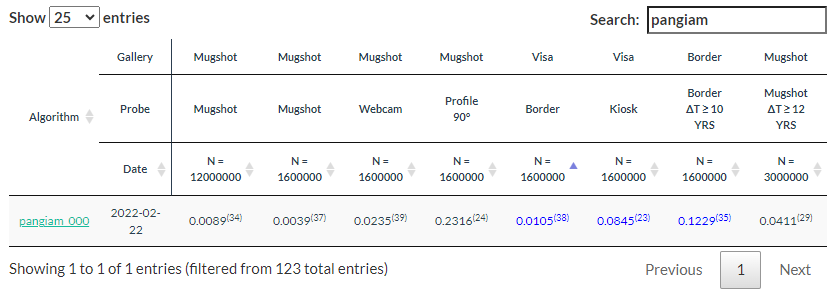
Things change. Pangiam, a company that didn’t even exist a few years ago, and that started off by acquiring a one-off project from a local government agency, is now itself a friendly acquisition target (pending stockholder and regulatory approvals).
From MWAA to Pangiam
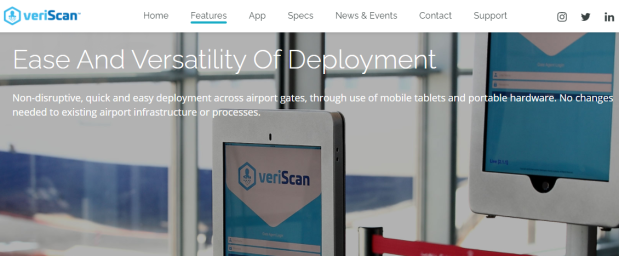
Back when I worked for IDEMIA and helped to market its border control solutions, one of our competitors for airport business was an airport itself—specifically, the Metropolitan Washington Airports Authority. Rather than buying a biometric exit solution from someone else, the MWAA developed its own, called veriScan.
2021 image from the former airportveriscan website.
ALEXANDRIA, Va., March 19, 2021 /PRNewswire/ — Pangiam, a technology-based security and travel services provider, announced today that it has acquired veriScan, an integrated biometric facial recognition system for airports and airlines, from the Metropolitan Washington Airports Authority (“Airports Authority”). Terms of the transaction were not disclosed.
So what will Pangiam work on next? Where will it expand? What will it acquire?
Nothing.
Enter BigBear.ai
Pangiam itself is now an acquisition target.
COLUMBIA, MD.— November 6, 2023 — BigBear.ai (NYSE: BBAI), a leading provider of AI-enabled business intelligence solutions, today announced a definitive merger agreement to acquire Pangiam Intermediate Holdings, LLC (Pangiam), a leader in Vision AI for the global trade, travel, and digital identity industries, for approximately $70 million in an all-stock transaction. The combined company will create one of the industry’s most comprehensive Vision AI portfolios, combining Pangiam’s facial recognition and advanced biometrics with BigBear.ai’s computer vision capabilities, positioning the company as a foundational leader in one of the fastest growing categories for the application of AI. The proposed acquisition is expected to close in the first quarter of 2024, subject to customary closing conditions, including approval by the holders of a majority of BigBear.ai’s outstanding common shares and receipt of regulatory approval.
Yet another example of how biometrics is now just a minor part of general artificial intelligence efforts. Identify a face or a grenade, it’s all the same.
Anyway, let’s check back in a few months. Because of the technology involved, this proposed acquisition will DEFINITELY merit government review.
As identity/biometric professionals well know, there are five authentication factors that you can use to gain access to a person’s account. (You can also use these factors for identity verification to establish the person’s account in the first place.)
Something You Are. I’ve spent…a long time with this factor, since this is the factor that includes biometrics modalities (finger, face, iris, DNA, voice, vein, etc.). It also includes behavioral biometrics, provided that they are truly behavioral and relatively static.
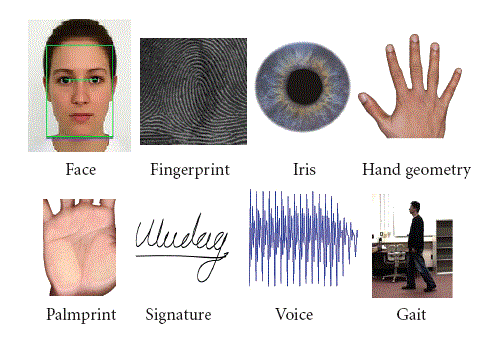
As I mentioned in August, there are a number of biometric modalities, including face, fingerprint, iris, hand geometry, palm print, signature, voice, gait, and many more.
If your firm offers an identity solution that partially depends upon “something you are,” then you need to create content (blog, case study, social media, white paper, etc.) that converts prospects for your identity/biometric product/service and drives content results.
If you listen closely, you can hear about all sorts of wonderful biometric identifiers. They range from the common (such as fingerprint ridges and detail) to the esoteric (my favorite was the 2013 story about Japanese car seats that captured butt prints).
Forget about fingerprints and faces and irises and DNA and gait recognition and butt prints. Tongue prints are the answer!
Benefits of tongue print biometrics
To its credit, the article does point out two benefits of using tongue prints as a biometric identifier.
Consent and privacy. Unlike fingerprints and irises (and faces) which are always exposed and can conceivably be captured without the person’s knowledge, the subject has to provide consent before a tongue image is captured. For the most part, tongues are privacy-perfect.
Liveness. The article claims that “sticking out one’s tongue is an undeniable ‘proof of life.'” Perhaps that’s an exaggeration, but it is admittedly much harder to fake a tongue than it is to fake a finger or a face.
Are tongues unique?
But the article also makes these claims.
Two main attributes are measured for a tongue print. First is the tongue shape, as the shape of the tongue is unique to everyone.
The other notable feature is the texture of the tongue. Tongues consist of a number of ridges, wrinkles, seams and marks that are unique to every individual.
There is serious doubt (if not outright denial) that everyone has a unique face (although NIST is investigating this via the FRTE Twins Demonstration).
But at least these modalities are under study. Has anyone conducted a rigorous study to prove or disprove the uniqueness of tongues? By “rigorous,” I mean a study that has evaluated millions of tongues in the same way that NIST has evaluated millions of fingerprints, faces, and irises?
I did find this 2017 tongue identification pilot study but it only included a whopping 20 participants. And the study authors (who are always seeking funding anyway) admitted that “large-scale studies are required to validate the results.”
Conclusion
So if a police officer tells you to stick out your tongue for identification purposes, think twice.
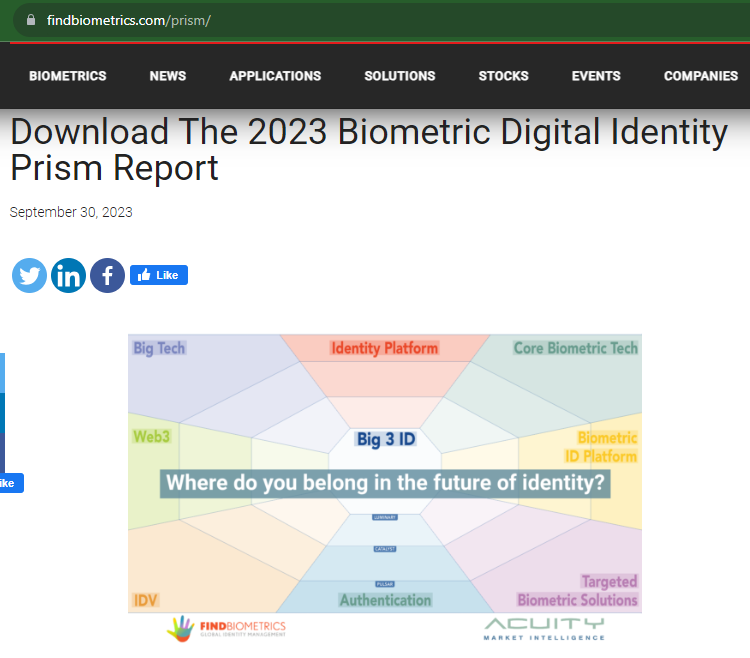
On September 30, FindBiometrics and Acuity Market Intelligence released the production version of the Biometric Digital Identity Prism Report. You can request to download it here.
But FindBiometrics and Acuity Market Intelligence didn’t invent the Big 3. The concept has been around for 40 years. And two of today’s Big 3 weren’t in the Big 3 when things started. Oh, and there weren’t always 3; sometimes there were 4, and some could argue that there were 5.
So how did we get from the Big 3 of 40 years ago to the Big 3 of today?
The Big 3 in the 1980s
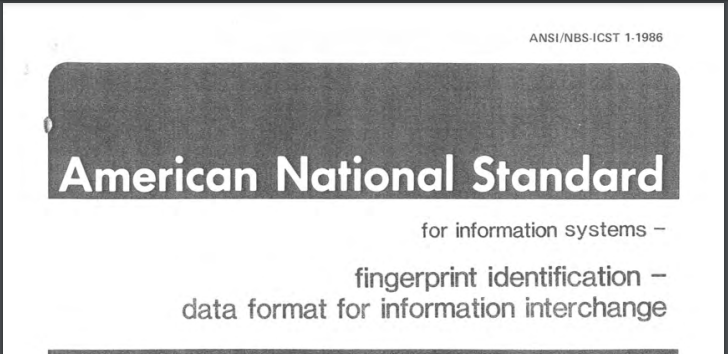
Back in 1986 (eight years before I learned how to spell AFIS) the American National Standards Institute, in conjunction with the National Bureau of Standards, issued ANSI/NBS-ICST 1-1986, a data format for information interchange of fingerprints. The PDF of this long-superseded standard is available here.
When creating this standard, ANSI and the NBS worked with a number of law enforcement agencies, as well as companies in the nascent fingerprint industry. There is a whole list of companies cited at the beginning of the standard, but I’d like to name four of them.
De La Rue Printrak, Inc.
Identix, Inc.
Morpho Systems
NEC Information Systems, Inc.
While all four of these companies produced computerized fingerprinting equipment, three of them had successfully produced automated fingerprint identification systems, or AFIS. As Chapter 6 of the Fingerprint Sourcebook subsequently noted:
Morpho Systems resulted from French AFIS efforts, separate from those of the FBI. These efforts launched Morpho’s long-standing relationship with the French National Police, as well as a similar relationship (now former relationship) with Pierce County, Washington.
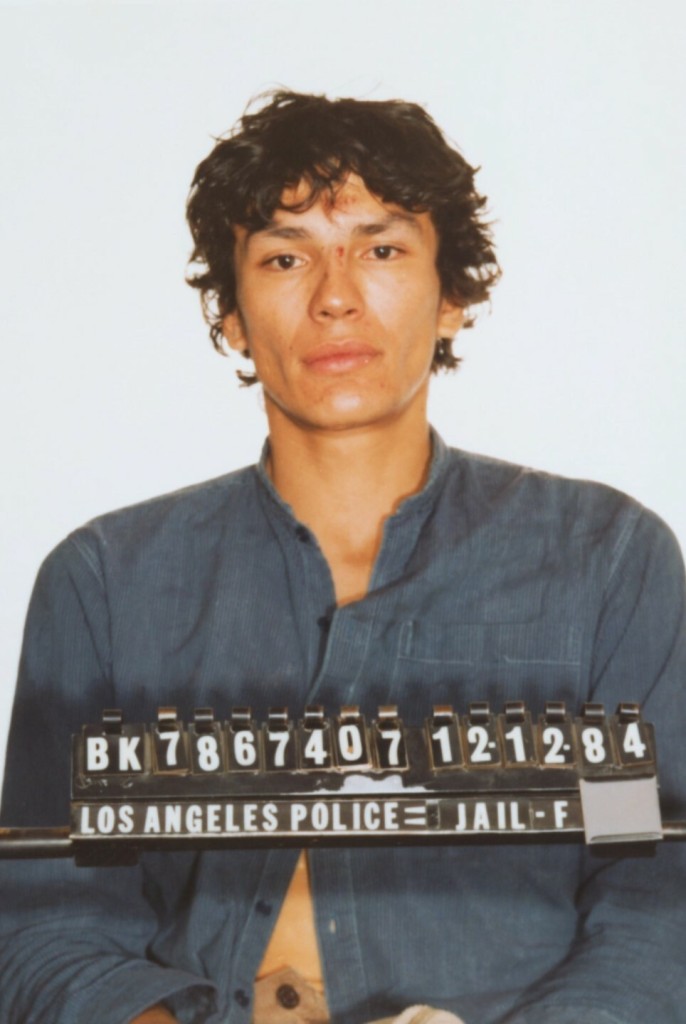
NEC had deployed AFIS equipment for the National Police Academy of Japan, and (after some prodding; read Chapter 6 for the story) the city of San Francisco. Eventually the state of California obtained an NEC system, which played a part in the identification of “Night Stalker” Richard Ramirez.
After the success of the San Francisco and California AFIS systems, many other jurisdictions began clamoring for AFIS of their own, and turned to these three vendors to supply them.
The Big 4 in the 1990s
But in 1990, these three firms were joined by a fourth upstart, Cogent Systems of South Pasadena, California.
While customers initially preferred the Big 3 to the upstart, Cogent Systems eventually installed a statewide system in Ohio and a border control system for the U.S. government, plus a vast number of local systems at the county and city level.
Between 1991 and 1994, the (Immigfation and Naturalization Service) conducted several studies of automated fingerprint systems, primarily in the San Diego, California, Border Patrol Sector. These studies demonstrated to the INS the feasibility of using a biometric fingerprint identification system to identify apprehended aliens on a large scale. In September 1994, Congress provided almost $30 million for the INS to deploy its fingerprint identification system. In October 1994, the INS began using the system, called IDENT, first in the San Diego Border Patrol Sector and then throughout the rest of the Southwest Border.
I was a proposal writer for Printrak (divested by De La Rue) in the 1990s, and competed against Cogent, Morpho, and NEC in AFIS procurements. By the time I moved from proposals to product management, the next redefinition of the “big” vendors occurred.
The Big 3 in 2003
There are a lot of name changes that affected AFIS participants, one of which was the 1988 name change of the National Bureau of Standards to the National Institute of Standards and Technology (NIST). As fingerprints and other biometric modalities were increasingly employed by government agencies, NIST began conducting tests of biometric systems. These tests continue to this day, as I have previously noted.
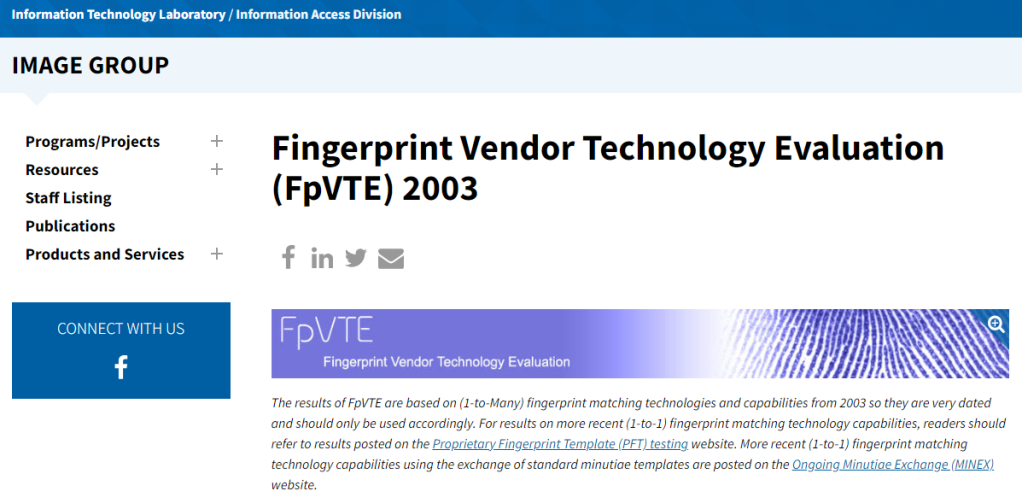
One of NIST’s first tests was the Fingerprint Vendor Technology Evaluation of 2003 (FpVTE 2003).
For those who are familiar with NIST testing, it’s no surprise that the test was thorough:
FpVTE 2003 consists of multiple tests performed with combinations of fingers (e.g., single fingers, two index fingers, four to ten fingers) and different types and qualities of operational fingerprints (e.g., flat livescan images from visa applicants, multi-finger slap livescan images from present-day booking or background check systems, or rolled and flat inked fingerprints from legacy criminal databases).
Eighteen vendors submitted their fingerprint algorithms to NIST for one or more of the various tests, including Bioscrypt, Cogent Systems, Identix, SAGEM MORPHO (SAGEM had acquired Morpho Systems), NEC, and Motorola (which had acquired Printrak). And at the conclusion of the testing, the FpVTE 2003 summary (PDF) made this statement:
Of the systems tested, NEC, SAGEM, and Cogent produced the most accurate results.
Which would have been great news if I were a product manager at NEC, SAGEM, and Cogent.
Unfortunately, I was a product manager at Motorola.
The effect of this report was…not good, and at least partially (but not fully) contributed to Motorola’s loss of its long-standing client, the Royal Canadian Mounted Police, to Cogent.
The Big 3, 4, or 5 after 2003
So what happened in the years after FpVTE was released? Opinions vary, but here are three possible explanations for what happened next.
Did the Big 3 become the Big 4 again?
Now I probably have a bit of bias in this area since I was a Motorola employee, but I maintain that Motorola overcame this temporary setback and vaulted back into the Big 4 within a couple of years. Among other things, Motorola deployed a national 1000 pixels-per-inch (PPI) system in Sweden several years before the FBI did.
Did the Big 3 remain the Big 3?
Motorola’s arch-enemies at Sagem Morpho had a different opinion, which was revealed when the state of West Virginia finally got around to deploying its own AFIS. A bit ironic, since the national FBI AFIS system IAFIS was located in West Virginia, or perhaps not.
Anyway, Motorola had a very effective sales staff, as was apparent when the state issued its Request for Proposal (RFP) and explicitly said that the state wanted a Motorola AFIS.
That didn’t stop Cogent, Identix, NEC, and Sagem Morpho from bidding on the project.
After the award, Dorothy Bullard and I requested copies of all of the proposals for evaluation. While Motorola (to no one’s surprise) won the competition, Dorothy and I believed that we shouldn’t have won. In particular, our arch-enemies at Sagem Morpho raised a compelling argument that it should be the chosen vendor.
Their argument? Here’s my summary: “Your RFP says that you want a Motorola AFIS. The states of Kansas (see page 6 of this PDF) and New Mexico (see this PDF) USED to have a Motorola AFIS…but replaced their systems with our MetaMorpho AFIS because it’s BETTER than the Motorola AFIS.”
But were Cogent, Motorola, NEC, and Sagem Morpho the only “big” players?
Did the Big 3 become the Big 5?
While the Big 3/Big 4 took a lot of the headlines, there were a number of other companies vying for attention. (I’ve talked about this before, but it’s worthwhile to review it again.)
Identix, while making some efforts in the AFIS market, concentrated on creating live scan fingerprinting machines, where it competed (sometimes in court) against companies such as Digital Biometrics and Bioscrypt.
The fingerprint companies started to compete against facial recognition companies, including Viisage and Visionics.
Oh, and there were also iris companies such as Iridian.
And there were other ways to identify people. Even before 9/11 mandated REAL ID (which we may get any year now), Polaroid was making great efforts to improve driver’s licenses to serve as a reliable form of identification.
In short, there were a bunch of small identity companies all over the place.
But in the course of a few short years, Dr. Joseph Atick (initially) and Robert LaPenta (subsequently) concentrated on acquiring and merging those companies into a single firm, L-1 Identity Solutions.
These multiple mergers resulted in former competitors Identix and Digital Biometrics, and former competitors Viisage and Visionics, becoming part of one big happy family. (A multinational big happy family when you count Bioscrypt.) Eventually this company offered fingerprint, face, iris, driver’s license, and passport solutions, something that none of the Big 3/Big 4 could claim (although Sagem Morpho had a facial recognition offering). And L-1 had federal contracts and state contracts that could match anything that the Big 3/Big 4 offered.
So while L-1 didn’t have a state AFIS contract like Cogent, Motorola, NEC, and Sagem Morpho did, you could argue that L-1 was important enough to be ranked with the big boys.
So for the sake of argument let’s assume that there was a Big 5, and L-1 Identity Solutions was part of it, along with the three big boys Motorola, NEC, and Safran (who had acquired Sagem and thus now owned Sagem Morpho), and the independent Cogent Systems. These five companies competed fiercly with each other (see West Virginia, above).
In a two-year period, everything would change.
The Big 3 after 2009
Hang on to your seats.
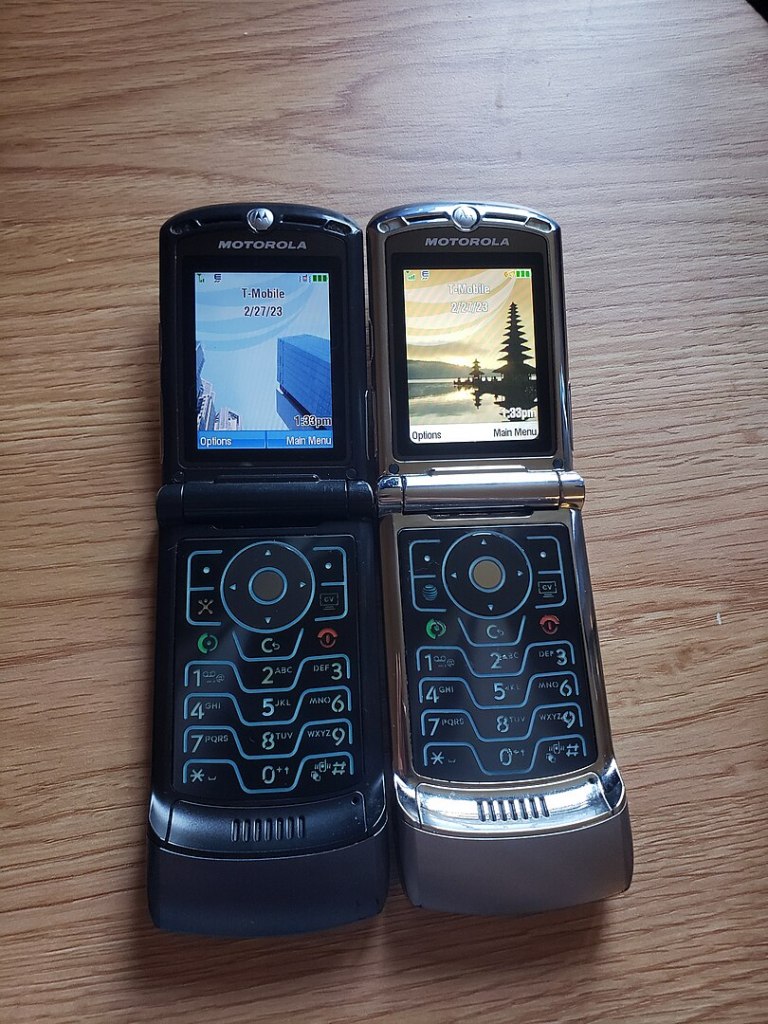
The Motorola RAZR was hugely popular…until it wasn’t. Eventually Motorola split into two companies and sold off others, including the “Printrak” Biometric Business Unit. By NextG50 – Own work, CC BY-SA 4.0, https://commons.wikimedia.org/w/index.php?curid=130206087
By 2009, Safran (resulting from the merger of Sagem and Snecma) was an international powerhouse in aerospace and defense and also had identity/biometric interests. Motorola, in the meantime, was no longer enjoying the success of its RAZR phone and was looking at trimming down (prior to its eventual, um, bifurcation). In response to these dynamics, Safran announced its intent to purchase Motorola’s Biometric Business Unit in October 2008, an effort that was finalized in April 2009. The Biometric Business Unit (adopting its former name Printrak) was acquired by Sagem Morpho and became MorphoTrak. On a personal level, Dorothy Bullard moved out of Proposals and I moved into Proposals, where I got to work with my new best friends that had previously slammed Motorola for losing the Kansas and New Mexico deals. (Seriously, Cindy and Ron are great folks.)
By 2011, Safran decided that it needed additional identity capabilities, so it acquired L-1 Identity Solutions and renamed the acquisition as MorphoTrust.
If you’re keeping notes, the Big 5 have now become the Big 3: 3M, Safran, and NEC (the one constant in all of this).
While there were subsequent changes (3M sold Cogent and other pieces to Gemalto, Safran sold all of Morpho to Advent International/Oberthur to form IDEMIA, and Gemalto was acquired by Thales), the Big 3 has remained constant over the last decade.
And that’s where we are today…pending future developments.
If Alphabet or Amazon reverse their current reluctance to market their biometric offerings to governments, the entire landscape could change again.
Or perhaps a new AI-fueled competitor could emerge.
The 1 Biometric Content Marketing Expert
This was written by John Bredehoft of Bredemarket.
If you work for the Big 3 or the Little 80+ and need marketing and writing services, the biometric content marketing expert can help you. There are several ways to get in touch:
Book a meeting with me at calendly.com/bredemarket. Be sure to fill out the information form so I can best help you.
Well, the FATE side of the house has released its first two studies, including one entitled “Face Analysis Technology Evaluation (FATE) Part 10: Performance of Passive, Software-Based Presentation Attack Detection (PAD) Algorithms” (NIST Internal Report NIST IR 8491; PDF here).
Machine learning models need training data to improve their accuracy—something I know from my many years in biometrics.
And it’s difficult to get that training data—something else I know from my many years in biometrics. Consider the acronyms GDPR, CRPA, and especially BIPA. It’s very hard to get data to train biometric algorithms, so they are trained on relatively limited data sets.
At the same time that biometric algorithm training data is limited, Kevin Indig believes that generative AI large language models are ALSO going to encounter limited accessibility to training data. Actually, they are already.
The lawsuits have already begun
A few months ago, generative AI models like ChatGPT were going to solve all of humanity’s problems and allow us to lead lives of leisure as the bots did all our work for us. Or potentially the bots would get us all fired. Or something.
But then people began to ask HOW these large language models work…and where they get their training data.
Just like biometric training models that just grab images and associated data from the web without asking permission (you know the example that I’m talking about), some are alleging that LLMs are training their models on copyrighted content in violation of the law.
I am not a lawyer and cannot meaningfully discuss what is “fair use” and what is not, but suffice it to say that alleged victims are filing court cases.
Comedian and author Sarah Silverman, as well as authors Christopher Golden and Richard Kadrey — are suing OpenAI and Meta each in a US District Court over dual claims of copyright infringement.
The suits alleges, among other things, that OpenAI’s ChatGPT and Meta’s LLaMA were trained on illegally-acquired datasets containing their works, which they say were acquired from “shadow library” websites like Bibliotik, Library Genesis, Z-Library, and others, noting the books are “available in bulk via torrent systems.”
This could be a big mess, especially since copyright laws vary from country to country. This description of copyright law LLM implications, for example, is focused upon United Kingdom law. Laws in other countries differ.
Systems that get data from the web, such as Google, Bing, and (relevant to us) ChatGPT, use “crawlers” to gather the information from the web for their use. ChatGPT, for example, has its own crawler.
But that only includes the sites that blocked the crawler when Originality AI performed its analysis.
More sites will block the LLM crawlers
Indig believes that in the future, the number of the top 1000 sites that will block ChatGPT’s crawler will rise significantly…to 84%. His belief is based on analyzing the business models for the sites that already block ChatGPT and assuming that other sites that use the same business models will also find it in their interest to block ChatGPT.
The business models that won’t block ChatGPT are assumed to include governments, universities, and search engines. Such sites are friendly to the sharing of information, and thus would have no reason to block ChatGPT or any other LLM crawler.
The business models that would block ChatGPT are assumed to include publishers, marketplaces, and many others. Entities using these business models are not just going to turn it over to an LLM for free.
One possibility is that LLMs will run into the same training issues as biometric algorithms.
In biometrics, the same people that loudly exclaim that biometric algorithms are racist would be horrified at the purely technical solution that would solve all inaccuracy problems—let the biometric algorithms train on ALL available biometric data. In the activists’ view (and in the view of many), unrestricted access to biometric data for algorithmic training would be a privacy nightmare.
Similarly, those who complain that LLMs are woefully inaccurate would be horrified if the LLM accuracy problem were solved by a purely technical solution: let the algorithms train themselves on ALL available data.
Could LLMs buy training data?
Of course, there’s another solution to the problem: have the companies SELL their data to the LLMs.
In theory, this could provide the data holders with a nice revenue stream while allowing the LLMs to be extremely accurate. (Of course the users who actually contribute the data to the data holders would probably be shut out of any revenue, but them’s the breaks.)
But that’s only in theory. Based upon past experience with data holders, the people who want to use the data are probably not going to pay the data holders sufficiently.
Google and Meta to Canada: Drop dead / Mourir
By The original uploader was Illegitimate Barrister at Wikimedia Commons. The current SVG encoding is a rewrite performed by MapGrid. – This vector image is generated programmatically from geometry defined in File:Flag of Canada (construction sheet – leaf geometry).svg., Public Domain, https://commons.wikimedia.org/w/index.php?curid=32276527
Even today, Google and Meta (Facebook et al) are greeting Canada’s government-mandated Bill C-18 with resistance. Here’s what Google is saying:
Bill C-18 requires two companies (including Google) to pay for simply showing links to Canadian news publications, something that everyone else does for free. The unprecedented decision to put a price on links (a so-called “link tax”) breaks the way the web and search engines work, and exposes us to uncapped financial liability simply for facilitating access to news from Canadian publications….
As a result, we have informed them that we have made the difficult decision that, when the law takes effect, we will be removing links to Canadian news publications from our Search, News, and Discover products.
Google News Showcase is the program that gives money to news organizations in Canada. Meta has a similar program. Peter Menzies notes that these programs give tens of millions of (Canadian) dollars to news organizations, but that could end, despite government threats.
The federal and Quebec governments pulled their advertising spends, but those moves amount to less money than Meta will save by ending its $18 million in existing journalism funding.
Bearing in mind that Big Tech is reluctant to give journalistic data holders money even when a government ORDERS that they do so…
…what is the likelihood that generative AI algorithm authors (including Big Tech companies like Google and Microsoft) will VOLUNTARILY pay funds to data holders for algorithm training?
If Kevin Indig is right, LLM training data will become extremely limited, adversely affecting the algorithms’ use.
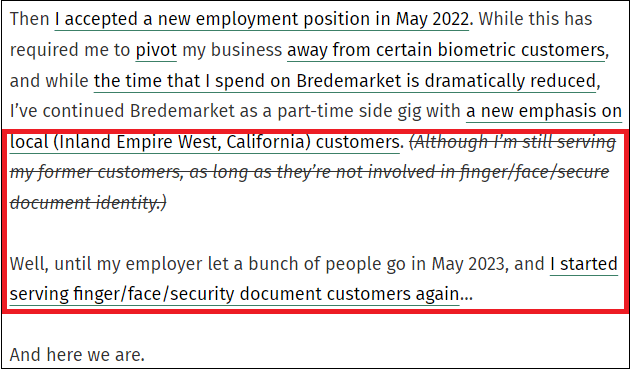
Basically, I had gone through great trouble to document that Bredemarket would NOT take identity work, so I had to reverse a lot of pages to say that Bredemarket WOULD take identity work.
I may have found a few additional pages after June 1, but eventually I reached the point where everything on the Bredemarket website was completely and totally updated, and I wouldn’t have to perform any other changes.
You can predict where this is going.
Who I…was
Today it occurred to me that some of the readers of the LinkedIn Bredemarket page may not know the person behind Bredemarket, so I took the opportunity to share Bredemarket’s “Who I Am” web page on the LinkedIn page.
So yes, this biometric content marketing expert/identity content marketing expert IS available for your content marketing needs. If you’re interested in receiving my help with your identity written content, contact me.
I didn’t either. Frankly, I didn’t even work in biometrics professionally until I was in my 30s.
If you have a mad adult desire to become a biometric content marketing expert, here are five topics that I (a self-styled biometric content marketing expert) think you need to understand.
Topic One: Biometrics
Sorry to be Captain Obvious, but if you’re going to talk about biometrics you need to know what you’re talking about.
The days in which an expert could confine themselves to a single biometric modality are long past. Why? Because once you declare yourself an iris expert, someone is bound to ask, “How does iris recognition compare to facial recognition?”
And there are a number of biometric modalities. In addition to face and iris, the Biometrics Institute has cataloged a list of other biometric modalities, including fingerprints/palmprints, voice, DNA, vein, finger/hand geometry, and some more esoteric ones such as gait, keystrokes, and odor. (I wouldn’t want to manage the NIST independent testing for odor.)
As far as I’m concerned, the point isn’t to select the best biometric and ignore all the others. I’m a huge fan of multimodal biometrics, in which a person’s identity is verified or authenticated by multiple biometric types. It’s harder to spoof multiple biometrics than it is to spoof a single one. And even if you spoof two of them, what if the system checks for odor and you haven’t spoofed that one yet?
Topic Two: All the other factors
In the same way that I don’t care for people who select one biometric and ignore the others, I don’t care for some in the “passwords are dead” crowd who go further and say, “Passwords are dead. Use biometrics instead.”
Although I admire the rhyming nature of the phrase.
If you want a robust identity system, you need to use multiple factors in identity verification and authentication.
Something you know.
Something you have.
Something you are (i.e. biometrics).
Something you do.
Somewhere you are.
Again, use of multiple factors protects against spoofing. Maybe someone can create a gummy fingerprint, but can they also create a fake passport AND spoof the city in which you are physically located?
It’s not enough to understand the technical ins and outs of biometric capture, matching, and review. You need to know how biometrics are used.
One-to-one vs. one-to-many. Is the biometric that you acquire only compared to a single biometric samples, or to a database of hundreds, thousands, millions, or billions of other biometric samples?
Markets. When I started in biometrics, I only participated in two markets: law enforcement (catch bad people) and benefits (get benefit payments to the right people). There are many other markets. Just recently I have written about financial identity and educational identity. I’ve worked with about a dozen other markets personally, and there are many more.
Use cases. Related to markets, you need to understand the use cases that biometrics can address. Taking the benefits example, there’s a use case in which a person enrolls for benefits, and the government agency wants to make sure that the person isn’t already enrolled under another name. And there’s a use cases when benefits are paid to make sure that the authorized recipient receives their benefits, and no one else receives their benefits.
Legal and privacy issues. It is imperative that you understand the legal ramifications that affect your chosen biometric use case in your locality. For example, if your house has a doorbell camera that uses “familiar face detection” to identify the faces of people that come to your door, and the people that come to your door are residents of the state of Illinois, you have a BIG BIPA (Biometric Information Privacy Act) problem.
Any identity content marketing expert or biometric content marketing expert worth their salt will understand these and related issues.
Topic Four: Content marketing
This is another Captain Obvious point. If you want to present yourself as a biometric contet marketing expert or identity content marketing expert, you have to have a feel for content marketing.
The definition of content marketing is simple: It’s the process of publishing written and visual material online with the purpose of attracting more leads to your business. These can include blog posts, pages, ebooks, infographics, videos, and more.
But content marketers need to be comfortable with creating at least one type of content.
Topic Five: How L-1 Identity Solutions came to be
Yes, an identity content marketing expert needs to thoroughly understand how L-1 Identity Solutions came to be.
I’m only half joking.
Back in the late 1990s and early 2000s (I’ll ignore FpVTE results for a moment), the fingerprint world in which I worked recognized four major vendors: Cogent, NEC, Printrak (later part of Motorola), and Sagem Morpho.
And then there were all these teeny tiny vendors that offered biometric and non-biometric solutions, including the fierce competitors Identix and Digital Biometrics, the fierce competitors Viisage and Visionics, and a bunch of other companies like Iridian.
Wel, there WERE all these teeny tiny vendors.
Until Bob LaPenta bought them all up and combined them into a single company, L-1 Identity Solutions. (LaPenta was one of the “Ls” in L-3, so he chose the name L-1 when he started his own company.)
So around 2008 the Big Four (including a post-FpVTE Motorola) became the Big Five, since L-1 Identity Solutions was now at the table with the big boys.
But then several things happened:
Motorola started selling off parts of itself. One of those parts, its Biometric Business Unit, was purchased by Safran (the company formed after Sagem and Snecma merged). This affected me because I, a Motorola employee, became an employee of MorphoTrak, the subsidiary formed when Sagem Morpho de facto acquired “Printrak” (Motorola’s Biometric Business Unit). So now the Big Five were the Big Four.
Make that the Big Three, because Safran also bought L-1 Identity Solutions, which became MorphoTrust. MorphoTrak and MorphoTrust were separate entities, and in fact competed against each other, so maybe we should say that the Big Four still existed.
Oh, and by the way, the independent company Cogent was acquired by 3M (although NEC considered buying it).
A few years later, 3M sold bits of itself (including the Cogent bit) to Gemalto.
Then in 2017, Advent International (which owned Oberthur) acquired bits of Safran (the “Morpho” part) and merged them with Oberthur to form IDEMIA. As a consequence of this, MorphoTrust de facto acquired MorphoTrak, ending the competition but requiring me to have two separate computers to access the still-separate MorphoTrust and MorphoTrak computer networks. (In passing, I have heard from two sources, but have not confirmed myself, that the possible sale of IDEMIA is on hold.)
Why do I mention all this? Because all these mergers and acquisitions have resulted in identity practitioners working for a dizzying number of firms.
As of August 2023, I myself have worked for five identity firms, but in reality four of the five are the same firm because the original Printrak International kept on getting acquired (Motorola, Safran, IDEMIA).
And that’s nothing. One of my former Printrak coworkers (R.M.) has also worked for Digital Biometrics (now part of IDEMIA), Cross Match Technologies (now part of ASSA ABLOY), Iridian (now part of IDEMIA), Datastrip, Creative Information Technology, AGNITiO, iTouch Biometrics, NDI Recognition Systems, iProov, and a few other firms here and there.
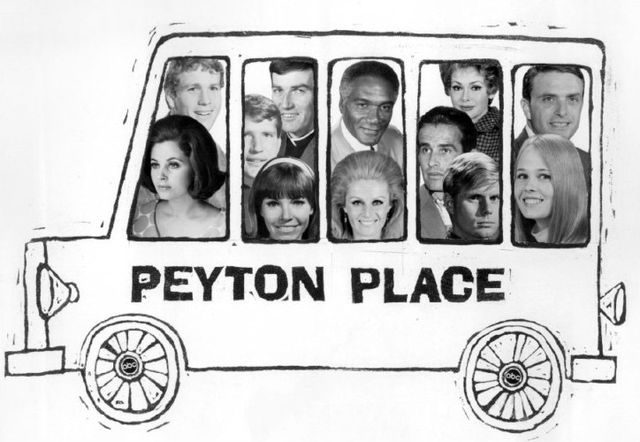
The point is that everybody knows everybody because everybody has worked with (and against) everybody. And with all the job shifts, it’s a regular Peyton Place.
Not sure which one is me, which one is R.M., and who the other people are.
Do you need an identity content marketing expert today?
Do you need someone who not only knows biometrics and content marketing, but also all the other factors, their uses, and even knows the tangled history of L-1?

















 Bredemarket