I talk endlessly about presentation attack detection independent testing, but I occasionally discuss injection attack detection independent testing also, who performs the test (as more entities do so), and who has been tested.
The testing entities perform the test according to the European Committee for Standardization (CEN) standard CEN/TS 18099:2025.
“This document provides an overview of:
– Definitions of biometric data injection attacks;
– Use cases for injection attacks with biometric data on essential hardware components of biometric systems used for enrollment and verification;
– Tools for injection attacks on systems using one or more biometric modalities.
This document provides guidance for:
– Injection Attack Instrument Detection System (defined in 3.12);
– adequate risk mitigation for injection attack tools;
– Creation of a test plan for the evaluation of an injection attack detection system (defined in 3.9).”
And Ingenium and BixeLab have developed their own testing methods.
iBeta and Injection Attack Detection Testing
And if you need a third choice of a testing lab, there is one. Via a sponsored post, iBeta joined the party.
“A new testing solution from iBeta Quality Assurance meets a growing need for evaluations of injection attack detection (IAD) products. The lab’s IAD testing launches today, and will be part of what iBeta showcases at Identity Week 2026 in Amsterdam next week. It includes testing up to Level 3, against the European standard CENS/TS 18099: 2025, across multiple platforms. And it presages the planned 2027 publication of the ISO/IEC standard dedicated to injection attack testing. iBeta will release a IAD testing solution for the ISO standard when it is released.”
Changes
The Biometric Update quote about the forthcoming ISO/IEC standard illustrates the challenge in testing when standards change, and new standards are adopted.
Something the Kantara Initiative recently addressed:
“Kantara Initiative announces the formal publication of the Kantara Initiative International Assurance Program: SP 800-63A-4 Service Assessment Criteria (SAC) & Statement of Criteria Applicability (SoCA), aligned to NIST Special Publication 800-63A Revision 4 – Identity Proofing.
“Following completion of the public review process and consideration of community feedback, the assessment criteria have been finalized and are effective immediately.”
NIST Special Publication 800-63A Revision 4 is the successor to Revision 3. Kantara Initiative previously offered assessments against the older standard, and can now assess against the newer one.
This illustrates the ripple effect of standards revisions…and in the case of injection attack detection, upcoming new standards.
“I think too much knowledge is actually bad in tech: you’re biased.”
Why does this quote affect me so deeply? Because with my 30-plus years of identity/biometric experience, I obviously have too much knowledge of the industry, which is obviously bad. After all, all a biometric company needs is a salesperson, an engineer, an African data labeler, and someone to run the generative AI for everything else. The company doesn’t need someone who knows that Printrak isn’t spelled with a C.
Google Gemini.
In this post I will share three of the “biases” I have developed in my 30-plus years in identity and biometrics, and how to correct these biases by stripping away that 20th century experience and applying novel thinking.
And if that last paragraph made you throw up in your mouth…read to the end of the post.
But first, let’s briefly explore these three biases that I shamefully hold due to my status as a biometric product marketing expert:
Independent algorithmic confirmation is valuable.
Process is valuable.
Artificial intelligence is merely a tool.
Biometric product marketing expert.
Bias 1: Independent Algorithmic Confirmation is Valuable
But how do prospects know that these algorithms work? How accurate are they? How fast are they? How secure are they?
My bias
My brain, embedded with over 30 years of bias, gravitates to the idea that vendors should submit their algorithms for independent testing and confirmation.
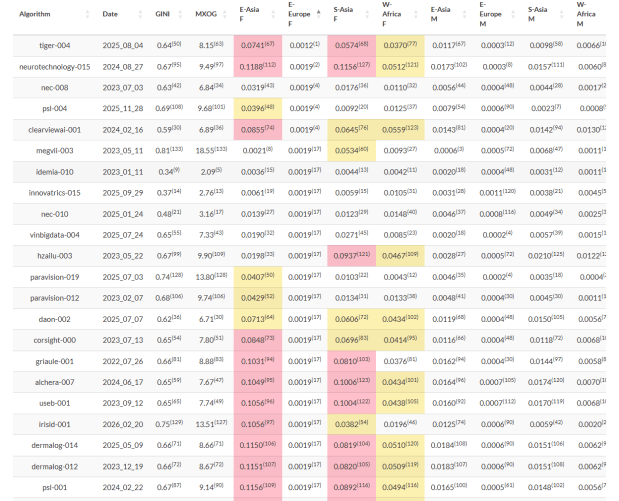
From a NIST facial recognition demographic bias text.
This could be an accuracy test such as the ones NIST and DHS administer, or confirmation of presentation attack detection capabilities (as BixeLab, iBeta, and other organizations perform), or confirmation of injection attack detection capabilities.
Novel thinking
But you’re smarter than that and refuse to support the testing-industrial complex. They have their explicit or implicit agendas and want to force the biometric vendors to do well on the tests. For example, the U.S. Federal Bureau of Investigation’s “Appendix F” fingerprint capture quality standard specifically EXCLUDES contactless solutions, forcing everyone down the same contact path.
But you and your novel thinking reject these unnecessary impediments. You’re not going to constrain yourself by the assertions of others. You are going to assert your own benefits. Develop and administer your own tests. Share with your prospects how wonderful you are without going through an intermediary. That will prove your superiority…right?
Bias 2: Process is Valuable
A biometric company has to perform a variety of tasks. Raise funding. Hire people. Develop, market, propose, sell, and implement products. Throw parties.
How will the company do all these things?
My bias
My brain, encumbered by my experience (including a decade at Motorola), persists in a belief that process is the answer. The process can be as simple as scribblings on a cocktail napkin, but you need some process if you want to cash out in a glorious exit—I mean, deliver superior products to your customers.
Perhaps you need a development processs that defines, among other things, how long a sprint should be. A capture and proposal process (Shipley or simpler) that defines, among other things, who has the authority to approve a $10 million proposal A go-to-market process that defines the deliverables for different tiers, and who is responsible, accountable, consulted, and informed. Or maybe just an onboarding process when starting a new project, dictating the questions you need to ask at the beginning.
Bredemarket’s seven questions. I ask, then I act.
Novel thinking
Sure all that process is fine…if you don’t want to do anything. Do you really want to force your people to wait two weeks for the latest product iteration? Impose a multinational bureauracy on your sales process? Go through an onerous checklist before marketing a product?
Google Gemini.
Just code it.
Just sell it.
Just write it.
Bias 3: Artificial Intelligence is Merely a Tool
The problem with experienced people is that they think that there is nothing new under the sun.
You talk about cloud computing, and they yawn, “Sounds like time sharing.” You talk about quantum computing, and they yawn, “Sounds like the Pentium.” You talk about blockchain, and they yawn, “Sounds like a notary public.”
My bias
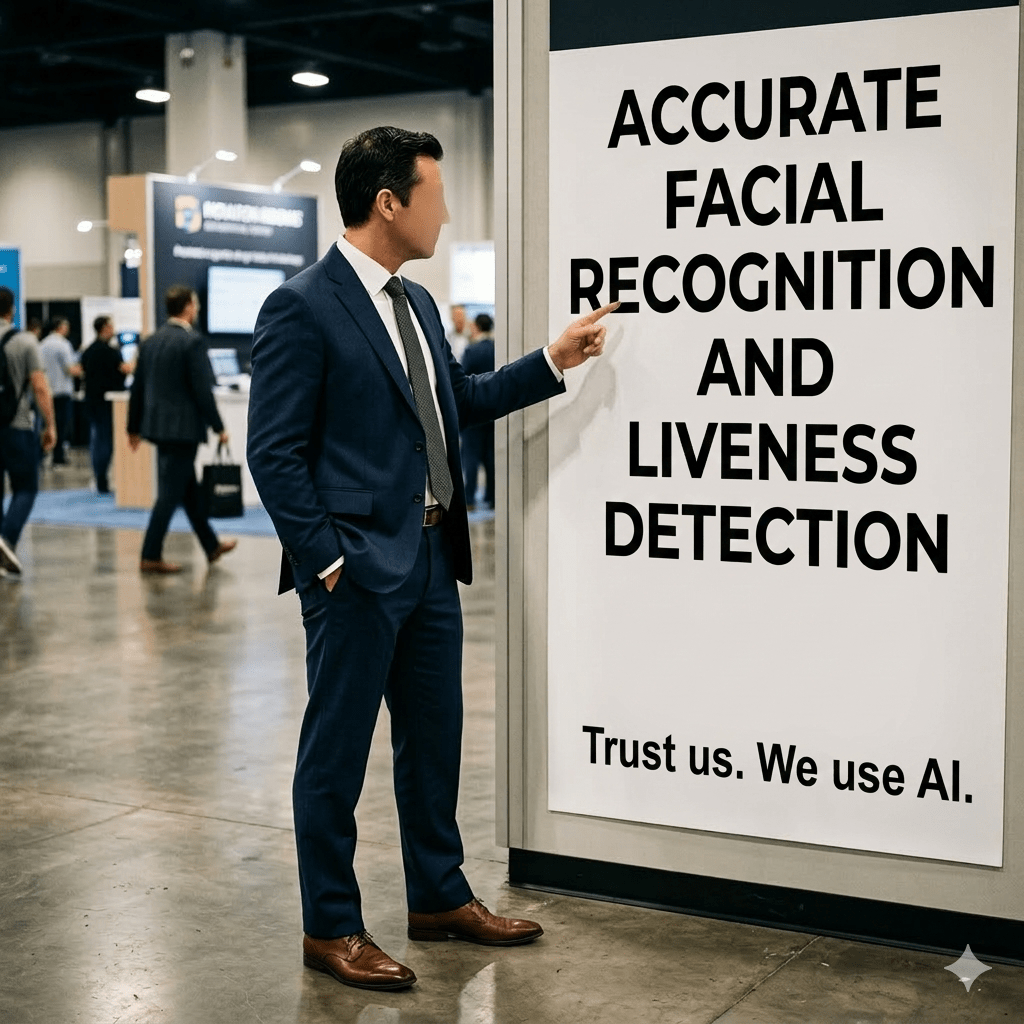
As I sip my Pepperidge Farm, I can barely conceal my revulsion at those who think “we use AI” is a world-dominating marketing message. Artificial intelligence is not a way of life. It is a tool. A tool that in and of itself does not merit much of a mention.
Google Gemini.
How many automobile manufacturers proclaim “we use tires” as part of their marketing messaging? Tires are essential to an automobile’s performance, but since everyone has them, they’re not a differentiator and not worthy of mention.
In the same way, everyone has AI…so why talk about its mere presence? Talk about the benefits your implementation provides and how these benefits differentiate you from your competitors.
Novel thinking
Yep, the grandpas that declare “AI is only a tool” are missing the significance entirely. AI is not like a Pentium chip. It is a transformational technology that is already changing the way we create, sell, and market.
Therefore it is critically important to highlight your product’s AI use. AI isn’t a “so what” feature, but an indication of revolutionary transformative technology. You suppress mention of AI at your own peril.
How do I overcome my biases of experience?
OK, so I’ve identified the outmoded thinking that results from too much experience. But how do I overcome it?
I don’t.
Because if you haven’t already detected it, I believe that experience IS valuable, and that all three items above are essential and shouldn’t be jettisoned for the new, novel, and kewl.
Are you a identity/biometric marketing leader who needs to tell your prospects that your algorithms are validated by reputable independent bodies?
Or that you have a process (simple or not) that governs how your customers receive your products?
Or that your AI actually does unique things that your competitors don’t, providing true benefits to your customers?
Bredemarket can help with strategy, analysis, content, and/or proposals for your identity/biometric firm. Talk to me (for free).
By the way, here’s MY process (and my services and pricing).
I know that the experts say that “too much knowledge is actually bad in tech.” But based upon what I just saw from an (unnamed) identity verification company, I assert that too little knowledge is much worse.
As a biometric product marketing expert and biometric product marketing writer, I pay a lot of attention to how identity verification companies and other biometric and identity companies market themselves. Many companies know how to speak to their prospects…and many don’t.
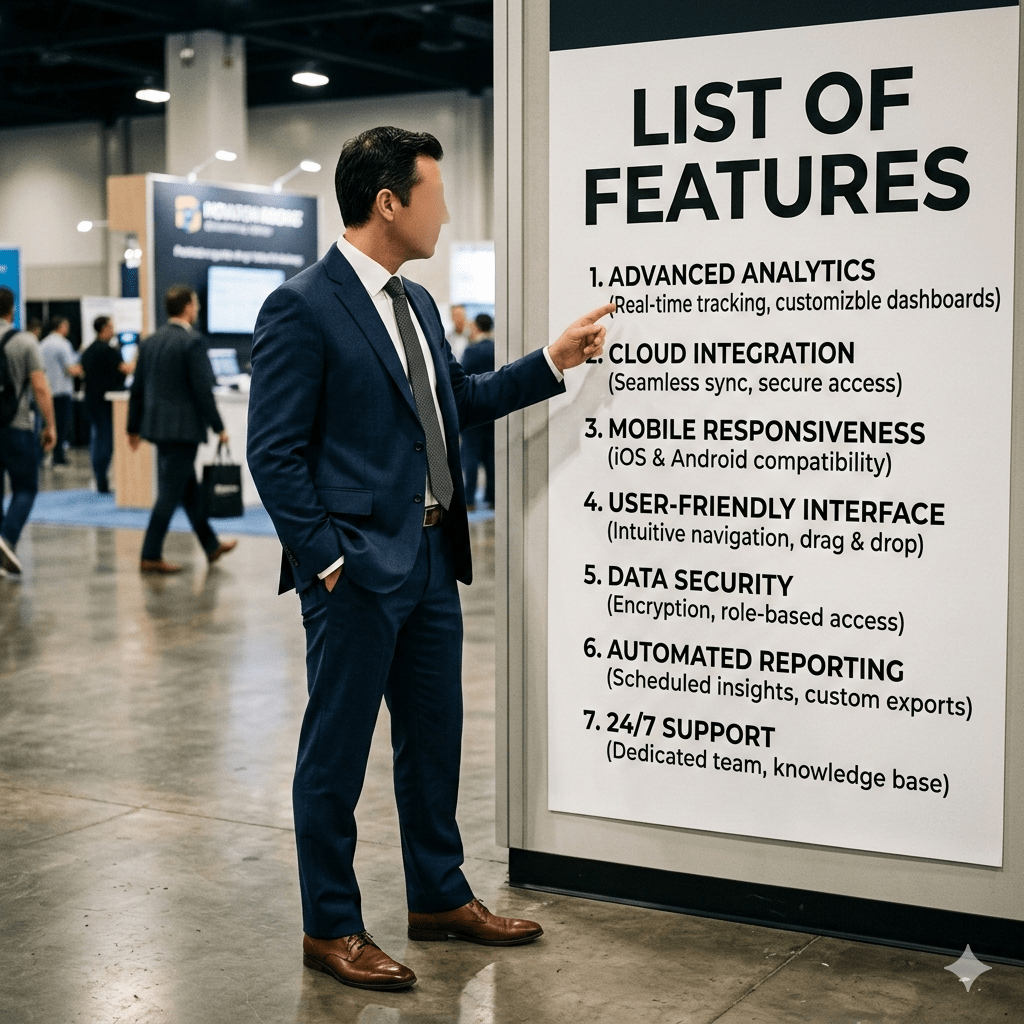
Take a particular company, which I will not name. Here is the “marketing” from this company.
We claim high facial recognition accuracy but don’t publish our NIST FRTE results! (While the company claims to author its technology, the company name does not appear in either the NIST FRTE 1:1 or NIST FRTE 1:N results.)
We claim liveness detection (presentation attack detection) but don’t publish any confirmation letters! (Again, I could not find the company name on the confirmation letter lists from BixeLab or iBeta.)
Google Gemini.
So what is the difference between this company and the other 100+ identity verification companies…many of which explicitly state their benefits, trumpet their NIST FRTE performance, and trumpet their third-party liveness detection confirmation letters?
If you claim great accuracy and great liveness detection but can’t support it via independent third-party verification, your claim is “so what?” worthless. Prove your claims.
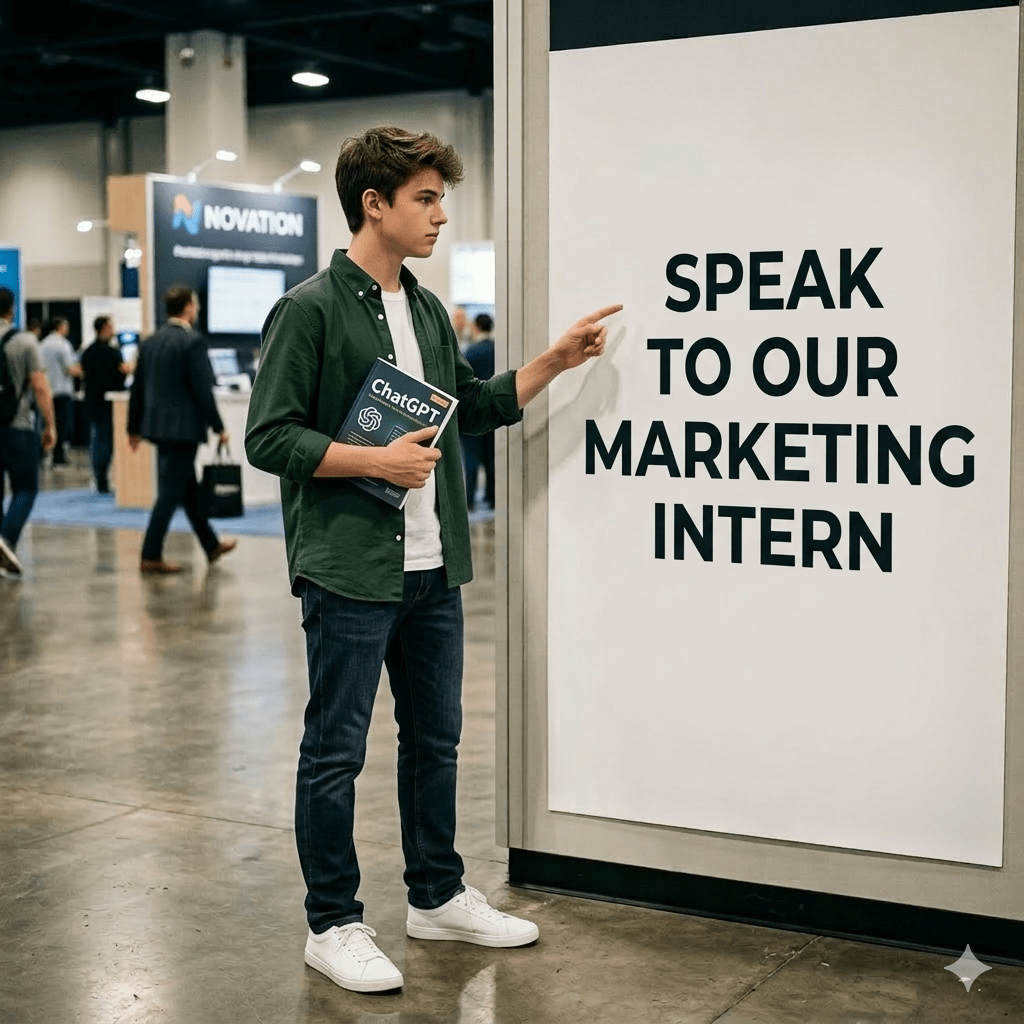
Now I’m sure I could help this company. Even if they have none of the certifications or confirmations I mentioned, I could at least get the company to focus on meaningful differentiation and meaningful benefits. But there’s no need to even craft a Bredemarket pitch to the company, since the only marketer on staff is an intern who is indifferent to strategy.
Google Gemini.
Because while many companies assert that all they need is a salesperson, an engineer, an African data labeler, and someone to run the generative AI for everything else…there are dozens of competitors doing the exact same thing.
But some aren’t. Some identity/biometric companies are paying attention to their long-term viability, and are creating content, proposals, and analyses that support that viability.
Take a look at your company’s marketing. Does it speak to prospects? Does it prove that you will meet your customers’ needs? Or does it sound like every other company that’s saying “We use AI. Trust us“?
And if YOUR company needs experienced help in conveying customer-focused benefits to your prospects…contact Bredemarket. I’ve delivered meaningful biometric materials to two dozen companies over the years. And yes, I have experience. Let me use it for your advantage.
I remember when I was working in Anaheim and keeping track of the latest BIPA lawsuits, back when you could count them on one hand…then on two hands…then there were too many.
I feel the same way about mypreviousattempts to track the vendors that offer solutions that conform to ISO 30107-3 Presentation Attack Detection Level 3. I thought I’d found them all, then I’d find another one.
So here’s my current (Friday afternoon) list of the PAD 3 conforming solutions.
While Google Gemini informed me that Veridas had also received Level 3 confirmation from iBeta, that turned out to be a hallucination. Veridas realizes the importance of Level 3, though, as do other selected vendors, so I suspect this table will be outdated soon.
Oh, and just to confuse things further, some of the other tests, such as CEN/TS 18099 injection attack detection tests, also may apply in some way to presentation attacks. Or maybe not. We’ll see.
This morning’s post listed three companies with independently demonstrated conformance to ISO 30107-3 presentation attack detection level 3: Aware, FaceTec, and Yoti.
The independent evaluators were BixeLab and iBeta.
But Ingenium provides PAD level 3 conformance assessments also.
So that’s a total of four companies at PAD Level 3: Aware, FaceTec, Paravision, and Yoti.
Who else did I miss?
And I will revisit my earlier question. Will consumers perceive that THEIR data is valuable enough to warrant Level 3 liveness detection? And avoid the solutions with “only” Level 2 conformance?
But iBeta isn’t the only entity performing PAD Level 3 testing.
FaceTec’s algorithm received PAD Level 3 confirmation from BixeLab in October.
Aware received a similar confirmation in November.
Will PAD Level 3 become the new floor for liveness detection? It depends upon your needs. Here’s how Mantra explains the difference between levels 2 and 3.
Level 2 (L2):
More realistic spoofs-high-quality 3D masks, composite fingers, better materials. Harder to detect, but still lab-craft attacks.
The “serious resources” part is key. Fraudsters will only spend “serious resources” if the target is valuable enough.
But will consumers perceive that THEIR data is valuable enough to warrant Level 3 liveness detection? And avoid the solutions with “only” Level 2 conformance?






 Bredemarket