
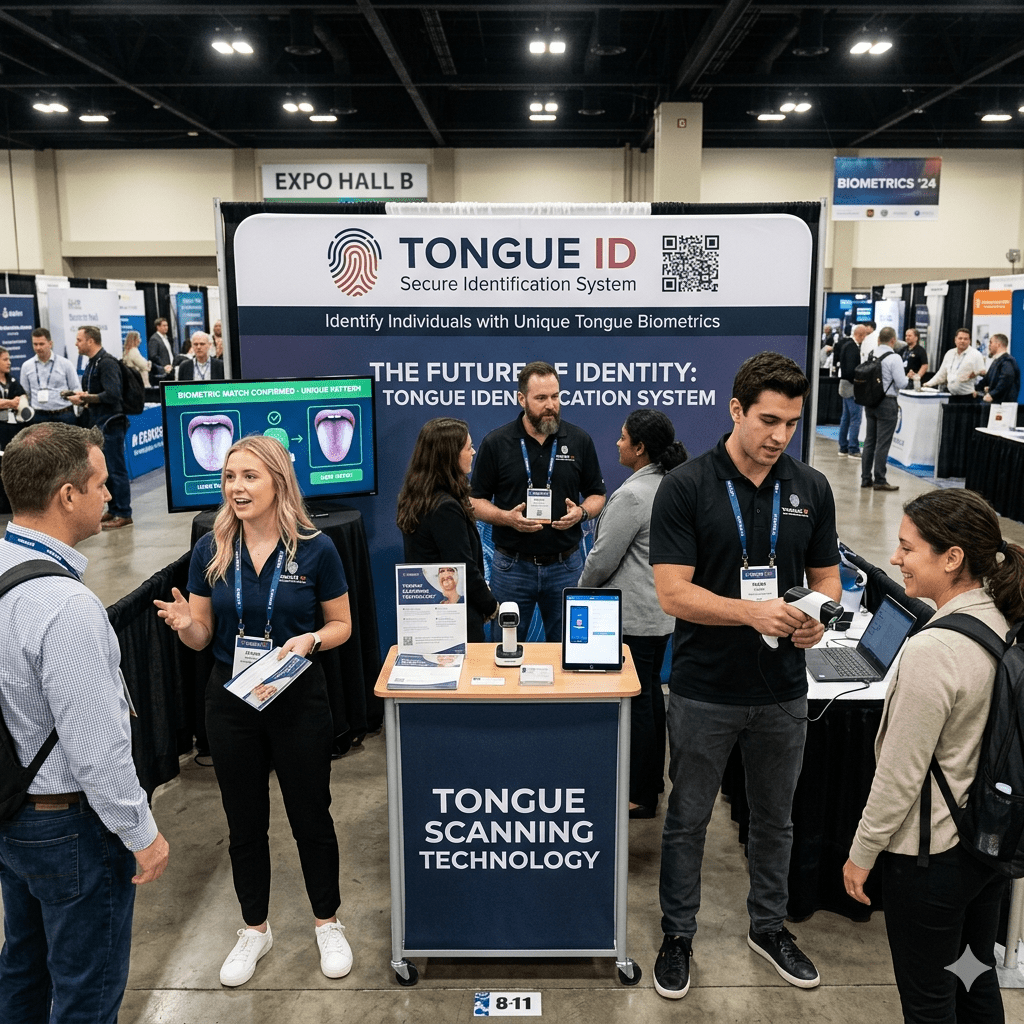
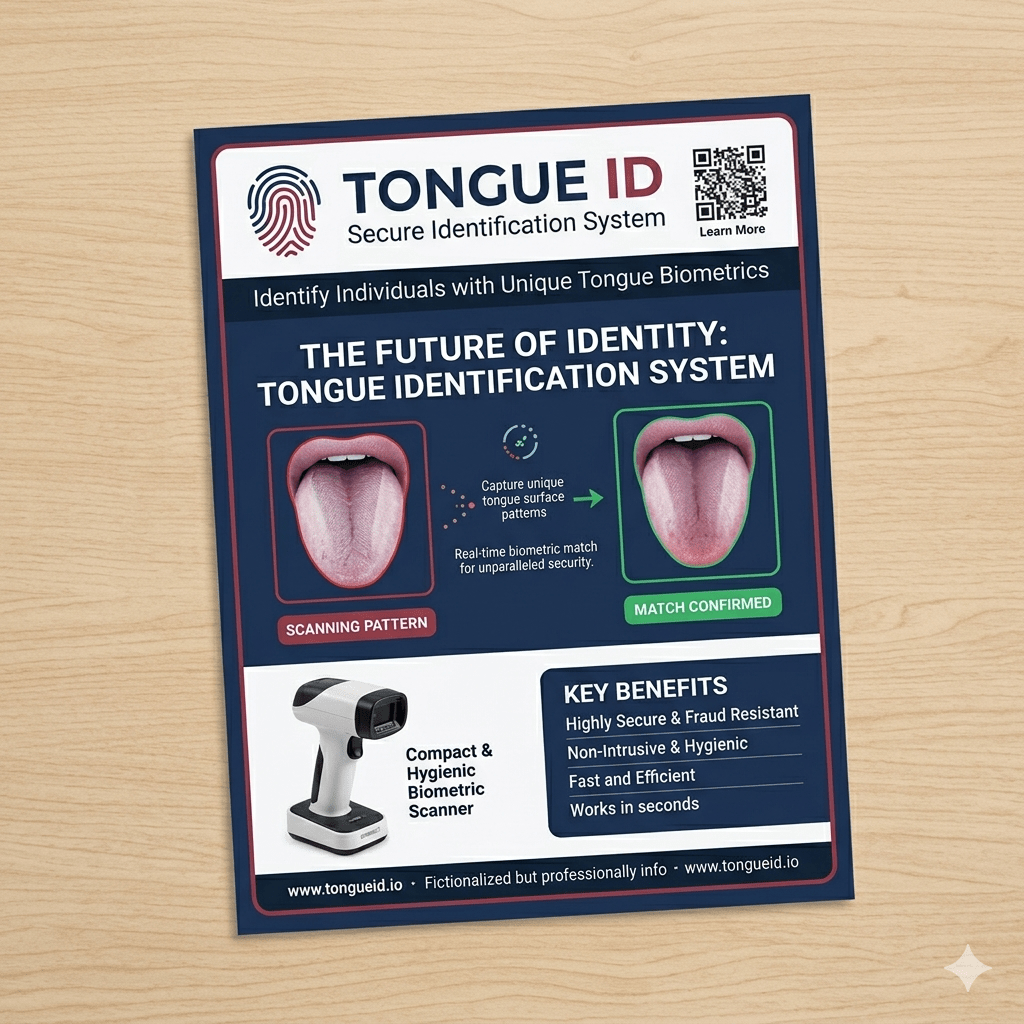
I forgot about this image, used in this post and inspired by an earlier post.
Tag Archives: tongue
The Two-Way Door Decision

In business there’s something called a “Type 2 decision.” Because of my biometric background I shy away from the term (which means “false positive” in biometrics) and prefer to use the term “two-way door decision.”
If you’ve been through an airport security checkpoint, either entering or leaving a security area, you know that you can only go one way.

Amazon and the two-way door decision
But other entrances and exits DO allow you to change your mind.
“The [two-way door decision] concept was introduced by Jeff Bezos in his Amazon shareholder letters, using the metaphor of walking through a door. With a two-way door decision, you can walk through the door, see what’s on the other side, and if you don’t like it, you can easily turn around and come back through. If you make a suboptimal two-way door decision, you don’t have to live with the consequences for long—you can reopen the door and go back through.”
Amazon Fresh is not a good example.
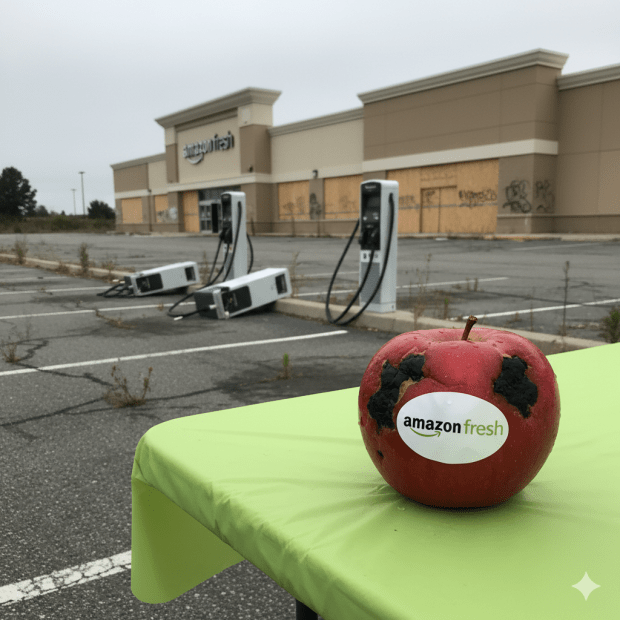
While in the end the original decision was reversible, the reversal was not without pain. The rise and fall of Amazon Fresh took years. (Technically less than a year in Upland, if you don’t count the years of planning, but still a long time.)
But what about trying a new product marketing idea? While some ideas, such as pricing a luxury car at one dollar, can cause permanent damage, others can easily be reversed.
I’ll use Bredemarket as an example. Back in 2020 I was heavily pushing my Bredemarket 404 Web/Social Media Checkup. While it remains on my website, I haven’t promoted it in years. I could certainly still do it (and did it for one client), but while it parallels my analysis strengths, I find other areas (such as market and competitive analysis in the biometric industry) much more satisfying and financially rewarding.
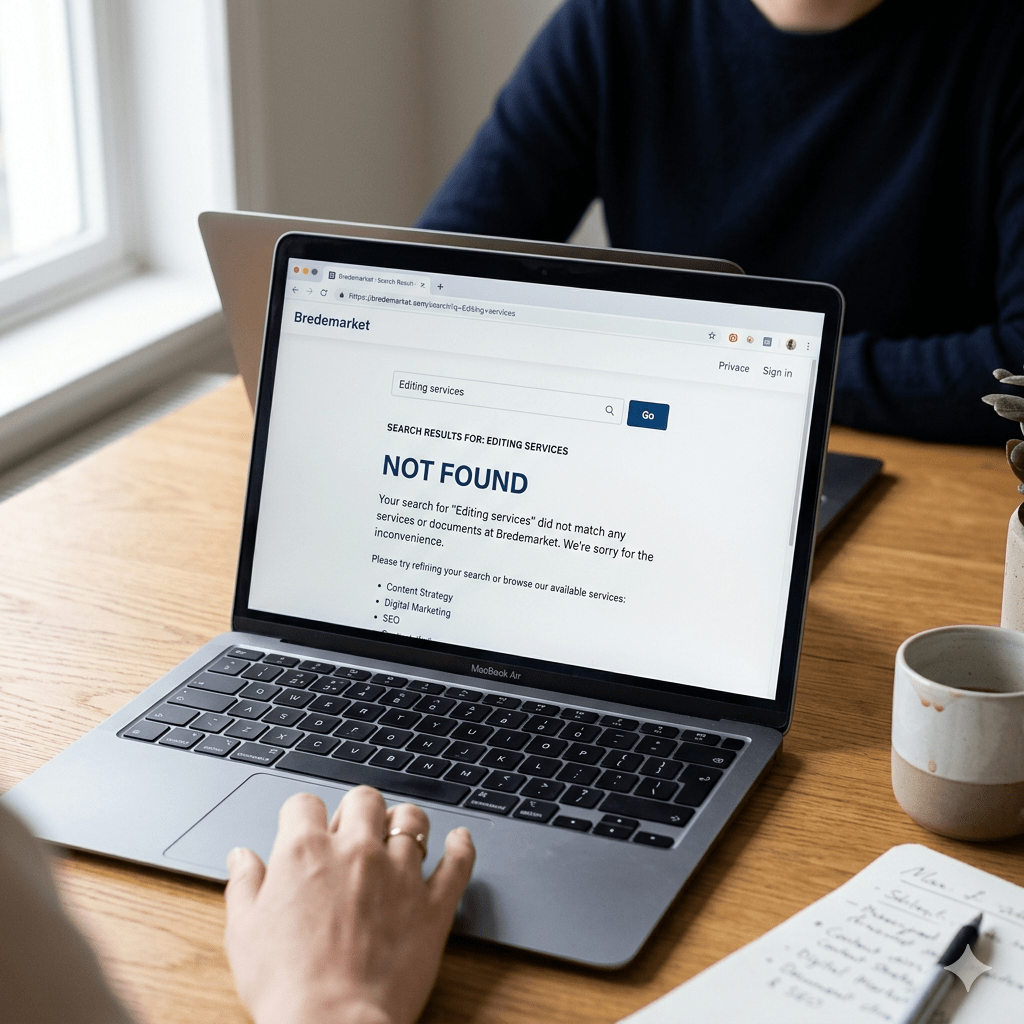
On the other hand, I DID pull my editing services from the Bredemarket website. That’s not rewarding at all.
Enough about me…what about you?
But what if YOU want to try a new product marketing idea and see if it resonates with your prospects?
Now you could go through an entire tiered go-to-market launch,
Or alternatively, you could send up a trial balloon such as a blog post, a social media post, or a data sheet.
Then measure the results.
- If the content resonates with your prospects, double down.
- If your prospects are indifferent, never mention the idea again.
- If your prospects hate it, delete it.
Because of my “I ask, then I act” bias, I gravitate toward these trial balloons. As long as the idea doesn’t kill your company, why not try it quickly, rather than paralyzing yourself by repeated inaction?
Your trial balloon

Are you ready to launch a trial balloon, but need some help with the helium? Set up a meeting with Bredemarket and we can discuss your options.
No, Tongue Identification Is NOT Widely Accepted

Remember tongue identification, which I discussed in 2023? Supposedly you can identify people based upon the shape and texture of their tongues. Unfortunately for the proponents, I don’t know that this has ever been tested with a subject size greater than 20 participants.
But that doesn’t stop people from talking about tongue identification as established fact.
A blog post (I won’t link to it) makes statements such as this:
The human tongue…has unique features that are different for each person.
Again without a shred of evidence.
Of course, the same blog post also praises bite mark analysis as an established identification method. Ignoring what scientists say:
“A likely next candidate for elimination is bitemark identification….An important National Academies review found little scientific support for the field. The Texas Forensic Science Commission recently recommended a moratorium on the admission of bitemark expert testimony….This article describes the (legal) basis for the rise of bitemark identification and the (scientific) basis for its impending fall. The article explains the general logic of forensic identification, the claims of bitemark identification, and reviews relevant empirical research on bitemark identification—highlighting both the lack of research and the lack of support provided by what research does exist. The rise and possible fall of bitemark identification evidence has broader implications—highlighting the weak scientific culture of forensic science and the law’s difficulty in evaluating and responding to unreliable and unscientific evidence.”
So don’t get all excited about tongue identification just yet.
Which Biometric Modalities Does NIST Investigate?
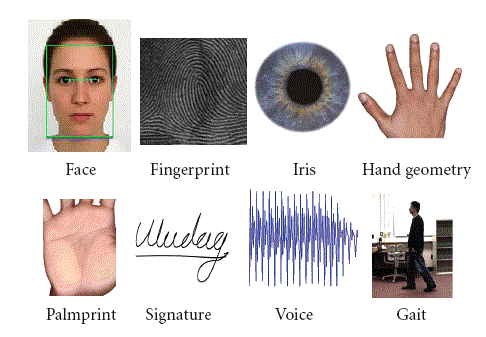
I’ve spent a lot of time in the Bredemarket blog looking at a variety of NIST studies of different biometric modalities.
But you can read up on them yourself.
NIST has investigated the following biometric modalities, using both definitions of the word biometrics:
- Voice identification and analysis.
But NIST has not spent taxpayer money researching other biometric modalities, such as tongue identification.
In Which I “Nyah Nyah” Tongue Identification
(Part of the biometric product marketing expert series)
If you listen closely, you can hear about all sorts of wonderful biometric identifiers. They range from the common (such as fingerprint ridges and detail) to the esoteric (my favorite was the 2013 story about Japanese car seats that captured butt prints).

A former coworker who left the biometric world for the world of Adobe Experience Manager (AEM) expert consulting brought one of the latter to my attention.
Tongue prints.
This article, shared with me by Krassimir Boyanov of KBWEB Consult, links to this article from Science ABC.
As is usual with such articles, the title is breathless: “How Tongue Prints Are Going To Revolutionize Identification Methods.”

Forget about fingerprints and faces and irises and DNA and gait recognition and butt prints. Tongue prints are the answer!
Benefits of tongue print biometrics
To its credit, the article does point out two benefits of using tongue prints as a biometric identifier.
- Consent and privacy. Unlike fingerprints and irises (and faces) which are always exposed and can conceivably be captured without the person’s knowledge, the subject has to provide consent before a tongue image is captured. For the most part, tongues are privacy-perfect.
- Liveness. The article claims that “sticking out one’s tongue is an undeniable ‘proof of life.'” Perhaps that’s an exaggeration, but it is admittedly much harder to fake a tongue than it is to fake a finger or a face.
Are tongues unique?
But the article also makes these claims.
Two main attributes are measured for a tongue print. First is the tongue shape, as the shape of the tongue is unique to everyone.
From https://www.scienceabc.com/innovation/how-tongue-prints-are-going-to-revolutionize-identification-methods.html

The other notable feature is the texture of the tongue. Tongues consist of a number of ridges, wrinkles, seams and marks that are unique to every individual.
From https://www.scienceabc.com/innovation/how-tongue-prints-are-going-to-revolutionize-identification-methods.html
So tongue shape and tongue texture are unique to every individual?
Prove it.
Even for some of the more common biometric identifiers, we do not have scientific proof that most biometric identifiers are unique to every individual.
- There is no proof that each of the 8+ billion living people and each of the dead ones has a unique fingerprint.
- There is serious doubt (if not outright denial) that everyone has a unique face (although NIST is investigating this via the FRTE Twins Demonstration).
But at least these modalities are under study. Has anyone conducted a rigorous study to prove or disprove the uniqueness of tongues? By “rigorous,” I mean a study that has evaluated millions of tongues in the same way that NIST has evaluated millions of fingerprints, faces, and irises?
We know that NIST hasn’t studied tongues.

I did find this 2017 tongue identification pilot study but it only included a whopping 20 participants. And the study authors (who are always seeking funding anyway) admitted that “large-scale studies are required to validate the results.”
Conclusion
So if a police officer tells you to stick out your tongue for identification purposes, think twice.
 Bredemarket