Bredemarket helps identity/biometric firms.
- Finger, face, iris, voice, DNA, ID documents, geolocation, and even knowledge.
- Content-Proposal-Analysis. (Bredemarket’s “CPA.”)
Don’t miss the boat.
Augment your team with Bredemarket.

Identity/biometrics/technology marketing and writing services

Bredemarket helps identity/biometric firms.
Don’t miss the boat.
Augment your team with Bredemarket.

Whether and how you delegate something depends upon its importance, especially if you recognize three levels of importance. Sometimes the very important and critically important items require a CPA, or Content-Proposal-Analysis marketing professional. (I know one.)
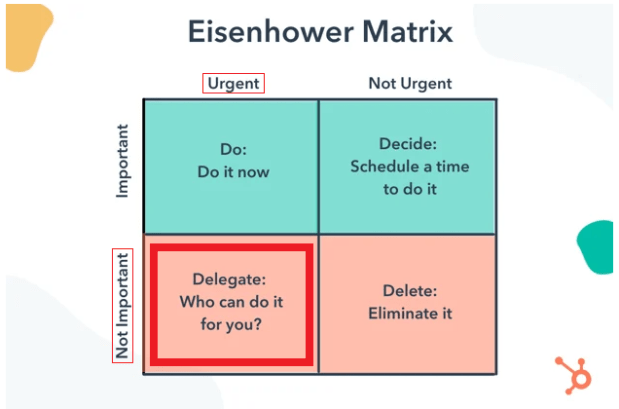
Last October I spent some time talking about the Eisenhower Matrix and its critical flaw, focusing upon the “important but not urgent” quadrant:
When you have a single level of importance, then decisions are pretty simple. For urgent things, do it yourself if it’s important, delegate it if it’s not.
But what if, instead of “Not Important” and “Important,” we had three levels of importance instead of just one? In other words, “Not Important,” “Important,” “Very Important,” and “Critically Important”?
In that case, you not only consider whether to delegate something, but who should be delegated that thing. (Or, as you’ll see, WHAT should be delegated that thing.)
As I noted in October, a more granular approach to importance increases the, um, importance of Bredemarket’s services.
But if your needs are critical, and you require the services of a CPA (Content-Proposal-Analysis marketing professional), then you need to learn what Bredemarket can do for you. Click on the image to learn more.


Is your firm losing business and leaving important items unfinished?
I, John E. Bredehoft of Bredemarket, am a “CPA.” Not a Certified Public Accountant; a Content-Proposal-Analysis marketing professional:
I offer over 30 years of technology experience—30 in identity/biometrics, where I am the biometric product marketing expert.
I ask questions first (why, how, what, and more) and collaborate later to ensure I deliver the right content to you.
I provide pre-packaged services or bill you at an hourly rate.

Identity/biometric professionals require the right words to raise product awareness, influence consideration, or drive conversions.
Bredemarket helps you create the words your prospects and customers must hear now:
With over 29 years of identity/biometric experience, John Bredehoft of Bredemarket is the biometric product marketing expert that can move your company forward.
If I can help you, book a free 30 minute meeting with me on Calendly.
If you’re not sure about using Bredemarket, here is more information.
I’ve taken a very small break from my identity blog post writing business to help a biometric company with a proposal. I am, after all, the biometric proposal writing expert, so I’m at home working on identity proposals. After all, I’ve done it before.

Bredemarket’s services are grouped into two distinct and separate functions: content marketing (blog posts, white papers, etc.) and proposals (RFI responses, RFP responses, sole source letters, etc.).
My division of my services makes sense in the real world. After all, in some employment situations, content marketing and proposals employ distinct and separate sets of employees.

But other companies are different. In fact, I’ve seen employment ads seeking marketing/proposals managers. Sounds like a lot of work, unless the company submits few proposals or performs minimal marketing.
And in many companies there are NOT dedicated proposals specialists. Which is why Bredemarket makes its money by helping the salespeople at these firms get the documents out.
And if we’re truthful with ourselves, content marketing and proposals are pretty much the same thing.
I know this angers some people, who insist that they are content marketing professionals or proposal professionals, with all the proper certifications that a mere mortal could never attain. Or they did attain it, but it lapsed. Or is about to lapse unless I renew it in time.
But hear me out. I’m going to list four aspects of a particular document, and you tell me whether I’m talking about a piece of marketing content, or a proposal.
Guess what? From that description you CAN’T tell if it’s a piece of content or a proposal.
Yes, I know some of you thought item 4 was a dead giveaway because it sounded like an RFP requirement, but maybe some company’s brand guidelines dictate that the firm’s white papers must conform to that format. You never know.
And I know that when you get into the minutiae, there are certain things that proposal writers do that content marketers don’t have to worry about, and vice versa.
But at a high level, the content marketer already knows 90% of the things they need to know to write proposals. And vice versa.
Can we all get along?
Man, I’ve been negative lately.
I figure that it is time to become more positive.
I’m going to describe one example of how Bredemarket has helped its customers, based upon one of my client projects from several years ago.

I’ve told this story before, but I wanted to take a fresh look at the problem the firm had, and the solution Bredemarket provided. I’m not identifying the firm, but perhaps YOUR firm has a similar problem that I can solve for you. And your firm is the one that matters.
This happened several years ago, but was one of Bredemarket’s first successes.
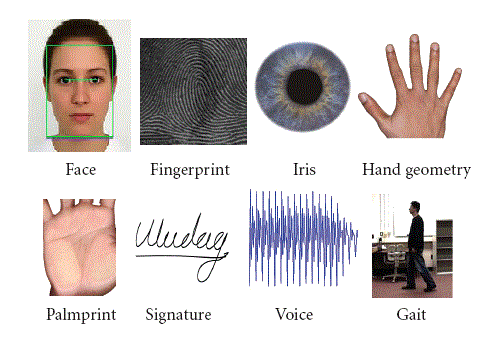
I should preface this by noting that there are a lot of different biometric modalities, including some that aren’t even listed in the image above.
The firm that asked for my help is one that focuses on one particular biometric modality, and provides a high-end solution for biometric identification.
In addition, the firm’s solution has multiple applications, crime solving and disaster victim identification being two of them.

The firm needed a way to perform initial prospect outreach via budgetary quotations, targeted to the application that mattered to the prospect. A simple proposal problem to be solved…or so it seemed.
I had encountered similar problems while employed at Printrak and MorphoTrak and while consulting here at Bredemarket, so the solution was painfully obvious.
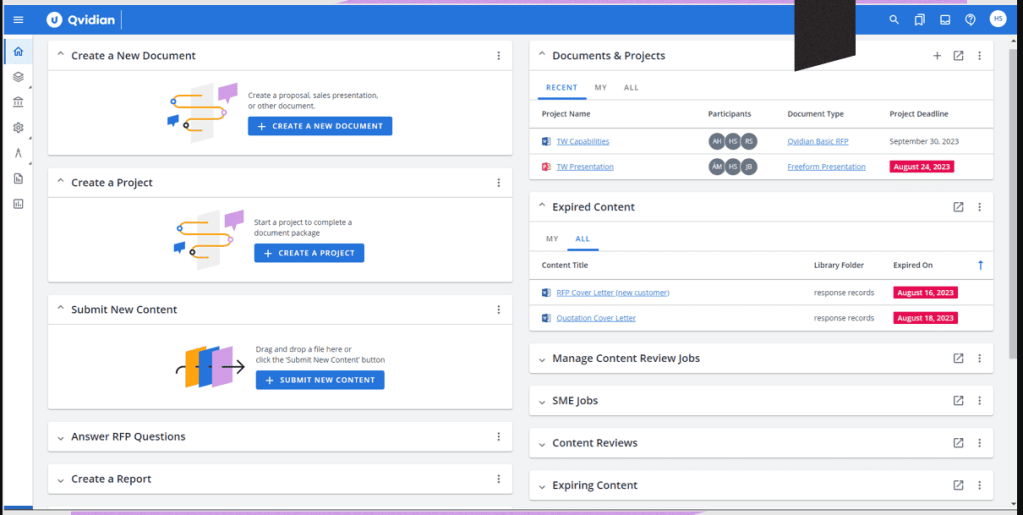
Have your proposal writers create relevant material in their proposal automation software that could target each of the audiences.
So when your salesperson wants to approach a medical examiner involved in disaster victim identification, the proposal writer could just run the proposal automation software, create the targeted budgetary quotation, populate it with the prospect’s contact information, and give the completed quotation to the salesperson.
Unfortuntely for the firm, the painfully obvious solution was truly painful, for two reasons:
In this case, the firm needed a way for the salespeople to generate the necessary budgetary quotations as easily as possible, WITHOUT relying on proposal automation software or proposal writers.
To solve the firm’s problem, I resorted to Stupid Word Tricks.
(Microsoft Word, not Cameo.)
I created two similar budgetary quotation templates: one for crime solving, and one for disaster victim identification. (Actually I created more than two.) That way the salesperson could simply choose the budgetary quotation they wanted.
The letters were similar in format, but had little tweaks depending upon the audience.
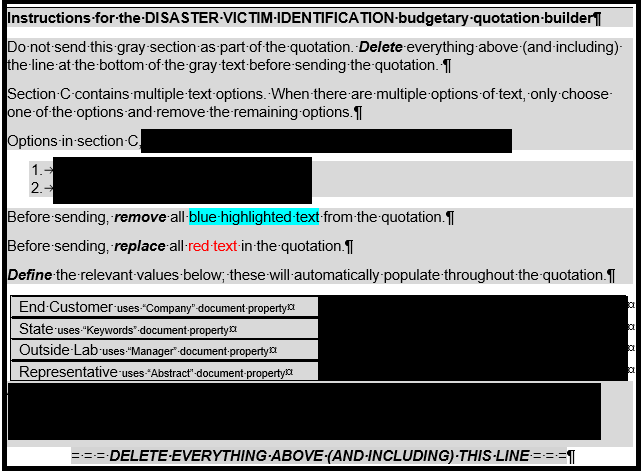
The Stupid Word Tricks came into play when I used Word document property features to allow the salesperson to enter the specific information for each prospect, which then rippled throughout the document, providing a customized budgetary quotation to the prospect.
The firms’ salespeople used Bredemarket’s templates to generate initial outreach budgetary quotations to their clients.
And the salespeople were happy.
I’ve used this testimonial quote before, but it doesn’t hurt to use it again.
“I just wanted to truly say thank you for putting these templates together. I worked on this…last week and it was extremely simple to use and I thought really provided a professional advantage and tool to give the customer….TRULY THANK YOU!”
Comment from one of the client’s employees who used the standard proposal text
While I actively consulted for the firm I maintained the templates, updating as needed as the firm achieved additional certifications.
I just want to remind people that Bredemarket doesn’t just write posts, articles, and other collateral. I can also create collateral such as these proposal templates that you can re-use.
So if you have a need that can’t be met by the painfully obvious solutions, talk to me. Perhaps we can develop our own solution.

Whether you’re an employee or a sole proprietor, at some point you’re going to have to play well with others to get things done.
Bredemarket has performed this (fancy phrase: “cross-functional collaboration”), both as part of Bredemarket’s services and outside of it.
Even though I’m not formally certified to do this, I do it anyway.
Long before I started Bredemarket, I was managing products and proposals associated with an on-premise technology solution.
This solution had a long sales cycle (longer than Cloudflare’s, for example) and a long implementation time. After contract signature, it might take a year or more to lock down the requirements, procure the hardware and third-party software, configure the solution, perform a factory acceptance test, deliver the solution to the customer’s premises, perform one or more rounds of on-site testing, and obtain final acceptance.
But my employer wasn’t lacking in revenue during implementation, because it received partial payments as it passed various milestones. Perhaps a small percentage of the total price would be paid upon requirements completion. Another percentage at delivery. Additional percentages at different points in the implementation, with the final large payment upon acceptance.

But then I was the proposal manager for a prospect desiring a SaaS implementation.

Several years later, the, um, SITUATION had changed, and my employer was more willing to accept the financial risks associated with SaaS implementations. I was still a proposal manager at the time and was able to work on my employer’s first successful SaaS bids. But that assumption of risk wasn’t the only barrier to success, because I had to work with a lot of different cross-functional collaborators to get those bids out.
I think this is when I made my observation about managers of large proposals. In a large project, the proposal manager is the only one who spends 100% of their time on the project. The salespeople are selling other deals, the engineers are engineering other stuff, and so forth. Therefore, it was up to me to ensure that everything continued to move forward, because while these bids were important to the others, they were critically important to me.
Anyway, these later bids had a much happier ending, the employer successfully entered the SaaS market, and as more customers moved from on-premise to SaaS models, thus evening out my employer’s income stream, the financial risk from SaaS proposals was reduced significantly.
That cross-functional collaboration experience, exercised on these bids and in many other instances over the years, would be put to the test a few years later when I started Bredemarket.

It’s one thing for a company employee to manage a project with a ton of people, none of whom report to you and most of whom outrank you.
It’s another thing when an outside contractor has to manage a project of inside employees.
One of my Bredemarket projects, which happened to be another proposal project, required me to do just that. While the proposal was much simpler than the bids constructed at my former employer, the effort still required a lot of shepherding to get all the pieces put together, obtain all the approvals, and get someone to submit the final proposal since I, as a non-employee, couldn’t do it myself.
Everything worked out, and the employees were great, but there were times when it seemed like I was the only one to keep an eye on all the tasks.
Something that I had never been formally trained to do.
Eventually I (temporarily) stopped working on finger/face projects for Bredemarket because I was employed by a finger/face company. And I found myself managing projects of similar complexity (the 80+ battlecard project, for example).
And that’s when I realized that I was a de facto project manager.
Even though I didn’t have the fancy certification to attest to this.

The Project Management Institute offers several certifications, including:
I toyed around with the idea of starting the certification progression in 2023, and even though my employer didn’t have the rigorous annual goal-setting processes that larger organizations have, I set a personal goal in one of my employer’s Asana projects to advance to CAPM by the end of 2023.
And then…things happened.
Perhaps at some point I’ll get the official piece of paper that I can flash around, but until then I’ll learn on my own, both by coursework and by…well…actual managing projects.
Often consultants work with someone whom they have never met before.
Sometimes they get to work with friends they have known from previous experiences, which can be a good thing.

First example: A couple of years ago, when consulting for a large client, I worked on a proposal with one of the client’s partners, and one of the employees in the partner organization happened to be a former coworker from MorphoTrak.
Second example: This morning I’m meeting with Gene Volfe, a former coworker at Incode Technologies (we started at Incode on the same day). We’re working on a project together that requires Gene’s demand generation skills and my content skills…which we will be employing for the benefit of another former MorphoTrak coworker.
Third example: Speaking of Incode, two of my former coworkers are reuniting at a different company. As a sign that these two know each other well, one made a point of saying to the other, “Go Bills!”
And yes, Gene, I remember how you like Google Docs…
No, this is not déjà vu all over again.
If you’re familiar with Bredemarket’s “six questions your content creator should ask you”…I came up with a seventh question because I feared the six questions were not enough, and I wanted to provide you with better confidence that Bredemarket-authored content will achieve your goals.
To no one’s surprise, I’ll tell you WHY and HOW I added a seventh question.
If you want to skip to the meat, go to the WHAT section where you can download the new e-book.
Early Sunday morning I wrote something on LinkedIn and Facebook that dealt with three “e” words: entertainment, emotion, and engagement, and how the first and second words affect the third. The content was very long, and I don’t know if the content itself was engaging. But I figured that this wasn’t the end of the story:
I know THIS content won’t receive 250 engagements, and certainly won’t receive 25,000 impressions, but maybe I can repurpose the thoughts in some future content. (#Repurposing is good.)
From LinkedIn.
But what to repurpose?
Rather than delving into my content with over 25,000 impressions but less than 250 engagements, and rather than delving into the social media group I discussed, and rather than delving into the Four Tops and the Sons of the Pioneers (not as a single supergroup), I decided that I needed to delve into a single word: indifference, and how to prevent content indifference.
Because if your prospects are indifferent to your content, nothing else matters. And indifference saddens me.

Eventually I decided that I needed to revise an old piece of content from 2022.
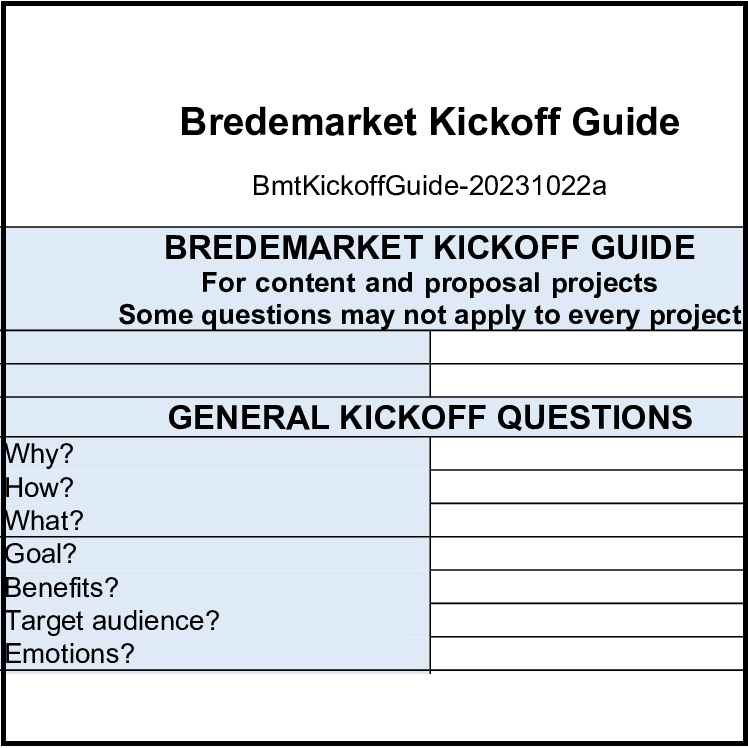
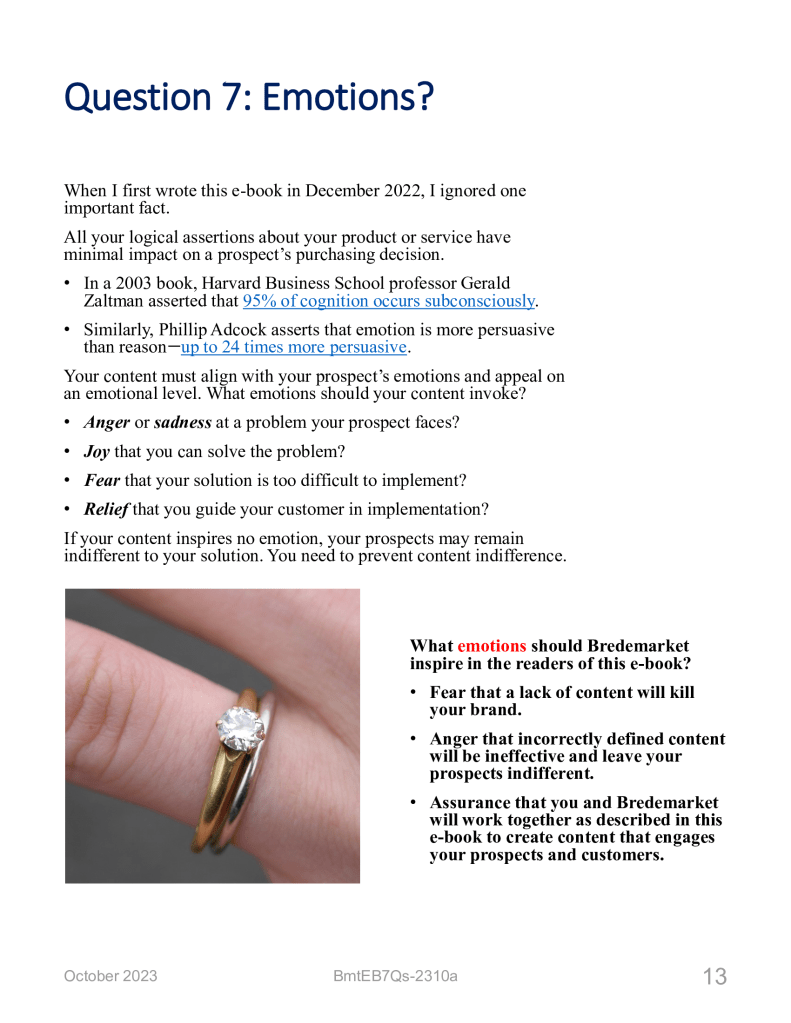
I decided that I needed to update my process, as well as that e-book, and add a seventh question, “Emotions?”
For those who have raced ahead to this section, Bredemarket has a new downloadable e-book (revised from an earlier version) entitled “Seven Questions Your Content Creator Should Ask You.” It includes a new page, “Emotions,” as well as minor revisions to the other pages. You can download it below.
You’ll have to download the e-book to find the answers to the remaining four questions.

On September 30, FindBiometrics and Acuity Market Intelligence released the production version of the Biometric Digital Identity Prism Report. You can request to download it here.
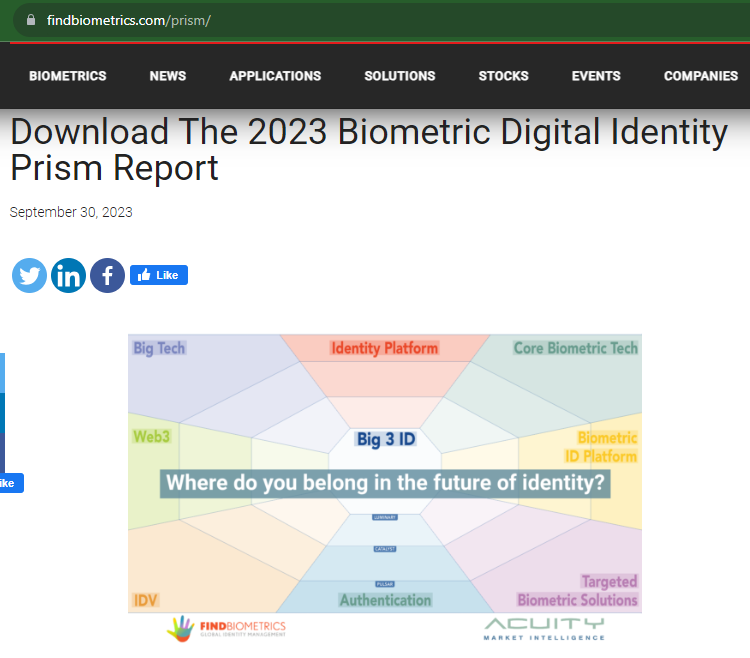
Central to the concept of the Biometric Digital Identity Prism is the idea of the “Big 3 ID,” which the authors define as follows:
These firms have a global presence, a proven track record, and moderate-to-advanced activity in every other prism beam.
From “The Biometric Digital Identity Prism Report, September 2023.”
The Big 3 are IDEMIA, NEC, and Thales.
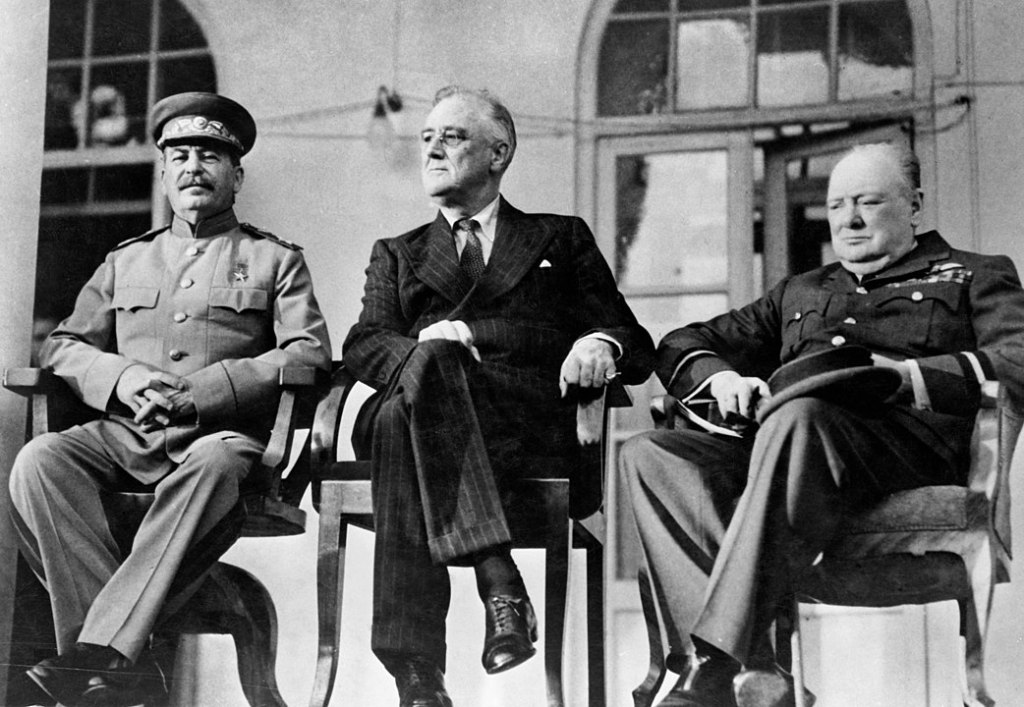
But FindBiometrics and Acuity Market Intelligence didn’t invent the Big 3. The concept has been around for 40 years. And two of today’s Big 3 weren’t in the Big 3 when things started. Oh, and there weren’t always 3; sometimes there were 4, and some could argue that there were 5.
So how did we get from the Big 3 of 40 years ago to the Big 3 of today?
Back in 1986 (eight years before I learned how to spell AFIS) the American National Standards Institute, in conjunction with the National Bureau of Standards, issued ANSI/NBS-ICST 1-1986, a data format for information interchange of fingerprints. The PDF of this long-superseded standard is available here.
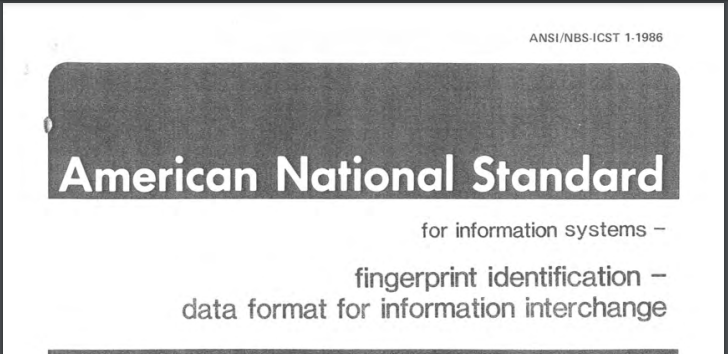
When creating this standard, ANSI and the NBS worked with a number of law enforcement agencies, as well as companies in the nascent fingerprint industry. There is a whole list of companies cited at the beginning of the standard, but I’d like to name four of them.
While all four of these companies produced computerized fingerprinting equipment, three of them had successfully produced automated fingerprint identification systems, or AFIS. As Chapter 6 of the Fingerprint Sourcebook subsequently noted:
After the success of the San Francisco and California AFIS systems, many other jurisdictions began clamoring for AFIS of their own, and turned to these three vendors to supply them.
But in 1990, these three firms were joined by a fourth upstart, Cogent Systems of South Pasadena, California.
While customers initially preferred the Big 3 to the upstart, Cogent Systems eventually installed a statewide system in Ohio and a border control system for the U.S. government, plus a vast number of local systems at the county and city level.
Between 1991 and 1994, the (Immigfation and Naturalization Service) conducted several studies of automated fingerprint systems, primarily in the San Diego, California, Border Patrol Sector. These studies demonstrated to the INS the feasibility of using a biometric fingerprint identification system to identify apprehended aliens on a large scale. In September 1994, Congress provided almost $30 million for the INS to deploy its fingerprint identification system. In October 1994, the INS began using the system, called IDENT, first in the San Diego Border Patrol Sector and then throughout the rest of the Southwest Border.
From https://oig.justice.gov/reports/plus/e0203/back.htm
I was a proposal writer for Printrak (divested by De La Rue) in the 1990s, and competed against Cogent, Morpho, and NEC in AFIS procurements. By the time I moved from proposals to product management, the next redefinition of the “big” vendors occurred.
There are a lot of name changes that affected AFIS participants, one of which was the 1988 name change of the National Bureau of Standards to the National Institute of Standards and Technology (NIST). As fingerprints and other biometric modalities were increasingly employed by government agencies, NIST began conducting tests of biometric systems. These tests continue to this day, as I have previously noted.
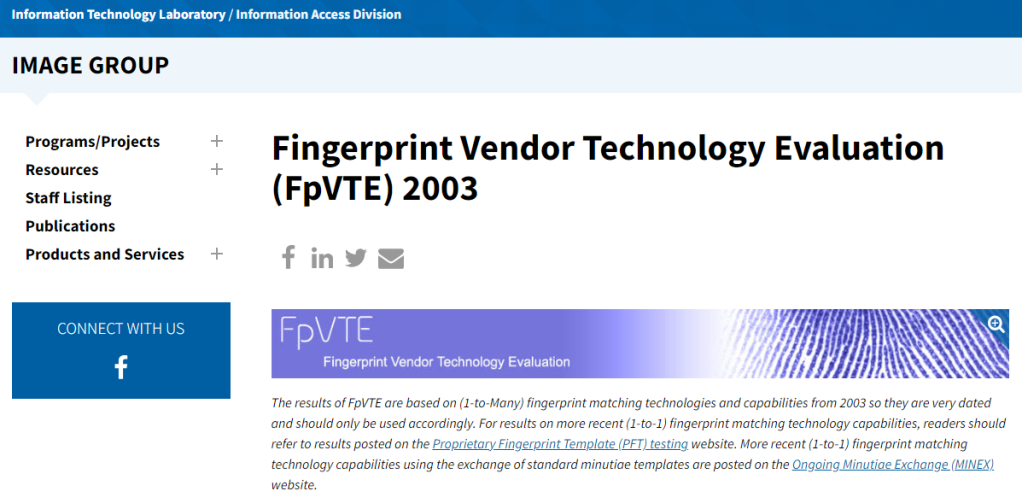
One of NIST’s first tests was the Fingerprint Vendor Technology Evaluation of 2003 (FpVTE 2003).
For those who are familiar with NIST testing, it’s no surprise that the test was thorough:
FpVTE 2003 consists of multiple tests performed with combinations of fingers (e.g., single fingers, two index fingers, four to ten fingers) and different types and qualities of operational fingerprints (e.g., flat livescan images from visa applicants, multi-finger slap livescan images from present-day booking or background check systems, or rolled and flat inked fingerprints from legacy criminal databases).
From https://www.nist.gov/itl/iad/image-group/fingerprint-vendor-technology-evaluation-fpvte-2003
Eighteen vendors submitted their fingerprint algorithms to NIST for one or more of the various tests, including Bioscrypt, Cogent Systems, Identix, SAGEM MORPHO (SAGEM had acquired Morpho Systems), NEC, and Motorola (which had acquired Printrak). And at the conclusion of the testing, the FpVTE 2003 summary (PDF) made this statement:
Of the systems tested, NEC, SAGEM, and Cogent produced the most accurate results.
Which would have been great news if I were a product manager at NEC, SAGEM, and Cogent.
Unfortunately, I was a product manager at Motorola.
The effect of this report was…not good, and at least partially (but not fully) contributed to Motorola’s loss of its long-standing client, the Royal Canadian Mounted Police, to Cogent.
So what happened in the years after FpVTE was released? Opinions vary, but here are three possible explanations for what happened next.
Now I probably have a bit of bias in this area since I was a Motorola employee, but I maintain that Motorola overcame this temporary setback and vaulted back into the Big 4 within a couple of years. Among other things, Motorola deployed a national 1000 pixels-per-inch (PPI) system in Sweden several years before the FBI did.
Motorola’s arch-enemies at Sagem Morpho had a different opinion, which was revealed when the state of West Virginia finally got around to deploying its own AFIS. A bit ironic, since the national FBI AFIS system IAFIS was located in West Virginia, or perhaps not.
Anyway, Motorola had a very effective sales staff, as was apparent when the state issued its Request for Proposal (RFP) and explicitly said that the state wanted a Motorola AFIS.
That didn’t stop Cogent, Identix, NEC, and Sagem Morpho from bidding on the project.
After the award, Dorothy Bullard and I requested copies of all of the proposals for evaluation. While Motorola (to no one’s surprise) won the competition, Dorothy and I believed that we shouldn’t have won. In particular, our arch-enemies at Sagem Morpho raised a compelling argument that it should be the chosen vendor.
Their argument? Here’s my summary: “Your RFP says that you want a Motorola AFIS. The states of Kansas (see page 6 of this PDF) and New Mexico (see this PDF) USED to have a Motorola AFIS…but replaced their systems with our MetaMorpho AFIS because it’s BETTER than the Motorola AFIS.”
But were Cogent, Motorola, NEC, and Sagem Morpho the only “big” players?
While the Big 3/Big 4 took a lot of the headlines, there were a number of other companies vying for attention. (I’ve talked about this before, but it’s worthwhile to review it again.)
In short, there were a bunch of small identity companies all over the place.
But in the course of a few short years, Dr. Joseph Atick (initially) and Robert LaPenta (subsequently) concentrated on acquiring and merging those companies into a single firm, L-1 Identity Solutions.
These multiple mergers resulted in former competitors Identix and Digital Biometrics, and former competitors Viisage and Visionics, becoming part of one big happy family. (A multinational big happy family when you count Bioscrypt.) Eventually this company offered fingerprint, face, iris, driver’s license, and passport solutions, something that none of the Big 3/Big 4 could claim (although Sagem Morpho had a facial recognition offering). And L-1 had federal contracts and state contracts that could match anything that the Big 3/Big 4 offered.
So while L-1 didn’t have a state AFIS contract like Cogent, Motorola, NEC, and Sagem Morpho did, you could argue that L-1 was important enough to be ranked with the big boys.
So for the sake of argument let’s assume that there was a Big 5, and L-1 Identity Solutions was part of it, along with the three big boys Motorola, NEC, and Safran (who had acquired Sagem and thus now owned Sagem Morpho), and the independent Cogent Systems. These five companies competed fiercly with each other (see West Virginia, above).
In a two-year period, everything would change.
Hang on to your seats.
If you’re keeping notes, the Big 5 have now become the Big 3: 3M, Safran, and NEC (the one constant in all of this).
While there were subsequent changes (3M sold Cogent and other pieces to Gemalto, Safran sold all of Morpho to Advent International/Oberthur to form IDEMIA, and Gemalto was acquired by Thales), the Big 3 has remained constant over the last decade.
And that’s where we are today…pending future developments.
This was written by John Bredehoft of Bredemarket.
If you work for the Big 3 or the Little 80+ and need marketing and writing services, the biometric content marketing expert can help you. There are several ways to get in touch:




 Bredemarket