The expurgated version. Original here.
If you need a trusted analysis partner, schedule a free meeting: https://bredemarket.com/mark/

Identity/biometrics/technology marketing and writing services

The expurgated version. Original here.
If you need a trusted analysis partner, schedule a free meeting: https://bredemarket.com/mark/
When I took my earlier post “Bredemarket Helps Your Firm Turn Impossible Ambitions Into Actionable Innovation” and repurposed it as a Wildebeest Speaks LinkedIn article “Analyze the ‘Impossible,'” I took the opportunity to write it a little differently.
For example, I extracted some of the material from the video and placed it in the article in text form.
And my clients turn to me to help with some very specific tasks:
Market analysis.
Competitive analysis.
Product analysis.
Pilots and deployments.
Grants and opportunities.
Laws and regulations.
I’ve worked on all of these things for multiple clients, usually following a process of kicking off the project, periodically (e.g., weekly) reporting status, and issuing a final report. This often also involves some project management of keeping track of various tasks.
And I told part (not all) of the story of my last few months as an IDEMIA employee: how our grand plans to expand into stadiums kinda sorta fell apart when all the stadiums closed due to COVID-19.
Those things happen.
But the main point remained.
Do you need a trusted partner with over 30 years of identity/biometric experience?
Then schedule a free meeting with Bredemarket…
And here’s the video again:
Your competitors say your ambitions are impossible.
You wonder if your competitors are wrong.
But you need services from a trusted partner to help you analyze the problem and track the project.
Bredemarket can help.
Obviously I can’t give examples of the analysis work I have performed for clients…or that I am currently performing.
But if you had told me in the 1990s the kinds of projects I’d be managing in the 2020s…my head would have spun.

Proactive project management is possible, as the (anonymized) Bredemarket example later in this post illustrates. But first I am compelled to talk about an uncomfortable topic, due dates.
Some people in a company don’t know what a “due date” is. If the work isn’t done by this Friday, it will get done by next Friday. Or whenever.
But there’s one part of your company that lives and breathes due dates. I talked about this in March 2025 as it relates to Bredemarket’s clients.
“I still enjoy the satisfaction when my client submits a persuasive, compliant proposal. A day before the due date, even.”
Which is better than submitting a proposal AFTER the due date.
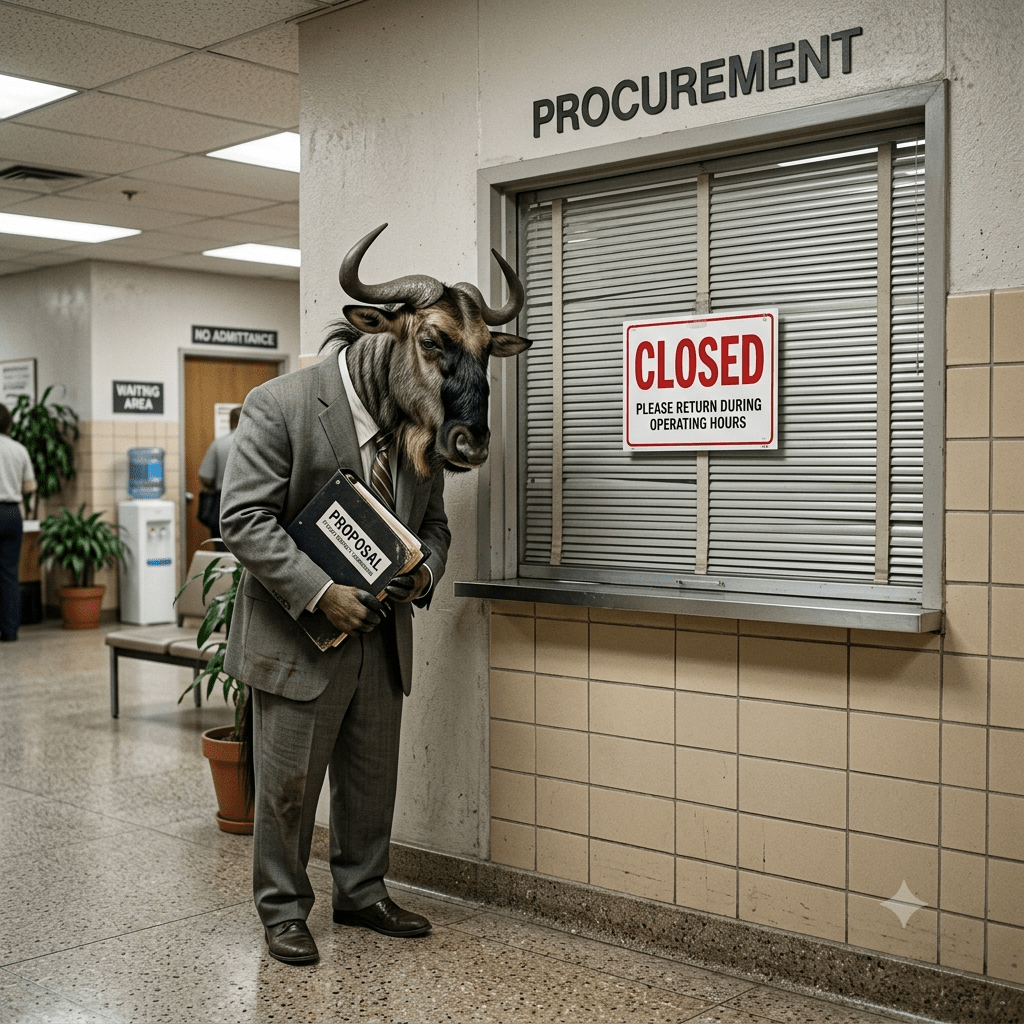
Why does Proposals tend to care more about due dates than, say, Product Marketing?
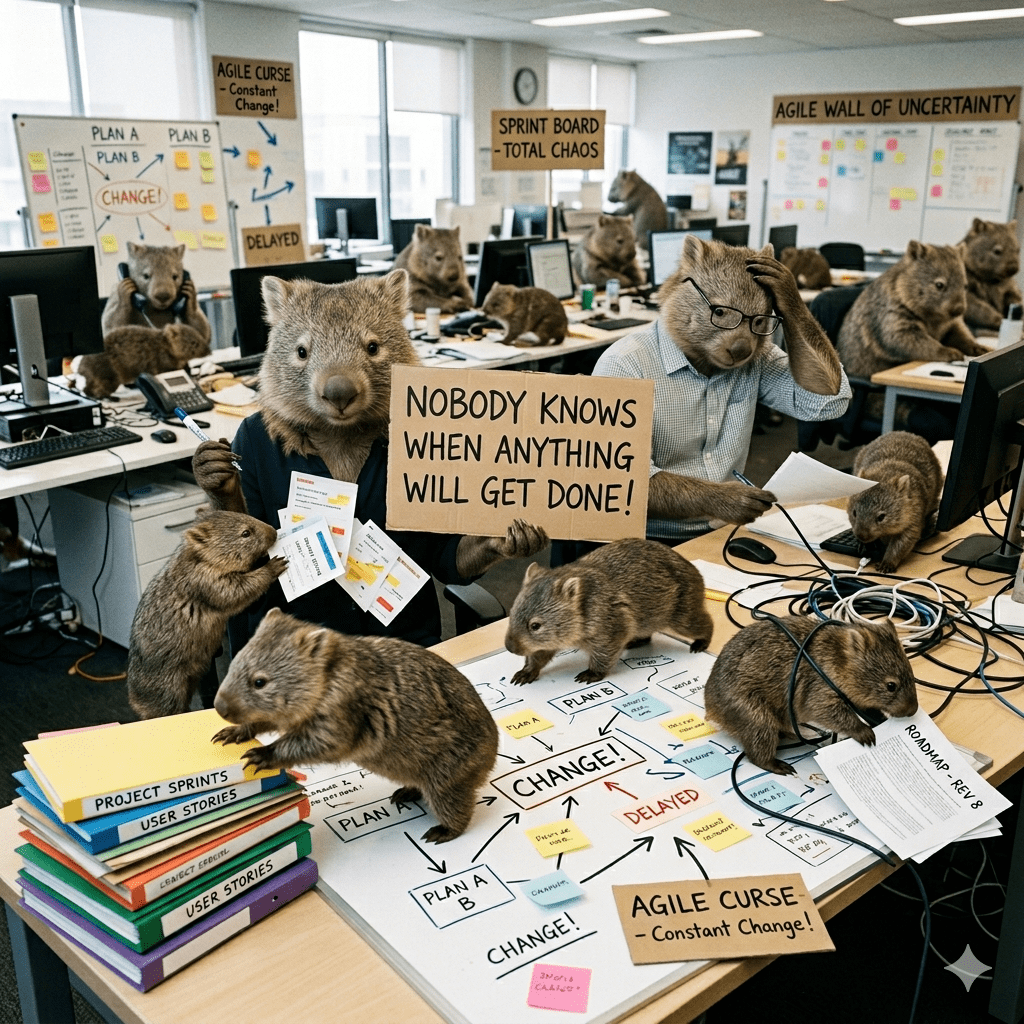
Because the latter due dates are set internally. And the “agile curse” is that you can, and often do, change anything on a whim.
Contrast with proposal due dates that are set externally by an outside entity such as a government agency that receives funding for a particular fiscal year. Funds that you use or lose.
For your organization’s product marketing initiatives, do you adopt a “we’ll do it when we get to it” approach?
You don’t have to.
Last week my client and I were getting proactive about an end customer’s anticipated requests. I was recording these in Excel.
Then I added an “anticipated due date” column.
Which allowed me to ask a question.
To preserve client and end customer confidentiality, I have obfuscated and fictionalized the question that I asked.
“Hey, Fernando, the widget manufacturer says that they will want a user guide, whatever that is.

“I doubt they’ll want it when they deliver their green widget pitch in Brooklyn next Tuesday, but is there a chance they’ll need it when they meet with Jay Leno’s folks the following week?”
Proactive project management involves transparency between the outside project manager (me), the client, and the end customer. Since we knew that the end customer was meeting with the organization of Jay Leno, we could ask the right questions and schedule a deliverable before the end customer even asked.

And we had a due date.
But what does this mean for you?
It means that Bredemarket can proactively manage your projects, whether they involve content, proposals, or analysis.
I provide product management consulting for identity, biometric, and technology products. In fact, I am a leading biometric product marketing consultant. (Among others.)

If you need an outside consultant to manage your product marketing projects, let’s talk.
Let me help you…forge your future
.
My recent video only used 8 seconds of the 30 second Google Lyria song “The Perpetual Roadmap.”
If you’d like to hear all of Google Lyria’s artificial ruminations on the topic, here they are.
Agile curse.
Constant change.

One of Bredemarket’s clients is microscopically close to achieving an important milestone with a major customer. As project manager I’m performing the issue tracking and am happy. It is premature to announce this customer milestone, but hopefully the day will come.
The only drawback was that a last-minute Bredemarket / client / customer call prevented me from attending Tuesday’s live iProov / Ingenium webinar on independent testing to standards such as NIST SP 800-63-4 and CEN/TS 18099. But that’s why webinars have replays.
The Bredemarket post below is not directly related to the webinar, but is tangentially related since it discusses independent testing.

How do you track project progress when people resist project tracking?
Track the project and don’t tell them.
Double-secret project management.


What is the proper reaction when things seem insurmountable?
Sometimes they aren’t insurmountable…but sometimes they are.

Back in July, I shared a post and a video based upon the simple phrase “I Ask, Then I Act.”
To be honest, this is not a revolutionary insight. A lot of people have described the things that do or do not happen before you take action.
But on Wednesday I ran into another phrase that urges that you do something BEFORE you act, but it uses a different formulation than my two-step process.

I attended the Small Business Expo in Pasadena on Wednesday, at which the first keynote was delivered by Dave Charest of Constant Contact. He let us know at the beginning of his keynote that he was going to repeat the following throughout:
“Review. Plan. Execute.”
Unlike me, Charest got a little more granular about what happens when you execute / act. In a LinkedIn post from a couple of weeks ago, Charest talked about each of the three parts of RPE. Yeah, he has an acronym. Because AARC.[1]
✅ Review: Where are you right now?
You don’t need to be an expert. Just be honest about what’s working and what’s not.
✅ Plan: What’s the one thing you can do to support your goal?
Not ten things. One. Focus is how you win.
✅ Execute: Block time on your calendar to actually do the work.
If you don’t protect that time, distractions will take it from you.
Charest’s “review” step maps to my “ask” step, but I didn’t explicitly call out the “plan” step like Charest did. But I have talked about “focus” a lot, which is the emphasis of Charest’s “plan” step. Don’t go all over the place. Just do one thing. He parallels Wally Schirra’s thoughts on this issue.
“With my eyes fixed on the control panel, studiously ignoring the view, I began a slow, four degrees per second, cartwheel.”
When Schirra went into space as part of the Project Mercury program, he was focused on the goal of completing his engineering tasks. While the view from space was spectacular, he ignored it and focused on the control panel. And the engineering tasks were themselves focused, explicitly avoiding “Larry Lightbulb” experiments. This was a reaction to the prior Scott Carpenter mission.
But whether you review and plan, or if you just act, I believe you need to prepare before you do the thing.
[1] AARC: Acronyms are really cool.

 Bredemarket