The Bangladesh Identities Weren’t Synthetic Identities, But They Failed The “Somewhat You Why” Test

Andrew Austin at Sardine has written an eye-catching blog post that discusses a fraud ring exhibiting unusual patterns.

  • Some fraudsters use synthetic identities to fool systems, but good systems can catch the synths.
  • But other fraudsters use mules and other techniques that pass identity verification checks, because the people are REAL people.
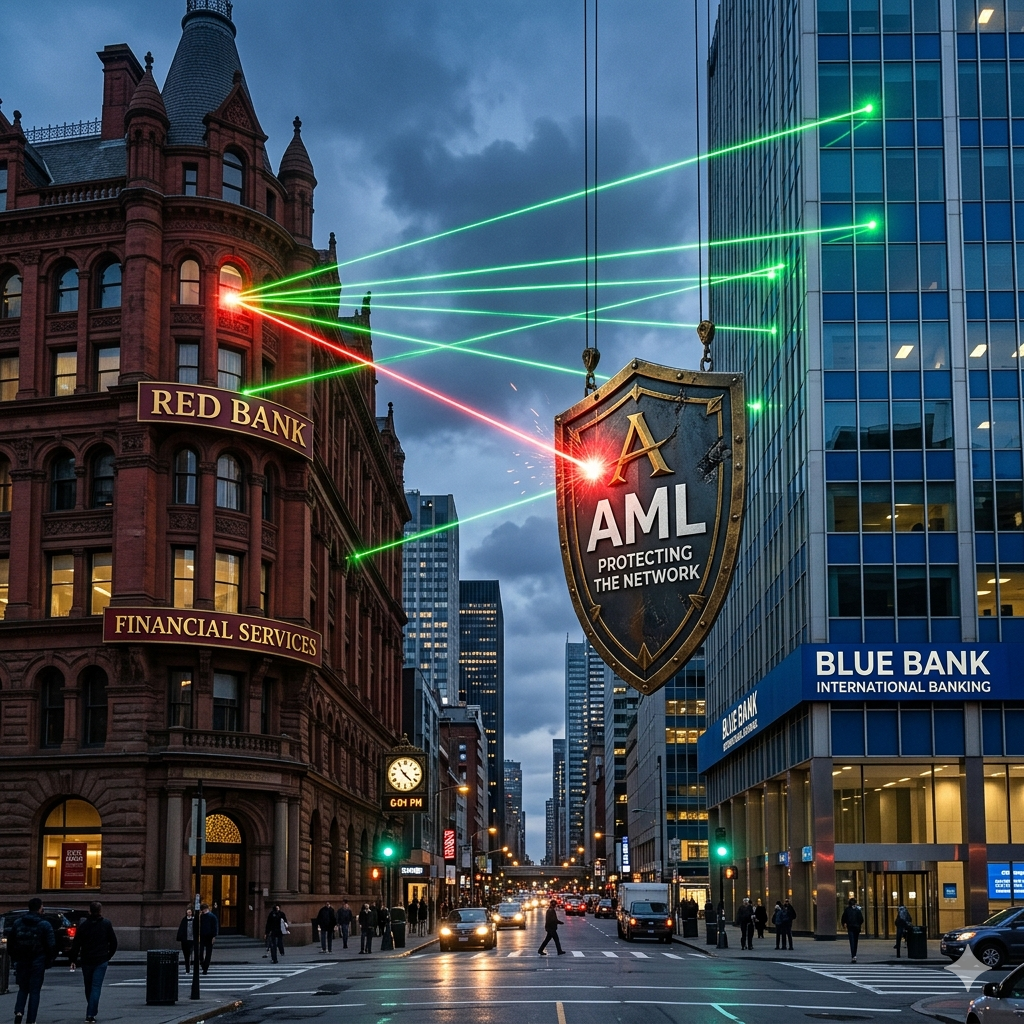
Google Gemini.

Austin’s post discusses an example of the latter.

Sign-up patterns in Bangladesh

In this particular case (Example 3 of 3), a gig economy company had discovered a fraud ring operating out of Bangladesh, but the identities were those of real people. The investigator noticed something right off the bat:

“When we looked into it, something was off: all of the locations seemed to be clustered in a few small towns.”

But wait…it gets better.

“The fraudsters were going door-to-door and signing up anyone who was willing to share their information….

“Dozens of routes snaked through neighborhoods where new accounts were being created, each of them running from North to South and then back to their starting point on the next street over.”

It turns out that the fraudsters were going down each street, paying people to borrow their identities, and then moving on to the next street.

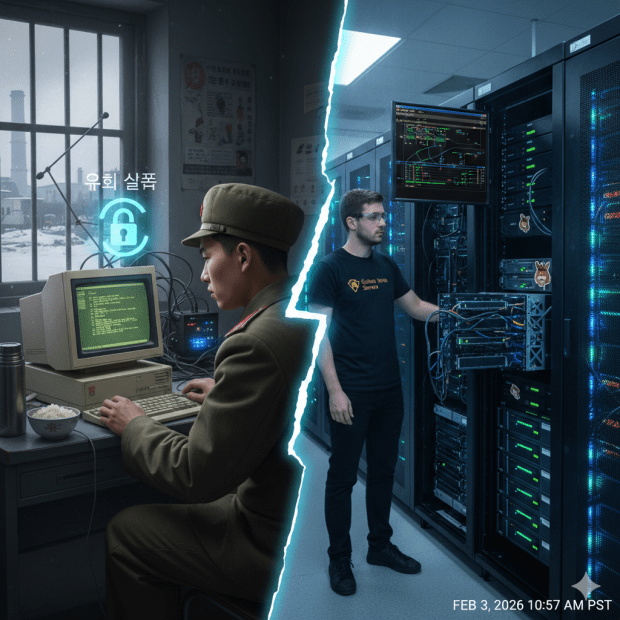
Google Gemini.

How identity factors (in the plural) identified the fraud

In Bredemarket’s view, this raised alarms surrounding two factors of identity verification and authentication.

  • The first was geolocation. Once the identities were plotted, it seems strange that all of the identities lined up down each street and on to the next street.
  • The second is what I call somewhat you why. It’s reasonable to believe that if person A signs up for a service, their neighbors may sign up also. But it’s NOT reasonable to believe that people would sign up for the service in address order, moving from street to street. “No, Jim, 158 1st street can’t sign up for the service! 156 1st street hasn’t signed up yet!”

Now even if you don’t believe that “somewhat you why” is a real factor (Sardine prefers to talk about “device and behavior intelligence“), it’s clear that fraudsters were using the identities of real people to engage in a massive fraud scheme.

Look at the patterns, and you can discover from unusual ones.

And now a word from our sponsor

And if you’re wondering why I discuss SIX factors of identity verification and authentication (rather than five or three), check out my ebook “Proving Humanity: The Six Factors of Identity Verification and Authentication.”

Four pages from "Proving Humanity: The Six Factors of Identity Verification and Authentication" by John E. Bredehoft, Bredemarket. Click on the image to purchase.

Dry To The Bone

You’re not gonna hear this song about dry fingerprint ridges on Top 40 radio. But for a select few biometric product marketers, it highlights a critically important issue.

“Dry To The Bone #1.” Google Lyria.

Why?

Because dry fingerprint ridges, while not a common worry among the general populace, ARE a concern among law enforcement, homeland security, financial institution, and other professionals who depend on high-quality friction ridge capture to solve crimes and identify people.

And these people desperately need products that accurately capture fingerprints in challenging conditions.

And the product vendors need to communicate their product benefits to potential vendors.

That’s where Bredemarket comes to save the day.

Not with music.

“Tracing the Ridge.” Google Lyria.

(Thankfully.)

Through Bredemarket, I work with you to develop the customer-focused, benefits-oriented words that move your prospects toward your fingerprint capture solution.

If you want prospects to buy your identity product, schedule a free meeting with the biometric product marketing expert.

Stop losing prospects!

And…I couldn’t resist one more.

“Dry To The Bone #2.” Google Lyria.

Hype

The picture above and text below were authored by Google Gemini.

Get ready to maximize your reality because our quantum-powered, generative AI agent is autonomously deploying a CRISPR-edited, synthetic biopolymer directly into your 5G-connected smart-home fabricator to 3D-print a hyper-personalized, self-driving robotaxi—instantly minting the entire experience as a fractionalized, Web3 DeFi asset with a secure NFT deed that grants your holographic avatar VIP entry into a fully decentralized, spatial-computing metaverse!

Why Identity/Biometric Product Marketers Should Target Organizations Instead of Enterprises

Since I am not really a business-to-consumer guy, I tend to think of hungry people (target audiences) who number in the hundreds or thousands rather than millions. For example, if you want to sell your identity/biometric solutions to banks with total assets of over US$100 billion, there are only about 100 of them.

Marketing products in this environment requires a completely different mindset. Rather than hiring a Kardashian or Jenner as your influencer or spokesperson, you’d hire a Buffett. (If you could. You probably can’t, unless he owns the company.)

Therefore you need to concentrate on the players who make buying decisions, from the CxO level down to the users. That is the way to get your product into the enterprise.

But if enterprise penetration is your goal, you’re doomed to failure.

Why an enterprise-only strategy will fail

For example, enterprises usually don’t buy automated biometric identification systems. Government agencies do.

Believe me, I know. Many identity/biometric firms sell to the U.S. Department of Homeland Security, and their orders have been disrupted on and off since last October.

One acronym that I love to use is B2G—business-to-government. But I’ve learned the hard way that many people have never heard this acronym before. (Scan the job descriptions and spot the ones for marketing to government agencies that require “B2B” experience.)

So Bredemarket doesn’t seek clients that only sell to enterprises. I seek those that sell to organizations, both private and public.

If your identity/biometric or technology company markets products to organizations and you need strategic and tactical assistance, talk go Bredemarket.

Bredemarket: Services, Process, and Pricing.

IPOs New and Old (ROC, Printrak)

Earlier this morning, ROC (formerly Rank One Computing) made an announcement:

“#ROC announces the pricing of its Initial Public Offering of 4,000,000 shares of its common stock at a public offering price of $6.00 per share, which was the high end of the range, for total gross proceeds of $24 million, before deducting underwriting discounts and commissions and other offering expenses.”

Six dollars a share doesn’t seem that impressive, but all companies have to start somewhere. If I recall correctly, Printrak’s price was in that range when it started public trading (under the then-trendy ticker “AFIS“) back in 1996.

ROC was able to secure its preferred ticker “ROC.” (Sorry Alcatraz.) And the stock is already trading; see Yahoo Finance for the latest movements.

Incidentally, I should state my views on the success of an IPO.

  • Many think that if a stock is initially priced at $6.00, and the price zooms to $100 by the end of the day, the IPO is a success.
  • I maintain that it’s a failure. A company wants to maximize its revenue, and if the stock was truly worth $100, it should have priced its IPO at $100 to realize maximum revenue.
  • Conversely, if the stock opens at $6 and the end of day price is at about that level, then the IPO is a success because the company received the maximum revenue.
  • Needless to say this doesn’t take employee holdings into account. But if the goal is to maximize IPO revenue, then a price that DOESN’T shoot up is a sign of success.

The United States’ 16 Critical Infrastructure Sectors

I was working with these sectors back when I was at MorphoTrak.

“There are 16 critical infrastructure sectors whose assets, systems, and networks, whether physical or virtual, are considered so vital to the United States that their incapacitation or destruction would have a debilitating effect on security, national economic security, national public health or safety, or any combination thereof. Presidential Policy Directive 21 (PPD-21): Critical Infrastructure Security and Resilience advances a national policy to strengthen and maintain secure, functioning, and resilient critical infrastructure. This directive supersedes Homeland Security Presidential Directive 7.”

The sectors are:

See:

https://www.cisa.gov/topics/critical-infrastructure-security-and-resilience/critical-infrastructure-sectors

https://www.cisa.gov/resources-tools/resources/presidential-policy-directive-ppd-21-critical-infrastructure-security-and

Another Voice Deepfake Fraud Scam

Time for another voice deepfake scam.

This one’s in Schwyz, in Switzerland, which makes reading of the original story somewhat difficult. But we can safely say that “Eine unbekannte Täterschaft hat zur Täuschung künstliche Intelligenz eingesetzt und so mehrere Millionen Franken erbeutet” is NOT a good thing.

And that’s millions of Swiss francs, not millions of Al Frankens.

Millions of Al Frankens.

Luckily, someone at Biometric Update speaks German well enough to get the gist of the story.

“Deploying audio manipulated to sound like a trusted business partner, fraudsters bamboozled an entrepreneur from the canton of Schwyz into transferring “several million Swiss francs” to a bank account in Asia.”

And what do the canton police recommend? (Google Translated)

“Be wary of payment requests via telephone or voice message, even if the voice sounds familiar.”

Updates on Hungary’s FaceKom and “Beneficial Ownership”

Masha Borak of Biometric Update is writing about FaceKom again.

I discussed Borak’s previous article on FaceKom, which noted the alleged ties between FaceKom and the Hungarian government. The whole thing is a classic example of BENEFICIAL ownership, in which someone who is not the legal owner of a company may still benefit from it.

Borak returned to the theme in the current post:

“FaceKom, the identity verification company used by the Hungarian national digital identity program, has been acquired by major local IT and telecom group, 4iG Informatikai (4iG IT). The deal is now attracting attention among media outlets and political watchers due to the companies’ relationship with Prime Minister Viktor Orbán….

“Recent 4iG’s purchases, however, have been raising questions over the company’s reported links to the Hungarian government, which has been accused by critics of enriching political allies, family, and loyalists through state resources and public contracts.”

The details are in Borak’s post, including:

“4iG chairman and majority investor Gellért Jászai is known for his ties to Orbán and was invited as part of his entourage to Donald Trump’s Mar-a-Lago resort after the 2024 U.S. presidential election.”

“[FaceKom’s] previous owner is Equilor Fund Management, owned by the Central European Opportunity Private Equity Fund (CEOM)….While CEOM has no direct links with Orbán, local media investigations have discovered links with companies owned by the Prime Minister’s son-in-law, István Tiborcz.”

Mere links do not necessarily indicate illegal activity, and Hungarian law may differ from laws in other countries, but FaceKom is being watched.

How Do You Make Cash Payments to the CORRECT People?

In the United States, we forget that much of the world does NOT fill out W-9 forms.

Take the apparel industry in Jordan.

“In Jordan, the apparel sector relies heavily on a large migrant workforce, many of whom lack access to bank accounts and remain unbanked. Wage payments have traditionally been cash-based…”

To facilitate cash payments to unbanked apparel workers in Jordan, IrisGuard stepped in with its EyePay product.

“Cairo Amman Bank (CAB) Jordan…has launched a national-scale biometric cash salary payment network for unbanked workers. 

“With just a simple iris scan, employees can securely access their wages instantly, without the need for a bank account, PIN, or physical ID.”

I don’t think this is tied to an iris-based time and attendance system, but that is the obvious next step.

Three Takeaways From Carey Ransom’s Presentation on Banking Technology

Another SoCal Tech Forum presentation on Saturday, this one on banking technology from Carey Ransom of BankTech Ventures.

FoundrSpace.

Only a small reference to financial identity, but excellent nonetheless. While I live-posted the event here on my personal LinkedIn account, I wanted to summarize my three main takeaways from Bredemarket’s perspective.

One: Differentiate

Yes, community banks need to differentiate. Perhaps back in the 1980s before the advent of national banks, community banks could offer a standard suite of services for their communities. But now they’re competing against national banks that do business in their prospects’ communities, and in their prospects’ phones. (We will get to phones in a minute.)

One example Ransom gave: why do community banks offer credit cards? Are their credit cards better than the credit cards from the Really Big (Banking) Bunch? Probably not.

But unlike the Capital Ones and Chimes of the world, community banks know their communities. And they know what local businesses need, and are ideally suited to deliver this. (We will get to services in two minutes.)

Yes, I know that Bank of America may have someone attending and sponsoring your local events, but that person is not Brian Moynihan. And if you don’t know who Moynihan is, your prospects don’t know him either.

Two: Mobilize

Some time ago I wrote a post about shifts in the banking industry, most notably from imposing branch buildings to locations within grocery stores to your mobile phones.

But John, you may be saying to yourself, you can’t bank on a phone. How do you deposit checks? And how do you get cash?

Well, let’s look at this:

  • Bredemarket hasn’t received a check in over three years, but when one of my clients was paying me by check, I would use my phone to take a picture of it and deposit it.
  • And as for cash, this is needed less and less, especially since many merchants take Apple Pay and Google Pay.

In fact, bank branches are so irrelevant to today’s—and tomorrow’s—bank prospects and customers that Ransom referred to a $3 million dollar bank branch as a really expensive billboard. Probably none of the people who are reading this post WANT to go into a bank branch. 

And those that do? Here’s a little secret: if the average age of the people who bank at your bank is in their 70s, they will…um…not be long-term bank customers. The 18 year olds that will bank for decades? They’re opening accounts on their phones. Can they use a phone to open an account at your bank? And why would they do so? (See the differentiation discussion above.)

Three: Supplement

One way a bank can differentiate is via the services they offer.

At the most basic level, a bank can make money by loaning the funds they receive from deposits.

But they can offer many more services to 21st century clients, thanks to legislation such as the Gramm-Leach-Billey Act that allow financial holding companies to own financial or complementary firms.

And not just investments and wealth management.

Ransom provided an illustrative example: cybersecurity.

Banks need to have expertise in cybersecurity to stay alive, and to comply with Know Your Customer and other financial regulations.

So why not offer cybersecurity services to their customers?

This not only gives the banks another revenue stream, but also reduces the risk that their own customers will experience fraud from hacks.

Four: Market

I know I said there were three takeaways. I lied.

Ransom also noted that CapitalOne spends 20% on marketing, including everything from TV ads to cafes. Your typical community bank spends much less, maybe 1%.

How are your prospects going to know what differentiates your bank if they don’t have awareness of those differentiators?

Perhaps you need content such as case studies or white papers. Even blog posts help ensure that your firm comes up in LLM answers. Your prospects aren’t watching ABC, CBS, or NBC commercials.

From NP Digital.

Or perhaps you need proposal or analysis services.

Bredemarket, a provider of content, proposal, and analysis services to technology (and identity) firms, can work with you to create the words you need. Learn about my offerings and book a free meeting here.