AAL1 (some confidence). AAL1, in the words of NIST, “provides some assurance.” Single-factor authentication is OK, but multi-factor authentication can be used also. All sorts of authentication methods, including knowledge-based authentication, satisfy the requirements of AAL1. In short, AAL1 isn’t exactly a “nothingburger” as I characterized IAL1, but AAL1 doesn’t provide a ton of assurance.
AAL2 (high confidence). AAL2 increases the assurance by requiring “two distinct authentication factors,” not just one. There are specific requirements regarding the authentication factors you can use. And the security must conform to the “moderate” security level, such as the moderate security level in FedRAMP. So AAL2 is satisfactory for a lot of organizations…but not all of them.
AAL3 (very high confidence). AAL3 is the highest authenticator assurance level. It “is based on proof of possession of a key through a cryptographic protocol.” Of course, two distinct authentication factors are required, including “a hardware-based authenticator and an authenticator that provides verifier impersonation resistance — the same device MAY fulfill both these requirements.”
This is of course a very high overview, and there are a lot of…um…minutiae that go into each of these definitions. If you’re interested in that further detail, please read section 4 of NIST Special Publication 800-63B for yourself.
Which authenticator assurance level should you use?
NIST has provided a handy dandy AAL decision flowchart in section 6.2 of NIST Special Publication 800-63-3, similar to the IAL decision flowchart in section 6.1 that I reproduced earlier. If you go through the flowchart, you can decide whether you need AAL1, AAL2, or the very high AAL3.
One of the key questions is the question flagged as 2, “Are you making personal data accessible?” The answer to this question in the flowchart moves you between AAL2 (if personal data is made accessible) and AAL1 (if it isn’t).
So what?
Do the different authenticator assurance levels provide any true benefits, or are they just items in a government agency’s technical check-off list?
Perhaps the better question to ask is this: what happens if the WRONG person obtains access to the data?
Could the fraudster cause financial loss to a government agency?
Threaten personal safety?
Commit civil or criminal violations?
Or, most frightening to agency heads who could be fired at any time, could the fraudster damage an agency’s reputation?
If some or all of these are true, then a high authenticator assurance level is VERY beneficial.
One advantage of an open source project is that there are far fewer secrets to hide. If a commercial firm develops biometric products, it has a responsibility to its investors to not release sensitive information.
Although findings…describe potential attack surfaces and are of high or medium severity, (Trail of Bits’) analysis did not uncover vulnerabilities in the Orb’s code…
In a recent project for a Bredemarket client, I researched how a particular group of organizations identified their online customers. Their authentication methods fell into two categories. One of these methods was much better than the other.
Multifactor authentication
Some of the organizations employed robust authentication procedures that included more than one of the five authentication factors—something you know, something you have, something you are, something you do, and/or somewhere you are.
For example, an organization may require you to authenticate with biometric data, a government-issued identification document, and sometimes some additional textual or location data.
Other organizations employed only one of the factors, something you know.
Not something as easy to crack as a password.
Instead they used the supposedly robust authentication method of “knowledge-based authentication,” or KBA.
The theory behind KBA is that if you ask multiple questions of a person based upon data from various authoritative databases, the chance of a fraudster knowing ALL of this data is minimal.
Sadly, Craig himself was recently a victim of fraud, and it took him several hours to resolve the issue.
I’m not going to repeat all of Craig’s story, which you can read in his LinkedIn post. But I do want to highlight one detail.
When the fraudster took over Craig’s travel-related account, the hotel used KBA to confirm that the fraudster truly was Steve Craig, specifically asking “when and where was your last hotel stay?”
Only one problem: the “last hotel stay” was one from the fraudster, NOT from Craig. The scammer fraudulently associated their hotel stay with Craig’s account.
This spurious “last hotel stay” allowed the fraudster to not only answer the “last hotel stay” question correctly, but also to take over Craig’s entire account, including all of Craig’s loyalty points.
And with that one piece of knowledge, Craig’s account was breached.
The “knowledge” used by knowledge based authentication
Craig isn’t the only one who can confirm that KBA by itself doesn’t work. I’ve already shared an image from an Alloy article demonstrating the failures of KBA, and there are many similar articles out there.
The biggest drawback of KBA is the assumption that ONLY the person can answer all the knowledge corrections correctly is false. All you have to do is participate in one of those never-ending Facebook memes that tell you something based on your birthday, or your favorite pet. Don’t do it.
Ease of implementation. It’s easier to implement KBA than it is to implement biometric authentication and/or ID card-based authentication.
Ease of use. It’s easier to click on answers to multiple choice questions than it is to capture an ID card, fingerprint, or face. (Especially if active liveness detection is used.)
Ease of remembrance. As many of us can testify, it’s hard to remember which password is associated with a particular website. With KBA, you merely have to answer a multiple choice quiz, using information that you already know (at least in theory).
Let me add one more:
Presumed protection of personally identifiable information (PII). Uploading your face, fingerprint, or driver’s license to a mysterious system seems scary. It APPEARS to be a lot safer to just answer some questions.
But in my view, the risks that someone else can get all this information (or create spurious information) and use it to access your account outweigh the benefits listed above. Even Fraud.com, which lists the advantages of KBA, warns about the risks and recommend coupling KBA with some other authentication method.
But KBA isn’t the only risky authentication factor out there
We already know that passwords can be hacked. And by now we should realize that KBA could be hacked.
But frankly, ANY single authentication can be hacked.
After Steve Craig resolved his fraud issue, he asked the hotel how it would prevent fraud in the future. The hotel responded that it would use caller ID on phone calls made to the hotel. Wrong answer.
While the biometric vendors are improving their algorithms to detect deepfakes, no one can offer 100% assurance that even the best biometric algorithms can prevent all deepfake attempts. And people don’t even bother to use biometric algorithms if the people on the Zoom call LOOK real.
While the ID card analysis vendors (and the ID card manufacturers themselves) are constantly improving their ability to detect fraudulent documents, no one can offer 100% assurance that a presented driver’s license is truly a driver’s license.
Geolocation has been touted as a solution by some. But geolocation can be hacked also.
In my view, the best way to minimize (not eliminate) fraudulent authentication is to employ multiple factors. While someone could create a fake face, or a fake driver’s license, or a fake location, the chances of someone faking ALL these factors are much lower than the chances of someone faking a single factor.
You knew the pitch was coming, didn’t you?
If your company has a story to tell about how your authentication processes beat all others, I can help.
Most importantly, why this may, or may not, impact you.
(Long-time readers of the Bredemarket blog see what I did there. In reverse.)
What are WhatsApp channels?
Meta, the company that owns Facebook, Instagram, WhatsApp, Threads, and half the known universe, wants to keep people on those social platforms. They can check out any time they like, but they can never leave.
So now WhatsApp, the service that was originally intended for PRIVATE communications between people that knew each other’s phone numbers, is now your latest source for Kardashians news. Seriously; there are millions of people who follow the Daily Mail’s “Kardashians News” channel.
WhatsApp, a widely used messaging platform, has recently introduced a revolutionary feature known as WhatsApp Channels. This innovation empowers businesses to thrive by effectively communicating with a broader audience, sharing vital information, and engaging with customers in a more personalised and efficient manner.
Revolutionary? Frankly, this isn’t any more revolutionary than the similar broadcasting feature in Instagram, with one important difference: not everyone can create an Instagram channel, but anyone with WhatsApp channel access can set up their own channel.
Which got me thinking.
How I was impacted by WhatsApp Channels
I began mulling over whether I should create my own WhatsApp channel, but initially decided against it. Bredemarket has enough social media properties already, and the need to put Bredemarket stuff on WhatsApp is not pressing (the “100” WhatsApp group members get enough Bredemarket stuff already). The chances of someone ONLY being on WhatsApp and not on ANY other channel are slim.
I’d just follow the existing WhatsApp channels on identity, biometrics, and related topics.
But I couldn’t find any.
So I created my own channel last Friday entitled “Identity, Biometrics, ID Documents, and Geolocation.”
Why should you care?
Why should you care about my WhatsApp identity channel? Maybe you SHOULDN’T.
If you don’t use WhatsApp, ignore the WhatsApp channel.
If you use WhatsApp but have other sources for identity industry information (such as my Facebook group/LinkedIn page), ignore the WhatsApp channel.
But if you love WhatsApp AND identity, here is the follow link for “Identity, Biometrics, ID Documents, and Geolocation.”
As identity/biometric professionals well know, there are five authentication factors that you can use to gain access to a person’s account. (You can also use these factors for identity verification to establish the person’s account in the first place.)
Something You Are. I’ve spent…a long time with this factor, since this is the factor that includes biometrics modalities (finger, face, iris, DNA, voice, vein, etc.). It also includes behavioral biometrics, provided that they are truly behavioral and relatively static.
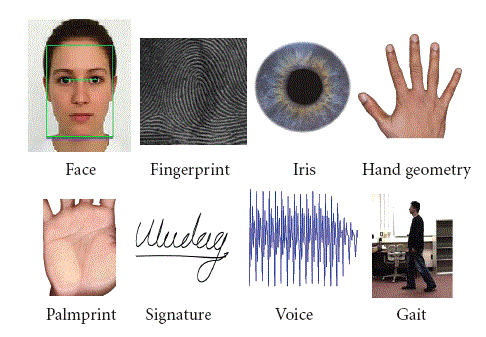
As I mentioned in August, there are a number of biometric modalities, including face, fingerprint, iris, hand geometry, palm print, signature, voice, gait, and many more.
If your firm offers an identity solution that partially depends upon “something you are,” then you need to create content (blog, case study, social media, white paper, etc.) that converts prospects for your identity/biometric product/service and drives content results.
If you ask any one of us in the identity verification industry, we’ll tell you how identity verification proves that you know who is accessing your service.
During the identity verification/onboarding step, one common technique is to capture the live face of the person who is being onboarded, then compare that to the face captured from the person’s government identity document. As long as you have assurance that (a) the face is live and not a photo, and (b) the identity document has not been tampered, you positively know who you are onboarding.
The authentication step usually captures a live face and compares it to the face that was captured during onboarding, thus positively showing that the right person is accessing the previously onboarded account.
Sound like the perfect solution, especially in industries that rely on age verification to ensure that people are old enough to access the service.
Therefore, if you are employing robust identity verification and authentication that includes age verification, this should never happen.
Eduardo Montanari, who manages delivery logistics at a burger shop north of São Paulo, has noticed a pattern: Every time an order pickup is assigned to a female driver, there’s a good chance the worker is a minor.
On YouTube, a tutorial — one of many — explains “how to deliver as a minor.” It has over 31,000 views. “You have to create an account in the name of a person who’s the right age. I created mine in my mom’s name,” says a boy, who identifies himself as a minor in the video.
Once a cooperative parent or older sibling agrees to help, the account is created in the older person’s name, the older person’s face and identity document is used to create the account, and everything is valid.
Outsmarting authentication
Yes, but what about authentication?
That’s why it’s helpful to use a family member, or someone who lives in the minor’s home.
Let’s say little Maria is at home, during her homework, when her gig economy app rings with a delivery request. Now Maria was smart enough to have her older sister Irene or her mama Cecile perform the onboarding with the delivery app. If she’s at home, she can go to Irene or Cecile, have them perform the authentication, and then she’s off on her bike to make money.
(Alternatively, if the app does not support liveness detection, Maria can just hold a picture of Irene or Cecile up to the camera and authenticate.)
The onboarding process was completed by the account holder.
The authentication was completed by the account holder.
But the account holder isn’t the one that’s actually using the service. Once authentication is complete, anyone can access the service.
So how do you stop underage gig economy use?
According to Rest of World, one possible solution is to tattle on underage delivery people. If you see something, say something.
But what’s the incentive for a restaurant owner or delivery recipient to report that their deliveries are being performed by a kid?
“The feeling we have is that, at least this poor boy is working. I know this is horrible, but here in Brazil we end up seeing it as an opportunity … It’s ridiculous,” (psychologist Regiane Couto) said.
A much better solution is to replace one-time authetication with continuous authentication, or at least be smarter in authentication. For example, a gig delivery worker could be required to authenticate at multiple points in the process:
When the worker receives the delivery request.
When the worker arrives at the restaurant.
When the worker makes the delivery.
It’s too difficult to drag big sister Irene or mama Cecile to ALL of these points.
As an added bonus, these authetications provide timestamps of critical points in the delivery process, which the delivery company and/or restaurant can use for their analytics.
Problem solved.
Except that little Maria doesn’t have any excuse and has to complete her homework.
Does your firm fight crooks who try to fraudulently use synthetic identities? If so, how do you communicate your solution?
This post explains what synthetic identities are (with examples), tells four ways to detect synthetic identities, and closes by providing an answer to the communication question.
While this post is primarily intended for identity firms who can use Bredemarket’s marketing and writing services, anyone else who is interested in synthetic identities can read along.
What are synthetic identities?
To explain what synthetic identities are, let me start by telling you about Jason Brown.
Jason Brown wasn’t Jason Brown
You may not have heard of him unless you lived in Atlanta, Georgia in 2019 and lived near the apartment he rented.
Jason Brown’s renting of an apartment isn’t all that unusual.
If you were to visit Brown’s apartment in February 2019, you would find credit cards and financial information for Adam M. Lopez and Carlos Rivera.
Now that’s a little unusual, especially since Lopez and Rivera never existed.
For that matter, Jason Brown never existed either.
A Georgia man was sentenced Sept. 1 (2022) to more than seven years in federal prison for participating in a nationwide fraud ring that used stolen social security numbers, including those belonging to children, to create synthetic identities used to open lines of credit, create shell companies, and steal nearly $2 million from financial institutions….
Cato joined conspiracies to defraud banks and illegally possess credit cards. Cato and his co-conspirators created “synthetic identities” by combining false personal information such as fake names and dates of birth with the information of real people, such as their social security numbers. Cato and others then used the synthetic identities and fake ID documents to open bank and credit card accounts at financial institutions. Cato and his co-conspirators used the unlawfully obtained credit cards to fund their lifestyles.
Talking about synthetic identity at Victoria Gardens
Here’s a video that I created on Saturday that describes, at a very high level, how synthetic identities can be used fraudulently. People who live near Rancho Cucamonga, California will recognize the Victoria Gardens shopping center, proof that synthetic identity theft can occur far away from Georgia.
Note that synthetic identity theft different from stealing someone else’s existing identity. In this case, a new identity is created.
So how do you catch these fraudsters?
Catching the identity synthesizers
If you’re renting out an apartment, and Jason Brown shows you his driver’s license and provides his Social Security Number, how can you detect if Brown is a crook? There are four methods to verify that Jason Brown exists, and that he’s the person renting your apartment.
Method One: Private Databases
One way to check Jason Brown’s story is to perform credit checks and other data investigations using financial databases.
Did Jason Brown just spring into existence within the past year, with no earlier credit record? That seems suspicious.
Does Jason Brown’s credit record appear TOO clean? That seems suspicious.
Does Jason Brown share information such as a common social security number with other people? Are any of those other identities also fraudulent? That is DEFINITELY suspicious.
This is one way that many firms detect synthetic identities, and for some firms it is the ONLY way they detect synthetic identities. And these firms have to tell their story to their prospects.
If your firm offers a tool to verify identities via private databases, how do you let your prospects know the benefits of your tool, and why your solution is better than all other solutions?
Method Two: Check That Driver’s License (or other government document)
What about that driver’s license that Brown presented? There are a wide variety of software tools that can check the authenticity of driver’s licenses, passports, and other government-issued documents. Some of these tools existed back in 2019 when “Brown” was renting his apartment, and a number of them exist today.
Maybe your firm has created such a tool, or uses a tool from a third party.
If your firm offers this capability, how can your prospects learn about its benefits, and why your solution excels?
Method Three: Check Government Databases
Checking the authenticity of a government-issued document may not be enough, since the document itself may be legitimate, but the implied credentials may no longer be legitimate. For example, if my California driver’s license expires in 2025, but I move to Minnesota in 2023 and get a new license, my California driver’s license is no longer valid, even though I have it in my possession.
Why not check the database of the Department of Motor Vehicles (or the equivalent in your state) to see if there is still an active driver’s license for that person?
The American Association of Motor Vehicle Administrators (AAMVA) maintains a Driver’s License Data Verification (DLDV) Service in which participating jurisdictions allow other entities to verify the license data for individuals. Your firm may be able to access the DLDV data for selected jurisdictions, providing an extra identity verification tool.
If your firm offers this capability, how can your prospects learn where it is available, what its benefits are, and why it is an important part of your solution?
Method Four: Conduct the “Who You Are” Test
There is one more way to confirm that a person is real, and that is to check the person. Literally.
If someone on a smartphone or videoconference says that they are Jason Brown, how do you know that it’s the real Jason Brown and not Jim Smith, or a previous recording or simulation of Jason Brown?
This is where tools such as facial recognition and liveness detection come to play.
You can ensure that the live face matches any face on record.
You can also confirm that the face is truly a live face.
In addition to these two tests, you can compare the face against the face on the presented driver’s license or passport to offer additional confirmation of true identity.
Now some companies offer facial recognition, others offer liveness detection, others match the live face to a face on a government ID, and many companies offer two or three of these capabilities.
One more time: if your firm offers these capabilities—either your own or someone else’s—what are the benefits of your algorithms? (For example, are they more accurate than competing algorithms? And under what conditions?) And why is your solution better than the others?
This is for the firms who fight synthetic identities
While most of this post is of general interest to anyone dealing with synthetic identities, this part of this post is specifically addressed to identity and biometric firms who provide synthetic identity-fighting solutions.
When you communicate about your solutions, your communicator needs to have certain types of experience.
Industry experience. Perhaps you sell your identity solution to financial institutions, or educational institutions , or a host of other industries (gambling/gaming, healthcare, hospitality, retailers, or sport/concert venues, or others). You need someone with this industry experience.
Solution experience. Perhaps your communications require someone with 29 years of experience in identity, biometrics, and technology marketing, including experience with all five factors of authentication (and verification).
Communication experience. Perhaps you need to effectively communicate with your prospects in a customer focused, benefits-oriented way. (Content that is all about you and your features won’t win business.)
If you haven’t read a Bredemarket blog post before, or even if you have, you may not realize that this post is jam-packed with additional information well beyond the post itself. This post alone links to the following Bredemarket posts and other content. You may want to follow one or more of the 13 links below if you need additional information on a particular topic:
Here’s my latest brochure for the Bredemarket 400 Short Writing Service, my standard package to create your 400 to 600 word blog posts and LinkedIn articles. Be sure to check the Bredemarket 400 Short Writing Service page for updates.
I know that I’m the guy who likes to say that it’s all semantics. After all, I’m the person who has referred to five-page long documents as “battlecards.”
But sometimes the semantics are critically important. Take the terms “factors” and “modalities.” On the surface they sound similar, but in practice there is an extremely important difference between factors of authentication and modalities of authentication. Let’s discuss.
What is a factor?
To answer the question “what is a factor,” let me steal from something I wrote back in 2021 called “The five authentication factors.”
Something You Know. Think “password.” And no, passwords aren’t dead. But the use of your mother’s maiden name as an authentication factor is hopefully decreasing.
Something You Have. I’ve spent much of the last ten years working with this factor, primarily in the form of driver’s licenses. (Yes, MorphoTrak proposed driver’s license systems. No, they eventually stopped doing so. But obviously IDEMIA North America, the former MorphoTrust, has implemented a number of driver’s license systems.) But there are other examples, such as hardware or software tokens.
Something You Are. I’ve spent…a long time with this factor, since this is the factor that includes biometrics modalities (finger, face, iris, DNA, voice, vein, etc.). It also includes behavioral biometrics, provided that they are truly behavioral and relatively static.
Something You Do. The Cybersecurity Man chose to explain this in a non-behavioral fashion, such as using swiping patterns to unlock a device. This is different from something such as gait recognition, which supposedly remains constant and is thus classified as behavioral biometrics.
Somewhere You Are. This is an emerging factor, as smartphones become more and more prevalent and locations are therefore easier to capture. Even then, however, precision isn’t always as good as we want it to be. For example, when you and a few hundred of your closest friends have illegally entered the U.S. Capitol, you can’t use geolocation alone to determine who exactly is in Speaker Pelosi’s office.
(By the way, if you search the series of tubes for reading material on authentication factors, you’ll find a lot of references to only three authentication factors, including references from some very respectable sources. Those sources are only 60% right, since they leave off the final two factors I listed above. It’s five factors of authentication, folks. Maybe.)
The one striking thing about the five factors is that while they can all be used to authenticate (and verify) identities, they are inherently different from one another. The ridges of my fingerprint bear no relation to my 16 character password, nor do they bear any relation to my driver’s license. These differences are critical, as we shall see.
What is a modality?
In identity usage, a modality refers to different variations of the same factor. This is most commonly used with the “something you are” (biometric) factor, but it doesn’t have to be.
[M]any businesses and individuals (are adopting) biometric authentication as it been established as the most secure authentication method surpassing passwords and pins. There are many modalities of biometric authentication to pick from, but which method is the best?
After looking at fingerprints, faces, voices, and irises, Aware basically answered its “best” question by concluding “it depends.” Different modalities have their own strengths and weaknesses, depending upon the use case. (If you wear thick gloves as part of your daily work, forget about fingerprints.)
ID R&D goes a step further and argues that it’s best to use multimodal biometrics, in which the two biometrics are face and voice. (By an amazing coincidence, ID R&D offers face and voice solutions.)
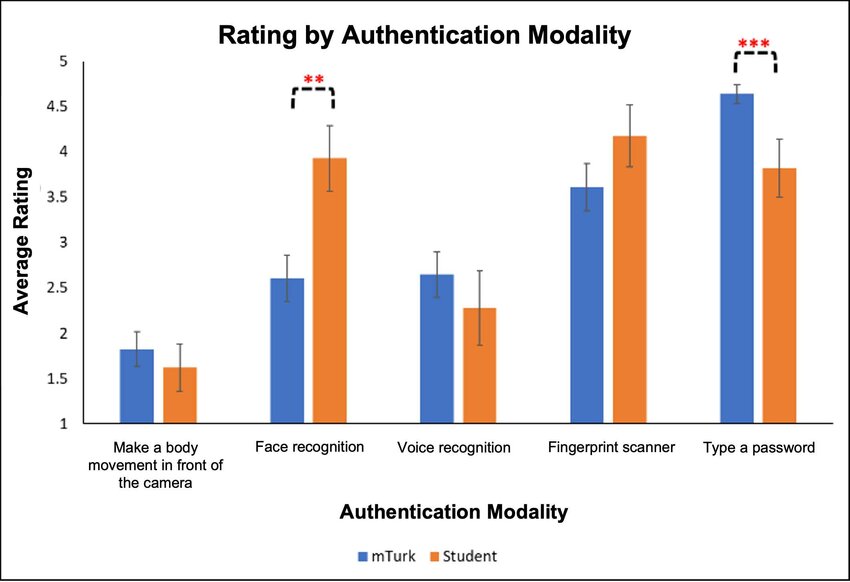
The three modalities in the middle—face, voice, and fingerprint—are all clearly biometric “something you are” modalities.
But the modality on the left, “Make a body movement in front of the camera,” is not a biometric modality (despite its reference to the body), but is an example of “something you do.”
Passwords, of course, are “something you know.”
In fact, each authentication factor has multiple modalities.
For example, a few of the modalities associated with “something you have” include driver’s licenses, passports, hardware tokens, and even smartphones.
Why multifactor is (usually) more robust than multimodal
Modalities within a single authentication factor are more closely related than modalities within multiple authentication factors. As I mentioned above when talking about factors, there is no relationship between my fingerprint, my password, and my driver’s license. However, there is SOME relationship between my driver’s license and my passport, since the two share some common information such as my legal name and my date of birth.
What does this mean?
If I’ve fraudulently created a fake driver’s license in your name, I already have some of the information that I need to create a fake passport in your name.
If I’ve fraudulently created a fake iris, there’s a chance that I might already have some of the information that I need to create a fake face.
However, if I’ve bought your Coinbase password on the dark web, that doesn’t necessarily mean that I was able to also buy your passport information on the dark web (although it is possible).
Can an identity content marketing expert help you navigate these issues?
As you can see, you need to be very careful when writing about modalities and factors.
You need a biometric content marketing expert who has worked with many of these modalities.
Actually, you need an identity content marketing expert who has worked with many of these factors.
So if you are with an identity company and need to write a blog post, LinkedIn article, white paper, or other piece of content that touches on multifactor and multimodal issues, why not engage with Bredemarket to help you out?
If you’re interested in receiving my help with your identity written content, contact me.
“Relevant security, financial services and data protection agencies have commenced inquiries and investigations to establish the authenticity and legality of the aforesaid activities, the safety and protection of the data being harvested, and how the harvesters intend to use the data,” read part of the statement.
“Further, it will be critical that assurances of public safety and the integrity of the financial transactions involving such a large number of citizens be satisfactorily provided upfront.”
And even the iris image data that Worldcoin DOES collect isn’t retained unless people request it.
Since no two people have the same iris pattern and these patterns are very hard to fake, the Orb can accurately tell you apart from everyone else without having to collect any other information about you — not even your name.
Importantly, the images of you and your iris pattern are permanently deleted as soon as you have signed up, unless you opt in to Data Custody to reduce the number of times you may need to go back to an Orb. Either way, the images are not connected to your Worldcoin tokens, transactions, or World ID.
Ah, but Worldcoin does retain…an iris code. A lot of good THAT’S gonna do a scammer.
Your biometric data is first processed locally on the Orb and then permanently deleted. The only data that remains is your iris code. This iris code is a set of numbers generated by the Orb and is not linked to your wallet or any of your personal information. As a result, it really tells us — and everyone else — nothing about you. All it does is stop you from being able to sign up again.
Since you are not required to provide personal information like your name, email address, physical address or phone number, this means that you can easily sign up without us ever knowing anything about you.
And no, you cannot reverse engineer an iris image from the iris code. In fact, you can’t reverse engineer any biometric image from its biometric template.
And even if you could reverse engineer an iris image, what are you going to do with it? You don’t know who owns it. It probably doesn’t belong to Bill Gates. It probably belongs to an impoverished Kenyan. (Good luck getting that person’s US$2.00. Which they probably already sold.)
Because—and here’s the thing that people forget about Worldcoin—”Worldcoin’s World ID emphasizes privacy so much that it does not conclusively prove a person’s identity (it only proves a person’s uniqueness).” (Link)
Companies could pay Worldcoin to use its digital identity system, for example if a coffee shop wants to give everyone one free coffee, then Worldcoin’s technology could be used to ensure that people do not claim more than one coffee without the shop needing to gather personal data, Macieira said.
Yup, that’s the use case. To allow 8 billion people to each claim one cup of coffee.
Not just the people who are members of the coffee company’s rewards club.
Not just the people who have purchased a certain amount of coffee.
Not just the people in the United States and Colombia.
Worldcoin can’t do those things, because even Worldcoin doesn’t know anything about its users.
Which means, by the way, that the World ID can’t be used in elections or national/state government welfare benefits distribution.
Sure it can be used to prove that someone hasn’t voted twice, or received benefits under two different names.
But it has no way of knowing whether the individual is qualified to vote or receive benefits. Maybe the person doesn’t live in the local jurisdiction. For voting, maybe the person lives there but is not a citizen. For benefits, maybe the person has too much income to qualify. Worldcoin doesn’t have a clue if any of these things are true.
So apparently the Kenyan authorities are worried that Worldcoin is gathering too much data.
I’m worried that Worldcoin is gathering not enough data for most practical use cases.
I didn’t either. Frankly, I didn’t even work in biometrics professionally until I was in my 30s.
If you have a mad adult desire to become a biometric content marketing expert, here are five topics that I (a self-styled biometric content marketing expert) think you need to understand.
Topic One: Biometrics
Sorry to be Captain Obvious, but if you’re going to talk about biometrics you need to know what you’re talking about.
The days in which an expert could confine themselves to a single biometric modality are long past. Why? Because once you declare yourself an iris expert, someone is bound to ask, “How does iris recognition compare to facial recognition?”
And there are a number of biometric modalities. In addition to face and iris, the Biometrics Institute has cataloged a list of other biometric modalities, including fingerprints/palmprints, voice, DNA, vein, finger/hand geometry, and some more esoteric ones such as gait, keystrokes, and odor. (I wouldn’t want to manage the NIST independent testing for odor.)
As far as I’m concerned, the point isn’t to select the best biometric and ignore all the others. I’m a huge fan of multimodal biometrics, in which a person’s identity is verified or authenticated by multiple biometric types. It’s harder to spoof multiple biometrics than it is to spoof a single one. And even if you spoof two of them, what if the system checks for odor and you haven’t spoofed that one yet?
Topic Two: All the other factors
In the same way that I don’t care for people who select one biometric and ignore the others, I don’t care for some in the “passwords are dead” crowd who go further and say, “Passwords are dead. Use biometrics instead.”
Although I admire the rhyming nature of the phrase.
If you want a robust identity system, you need to use multiple factors in identity verification and authentication.
Something you know.
Something you have.
Something you are (i.e. biometrics).
Something you do.
Somewhere you are.
Again, use of multiple factors protects against spoofing. Maybe someone can create a gummy fingerprint, but can they also create a fake passport AND spoof the city in which you are physically located?
It’s not enough to understand the technical ins and outs of biometric capture, matching, and review. You need to know how biometrics are used.
One-to-one vs. one-to-many. Is the biometric that you acquire only compared to a single biometric samples, or to a database of hundreds, thousands, millions, or billions of other biometric samples?
Markets. When I started in biometrics, I only participated in two markets: law enforcement (catch bad people) and benefits (get benefit payments to the right people). There are many other markets. Just recently I have written about financial identity and educational identity. I’ve worked with about a dozen other markets personally, and there are many more.
Use cases. Related to markets, you need to understand the use cases that biometrics can address. Taking the benefits example, there’s a use case in which a person enrolls for benefits, and the government agency wants to make sure that the person isn’t already enrolled under another name. And there’s a use cases when benefits are paid to make sure that the authorized recipient receives their benefits, and no one else receives their benefits.
Legal and privacy issues. It is imperative that you understand the legal ramifications that affect your chosen biometric use case in your locality. For example, if your house has a doorbell camera that uses “familiar face detection” to identify the faces of people that come to your door, and the people that come to your door are residents of the state of Illinois, you have a BIG BIPA (Biometric Information Privacy Act) problem.
Any identity content marketing expert or biometric content marketing expert worth their salt will understand these and related issues.
Topic Four: Content marketing
This is another Captain Obvious point. If you want to present yourself as a biometric contet marketing expert or identity content marketing expert, you have to have a feel for content marketing.
The definition of content marketing is simple: It’s the process of publishing written and visual material online with the purpose of attracting more leads to your business. These can include blog posts, pages, ebooks, infographics, videos, and more.
But content marketers need to be comfortable with creating at least one type of content.
Topic Five: How L-1 Identity Solutions came to be
Yes, an identity content marketing expert needs to thoroughly understand how L-1 Identity Solutions came to be.
I’m only half joking.
Back in the late 1990s and early 2000s (I’ll ignore FpVTE results for a moment), the fingerprint world in which I worked recognized four major vendors: Cogent, NEC, Printrak (later part of Motorola), and Sagem Morpho.
And then there were all these teeny tiny vendors that offered biometric and non-biometric solutions, including the fierce competitors Identix and Digital Biometrics, the fierce competitors Viisage and Visionics, and a bunch of other companies like Iridian.
Wel, there WERE all these teeny tiny vendors.
Until Bob LaPenta bought them all up and combined them into a single company, L-1 Identity Solutions. (LaPenta was one of the “Ls” in L-3, so he chose the name L-1 when he started his own company.)
So around 2008 the Big Four (including a post-FpVTE Motorola) became the Big Five, since L-1 Identity Solutions was now at the table with the big boys.
But then several things happened:
Motorola started selling off parts of itself. One of those parts, its Biometric Business Unit, was purchased by Safran (the company formed after Sagem and Snecma merged). This affected me because I, a Motorola employee, became an employee of MorphoTrak, the subsidiary formed when Sagem Morpho de facto acquired “Printrak” (Motorola’s Biometric Business Unit). So now the Big Five were the Big Four.
Make that the Big Three, because Safran also bought L-1 Identity Solutions, which became MorphoTrust. MorphoTrak and MorphoTrust were separate entities, and in fact competed against each other, so maybe we should say that the Big Four still existed.
Oh, and by the way, the independent company Cogent was acquired by 3M (although NEC considered buying it).
A few years later, 3M sold bits of itself (including the Cogent bit) to Gemalto.
Then in 2017, Advent International (which owned Oberthur) acquired bits of Safran (the “Morpho” part) and merged them with Oberthur to form IDEMIA. As a consequence of this, MorphoTrust de facto acquired MorphoTrak, ending the competition but requiring me to have two separate computers to access the still-separate MorphoTrust and MorphoTrak computer networks. (In passing, I have heard from two sources, but have not confirmed myself, that the possible sale of IDEMIA is on hold.)
Why do I mention all this? Because all these mergers and acquisitions have resulted in identity practitioners working for a dizzying number of firms.
As of August 2023, I myself have worked for five identity firms, but in reality four of the five are the same firm because the original Printrak International kept on getting acquired (Motorola, Safran, IDEMIA).
And that’s nothing. One of my former Printrak coworkers (R.M.) has also worked for Digital Biometrics (now part of IDEMIA), Cross Match Technologies (now part of ASSA ABLOY), Iridian (now part of IDEMIA), Datastrip, Creative Information Technology, AGNITiO, iTouch Biometrics, NDI Recognition Systems, iProov, and a few other firms here and there.
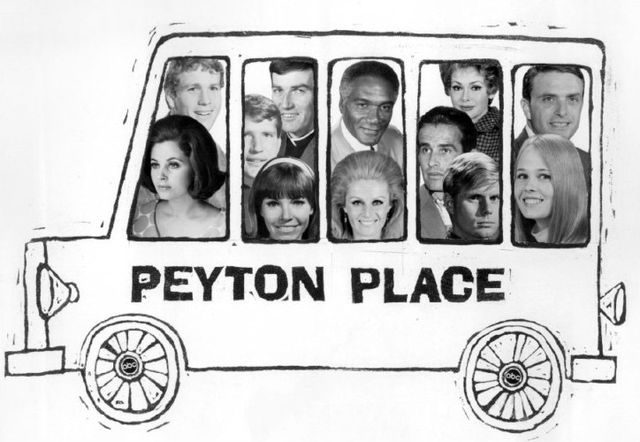
The point is that everybody knows everybody because everybody has worked with (and against) everybody. And with all the job shifts, it’s a regular Peyton Place.
Not sure which one is me, which one is R.M., and who the other people are.
Do you need an identity content marketing expert today?
Do you need someone who not only knows biometrics and content marketing, but also all the other factors, their uses, and even knows the tangled history of L-1?










 Bredemarket