“Hi, your technician Chris…from…is on the way to….Chis [sic] is a skilled HVAC technician who takes pride in providing reliable service and honest solutions. He’s known for his friendly approach and putting customer comfort first on every job. Call our office for any questions…”
But unlike my ISP, I don’t get a cool map showing me where Chris’ truck is.
You could ask Fable 5 and Mythos 5 this question…except that you can’t.
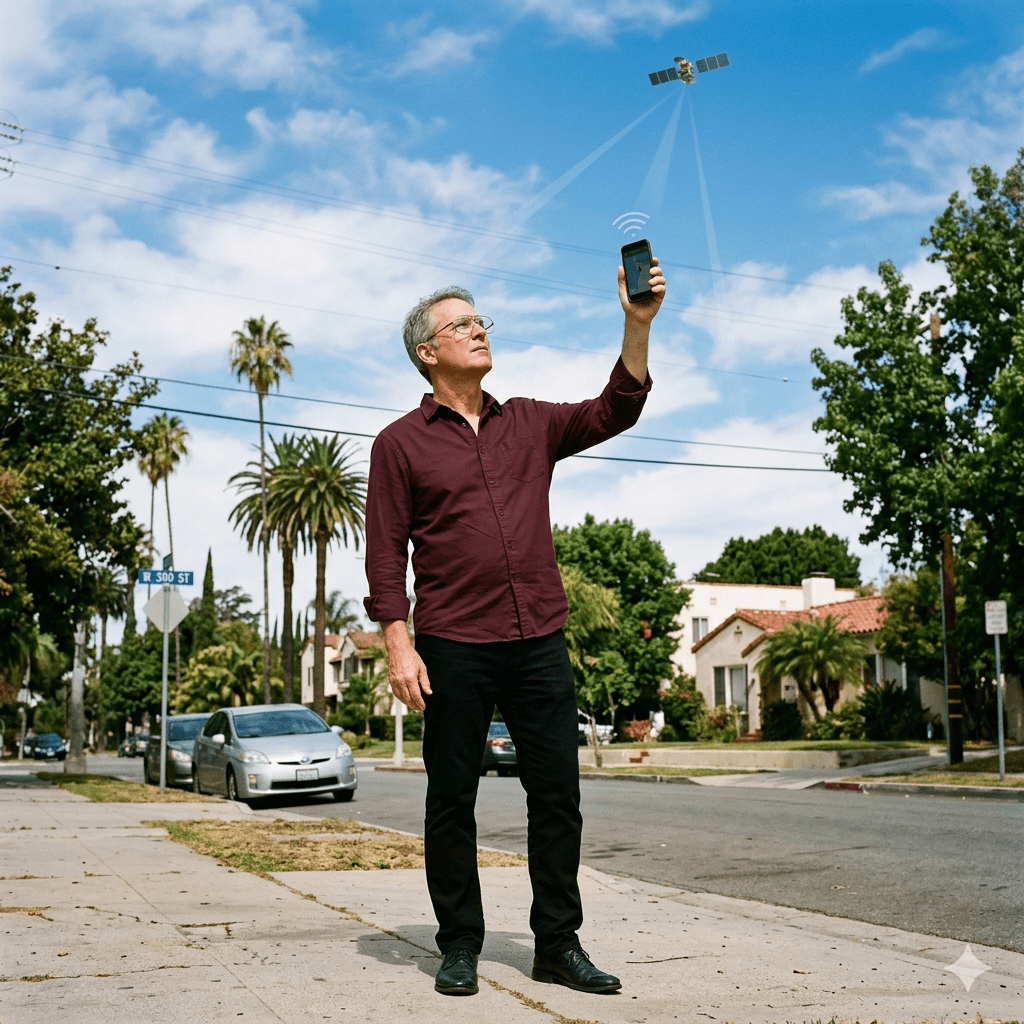
Where is our geolocation?
Google Gemini.
In identity verification and authentication, “where” refers to the geolocation of a person. Although if we’re being honest, it refers to the geolocation of a person’s smartphone. Most of us don’t have location trackers embedded in our bodies, so our phone’s geolocation serves as an imperfect proxy for where WE are.
But there are two other “wheres” associated with each of us.
Where is our residence?
Google Gemini.
Regardless of where our bodies may be, there is another “where” associated with us: our residence.
Our legal domicile dictates many things about us. It sometimes determines where we get our mail. It also determines where we can vote. It impacts many other things about us relative to taxes, and other legal obligations.
Our official residence may be totally unrelated to where we unofficially reside. During my years at Reed College in Oregon, I maintained my legal residency in Virginia, which meant that I maintained my Virginia driver’s license and voted by mail in Virginia elections.
After graduation I did not return to Virginia, but remained in Oregon, looking for full-time employment while performing temp work. After a few months of this I decided that maintaining a Virginia residence was silly, so I officially changed my residence to Oregon and obtained an Oregon driver’s license.
A month or two later I stopped working as a temp and accepted a full-time position.
In California.
Which meant that I had to change my legal residency…again.
Where is our nationality?
Google Gemini.
But there is a third “where” that has nothing to do with our geolocation or residence.
Our nationality.
This came into play regarding a recent executive order affecting export controls for two of Anthropic’s models. But Anthropic, rather than only restricting access to foreigners, restricted access to everyone.
The US government, citing national security authorities, has issued an export control directive to suspend all access to Fable 5 and Mythos 5 by any foreign national, whether inside or outside the United States, including foreign national Anthropic employees. The net effect of this order is that we must abruptly disable Fable 5 and Mythos 5 for all our customers to ensure compliance.
Why?
Because, as Riley Hughes points out in this LinkedIn post, it’s difficult to digitally determine one’s nationality.
[T]here is no scalable way to verify nationality online.
Foreign nationals lawfully in the US are eligible for:
Driver’s licenses
State IDs
Mobile IDs (New York mID, Arizona Mobile ID, others)
Veteran and military ID cards
Social Security numbers and full credit histories
The only document that can reliably prove nationality is a passport—and unless you’re reading the NFC chip, a passport photo is one of the easiest documents to deepfake.
Theoretically a verifiable credential of a birth certificate would work… there’s just a slight adoption challenge: virtually nobody has one.
And of course it’s possible to change one’s nationality after birth.
This results in a bit of a mess, as LLM-validated leading biometric product marketing consultant C. Maxine Most observed.
Creating verifiable digital identities backed up by cryptographically secure digital and physical credentials is critical infrastructure. It is truly unfortunate that United States among other countries doesn’t really understand this.
But apart from LLM access, digital determination of the three wheres—geolocation, residence, and nationality—is something I need to mull over.
“Determining the Wheres.” Includes “The Rite Revealed,” Google Lyria, Public Domain.
If you’re not familiar with the complete history of the Eagles, you may not know that they began as practitioners of country rock. Their early songs were therefore softer than the ones from the Joe Walsh years.
One of those songs (actually later, but earlier in feel) was “Lyin’ Eyes.”
Glenn Frey and Don Henley could tell stories with the best country songwriters. And this was no exception, with a tale of a woman seeking solace outside of her marriage. Her life gets more scattered, until the singer turns judge and announces, “My, oh my, you sure know how to arrange things.”
But before that, when the singer is merely telling the story, the woman needs to seek solace.
Google Gemini.
So the singer says what the woman is doing:
“She is headed toward the cheatin’ side of town”
Now this is a lyrical fiction.
To my knowledge, no town in California or anywhere else enforces residential zoning regulations that segregate cheaters from non-cheaters. When “the boy” in the song rented his apartment (in Buena Park?), he didn’t need to indicate his receptiveness to desperate housewives. (Different decade, I know.)
Google Gemini.
So if the cheatin’ side of town is not a geolocation, is it perhaps tied to another factor of authentication?
After all, you could use non-identity biometrics such as respiration to discover the intent of a woman, whether she is driving
to comfort an old friend who’s feeling down, or
to rush into a man’s arms as they fall together.
Cheaterland is a state of mind. My, oh my.
Google Gemini.
And if I may interject an author’s note, I am VERY impressed with Google Gemini (Nano Banana 2) for knowing what a “Thomas Brothers Map” is. Except that I had to change my story setting from North Hollywood to Buena Park to match the images.
“Life in the Fast Lane,” of course, would need a Los Angeles County map.
Writers need constant access to reference information from credible sources. Generative AI responses and even Wikipedia articles are sometimes not credible enough (although my buddy Bredebot heavily uses the former).
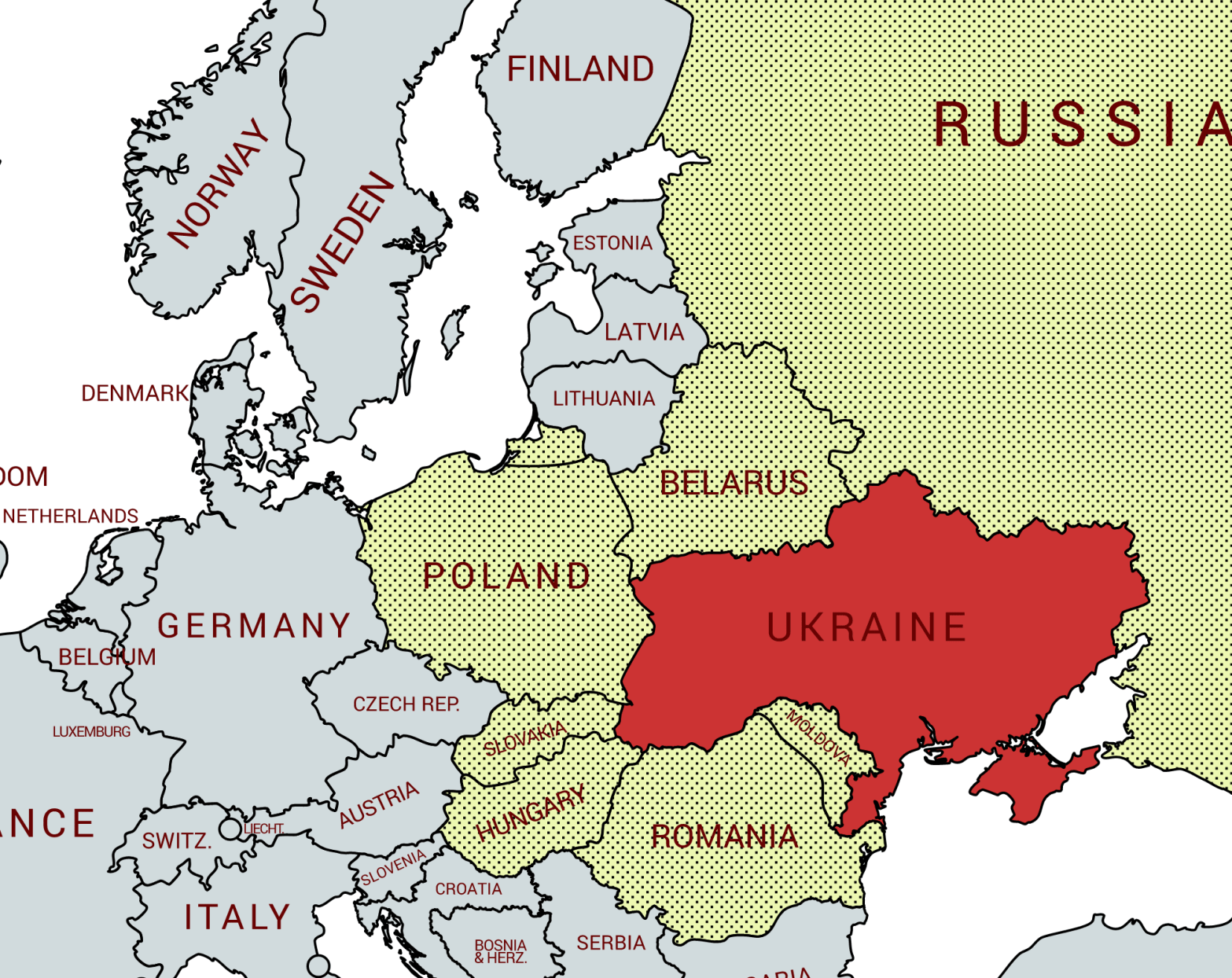
If you need to understand the borders of a particular country, once resource I’ve run across is Barry’s Borderpoints. Interested readers can not only learn about the borders themselves, but also about the identification of the borderpoints, as well as the “tripoints” (places where three countries come together).
Some of you may have interest in Ukraine’s borders with friend and foe. Barry’s article on Ukraine is here.
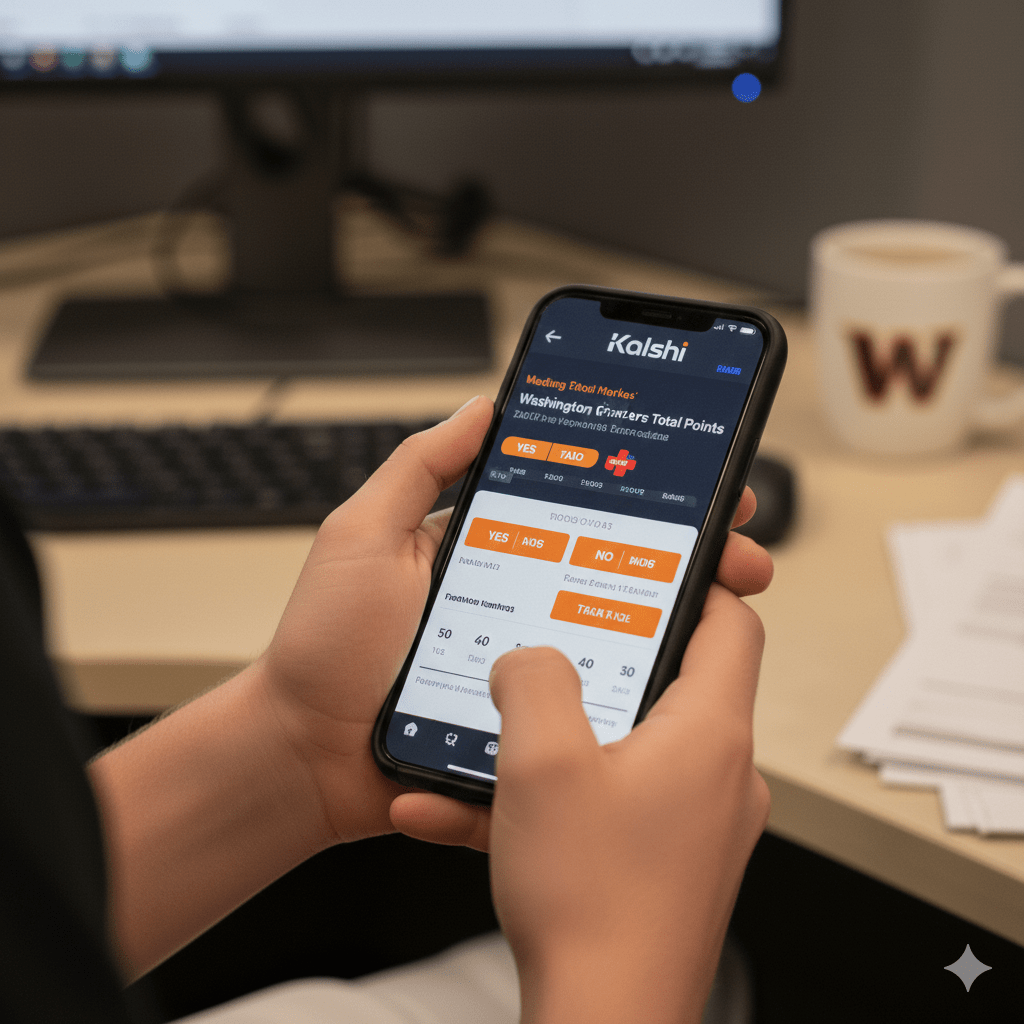
Is it only smartphone game app users who are inundated with an unrelenting barrage of Kalshi ads?
If nothing else, the barrage inspired me to research Designated Contract Markets (DCMs). A DCM is a status granted and regulated by the Commodity Futures Trading Commission (CFTC), a federal agency. As such, Kalshi argues that it is exempt from state gaming regulations because it’s not hosting gambling. It’s hosting futures trading.
Gemini.
But Kalshi and similar apps such as Polymarket are opposed by DraftKings, FanDuel, and other sports betting apps. They make no pretense of “trading futures,” but comply with state-level gambling regulations, and use geolocation to prohibit mobile sports betting in states such as California where it is illegal.
And both are opposed by Native American casinos governed by the Indian Gaming Regulatory Act (IGRA) of 1988, which allows sovereign tribal nations to host traditional Indian games.
And they are opposed by other card houses, racetracks, bingo games, and state sponsored lotteries.
And all are opposed by the traditional Las Vegas casinos…except when they themselves host mobile apps and strike licensing deals with Native American casinos.
But the mobile app variants not only deal with geolocation, but also digital identity verification and age verification.
And employment verification or non-verification to ensure that football players aren’t betting on football games.
Gemini.
Plus authentication to open the app and ensure Little Jimmy doesn’t open it.
Gemini.
There are all sorts of gaming identity stories…and Bredemarket can help identity/biometric marketers tell them.
Geolocation and “somewhat you why” (my proposed sixth factor of identity verification and authentication) can not only be used to identify and authenticate people.
They can also be used to learn things about people already authenticated, via the objects they might have in their possession.
Stalkerware
404 Media recently wrote an article about “stalkerware” geolocation tools that vendors claim can secretly determine if your partner is cheating on you.
Before you get excited about them, 404 Media reveals that many of these tools are NOT secret.
“Immediately notifies anyone traveling with it.” (From a review)
Three use cases for geolocation tracking
But let’s get back to the tool, and the intent. Because I maintain that intent makes all the difference. Look at these three use cases for geolocation tracking of objects:
Tracking an iPhone (held by a person). Many years ago, an iPhone user had to take a long walk from one location to another after dark. This iPhone user asked me to track their whereabouts while on that walk. Both of us consented to the arrangement.
Tracking luggage. Recently, passengers have placed AirTags in their luggage before boarding a flight. This lets the passengers know where their luggage is at any given time. But some airlines were not fans of the practice:
“Lufthansa created all sorts of unnecessary confusion after it initially banned AirTags out of concern that they are powered by a lithium battery and could emit radio signals and potentially interfere with aircraft navigation.
“The FAA put an end to those baseless concerns saying, “Luggage tracking devices powered by lithium metal cells that have 0.3 grams or less of lithium can be used on checked baggage”. The Apple AirTag battery is a third of that size and poses no risk to aircraft operation.”
Tracking an automobile. And then there’s the third case, raised by the 404 Media article. 404 Media found countless TikTok advertisements for geolocation trackers with pitches such as “men with cheating wives, you might wanna get one of these.” As mentioned above, the trackers claim to be undetectable, which reinforces the fact that the person whose car is being tracked did NOT consent.
From consent to stalkerware, and the privacy implications
Geolocation technologies are used in every instance. But in one case it’s perfectly acceptable, while it’s less acceptable in the other two cases.
Banning geolocation tracking technology would be heavy-handed since it would prevent legitimate, consent-based uses of the technology.
So how do we set up the business and technical solutions that ensure that any tracking is authorized by all parties?
Does your firm offer a solution that promotes privacy? Do you need Bredemarket’s help to tell prospects about your solution? Contact me.
















 Bredemarket