
Tag Archives: education
Strategy for Marketing One or Multiple Products
Back when dinosaurs ruled the earth I was a technical writer at a software company. These were the days when software came with printed user guides, which I wrote.
I was NOT the de facto product marketer at this software company; the owner was. But during my tenure I observed how he marketed the evolving line of products through three distinct phases. I’m presenting these phase in the chronological order of the company, not the logical order.
Phase One: Multiple Related Products
When I joined Logic eXtension Resources (LXR), the company was transitioning from consulting work to becoming the leading software provider for users of the THEOS (formerly OASIS) operating system (Wikipedia). THEOS could be configured as a multi-user operating system that could run on (souped up) microcomputer hardware, and thus was an attractive alternative to minicomputers running UNIX.
And LXR provided the business applications: multiCALC for spreadsheets, multiWRITE for word processing, multiMAIL (which I recall nothing about), and multiPERT for project management.
Speaking of dinosaurs, this was when Lotus 1-2-3 was prominent in PC-DOS and MS-DOS circles. You may recall the key word associated with Lotus: integrated. (One prospect at a trade show asked if multiCALC was integrated—it wasn’t—but I doubt he even knew what the word meant.) But in the mind of the consumer, Lotus and the future Microsoft Office caused these seemingly disparate software packages to be regarded as a unified offering.

So the four products I mentioned were loosely related, inasmuch as all of them were business applications, and all ran on THEOS. “Hey, you know that spreadsheet you have? We have a word processor also!”
So we had customers using all four products, and I was eating my own wildebeest food and writing all my user manuals in multiWRITE.
Until I didn’t.
Phase Two: Multiple Unrelated Products
Behind the scenes, LXR shifted to the Macintosh computer for internal work, including my user manuals. We all admired the elegance of the Mac for developers and users alike.
At the same time, the owner decided to pursue his personal interest in education and launched a product that didn’t fit on THEOS and didn’t fit in the “multi” product line.
Enter LXR*TEST, an educational measurement/test generation software package for the Macintosh that created test banks of questions incorporating text and graphics. Questions from the test banks could then be incorporated into individual tests. And if you didn’t want to create your own test banks, third parties were creating test banks in LXR*TEST format.
So, how did the owner/product marketer market LXR*TEST along with all the “multi” products?

He didn’t.
The two product lines served two completely different target audiences. THEOS business prospects didn’t care a whit about test generation, and educators on Macs had no use for a THEOS word processor.
So LXR marketed separately to its target audiences, addressing their individual needs.
Phase Three: One Product
Eventually I left LXR and after a few years drifted into the wonderful world of biometrics.
I can’t remember exactly when LXR discontinued its THEOS products, but eventually it concentrated exclusively on LXR*TEST, bowing to the inevitable and releasing a Windows version to complement its Mac version.

Even after LXR was acquired, the parent company continued to offer LXR*TEST for years afterwards.
Of course this allowed LXR to devote its product marketing attention exclusively to the testing market.
Until LXR*TEST, and LXR itself, faded away.
Like several of my other employers that no longer exist in their initial form.
Animated No-Good Educational Fraudsters
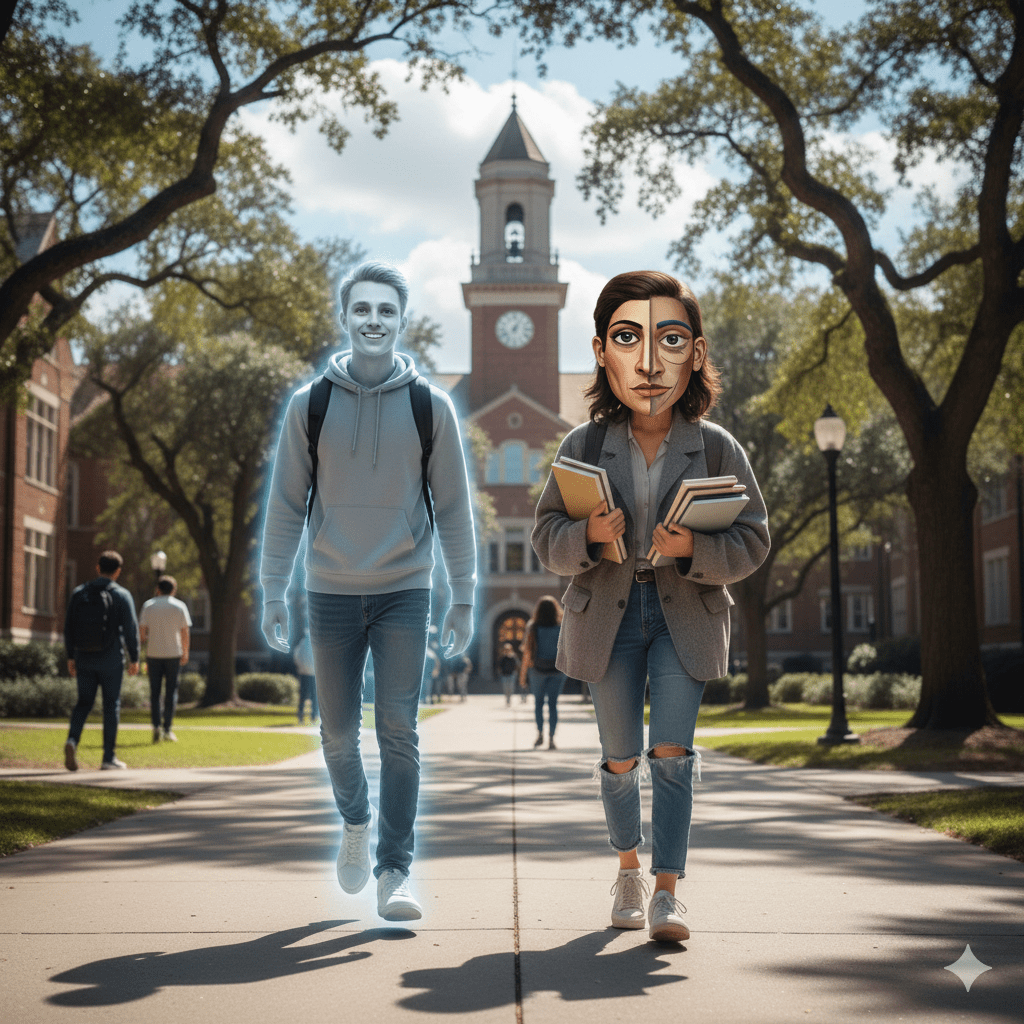
These are the no-good characters from my Bredemarket blog post earlier today, “Why is Educational Identity Important?” That post quoted from 1Kosmos and Fischer Identity:
“Higher education institutions are increasingly targeted by identity fraud schemes, including “ghost students,” synthetic identities, and financial aid fraud.”
Don’t let these fraudsters rip your university off.
Why is Educational Identity Important?
1Kosmos and Fischer Identity (discussed previously) announced a partnership on February 4 to bring “high-assurance identity verification and passwordless authentication to colleges and universities.”
The press release also noted why educational identity is important.
“Higher education institutions are increasingly targeted by identity fraud schemes, including “ghost students,” synthetic identities, and financial aid fraud. At the same time, universities must support digital access for students, alumni, faculty, and staff across fragmented IAM environments that span legacy systems, modern cloud platforms, and third-party services.”
Let’s look at the what.
- Verify student, alumni, and staff identities using high-assurance proofing and biometric verification
- Reduce financial aid and enrollment fraud caused by synthetic or stolen identities
- Strengthen assurance across fragmented IAM environments spanning legacy and modern systems
- Enable strong, passwordless authentication based on verified digital identity that is reusable and persists across enrollment, academic access, and alumni engagement
If your company provides educational identity solutions, and your message isn’t getting out to your prospects, perhaps you need to talk to the biometric product marketing expert, Bredemarket.
Bredemarket can write your biometric company’s product marketing content.
Montana Fingerprinting Laws…and Costs
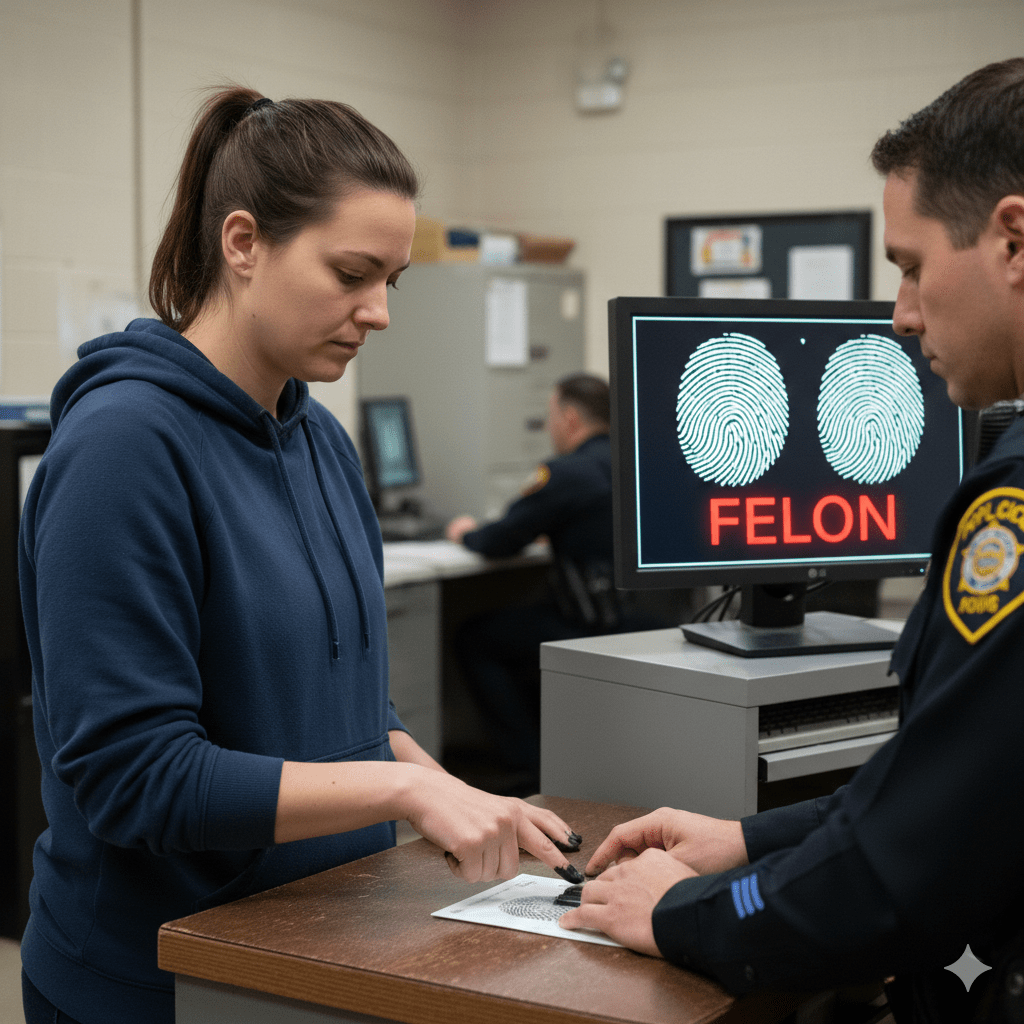
School volunteers aren’t free…especially when they need background checks.
Montana Public Radio explains that the state imposed new fingerprint-based background checks for school volunteers.
At $30 a pop, the costs add up. Missoula is spending an additional $20,000 a month to fund this.
Bozeman isn’t paying for this. It’s making the volunteers pay.
Helena was already fingerprinting volunteers and therefore isn’t incurring any additional costs.
Bar None

(Imagen 3)
Follow-up to my March post “When Remote Bar Exam Technology Failed, You Won’t Believe What Happened Next.”
“The State Bar of California announced Friday that its beleaguered leader, who has faced growing pressure to resign over the botched February roll out of a new bar exam, will step down in July. Leah T. Wilson, the agency’s executive director, informed the Board of Trustees she will not seek another term in the position she has held on and off since 2017. She also apologized for her role in the February bar exam chaos.”
No idea if Wilson was sued personally.
Read the updated story at https://www.mahoningmatters.com/news/nation-world/national/article305606501.html#storylink=cpy
When Remote Bar Exam Technology Failed, You Won’t Believe What Happened Next
(Imagen 3)
This is a remote education post, but not an educational identity post.
I have previously discussed online test taking, and I guess the State Bar of California reads the Bredemarket blog because it decided that an online bar exam would be a great idea, since it would reduce the costs of renting large halls for test taking purposes.
“The online testing platforms repeatedly crashed before some applicants even started. Others struggled to finish and save essays, experienced screen lags and error messages and could not copy and paste text from test questions into the exam’s response field — a function officials had stated would be possible.”
No surprise, but the remote bar exam debacle was so bad that students are filing…lawsuits.
“Some students also filed a complaint Thursday in the U.S. District Court for the Northern District of California, accusing Meazure Learning, the company that administered the exam, of “failing spectacularly” and causing an “unmitigated disaster.””
Bredemarket’s Three (So Far) Industry Pillar Pages

Since I started creating (sort of) pillar pages in April 2022, I’ve built more, including three devoted to particular industries.
- Educational Identity, https://bredemarket.com/educational-identity/
- Financial Identity, https://bredemarket.com/financial-identity/
- Health (both identity and technology), https://bredemarket.com/health/
Who Took This Test?

(Imagen 3)
As a follow-up to “You Need a Driver’s License,” my latest wildebeest picture is called “Who Took This Test?”
Educational identity is important.
Know Your…Everyone

It all started with “Know Your Customer,” a shorthand phrase used by financial institutions and related entities who need to know who their customers are.
But then various governments, industries, and entities got into the act with their own variants, such as “Know Your Business.”
I was curious about how many of these “know your” variants I’ve discussed in the Bredemarket blog. Here’s what I found:
- Know Your Business. Who is actually running your business? Putin?
- Know Your Competitor. Bredemarket can help with that.
- Know Your Customer. We don’t live in small towns any more.
- Know Your (LinkedIn) InMailer. LinkedIn has a problem with InMails from fake people.
- Know Your Recruiter. Also here. Especially the fake ones.
- Know Your Teacher. Especially the fake ones.
- Know Your (Healthcare) Visitor. Who is visiting your patients or interacting with your medical staff?
I’m sure I’ll come up with some others.
 Bredemarket