How Non-Commodity Content Creators Collaborate with Clients

On Friday, I shared a Kaye Putnam video on my Bredemarket LinkedIn page.

While I won’t go into all of the video details here (you should spend a few minutes and watch Putnam’s video yourself), one of the points that Putnam made was that the best content creators need to differentiate themselves from commodity content providers—in other words, to “be irreplaceable.”

If it’s not obvious how your product or service is wildly different, not just better, your ideal clients will resort to looking at you like a commodity.

Kaye Putnam, from the transcript to https://www.youtube.com/watch?v=jNGos1kVIdM

One of the ways in which content creators can differentiate themselves from their competition is to have a unique process.

In addition to having the emotional appeal and positioning that we already talked about, you can employ tools like having a proprietary process. A unique way of achieving a desired result.

Kaye Putnam, from the transcript to https://www.youtube.com/watch?v=jNGos1kVIdM

I’d like to look at one such process, the process in which a content creator collaborates with a client, but I’d like to take a look at how two very different content creators achieve the same outcome.

How Bredemarket collaborates with clients

One of the many differentiators between Bredemarket and its marketing and writing competitors is the way that Bredemarket kicks off projects.

Before I work with you, I ask a series of questions to better understand what you need.

(UPDATE OCTOBER 23, 2023: “SIX QUESTIONS YOUR CONTENT CREATOR SHOULD ASK YOU IS SO 2022. DOWNLOAD THE NEWER “SEVEN QUESTIONS YOUR CONTENT CREATOR SHOULD ASK YOU” HERE.)

Now these are not all of the questions that I ask. After all, my process is, um, “Bredemarket-developed.” (I avoid the word “proprietary” because of its negative connotations.) But the limited number of questions that I did share suggests how I try to understand you. Why you do what you do. How you do it. And so forth.

(If you are interested in this topic, I have written an entire e-book focused on the first six questions that I ask you. To download the e-book, visit my blog post “Six Questions Your Content Creator Should Ask You: the e-book version.”)

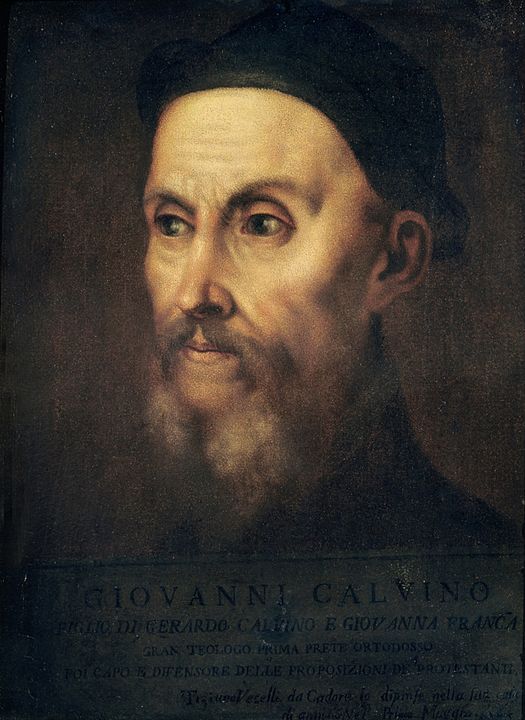
In true Putnam manner, I approach this entire process as a Sage, or someone who imparts wisdom which, when combined with your wisdom, results in an effective piece of content.

Yes, this is a Rembrandt painting, anticipating the next section of the blog post. By Rembrandt – The Yorck Project (2002) 10.000 Meisterwerke der Malerei (DVD-ROM), distributed by DIRECTMEDIA Publishing GmbH. ISBN: 3936122202., Public Domain, https://commons.wikimedia.org/w/index.php?curid=157824

But not everyone is a Sage, and other content creators approach collaboration differently.

How Paso Artis collaborates with clients

As I’ve frequently said, my primary emphasis is words. My graphic execution capabilities are somewhat limited.

I did not draw this myself. Originally created by Jleedev using Inkscape and GIMP. Redrawn as SVG by Ben Liblit using Inkscape. – Own work, Public Domain, link.

But there are many, many people who have better graphic execution capabilities than I do.

One such person is the artist behind Paso Artis.

Now I don’t know Paso Artis’ personal archetypes, but I’d be willing to bet that her primary archetype isn’t Sage. The obvious guess for her primary archetype is “Creator.”

Get ready to celebrate the power of your creative brand archetype! Whether you resonate with being an Artist, musician, writer, dreamer, builder, or designer, your brand has the incredible ability to amaze and inspire others.

When customers encounter your creative brand, they can’t help but feel captivated. They look at your work and think, “I want to be able to do what they can.” Your brand ignites a spark of inspiration and ignites the imagination within those who connect with it.

One of your innate advantages as a creative brand is your boundless creativity and imagination. You possess the unique ability to see the world in a different light, to think outside the box, and to breathe life into your visions.

Kaye Putnam, from https://www.kayeputnam.com/brand-archetype-creator/

A few of you may recall that I initially thought that I was a “Creator,” until I realized that this archetype applies more to imagery rather than words. And not stick figures.

Despite our vast differences, Paso Artis and Bredemarket have one similarity.

  • We both work together with our clients to create a piece of content that satisfies the clients’ needs.
  • With Bredemarket, it’s a written piece of content.
  • With Paso Artis, it’s a custom painting.

But because Paso Artis is…well, an artist, she doesn’t use Sage-like words and tables and bullet points to describe her client collaboration process. The Paso Artis-developed (again, I don’t like the word “proprietary”) collaboration process is described much more…artistically.

As an artist, I do feel the responsibility and privilege of taking a vision and turning it into a painting that will hang on the wall for years and be seen every day and regarded with affection.

Don’t be scared of handing over your dream to me.

In order to achieve a happy outcome, you and I will work together.

From https://www.facebook.com/paso.artis/about_details

Note that Paso Artis uses some words that Bredemarket never uses, such as “affection” and “dream.” Now I might use “vision” and “scared” in the proper context, but most of my clients and prospects do not dream of having their customers regard their products and services, or their blog posts or white papers, with affection. Even the Bredemarket client who chose to “truly say thank you for putting these (proposal) templates together” didn’t get affectionate about them. I mean, I love Microsoft Word, but I don’t LOVE Microsoft Word.

So Bredemarket and Paso Artis use a different vocabulary. This happens to come back to another point that Putnam made, to speak the language of your clients.

If you only know Italian and your ideal clients are speaking French, you might get a few people that understand what you mean, but it’s not going to have the transformative effect that we’re looking for. You want to learn to be fluent. In the decision making language of your ideal clients.

Kaye Putnam, from the transcript to https://www.youtube.com/watch?v=jNGos1kVIdM

Marketers, imagine if you will a possible persona for a Paso Artis prospect.

By David Teniers the Younger – 1. Kunsthistorisches Museum Wien, Bilddatenbank.2. khm.at, Public Domain, https://commons.wikimedia.org/w/index.php?curid=659517

“Jay” is a homeowner who loves art and desires a particular type of painting for his home, but does not have the artistic talent to paint it himself. Ideally, the completed painting will be one that brings Jay delight when he sees it in his home, and will also delight his guests. But can he trust anyone to realize his dream?

So Paso Artis (who has years of marketing experience in her day job work) knows that she has to address Jay’s pain points. She first does this by addressing them in her “About” text (“Don’t be scared of handing over your dream to me”), but then addresses them more deeply during her consultation with Jay.

I have never performed a competitive analysis of artists who respond to commission requests, but I’d guess that some are better at collaborating with clients than others.

And the ones that collaborate well earn a positive reputation, which translates to increased revenue over those who don’t collaborate well.

How should YOU collaborate?

But of course Bredemarket doesn’t matter, and Paso Artis doesn’t matter. You matter.

When you collaborate with a partner, either one in which the partner provides a product or service to you, or you provide a product or service to the partner, make sure that both of you are on the same page (or easel) before launching into the work project.

And if you have a dream for a painting, contact Paso Artis via her Facebook page.

And if you want your blog posts, white papers, case studies, and other content to be regarded with affection (or something like that), contact Bredemarket.

On Benefits, Features…and Advantages

I’m trying to flesh out the usefulness of the Bredemarket website.

  • Initially, much of the content was benefit-focused.
  • As the website matured, I began to include and flag more information on features—not only as features relate to benefits, but also discussing features independent of benefits (example: my discussion of the Touch ID feature).
  • It’s time to throw one other term into the mix.

Using bad statistics, addition of a third term to the two existing terms improves bredemarket.com by a whopping 50%.

Not bad for (more than) 5 minutes of work.

Review of features and benefits

The home page for the product management platform provider Airfocus, https://airfocus.com/

Airfocus has published an article about…well, I’m not going to reveal the title yet, because that gives away the massive surprise ending.

(Whoops; I already revealed it. Pay no attention to the title behind the blog post.)

For now, I’ll just say that the article discusses features and benefits.

Here’s how Airfocus defines features (which coincides with my own definition of features):

(Features) are characteristics that a product or service has. It is a simple statement about attributes. 

For example: ‘An automated photo storage app that edits, selects and stores photos’ 

From Airfocus

Contrast this definition of features with Airfocus’ definition of benefits (which again coincides with my own definition of benefits):

A benefit…is why a prospect would ultimately use a product.

This key benefit provides an emotional hook point that you can leverage in helping the user imagine the positive experiences felt by using your product. 

For example: ‘If you don’t waste your time editing and can store more of your best photos, you’ll keep happier memories for longer’.

From Airfocus

So again, the feature is a characteristic of a product (or what the product does), while a benefit explains why that characteristic is important to a prospect.

This is good in and of itself, and has served me well for years. I could stop right here, but I’ve just passed 400 Bredemarket blog posts and am on a roll to get up to 500.

So I’m going to tell you that Airfocus expands the feature-benefit model by defining an middle category between features and benefits.

The stage between a feature and a benefit

Airfocus defines the intermediate step between a feature and benefit as follows:

An advantage is what that feature does, and how it helps. These are factual and descriptive but do not yet make a connection as to how it will make users’ life better. 

For example: ‘It automatically keeps only the clearest picture of a similar set, and deletes the rest. Your photo storage is reduced on average by 80%.

From Airfocus, https://airfocus.com/glossary/what-is-a-features-advantages-and-benefits-analysis/

So now it’s time for the big surprise. The third word is advantage.

Perhaps I’m oversimplifying the analysis, but the three terms (features, advantages, and benefits) can be related as follows, using my three favorite question adverbs and incorporating Airfocus’ examples:

FeatureWhatAutomated photo storage app
AdvantageHowReduce photo storage 80%
BenefitWhyKeep happier memories for longer
I’ll use this caption to plug my first e-book, which you can get here.

Since I talk about benefits ad nauseum, you may get the mistaken view that features and advantages don’t matter. They do matter—in the proper context. For example, if you’re working on a data sheet or a user manual (if they still exist), you definitely need a feature list and could probably use an advantage list also.

Now do you have to use a feature-advantage-benefit model, instead of the simpler feature-benefit model?

Not at all.

But if you find it helpful, use it.

We Don’t Need Customer Focus Because Our Product Is So Great

It’s always good to question previous thoughts, and that’s what I’m doing right now.

In the past, I’ve stated that the best way to attract awareness (and eventually revenue) is to focus on customers and their needs.

But what if I’m wrong? (I’ve been wrong before.)

The benefits of product focus

What if a stellar product is all that is needed to attract business and gain revenue?

After all, aren’t the benefits of a great product obvious at first glance?

If we stop with the claptrap of understanding our target audiences and pain points and stuff, and just focus on ourselves and our great product, we’ll have a clearly focused message…

…um…

…that no one will give a hoot about.

“OK, I’m glad that your Super Duper Gizmo is so great, but so what? What’s in it for me? Why should I care?”

Never mind.

From https://www.youtube.com/watch?v=OjYoNL4g5Vg

I guess I was right when talking about customer focus.

Sure, talk about your product, but start with the customer first and their needs. Then say how your product benefits the customer, exceeds their needs, and delights them.

(So why did I write this piece of content? Neil Patel’s Ubersuggest…um, suggested that my website needed yet another article on customer focus. I thought I’d do something a little different this time.)

Insight

From https://open.spotify.com/track/2lyHCMlRtEeHlLYFuGGlZB?si=nIFe0l4NSbm1DGQU-8YbnQ&pi=FfNgkCWyQ0i2

When you deal with WordPress enough, this song pops into your head.

From https://open.spotify.com/track/2lyHCMlRtEeHlLYFuGGlZB?si=MpxHgffcQYS36GfuUqNocA

So what is my, um, insight into this song from Depeche Mode’s “Ultra” album?

That it’s a wonder that the song, and the album, was ever released. One member had already quit the band, and the other three were all dealing with personal issues. (Not just Dave.)

But they DID release the album, and this configuration of the band released several additional albums over the next…quarter century.

Sometimes we are surprised by what we can do.

I’m talking to you now.

Bredemarket’s Name for the Sixth Factor of Authentication

Depending upon whom you ask, there are either three or five factors of authentication.

Unless you ask me.

I say that there are six.

Let me explain.

First I’ll discuss what factors of authentication are, then I’ll talk about the three factor and five factor school, then I’ll briefly review my thoughts on the sixth factor—now that I know what I’ll call it.

What are factors of authentication?

Before proceeding to factors of authentication, let’s review TechTarget’s definition of authentication.

Authentication is the process of determining whether someone or something is, in fact, who or what it says it is.

From https://www.techtarget.com/searchsecurity/definition/authentication

For purposes of this post I’m going to stay away from the “something” part and concentrate on the “someone” part.

For example, if Warren Buffett has a bank account, and I claim that I am Warren Buffett and am entitled to take money from that bank account, I must complete an authentication process to determine whether I am entitled to Warren Buffett’s money. (Spoiler alert: I’m not.)

So how do I authenticate? There are many different ways to authenticate, which can be grouped into several authentication factors. Here’s how Sumo Logic defines “authentication factor.”

An authentication factor is a special category of security credential that is used to verify the identity and authorization of a user attempting to gain access, send communications, or request data from a secured network, system or application….Each authentication factor represents a category of security controls of the same type. 

From https://www.sumologic.com/glossary/authentication-factor/

When considering authentication factors, the whole group/category/type definition is important. For example, while a certain system may require both a 12-character password and a 4-digit personal identification number (PIN), these are pretty much the same type of authentication. It’s just that the password is longer than the PIN. From a security perspective, you don’t gain a lot by requiring both a password and a PIN. You would gain more by choosing a type of authentication that is substantially different from passwords and PIN.

How many factors of authentication are there?

So how do we define the factors of authentication? Different people have different definitions.

Three factors of authentication

For the most part, I believe that everyone agrees on at least three factors of authentication. As I noted in a prior post on factors of authentication, NIST defines the following three factors:

Factors include: (i) something you know (e.g. password/personal identification number (PIN)); (ii) something you have (e.g., cryptographic identification device, token); or (iii) something you are (e.g., biometric).

From https://csrc.nist.gov/glossary/term/Multi_Factor_Authentication, cited in https://bredemarket.com/2022/03/19/remember-the-newer-factors-of-authentication/

Note that NIST’s three factors are very different from one another. Knowing something (such as a password or a PIN) differs from having something (such as a driver’s license) or being something (a fingerprint or a face).

But some people believe that there are more than three factors of authentication.

Five factors of authentication

Let’s add two factors to the definition trumpeted by NIST. People such as The Cybersecurity Man have included all five in their definition.

  • Something you know.
  • Something you have.
  • Something you are.
  • Something you do.
  • Somewhere you are.

For more information, see my March 2021 post on the five factors of authentication.

But are there only five?

Six factors of authentication

In April 2022, I began wondering if there is a sixth authentication factor. While I struggled to put it into the “some xxx you xxx” format, I was able to encapsulate what this sixth factor was.

What about the authentication factor “why”?

This proposed factor, separate from the other factors, applies a test of intent or reasonableness to any identification request.

From https://bredemarket.com/2022/04/12/the-sixth-factor-of-multi-factor-authentication-you-heard-it-here-first/
Why is this man smoking a cigarette outdoors? By Marek Slusarczyk, CC BY 3.0, https://commons.wikimedia.org/w/index.php?curid=108924712

Over the months, I struggled through some examples of the “why” factor.

  • Why is a person using a credit card at a McDonald’s in Atlantic City? (Link) Or, was the credit card stolen, or was it being used legitimately?
  • Why is a person boarding a bus? (Link) Or, was the bus pass stolen, or was it being used legitimately?
  • Why is a person standing outside a corporate office with a laptop and monitor? (Link) Or, is there a legitimate reason for an ex-employee to gain access to the corporate office?

As I refined my thinking, I came to the conclusion that “why” is a reasonable factor of authentication, and that this was separate from the other authentication factors (such as “something you do”).

And the sixth factor of authentication is called…

You’ll recall that I wanted to cast this sixth authentication factor into the “some xxx you xxx” format.

So, as of today, here is the official Bredemarket list of the six factors of authentication:

  • Something you know.
  • Something you have.
  • Something you are.
  • Something you do.
  • Somewhere you are.

(Drumroll…)

  • Somewhat you why.

Yes, the name of this factor stands out from the others like a sore thumb (probably a loop).

However, the performance of this factor stands out from the others. If we can develop algorithms that accurately measure the “why” reasonableness of something as a way to authenticate identity, then our authentication capabilities will become much more powerful.

The Adobe Exception to the Temperamental Writer’s Hard and Fast Rule

When I originally wrote “The Temperamental Writer’s Two Suggestions and One Rule for Using Generative AI,” I included the following caveat:

So unless someone such as an employer or a consulting client requires that I do things differently, here are three ways that I use generative AI tools to assist me in my writing.

From https://bredemarket.com/2023/06/05/the-temperamental-writers-two-suggestions-and-one-rule-for-using-generative-ai/

It’s good that I included that caveat.

The Bredemarket Rule, Item One

If you read the post, you’ll recall that some of the items were suggestions. However, one was not:

Bredemarket Rule: Don’t share confidential information with the tool

If you are using a general-purpose public AI tool, and not a private one, you don’t want to share secrets.

By Unnamed photographer for Office of War Information. – U.S. Office of War Information photo, via Library of Congress website [1], converted from TIFF to .jpg and border cropped before upload to Wikimedia Commons., Public Domain, https://commons.wikimedia.org/w/index.php?curid=8989847

I then constructed a hypothetical situation in which Bredemarket was developing a new writing service, but didn’t want to share confidential details about it. One of my ideas was as follows:

First, don’t use a Bredemarket account to submit the prompt. Even if I follow all the obfuscation steps that I am about to list below, the mere fact that the prompt was associated with a Bredemarket account links Bredemarket to the data.

From https://bredemarket.com/2023/06/05/the-temperamental-writers-two-suggestions-and-one-rule-for-using-generative-ai/

Now I happen to have a ton of email accounts, so if I really wanted to divorce a generative AI prompt from its Bredemarket origins, I’d just use an account other than my Bredemarket account. It’s not a perfect solution (a sleuth could determine that the “gamer” account is associated with the same person as the Bredemarket account), but it seems to work.

But not well enough for one company.

Adobe’s restrictions on employee use of generative AI

PetaPixel accessed a gated Business Insider article that purported to include information from an email from an Adobe executive.

Adobe employees have been instructed to not use their “personal email accounts or corporate credit cards when signing up for AI tools, like ChatGPT.” This, the publication reports, comes from an internal email from Chief Information Officer Cindy Stoddard that Insider obtained.

From https://petapixel.com/2023/07/06/adobe-limits-its-employees-use-of-generative-ai/?utm_source=tldrai

Specifically, the email apparently included a list of “Don’ts”:

  • Don’t use personal emails for tools used on work-related tasks. This is the one that contradicts what I previously suggested. So if you work for Adobe, don’t listen to me.
  • Don’t include any personal or non-public Adobe information in prompts. This is reasonable when you’re using public tools such as ChatGPT.
  • Don’t use outputs verbatim. This is also reasonable, since (a) the outputs may be incorrect, and (b) there are potential copyright issues.

But don’t think that Adobe is completely restricting generative AI. It’s just putting guardrails around its use.

“We encourage the responsible and ethical exploration of generative Al technology internally, which we believe will enable employees to learn about its capabilities as we explore how it will change the way we all work,” Business Insider reported Stoddard wrote in the email.

“As employees, it’s your responsibility to protect Adobe and our customers’ data and not use generative Al in a way that harms or risks Adobe’s business, customers, or employees.”

From https://petapixel.com/2023/07/06/adobe-limits-its-employees-use-of-generative-ai/?utm_source=tldrai

What does this mean?

So my suggestion to use a non-corporate login to obfuscate already-scrubbed confidential information doesn’t fly with Adobe. All fine and good.

The true takeaways from this are two:

  1. If you’re working for or with someone who has their own policies on generative AI use, follow their policies.
  2. If they don’t have their own policies on submitting confidential information to a generative AI tool, and if you don’t have your own policy on submitting confidential information to a generative AI tool, then stop what you’re doing and create a policy now.

Five Truths About Your Target Audiences

This post explains what “pillar pages” are, the pros and cons of Bredemarket’s pillar pages, what I’ve learned from the “Target Audience” pillar page that I created, and how this can help your business deliver effective, converting messages to your prospects.

What are pillar pages?

I’ve been working on “pillar pages” for the Bredemarket website for over a year now.

By Rama – Own work, CC BY-SA 2.0 fr, https://commons.wikimedia.org/w/index.php?curid=638837

As I stated before in an April 2022 blog post, a “pillar page” is simply a central “cluster” page on your website that discusses an important topic, and which is linked to other pages that provide more detail on the topic.

Think of a wheel with a hub and spokes. The pillar page is the hub, and the related pages are the spokes.

How can Bredemarket’s pillar pages be better?

As of July 5, 2023, I have created five pillar pages, which I label as “topics of interest” on Bredemarket’s “Information” page.

Now these pillar pages aren’t as mature as I’d like them to be.

  • I haven’t really multi-layered my keywords that link to the pillar; currently things are fairly simplistic where benefit “spoke” blog posts link to the benefits “hub” pillar. I haven’t explicitly optimized the “hub and spokes” for people who search for, say, features.
  • Similarly, the organization of each pillar page is fairly simplistic. Each pillar starts with a brief discussion of the topic in question, and is then followed by excerpts from and links to blog posts that provide more detail on the topic. (And the blog posts themselves link back to the pillar, providing bidirectional…um, benefits.) It’s functional, but perhaps you’d be better served if the pillars grouped subtopics together, rather than listing all the blog posts in reverse chronological order.

But the pillars do their work in terms of navigation and search engine optimization. If you want to find out what Bredemarket says about a topic such as benefits, it’s fairly easy to find this.

What have I learned from the Bredemarket Target Audience pillar page?

This post delves into the fifth of my five pillar pages, the Target Audience page.

By Christian Gidlöf – Photo taken by Christian Gidlöf, Public Domain, https://commons.wikimedia.org/w/index.php?curid=2065930

I’ve recently worked on beefing up this pillar page by linking to more Bredemarket blog posts that discuss target audiences. And in the process of making these additions, I’ve realized some things about target audiences that I wanted to summarize here. (Repurposing content refocuses the mind, I guess.)

In the process of improving my pillar page, I’ve gleaned five truths about target audiences:

  1. You need to define at least one target audience.
  2. It’s not illegal to have multiple target audiences.
  3. Different target audiences get different messages.
  4. You can create personas, or you can not create personas. Whatever floats your boat.
  5. Target audience definition focuses your content.

I’ll discuss each of these truths and suggest how they can improve your firm’s content.

One: You Need to Define At Least One Target Audience.

The first and most important thing is that you need a target audience before you start writing.

By David Shankbone – Own work, CC BY-SA 3.0, https://commons.wikimedia.org/w/index.php?curid=2786722

If you have no target audience, who is receiving your message? How do you know what to say?

For example, the primary target audience for THIS blog post is anyone from any type of company who could use Bredemarket’s marketing and writing services. It’s not limited to just the identity folks, or just the Inland Empire folks. If it were, I’d write it differently.

Here’s another target audience example that I used in an October 2022 blog post:

  • If you’re a lollipop maker and you’re writing for kids who buy lollipops in convenience stores, you’ll write one way.
  • If you’re a lollipop maker and you’re writing to the convenience stores who could carry your lollipops, you’ll write another way.
From https://bredemarket.com/2022/10/30/six-questions-your-content-creator-should-ask-you/

Do you see how target audiences influence what you write?

Two: It’s Not Illegal to Have Multiple Target Audiences.

I recently criticized myself in jest because my self-promotional LinkedIn post identified two target audiences: companies who could use my services as a full-time employee, and companies who could use my services as a Bredemarket contract consultant.

This does have some drawbacks, since if I had chosen one or the other, I could have streamlined my post and made my message stronger.

But in this particular case, I chose to “muddy the waters.” Mary, grab the baby, targets rising.

Not Limp Bizkit. From https://www.youtube.com/watch?v=WhF7gnRZBpY

The content addressed two target audiences at the same time, although this post prioritized the companies looking for full-time employees.

As long as you know in advance what you’re going to do, you can define multiple target audiences. Just don’t define a dozen target audiences for a 288-character tweet.

Three: Different Target Audiences Get Different Messages.

Perhaps you are writing a single piece of content that must address multiple target audiences. A proposal is an example of this. For example, a proposal in response to a request for proposal (RFP) for an automated biometric identification system (ABIS) affects multiple target audiences.

Here’s an example of multiple target audiences for a theoretical Ontario, California ABIS proposal, taken from a May 2021 Bredemarket post:

  • Field investigators.
  • Examiners.
  • People who capture biometrics.
  • Information Technologies.
  • Purchasing.
  • The privacy advocate.
  • The mayor.
  • Others.

That’s a lot of target audiences, but if you’re submitting a 300 page proposal that answers hundreds of individual questions, you have the ability to customize each of the hundreds of responses to address the affected target audience(s).

For example, if the RFP asks about the maximum resolution of captured latent fingerprint images, your response will address the needs of the “examiner” target audience. Your response to that question won’t need to say anything about your compliance with city purchasing regulations. (Unless you have a really weird city, which is possible I guess.)

At the same time, if the RFP asks if you comply with E-Verify, this is NOT the time to brag about supporting 4,000 pixels per inch image capture.

Four: You Can Create Personas, Or You Can Not Create Personas. Whatever Floats Your Boat.

If you haven’t read the Bredemarket blog that much, you should know that I’m not very hung up on processes—unless my client (or my employer) insists on them. Then they’re the most important thing in the world.

If you find yourself trapped in a room (preferably padded) with a bunch of certified marketing professionals, they’ll probably toss around the word “persona” a lot. A persona helps you visualize your target audience by writing to someone with a particular set of attributes. Here’s an example from the October 2022 post I cited earlier:

Jane Smith is a 54 year old single white owner of a convenience store in a rural area with an MBA and a love for Limp Bizkit…

From https://bredemarket.com/2022/10/30/six-questions-your-content-creator-should-ask-you/

If I’m going to write a particular piece of content, this persona helps me focus my writing. As I write, I can picture Jane in my mind, fetching the giant cups for the soda dispenser, planning her next trip to the big city, and wondering if her customers would mind if she started blasting this song.

Not the Seldom Scene.

Having this persona in my mind can be an excellent writing support.

  • What would Jane think about a list of target audience truths?
  • What would Jane think if a Limp Bizkit song appeared in the middle of the list? (She’d like that.)
  • Most importantly, would that post about target audiences induce Jane to explore the Bredemarket 400 Short Writing Service?

So you can create personas, either on the fly (take a LinkedIn profile of a real person and change a few facts so that the persona becomes Jim, a 35 year old product/content marketer who specializes in healthcare) or through an extensive and expensive persona research program.

By Idaho National Laboratory – Flickr: Microscopy lab, CC BY 2.0, https://commons.wikimedia.org/w/index.php?curid=16101131

But what if you escape from the padded room, run away from the marketing professionals, and swear up and down that you will never ever create a persona?

Will your marketing efforts die?

No they won’t.

You can still target your writing without inventing demographic information about the person reading your content.

It depends upon the effort you want to invest in the task.

Five: Target Audience Definition Focuses Your Content.

I kind of already said this, but I wanted to explicitly repeat it and emphasize it.

Regardless of whether your target audience is defined by an expensive research effort, a tweak of a real person’s LinkedIn profile, or the simple statement “we want to target latent fingerprint examiners,” the simple act of defining your target audience focuses your content.

By Lookang many thanks to author of original simulation = Fu-Kwun Hwang author of Easy Java Simulation = Francisco Esquembre – Own work http://weelookang.blogspot.com/2015/05/ejss-thin-converging-diverging-lens-ray.html, CC BY-SA 4.0, https://commons.wikimedia.org/w/index.php?curid=40429189

Your text addresses the target audience, and doesn’t go off on tangents that bear no relation to your target audience.

This makes your message much more effective.

But is the message of this post resonating with companies needing content creators?

If you’re still reading, I guess it is.

Bredemarket can help you define your target audience for your content, and can help you define other things also that are necessary for effective content.

Would you like to talk to me about the content you want to create, and the message you want to deliver to your target audience?

Are you ready to take your firm to the next level with a compelling message that addresses your target audience(s) and increases awareness, consideration, conversion, and long-term revenue?

Let’s talk today!

Now if you’ll excuse me, I have to cross-reference this blog post with my Target Audience pillar page.

Ontario, California’s July 4 Parade From A Non-videographer

John E. Bredehoft of Bredemarket at the Ontario, California Fourth of July Parade on July 4, 2023 at Euclid and E.

Let’s start with a confession.

I am not a professional videographer.

So why did I shoot video at this morning’s July 4 parade in Ontario, California?

Because I had previously resolved that I needed to recommit myself to video.

From the Bredemarket podcast, https://open.spotify.com/episode/6e0CkM918ytlxHg518b0rc?si=vuv5WuAgQ62W4tRfpgVnkg. Also available on other platforms. This episode is only about a minute long.

And today was the obvious day to recommit.

From the Bredemarket podcast, https://open.spotify.com/episode/5g79mQZZ1w0KpGWjdkGqm4?si=1HxjWpO7R-GXi40PmEvFBg. Also available on other platforms. This episode is even shorter, less than 30 seconds.

Oh, and there were two other reasons.

  1. I know a lot of people who write today’s date as 4/7. In other words, they do not live in the United States. Most of these people have never experienced a U.S. July 4 celebration, and this post is a convenient way to share a 4th of July parade with them.
  2. There are a lot of businesspeople in California’s Inland Empire. They write the date as 7/4, and these businesspeople need to communicate with their prospects and clients. If Bredemarket can’t fulfill their videography needs, then what the heck CAN Bredemarket do for them? A lot, as I’ll explain at the end of this post.

But first let’s look at some parade videos and pictures.

Videos from before the parade

Pre-parade staging, Euclid and 4th. From https://www.youtube.com/watch?v=QbBgfRRJqAE
Euclid and I, 20 minutes before the parade began. From https://www.youtube.com/watch?v=jE5M5GIZcEE

Videos and pictures from the parade

The start of the parade. From https://www.youtube.com/watch?v=AW7wpcu14wM
The Chaffey High School marching band. To ensure that I didn’t violate copyright restrictions on various social media platforms, I made sure to create this video when the band was NOT playing its long-standing theme song, “Eye of the Tiger.” From https://www.youtube.com/watch?v=eoLiObu_l04
Ontario, California Mayor Paul Leon and his wife Cheryl.
These are just a few of the motorized vehicles that appeared in the parade. From https://www.youtube.com/watch?v=JA3CjUwXsi8
On the right you can see a U.S. Marine re-enactment of the famous Iwo Jima picture.
A banner representing Buffy Gutierrez’s Christmas on Pleasant St charity.

The videos and pictures that I DIDN’T take

Obviously this is not a complete document of today’s parade, which had well over 50 participating entries. There were a few notable omissions:

  • Horses. Sorry for not capturing any horse videos or pictures this year.
  • Twirlers. The girls (and at least one guy) who were twirling were exceptionally good.
  • Itty bitty cars. I didn’t see the Shriners this year, but there were at least a couple of participants who drove itty bitty cars around.
  • Those danged bagpipes. Locals know who I’m talking about. I lived near Upland High School for a few years, and was “blessed” to hear them practice early on some mornings. Jeff Pope, they’re yours.

But at least the videos and pictures that I DID take give you a little bit of a taste of what a U.S. July 4th is like.

IE businesses are now wondering what Bredemarket CAN do for them

My European friends can tune out here. This next part is addressed to local businesses.

Specifically, I’m talking to local businesses who need to communicate to their prospects and clients, and therefore have a need for written content that inspires your prospects to find out more about your products and services, and hopefully purchase those products and services.

But before you create that written content yourself, or have someone (such as Bredemarket’s John E. Bredehoft) work with you to create the content, you need to make sure you create the right written content.

Click below to find out how to create the right written content.

Or if you’re already familiar with the six questions, skip ahead and find out how Bredemarket works with you to create the right content for you.

I Changed My Mind on Age Estimation

(Part of the biometric product marketing expert series)

I’ll admit that I previously thought that age estimation was worthless, but I’ve since changed my mind about the necessity for it. Which is a good thing, because the U.S. National Institute of Standards and Technology (NIST) is about to add age estimation to its Face Recognition Vendor Test suite.

What is age estimation?

Before continuing, I should note that age estimation is not a way to identify people, but a way to classify people. For once, I’m stepping out of my preferred identity environment and looking at a classification question. Not “gender shades,” but “get off my lawn” (or my tricycle).

Designed by Freepik.

Age estimation uses facial features to estimate how old a person is, in the absence of any other information such as a birth certificate. In a Yoti white paper that I’ll discuss in a minute, the Western world has two primary use cases for age estimation:

  1. First, to estimate whether a person is over or under the age of 18 years. In many Western countries, the age of 18 is a significant age that grants many privileges. In my own state of California, you have to be 18 years old to vote, join the military without parental consent, marry (and legally have sex), get a tattoo, play the lottery, enter into binding contracts, sue or be sued, or take on a number of other responsibilities. Therefore, there is a pressing interest to know whether the person at the U.S. Army Recruiting Center, a tattoo parlor, or the lottery window is entitled to use the service.
  2. Second, to estimate whether a person is over or under the age of 13 years. Although age 13 is not as great a milestone as age 18, this is usually the age at which social media companies allow people to open accounts. Thus the social media companies and other companies that cater to teens have a pressing interest to know the teen’s age.

Why was I against age estimation?

Because I felt it was better to know an age, rather than estimate it.

My opinion was obviously influenced by my professional background. When IDEMIA was formed in 2017, I became part of a company that produced government-issued driver’s licenses for the majority of states in the United States. (OK, MorphoTrak was previously contracted to produce driver’s licenses for North Carolina, but…that didn’t last.)

With a driver’s license, you know the age of the person and don’t have to estimate anything.

And estimation is not an exact science. Here’s what Yoti’s March 2023 white paper says about age estimation accuracy:

Our True Positive Rate (TPR) for 13-17 year olds being correctly estimated as under 25 is 99.93% and there is no discernible bias across gender or skin tone. The TPRs for female and male 13-17 year olds are 99.90% and 99.94% respectively. The TPRs for skin tone 1, 2 and 3 are 99.93%, 99.89% and 99.92% respectively. This gives regulators globally a very high level of confidence that children will not be able to access adult content.

Our TPR for 6-11 year olds being correctly estimated as under 13 is 98.35%. The TPRs for female and male 6-11 year olds are 98.00% and 98.71% respectively. The TPRs for skin tone 1, 2 and 3 are 97.88%, 99.24% and 98.18% respectively so there is no material bias in this age group either.

Yoti’s facial age estimation is performed by a ‘neural network’, trained to be able to estimate human age by analysing a person’s face. Our technology is accurate for 6 to 12 year olds, with a mean absolute error (MAE) of 1.3 years, and of 1.4 years for 13 to 17 year olds. These are the two age ranges regulators focus upon to ensure that under 13s and 18s do not have access to age restricted goods and services.

From https://www.yoti.com/wp-content/uploads/Yoti-Age-Estimation-White-Paper-March-2023.pdf

While this is admirable, is it precise enough to comply with government regulations? Mean absolute errors of over a year don’t mean a hill of beans. By the letter of the law, if you are 17 years and 364 days old and you try to vote, you are breaking the law.

Why did I change my mind?

Over the last couple of months I’ve thought about this a bit more and have experienced a Jim Bakker “I was wrong” moment.

I was wrong for two reasons.

Kids don’t have government IDs

Designed by Freepik.

I asked myself some questions.

  • How many 13 year olds do you know that have driver’s licenses? Probably none.
  • How many 13 year olds do you know that have government-issued REAL IDs? Probably very few.
  • How many 13 year olds do you know that have passports? Maybe a few more (especially after 9/11), but not that many.

Even at age 18, there is no guarantee that a person will have a government-issued REAL ID.

So how are 18 year olds, or 13 year olds, supposed to prove that they are old enough for services? Carry their birth certificate around?

You’ll note that Yoti didn’t target a use case for 21 year olds. This is partially because Yoti is a UK firm and therefore may not focus on the strict U.S. laws regarding alcohol, tobacco, and casino gambling. But it’s also because it’s much, much more likely that a 21 year old will have a government-issued ID, eliminating the need for age estimation.

Sometimes.

In some parts of the world, no one has government IDs

Over the past several years, I’ve analyzed a variety of identity firms. Earlier this year I took a look at Worldcoin. While Worldcoin’s World ID emphasizes privacy so much that it does not conclusively prove a person’s identity (it only proves a person’s uniqueness), and makes no attempt to provide the age of the person with the World ID, Worldcoin does have something to say about government issued IDs.

Online services often request proof of ID (usually a passport or driver’s license) to comply with Know your Customer (KYC) regulations. In theory, this could be used to deduplicate individuals globally, but it fails in practice for several reasons.

KYC services are simply not inclusive on a global scale; more than 50% of the global population does not have an ID that can be verified digitally.

From https://worldcoin.org/blog/engineering/humanness-in-the-age-of-ai

But wait. There’s more:

IDs are issued by states and national governments, with no global system for verification or accountability. Many verification services (i.e. KYC providers) rely on data from credit bureaus that is accumulated over time, hence stale, without the means to verify its authenticity with the issuing authority (i.e. governments), as there are often no APIs available. Fake IDs, as well as real data to create them, are easily available on the black market. Additionally, due to their centralized nature, corruption at the level of the issuing and verification organizations cannot be eliminated.

Same source as above.

Now this (in my opinion) doesn’t make the case for Worldcoin, but it certainly casts some doubt on a universal way to document ages.

So we’d better start measuring the accuracy of age estimation.

If only there were an independent organization that could measure age estimation, in the same way that NIST measures the accuracy of fingerprint, face, and iris identification.

You know where this is going.

How will NIST test age estimation?

Yes, NIST is in the process of incorporating an age estimation test in its battery of Face Recognition Vendor Tests.

NIST’S FRVT Age Estimation page explains why.

Facial age verification has recently been mandated in legislation in a number of jurisdictions. These laws are typically intended to protect minors from various harms by verifying that the individual is above a certain age. Less commonly some applications extend benefits to groups below a certain age. Further use-cases seek only to determine actual age. The mechanism for estimating age is usually not specified in legislation. Face analysis using software is one approach, and is attractive when a photograph is available or can be captured.

In 2014, NIST published a NISTIR 7995 on Performance of Automated Age Estimation. The report showed using a database with 6 million images, the most accurate age estimation algorithm have accurately estimated 67% of the age of a person in the images within five years of their actual age, with a mean absolute error (MAE) of 4.3 years. Since then, more research has dedicated to further improve the accuracy in facial age verification.

From https://pages.nist.gov/frvt/html/frvt_age_estimation.html

Note that this was in 2014. As we have seen above, Yoti asserts a dramatically lower error rate in 2023.

NIST is just ramping up the testing right now, but once it moves forward, it will be possible to compare age estimation accuracy of various algorithms, presumably in multiple scenarios.

Well, for those algorithm providers who choose to participate.

Does your firm need to promote its age estimation solution?

Does your company have an age estimation solution that is superior to all others?

Do you need an experienced identity professional to help you spread the word about your solution?

Why not consider Bredemarket? If your identity business needs a written content creator, look no further.