I just took a look over the last few calls to action that Bredemarket has published.
Whatever you need, talk to me. And be prepared for me to ask you six (or more) questions.
And if you’re reading this post in Janury 2025, thank you. If you want to talk to me about content creation, some of these links may still work!
Perhaps Bredemarket, the technology content marketing expert, can help you select the words to tell your story. If you’re interested in talking, let me know.
If I can help your firm:
From various Bredemarket blog posts.
All of my most recent calls to action were variations on “Contact me.”
And all the CTAs werre kinda so-so and yawn-inducing.
Since I was open to other ideas, I viewed @yourfavcontentcreator_’s recent Instagram reel with four suggestions. Two of them didn’t make sense for Bredemarket’s business, but the first and fourth resonated with me.
I’ve reproduced those two below.
👉 “Get started on your journey to [desired outcome] today.” 👉 “Ready to see real results? Explore our [product/service] now.”
At first I thought I’d simply incorporate “journey” into my CTA…
Don’t stop believin’ in your content!
…but then I decided that “results” would be better.
At the same time, the CTA has to be Brede-distinctive, captivate prospects better than “contact me,” and ideally appeal to all of Bredemarket’s target audiences (identity/biometrics, technology, local).
So, identity/biometric and technology firms, will the paragraph below the logo make you MORE likely to engage with Bredemarket for marketing and writing services? If not, I’ll continue to tweak it in an agile fashion.
Kasey Jones alerted me to the phrase “trust funnel,” and I’ve been thinking about it and its relationship to content marketing. Here are my thoughts.
The sales funnel
Many of us are familiar with the concept of sales funnels. The idea is that there are a bunch of people at the top of the funnel, and people move through the sales process.
As people move down, the funnel gets narrower and narrower as some people exit the funnel. At the bottom of the funnel, there is a very small hole that represents the customers who have converted, or who have actually purchased something.
In a rare instance of my championing simplicity, I like to use an easy three-step sales funnel model with awareness, consideration, and conversion.
From Venn Marketing, “Awareness, Consideration, Conversion: A 4 Minute Intro To Marketing 101.” (Link)
You may use a more complex sales funnel, but the exact number of steps in the funnel really doesn’t matter. What does matter is that your content marketers create content that addresses each step in your funnel.
In early steps of the funnel, the content goal is to ensure that prospects know that you’re out there and you have a solution that benefits the prospects.
In later steps of the funnel, the content goal is to move prospects to the point where they will purchase something from you, rather than purchasing it from one of your competitors or not purchasing anything at all.
Some of the approaches to sales funnel-based content marketing are based upon the faulty assumption that people progress through the funnel in a logical and predictable manner. In the logical model, you present an awareness piece of content, then follow that with a consideration piece of content, then finally present content to convert the prospect into a customer.
It’s about time we redefine the classic marketing funnel. It describes the user journey as a rather linear path, while the reality is a lot more messy, complex, and unpredictable.
Let’s scrap the dated marketing funnel and try to map out the real user journey.
It starts with a trigger, and then it goes into an almost infinite loop between exploration and evaluation – over and over again. And finally, the user exits the loop by making a decision or a purchase.
Oh, and in addition to assuming logic, standard content creation methods assume that your firm knows where every buyer is on their journey. This assumption is essential so that your firm can detect a prospect in the awareness phase and take the necessary steps to move them downward into the funnel (or toward the endless loop pictured above).
Kasey Jones and the trust funnel
I mentioned Kasey Jones at the beginning of this blog post, based upon something she shared on LinkedIn. She started with an inconvenient truth that blew the second assumption out of the water.
Your buyers will probably never like or comment on your posts.
So much for all of those fancy tools that identify the sources of interaction with your content. They don’t work if people don’t interact with your content.
Yet Jones notes that these people are still buying. Three of them reached out to her in the last two weeks.
Each mentioned my content as why they wanted to work with me.
But they have never, not once, engaged with anything I’ve done on here.
Still, they were in my trust funnel, just the same.
It’s different from the sales funnel that we are laboriously tracking in our customer relationship management (CRM) tool. For content marketers, these things literally pop up out of the blue from a “trust funnel” that we know nothing about, even though we’re building it with our content.
If I wished, I could name multiple examples of people reaching out to me because of my content or Bredemarket’s content.
Jones’ point in all this was to emphasize that you need to keep on creating “scroll-stopping content” to attract DREAM (her capitalization) clients.
Even though you don’t know who you are attracting.
You’re not a sausage grinder making sausages. You’re a flower attracting bees.
By The original uploader was Y6y6y6 at English Wikipedia. – Original image located at PDPhoto.org. Transferred from en.wikipedia to Commons by Drilnoth using CommonsHelper., Public Domain, https://commons.wikimedia.org/w/index.php?curid=7365698
Now I could end this discussion right here with Kasey Jones’ comments, but I thought I’d perform a LinkedIn search to see who else was talking about the trust funnel.
And I found Kevin Schmitz.
Kevin Schmitz and the trust funnel
Schmitz approached the topic from a different perspective in his post from earlier this week. He focused on a particular piece of content: a person’s LinkedIn profile and activity.
Schmitz asserted that if someone approaches you with a meeting request, and the person’s LinkedIn presence is (his words) “bare bones,” you’re less likely to take the meeting. But if a meeting requester posts engaging, relevant content, perhaps you’ll take that call.
Schmitz went on to say:
Your presence on LinkedIn is not a “lead funnel”.
It’s a “trust funnel”.
We work so damn hard to establish trust in the meeting.
Yet, most of us are person 1 (the “bare bones” person) with an uphill battle each and every meeting.
Kevin Schmitz LinkedIn post, 8/22/2023 ot 8/23/2023. (Link)
If you’re interested, Schmitz’s post goes on to suggest ways to make your LinkedIn presence more engaging.
The meaning for content marketing
So what does the idea of “creating content that resonates with your invisible trust funnel” mean for content marketing?
Most people realize (or I hope they realize) that organic content often does not have an immediate payoff, especially for complex B2B sales. Even if I write the most amazing automated biometric identification system (ABIS) content for a Bredemarket client, the client won’t get orders within the first three days of posting the content. (I’ll have more to say about “three days” in a future post discussing go-to-market efforts.) Even if I am the biometric content marketing expert. (I’ve been working on promoting THAT piece of content for a while now.)
It takes longer than three days for content marketing to yield results. One source estimates four to five months. Another source says six to twelve months. Joe Pulizzi (quoted by Neil Patel) estimates 15 to 17 months. And all the sources say that their estimates may not apply to your particular case.
But Bredemarket (and I in my personal communications) will continue to cater to that invisible trust funnel and see what happen.
And if you’re reading this post in Janury 2025, thank you. If you want to talk to me about content creation, some of these links may still work!
But what if I want to know how to work with Bredemarket?
Glad you asked.
After reading Mace’s LinkedIn post, I realized that I have a bunch of different online sources that explain how to work with Bredemarket, but they’re scattered all over the place. This post groups them all the “how to work with Bredemarket” content together, following an outline similar (yet slightly different) to Mace’s.
And no, it’s not a stand-alone PDF, but as you read the content below you’ll discover two stand-alone PDFs that address critical portions of the process.
Question 1: Why would I work with Bredemarket?
As you’ll see below, “why” is a very important question, even more important than “how.” Here are some reasons to work with Bredemarket.
You require the words to communicate the benefits of your identity/biometrics product/service. I offer 29 years of experience in the identity/biometrics industry and am a biometric content marketing expert and an identity content marketing expert. I have created multiple types of content (see below) to share critical points about identity/biometrics offerings.
You require the words to communicate the benefits of your technology product/service. I have also created multiple types of content to share critical points about technology offerings.
You require the words to communicate the benefits of a product/service you provide to California’s Inland Empire. I’ve lived in the Inland Empire for…well, for more than 29 years. I know the area—its past, its present, and its future.
You require one of the following types of content. Blogs, case studies / testimonials, data sheets, e-books, proposals, social media posts / Xs (or whatever tweets are called today), white papers, or anything. I’ve done these for others and can do it for you.
Question 2: Why WOULDN’T I work with Bredemarket?
This question is just as important as the prior one. If you need the following, you WON’T want to work with Bredemarket.
You require high quality graphics. Sorry, that’s not me.
I did not draw this myself. Originally created by Jleedev using Inkscape and GIMP. Redrawn as SVG by Ben Liblit using Inkscape. – Own work, Public Domain, link.
You are based outside of the United States. Foreign laws and exchange rates make my brain hurt, so I only pursue business domestically. But depending upon where you are, I may be able to recommend a content marketer for you.
Question 3: What are Bredemarket’s most popular packages? How much do they cost?
Here are the three most common packages that Bredemarket offers.
Note that these are the standard packages. If your needs are different, I can adapt them, or charge you an hourly rate if the need is not well defined. (But as you will see below, I try to work with you at the outset to define the project.)
If you follow the link above for your desired package and download the first brochure on each page, you’ll get a description of the appropriate service. The pricing is at the bottom of each brochure.
Each brochure also explains how I kick off a project, but the procedure is fairly common for each package.
Question 4: What are Bredemarket’s working practices?
But that’s not all that we address in the kickoff. There are some other lower-level questions that I ask you (such as the long and short form of your company name).
Once we have defined the project, I iteratively provide draft copy and you iteratively review it. The number and length of review cycles varies depending upon the content length and your needs. For example, I use up to two review cycles of up to three days each for short content.
Eventually I provide the final copy, you publish it and pay me, and both of us are happy.
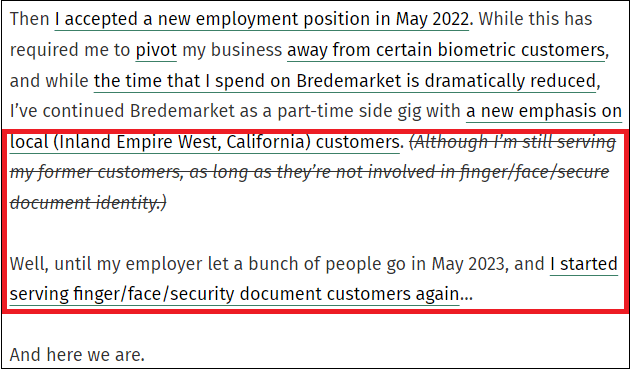
Basically, I had gone through great trouble to document that Bredemarket would NOT take identity work, so I had to reverse a lot of pages to say that Bredemarket WOULD take identity work.
I may have found a few additional pages after June 1, but eventually I reached the point where everything on the Bredemarket website was completely and totally updated, and I wouldn’t have to perform any other changes.
You can predict where this is going.
Who I…was
Today it occurred to me that some of the readers of the LinkedIn Bredemarket page may not know the person behind Bredemarket, so I took the opportunity to share Bredemarket’s “Who I Am” web page on the LinkedIn page.
So yes, this biometric content marketing expert/identity content marketing expert IS available for your content marketing needs. If you’re interested in receiving my help with your identity written content, contact me.
I know that I’m the guy who likes to say that it’s all semantics. After all, I’m the person who has referred to five-page long documents as “battlecards.”
But sometimes the semantics are critically important. Take the terms “factors” and “modalities.” On the surface they sound similar, but in practice there is an extremely important difference between factors of authentication and modalities of authentication. Let’s discuss.
What is a factor?
To answer the question “what is a factor,” let me steal from something I wrote back in 2021 called “The five authentication factors.”
Something You Know. Think “password.” And no, passwords aren’t dead. But the use of your mother’s maiden name as an authentication factor is hopefully decreasing.
Something You Have. I’ve spent much of the last ten years working with this factor, primarily in the form of driver’s licenses. (Yes, MorphoTrak proposed driver’s license systems. No, they eventually stopped doing so. But obviously IDEMIA North America, the former MorphoTrust, has implemented a number of driver’s license systems.) But there are other examples, such as hardware or software tokens.
Something You Are. I’ve spent…a long time with this factor, since this is the factor that includes biometrics modalities (finger, face, iris, DNA, voice, vein, etc.). It also includes behavioral biometrics, provided that they are truly behavioral and relatively static.
Something You Do. The Cybersecurity Man chose to explain this in a non-behavioral fashion, such as using swiping patterns to unlock a device. This is different from something such as gait recognition, which supposedly remains constant and is thus classified as behavioral biometrics.
Somewhere You Are. This is an emerging factor, as smartphones become more and more prevalent and locations are therefore easier to capture. Even then, however, precision isn’t always as good as we want it to be. For example, when you and a few hundred of your closest friends have illegally entered the U.S. Capitol, you can’t use geolocation alone to determine who exactly is in Speaker Pelosi’s office.
(By the way, if you search the series of tubes for reading material on authentication factors, you’ll find a lot of references to only three authentication factors, including references from some very respectable sources. Those sources are only 60% right, since they leave off the final two factors I listed above. It’s five factors of authentication, folks. Maybe.)
The one striking thing about the five factors is that while they can all be used to authenticate (and verify) identities, they are inherently different from one another. The ridges of my fingerprint bear no relation to my 16 character password, nor do they bear any relation to my driver’s license. These differences are critical, as we shall see.
What is a modality?
In identity usage, a modality refers to different variations of the same factor. This is most commonly used with the “something you are” (biometric) factor, but it doesn’t have to be.
[M]any businesses and individuals (are adopting) biometric authentication as it been established as the most secure authentication method surpassing passwords and pins. There are many modalities of biometric authentication to pick from, but which method is the best?
After looking at fingerprints, faces, voices, and irises, Aware basically answered its “best” question by concluding “it depends.” Different modalities have their own strengths and weaknesses, depending upon the use case. (If you wear thick gloves as part of your daily work, forget about fingerprints.)
ID R&D goes a step further and argues that it’s best to use multimodal biometrics, in which the two biometrics are face and voice. (By an amazing coincidence, ID R&D offers face and voice solutions.)
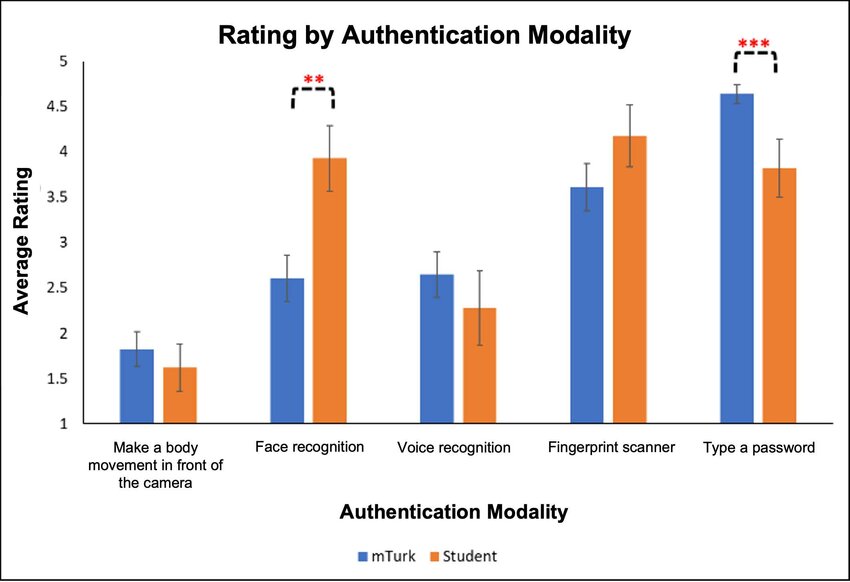
The three modalities in the middle—face, voice, and fingerprint—are all clearly biometric “something you are” modalities.
But the modality on the left, “Make a body movement in front of the camera,” is not a biometric modality (despite its reference to the body), but is an example of “something you do.”
Passwords, of course, are “something you know.”
In fact, each authentication factor has multiple modalities.
For example, a few of the modalities associated with “something you have” include driver’s licenses, passports, hardware tokens, and even smartphones.
Why multifactor is (usually) more robust than multimodal
Modalities within a single authentication factor are more closely related than modalities within multiple authentication factors. As I mentioned above when talking about factors, there is no relationship between my fingerprint, my password, and my driver’s license. However, there is SOME relationship between my driver’s license and my passport, since the two share some common information such as my legal name and my date of birth.
What does this mean?
If I’ve fraudulently created a fake driver’s license in your name, I already have some of the information that I need to create a fake passport in your name.
If I’ve fraudulently created a fake iris, there’s a chance that I might already have some of the information that I need to create a fake face.
However, if I’ve bought your Coinbase password on the dark web, that doesn’t necessarily mean that I was able to also buy your passport information on the dark web (although it is possible).
Can an identity content marketing expert help you navigate these issues?
As you can see, you need to be very careful when writing about modalities and factors.
You need a biometric content marketing expert who has worked with many of these modalities.
Actually, you need an identity content marketing expert who has worked with many of these factors.
So if you are with an identity company and need to write a blog post, LinkedIn article, white paper, or other piece of content that touches on multifactor and multimodal issues, why not engage with Bredemarket to help you out?
If you’re interested in receiving my help with your identity written content, contact me.
I didn’t either. Frankly, I didn’t even work in biometrics professionally until I was in my 30s.
If you have a mad adult desire to become a biometric content marketing expert, here are five topics that I (a self-styled biometric content marketing expert) think you need to understand.
Topic One: Biometrics
Sorry to be Captain Obvious, but if you’re going to talk about biometrics you need to know what you’re talking about.
The days in which an expert could confine themselves to a single biometric modality are long past. Why? Because once you declare yourself an iris expert, someone is bound to ask, “How does iris recognition compare to facial recognition?”
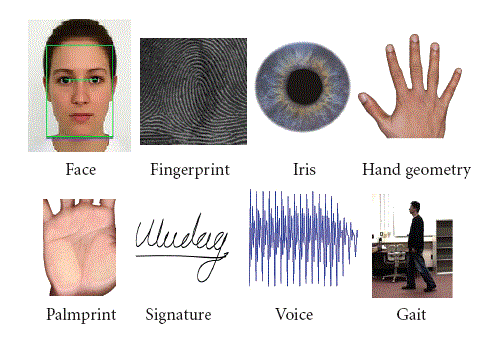
And there are a number of biometric modalities. In addition to face and iris, the Biometrics Institute has cataloged a list of other biometric modalities, including fingerprints/palmprints, voice, DNA, vein, finger/hand geometry, and some more esoteric ones such as gait, keystrokes, and odor. (I wouldn’t want to manage the NIST independent testing for odor.)
As far as I’m concerned, the point isn’t to select the best biometric and ignore all the others. I’m a huge fan of multimodal biometrics, in which a person’s identity is verified or authenticated by multiple biometric types. It’s harder to spoof multiple biometrics than it is to spoof a single one. And even if you spoof two of them, what if the system checks for odor and you haven’t spoofed that one yet?
Topic Two: All the other factors
In the same way that I don’t care for people who select one biometric and ignore the others, I don’t care for some in the “passwords are dead” crowd who go further and say, “Passwords are dead. Use biometrics instead.”
Although I admire the rhyming nature of the phrase.
If you want a robust identity system, you need to use multiple factors in identity verification and authentication.
Something you know.
Something you have.
Something you are (i.e. biometrics).
Something you do.
Somewhere you are.
Again, use of multiple factors protects against spoofing. Maybe someone can create a gummy fingerprint, but can they also create a fake passport AND spoof the city in which you are physically located?
It’s not enough to understand the technical ins and outs of biometric capture, matching, and review. You need to know how biometrics are used.
One-to-one vs. one-to-many. Is the biometric that you acquire only compared to a single biometric samples, or to a database of hundreds, thousands, millions, or billions of other biometric samples?
Markets. When I started in biometrics, I only participated in two markets: law enforcement (catch bad people) and benefits (get benefit payments to the right people). There are many other markets. Just recently I have written about financial identity and educational identity. I’ve worked with about a dozen other markets personally, and there are many more.
Use cases. Related to markets, you need to understand the use cases that biometrics can address. Taking the benefits example, there’s a use case in which a person enrolls for benefits, and the government agency wants to make sure that the person isn’t already enrolled under another name. And there’s a use cases when benefits are paid to make sure that the authorized recipient receives their benefits, and no one else receives their benefits.
Legal and privacy issues. It is imperative that you understand the legal ramifications that affect your chosen biometric use case in your locality. For example, if your house has a doorbell camera that uses “familiar face detection” to identify the faces of people that come to your door, and the people that come to your door are residents of the state of Illinois, you have a BIG BIPA (Biometric Information Privacy Act) problem.
Any identity content marketing expert or biometric content marketing expert worth their salt will understand these and related issues.
Topic Four: Content marketing
This is another Captain Obvious point. If you want to present yourself as a biometric contet marketing expert or identity content marketing expert, you have to have a feel for content marketing.
The definition of content marketing is simple: It’s the process of publishing written and visual material online with the purpose of attracting more leads to your business. These can include blog posts, pages, ebooks, infographics, videos, and more.
But content marketers need to be comfortable with creating at least one type of content.
Topic Five: How L-1 Identity Solutions came to be
Yes, an identity content marketing expert needs to thoroughly understand how L-1 Identity Solutions came to be.
I’m only half joking.
Back in the late 1990s and early 2000s (I’ll ignore FpVTE results for a moment), the fingerprint world in which I worked recognized four major vendors: Cogent, NEC, Printrak (later part of Motorola), and Sagem Morpho.
And then there were all these teeny tiny vendors that offered biometric and non-biometric solutions, including the fierce competitors Identix and Digital Biometrics, the fierce competitors Viisage and Visionics, and a bunch of other companies like Iridian.
Wel, there WERE all these teeny tiny vendors.
Until Bob LaPenta bought them all up and combined them into a single company, L-1 Identity Solutions. (LaPenta was one of the “Ls” in L-3, so he chose the name L-1 when he started his own company.)
So around 2008 the Big Four (including a post-FpVTE Motorola) became the Big Five, since L-1 Identity Solutions was now at the table with the big boys.
But then several things happened:
Motorola started selling off parts of itself. One of those parts, its Biometric Business Unit, was purchased by Safran (the company formed after Sagem and Snecma merged). This affected me because I, a Motorola employee, became an employee of MorphoTrak, the subsidiary formed when Sagem Morpho de facto acquired “Printrak” (Motorola’s Biometric Business Unit). So now the Big Five were the Big Four.
Make that the Big Three, because Safran also bought L-1 Identity Solutions, which became MorphoTrust. MorphoTrak and MorphoTrust were separate entities, and in fact competed against each other, so maybe we should say that the Big Four still existed.
Oh, and by the way, the independent company Cogent was acquired by 3M (although NEC considered buying it).
A few years later, 3M sold bits of itself (including the Cogent bit) to Gemalto.
Then in 2017, Advent International (which owned Oberthur) acquired bits of Safran (the “Morpho” part) and merged them with Oberthur to form IDEMIA. As a consequence of this, MorphoTrust de facto acquired MorphoTrak, ending the competition but requiring me to have two separate computers to access the still-separate MorphoTrust and MorphoTrak computer networks. (In passing, I have heard from two sources, but have not confirmed myself, that the possible sale of IDEMIA is on hold.)
Why do I mention all this? Because all these mergers and acquisitions have resulted in identity practitioners working for a dizzying number of firms.
As of August 2023, I myself have worked for five identity firms, but in reality four of the five are the same firm because the original Printrak International kept on getting acquired (Motorola, Safran, IDEMIA).
And that’s nothing. One of my former Printrak coworkers (R.M.) has also worked for Digital Biometrics (now part of IDEMIA), Cross Match Technologies (now part of ASSA ABLOY), Iridian (now part of IDEMIA), Datastrip, Creative Information Technology, AGNITiO, iTouch Biometrics, NDI Recognition Systems, iProov, and a few other firms here and there.
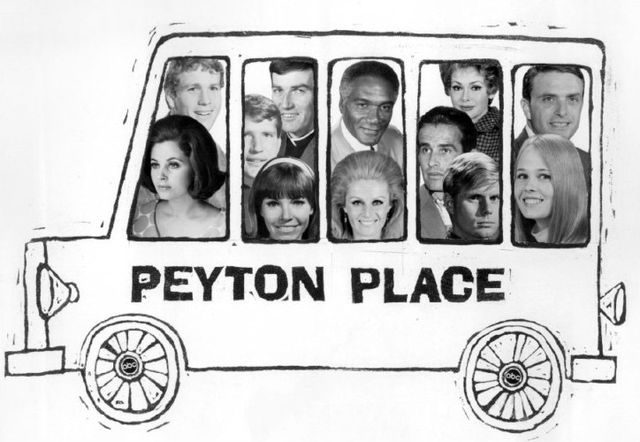
The point is that everybody knows everybody because everybody has worked with (and against) everybody. And with all the job shifts, it’s a regular Peyton Place.
Not sure which one is me, which one is R.M., and who the other people are.
Do you need an identity content marketing expert today?
Do you need someone who not only knows biometrics and content marketing, but also all the other factors, their uses, and even knows the tangled history of L-1?
Whether a student is attending a preschool, a graduate school, or something in between, the educational institution needs to know who is accessing their services. This post discusses the types of identity verification and authentication that educational institutions may employ.
Why do educational institutions need to verify and authenticate identities?
Whether little Johnny is taking his blanket to preschool, or Johnny’s mother is taking her research notes to the local university, educational institutions such as schools, colleges, and universities need to know who the attendees are. It doesn’t matter whether the institution has a physical campus, like Chaffey High School’s campus in the video above, or if the institution has a virtual campus in which people attend via their computers, tablets, or phones.
Access boils down to two questions:
Who is allowed within the educational institution?
Who is blocked from the educational institution?
Who is allowed within the educational institution?
Regardless of the type of institution, there are certain people who are allowed within the physical and/or virtual campus.
Students.
Instructors, including teachers, teaching assistants/aides, and professors.
Administrators.
Staff.
Parents of minor students (but see below).
Others.
All of these people are entitled to access to at least portions of the campus, with different people having access to different portions of the campus. (Students usually can’t enter the teacher’s lounge, and hardly anybody has full access to the computer system where grades are kept.)
Before anyone is granted campus privileges, they have to complete identity verification. This may be really rigorous, but in some cases it can’t be THAT rigorous (how many preschoolers have a government ID?). Often, it’s not rigorous at all (“Can you show me a water bill? Is this your kid? OK then.”).
Once an authorized individual’s identity is verified, they need to be authenticated when they try to enter the campus. This is a relatively new phenomenon, in response to security threats at schools. Again, this could be really rigorous. For example, when students at a University of Rhode Island dining hall want to purchase food from the cafeteria, many of then consent to have their fingerprints scanned.
But some authentiation is much less rigorous. In these cases, people merely show an ID (hopefully not a fake ID) to authenticate themselves, or a security guard says “I know Johnny.”
(Again, all this is new. Many years ago, I accompanied a former college classmate to a class at his new college, the College of Marin. If I had kept my mouth shut, the professor wouldn’t have known that an unauthenticated student was in his class.)
Who is blocked from the educational institution?
At the same time, there are people who are clearly NOT allowed within the physical and/or virtual campus. Some of these people can enter campus with special permission, while some are completely blocked.
Former students. Once a student graduates, their privileges are usually revoked, and they need special permission if they want to re-enter campus to visit teachers or friends. (Admittedly this isn’t rigorously enforced.)
Expelled students. Well, some former students have a harder time returning to campus. If you brought a gun on campus, it’s going to be much harder for you to re-enter.
Former instructors, administrators, and staff. Again, people who leave the employ of the institution may not be allowed back, and certain ones definitely won’t be allowed back.
Non-custodial parents of minor students. In some cases, a court order prohibits a natural parent from contact with their child. So the educational institutions are responsible for enforcing this court order and ensuring that the minor student leaves campus only with someone who is authorized to take the child.
Others.
So how do you keep these people off campus? There are two ways.
If they’re not on the allowlist, they can’t enter campus anyway. As part of the identity verification process for authorized individuals, there is a list of people who can enter the campus. By definition, the 8 billion-plus people who are not on that “allowlist” can’t get on campus without special permission.
Sometimes they can be put on a blocklist. Or maybe you want to KNOW that certain people can’t enter campus. The inverse of an allowlist, people who are granted access, is a blocklist, people who are prevented from getting access. (You may know “blocklist” by the older term “blacklist,” and “allowlist” by the older term “whitelist.” The Security Industry Association and the National Institute of Standards and Technology recommend updated terminology.)
There’s just one teeny tiny problem with blocklists. Sometimes they’re prohibited by law.
In some cases (but not in others), a person is required to give consent before they are enrolled in a biometric system. If you’re the ex-student who was expelled for brining a gun on campus, how motivated will you be to allow that educational institution to capture your biometrics to keep you off campus?
And yes, I realize that the expelled student’s biometrics were captured while they were a student, but once they were no longer a student, the institution would have on need to retain those biometrics. Unless they felt like it.
This situation becomes especially sticky for campuses that use video surveillance systems. Like Chaffey High School.
Chaffey High School, Ontario, California.
Now the mere installation of a video surveillance system does not (usually) result in legally prohibited behavior. It just depends upon what is done with the video.
If the video is not integrated with a biometric facial recognition system, there may not be an issue.
If Chaffey High School has its own biometric facial recognition system, then a whole host of legal factors may come into play.
If Chaffey High School does not have a biometric facial recognition system, but it gives the video to a police agency or private entity that does have a biometric facial recognition system, then some legal factors may emerge.
As you can see, educational identity is not as clear-cut as financial identity, both because financial institutions are more highly regulated and because blocklists are more controversial in educational identity. Vladimir Putin may not be able to open a financial account at a U.S. bank, but I bet he’d be allowed to enroll in an online course at a U.S. community college.
So if you are an educational institution or an identity firm who serves educational institutions, people who write for you need to know all of these nuances.
You need to provide the right information to your customers, and write it in a way that will motivate your customers to take the action you want them to take.
Speaking of motivating customers, are you with an identity firm or educational institution and need someone to write your marketing text?
Someone with 29 years of identity/biometric marketing experience?
Someone who understands that technological, organizational, and legal issues surrounding the use of identity solutions?
Someone who will explain why your customers should care about these issues, and the benefits a compliant solution provides to them?
If I can help you create your educational identity content, we need to talk.
Stump the Experts at WWDC 2010 Stefan Haubold • CC BY-SA 3.0
One way for your firm to publicize its offerings is through company LinkedIn articles. My LinkedIn article, written by my company Bredemarket, discusses…well, company LinkedIn articles. It also discusses:
Why you should write LinkedIn articles.
Why companies should write LinkedIn articles under their own names.
How to create LinkedIn articles.
Finally, who can write your LinkedIn articles. (I have a suggestion.)
Bank of America, Euclid Avenue, Ontario, California.
Here’s a sign of the times from Ontario, California. The sign at the end of this video appears on the door of a bank branch in downtown Ontario, and basically says that if you wanted to go to THIS branch on Saturday, you’re out of luck.
Of course, that assumes that you actually WANT to go to a physical bank branch location. Unlike the old days, when banks were substantive buildings that you visited to deposit and withdraw money, now banks can be found in our smartphones.
What locational, technological, and organizational changes have taken place at banks over the last 50 years? And now that you can open an account to buy crypto on your smartphone, does your financial institution’s onboarding solution actually WORK in determining financial identity?
Three changes in banking over the last fifty years
Over the last fifty years, banking has changed to the point where someone from 1973 wouldn’t even recognize “banking” today. Stick around to see a video from a company called “Apple” showing you how to use a “wallet” on a “smartphone” to pay for things even if you’re not carrying your “chip card.” Karl Malden would be spinning in his grave. So let’s talk about the three changes:
The locational change.
The technological change.
The organizational change.
The locational change: from stand-alone buildings to partitioned grocery store sections
When I was growing up, a “bank” (or a “savings & loan,” which we will discuss later) was located in a building where you would go on weekdays (or even Saturdays!) and give money to, or get money from, a person referred to as a teller.
There was this whole idea of “going to the bank,” perhaps on your lunch hour because you couldn’t go to the bank on Sunday at midnight, could you?
The first crack in the whole idea of “going to the bank” was the ability to bank without entering the door of the bank…and being able to bank on Sunday at midnight if you felt like it. Yes, I’m talking about Automated Teller Machines (ATMs), where the “teller,” instead of being a person, was a bunch of metal and a TV screen. The first ATM appeared in 1967, but they didn’t really become popular until several years later.
For the most part, these ATMs were located at the bank buildings themselves. But those buildings were costly, and as competition between banks increased, banks sought alternatives. By 1996, a new type of banking location emerged (PDF):
The largest U.S. commercial banks are restructuring their retail operations to reduce the cost disadvantage resulting from a stagnant deposit base and stiffer competition. As part of this effort, some banks are opening “supermarket,” or “in-store,” branches: a new type of banking office within a large retail outlet. An alternative to the traditional bank office, the supermarket branch enables banks to improve the efficiency of the branch network and offer greater convenience to customers.
To traditionalists, these bank branches looked pretty flimsy. Where are the brick and (fake) marble walls that protect my cash? Heck, anyone can walk into the store and just steal all my money, right?
Well, these newfangled bank branches apparently WERE able to protect our cash, and the idea of banking right in the grocery store proved to be very popular because of its convenience.
But the changes were just beginning.
The technological change: from store sections to smartphones
As banks changed where they were located, there were technological changes also.
During the 1990s, more and more people were using home computers. As the computers and their security became more and more sophisticated, some people asked why we needed to “go to the bank” (either a stand-alone building or a partitioned area next to the cigarettes) at all. Why not just bank at the computer? So PC banking emerged.
The term “PC banking” refers to the online access of banking information from a personal computer. A solution for both personal or business banking needs, this type of financial management allows you to conduct transactions using an Internet connection and your computer in lieu of a trip to the local bank branch or the use of an ATM. PC banking enables an account holder to perform real-time account activities and effectively manage finances in a way that avoids the hassle of daytime bank visits and eliminates the postage required to pay bills by mail.
Ah yes; there was another benefit. You could use the computer to pay your bills electronically. The U.S. Postal Service was NOT a fan of this change.
As we crossed into the new millennium, the online banking ideas got even wilder. Cellular telephones, which followed a modified version of the “Princess phone” form factor, became more complex devices with their own teeny-tiny screens, just like their larger computer cousins. Eventually, banks began offering their services on these “smartphones,” so that you didn’t even need a computer to perform your banking activities.
Imagine putting the video below on 8mm film and traveling back in time to show it to a 1973 banking customer. They would have no idea what was going on in the film.
But are PC and smartphone banking secure? After all, smartphones don’t have brick or (fake) marble walls. We’ll get to that question.
The organizational change: from banks to…who knows what?
The third change was not locational or technological, but a change in terms of business organization. Actually, many changes.
Back in 1973, the two major types of banks were banks, and something called “savings & loans.” Banks had been around for centuries, but savings & loans were a little newer, having started in 1831. They were regulated a little differently: banks were insured by the FDIC, S&Ls by the FSLIC.
Everything was all hunky dory until the 1980s, when the S&Ls started collapsing. This had monumental effects; for example, this PDF documenting the S&L crisis is hosted on the FDIC website, because the FSLIC was abolished many years ago.
After savings & loans became less popular, other “banks” emerged.
Members-only associations called credit unions had started in 1864, and in the United States they had their own government-sponsored insurance, separate from the FDIC and FSLIC.
But there was one similarity between banks, savings & loans, credit unions, and payday loans. They all dealt in U.S. dollars (or the currency of the nation where they were located).
Enter the crypto providers, who traded cryptocurrencies that weren’t backed by any government. Since they were very new entrants, they didn’t have to make the locational and technological changes that banks and related entities had to make; they zoomed straight to the newest methods. Everything was performed on your smartphone (or computer), and you never went to a physical place.
Now, let’s open a financial account
Back in 1973, the act of opening an account required you to travel to a bank branch, fill out some forms, and give the teller some form of U.S. dollars.
You can still do that today, for the most part. But it was hard to do that in the summer and fall of 2020 when Bredemarket started.
Bredemarket pretty much started because of the COVID-19 pandemic, and those first few months of Bredemarket’s existence were adversely affected by COVID-19. When I wanted to start a bank account for Bredemarket, I COULDN’T travel to my nearby bank branch to open an account. I HAD to open my account with my computer.
So, without a teller (human or otherwise) even meeting me, I had to prove that I was a real person, and give my bank enough information during onboarding so that they knew I wasn’t a money-laundering terrorist. Banks had to follow government regulations (know your customer, anti-money laundering, know your business), even in the midst of a worldwide pandemic.
This onboarding process had to be supported whether you were or were not at a physical location of a financial institution.
Whether you were conducting business in person, on a computer, or on a smartphone.
Whether you were working with U.S. dollars or (as crypto regulations tightened) something named after a dog or an entire planet or whatever.
How can you support all that?
Liminal’s “Link™ Index for Account Opening in Financial Services”
Back in 2020 when I was onboarding the new-fashioned way, I had no way of predicting that in less than two years, I would be working for a company that helped financial institutions onboard customers the new-fashioned way.
At the time, I estimated that there were over 80 companies that provided such services.
According to Liminal, my estimate was too low. Or maybe it was too high.
Liminal’s July 2023 report, “Link™ Index for Account Opening in Financial Services,” covers companies that provide onboarding services that allow financial institutions to use their smartphone apps (or web pages) to sign up new clients.
Account opening solutions for the financial services industry are critical to ensuring compliance and preventing fraud, enabling companies to effectively identify new users during customer registration and deliver a seamless onboarding experience. The primary purpose of these solutions is to facilitate mandatory compliance checks, with a particular emphasis on the Know Your Customer (KYC) process.
If I can summarize KYC in layperson terms, it basically means that the person opening a financial institution account is who they say they are. For example, it ensures that Vladimir Putin can’t open a U.S. bank acccount under the name “Alan Smithee” to evade U.S. bans on Russian national transctions.
Remember how I found over 80 identify proofing vendors? Liminal found a few more who claimed to offer identity proofing, but thinks that less than 80 firms can actually deliver.
Around 150 vendors claim to offer account opening compliance and fraud solutions in banking, but only 32 (21.3%) have the necessary product features to meet buyer demands.
Now I have not purchased the entire Liminal report, and even the Executive Summary (which I do have) is “privileged and confidential” so I can’t reprint it here. But I guess that I can say that Liminal used something called the “Link Score” to determine which vendors made the top category, and which didn’t.
I’m not sure how the vendors who DIDN’T make the top category are reacting to their exclusion, but I can bet that they’re not happy.
Writing about Financial Identity
As you can gather, there are a number of issues that you have to address if you want to employ identity proofing at a financial institution.
And if you’re an identity firm or financial institution, you need to provide the right information to your customers, and write it in a way that will motivate your customers to take the action you want them to take.
Speaking of motivating customers, are you with an identity firm or financial institution and need someone to write your marketing text?
Someone with 29 years of identity/biometric marketing experience?
Someone who consistently tosses around acronyms like ABM, FRVT, KYB, KYC, and PAD, but who would never dump undefined acronyms on your readers? (If you’re not a financial/identity professional and don’t know these acronyms, they stand for anti-money laundering, Face Recognition Vendor Test, Know Your Business, Know Your Customer, and Presentation Attack Detection.)
Someone who will explain why your customers should care about these acronyms, and the benefits a compliant solution provides to them?
If I can help you create your financial identity content, we need to talk.
I remember the day that my car skidded down Monterey Pass Road in Monterey Park, California, upside down, my seatbelt saving my brain from…um…very bad things. (I promised myself that I’d make this post NON-gory.)
I was returning from lunch to my employer farther south on Monterey Pass Road when a car hit me from the side, flipping my car over so that it skidded down Monterey Pass Road, upside down. Only my seat belt saved my from certain death.
Now some of you who know me are asking, “John, you’ve lived in Ontario and Upland for the past several decades. Why were you 30 miles away, in Monterey Park?”
Well, back in 1991, after working for Rancho Cucamonga companies for several years, I ended up commuting to a company in Monterey Park, California, at least an hour’s drive one way from my home. Driving toward downtown Los Angeles in the morning, and away from downtown Los Angeles in the afternoon. If you know, you know.
After I left the Monterey Park company, I consulted or worked for companies in Pomona, Brea, Anaheim, Irvine, and other cities. But for most of the next three decades, I was still driving at least an hour one-way every day to get from home to work.
As I’ll note later in this post, some people are still commuting today. And for all I know I may commute again also.
I learn the acronym WFH
That all stopped in March 2020 when a worldwide pandemic sent all non-essential personnel at IDEMIA’s Anaheim office to work from home (WFH). Now there were some IDEMIA employees, such as salespeople, who had been working from home for years, but this was the first time that a whole bunch of us were doing it.
Some of us had to upgrade our home equipment: mesh networks, special face illumination lighting, and other things. And now, instead of having a couple of people participating in meetings remotely, ALL of us were doing so. (Before 2020, the two words “Zoom background” would be incomprehensible to me. After 2020, I understood those words intimately.)
This new work practice continued after I left IDEMIA, as I started Bredemarket, joined Incode Technologies for a little over a year, and returned (for now) to Bredemarket again.
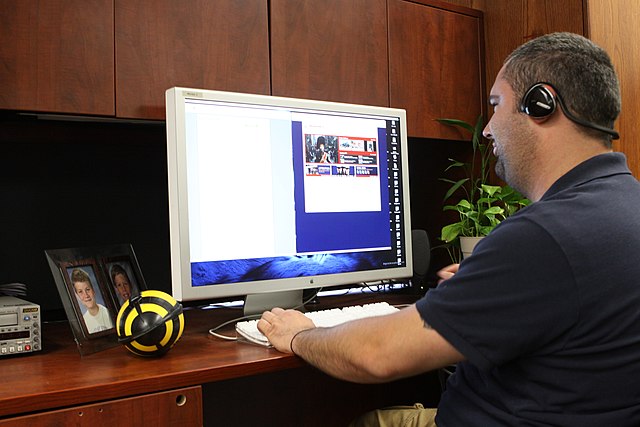
The U.S. Marine Corps supported WFH (for certain positions) in 2010, long before COVID. This image was released by the United States Marine Corps with the ID 100324-M-6847A-001 (next). This tag does not indicate the copyright status of the attached work. A normal copyright tag is still required. See Commons:Licensing.العربية ∙ বাংলা ∙ Deutsch ∙ Deutsch (Sie-Form) ∙ English ∙ español ∙ euskara ∙ فارسی ∙ français ∙ italiano ∙ 日本語 ∙ 한국어 ∙ македонски ∙ മലയാളം ∙ Plattdüütsch ∙ Nederlands ∙ polski ∙ پښتو ∙ português ∙ slovenščina ∙ svenska ∙ Türkçe ∙ українська ∙ 简体中文 ∙ 繁體中文 ∙ +/−, Public Domain, https://commons.wikimedia.org/w/index.php?curid=23181833
WFH benefits
There are two benefits to working from home:
First, it preserves your brain. Not just from the horrible results of a commuting automobile accident. For the last three-plus years, I’ve gotten more rest and sleep since I’m not waking up before 6am and getting home after 6pm. And I’m not sitting in traffic on the 57, waiting for an accident to clear.
Second, it provides the best talent to your employer. Why? Because it can hire you. I just spent over a year working for a company headquartered in San Francisco, and I didn’t have to move to San Francisco to do it. In fact, when my product marketing team reached its apex, we had two people in Southern California, one in England, and one in Sweden. None of us had to move to San Francisco to work there, and my company was not restricted to hiring people who could get to San Francisco every day.
But that doesn’t stop some companies from insisting on office work
In-office presence controversy predates COVID (remember Marissa Mayer and Yahoo?), and now that COVID has receded, the “return to office” drumbeat has gotten louder.
Now I’m not saying I’ll never work on-site again. Maybe someday I’ll even accept an on-site position in Monterey Park.
But I’m not that thrilled about going down Monterey Pass Road again.
In the meantime…
…since I’m NOT full-time employed, and since my home office is well equipped (I have Nespresso!), I have the time to make YOUR company’s messaging better.
If you can use Bredemarket’s expertise for your biometric, identity, technology, or general blog posts, case studies, white papers, or other written content, contact me.
















 Bredemarket
