All too often, Bredemarket confines its writing discussions to the traditional ABCW (articles, blog posts, case studies, white papers) categories.
But what if your content needs are non-traditional and fall outside of the usual nice neat business writing categories?
From the 2023 Route 66 Cruisin’ Reunion, Saturday, September 16, 2023.
If you are an Inland Empire business who needs words, but not in the traditional “ABCW” (articles, blog posts, case studies, white papers) business types, Bredemarket will help you with your non-traditional writing needs.
Take a look at the examples I’ve provided below, and if these spark interest within you, authorize Bredemarket, Ontario California’s content marketing expert, to help your firm produce words that return results.
Book a meeting with me at calendly.com/bredemarket. Be sure to fill out the information form so I can best help you. For example, if you’re an Inland Empire business requiring non-traditional content, fill out the form accordingly.
I won’t go into all 22 types again, especially since some of them are internal content rather than customer-facing content. But I’d like to highlight the “ABCW” four types that I mentioned at the beginning of this blog post, plus a couple of others.
Articles and blog posts
I’m lumping articles and blog posts together, because while some “experts” try to draw hard-and-fast distinctions between the two, they’re pretty much the same thing.
Whether it’s a blog post on your website, a post or article on LinkedIn, or even some extended text associated with an Instagram picture or a TikTok video, what you’re creating is some text that entertains, persuades, inspires, or educates your reader, or perhaps all four. You set the goal for the article or blog post, then tailor the content to meet the goal. (I’ll talk more about goals later.)
Case studies
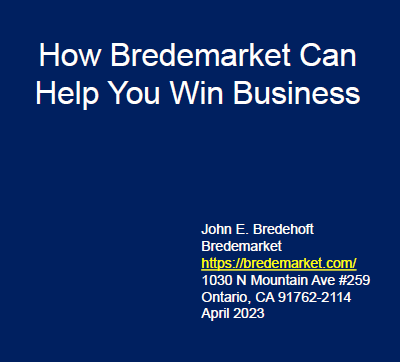
From “How Bredemarket Can Help You Win Business,” available via this post.
Case studies show your readers how your solution was applied to someone else’s problem, and how your solution can benefit your prospects with similar problems.
Maybe your prospect is a city police agency that needs a tool to solve crimes, and your case study describes how your solution solved crimes in a similar city. Again, you set the goal for the case study, then tailor the content to meet the goal.
White papers
On the surface, white papers are informational, but when a company issues a white paper, the “information” that the white paper provides should gently guide the reader toward doing business with the company that issued the paper. Using the example above, you could write a white paper that outlines “Five Critical Elements for a Local Crime-Solving Solution.” By remarkable coincidence, your own solution happens to include all five of those critical elements. Again, you set the goal and tailor the content.
Briefs, data sheets, and literature sheets
One-page sheet for the Bredemarket 400 Short Writing Service. More information here.
Perhaps you need to provide handouts to your prospects that describe your product or service.
Regardless of whether you call these handouts briefs, data, sheets, literature sheets, or something else, they should at a minimum contain both “educate” and “persuade” elements—educate your prospects on the benefits of your product or service, and persuade your prospects to move closer to a sale (conversion).
Again, you set the goal and tailor the content.
Web page content
If your business has a web page, I hope that it has more words than “Under construction.” Whether you have imagery, video, audio, text, or all four on your web page, it needs to answer the questions that your prospects and customers have.
You know what I’m going to say here, but it’s still important. You set the goal and tailor the content.
But…what if your business needs content that doesn’t fall into these traditional business categories?
Non-traditional content: going to a car show
I went to a car show this weekend—specifically, this year’s Route 66 Cruisin’ Reunion in downtown Ontario, California. (Yes, I know that Route 66 actually passed three miles north of downtown Ontario, but work with me here.)
While some of the exhibitors were personal, some of them were businesses. As businesses, what was the major marketing collateral that they generated?
Not a blog post, or LinkedIn article, or any of the traditional business media collateral.
In addition to the car itself, this exhibitor included poster boards with words describing the car.
Another exhibitor did the same thing.
So while these car show exhibitors didn’t choose a traditional way to convey their words, they shared written text anyway.
Your non-traditional business communication needs
Maybe you don’t have a classic car. Maybe you don’t have a car at all. Do you need to share words with your prospects and customers anyway?
Now I don’t know your business communication needs. You do. But I can guess a few things.
Do you need to tell your clients/potential clients why you do what you do?
Do you need to tell them how you do it?
And last but not least, do you need to tell them what you do?
I know that this may seem like an unusual order to you. Why not start with what you do?
Because your customers don’t care about what you do. Your customers care about themselves.
If you keep the focus on your customers, the answer to the “why” question will induce your customers to care about you, because it shows how you can solve their problems.
Let’s illustrate this.
Why and how Bredemarket creates non-traditional content
You may be asking why I create content in the first place. There are countless content creators, both human and non-human. Why turn to me when OpenAI and its bot buddies are a lot cheaper and faster?
Normally I include my recent professional picture, but I have been writing since my college days (on a typewriter back then).
Bredemarket’s service is independent of content type. I don’t have a “Bredemarket blog writing service” or “Bredemarket data sheet writing service” or “Bredemarket case study writing service.” My services are based on word length, not content type, with my most popular service targeted to customers who need between 400 and 600 words of text. From this perspective, I don’t care if you want the words to appear on your website or your social media channel or a paper flyer or a sign next to your car or a really really long banner towed behind an airplane. (Read about the Bredemarket 400 Short Writing Service here.)
Before I write a thing, I ask your some questions. It won’t surprise you to learn that my first questions to you are why, how, and what. I then move on to questions about your goal for the content, the benefits of your solution, the target audience for your solution, and many additional questions. (Read about the Six Questions Your Content Creator Should Ask You here.)
Once the questions are out of the way, content creation is collaborative and iterative. I create a draft, you review it, and we repeat. The Bredemarket 400 service includes two review cycles; longer content needs include three review cycles. The goal is to ensure that both of us are happy with the final product.
Bredemarket’s process applies regardless of the specific content type, so I should be able to support whatever content you need, whether it’s traditional or non-traditional.
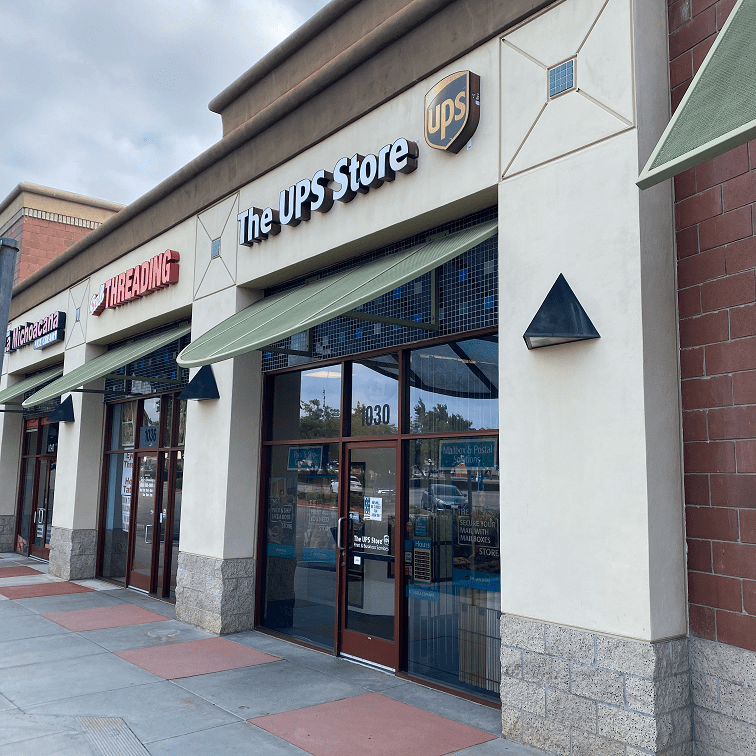
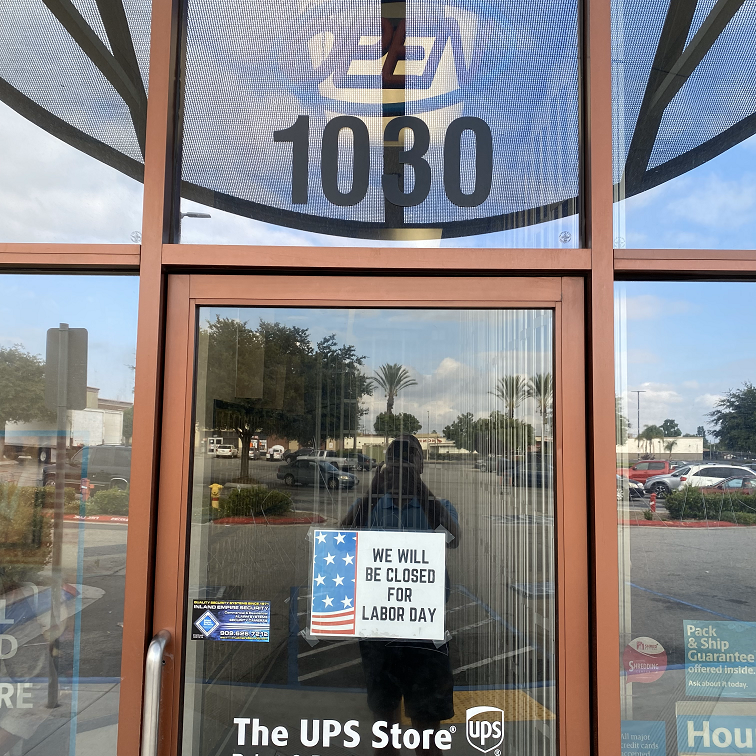
I wasn’t going to labor on this Labor Day, but I ended up renewing my City of Ontario business license. (This coming year will be the fourth that Bredemarket has conducted business in Ontario.)
The UPS Store, 1030 N Mountain Ave, Ontario CA 91762.They WERE closed for Labor Day (but boxholders have keys).Bredemarket’s mailing address is 1030 N Mountain Ave #259, Ontario CA 91762-2114.
Now most people don’t interact with Bredemarket via my physical mailing address. The few that do include the City of Ontario, and three of my clients who have chosen to pay me via paper checks. (I’m flexible.)
This got me curious.
What if?
What if the Internet were to disappear tomorrow? What if the only way my clients could interact with Bredemarket was through my Bredemarket physical mailing address? Could Bredemarket still conduct business?
Possibly.
Some of my business would disappear overnight. Blog posts, for example, are meaningless in a non-Internet world, unless companies choose to post long text-based communications on utility poles. Or in laundromats.
This used to be my laundromat. 454 N Mountain Ave, Ontario, CA 91762.
Even if the Internet were to disappear, I could still write text for case studies (maintaining my Inland Empire case study writing business) and white papers. I could send my client a Microsoft Word file (perhaps an old version of Word), and the firm could send the file to their printer. But how would I send the file? Put a CD in the mail?
If your Inland Empire company doesn’t have an online presence, one quick way to create one is to create a business page on Facebook.
This post outlines the benefits of establishing an online presence via a Facebook business page. It also provides four examples of Facebook business pages. Finally, the post addresses the thorny question of creating content for your Facebook business page.
Why Faceboook may be the best online presence for your business
For the first time in years, I attended an Ontario IDEA Exchange meeting at AmPac Business Capital on Tuesday afternoon. There was a mixture of attendees: some who had established several businesses, some like me who had run one business for some time, and a few who were just starting out in business.
The ones who were starting out were still trying to figure out all the things you need to do to start a business: figuring out why the business exists in the first place, getting the appropriate business licenses (and in some cases professional licenses), printing business cards (or creating the online equivalent), setting up SOME kind of way to track prospects and customers…and establishing an online presence.
Now some businesses choose to establish their online presence by creating a website.
But even the simplest website can involve a lot of complexity—bredemarket.com currently has 57 pages, not counting tag pages and individual blog post pages.
For many small businesses, it may be much easier to create a Facebook business page then to create an entire website.
Facebook business pages are free. (Well, unless you run ads.)
Facebook business pages are easy to create.
Facebook business pages potentially reach billions of people, including your prospects and customers.
Creating a Facebook business page
So how do you create a Facebook business page?
There’s no need for me to document all of that in detail, since many have already done so.
Don’t worry if you don’t have all the optional items, such as a page cover picture. You can add them later. This will get you going.
Other guides to creating Facebook business pages are available from Buffer (with pictures), Hootsuite (with pictures). Sprout Social (with pictures), and a number of other sources.
But before you create YOUR Facebook business page, let me show you four varied examples of EXISTING Facebook business pages.
Four examples of Facebook business pages
Let’s take a look at some pages that already exist. Perhaps one or more of these will give you ideas for your own page.
The artist page (Paso Artis)
Paso Artis is a European business whose proprietor is a painter who sells her paintings.
The menu options at the bottom of the picture above (some of which cannot be seen) illustrate some of the elements you can include in a Facebook page. Here are just a few of the page elements that Paso Artis uses:
Posts. This is the equivalent of a blog on a website, and allows you to post text, images, videos, and other types of content.
About. This is where you provide contact and other basic information about your business.
Shop. Facebook allows you to include a shop, which Paso Artis uses to sell her paintings.
Photos. As you can imagine for an artist’s page, photos of the artwork are essential.
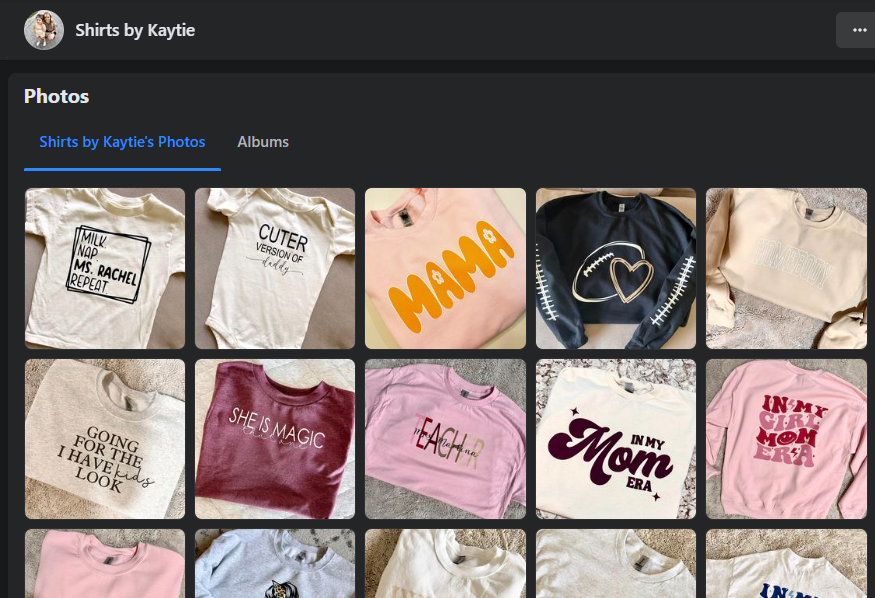
The shirtmaker page (Shirts by Kaytie)
(UPDATE 10/20/2023: Because Shirts by Kaytie is sadly no longer in business, I have removed the, um, live links to her Facebook page.)
Let’s leave Europe and go to Illinois where we find another artist, but her work is not displayed on paintings, but on shirts. Here is the Shirts by Kaytie Facebook page.
You’ll notice that Shirts by Kaytie has a different menu item order (and different menu items) than Paso Artis. For example, Shirts by Kaytie doesn’t have a Facebook “shop” element; you need to contact her directly to purchase items.
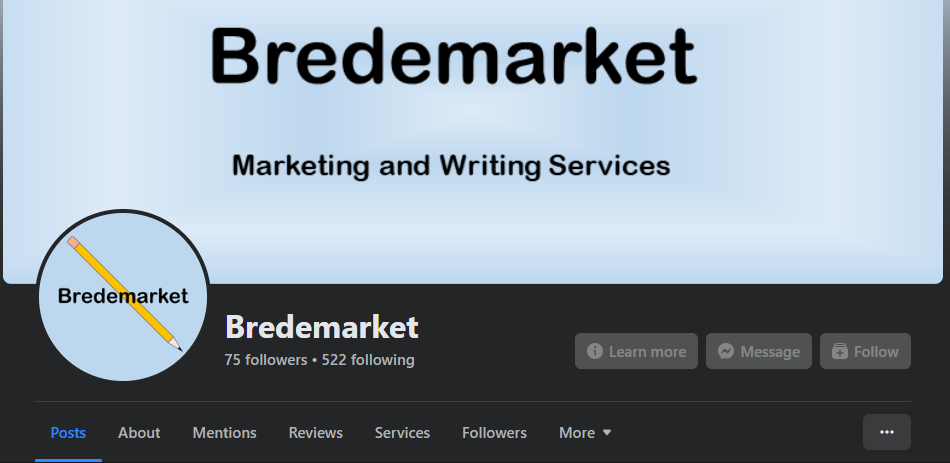
Enough of such exotic locations as Europe and Illinois. Let’s head to California’s Inland Empire and look at my favorite marketing/writing services Facebook page, the Bredemarket Facebook page.
First, Bredemarket (unlike Paso Artis and Shirts by Kaytie) provides services rather than tangible products. Therefore, I chose to include a “Services” element as part of my Facebook page.
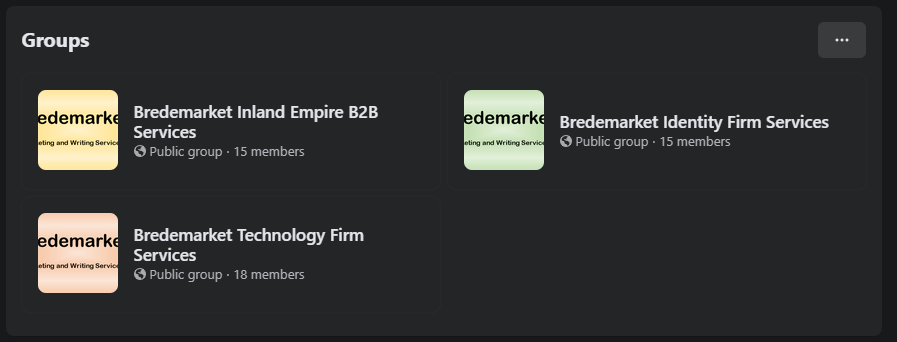
Second, Bredemarket has chosen to implement Facebook’s “groups” feature. In Bredemarket’s case, there are three separate groups that focus on various aspects of Bredemarket’s business. Inland Empire businesses can read the content in the Bredemarket Inland Empire B2B Services group and not get bogged down in out-of-area identity discussions about the change from FRVT to FRTE. (They’re missing out.)
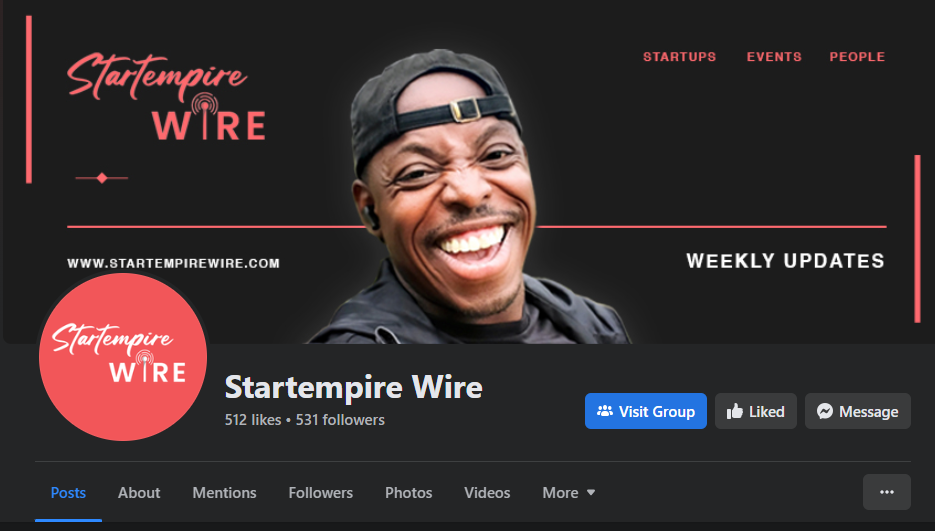
By the way, if you are an Inland Empire business—especially an Inland Empire startup technology business—and you have never heard of Startempire Wire, STOP READING MY POST and go follow Startempire Wire’s Facebook pageNOW. Startempire Wire is THE news source for Inland Empire startup tech information, and is a strong champion of the IE tech community.
So what does Startempire Wire’s Facebook page offer? Posts, photos, weekly videos, and the “Inland Empire Startup Scene” group. All of the content is jam-packed with information.
Facebook pages are essential to these firms’ strategies
Now in some cases the Facebook pages are only part of the online presence for these firms. Both Bredemarket and Startempire Wire have their own web pages, and both firms are also active on other online properties such as LinkedIn. (Bredemarket is almost everywhere, but not on Snapchat.) But Facebook is an essential part of the outreach for all four of these firms, allowing them to reach prospects and clients who are only on Facebook and nowhere else.
Perhaps a Facebook page is a perfect solution for YOUR firm’s online presence.
Let’s talk about content
But creating a Facebook page is not enough.
You need to populate it with content, such as images, videos…and posts.
Now I’m not saying that you HAVE to update your Facebook page daily, but it’s a good idea to add new content at least once a month.
But what if you aren’t a writer, or don’t have time to write? Do you have to resort to ChatGPT?
Heavens no. (I’ll say more about that later.)
Well, online content creation is where Bredemarket comes in. I help firms create blog posts, Facebook posts, LinkedIn articles, case studies, white papers, and other content (22 different types of content at last count).
Does your product (or company) need these 22 content types?
Let me help you populate your Facebook page (or other online content).
Authorize Bredemarket, Ontario California’s content marketing expert, to help your firm produce words that return results.
If you are reading this on your laptop (or your desktop), point your smartphone to the QR code on your laptop (or desktop) screen to read my first e-book, “Six Questions Your Content Creator Should Ask You.”
(UPDATE OCTOBER 22, 2023: “SIX QUESTIONS YOUR CONTENT CREATOR SHOULD ASK YOU IS SO 2022. DOWNLOAD THE NEWER “SEVEN QUESTIONS YOUR CONTENT CREATOR SHOULD ASK YOU” HERE.)
As I said before, QR codes are sometimes useful, and sometimes not.
If you want to know the “why” about the e-book-see what I did there?-visit my announcement of the e-book. You can view the e-book there also.
By the way, I just checked my WordPress stats. Since this e-book was published in December 2022, it’s been downloaded over 160 times. I hope it’s helping people.
I can’t share work samples that I created for Bredemarket clients, because they are ghostwritten “works for hire” that are not publicly attributed to Bredemarket.
(For the same reason, I can’t share most work samples that I created for my previous employers.)
But I CAN share work samples that I created for…Bredemarket.
The video containing this image can be found on various Bredemarket properties.
Actually, you can search through the entire Bredemarket website and social media outlets and find them.
Or you can just watch the video below, which summarizes everything.
As content creators accelerate information generation and distribution, content consumers demand information NOW. Perhaps my prediction of five-minute content creation hasn’t occurred—yet—but firms need to distribute their messages as fast as possible.
This Bredemarket blog post discusses a rapid way for identity/biometric firms to communicate the benefits of their solutions and capture their prospects’ attention immediately.
Blogging provides the rapid content generation your identity/biometric firm needs.
Benefits are essential in your blog post to help convert your readers.
Bredemarket can generate a benefits-laced blog post for your identity/biometric firm…with no learning curve necessary, allowing you to distribute your message quickly.
Why blogging?
While my consultancy Bredemarket creates identity content in a variety of customer-facing formats, including white papers, case studies, and e-books, one of my favorite ways to write about identity is via blog posts.
Blog posts provide an immediate business impact. It’s easier to create a blog post than it is to create a downloadable document. If Bredemarket needs to generate content for its self-marketing, I can get a blog post out in two hours, if not sooner. For a breaking news story, your company’s blogged take may hit your prospects before they’ve even heard about the breaking news story in the first place.
Blog posts are easy to share. You can’t just post your blog content and let it sit there. While over 200 people subscribe to the Bredemarket blog, that means that almost 8 billion people will never see it. I increase my viewing odds (slightly) by resharing my blog posts to my hundreds of additional followers on LinkedIn, Instagram, Facebook, and other platforms.
Blog posts are easy to repurpose. Once people have read your blog post, your work is not done. It’s easy to repurpose blog content into other forms. For example, I created an e-book from a blog post.
Why benefits?
However, if your identity/biometric blog post merely consists of a list of features of your product or service, then you’re wasting your time.
If your post simply states that your new latent fingerprint station captures print evidence at 2000 pixels per inch, most of your prospects are going to say, “So what?”
On the other hand, if your post talks about how your latent fingerprint station’s high capture resolution benefits your prospects by helping experts to solve crimes more quickly and getting bad people off the street, then your prospects are going to care about your product/service—and will convertfrom prospects to paying customers.
Why Bredemarket?
That little tip about benefits vs. features is just one of numerous tips that I’ve picked up over my many years as an identity/biometric blog expert. And you can benefit from my ability to start writing immediately because I require no learning curve. My 29 years of identity/biometric expertise comes in handy when your firm requires identity blog post writing.
OK, perhaps it’s an exaggeration to say that I can start writing immediately. Before I type a single word, we need to ensure a common understanding of why we’re writing this blog post. If you want to know how we achieve this common understanding, read the e-book I mentioned earlier.
If you are ready to purchase my Bredemarket 400 Short Writing Service to create a blog post (or other short content) describing the benefits of your identity/biometric product or service, then we should start talking sooner rather than later.
But what if I want to know how to work with Bredemarket?
Glad you asked.
After reading Mace’s LinkedIn post, I realized that I have a bunch of different online sources that explain how to work with Bredemarket, but they’re scattered all over the place. This post groups them all the “how to work with Bredemarket” content together, following an outline similar (yet slightly different) to Mace’s.
And no, it’s not a stand-alone PDF, but as you read the content below you’ll discover two stand-alone PDFs that address critical portions of the process.
Question 1: Why would I work with Bredemarket?
As you’ll see below, “why” is a very important question, even more important than “how.” Here are some reasons to work with Bredemarket.
You require the words to communicate the benefits of your identity/biometrics product/service. I offer 29 years of experience in the identity/biometrics industry and am a biometric content marketing expert and an identity content marketing expert. I have created multiple types of content (see below) to share critical points about identity/biometrics offerings.
You require the words to communicate the benefits of your technology product/service. I have also created multiple types of content to share critical points about technology offerings.
You require the words to communicate the benefits of a product/service you provide to California’s Inland Empire. I’ve lived in the Inland Empire for…well, for more than 29 years. I know the area—its past, its present, and its future.
You require one of the following types of content. Blogs, case studies / testimonials, data sheets, e-books, proposals, social media posts / Xs (or whatever tweets are called today), white papers, or anything. I’ve done these for others and can do it for you.
Question 2: Why WOULDN’T I work with Bredemarket?
This question is just as important as the prior one. If you need the following, you WON’T want to work with Bredemarket.
You require high quality graphics. Sorry, that’s not me.
I did not draw this myself. Originally created by Jleedev using Inkscape and GIMP. Redrawn as SVG by Ben Liblit using Inkscape. – Own work, Public Domain, link.
You are based outside of the United States. Foreign laws and exchange rates make my brain hurt, so I only pursue business domestically. But depending upon where you are, I may be able to recommend a content marketer for you.
Question 3: What are Bredemarket’s most popular packages? How much do they cost?
Here are the three most common packages that Bredemarket offers.
Note that these are the standard packages. If your needs are different, I can adapt them, or charge you an hourly rate if the need is not well defined. (But as you will see below, I try to work with you at the outset to define the project.)
If you follow the link above for your desired package and download the first brochure on each page, you’ll get a description of the appropriate service. The pricing is at the bottom of each brochure.
Each brochure also explains how I kick off a project, but the procedure is fairly common for each package.
Question 4: What are Bredemarket’s working practices?
But that’s not all that we address in the kickoff. There are some other lower-level questions that I ask you (such as the long and short form of your company name).
Once we have defined the project, I iteratively provide draft copy and you iteratively review it. The number and length of review cycles varies depending upon the content length and your needs. For example, I use up to two review cycles of up to three days each for short content.
Eventually I provide the final copy, you publish it and pay me, and both of us are happy.
I know that I’m the guy who likes to say that it’s all semantics. After all, I’m the person who has referred to five-page long documents as “battlecards.”
But sometimes the semantics are critically important. Take the terms “factors” and “modalities.” On the surface they sound similar, but in practice there is an extremely important difference between factors of authentication and modalities of authentication. Let’s discuss.
What is a factor?
To answer the question “what is a factor,” let me steal from something I wrote back in 2021 called “The five authentication factors.”
Something You Know. Think “password.” And no, passwords aren’t dead. But the use of your mother’s maiden name as an authentication factor is hopefully decreasing.
Something You Have. I’ve spent much of the last ten years working with this factor, primarily in the form of driver’s licenses. (Yes, MorphoTrak proposed driver’s license systems. No, they eventually stopped doing so. But obviously IDEMIA North America, the former MorphoTrust, has implemented a number of driver’s license systems.) But there are other examples, such as hardware or software tokens.
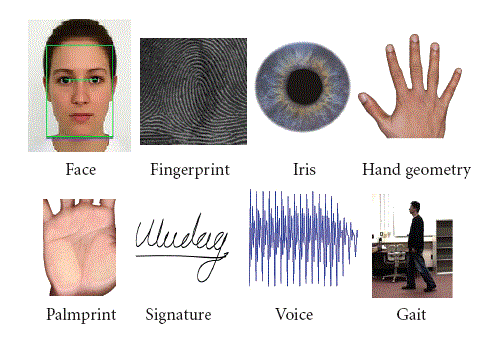
Something You Are. I’ve spent…a long time with this factor, since this is the factor that includes biometrics modalities (finger, face, iris, DNA, voice, vein, etc.). It also includes behavioral biometrics, provided that they are truly behavioral and relatively static.
Something You Do. The Cybersecurity Man chose to explain this in a non-behavioral fashion, such as using swiping patterns to unlock a device. This is different from something such as gait recognition, which supposedly remains constant and is thus classified as behavioral biometrics.
Somewhere You Are. This is an emerging factor, as smartphones become more and more prevalent and locations are therefore easier to capture. Even then, however, precision isn’t always as good as we want it to be. For example, when you and a few hundred of your closest friends have illegally entered the U.S. Capitol, you can’t use geolocation alone to determine who exactly is in Speaker Pelosi’s office.
(By the way, if you search the series of tubes for reading material on authentication factors, you’ll find a lot of references to only three authentication factors, including references from some very respectable sources. Those sources are only 60% right, since they leave off the final two factors I listed above. It’s five factors of authentication, folks. Maybe.)
The one striking thing about the five factors is that while they can all be used to authenticate (and verify) identities, they are inherently different from one another. The ridges of my fingerprint bear no relation to my 16 character password, nor do they bear any relation to my driver’s license. These differences are critical, as we shall see.
What is a modality?
In identity usage, a modality refers to different variations of the same factor. This is most commonly used with the “something you are” (biometric) factor, but it doesn’t have to be.
[M]any businesses and individuals (are adopting) biometric authentication as it been established as the most secure authentication method surpassing passwords and pins. There are many modalities of biometric authentication to pick from, but which method is the best?
After looking at fingerprints, faces, voices, and irises, Aware basically answered its “best” question by concluding “it depends.” Different modalities have their own strengths and weaknesses, depending upon the use case. (If you wear thick gloves as part of your daily work, forget about fingerprints.)
ID R&D goes a step further and argues that it’s best to use multimodal biometrics, in which the two biometrics are face and voice. (By an amazing coincidence, ID R&D offers face and voice solutions.)
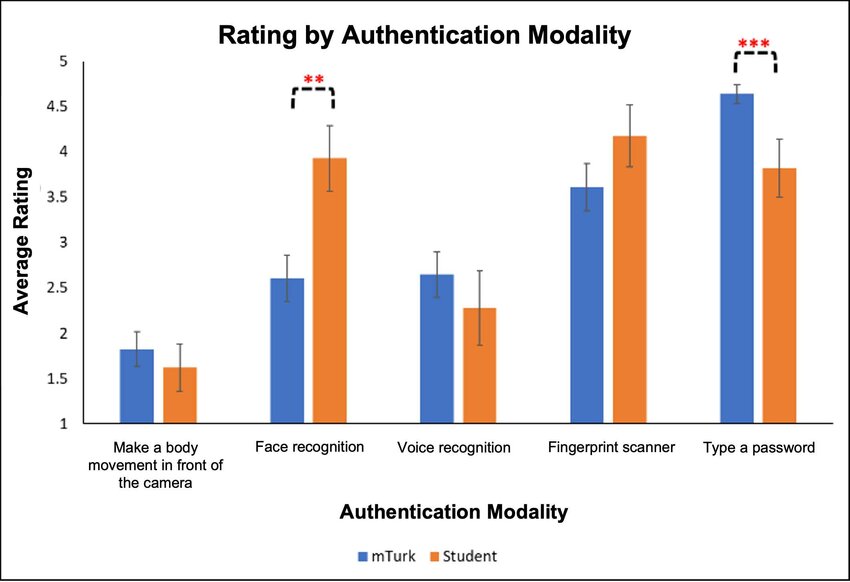
The three modalities in the middle—face, voice, and fingerprint—are all clearly biometric “something you are” modalities.
But the modality on the left, “Make a body movement in front of the camera,” is not a biometric modality (despite its reference to the body), but is an example of “something you do.”
Passwords, of course, are “something you know.”
In fact, each authentication factor has multiple modalities.
For example, a few of the modalities associated with “something you have” include driver’s licenses, passports, hardware tokens, and even smartphones.
Why multifactor is (usually) more robust than multimodal
Modalities within a single authentication factor are more closely related than modalities within multiple authentication factors. As I mentioned above when talking about factors, there is no relationship between my fingerprint, my password, and my driver’s license. However, there is SOME relationship between my driver’s license and my passport, since the two share some common information such as my legal name and my date of birth.
What does this mean?
If I’ve fraudulently created a fake driver’s license in your name, I already have some of the information that I need to create a fake passport in your name.
If I’ve fraudulently created a fake iris, there’s a chance that I might already have some of the information that I need to create a fake face.
However, if I’ve bought your Coinbase password on the dark web, that doesn’t necessarily mean that I was able to also buy your passport information on the dark web (although it is possible).
Can an identity content marketing expert help you navigate these issues?
As you can see, you need to be very careful when writing about modalities and factors.
You need a biometric content marketing expert who has worked with many of these modalities.
Actually, you need an identity content marketing expert who has worked with many of these factors.
So if you are with an identity company and need to write a blog post, LinkedIn article, white paper, or other piece of content that touches on multifactor and multimodal issues, why not engage with Bredemarket to help you out?
If you’re interested in receiving my help with your identity written content, contact me.





















 Bredemarket