In business there’s something called a “Type 2 decision.” Because of my biometric background I shy away from the term (which means “false positive” in biometrics) and prefer to use the term “two-way door decision.”
If you’ve been through an airport security checkpoint, either entering or leaving a security area, you know that you can only go one way.
“The [two-way door decision] concept was introduced by Jeff Bezos in his Amazon shareholder letters, using the metaphor of walking through a door. With a two-way door decision, you can walk through the door, see what’s on the other side, and if you don’t like it, you can easily turn around and come back through. If you make a suboptimal two-way door decision, you don’t have to live with the consequences for long—you can reopen the door and go back through.”
While in the end the original decision was reversible, the reversal was not without pain. The rise and fall of Amazon Fresh took years. (Technically less than a year in Upland, if you don’t count the years of planning, but still a long time.)
But what about trying a new product marketing idea? While some ideas, such as pricing a luxury car at one dollar, can cause permanent damage, others can easily be reversed.
I’ll use Bredemarket as an example. Back in 2020 I was heavily pushing my Bredemarket 404 Web/Social Media Checkup. While it remains on my website, I haven’t promoted it in years. I could certainly still do it (and did it for one client), but while it parallels my analysis strengths, I find other areas (such as market and competitive analysis in the biometric industry) much more satisfying and financially rewarding.
Google Gemini.
On the other hand, I DID pull my editing services from the Bredemarket website. That’s not rewarding at all.
Or alternatively, you could send up a trial balloon such as a blog post, a social media post, or a data sheet.
Google Gemini.
Then measure the results.
If the content resonates with your prospects, double down.
If your prospects are indifferent, never mention the idea again.
If your prospects hate it, delete it.
Because of my “I ask, then I act” bias, I gravitate toward these trial balloons. As long as the idea doesn’t kill your company, why not try it quickly, rather than paralyzing yourself by repeated inaction?
Your trial balloon
Google Gemini.
Are you ready to launch a trial balloon, but need some help with the helium? Set up a meeting with Bredemarket and we can discuss your options.
“Though most users are unique in their four most-visited domains, we find that we often need fewer data points for user identification. To determine how many domains are needed to pinpoint a user, we examine fingerprints at the individual level. For each unique user i, we randomly select a domain from their fingerprint and group all unique users who have that domain in their fingerprints (see Methods). Then, we select another most-visited domain from user i and narrow our group to those with both domains (Fig. 1c). We repeat this step, incrementally adding domains, until we isolate user i. At this point, we have a set of domains which exists only within user i’s fingerprint. Our analysis shows that we need an average of 2.45 steps to identify a unique user within the data set (Fig. 1d). This finding indicates that although four domains guarantee uniqueness, users’ distinct online habits facilitate their identification with fewer domains.”
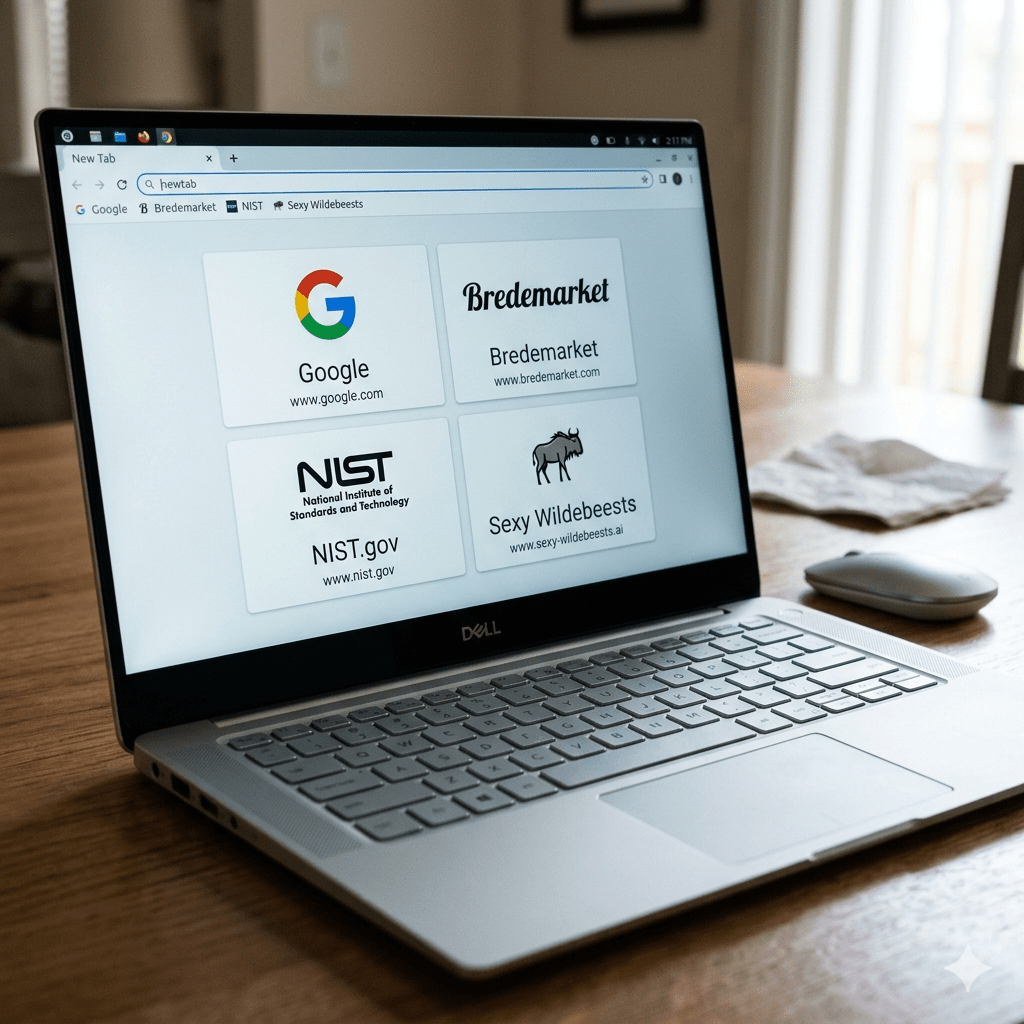
Think about the four domains that YOU visit the most. If you don’t know what they are, Chrome users can visit chrome://site-engagement/ and order the list. I can almost guarantee that one of my four most-visited websites is NOT one of yours.
One drawback of working as a consultant, rather than as an embedded employee within a company, is that you often don’t get to see how your content affects your client.
But I recently was exposed to some data that revealed how Bredemarket’s content impacted one of my clients.
I can’t reveal the client or the content, but suffice it to say that a particular piece of content resonated with the client’s prospects and customers.
Why?
Because it not only described my client’s green widget, but also described the emotional effects that using this green widget had on others.
Don’t forget to tell the story.
Prospects may not remember that the green widget supports 1000 ppi resolution.
But prospects will remember that the green widget brought closure to a family when a family member was successfully identified with the green widget.
Your company probably spends a lot of money exhibiting and presenting at trade shows and conferences. And you probably email your prospects and customers about your participation in these events.
But what about the people not on your mailing list?
You can do what the Biometrics Institute has done and create an events page on your website. As I write this, the Biometrics Institute’s events page lists upcoming appearances from March to June, including both in-person events and (for those of us nowhere near Sydney) online events.
How many Biometrics Institute members (and non-members) have their own events pages? One major identity firm (I won’t name it) has an events page…with no events.
But even if you don’t have a web page per se, you can email your prospects and customers as mentioned above. Another identity firm just sent me an email listing several future events, their dates, their locations, and why I would want to go to any of these events.
Do your prospects know about your upcoming events? Bredemarket can help you create a blog post, social media post, email, or even some web page content so that your prospects can see you. Let’s talk.
By the way, here are all the services Bredemarket provides.
But if you have an idea for a software application, mobile app, or web solution and you don’t have the technical skills to create it yourself, how can you make your idea a reality?
One avenue is to engage with a product development firm that can perform all aspects of product development from concept to launch:
design
development
testing
launch
Google Gemini.
And if you engage with the right firm, you will receive expert handling of your development effort, an intuitive user-centered design for your solution, an agile and scalable product, and (most importantly) rapid time to market.
If you have product development needs, talk to Silicon Tech Solutions. Offering a complete suite of services (custom software development, digital transformation, product development, and IT outsourcing), Silicon Tech Solutions addresses multiple needs for small and mid-size businesses. With a team that has gained experience from employment at Amazon and Facebook and from multiple consulting projects, Silicon Tech Solutions is ready to help your firm.
Content, proposal, and analysis (“CPA”) marketing and writing services.
But what in the heck does Bredemarket DO?
During the first 21 days of March, my biometric, identity, and technology clients received blog posts, an ebook, emails, a landing page, slides, a press release, a Request for Information (RFI) response, a process, and other things.
Can I help your firm? Let me know on my “CPA” page.
All too often, Bredemarket confines its writing discussions to the traditional ABCW (articles, blog posts, case studies, white papers) categories.
But what if your content needs are non-traditional and fall outside of the usual nice neat business writing categories?
From the 2023 Route 66 Cruisin’ Reunion, Saturday, September 16, 2023.
If you are an Inland Empire business who needs words, but not in the traditional “ABCW” (articles, blog posts, case studies, white papers) business types, Bredemarket will help you with your non-traditional writing needs.
Take a look at the examples I’ve provided below, and if these spark interest within you, authorize Bredemarket, Ontario California’s content marketing expert, to help your firm produce words that return results.
Book a meeting with me at calendly.com/bredemarket. Be sure to fill out the information form so I can best help you. For example, if you’re an Inland Empire business requiring non-traditional content, fill out the form accordingly.
I won’t go into all 22 types again, especially since some of them are internal content rather than customer-facing content. But I’d like to highlight the “ABCW” four types that I mentioned at the beginning of this blog post, plus a couple of others.
Articles and blog posts
I’m lumping articles and blog posts together, because while some “experts” try to draw hard-and-fast distinctions between the two, they’re pretty much the same thing.
Whether it’s a blog post on your website, a post or article on LinkedIn, or even some extended text associated with an Instagram picture or a TikTok video, what you’re creating is some text that entertains, persuades, inspires, or educates your reader, or perhaps all four. You set the goal for the article or blog post, then tailor the content to meet the goal. (I’ll talk more about goals later.)
Case studies
From “How Bredemarket Can Help You Win Business,” available via this post.
Case studies show your readers how your solution was applied to someone else’s problem, and how your solution can benefit your prospects with similar problems.
Maybe your prospect is a city police agency that needs a tool to solve crimes, and your case study describes how your solution solved crimes in a similar city. Again, you set the goal for the case study, then tailor the content to meet the goal.
White papers
On the surface, white papers are informational, but when a company issues a white paper, the “information” that the white paper provides should gently guide the reader toward doing business with the company that issued the paper. Using the example above, you could write a white paper that outlines “Five Critical Elements for a Local Crime-Solving Solution.” By remarkable coincidence, your own solution happens to include all five of those critical elements. Again, you set the goal and tailor the content.
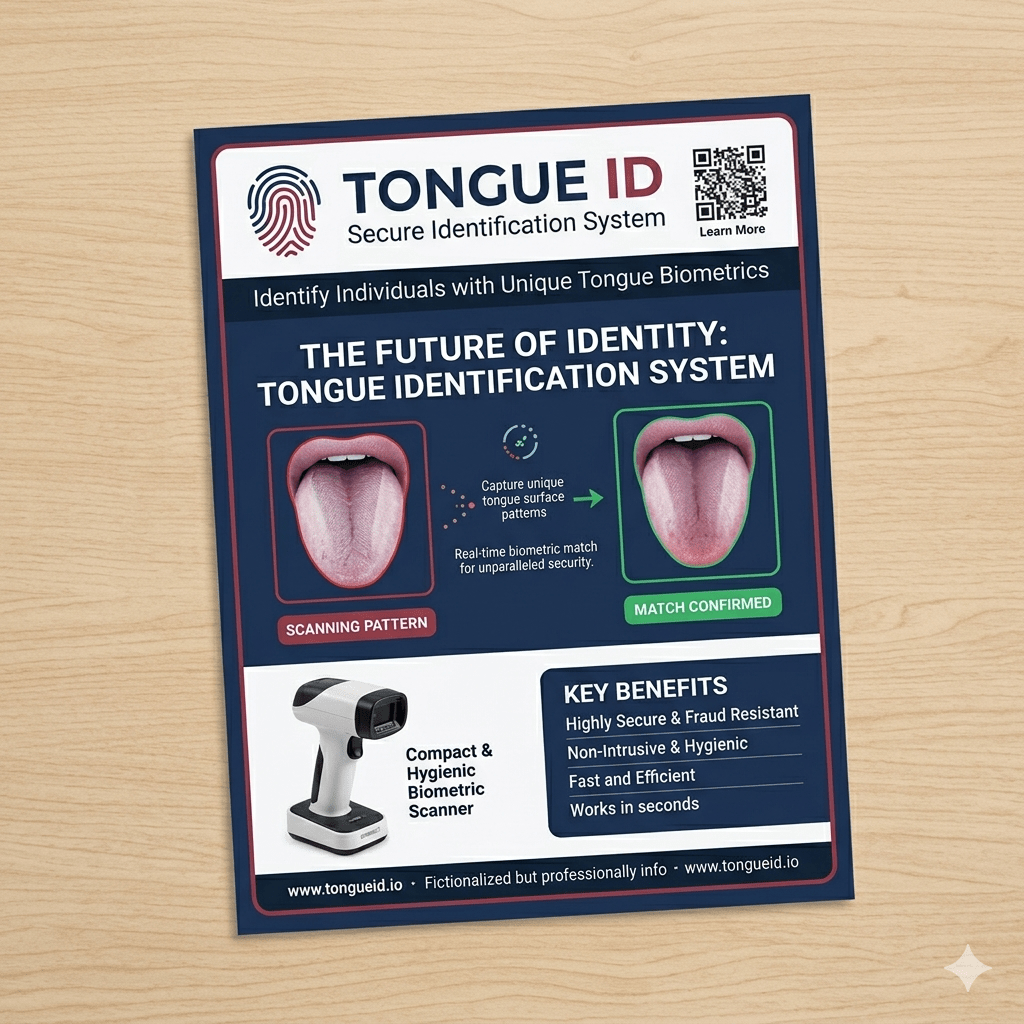
Briefs, data sheets, and literature sheets
One-page sheet for the Bredemarket 400 Short Writing Service. More information here.
Perhaps you need to provide handouts to your prospects that describe your product or service.
Regardless of whether you call these handouts briefs, data, sheets, literature sheets, or something else, they should at a minimum contain both “educate” and “persuade” elements—educate your prospects on the benefits of your product or service, and persuade your prospects to move closer to a sale (conversion).
Again, you set the goal and tailor the content.
Web page content
If your business has a web page, I hope that it has more words than “Under construction.” Whether you have imagery, video, audio, text, or all four on your web page, it needs to answer the questions that your prospects and customers have.
You know what I’m going to say here, but it’s still important. You set the goal and tailor the content.
But…what if your business needs content that doesn’t fall into these traditional business categories?
Non-traditional content: going to a car show
I went to a car show this weekend—specifically, this year’s Route 66 Cruisin’ Reunion in downtown Ontario, California. (Yes, I know that Route 66 actually passed three miles north of downtown Ontario, but work with me here.)
While some of the exhibitors were personal, some of them were businesses. As businesses, what was the major marketing collateral that they generated?
Not a blog post, or LinkedIn article, or any of the traditional business media collateral.
In addition to the car itself, this exhibitor included poster boards with words describing the car.
Another exhibitor did the same thing.
So while these car show exhibitors didn’t choose a traditional way to convey their words, they shared written text anyway.
Your non-traditional business communication needs
Maybe you don’t have a classic car. Maybe you don’t have a car at all. Do you need to share words with your prospects and customers anyway?
Now I don’t know your business communication needs. You do. But I can guess a few things.
Do you need to tell your clients/potential clients why you do what you do?
Do you need to tell them how you do it?
And last but not least, do you need to tell them what you do?
I know that this may seem like an unusual order to you. Why not start with what you do?
Because your customers don’t care about what you do. Your customers care about themselves.
If you keep the focus on your customers, the answer to the “why” question will induce your customers to care about you, because it shows how you can solve their problems.
Let’s illustrate this.
Why and how Bredemarket creates non-traditional content
You may be asking why I create content in the first place. There are countless content creators, both human and non-human. Why turn to me when OpenAI and its bot buddies are a lot cheaper and faster?
Normally I include my recent professional picture, but I have been writing since my college days (on a typewriter back then).
Bredemarket’s service is independent of content type. I don’t have a “Bredemarket blog writing service” or “Bredemarket data sheet writing service” or “Bredemarket case study writing service.” My services are based on word length, not content type, with my most popular service targeted to customers who need between 400 and 600 words of text. From this perspective, I don’t care if you want the words to appear on your website or your social media channel or a paper flyer or a sign next to your car or a really really long banner towed behind an airplane. (Read about the Bredemarket 400 Short Writing Service here.)
Before I write a thing, I ask your some questions. It won’t surprise you to learn that my first questions to you are why, how, and what. I then move on to questions about your goal for the content, the benefits of your solution, the target audience for your solution, and many additional questions. (Read about the Six Questions Your Content Creator Should Ask You here.)
Once the questions are out of the way, content creation is collaborative and iterative. I create a draft, you review it, and we repeat. The Bredemarket 400 service includes two review cycles; longer content needs include three review cycles. The goal is to ensure that both of us are happy with the final product.
Bredemarket’s process applies regardless of the specific content type, so I should be able to support whatever content you need, whether it’s traditional or non-traditional.
I can’t share work samples that I created for Bredemarket clients, because they are ghostwritten “works for hire” that are not publicly attributed to Bredemarket.
(For the same reason, I can’t share most work samples that I created for my previous employers.)
But I CAN share work samples that I created for…Bredemarket.
The video containing this image can be found on various Bredemarket properties.
Actually, you can search through the entire Bredemarket website and social media outlets and find them.
Or you can just watch the video below, which summarizes everything.


















 Bredemarket