

Just the video, ma’am. The extra junk is here.
Tag Archives: features
For Those Who Still Write User Manuals, They’re Better Now
1984 John would have been so jealous of me on Tuesday.
On Tuesday I was writing an installation guide for a Bredemarket client. Even though it was a simply formatted guide, its formatting was light years ahead the software user manuals I wrote around 1984 (no significance, just coincidence).
As I previously mentioned, 1984 John wrote user manuals using a software package called multiWRITE. You’ve probably never heard of it. multiWRITE was a word processor for the THEOS operating system that was developed by my employer, Logic eXtension Resources. So when I wrote the user manual for multiWRITE, I used…multiWRITE. Yeah, I ate my own wildebeest food even in the 1980s.
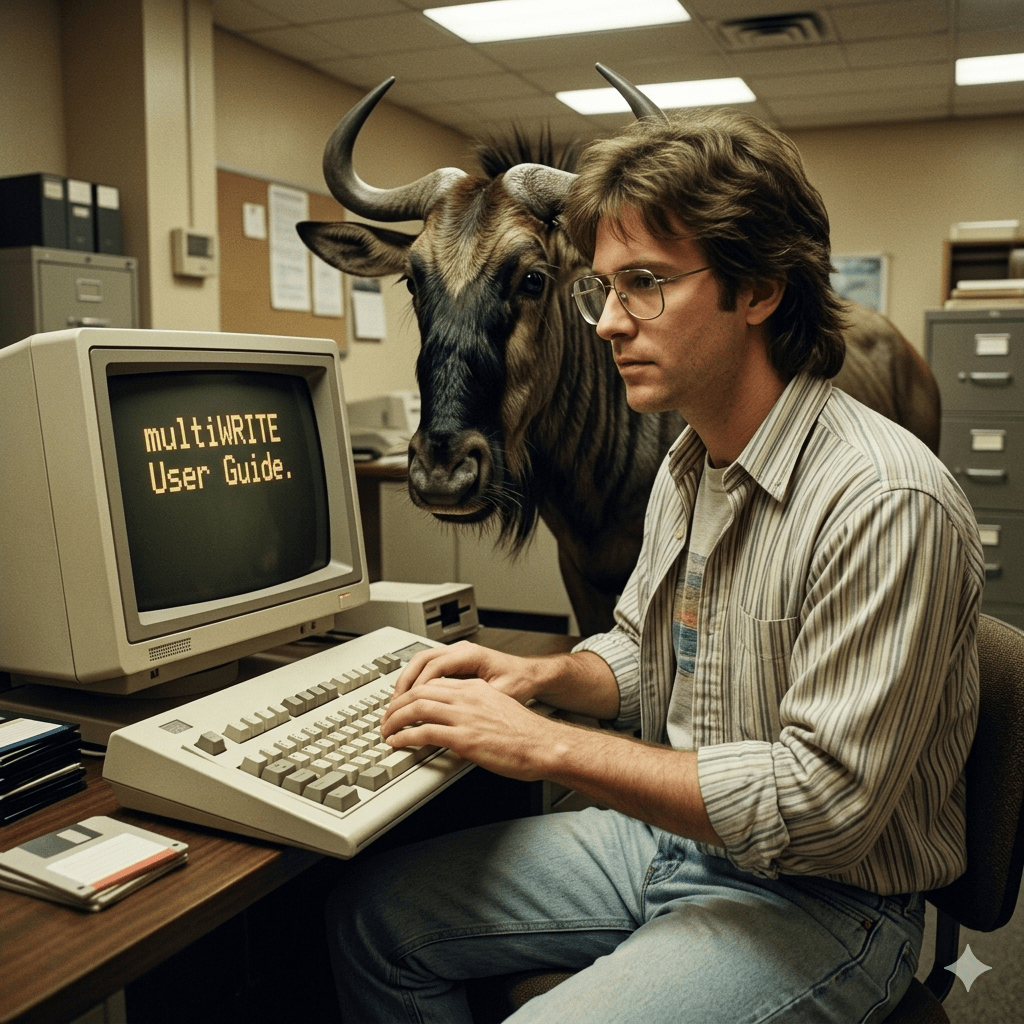
Now multiWRITE was a pretty good software package for the time, and THEOS was a pretty good operating system for the time. But by 2026 standards it was atrocious.
- The output was bi-tonal, just black and white with no colors or even grayscale output.
- The output was monospaced, just like a typewriter. Typewriters were still very common in 1984.
Things started to change as Logic eXtension Resources started to offer Macintosh software and started using Macs for internal document creation. But for my first years at Logic eXtension Resources it was basically typewriter-looking text saved to disk.
Fast forward to 2026, and I had to create a simple installation guide using today’s tools. The manual wasn’t fancy by any stretch of the imagination: even my ebook on the six factors of identity verification is fancier.
Oh, have I mentioned my ebook recently? Now I have. Click the image to buy.
But the client’s installation guide had several features that left multiWRITE in the dust.
One example: back in 1984 my text highlighting options were limited.

On Tuesday I wrote a sentence that looked like this.

Yeah, blue text. 1984 me would have been shocked.
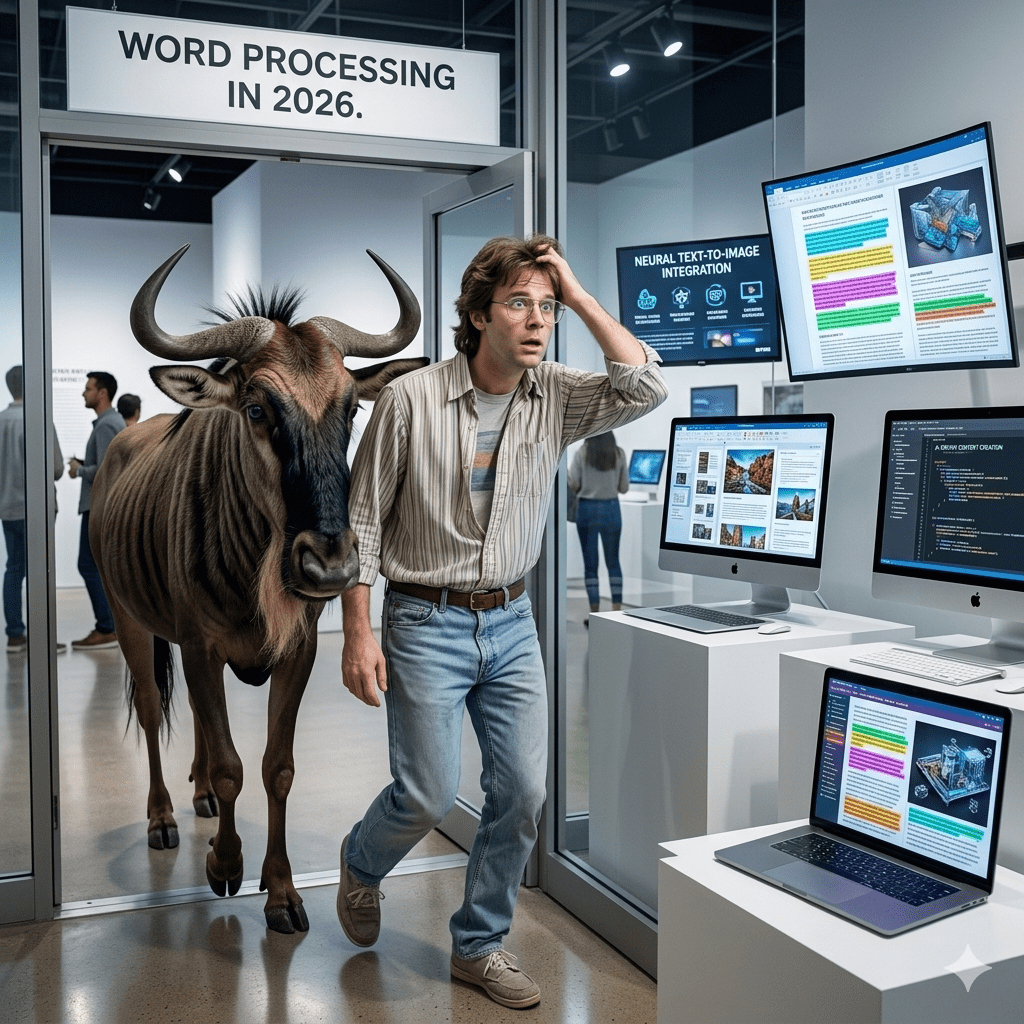
But then again, other than me, who writes user manuals any more?
Communicating Benefits Over Features, Revisited and Repurposed
In 2021, I wrote a series of posts on the topic of communicating benefits, not features, to identity customers. The first post in the series is here; click at the top of the post to view the other three parts. (And yes, it was originally supposed to be a three-part series, until I wrote a fourth part on a company’s distinct voice.)
But if you don’t want to wade through four Bredemarket posts, just wade through the following two words:
So what?

But if that’s too short for you, I plunged into the Google NotebookLM world and repurposed the four posts as three separate pieces of content: an infographic, a podcast, and a video.
The benefits over features infographic, “Winning the Identity Customer”
I’ve never created a NotebookLM infographic before, so I was interested in seeing how this would turn out.
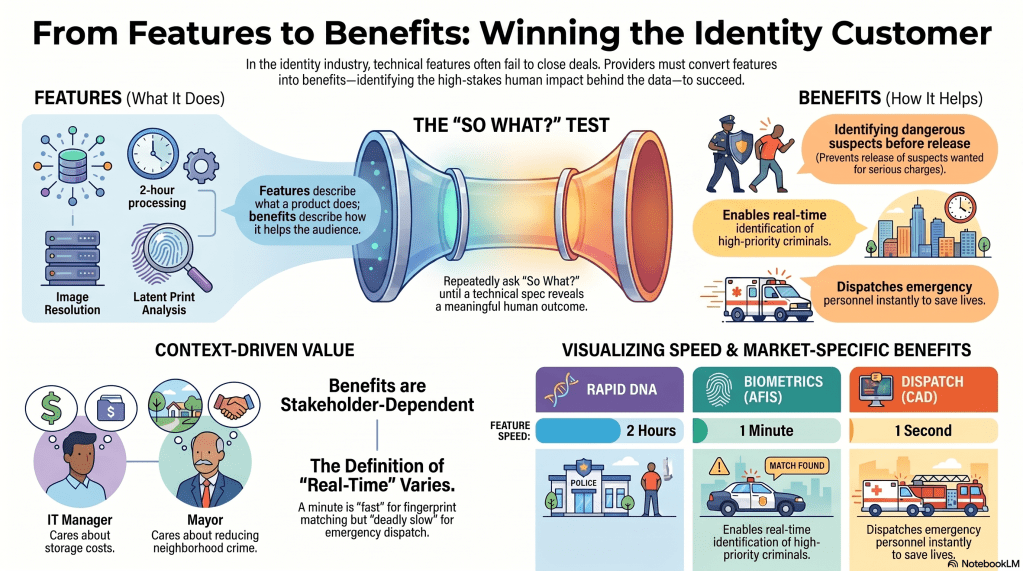
It’s busy, but ALL infographics are busy. And I like how it visualizes the response-time differences between rapid DNA, biometrics, and computer aided dispatch, where “real time” can mean very different things.
We on the AFIS side learned this the hard way when we introduced ourselves to our new colleagues.
“Hi, SCC folks, welcome to Printrak. You’re joining a company that sells REAL TIME AFIS that delivers results within one minute! Aren’t you impressed?”
The ex-SCC people responded, gently disabusing us of our pretensions to speed.
“Hello, new corporate overlords. We provide computer aided dispatch systems that send police, fire, and medical personnel to crime scenes and emergency sites as soon as possible. If our CAD systems took AN ENTIRE MINUTE to dispatch personnel, PEOPLE WOULD DIE. We use really powerful computers to get personnel dispatched in a second. Enjoy your real time AFIS…amateurs.”
So the company Printrak learned that it needed separate benefit statements, depending upon the product line the company was promoting at any given time. The CAD customers received one set of benefit statements, while the AFIS customers received a separate set.
Because there are different benefits for different “hungry people.”
The benefits over features podcast, “Sell the Outcome, Not the Math”
Unlike infographics, I’ve created multiple NotebookLM podcasts over the years. If you’re not familiar with NotebookLM podcasts, they have two distinct…um…features.
- The podcasts feature a male and female speaker chatting with each other about the subject matter.
- The podcasts are relentlessly positive. If you are feeling down in the dumps, upload your resume to NotebookLM and have the two speakers talking about how wonderful you are.
Anyway, here’s how the two speakers treated my source material.
The benefits over features video, “Stop Selling Features”
Again, I’ve created multiple NotebookLM videos, such as this one on avoiding false differentiators.
Despite the fact that I haven’t been able to customize the video so it doesn’t have the NotebookLM “look.” One identity/biometric company is sharing these videos, and I can tell immediately that it’s NotebookLM content.
Nevertheless I wanted to see the video that I got.
And I finally figured out that if I explicitly upload specific pictures into NotebookLM, they can appear in the final video. Look for this one at the three and a half minute mark.

Other formats
Perhaps I’ll experiment with some of the other output available in NotebookLM, although there are some formats that I will probably never use.
- If I’m going to create a slide deck, I’m going to create it myself.
- I don’t really have a use for flash cards, mind maps, or quizzes. Unless you, my readers, REALLY REALLY REALLY want to be quizzed on benefits and features.
But I now have these three pieces of content. And perhaps the next time I discuss this topic, I can drag the infographic out of my WordPress media library.
And I now have more content to add to Bredemarket’s YouTube channel.
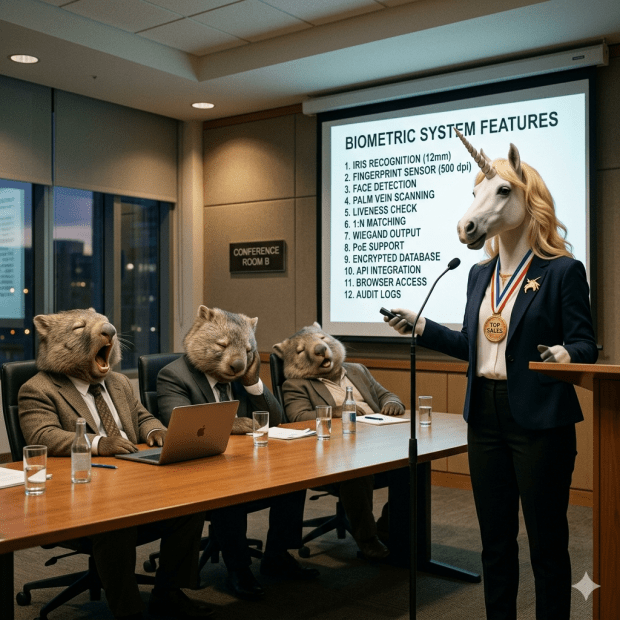
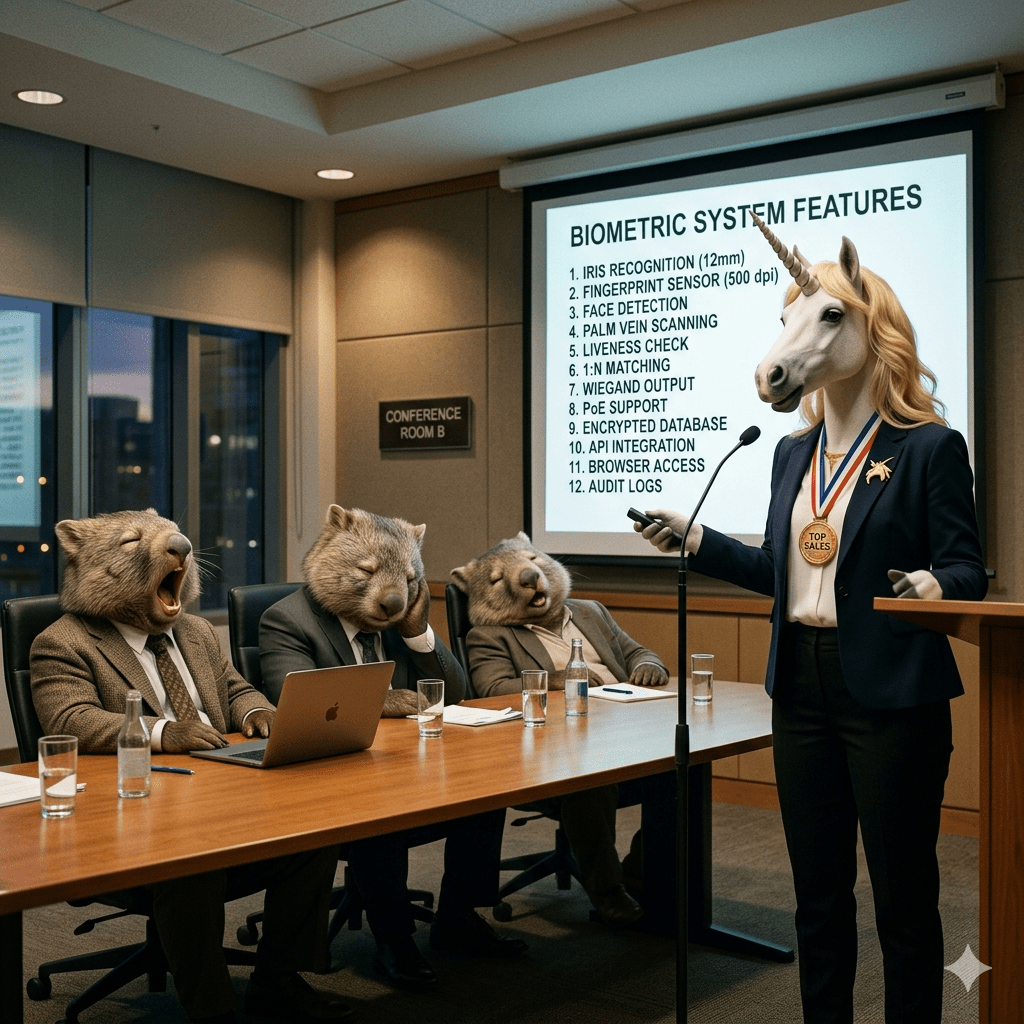
Sleep Inducing

This will work. With certainty.
So if you want your prospects to act and buy your product, don’t present long feature lists.
Wooing Your Prospects

I tangentially referred to Rachael Wheatley’s article “Six steps to woo your clients” in a caption for my own post “Your Prospects Don’t Care About Your Technology.”
We were both saying the same thing, but from different perspectives.
Here’s part of how Wheatley put it.
“Focus on care and concern – reach out, offer help, stay true to your company purpose and values.
“Meet your customers where they are – both where they ‘hang out’ now, and to meet their current concerns.”
But it’s important to remember why you’re doing this.
“Building a good marketing plan helps motivate your audience to take the next step. And, in the end, to say “yes” to what you’re offering.
“But of course, they need to want to come. Your intent needs to be authentic. It will be if you genuinely believe that you can offer them value (and they recognise that) and you want to be in the relationship for the long term, not just to make a quick sale this quarter.”
Earlier this week I signed a contract with a former client from the first stint of Bredemarket (2020-2022). I had to end that contract because my then-new employer Incode competed with my client.
But then Incode became my ex-employer, and eventually my former client came back.
And I was happy they came back.
Avoiding False Differentiators
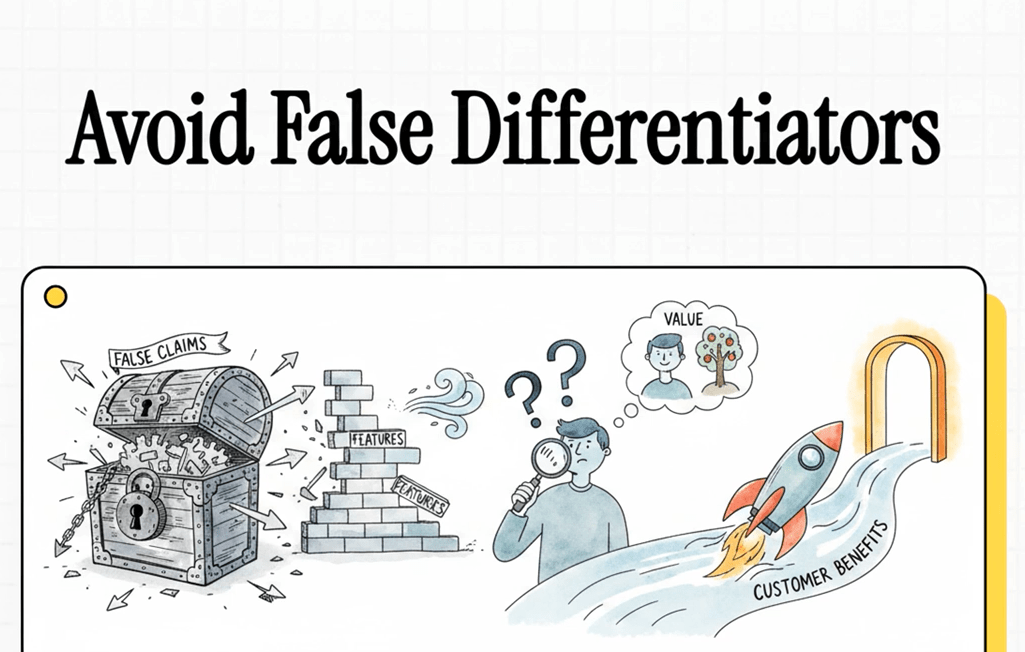
This video is about three common marketing errors made by identity/biometrics companies.
If this seems familiar, that’s because it is based upon a blog post I wrote a month ago.
For those keeping score, this is Bredemarket’s third NotebookLM video, and the second based upon a Bredemarket blog post. A nice way to repurpose text in video form.

But let’s ask the uncomfortable question. Does NotebookLM’s current video capabilities actually enhance Bredemarket’s own marketing? Sure it gives me another avenue to get my message out, but the common look of NotebookLM output results in a message that is…not differentiated.
There are some customization options when creating videos, so maybe I should explore those more.
Anyway, this is on YouTube also.
No One Cares About Features…Or Your Product
With apologies to “experts” who can detect AI-generated text—they know who they are—I want to DELVE into a statement I made in my 9am post.
“I don’t ask for your feature list; no one cares.”
Over the years I have managed or marketed a number of products and services: Omnitrak, Printrak BIS, MorphoBIS Cloud, Morpho Video Investigator, Incode Omni, AEM Resurgence, IB360°, and many others.
All of which had extremely impressive lists of features.
And over the years I slowly realized that prospects and even happy customers didn’t care about ANY of those features.
Because customers don’t buy features…or products.
They buy solutions to their problems.
- If you’re telling prospects about your 1000 pixel per inch resolution, they will respond “So what?” and ask about reducing their jurisdictional crime.
- If you’re telling prospects about your certifications, they will respond “So what?” and ask about keeping privacy lawsuits away.
- And if you’re telling your prospects about your financial integrations, they will respond “So what?” and ask about making money. Lots of money. Loads of money.
Your product marketing shouldn’t talk about your products.
It should speak to your prospects.
Because then your products won’t only make money for your customers, but will also make money for you.
And don’t you want money, rather than a long feature list?
Let’s talk.
Don’t Bore Your Prospects; Compel Them
If your product marketing is so “me too” that you only generate leads for your competitors, how can I help?
I ask, then I act.
I don’t ask for your feature list; no one cares. I ask to uncover YOUR “why” story that compels your prospects to buy your stellar product, rather than all the products that aren’t as valuable as yours.
Then I act. I create a draft for your review. And you act in reviewing it. And when we are both happy, you publish.
And your prospects respond.
Talk to Bredemarket.
Top 3 Identity/Biometric Marketing Mistakes: Avoid These False Differentiators
Bredemarket has consistently argued AGAINST “me too” product marketing, and FOR differentiating your identity/biometric product from its competitors. But your differentiators must resonate with your prospects.
This post lists three false differentiators, and why you should avoid them.
False differentiator 1: we’re a great place to work
Does your company description place undue emphasis on the shiny happy people who work for you? Their competitive salaries? Their unlimited PTO? Their community days? Their “best place to work” awards?
Who cares?
While you would think happy employees are important to prospects, they really aren’t. Enron was a best company to work for, but definitely did not deliver for its customers. Other companies are slave drivers, but customers love their products.
Save the “best place to work” mumbo jumbo for your careers page, not your prospect-facing content.
False differentiator 2: we’re a unicorn
Other companies take a different tack. Some emphasize their financial might: they’re a unicorn, a Series C, a NASDAQ-listed firm. Others take the opposite tack, asserting they are small and scrappy. (Bredemarket is in the latter category.)
So what?
Your prospects don’t care how big you are. Size doesn’t matter to them. Your performance does.
Stick the “unicorn” talk in your investor pitch decks, not on stuff your prospects read.
False differentiator 3: we have great features
By now you’ve probably figured out that your customers care about your product, not your employee satisfaction or your valuation. So you start talking about your product and its impressive array of features. 1000 ppi fingerprint capture. Sub-second matching. Integration with over 100 third-party systems.
How so?
Prospects don’t care about your product and what it does. They care about what it does FOR THEM. Does it solve crimes and keep bad people off the streets? Does it ensure that bank account applicants really are who they say they are? Does it complete its checks quickly before e-commerce buyers abandon their shopping carts?
Talk benefits, not features. Save the feature lists for your sprints.
How do you isolate true differentiators?
Your prospects need to see why your product is great for them, and why competitor products are terrible for them. How your product achieves their objectives: get stuff done, make money.
So what are the differentiators and benefits of your product?
Bredemarket can help your identity/biometric firm with the strategy and tactics of marketing your product. My services and process help you position your product for your prospects.
Do you want to learn more? Go to https://bredemarket.com/mark/ and schedule a free meeting with me to learn how Bredemarket can benefit you, so you can fulfill the needs of your prospects.
Justin Welsh’s Purple Squirrel Story
While I talk about wildebeests, iguanas, wombats, and friction ridge-equipped koalas, Justin Welsh talks about squirrels.
Purple squirrels.

Welsh explains what a purple squirrel is:
“A purple squirrel is a candidate so rare and perfectly matched to what you need that finding one feels impossible. Someone who checks every single box, including boxes you didn’t even know you cared about.”
Then Welsh provided an example of a purple squirrel, a man named Sagar Patel who worked for him at PatientPop.
On paper pyramids
At the time PatientPop had less than $40,000 in annual revenue, so it didn’t have a huge marketing department. It didn’t even have Bredemarket as a product marketing consultant because Bredemarket didn’t exist yet. And anyway, at the time I knew next to nothing about PatientPop’s healthcare-centered hungry people, physicians who needed to attract prospects and clients via then-current search engine optimization (SEO) techniques.

Patel could have launched into a complex, feature-laden SEO discussion, but his target physicians would have responded, “So what?” Doctors want to doctor, not obsess over choosing trailing keywords…and understand the benefits of a solution immediately.
So Patel, without the resources of a marketing department, took another approach.
“So Sagar grabbed some notebook paper and drew five sides of a pyramid. He labeled each one, describing his ‘5 sides of local SEO for healthcare providers,’ and then taped them all together.
“He made himself a little paper pyramid to use in his sales pitches.”

Was Patel’s paper pyramid an effective sales tool for PatientPop? Read Welsh’s article to find out.
What’s your paper pyramid?
Too many companies wait months for the perfect marketing solution instead of doing something NOW and refining it later.
Bredemarket’s different. I ask, then I act.
Once I’ve set my compass, I get my clients a draft within days. Last week alone I turned out drafts for two clients, moving them forward so the content is available to their prospects and clients.
With my suggested schedule for short content—three day drafts, three day reviews, three day redrafts—your new content can become your online “secret salesperson” within two weeks or less.
Don’t believe me? This post alone is chock-full of links to other Bredemarket posts and Bredemarket pages, all of which are functioning as “secret salespeople” for me every single day.
If you want secret salespeople to work for you, talk to me and we’ll devise a plan to improve your product marketing awareness RIGHT NOW.
 Bredemarket