Then there was the time I was performing U.S. go-to-market activities for a global identity/biometric offering.
The product marketing launch went great…
…until the home office received a communication from a competitor.
A competitor with a previously existing product with a name VERY similar to that of our subsequently launched solution.
Oops.
We definitely made a mistake by not thoroughly checking the name.
Of course, with the way that some companies want to imitate the things their competitors do, I’m sure some firms perform this intentionally, rather than accidentally.
You can’t just slap a few things together in three days and say your go-to-market is complete. You need a plan on how you will go to market, including the different tiers of go-to-market efforts (you won’t spend four months planning materials for your 5.0.11 software release)…
Unless you’re in very unusual circumstances, your go-to-market efforts will encompass variable efforts.
Release to me relates to the update of an existing product vs. a net-new addition to a solution offering. It’s common to have multiple releases a quarter vs. large launches 1-2x per year.
My former product marketing team devised a three-tier system, in which the top tier encompassed a full-blown effort and the bottom tier just had some release notes, a bit of internal education, and maybe a blog post.
Defined tiers
But as I said on August 30, you need to define the tiers beforehand. Don’t just shoot from the lip and say you want a blog post, a press release, and a brochure…oh, and maybe a cool infographic! Yeah!
Well, I posted a follow-up on LinkedIn (as part of my “The Wildebeest Speaks” series) about one of those seven documents.
If you’re not already following Bredemarket on LinkedIn (why not?), be sure to read “A Deeper Dive Into Positioning,” and the complexities that occur when you have to position and message for multiple products, personas, industries, use cases, and geographies.
Due to the nature of my business, Bredemarket doesn’t usually get involved in strategy. The clients set the strategy, and I fill the tactical holes to execute that strategy.
But I recently welcomed the opportunity to envision a strategy to achieve a strategy, and in the process defined seven essential strategy documents to kick off a product marketing or general marketing program.
Depending upon how you define product marketing, one of these seven goes above and beyond the product marketing function. I included it anyway, because if you ask 20 people what “product marketing” is, you will get 21 answers.
There’s a reason I dated this. I may want to refine it in the future. For example, some of you may recall how my “six questions your content creator should ask you” eventually became seven questions.
The seven strategy and process documents
Go-to-Market Process. I’ve talked about this before, but it bears repeating. You can’t just slap a few things together in three days and say your go-to-market is complete. You need a plan on how you will go to market, including the different tiers of go-to-market efforts (you won’t spend four months planning materials for your 5.0.11 software release), the types of internal (employee) content you will release in each tier, and the types of external (prospect/customer) content you will release in each tier.
Performance Report. I listed this near the top because you need to quickly establish your metrics, define them, and how you will gather them. For example, if you want to measure “engagement,” you need to define exactly what engagement is (likes on a blog post? reshares on a LinkedIn post?), and ensure that you have a way to capture that data. Preferably automated data capture; manual tabulation is horrendous.
Product and Competitive Analysis. Plan how you will perform these duties. Even in my simplest analyses when I was still with IDEMIA, I planned exactly what data I needed, what data I wanted to capture, and how I was going to distribute it. I refined this during my time at Incode, when a team of four released battlecards in a standard format, with data that highlighted items important to Incode. My subsequent analyses for Bredemarket, which were more comparative rather than stand-alone, refined things still further.
Brand Strategy. I must confess that I have never created a formal brand book. But it’s important that you define your branding, at least informally, so that your products and services are presented consistently on all platforms. And so you spell things correctly (it’s NOT “BredeMarket”).
Customer Feedback. If you want to institute a customer focus, you need information from your prospects and customers. What information do you need? How much? (Shorter surveys get more responses.) How will you get it? What will you do with it? (“Trash it” is not an option.)
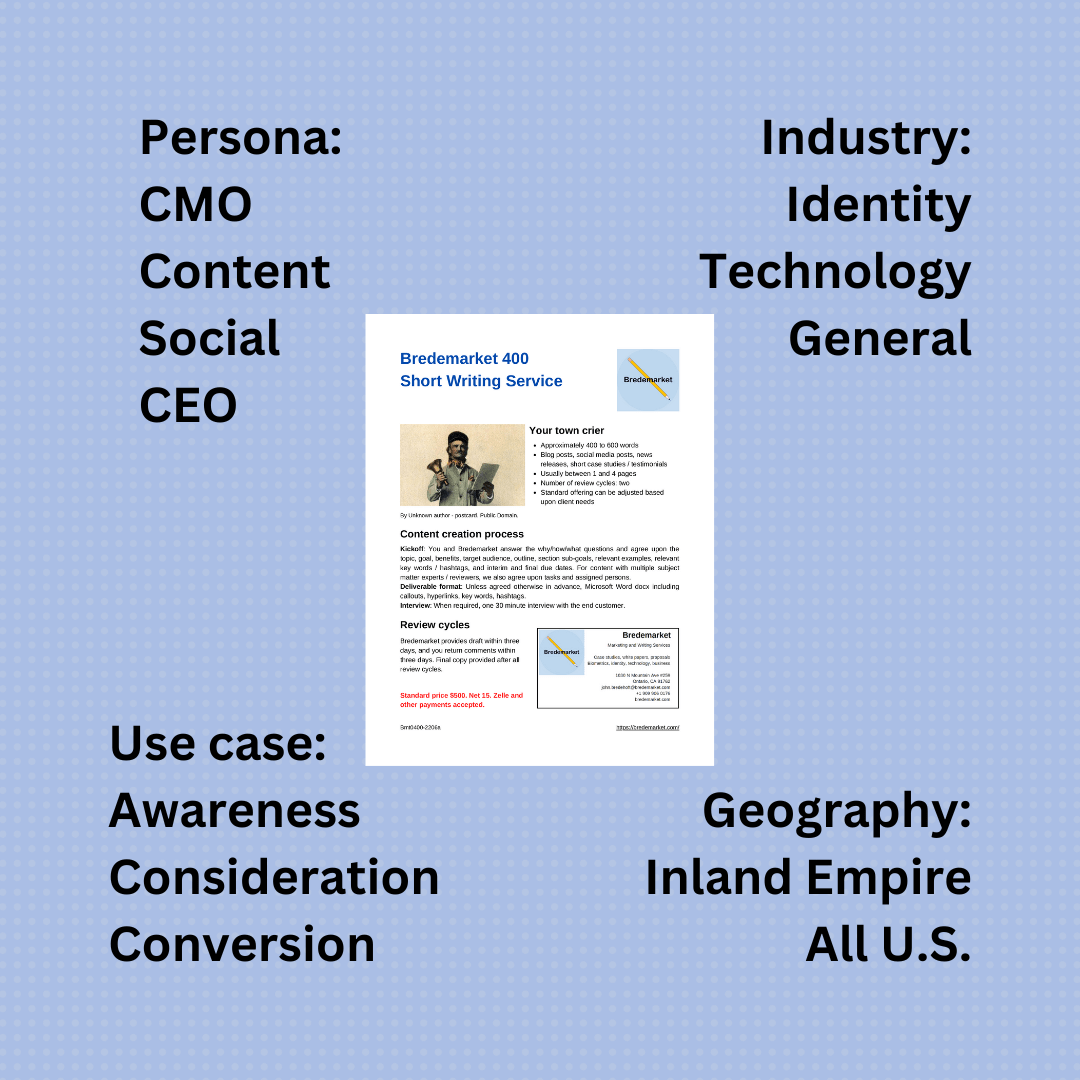
Positioning and Messaging Book. Once you’ve created the brand strategy, you need a set of consistent positioning (internal) and messaging (external) content. The positioning and messaging matrix can get pretty complex if you are supporting multiple products, personas, industries, use cases, and geographies. I will again confess that I do not have a standard messaging statement for Bredemarket 400 prospects who are Chief Marketing Officers who need blog posts in the identity/biometric industry discussing privacy concerns in the European Union. My loss.
Demand Generation and Content Marketing Parameters. Now in many organizations, demand generation and/or content marketing are separate from product marketing. But sometimes they’re not. What are your plans for demand generation? How will you achieve your goals? What content is necessary?
So what?
As I said, I recently had the opportunity to envision these strategies for a prospect, and have scheduled a meeting with the prospect to discuss these. (Note to “prospect”: these are iterative, and I fully expect that up to 90% of this may change by the time of implementation. But I think it’s a good starting point for discussion.)
The prospect may secure my services, or they may not.
And if they don’t, I can develop these same documents for others.
Do YOU need help defining strategies for your business? If so, let’s talk.
Who are the competitors in the market for my product?
Which features do competitive products offer? How do they compare to the features my product offers?
Which industries do competitors target? How do they compare with the industries my company targets?
Which contracts have the competitors won? How do they compare with the contracts my company has won?
How effective is my company’s product marketing? My website? My social media? My key employees’ social media?
Bredemarket can help you answer these questions.
Types of analyses Bredemarket performs
For those who don’t know, or who missed my previous discussion on the topic, Bredemarket performs analyses that contain one or more of the following:
Analysis of one or more markets/industries for a particular product or product line.
Analysis of one or more (perhaps tens or hundreds) of competitors and/or competitive products for a particular product or product line.
Analysis of a firm’s own product or product line, including how it is marketed.
How Bredemarket conducts its analyses
Bredemarket analyses only use publicly available data.
I’m not hacking websites to get competitor prices or plans.
I’m not asking past employees to violate their non-disclosure agreements.
How Bredemarket packages its analyses
These analyses can range in size from very small to very large. On the very small side, I briefly analyzed the markets of three prospect firms in advance of calls with them. On the large side, I’ve performed analyses that take between one and six weeks to complete.
For the small self-analyses (excluding the very small quick freebies before a prospect call), I deliver these under my Bredemarket 404 Web/Social Media Checkup banner. When I first offered this service in 2020, I had a complex price calculation mechanism that depended upon the number of pages I had to analyze. Now I’ve simplified it and charge one of two flat rates.
Because the larger analyses are of undetermined length, I offer these at an hourly rate under my Bredemarket 4000 Long Writing Service banner. These reports can number 40 pages or more in length, sometimes accompanied by a workbook describing 700 or more competitor products or contracts.
Obviously I can’t provide specifics upon the analyses I’ve already performed since those are confidential to my customers, but I always discuss the customers’ needs before launching the analysis to ensure that the final product is what you want. I also provide drafts along the way in case we need to perform a course correction.
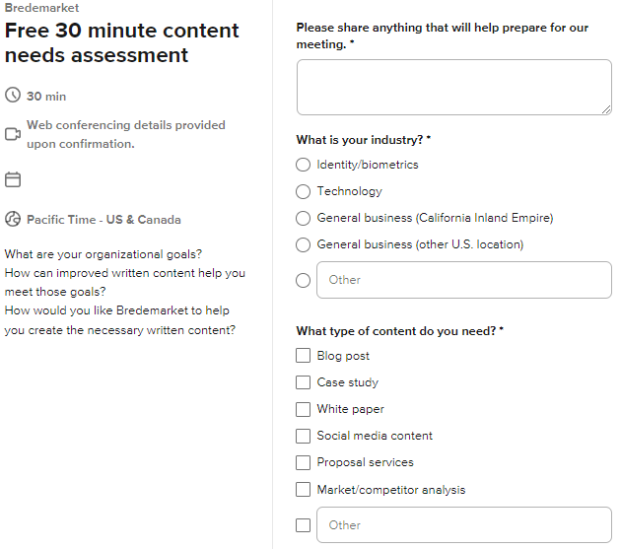
Do you need a market, competitor, or self analysis? Contact me. Or book a meeting with me at calendly.com/bredemarket to talk about your needs (and check the “Market/competitor analysis” check box).
Knell Computer announced Friday that it is eliminating wi-fi capabilities from its business computer product lines.
“At Knell Computer, we strongly believe that the best work occurs in a traditional office environment,” according to Gabriel Knell, CEO. “Since modern offices are fully equipped with Ethernet cabling, wi-fi is an unnecessary expense. Removal of wi-fi allows us to sell Knell Computers at a lower price point than our competitors, providing cost savings to our customers.”
Knell will promote this innovation with an ad campaign in major city downtown business districts, where it will attract the attention of real workers.
Gabriel Knell: “If you’re an amateur who performs so-called ‘work’ at home in your shorts, rather than from a true cubicle office environment, feel free to buy wi-fi computers from our competitors. We are embarrassed to see the Knell logo in a coffee shop—or in a converted bedroom.”
In a related announcement, Knell will incorporate technology that “red flags” the use of any Knell computer in a residential zone.
Generated by Google Gemini.
For those of you who don’t know much about Knell Computer, LinkedIn’s helpful AI feature provided contextual detail, including answers to critical questions:
“What is Knell Computer known for?”
“How will removing wi-fi impact office environments?”
“What is the significance of the technology preventing residential use?”
All of these answers, sourced from information found in LinkedIn and on the Internet, were undoubtedly helpful.
But LinkedIn AI appears to have missed one teeny tiny thing.
Since I’m not engaged in full-time product marketing (although I perform some product marketing activities for my Bredemarket clients), I sometimes spend my time writing other things.
Like fake press releases for fake products from fake companies.
Who is the real Knell Computer?
But I think that most of you figured out that Knell Computer and its head Gabriel Knell are based upon Dell Computer and its head Michael Dell.
(Note the “angelic” naming here. And no, I’m not naming anything after Lucifer.)
Dell’s two classes of workers
And most of you know why Dell Computer was suddenly in the news in May, and actually a little before that, as this Forbes article indicates.
Dell’s new remote-work policy will categorize its workers into two main groups: remote and hybrid.
Hybrid workers must agree to come into an “approved” office at least 39 days each quarter. This is roughly the equivalent of three days per week. Remote workers do not have to come into an approved office at all. However, remote workers aren’t eligible for promotion or to change jobs within the company.
According to the Register, Dell confirmed the 39 days/quarter requirement, and explained why it believed it was important.
In a statement, a Dell spokesperson told The Register, “We shared with team members our updated hybrid work policy. Team members in hybrid roles will be onsite at a Dell Technologies office at least 39 days per quarter (on average three days a week). In today’s global technology revolution, we believe in-person connections paired with a flexible approach are critical to drive innovation and value differentiation.”
Starting next Monday, May 13, the enterprise hardware slinger plans to make weekly site visit data from its badge tracking available to employees through the corporation’s human capital management software…
Let me just pause right there. Any time that you read something about “human capital management,” your antennae should go up.
Blue flags are good, red flags are bad
But let’s get back to how Dell is managing its carbon-based capital.
…and to give them color-coded ratings that summarize their status. Those ratings are:
Bredemarket’s fake press release…and you’ll never believe what happened next!
So that was the situation as of June 1 when Knell Computer issued its press release, complete with “red flag” capability.
I’m forced to confess that Knell Computer’s product marketing efforts didn’t really make an impact. (I KNEW I should have included the press release in the Bredemarket blog. Better late than never.)
But Dell Computer’s efforts truly impacted its employees…but not in the way that Dell Computer wanted.
A few weeks after Knell Computer’s product marketing effort, stories began to emerge about what was happening at the real Dell. Here’s part of what Ars Technica said on June 20:
Dell announced a new return-to-office initiative earlier this year. In the new plan, workers had to classify themselves as remote or hybrid.
Those who classified themselves as hybrid are subject to a tracking system….
Alternatively, by classifying themselves as remote, workers agree they can no longer be promoted or hired into new roles within the company.
Business Insider claims it has seen internal Dell tracking data that reveals nearly 50 percent of the workforce opted to accept the consequences of staying remote, undermining Dell’s plan to restore its in-office culture.
But haven’t they killed their chances for promotion or lateral moves?
“But wait!” you’re saying. “So many people are willing to forgo promotion at Dell, or even to apply to new positions at Dell?”
Yes. Because here’s a dirty little secret:
Dell employees can leave Dell and work for other companies.
Granted many other companies aren’t remote-friendly either (believe me, I know), but those that are have an opportunity to scoop up Dell’s best and brightest.
Does Dell dissatisfaction provide an opportunity for me?
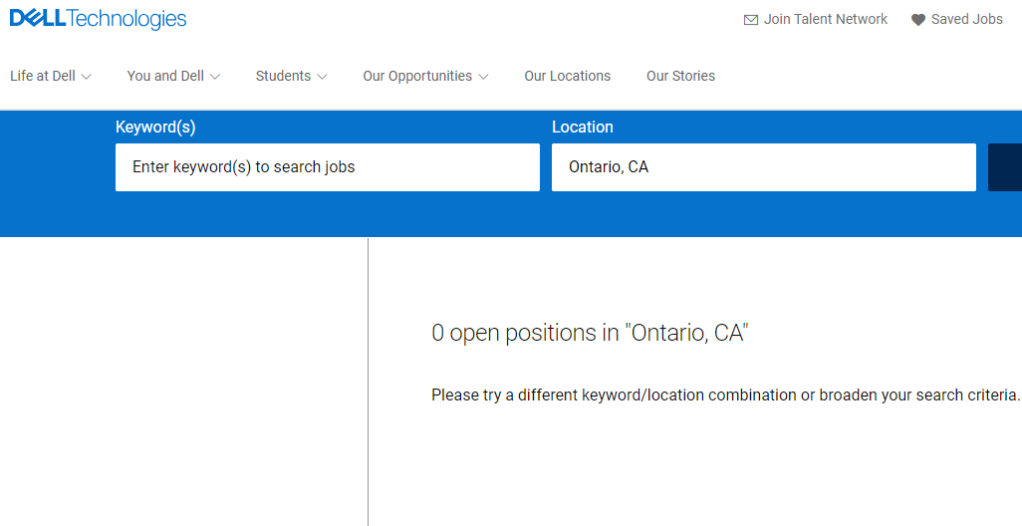
And as the Dell workers leave, this provides an opportunity for yours truly. After all, I’d be happy to report to Dell’s office in Ontario, California. So I went to see what opportunities I’d have.
When your company attends events, you’ll want to maximize your event return on investment (ROI) by creating marketing content that you publish before, during, and after the event.
The two things (first, second) you need to do NOW, well before your event.
And I’ll spill a couple of secrets along the way.
The first secret (about events)
I’m going to share two secrets in this post. OK, maybe they’re not that secret, but you’d think they ARE secrets because no one acknowledges them.
The first one has to do with event attendance. You personally might be awed and amazed when you’re in the middle of an event and surrounded by hundreds, or thousands, or tens of thousands of people. All of whom are admiring your exhibit booth or listening to your CEO speak.
Technically not a CEO (Larry Ellison’s official title is Chief Technology Officer, and the CEO is Safra Catz), but you get the idea. By Oracle PR Hartmann Studios – CC BY 2.0, https://commons.wikimedia.org/w/index.php?curid=47277811.
But guess what?
Many, many more people are NOT at the event.
They can’t see your exhibit booth, and can’t hear your speaker. They’re on the outside, TRYING to look in.
And all the money you spent on booth space and travel and light-up pens does NOTHING for the people who aren’t there…
Unless you bring the event to them. Your online content can bring the event to people who were never there.
But you need to plan, create, and approve your content before, during, and after the event. Here’s how you do that.
Three keys to creating event-related content
Yes, you can just show up at an event, take some pictures, and call it a day. But if you want to maximize your event return on investment, you’ll be a bit more deliberate in executive your event content. Ideally you should be:
Before the event begins, you need to plan your content. While you can certainly create some content on a whim as opportunity strikes, you need to have a basic idea of what content you plan to create.
Before the event. Why should your prospects and customers care about the event? How will you get prospects and customers to attend the event? What will attendees and non-attendees learn from the event?
During the event. What event activities require content generation? Who will cover them? How will you share the content?
Some dude creating Morphoway-related content for Biometric Update at the (then) ConnectID Expo in 2015.
After the event. What lessons were learned? How will your prospects and customers benefit from the topics covered at the event? Why should your prospects buy the product you showcased at the event?
Creating your event content
Once you have planned what you want to do, you need to do it. Before, during, and after the event, you may want to create the following types of content:
Blog posts. These can announce your attendance at the event before it happens, significant goings-on at the event (such as your CEO’s keynote speech or the evening party launching your new product), or lessons learned from the event (what your CEO’s speech or your new product means for your prospects and clients). Blog posts can be created relatively quickly (though not as quick as some social media posts), and definitely benefit your bottom line.
Social media. Social media such as Facebook, Instagram, and LinkedIn can also be used before, during, and after the event. Social media excels at capturing the atmosphere of the event, as well as significant activities. When done right, it lets people experience the event who were never there.
E-mails. Don’t forget about e-mails before, during, and after the event. I forgot about e-mails once and paid the price. I attended an event but neglected to tell my e-mail subscribers that I was going to be there. When I got to the event, I realized that hardly any of the attendees understood the product I was offering, and were not the people who were hungry for my product. If I had stocked the event with people from my e-mail list, the event would have been more productive for me.
Data sheets. Are you announcing a new product at an event? Have the data sheet ready.
Demonstration scripts. Are you demonstrating a new or existing product at the event? Script out your demonstration so that your demonstrators start with the same content and make the points YOU want them to make.
Case studies and white papers. While these usually come into play after the event, you may want to release an appropriate case study or white paper before or during the event, tied to the event topic. Are you introducing a new product at an industry conference? Time your product-related white paper for release during the conference. And promote the white paper with blog posts, social media, and e-mails.
Other types of content. There are many other types of content that you can release before, during, or after an event. Here’s a list of them.
Approving your event content
Make sure that your content approval process is geared for the fast-paced nature of events. I can’t share details, but:
If your content approval process requires 24 hours, then you can kiss on-site event coverage goodbye. What’s the point in covering your CEO’s Monday 10:00 keynote speech if the content doesn’t appear until 11:00…on Tuesday?
If your content approval process doesn’t have a timeline, then you can kiss ALL event coverage goodbye. There have been several times when I’ve written blog posts announcing my company’s attendance at an event…and the blog posts weren’t approved until AFTER the event was already over. I salvaged the blog posts via massive rewrites.
So how are you going to generate all this content? This brings us to my proposed solution…and the second secret.
The rest of this post talks about one of Bredemarket’s services, the Bredemarket 2800 Medium Writing Service. For those who haven’t heard about it, it’s a service where I provide between 2,800 and 3,200 words of written text.
“But John,” you’re asking. “How is a single block of 3,200 words of text going to help me with my event marketing?”
Time to reveal the second secret…
You can break up those 3,200 words any way you like.
For example, let’s say that you’re planning on attending an event. You could break the text up as follows:
One 500-word blog post annnouncing your attendance at the event.
Three 100-word social media posts before the event.
One 500-word blog post as the event begins.
One 300-word product data sheet prepared before the event and released on the second day of the event.
One 500-word blog post announcing the new product.
Three 100-word social media posts tied to the new product announcement.
One 500-word post-event blog post with lessons learned.
Three 100-word social media posts after the event.
For $2,000 (as of June 2024), you can benefit from written text for complete event coverage, arranged in any way you need.
So how can you and your company receive these benefits?
Read about the Bredemarket 2800 Medium Writing Service
First, read the data sheet for the Bredemarket 2800 Medium Writing Service so you understand the offer and process.
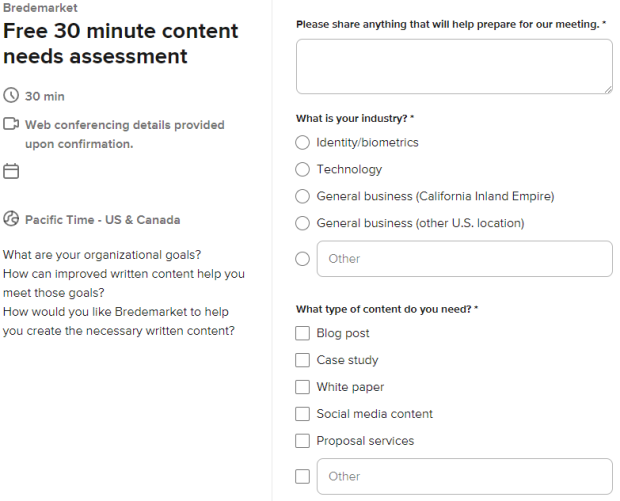
Second, contact Bredemarket to get the content process started well BEFORE your event. Book a meeting with me at calendly.com/bredemarket. Be sure to fill out the information form so I can best help you.
When I write about space aliens, there’s a reason. And that reason may be to warn identity vendors that silence is NOT golden.
Fake LinkedIn stories
As a frequent reader and writer on LinkedIn, I’ve seen all the tips and tricks to drive engagement. One popular trick is to make up a story that will resonate with the LinkedIn audience.
For example, the writer (usually a self-proclaimed career expert who is ex-FAANG) will tell the entirely fictional story of a clueless hiring manager and an infinitely wise recruiter. The clueless hiring manager is shocked that a candidate accepted a competing job offer. “Didn’t she like us?” asks the hiring manager. The wise recruiter reminds the clueless hiring manager that the candidate had endured countless delays in numerous interviews with the company, allowing another company to express interest in and snatch her.
Job seekers have endured countless delays in their own employment searches. When they read the post, they hoot and holler for the candidate and boo the clueless hiring manager. Most importantly, readers like and love the writer’s post until it goes viral, making the author an ex-FAANG top recruiting voice.
Even though no sources are cited and the story is fictional, it is very powerful.
Well…until you’ve read the same story a dozen times from a dozen recruiters. Then it gets tiresome.
My improvement on fake stories
But those fake stories powerfully drive clicks on LinkedIn, so I wanted to get in on the action. But I was going to add two wrinkles to my fake story.
First, I would explicitly admit that my story is fake. Because authenticity. Sort of.
Second, my story would include space aliens to make it riveting. And to hammer the point that the story is fake.
Now I just had to write a fake story with space aliens.
Or did I?
A repurposed and adapted fake story with space aliens
I just needed to make one of the characters a space alien, and since Jones was based on the striking Grace Jones, I went ahead and did it. If you can imagine Grace Jones with tentacles, two noses, and eight legs.
As the space alien’s tentacles quivered, I snuck something else into the LinkedIn story—some facts.
Kids who watched Fat Albert on TV not only enjoyed the antics, but also learned an Important Life Lessons. Now I don’t have multiple advanced degrees like Cosby, but then again I never had multiple degrees rescinded either.
But my life lesson wasn’t to stay in school or pull your pants up. My life lesson was to blog. The lesson was in the form of a statement by Jones’ humanoid colleague Smith, taken verbatim from the Pizza Stories post.
“Take blogging,” replied Smith. “The average company that blogs generates 55% more website visitors. B2B marketers that use blogs get 67% more leads than those who do not. Marketers who have prioritized blogging are 13x more likely to enjoy positive ROI. And 92% of companies who blog multiple times per day have acquired a customer from their blog.”

















 Bredemarket