
I remember the day that my car skidded down Monterey Pass Road in Monterey Park, California, upside down, my seatbelt saving my brain from…um…very bad things. (I promised myself that I’d make this post NON-gory.)
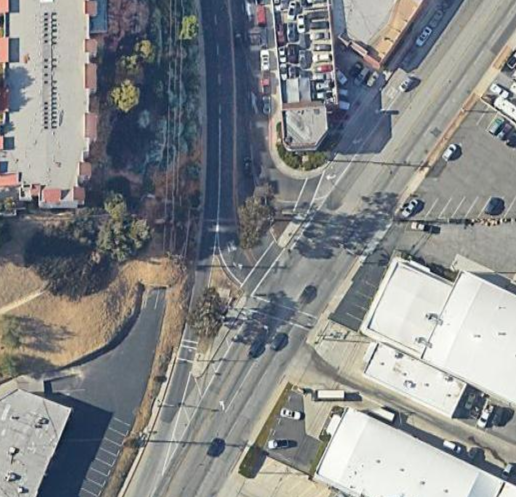
I was returning from lunch to my employer farther south on Monterey Pass Road when a car hit me from the side, flipping my car over so that it skidded down Monterey Pass Road, upside down. Only my seat belt saved my from certain death.
(Mini-call to action: wear seat belts.)

Now some of you who know me are asking, “John, you’ve lived in Ontario and Upland for the past several decades. Why were you 30 miles away, in Monterey Park?”
Well, back in 1991, after working for Rancho Cucamonga companies for several years, I ended up commuting to a company in Monterey Park, California, at least an hour’s drive one way from my home. Driving toward downtown Los Angeles in the morning, and away from downtown Los Angeles in the afternoon. If you know, you know.
After I left the Monterey Park company, I consulted or worked for companies in Pomona, Brea, Anaheim, Irvine, and other cities. But for most of the next three decades, I was still driving at least an hour one-way every day to get from home to work.
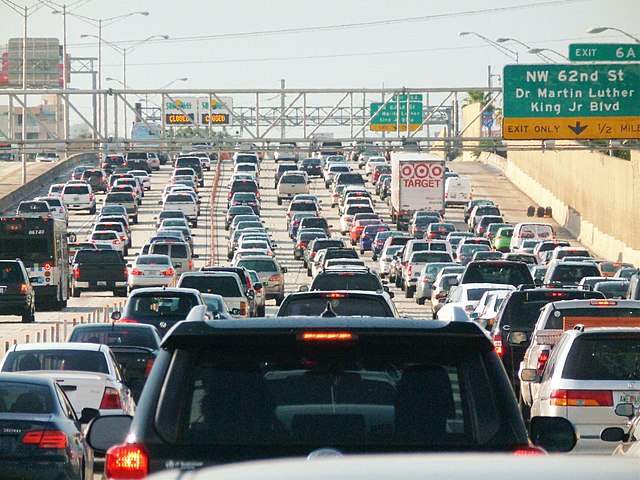
As I’ll note later in this post, some people are still commuting today. And for all I know I may commute again also.
I learn the acronym WFH
That all stopped in March 2020 when a worldwide pandemic sent all non-essential personnel at IDEMIA’s Anaheim office to work from home (WFH). Now there were some IDEMIA employees, such as salespeople, who had been working from home for years, but this was the first time that a whole bunch of us were doing it.
Some of us had to upgrade our home equipment: mesh networks, special face illumination lighting, and other things. And now, instead of having a couple of people participating in meetings remotely, ALL of us were doing so. (Before 2020, the two words “Zoom background” would be incomprehensible to me. After 2020, I understood those words intimately.)
This new work practice continued after I left IDEMIA, as I started Bredemarket, joined Incode Technologies for a little over a year, and returned (for now) to Bredemarket again.
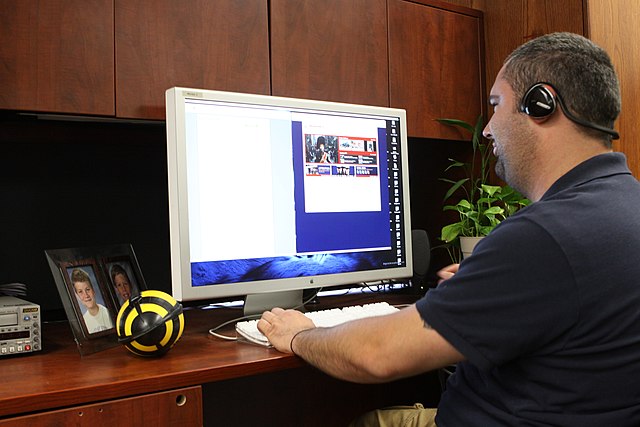
WFH benefits
There are two benefits to working from home:
- First, it preserves your brain. Not just from the horrible results of a commuting automobile accident. For the last three-plus years, I’ve gotten more rest and sleep since I’m not waking up before 6am and getting home after 6pm. And I’m not sitting in traffic on the 57, waiting for an accident to clear.
- Second, it provides the best talent to your employer. Why? Because it can hire you. I just spent over a year working for a company headquartered in San Francisco, and I didn’t have to move to San Francisco to do it. In fact, when my product marketing team reached its apex, we had two people in Southern California, one in England, and one in Sweden. None of us had to move to San Francisco to work there, and my company was not restricted to hiring people who could get to San Francisco every day.
But that doesn’t stop some companies from insisting on office work
In-office presence controversy predates COVID (remember Marissa Mayer and Yahoo?), and now that COVID has receded, the “return to office” drumbeat has gotten louder.
Laith Masarweh shared the story of a woman who, like me, is tiring of the L.A. freeway grind.
So she asked her boss for help–
And he told her to change her mindset.
“That’s just life,“ he said. “Everyone has to commute.”…
All she asked for was some flexibility, and he shut her down.
So he’s going to lose her.
Laith Masarweh, LinkedIn. (link)
Now I’m not saying I’ll never work on-site again. Maybe someday I’ll even accept an on-site position in Monterey Park.
But I’m not that thrilled about going down Monterey Pass Road again.
In the meantime…
…since I’m NOT full-time employed, and since my home office is well equipped (I have Nespresso!), I have the time to make YOUR company’s messaging better.
If you can use Bredemarket’s expertise for your biometric, identity, technology, or general blog posts, case studies, white papers, or other written content, contact me.
- Email me at john.bredehoft@bredemarket.com.
- Book a meeting with me at calendly.com/bredemarket.
- Contact me at bredemarket.com/contact/.















 Bredemarket