I don’t know, I don’t believe in the word “legacy.” I just think that’s another word for ego. Legacy doesn’t mean nothing. It’s just some word everybody grabbed onto.
It means absolutely nothing to me. I’m just passing through. I’m going to die and it’s going to be over. Who cares about legacy after that?
We’re nothing. We’re just dead. We’re dust. We’re absolutely nothing. Our legacy is nothing.
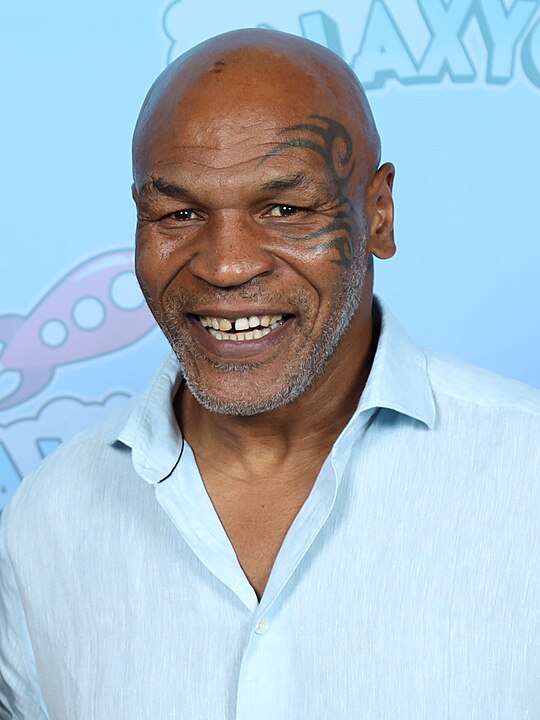
With the life that Tyson has lived, it’s understandable why he’s echoing Ecclesiastes in this interview.
But you don’t have to have had Tyson’s experiences to realize that legacy does not last.
Neither wanted nor needed
In business (and in life), there are companies (and people) who don’t need you or want you.
This may be temporary. The company that doesn’t need you today may urgently (and importantly) need you tomorrow.
Or it may NOT be temporary. There are companies that will NEVER need you or want you.
I recently ran across three such companies that will never need Bredemarket.
Six weeks (now less than six weeks)
Six weeks, the still image version.
Perhaps you noticed Bredemarket’s “six weeks” promotion over the weekend. It was addressed to companies that may have a final project that they want to complete before the year ends in six weeks. (Now 5 1/2 weeks.) I emphasized that Bredemarket can help companies complete those content, proposal, and analysis projects.
I also included email in this campaign, targeting prospects whom I haven’t worked with recently, or whom I’ve never worked with at all. I didn’t go overboard in my emails; although I have over 400 contacts in Bredemarket’s customer relationship management system, I sent the email to less than 40 of them.
As of this morning, none of the recipients has booked a meeting with me to discuss their end of year needs.
Some explicitly told me that they were fine now and did not need or want Bredemarket’s services for end of year projects.
Some didn’t respond, which probably indicates that they did not need or want Bredemarket’s services either.
And I discovered that three companies (four contacts) will NEVER need or want Bredemarket’s services.
Delivery incomplete
How did I discover that?
Via four “delivery status notification” messages.
Delivery incomplete.
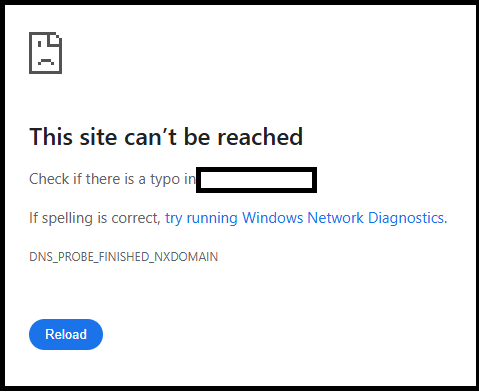
So I visited the web pages in question, and they no longer existed.
This site can’t be reached.
I’ve been building up my CRM for over four years, so it’s not shocking that some companies have disappeared.
But one of the companies (“Company X”) DID exist a mere eight months ago.
I know this because I prepared a presentation on differentiation (see version 2 of the presentation here), and two representatives from Company X received the presentation in advance of a conference.
After the conference organizer distributed the presentation, I offered to meet with the companies individually (no charge) to discuss their content and differentiation needs, or anything else they wanted to discuss.
While some conference attendees took advantage of my April offer, the representatives from Company X did not.
And now in November, Company X no longer exists.
Tumbleweed image public domain.
Could Bredemarket have created the necessary content to keep Company X afloat? Who knows?
But EVERY company needs content to differentiate it from its competitors. Otherwise the competitors will attack you. And your competitors may not be as merciful with you as Jake Paul was with Mike Tyson.
If you need Bredemarket’s help with content, proposal, or analysis services, book a meeting with me.
Perhaps I was a little agitated or excited this afternoon.
Perhaps I was a little agitated because five (or maybe more; I lost count) scammers had sent me LinkedIn DMs when they gravitated to my #opentowork LinkedIn banner…like flies speeding to a carcass. (Which gave me an excuse to write about identity management on LinkedIn.)
Or perhaps I was a little excited because a Never Search Alone participant had shared an identity management product marketing position with me.
The bot says hello
After applying for said job, I was reading the company’s website to learn about its identity management product when the company’s bot kept on messaging me.
At 2:30 pm Chat Bot says: Hello, this is an AI Rep from [COMPANY]. If you need any assistance, feel free to ask.
At 2:30 pm Chat Bot says: Saw that you’re interested in our SaaS management and identity governance software. Any questions?
Being the curious type (after all, I worked for IDEMIA), I wondered how the chat bot would deal with what I REALLY wanted to ask about.
Not about a demo.
Not about the company’s recent funding round. (Series B, $35 million.)
At 2:47 pm I say: With 30 years’ identity experience and 9 years as a PMM, I just applied for your Sr PMM Identity Management role. So the only question that I have is when you will interview me.
And yes, my assumption that the company would immediately drop everything and interview me may have been a little overconfident. But it’s better than imposter syndrome.
And after all, this was just a bot. I assumed that the bot would be completely confused by my question, so no harm would come from overconfidence.
You know what they say about people who assume?
The bot exceeds expectations
At 2:47 pm Chat Bot says: Thanks for applying for the Sr PMM Identity Management role! Could you provide your email address so we can follow up on your application status?
One note here: the bot parroted my response back to me. The company’s job description does not include a job title with the “PMM” acronym.
Regardless, I was pleasantly surprised. The bot was trained to respond to job applicants. So I provided the email address that I used for my job application.
The bot does not meet expectations
That’s when I was UNPLEASANTLY surprised.
At 2:47 pm Chat Bot says: Thank you for your interest. Please provide a business email address so we can follow up on your application status.
Apparently the training wasn’t thorough enough. Think about it; if you’re an individual applying for a job, why would you apply with a “business email address”? Which one? From your current employer? THAT is not a good idea.
But as it turns out, I DO have a business email address-the one for Bredemarket. So I entered that, even though that email address does not appear anywhere on the job application that I had just submitted.
At 2:47 pm Chat Bot says: Thank you for providing your email. Our team will review the conversation and follow up if necessary. How else can I assist you today?
So it will be interesting to see whether the company contacts me at both of my email addresses.
(Post image generated at craiyon.com)
Postscript for those who don’t click on every link in a Bredemarket post
You missed Brian May’s collaboration with the Weebl folks.
This resonated with me because in mid-September I spent some Instagram time thinking about the word “flash” (as in how fast a human can create content).
You’ve probably noticed that I’ve created a lot of Bredemarket videos lately.
My longer ones last a minute. That’s the length of a video I haven’t shared in the Bredemarket blog (it’s on Instagram) summarizing my client work over the last four years. My early July identity and Inland Empire reels are almost a minute long.
Researchers in Canada surveyed 2,000 participants and studied the brain activity of 112 others using electroencephalograms (EEGs). Microsoft found that since the year 2000 (or about when the mobile revolution began) the average attention span dropped from 12 seconds to eight seconds.
As many noted, a goldfish’s attention span is 9 seconds.
Some argue that the 8 second attention span is not universal and varies according to the task. For example, a 21 minute attention span has been recorded for drivers. If drivers had an 8 second attention span, we would probably all be dead by now.
But watching a video is not a life-or-death situation. Viewers will happily jump away if there’s no reason to watch.
So I have my challenge.
Ironically, I learned about the 8 second rule while watching a LinkedIn Learning course about the 3 minute rule. I haven’t finished the course yet, so I haven’t yet learned how to string someone along for 22.5 8-second segments.
I remember the first computer I ever owned: a Macintosh Plus with a hard disk with a whopping 20 megabytes of storage space. And that hard disk held ALL my files, with room to spare.
For sake of comparison, the video at the end of this blog post would fill up three-quarters of that old hard drive. Not that the Mac would have any way to play that video.
And its 20 megabyte hard disk illustrates the limitations of those days. File storage was a precious commodity in the 1980s and 1990s, and we therefore accepted images that we wouldn’t even think about accepting today.
This affected the ways in which entities exchanged biometric information.
The 1993 ANSI/NIST standard
The ANSI/NIST standard for biometric data interchange has gone through several iterations over the years, beginning in 1986 when NIST didn’t even exist (it was called the National Bureau of Standards in those days).
Yes, FINGERPRINT information. No faces. No scars/marks/tattoos. signatures, voice recordings, dental/oral data, irises, DNA, or even palm prints. Oh, and no XML-formatted interchange either. Just fingerprints.
No logical record type 99, or even type 10
Back in 1993, there were only 9 logical record types.
For purposes of this post I’m going to focus on logical record types 3 through 6 and explain what they mean.
Type 3, Fingerprint image data (low-resolution grayscale).
Type 4, Fingerprint image data (high-resolution grayscale).
Type 5, Fingerprint image data (low-resolution binary).
Type 6, Fingerprint image data (high-resolution binary).
Image resolution in the 1993 standard
In the 1993 version of the ANSI/NIST standard:
“Low-resolution” was defined in standard section 5.2 as “9.84 p/mm +/- 0.10 p/mm (250 p/in +/- 2.5 p/in),” or 250 pixels per inch (250ppi).
The “high-resolution” definition in sections 5.1 and 5.2 was twice that, or “19.69 p/mm +/- 20 p/mm (500 p/in +/- 5 p/in.”
While you could transmit at these resolutions, the standard still mandated that you actually scan the fingerprints at the “high-resolution” 500 pixels per inch (500ppi) value.
Incidentally, this brings up an important point. The series of ANSI/NIST standards are not focused on STORAGE of data. They are focused on INTERCHANGE of data. They only provided a method for Printrak system users to exchange data with automated fingerprint identification systems (AFIS) from NEC, Morpho, Cogent, and other fingerprint system providers. Just interchange. Nothing more.
Binary and grayscale data in the 1993 standard
Now let’s get back to Types 3 through 6 and note that you were able to exchange binary fingerprint images.
Why the heck would fingerprint experts tolerate a system that transmitted binary images that latent fingerprint examiners considered practically useless?
Because they had to.
Storage and transmission constraints in 1993
Two technological constraints adversely affected the interchange of fingerprint data in 1993:
Storage space. As mentioned above, storage space was limited and expensive in the 1980s and the 1990s. Not everyone could afford to store detailed grayscale images with (standard section 4.2) “eight bits (256 gray levels)” of data. Can you imagine storing TEN ENTIRE FINGERS with that detail, at an astronomical 500 pixels per inch?
Transmission speed. There was another limitation enforced by the modems of the data. Did I mention that the ANSI/NIST standard was an INTERCHANGE standard? Well, you couldn’t always interchange your data via the huge 1.44 megabyte floppy disks of the day. Sometimes you had to pull your your trusty 14.4k or 28.8k modem and send the images over the telephone. Did you want to spend the time sending those huge grayscale images over the phone line?
So as a workaround, the ANSI/NIST standard allowed users to interchange binary (black and white) images to save disk space and modem transmission time.
And we were all delighted with the capabilities of the 1993 ANSI/NIST standard.
Until we weren’t.
The 2015 ANSI/NIST standard
The current standard, ANSI/NIST-ITL 1-2011 Update 2015, supports a myriad of biometric types. For fingerprints (and palm prints), the focus is on grayscale images: binary image Type 5 and Type 6 are deprecated in the current standard, and low-resolution Type 3 grayscale images are also deprecated. Even Type 4 is shunned by most people in favor of new friction ridge image types in which the former “high resolution” is now the lowest resolution that anyone supports:
When your company attends events, you’ll want to maximize your event return on investment (ROI) by creating marketing content that you publish before, during, and after the event.
The two things (first, second) you need to do NOW, well before your event.
And I’ll spill a couple of secrets along the way.
The first secret (about events)
I’m going to share two secrets in this post. OK, maybe they’re not that secret, but you’d think they ARE secrets because no one acknowledges them.
The first one has to do with event attendance. You personally might be awed and amazed when you’re in the middle of an event and surrounded by hundreds, or thousands, or tens of thousands of people. All of whom are admiring your exhibit booth or listening to your CEO speak.
Technically not a CEO (Larry Ellison’s official title is Chief Technology Officer, and the CEO is Safra Catz), but you get the idea. By Oracle PR Hartmann Studios – CC BY 2.0, https://commons.wikimedia.org/w/index.php?curid=47277811.
But guess what?
Many, many more people are NOT at the event.
They can’t see your exhibit booth, and can’t hear your speaker. They’re on the outside, TRYING to look in.
And all the money you spent on booth space and travel and light-up pens does NOTHING for the people who aren’t there…
Unless you bring the event to them. Your online content can bring the event to people who were never there.
But you need to plan, create, and approve your content before, during, and after the event. Here’s how you do that.
Three keys to creating event-related content
Yes, you can just show up at an event, take some pictures, and call it a day. But if you want to maximize your event return on investment, you’ll be a bit more deliberate in executive your event content. Ideally you should be:
Before the event begins, you need to plan your content. While you can certainly create some content on a whim as opportunity strikes, you need to have a basic idea of what content you plan to create.
Before the event. Why should your prospects and customers care about the event? How will you get prospects and customers to attend the event? What will attendees and non-attendees learn from the event?
During the event. What event activities require content generation? Who will cover them? How will you share the content?
Some dude creating Morphoway-related content for Biometric Update at the (then) ConnectID Expo in 2015.
After the event. What lessons were learned? How will your prospects and customers benefit from the topics covered at the event? Why should your prospects buy the product you showcased at the event?
Creating your event content
Once you have planned what you want to do, you need to do it. Before, during, and after the event, you may want to create the following types of content:
Blog posts. These can announce your attendance at the event before it happens, significant goings-on at the event (such as your CEO’s keynote speech or the evening party launching your new product), or lessons learned from the event (what your CEO’s speech or your new product means for your prospects and clients). Blog posts can be created relatively quickly (though not as quick as some social media posts), and definitely benefit your bottom line.
Social media. Social media such as Facebook, Instagram, and LinkedIn can also be used before, during, and after the event. Social media excels at capturing the atmosphere of the event, as well as significant activities. When done right, it lets people experience the event who were never there.
E-mails. Don’t forget about e-mails before, during, and after the event. I forgot about e-mails once and paid the price. I attended an event but neglected to tell my e-mail subscribers that I was going to be there. When I got to the event, I realized that hardly any of the attendees understood the product I was offering, and were not the people who were hungry for my product. If I had stocked the event with people from my e-mail list, the event would have been more productive for me.
Data sheets. Are you announcing a new product at an event? Have the data sheet ready.
Demonstration scripts. Are you demonstrating a new or existing product at the event? Script out your demonstration so that your demonstrators start with the same content and make the points YOU want them to make.
Case studies and white papers. While these usually come into play after the event, you may want to release an appropriate case study or white paper before or during the event, tied to the event topic. Are you introducing a new product at an industry conference? Time your product-related white paper for release during the conference. And promote the white paper with blog posts, social media, and e-mails.
Other types of content. There are many other types of content that you can release before, during, or after an event. Here’s a list of them.
Approving your event content
Make sure that your content approval process is geared for the fast-paced nature of events. I can’t share details, but:
If your content approval process requires 24 hours, then you can kiss on-site event coverage goodbye. What’s the point in covering your CEO’s Monday 10:00 keynote speech if the content doesn’t appear until 11:00…on Tuesday?
If your content approval process doesn’t have a timeline, then you can kiss ALL event coverage goodbye. There have been several times when I’ve written blog posts announcing my company’s attendance at an event…and the blog posts weren’t approved until AFTER the event was already over. I salvaged the blog posts via massive rewrites.
So how are you going to generate all this content? This brings us to my proposed solution…and the second secret.
The rest of this post talks about one of Bredemarket’s services, the Bredemarket 2800 Medium Writing Service. For those who haven’t heard about it, it’s a service where I provide between 2,800 and 3,200 words of written text.
“But John,” you’re asking. “How is a single block of 3,200 words of text going to help me with my event marketing?”
Time to reveal the second secret…
You can break up those 3,200 words any way you like.
For example, let’s say that you’re planning on attending an event. You could break the text up as follows:
One 500-word blog post annnouncing your attendance at the event.
Three 100-word social media posts before the event.
One 500-word blog post as the event begins.
One 300-word product data sheet prepared before the event and released on the second day of the event.
One 500-word blog post announcing the new product.
Three 100-word social media posts tied to the new product announcement.
One 500-word post-event blog post with lessons learned.
Three 100-word social media posts after the event.
For $2,000 (as of June 2024), you can benefit from written text for complete event coverage, arranged in any way you need.
So how can you and your company receive these benefits?
Read about the Bredemarket 2800 Medium Writing Service
First, read the data sheet for the Bredemarket 2800 Medium Writing Service so you understand the offer and process.
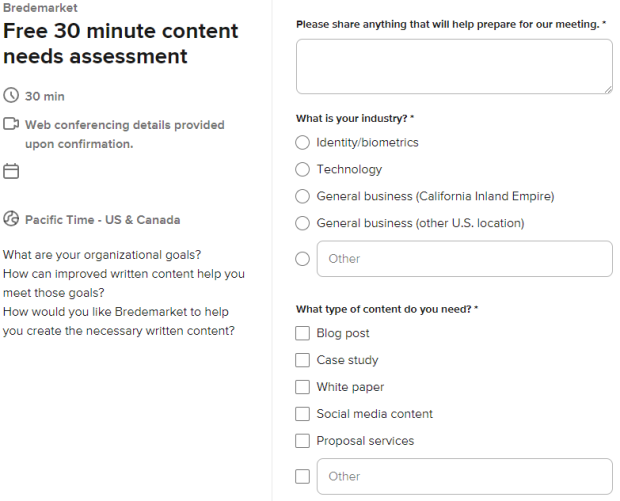
Second, contact Bredemarket to get the content process started well BEFORE your event. Book a meeting with me at calendly.com/bredemarket. Be sure to fill out the information form so I can best help you.
The third image in the “houseboat” series of posts that I’ve run on SOME social media outlets.
Beginning May 2, Bredemarket is on fewer social channels. The information in this post is not new.
If you were reading some of Bredemarket’s social channels, you may have seen a similar announcement on May 15, but that announcement listed the services where I was no longer posting.
If you were reading some of Bredemarket’s OTHER social channels, you may NOT have seen that announcement. Because those other social channels were the precise ones where I was no longer posting.
The May 15 social media account is a follow-up to a prior announcement from May 2, which said in part that I was “pausing activity on some Bredemarket social channels (and some related personal channels) that have no subscribers, exhibit no interest, or yield no responses.”
The second image in the “houseboat” series of posts that I’ve run on SOME social media outlets.
But rather than dwelling on the negative aspects of the social channels where Bredemarket has suspended activity, I’m going to concentrate on the social channels where Bredemarket is still active.
As further proof that I am celebrating, rather than hiding, my “seasoned” experience—and you know what the code word “seasoned” means—I am entitling this blog post “Take Me to the Pilot.”
Although I’m thinking about a different type of “pilot”—a pilot to establish that Login.gov can satisfy Identity Assurance Level 2 (IAL2).
The link in that sentence directs the kind reader to a post I wrote in November 2023, detailing that fact that the GSA Inspector General criticized…the GSA…for implying that Login.gov was IAL2-compliant when it was not. The November post references a GSA-authored August blog post which reads in part (in bold):
Login.gov is on a path to providing an IAL2-compliant identity verification service to its customers in a responsible, equitable way.
Specifically, over the next few months, Login.gov will:
Pilot facial matching technology consistent with the National Institute of Standards and Technology’s Digital Identity Guidelines (800-63-3) to achieve evidence-based remote identity verification at the IAL2 level….
Using proven facial matching technology, Login.gov’s pilot will allow users to match a live selfie with the photo on a self-supplied form of photo ID, such as a driver’s license. Login.gov will not allow these images to be used for any purpose other than verifying identity, an approach which reflects Login.gov’s longstanding commitment to ensuring the privacy of its users. This pilot is slated to start in May with a handful of existing agency-partners who have expressed interest, with the pilot expanding to additional partners over the summer. GSA will simultaneously seek an independent third party assessment (Kantara) of IAL2 compliance, which GSA expects will be completed later this year.
In short, GSA’s April 11 press release about the Login.gov pilot says that it expects to complete IAL2 compliance later this year. So it’s going to take more than a year for the GSA to repair the gap that its Inspector General identified.
My seasoned response
Once I saw Steve’s update this morning, I felt it sufficiently important to share the news among Bredemarket’s various social channels.
With a picture.
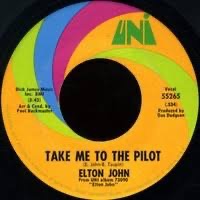
B-side of Elton John “Your Song” single issued 1970.
For those of you who are not as “seasoned” as I am, the picture depicts the B-side of a 1970 vinyl 7″ single (not a compact disc) from Elton John, taken from the album that broke Elton in the United States. (Not literally; that would come a few years later.)
By the way, while the original orchestrated studio version is great, the November 1970 live version with just the Elton John – Dee Murray – Nigel Olsson trio is OUTSTANDING.
Back to Bredemarket social media. If you go to my Instagram post on this topic, I was able to incorporate an audio snippet from “Take Me to the Pilot” (studio version) into the post. (You may have to go to the Instagram post to actually hear the audio.)
Not that the song has anything to do with identity verification using government ID documents paired with facial recognition. Or maybe it does; Elton John doesn’t know what the song means, and even lyricist Bernie Taupin doesn’t know what the song means.
So from now on I’m going to say that “Take Me to the Pilot” documents future efforts toward IAL2 compliance. Although frankly the lyrics sound like they describe a successful iris spoofing attempt.
Through a glass eye, your throne Is the one danger zone


















 Bredemarket