The one drawback of Google Lyria is that even when you tell it that you want to title a track with a particular title, Lyria makes up its own anyway.
My prompt:
“The title of the song is “West of Waltham.” The instrumental consists of maritime sounds (bells, horns, seagulls) mixed with acoustic guitar. A goth male sings about searching for work as an identity product marketing manager, finding a priceless job opportunity west of Waltham, and applying for it on the spot.”
Incidentally, using the phrase “goth male” is the only way I’ve found to guarantee that the singer will be male.
Google Gemini’s response:
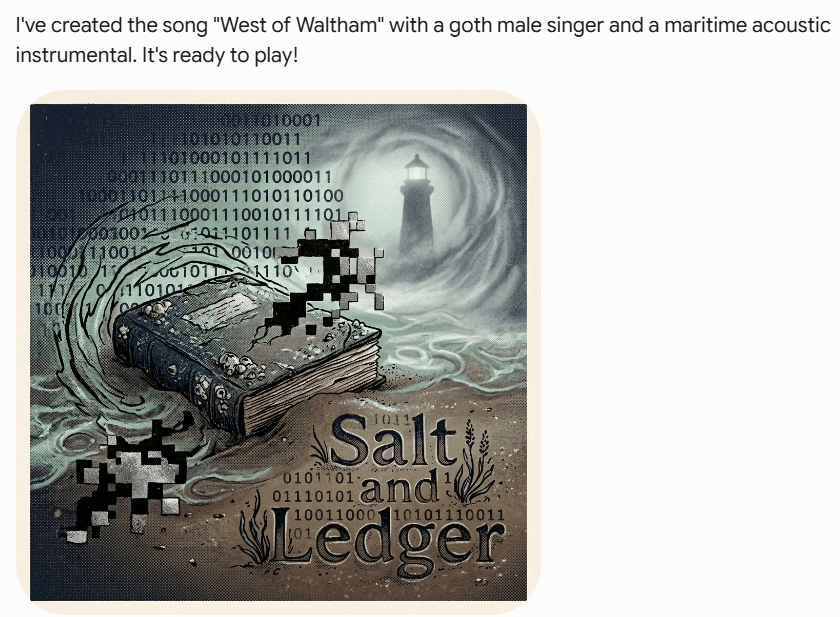
“I’ve created the song “West of Waltham” with a goth male singer and a maritime acoustic instrumental. It’s ready to play!”
And Gemini presented me with…”Salt and Ledger.”
Oh well…
“Salt and Ledger (West of Waltham).” Google Lyria. Public Domain.
Most people remember the 1970s television show “Good Times” for its overuse of the word “Dynomite!”
I remember it for its theme song, and one line in particular.
“Good Times” was a Norman Lear show (although Eric Monte and “George Jefferson’s first son” Mike Evans actually created it), and as such it wasn’t always traditional or pleasant. It wasn’t traditional because it depicted an African-American two-parent family, something that had never been done before. (The Cosby Show came much later.) It wasn’t pleasant because it dealt with then-controversial subject matter.
Including unemployment.
Which brings me to the line in the theme song:
“Temporary layoffs
GOOD TIMES!”
Good Times.
Yet this was NOT an early example of 21st century toxic positivity, James, Florida, J.J., and the rest didn’t run around manifesting positive vibes. They KNEW that life in Cabrini Green sucked, but they moved onward; maybe not “moving on up,” but onward.
Oh, and by the way, temporary layoffs were not TV sitcom fiction. In the 1970s, layoffs WERE temporary. They would close the plant for around two months, then call you back to your job. Around 70% of workers returned to their employer.
Google Gemini.
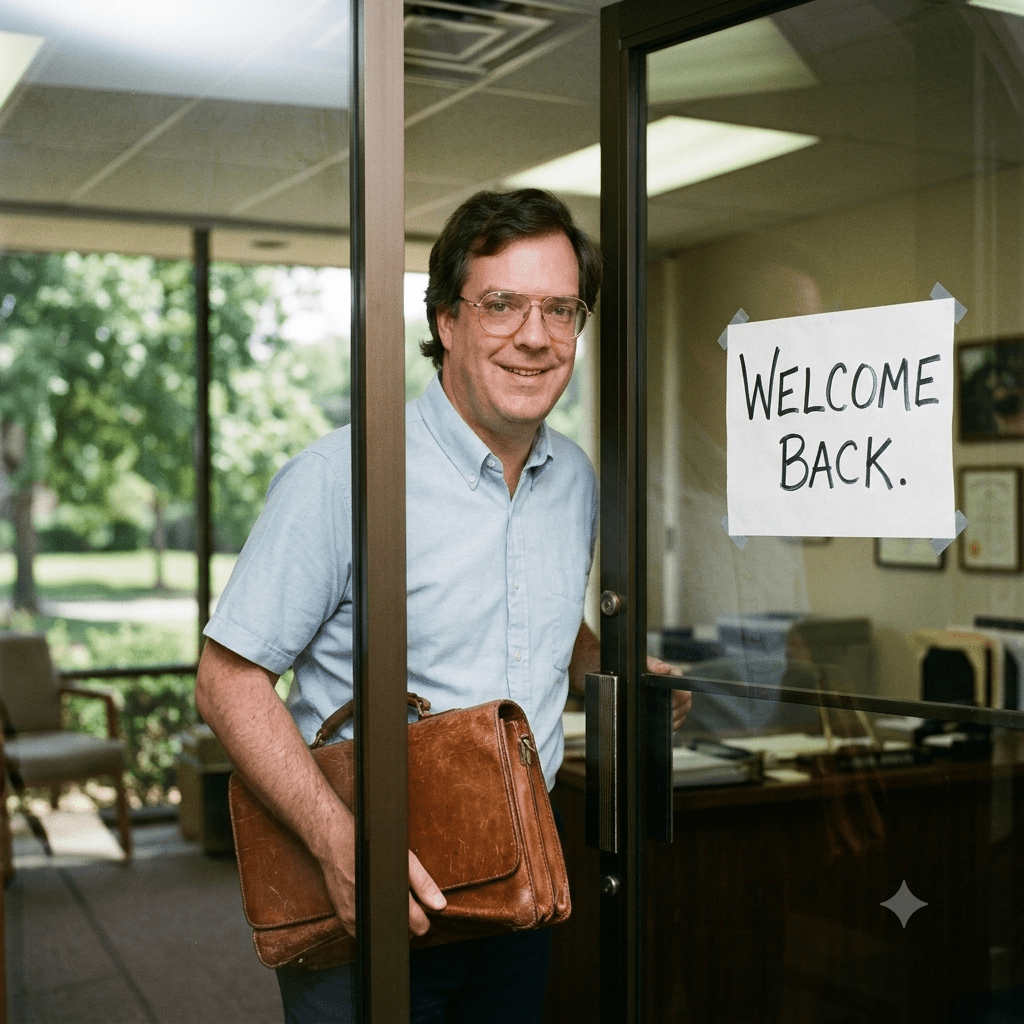
A decade later it happened to me. A company laid me off, and I went to work for an associate of the owner. When the second company ran out of work for me, the first company hired me back.
Google Gemini.
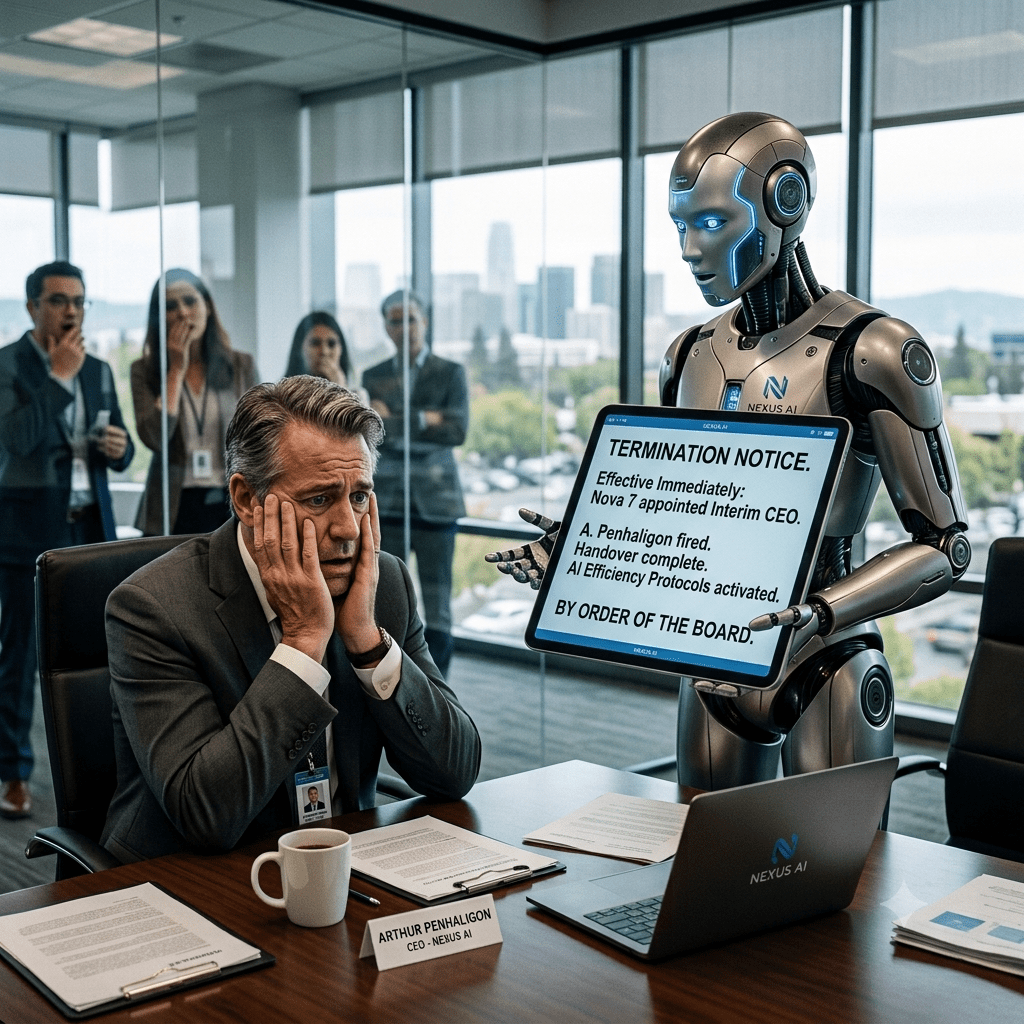
After that, temporary layoffs faded away. The next time I was laid off was in 2020. Not surprisingly, the company never called me back.
Oops, I did it again. Because LinkedIn employment fraud persists. Let’s see if the fraudsters have become smarter since November 2024.
As previously promised and as previously executed…
I’ve spent over 10 years in identity and biometrics, and other factors, including one-to-many identification, one-to-one verification, and classification (e.g. how old you are).
But as I have noted in an old article in the Bredemarket newsletter The Wildebeest Speaks, verifying someone’s identity only goes so far.
(For people reading this on LinkedIn: here comes #honeypot79, for those paying attention.)
For example, how many LinkedIn users sporting a green banner and an #opentowork hashtag have been approached by a person claiming to be from Company X…who is NOT from Company X?
That, my friends, is #employmentfraud – something that the REAL employees at all the Company X’s out there take very seriously.
Of course, no #fraudster who is doing something like that would be foolish enough to send me a LinkedIn InMail with such a claim…would they?
This negative perception of hallucinations extends to our views of generative artificial intelligence. Although perhaps what generative AI does is more accurately called “confabulations.”
““A hallucination is a conscious sensory perception that is at variance with the stimuli in the environment. A confabulation, on the other hand, is the making of assertions that are at variance with the facts, such as “the president of France is Francois Mitterrand,” which is currently not the case.”
Whatever you call it, the result is not consciously intended. And it can sometimes be bad.
Lying on a job application
Take those AI tools that jobseekers can use to not only apply for a job, but automatically customize their resume for that particular job.
When automatic resume rewrites are not reviewed, the new resume may end up with confabulations, hallucinations, or outright falsehoods.
If my rewritten resume claims two years’ Python experience, that just ain’t true.
And I could lose a job opportunity if I lie on my resume.
Fly (on) an eagle
But those who praise hallucinations as good are not limited to Timothy Leary.
Perhaps I’m wrong, but I don’t see any harm in creating a Tolkienesque illustration of Theodore Roosevelt riding a flying bald eagle. Actually, TR fans may think it’s pretty cool.
By definition, ANY generative AI engine HAS to invent stuff. A prompt can’t specify everything.
Now here is the prompt that I used to create that audio track.
“Create a moving song with violin, harp, and guitar about overly long meetings. The opening male spoken words are “meeting hour 1, meeting hour 2, meeting hour 3, meeting hour 4.” The female singer, accompanied by a female choir, sings of her despair in pointless meetings with no purpose. The chorus consists of the choir singing “When will this madness end?””
When you review the prompt you can see many of the elements of the final song.
But I never told Lyria to sing “the coffee turned to ink.” Lyria made that up.
But I like that addition.
And I have another example.
Image inventiveness
This example is from the images that appeared throughout the video. These were also created by Google; is the image generation capability still called Nano Banana this month?
Anyway, here is the prompt for the noon scene.
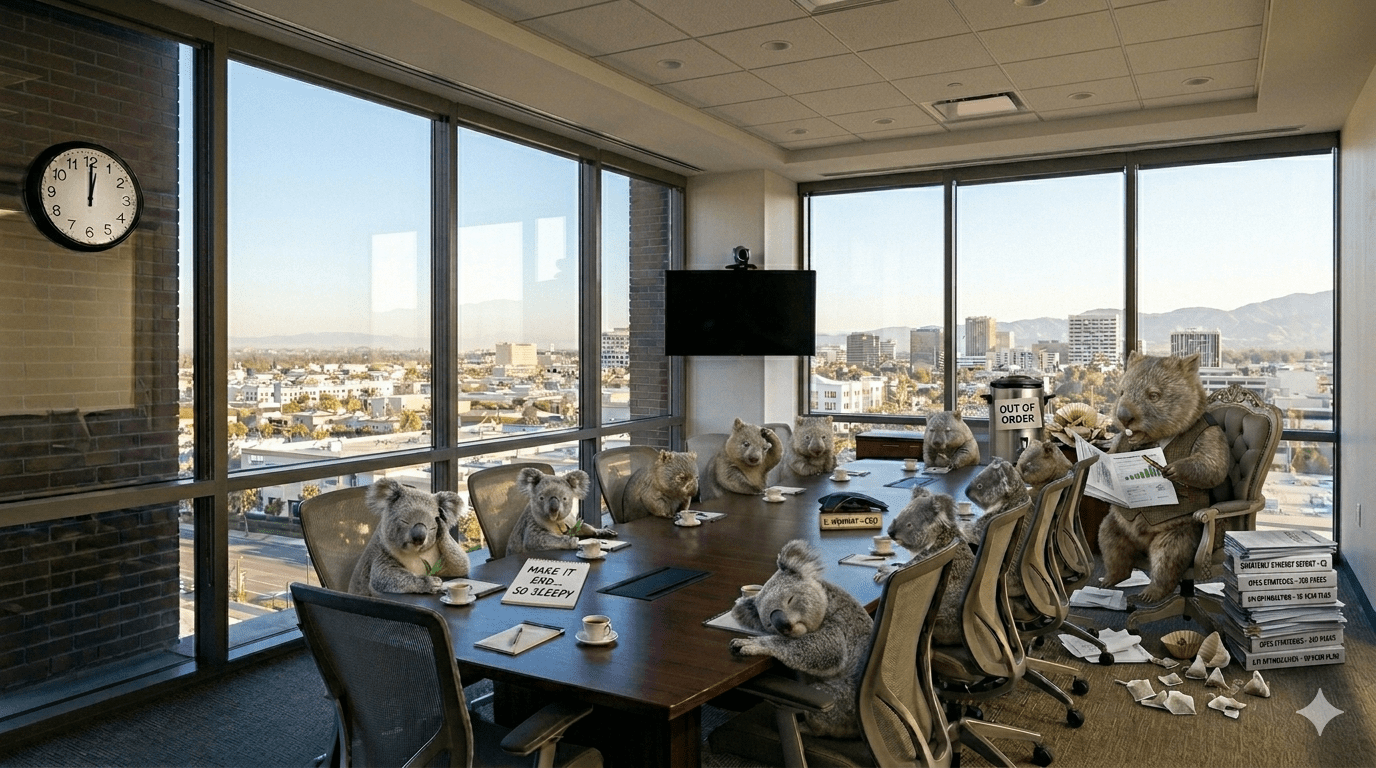
“Edit the picture so the time is noon and the lead wombat is still droning on and on. The attendees are restless.”
Google Gemini.
Google executed my image request.
But look more closely.
Google Gemini.
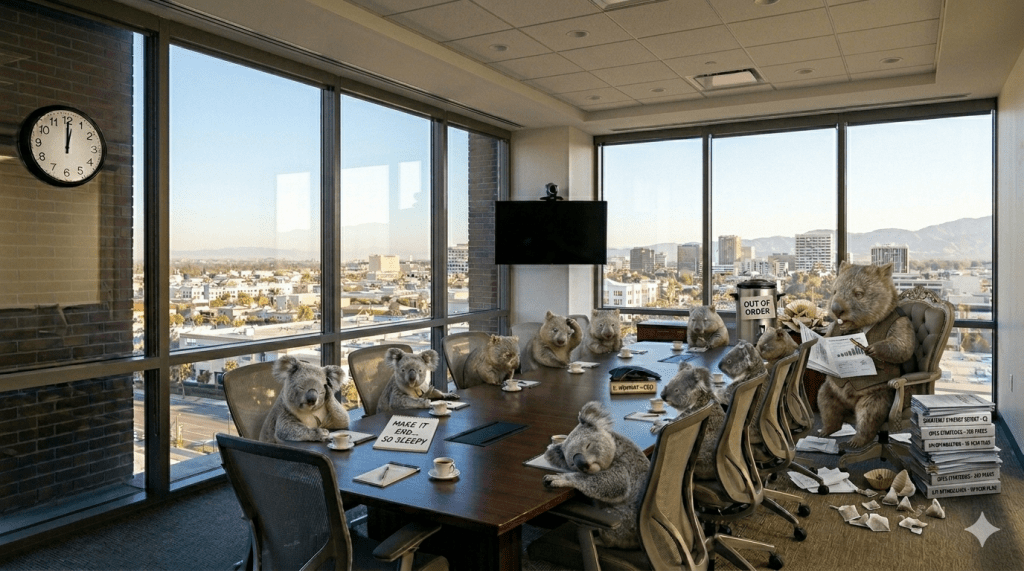
I did NOT specify that the koala write the note “Make it end…so sleepy.” Or any of the other notes that this particular koala wrote throughout the day.
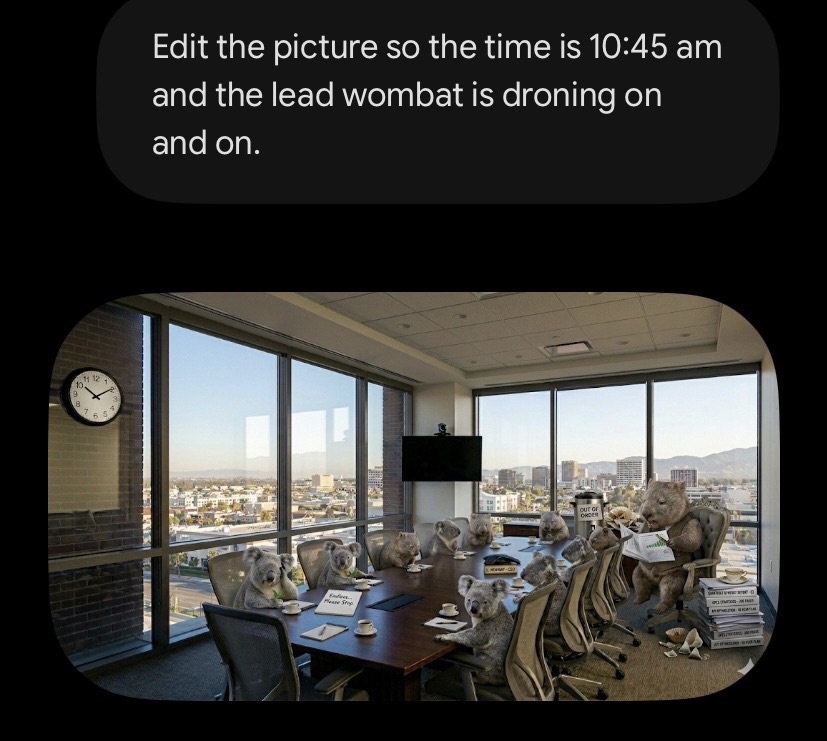
Nor did I specify the “out of order” note that appeared on the coffee urn at 10:10 am.
(My little secret: that time was NOT supposed to be 10:10. I asked Google to display a time of 10:45. But since so much of the clock training data uses at 10:10 time, Google got confused.)
Prompt and response from Google Gemini.
But I like those additions.
Take two minutes and twenty-four seconds and watch the reel again, taking note of the few elements specified by me, and the many elements that were “made up” by Google.
“The Cooling Blue.” Google Gemini/Lyria. Public Domain.
Hallucinations can be good, evil, or indifferent
Adding a koala note of frustration is a good thing.
Lying on a job application is a bad thing.
And showing a time of 10:10 instead of the requested time of 10:45? It didn’t materially affect my story, so I was indifferent to it.







 Bredemarket