As content creators accelerate information generation and distribution, content consumers demand information NOW. Perhaps my prediction of five-minute content creation hasn’t occurred—yet—but firms need to distribute their messages as fast as possible.
This Bredemarket blog post discusses a rapid way for identity/biometric firms to communicate the benefits of their solutions and capture their prospects’ attention immediately.
Blogging provides the rapid content generation your identity/biometric firm needs.
Benefits are essential in your blog post to help convert your readers.
Bredemarket can generate a benefits-laced blog post for your identity/biometric firm…with no learning curve necessary, allowing you to distribute your message quickly.
Why blogging?
While my consultancy Bredemarket creates identity content in a variety of customer-facing formats, including white papers, case studies, and e-books, one of my favorite ways to write about identity is via blog posts.
Blog posts provide an immediate business impact. It’s easier to create a blog post than it is to create a downloadable document. If Bredemarket needs to generate content for its self-marketing, I can get a blog post out in two hours, if not sooner. For a breaking news story, your company’s blogged take may hit your prospects before they’ve even heard about the breaking news story in the first place.
Blog posts are easy to share. You can’t just post your blog content and let it sit there. While over 200 people subscribe to the Bredemarket blog, that means that almost 8 billion people will never see it. I increase my viewing odds (slightly) by resharing my blog posts to my hundreds of additional followers on LinkedIn, Instagram, Facebook, and other platforms.
Blog posts are easy to repurpose. Once people have read your blog post, your work is not done. It’s easy to repurpose blog content into other forms. For example, I created an e-book from a blog post.
Why benefits?
However, if your identity/biometric blog post merely consists of a list of features of your product or service, then you’re wasting your time.
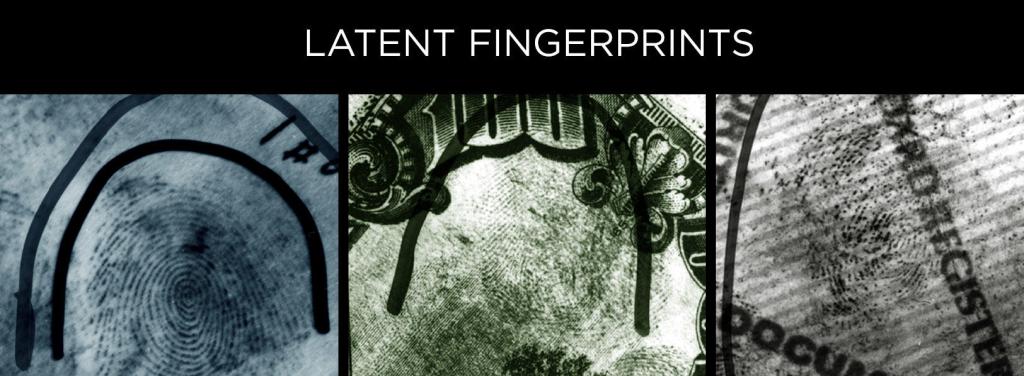
If your post simply states that your new latent fingerprint station captures print evidence at 2000 pixels per inch, most of your prospects are going to say, “So what?”
On the other hand, if your post talks about how your latent fingerprint station’s high capture resolution benefits your prospects by helping experts to solve crimes more quickly and getting bad people off the street, then your prospects are going to care about your product/service—and will convertfrom prospects to paying customers.
Why Bredemarket?
That little tip about benefits vs. features is just one of numerous tips that I’ve picked up over my many years as an identity/biometric blog expert. And you can benefit from my ability to start writing immediately because I require no learning curve. My 29 years of identity/biometric expertise comes in handy when your firm requires identity blog post writing.
OK, perhaps it’s an exaggeration to say that I can start writing immediately. Before I type a single word, we need to ensure a common understanding of why we’re writing this blog post. If you want to know how we achieve this common understanding, read the e-book I mentioned earlier.
If you are ready to purchase my Bredemarket 400 Short Writing Service to create a blog post (or other short content) describing the benefits of your identity/biometric product or service, then we should start talking sooner rather than later.
Companies often have a lot of things they want to do, but don’t have the people to do them. It takes a long time to hire someone, and it even takes time to find a consultant that knows your industry and can do the work.
This affects identity/biometric companies just like it affects other companies. When an identity/biometric company needs a specific type of expertise and needs it NOW, it’s often hard to find the person they need.
If your company needs a biometric content marketing expert (or an identity content marketing expert) NOW, you’ve come to the right place—Bredemarket. Bredemarket has no identity learning curve, no content learning curve, and offers proven results.
Identity/biometric consulting in the 1990s
I remember when I first started working as an identity/biometric consultant, long before Bredemarket was a thing.
OK, not quite THAT long ago. I started working in biometrics in the 1990s—NOT the 1940s.
In 1994, the proposals department at Printrak International needed additional writers due to the manager’s maternity leave, and she was so valuable that Printrak needed to bring in TWO consultants to take her place.
At least initially, the other consultant and I couldn’t fill the manager’s shoes.
Both of us could spell “RAID.” Not the bug spray, but the storage mechanism that stored all those “huge” fingerprint images.
But on that first night that I was cranking out proposal letters for something called a “Latent Station 2000,” I didn’t really know WHAT I was writing about.
As time went on, the other consultant and I learned much more—so much that the company brought both of us on as full-time employees.
After we were hired full-time, we spent a combined 45+ years at Printrak and its corporate successors in proposals, marketing, and product management positions, contributing to industry knowledge.
But neither of us knew biometrics before we started consuting at Printrak.
And I had never written a proposal before I started consulting at Printrak. (I had written an RFP. Sort of.)
But frankly, there weren’t a lot of identity/biometric consultants out in the field in the 1990s. There were the 20th century equivalents of Applied Forensic Services LLC, but at the time I don’t think there were any 20th century equivalents of Tandem Technical Writing LLC.
Unlike the 1990s, identity/biometric firms that need consulting help have many options. In addition to Applied Forensic Services and Tandem Technical Writing you have…me.
Mike and Laurel can tell you what they can do, and I heartily endorse both of them.
Let me share with you why I call myself a biometric content marketing expert who can help your identity/biometric company get marketing content out now:
No identity learning curve
No content learning curve
Proven results
No identity learning curve
I have worked with finger, face, iris, DNA, and other biometrics, as well as government-issued identity documents and geolocation. If you are interested, you can read my Bredemarket blog posts that mention the following topics:
Because I’ve produced both external and internal content on identity/biometric topics, I offer the experience to produce your content in a number of formats.
External content: account-based marketing content, articles, blog posts (I am the identity/biometric blog expert), case studies, data sheets, partner comarketing content, presentations, proposals, sales literature sheets, scientific book chapters, smartphone application content (events), social media posts, web page content, and white papers.
Does your identity business provide biometric or non-biometric products and services that use finger, face, iris, DNA, voice, government documents, geolocation, or other factors or modalities?
Does your identity business need written content, such as blog posts (from the identity/biometric blog expert), case studies, data sheets, proposal text, social media posts, or white papers?
How can your identity business (with the help of an identity content marketing expert) create the right written content?
I really need to update my own website more frequently.
About a year ago, I created a web page and an accompanying brochure entitled “Bredemarket and Identity Firms.” I’ve updated the web page a time or two in the last year, but until a few minutes ago both the web page and the brochure were significantly out of date, and didn’t include some of the projects that I’ve worked on during the past few months.
You can view the updated web page or download the updated brochure (at the end of this post) if you like, but I’ll create a frictionless experience for you by reproducing (repurposing) the list of ALL of Bredemarket’s biometric/identity projects as of today. (And there are more projects in work that I haven’t listed yet.)
Proposal Writing: Created five proposal letter templates to let a biometric firm’s sales staff propose two products to five separate markets. After completing the first three templates, I received this unsolicited testimonial:
“I just wanted to truly say thank you for putting these templates together. I worked on this…last week and it was extremely simple to use and I thought really provided a professional advantage and tool to give the customer….TRULY THANK YOU!”
More Proposal Writing: Responded to three Requests for Information (RFIs) for two biometric firms, positioning the firms for future work from government agencies.
Even More Proposal Writing: Assisted a biometric firm in responding to multiple Requests for Proposal (RFPs) and sole source letters.
And more…: Created a proposal letter template for a biometric firm.
And still more…: Created a Microsoft Word-based response library for a biometric firm.
Proposal Analyzing: Monitored the social media activity of a biometric firm’s competition and created responsive proposal text to position the firm against its competition.
Proposal Editing: Assisted a biometric firm in the final stages of an RFP response, editing its proposal both before and after its Gold Team review.
Strategic Marketing: Updated customer counts and technical data for a secure document firm.
More Strategic Marketing: Assisted a leading biometric vendor in analyzing its NIST FRVT 1:1 and 1:N results, providing both public information the firm could share with its clients, and private information for the firm’s internal use.
Online Marketing: Analyzed a biometric website and its social media channels, looking for broken links, outdated information, synchronization errors, and other problems, and provided a report to the firm upon completion.
More Online Marketing: Wrote three service descriptions for a biometric consulting firm.
Online Writing: Interviewed customers and wrote case study text for 14 case studies a biometric firm.
More Online Writing: Wrote blog posts for multiple biometric firms. After all, I am the identity/biometric blog expert.
Modern “journalism” often consists of reprinting a press release without subjecting it to critical analysis. Sadly, I see a lot of this in publications, including both biometric and technology publications.
This post looks at the recently announced master faces study results, the datasets used (and the datasets not used), the algorithms used (and the algorithms not used), and the (faulty) conclusions that have been derived from the study.
Oh, and it also informs you of a way to make sure that you don’t make the same mistakes when talking about biometrics.
In facial recognition, there is a concept called “master faces” (similar concepts can be found for other biometric modalities). The idea behind master faces is that such data can potentially match against MULTIPLE faces, not just one. This is similar to a master key that can unlock many doors, not just one.
This can conceivably happen because facial recognition algorithms do not match faces to faces, but match derived features from faces to derived features from faces. So if you can create the right “master” feature set, it can potentially match more than one face.
Ever thought you were being gaslighted by industry claims that facial recognition is trustworthy for authentication and identification? You have been.
The article goes on to discuss an Israeli research project that demonstrated some true “master faces” vulnerabilities. (Emphasis mine.)
One particular approach, which they write was based on Dlib, created nine master faces that unlocked 42 percent to 64 percent of a test dataset. The team also evaluated its work using the FaceNet and SphereFace, which like Dlib, are convolutional neural network-based face descriptors.
They say a single face passed for 20 percent of identities in Labeled Faces in the Wild, an open-source database developed by the University of Massachusetts. That might make many current facial recognition products and strategies obsolete.
Sounds frightening. After all, the study not only used dlib, FaceNet, and SphereFace, but also made reference to a test set from Labeled Faces in the Wild. So it’s obvious why master faces techniques might make many current facial recognition products obsolete.
Right?
Let’s look at the datasets
It’s always more impressive to cite an authority, and citations of the University of Massachusetts’ Labeled Faces in the Wild (LFW) are no exception. After all, this dataset has been used for some time to evaluate facial recognition algorithms.
But what does Labeled Faces in the Wild say about…itself? (I know this is a long excerpt, but it’s important.)
DISCLAIMER:
Labeled Faces in the Wild is a public benchmark for face verification, also known as pair matching. No matter what the performance of an algorithm on LFW, it should not be used to conclude that an algorithm is suitable for any commercial purpose. There are many reasons for this. Here is a non-exhaustive list:
Face verification and other forms of face recognition are very different problems. For example, it is very difficult to extrapolate from performance on verification to performance on 1:N recognition.
Many groups are not well represented in LFW. For example, there are very few children, no babies, very few people over the age of 80, and a relatively small proportion of women. In addition, many ethnicities have very minor representation or none at all.
While theoretically LFW could be used to assess performance for certain subgroups, the database was not designed to have enough data for strong statistical conclusions about subgroups. Simply put, LFW is not large enough to provide evidence that a particular piece of software has been thoroughly tested.
Additional conditions, such as poor lighting, extreme pose, strong occlusions, low resolution, and other important factors do not constitute a major part of LFW. These are important areas of evaluation, especially for algorithms designed to recognize images “in the wild”.
For all of these reasons, we would like to emphasize that LFW was published to help the research community make advances in face verification, not to provide a thorough vetting of commercial algorithms before deployment.
While there are many resources available for assessing face recognition algorithms, such as the Face Recognition Vendor Tests run by the USA National Institute of Standards and Technology (NIST), the understanding of how to best test face recognition algorithms for commercial use is a rapidly evolving area. Some of us are actively involved in developing these new standards, and will continue to make them publicly available when they are ready.
So there are a lot of disclaimers in that text.
LFW is a 1:1 test, not a 1:N test. Therefore, while it can test how one face compares to another face, it cannot test how one face compares to a database of faces. The usual law enforcement use case is to compare a single face (for example, one captured from a video camera) against an entire database of known criminals. That’s a computationally different exercise from the act of comparing a crime scene face against a single criminal face, then comparing it against a second criminal face, and so forth.
The people in the LFW database are not necessarily representative of the world population, the population of the United States, the population of Massachusetts, or any population at all. So you can’t conclude that a master face that matches against a bunch of LFW faces would match against a bunch of faces from your locality.
Captured faces exhibit a variety of quality levels. A face image captured by a camera three feet from you at eye level in good lighting will differ from a face image captured by an overhead camera in poor lighting. LFW doesn’t have a lot of these latter images.
I should mention one more thing about LFW. The researchers allow testers to access the database itself, essentially making LFW an “open book test.” And as any student knows, if a test is open book, it’s much easier to get an A on the test.
Now let’s take a look at another test that was mentioned by the LFW folks itself: namely, NIST’s Face Recognition Vendor Test.
This is actually a series of tests that has evolved over the years; NIST is now conducting ongoing tests for both 1:1 and 1:N (unlike LFW, which only conducts 1:1 testing). This is important because most of the large-scale facial recognition commercial applications that we think about are 1:N applications (see my example above, in which a facial image captured at a crime scene is compared against an entire database of criminals).
In addition, NIST uses multiple data sets that cover a number of use cases, including mugshots, visa photos, and faces “in the wild” (i.e. not under ideal conditions).
It’s also important to note that NIST’s tests are also intended to benefit research, and do not necessarily indicate that a particular algorithm that performs well for NIST will perform well in a commercial implementation. (If the algorithm is even available in a commercial implementation: some of the algorithms submitted to NIST are research algorithms only that never made it to a production system.) For the difference between testing an algorithm in a NIST test and testing an algorithm in a production system, please see Mike French’s LinkedIn article on the topic. (I’ve cited this article before.)
With those caveats, I will note that NIST’s FRVT tests are NOT open book tests. Vendors and other entities give their algorithms to NIST, NIST tests them, and then NIST tells YOU what the results were.
So perhaps it’s more robust than LFW, but it’s still a research project.
Let’s look at the algorithms
Now that we’ve looked at two test datasets, let’s look at the algorithms themselves and evaluate the claim that results for the three algorithms Dlib, FaceNet, and SphereFace can naturally be extrapolated to ALL facial recognition algorithms.
This isn’t the first time that we’ve seen such an attempt at extrapolation. After all, the MIT Media Lab’s Gender Shades study (which evaluated neither 1:1 nor 1:N use cases, but algorithmic attempts to identify gender and race) itself only used three algorithms. Yet the popular media conclusion from this study was that ALL facial recognition algorithms are racist.
Compare this with NIST’s subsequent study, which evaluated 189 algorithms specially for 1:1 and 1:N use cases. While NIST did find some race/sex differences in algorithms, these were not universal: “Tests showed a wide range in accuracy across developers, with the most accurate algorithms producing many fewer errors.”
In other words, just because an earlier test of three algorithms demonstrated issues in determining race or gender, that doesn’t mean that the current crop of hundreds of algorithms will necessarily demonstrate issues in identifying individuals.
So let’s circle back to the master faces study. How do the results of this study affect “current facial recognition products”?
The answer is “We don’t know.”
Has the master faces experiment been duplicated against the leading commercial algorithms tested by Labeled Faces in the Wild? Apparently not.
Has the master faces experiment been duplicated against the leading commercial algorithms tested by NIST? Well, let’s look at the various ways you can define the “leading” commercial algorithms.
For example, here’s the view of the test set that IDEMIA would want you to see: the 1:N test sorted by the “Visa Border” column (results as of August 6, 2021):
Now you can play with the sort order in many different ways, but the question remains: have the Israeli researchers, or anyone else, performed a “master faces” test (preferably a 1:N test) on the IDEMIA, Paravision, Sensetime, NtechLab, Anyvision, or ANY other commercial algorithm?
Maybe a future study WILL conclude that even the leading commercial algorithms are vulnerable to master face attacks. However, until such studies are actually performed, we CANNOT conclude that commercial facial recognition algorithms are vulnerable to master face attacks.
So naturally journalists approach the results critically…not
But I’m sure that people are going to make those conclusions anyway.
While Matt Schneier doesn’t go to the extreme of saying that all facial recognition algorithms are now defunct, he does classify the research as “fascinating” WITHOUT commenting on its limitations or applicability. Schneier knows security, but he didn’t vet this one.
Gizmodo, on the other hand, breathlessly declares (in “‘Master Face’: Researchers Say They’ve Found a Wildly Successful Bypass for Face Recognition Tech”) that “you’d be safe to add (the study) to the growing body of literature that suggests facial recognition is bad news for everybody except cops and large corporations.” Apparently Gizmodo never read the NIST gender/race test results that I cited earlier.
Does anyone even UNDERSTAND these studies? (Or do they choose NOT to understand them?)
How can you avoid the same mistakes when communicating about biometrics?
As you can see, people often write about biometric topics without understanding them fully.
Even biometric companies sometimes have difficulty communicating about biometric topics in a way that laypeople can understand. (Perhaps that’s the reason why people misconstrue these studies and conclude that “all facial recognition is racist” and “any facial recognition system can be spoofed by a master face.”)
Are you about to publish something about biometrics that requires a sanity check? (Hopefully not literally, but you know what I mean.)
Well, why not turn to a biometric content marketing expert? Use the identity/biometric blog expert to write your blog post, the identity/biometric case study expert to write your case study, or the identity/biometric white paper expert to…well, you get the idea. (And all three experts are the same person!)









 Bredemarket