I have a telehealth appointment next week with a medical professional whom I have previously met. And I assume she will participate in the telehealth appointment.
In the future, of course, she may not.
Way back in April 2013, I wrote a tymshft piece entitled “You will still take a cab to the doctor’s office. For a while.” It speculated about a future 2023 medical appointment in which the patient took a driverless cab to a medical facility. In the office, the patient was examined by remote staff…or so she thought.
“Well, I’m glad you’ve gotten used to the procedure,” replied the friendly voice. “I hope you like me!”
“I do,” said Edith. “You’ve been very helpful. But I’ve always wondered exactly WHERE you were. If you were in Los Angeles, or in Mississippi, or perhaps in India or China, or perhaps even in one of the low-cost places such as Chad. If you don’t mind my asking, exactly where ARE you?”
“I don’t mind answering the question,” replied the friendly voice, “and I hope you don’t take my response the wrong way, but I’m not really a person as you understand the term. I’m actually an application within the software package that runs the medical center. But my programmers want me to tell you that they’re really happy to serve you, and that Stanford sucks.” The voice paused for a moment. “I’m sorry, Edith. You have to forgive the programmers – they’re Berkeley grads.”
“Oh,” said Edith after a moment. “This is something new. I’m used to it in banking, but I didn’t realize that a computer program could run an entire medical center. Well…who picks up the trash?”
“That’s an extra question! Just kidding,” replied the friendly voice. “Much of the trash pickup is automated, but we do have a person to supervise the operation. Ron Hussein. You actually know him – he was your cab driver in 2018 when you came here.”
Re-reading this 2013 piece, I was amused at three things I got wrong.
First, Google, Facebook, and Apple did NOT merge to form Gaceapple, “the important merger that saved the tech industry in the United States from extinction.” American tech firms are still powerful…for now.
Second, my assumption of cab companies adopting driverless cars assumed the continued existence of cab companies. Ride share services have reduced the presence of traditional companies dramatically.
Third, my assumption that medical firms would sink untold sums of money into centralized automated medical examination rooms could be questioned…especially for routine appointments like Edith’s. Why not just let Edith’s smartphone—perhaps with a single attachment—gather the data?
Of course, there are medical ethics questions that underlie this entire discussion of remote telehealth and the use of non-person entities (NPEs). And we are struggling with those right now.
The Google Business Listing service sellers are almost as bad as the 17x professional resume writers.
A bit of history: when I started Bredemarket I also set up a Google Business Listing, which also included a free ugly Google website to promote my business. I poured my energies into bredemarket.com instead.
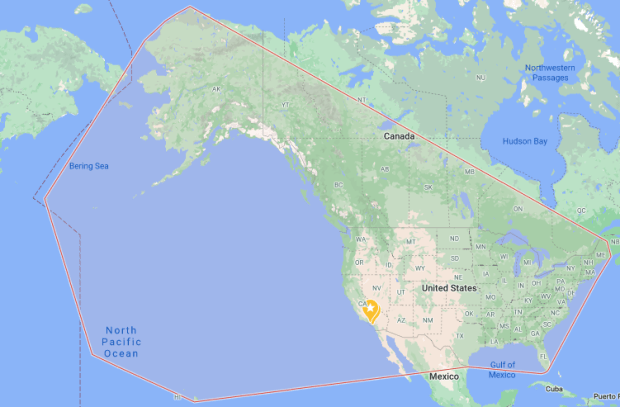
Bredemarket’s geographic market as of April 2021, according to my Google business listing page. The old link now redirects to a general Google search for Bredemarket.
I’d occasionally add content to my Google Business Listing, but sometimes Google would flag the content for some unknown reason, and eventually Google flagged the entire Google Business Listing for some unknown reason. (Google: “You violated our TOS, but we won’t tell you why. You figure out what you did.”) By this point I was happy to be rid of the thing.
But I’m still getting calls at least once a week from companies that want me to get my Google Business Listing properly verified. When I tell these companies that losing my Google Business Listing was the best thing that ever happened to me, they usually hang up.
Usually.
My “Google” review (which wasn’t about me, and wasn’t on Google)
Today the caller was persistent, mentioning at one point that Bredemarket had five star reviews saying “I was blown away with this service”…from a resume writing service. I asked for the date of the review, and the caller couldn’t tell me. And you know how I feel about some resume writing services anyway.
After this caller finally gave up on selling their services, I searched Google for a five-star review of Bredemarket.
I ended up at Bredemarket’s Yelp page…which has no reviews. But if you scroll down, you see sponsored content about OTHER websites…including KStar Professional Resume Writing Services, for which a reviewer wrote “I was blown away with this service.”
So instead of a five star Google review of Bredemarket, there is a five star review of a completely separate resume writing service that appears in the sponsored ads for Bredemarket’s Yelp page.
My current two categories for go-to-market collateral, “external” and “internal,” are not sufficient. I want to fix that, but I’m still thinking through things, such as what to call the third category. As of this moment, my best option is “intrinsic,” based upon my conversations with my good buddy Gemini.
My current two categories for go-to-market collateral
Based upon go-to-market efforts that stretch back a decade (even before I formally became a Product Marketing Manager), I have traditionally divided go-to-market output into two categories.
22 types of content Bredemarket can create.
External content for your hungry people (target audience), such as articles, blog posts, social media, case studies, white papers, and proposals. This content goes to CEOs, marketers, engineers, IT staff, and many others at the companies that buy from you.
Internal content for the people in the company who talk to your hungry people, such as battlecards, sales playbooks, and scripts for trade show demonstrations. This content goes to salespeople, marketers, product managers, customer success folks, and many other employees and contractors.
Some content can either be external or internal, depending upon the audience.
Simple and straightforward, right?
My emerging third category
But during a current go-to-market effort for a client, I realized that these two categories are insufficient, since both the client and I are creating content that will never been seen by either the external clients or the internal clients.
I’ll give you two heavily redacted and anonymized examples for a #fakefakefake machine.
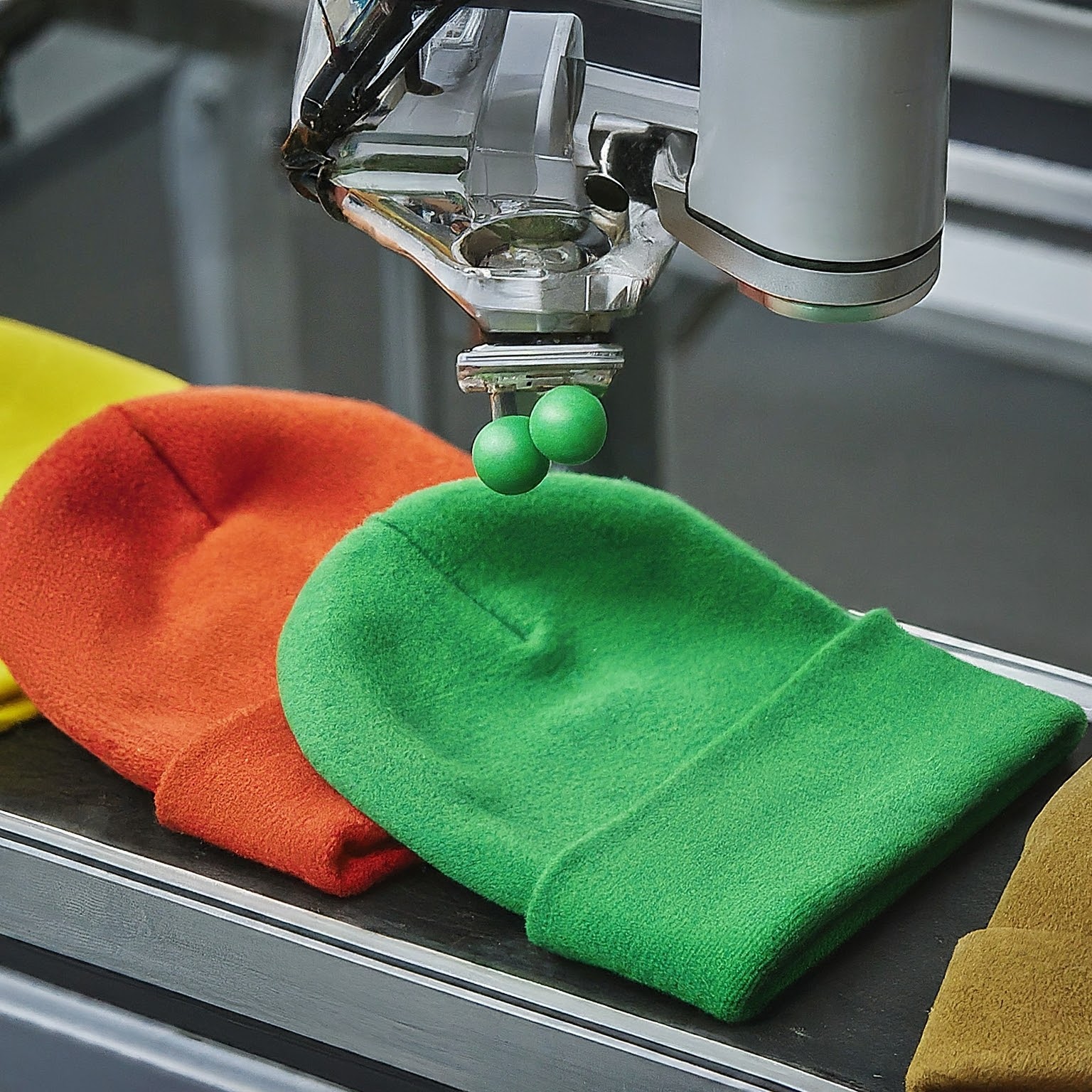
AI-generated by Google Gemini.
Bob wrote a Word document that listed the pain points that MegaCorp’s client encounter when trying to put green round widgets on their end customers’ beanie caps.
Judy created a picture with stick figures that showed how clients can use the MegaCorp WidgetPlacer 2000 for their beanie cap production needs.
Bob and Judy (names from this song) are NEVER going to show that document or that picture to the customers, or even to the company’s own account managers.
So why create it?
Because they will be the initial guides as the go-to-market team creates all the other external and internal collateral for the effort.
These foundation documents are a critical part of the go-to-market effort. Without them, the subsequent go-to-market collateral will be a contradictory mishmash of stuff, and you’ll need to undertake a lot of effort to align all the content after the fact.
And the third category is…
…well, I don’t know what to call this third category yet.
“Internal internal content” seems a bit silly.
“Foundational content” seems a bit grandiose.
“Bob and Judy” content seems like an independent TV show.
If we call the first category “external” marketing content for customers, and we call the second category “internal” marketing content for employees, then what do we call the third category which is only for the people who create marketing content for customers and employees?
Gemini’s first batch of answers:
Internal Marketing Content for Marketing Teams
Marketing Team Communication
Marketing Team Resources
Internal Marketing Tools
Brevity is NOT a strength of generative AI. Even when I specifically instructed Gemini to provide single word responses, I got hyphenated words:
Intra-marketing (combining “intra” for within and “marketing”)
Meta-marketing (implying a higher-level perspective on marketing)
Team-marketing (emphasizing its focus on the marketing team)
The fatal flaw is that not all the people on a go-to-market team are marketers. (This is my fault because of the prompt I wrote.)
And if I lop off the last part of each compound phrase, two of my options are “team” (too generic) and “meta” (NO).
And “intra” is too close to “internal internal.” But perhaps it’s a start. So I asked Gemini for words similar to “intra-” and got this response:
The prefix “intra-” means “within,” “inside,” or “inner.” Here are 12 words that convey a similar meaning:
Inward: Turning or moving toward the inside.
Internal: Existing or occurring within something.
Inner: Situated or located within.
Intrinsic: Belonging to or inherent in the nature of something.
Interior: The inside part of something.
Intramural: Occurring within a school or institution.
Intranet: A private computer network within an organization.
Intravenous: Administered into a vein.
Intracranial: Situated or occurring within the skull.
Intracellular: Existing or occurring within a cell.
Intralingual: Relating to or occurring within a language.
Intrajugular: Situated or occurring within the jugular vein.
I kind of like “intrinsic,” but I’ll sleep on it.
In the meantime, what would YOU call the third category?
For all but one Bredemarket client, I provide my deliverables via email. The deliverables usually consist of items such as Microsoft Word documents, Microsoft Excel workbooks, and Portable Document Files.
As I mentioned above, Bredemarket often performs market/competitive analyses. In fact, one of my clients likes my analyses so much that they keep on coming back for more analyses to cover different markets.
For the last three analyses for this particular client, my deliverables have consisted of the following:
An overall report, in PDF format.
The raw data, in XLSX format.
Extracts from the raw data, in PDF format.
The raw text of the report, in DOCX format.
Not a real Bredemarket report. By National Highway Traffic Safety Administration – National Highway Traffic Safety Administration Publication Number: NHTSA-DOT-HS-5-01160, Public Domain, https://commons.wikimedia.org/w/index.php?curid=6709383.
In my analyses I referred to the companies’ publicly available websites to gather information on the competitor products, as well as the markets they address. (Using a made-up example, if my client provided its products to convenience stores, and a particular competitor ALSO targeted convenience stores, my client would obviously want to know this.)
The opportunity
But for this third analysis I didn’t just look at the websites. I also looked at the product brochures that I could download from these websites.
Since I was downloading all the publicly available brochures from the various competitors, why not provide all of these brochures to my client?
It seemed like a great idea. Since I had gone through all the work to collect the brochures, might as well let my client make future use of them.
The problem
So as I wrapped up the project and prepared the deliverables for my client, I discovered that I had amassed over 100 megabytes of brochures. (That’s what happens when you analyze over 100 competitor products.)
So my idea of zipping all the brochures into a single file wouldn’t work. Even the zip file exceeded the attachment sending limits of Bredemarket’s email service provider, Google. (And probably exceeded the attachment receiving limits of my client’s email service provider.)
And if you’ve already figured out the obvious solution to my problem, bear with me. It took me several days to realize the obvious solution myself.
Anyway, I hit upon a great solution to my problem…or so I thought.
The solution, first attempt
But that wasn’t a problem for me. Along with my email account, Google also provides Bredemarket with Google Drive. While the contents of my Google Drive are private to the employees of Bredemarket (all 1 of us), I can designate individual files and folders for access by selected people.
So I set up a designated folder for my client’s access only, uploaded all the deliverables including the 100+ MB zip file to the designated folder, and provided my client’s contact with access.
I then told my client that all the deliverables were in the Google Drive folder and asked the client to let me know when they were downloaded.
Which is when I encountered my second problem.
For security reasons, the client’s IT department forbids employees from accessing unauthorized Google Drives.
So I jumped back to Plan A and emailed all the files to my client except for the one 100+ MB zip file.
Now I just had to get that zip file to the client.
The solution, second attempt
That’s when I recalled the Dropbox account I set up for Bredemarket some time ago.
It was a quick process to upload the single 100+ MB zip file to a designated folder in Dropbox and give my client access.
But the client isn’t allowed to access Dropbox from work either.
The solution, third attempt
By the time that my client was contacting his IT department for a possible fix, I realized the solution that you the reader probably realized several paragraphs ago.
Instead of emailing one zip file, why not email multiple zip files in multiple emails, with each zip file under Google’s 25 MB limit?
So I sent six emails to my client.
This FINALLY worked.
I should have divided and conquered in the first place.
Can you use Bredemarket’s deliverables?
Do you want Bredemarket to send you 100 megabytes of brochures, now that I know how to do it?
More importantly, do you want Bredemarket to send you a market/competitor analysis to your specifications?
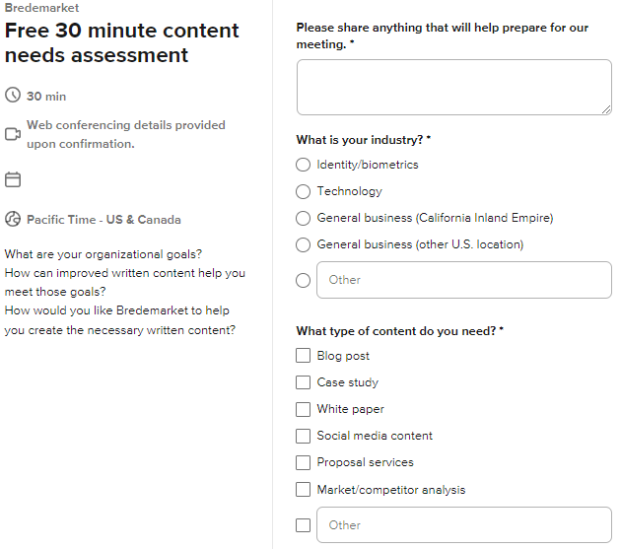
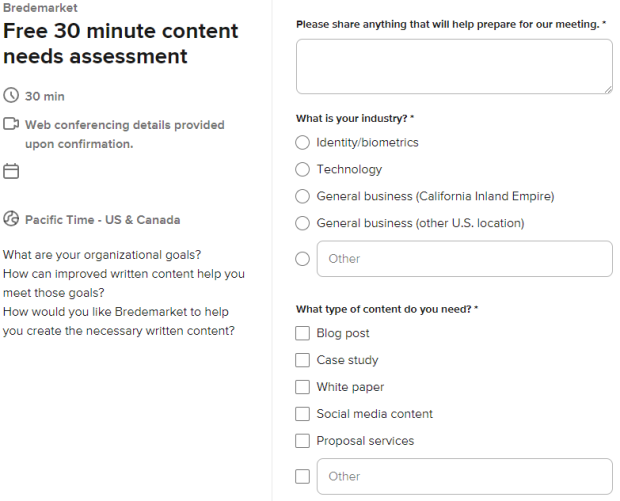
Talk to Bredemarket and discuss your needs. Book a meeting with me at calendly.com/bredemarket. Be sure to fill out the information form so I can best help you.
It discussed both large language models and large multimodal models. In this case “multimodal” is used in a way that I normally DON’T use it, namely to refer to the different modes in which humans interact (text, images, sounds, videos). Of course, I gravitated to a discussion in which an image of a person’s face was one of the modes.
In this post I will look at LMMs…and I will also look at LMMs. There’s a difference. And a ton of power when LMMs and LMMs work together for the common good.
When Google announced its Gemini series of AI models, it made a big deal about how they were “natively multimodal.” Instead of having different modules tacked on to give the appearance of multimodality, they were apparently trained from the start to be able to handle text, images, audio, video, and more.
Other AI models are starting to function in a TRULY multimodal way, rather than using separate models to handle the different modes.
So now that we know that LLMs are large multimodal models, we need to…
…um, wait a minute…
Introducing the Large Medical Model (LMM)
It turns out that the health people have a DIFFERENT definition of the acronym LMM. Rather than using it to refer to a large multimodal model, they refer to a large MEDICAL model.
Our first of a kind Large Medical Model or LMM for short is a type of machine learning model that is specifically designed for healthcare and medical purposes. It is trained on a large dataset of medical records, claims, and other healthcare information including ICD, CPT, RxNorm, Claim Approvals/Denials, price and cost information, etc.
I don’t think I’m stepping out on a limb if I state that medical records cannot be classified as “natural” language. So the GenHealth.AI model is trained specifically on those attributes found in medical records, and not on people hemming and hawing and asking what a Pekingese dog looks like.
But there is still more work to do.
What about the LMM that is also an LMM?
Unless I’m missing something, the Large Medical Model described above is designed to work with only one mode of data, textual data.
But what if the Large Medical Model were also a Large Multimodal Model?
Rather than converting a medical professional’s voice notes to text, the LMM-LMM would work directly with the voice data. This could lead to increased accuracy: compare the tone of voice of an offhand comment “This doesn’t look good” with the tone of voice of a shocked comment “This doesn’t look good.” They appear the same when reduced to text format, but the original voice data conveys significant differences.
Rather than just using the textual codes associated with an X-ray, the LMM-LMM would read the X-ray itself. If the image model has adequate training, it will again pick up subtleties in the X-ray data that are not present when the data is reduced to a single medical code.
In short, the LMM-LMM (large medical model-large multimodal model) would accept ALL the medical outputs: text, voice, image, video, biometric readings, and everything else. And the LMM-LMM would deal with all of it natively, increasing the speed and accuracy of healthcare by removing the need to convert everything to textual codes.
A tall order, but imagine how healthcare would be revolutionized if you didn’t have to convert everything into text format to get things done. And if you could use the actual image, video, audio, or other data rather than someone’s textual summation of it.
Obviously you’d need a ton of training data to develop an LMM-LMM that could perform all these tasks. And you’d have to obtain the training data in a way that conforms to privacy requirements: in this case protected health information (PHI) requirements such as HIPAA requirements.
But if someone successfully pulls this off, the benefits are enormous.
You’ve come a long way, baby.
Robert Young (“Marcus Welby”) and Jane Wyatt (“Margaret Anderson” on a different show). By ABC TelevisionUploaded by We hope at en.wikipedia – eBay itemphoto informationTransferred from en.wikipedia by SreeBot, Public Domain, https://commons.wikimedia.org/w/index.php?curid=16472486.
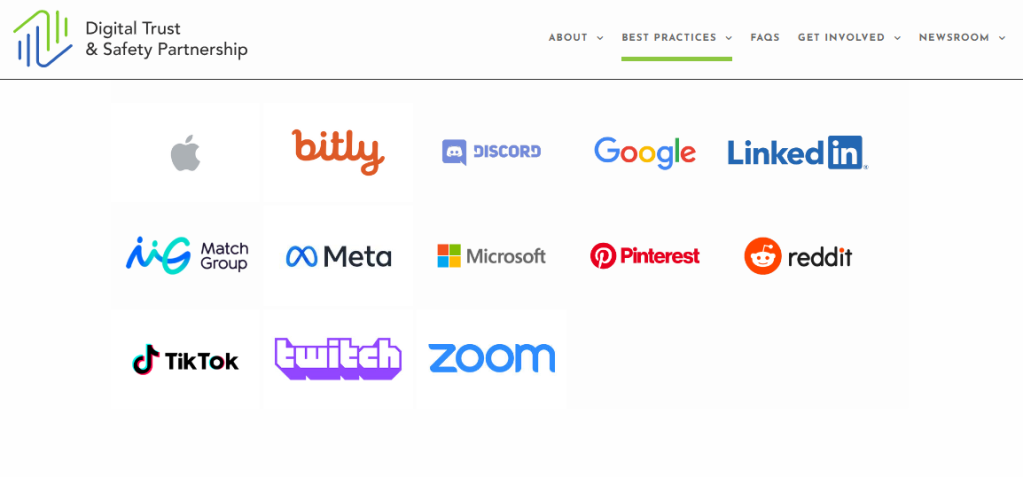
The Digital Trust & Safety Partnership (DTSP) consists of “leading technology companies,” including Apple, Google, Meta (parent of Facebook, Instagram, and WhatsApp), Microsoft (and its LinkedIn subsidiary), TikTok, and others.
DTSP appreciates and shares Ofcom’s view that there is no one-size-fits-all approach to trust and safety and to protecting people online. We agree that size is not the only factor that should be considered, and our assessment methodology, the Safe Framework, uses a tailoring framework that combines objective measures of organizational size and scale for the product or service in scope of assessment, as well as risk factors.
We’ll get to the “Safe Framework” later. DTSP continues:
Overly prescriptive codes may have unintended effects: Although there is significant overlap between the content of the DTSP Best Practices Framework and the proposed Illegal Content Codes of Practice, the level of prescription in the codes, their status as a safe harbor, and the burden of documenting alternative approaches will discourage services from using other measures that might be more effective. Our framework allows companies to use whatever combination of practices most effectively fulfills their overarching commitments to product development, governance, enforcement, improvement, and transparency. This helps ensure that our practices can evolve in the face of new risks and new technologies.
But remember that the UK’s neighbors in the EU recently prescribed that USB-3 cables are the way to go. This not only forced DTSP member Apple to abandon the Lightning cable worldwide, but it affects Google and others because there will be no efforts to come up with better cables. Who wants to fight the bureaucratic battle with Brussels? Or alternatively we will have the advanced “world” versions of cables and the deprecated “EU” standards-compliant cables.
So forget Ofcom’s so-called overbearing approach and just adopt the Safe Framework. Big tech will take care of everything, including all those age assurance issues.
Incorporating each characteristic comes with trade-offs, and there is no one-size-fits-all solution. Highly accurate age assurance methods may depend on collection of new personal data such as facial imagery or government-issued ID. Some methods that may be economical may have the consequence of creating inequities among the user base. And each service and even feature may present a different risk profile for younger users; for example, features that are designed to facilitate users meeting in real life pose a very different set of risks than services that provide access to different types of content….
Instead of a single approach, we acknowledge that appropriate age assurance will vary among services, based on an assessment of the risks and benefits of a given context. A single service may also use different approaches for different aspects or features of the service, taking a multi-layered approach.
Time for me to make a cryptic LinkedIn post. Although now that I’m sharing the secret here, I’ll have to lower the score to 89.
Bredemarket’s first rule
But before I share my revised Phineas-Hirshfield score, I need to share the first Bredemarket Rule, the Bredemarket Rule of Corporate Tool Adoption. (Copyright 2023 Bredemarket.)
In any organization, the number of adopted tools that perform the exact same function is always in excess of one.
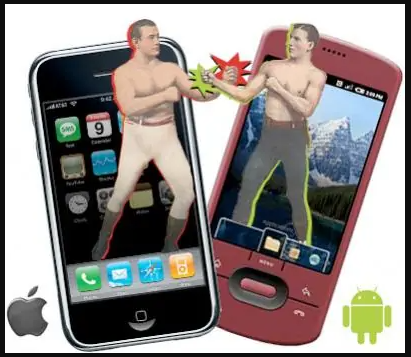
In other words, if there’s someone in your organization who is using an iPhone, there is someone else in your organization who is using an Android phone.
Or someone has a Mac, and another person has a Windows computer.
Or someone has one brand of software, while someone else has the competitior brand.
Even if an organization dictates that everyone will use a single tool, there will be someone somewhere who will rebel against the organization and use a different tool.
Presumably the first panelist was exposed to Asana at one point and liked it, while the second panelist was exposed to Monday and liked it.
Or, since the panelists were from two different companies, maybe each company standardized on one or the other. Or maybe the departments within their companies standardized on a particular tool, but if you poll the entire company, you’ll find some Monday departments and some Asana departments.
Multiple tools in a single department
Even in the same department you may find multiple tools. Let me cite an example.
Several of the people who were in the Marketing department of Incode Technologies have since left the company, and I’m working with one of them on a project this week.
I had to send a PDF to him, and was also going to also send him the source Microsoft Word document…until I remembered from our days at Incode that he was (and I guess still is) a Google Docs guy.
Of course, there are times in which an entire organization agrees on a single tool, but those times never last.
My mid-1990s employer, Printrak International, was preparing to go public. The head of Printrak determined that the company needed some help in this, and brought several staffers on board who were expert in Initial Public Offerings (IPOs).
One of these people took the role of Chief Financial Officer, preparing Printrak for its IPO and for two post-IPO acquisitions, one of which profoundly and positively impacted the future of the firm.
Along the way, he established the rule that Printrak would become a Lotus Notes shop.
For those who don’t remember Lotus Notes, it was one of those Lotus-like products that could do multiple things out of the box. And because the CFO was the CFO, he could enforce Lotus Notes usage.
Until the CFO left a couple of years later to assist another company, and the impetus to use Lotus Notes dropped off significantly.
And that, my friends, is why my former colleagues in IDEMIA aren’t using HCL Notes (the successor to Lotus Notes and IBM Notes) today.
So how do you settle the Tool Wars?
Do you know how you settle the Tool Wars?
You don’t. It’s an eternal battle.
In the case of Bredemarket, I can dictate which tools I use…unless my clients tell me otherwise. Then the client’s word is law…unless there’s a compelling reason why my tool should be used instead of the client’s tool. In Bredemarket’s 3+ years of existence, I haven’t encountered such a compelling reason…yet.
Just be flexible enough to use whatever tool you need to use, and you’ll be fine.
Things change. Pangiam, a company that didn’t even exist a few years ago, and that started off by acquiring a one-off project from a local government agency, is now itself a friendly acquisition target (pending stockholder and regulatory approvals).
From MWAA to Pangiam
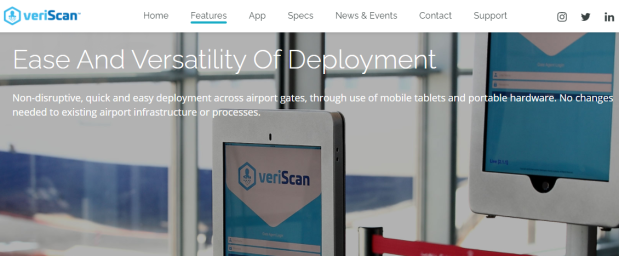
Back when I worked for IDEMIA and helped to market its border control solutions, one of our competitors for airport business was an airport itself—specifically, the Metropolitan Washington Airports Authority. Rather than buying a biometric exit solution from someone else, the MWAA developed its own, called veriScan.
2021 image from the former airportveriscan website.
ALEXANDRIA, Va., March 19, 2021 /PRNewswire/ — Pangiam, a technology-based security and travel services provider, announced today that it has acquired veriScan, an integrated biometric facial recognition system for airports and airlines, from the Metropolitan Washington Airports Authority (“Airports Authority”). Terms of the transaction were not disclosed.
So what will Pangiam work on next? Where will it expand? What will it acquire?
Nothing.
Enter BigBear.ai
Pangiam itself is now an acquisition target.
COLUMBIA, MD.— November 6, 2023 — BigBear.ai (NYSE: BBAI), a leading provider of AI-enabled business intelligence solutions, today announced a definitive merger agreement to acquire Pangiam Intermediate Holdings, LLC (Pangiam), a leader in Vision AI for the global trade, travel, and digital identity industries, for approximately $70 million in an all-stock transaction. The combined company will create one of the industry’s most comprehensive Vision AI portfolios, combining Pangiam’s facial recognition and advanced biometrics with BigBear.ai’s computer vision capabilities, positioning the company as a foundational leader in one of the fastest growing categories for the application of AI. The proposed acquisition is expected to close in the first quarter of 2024, subject to customary closing conditions, including approval by the holders of a majority of BigBear.ai’s outstanding common shares and receipt of regulatory approval.
Yet another example of how biometrics is now just a minor part of general artificial intelligence efforts. Identify a face or a grenade, it’s all the same.
Anyway, let’s check back in a few months. Because of the technology involved, this proposed acquisition will DEFINITELY merit government review.
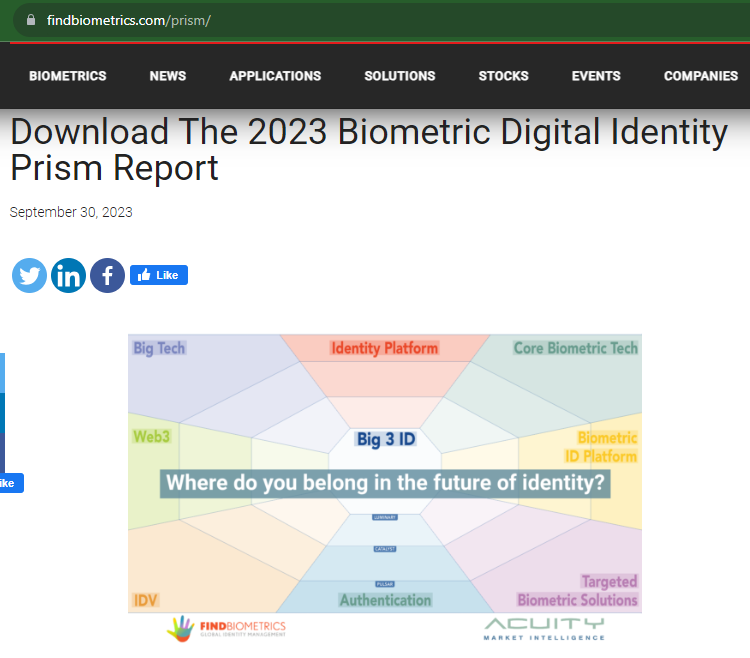
On September 30, FindBiometrics and Acuity Market Intelligence released the production version of the Biometric Digital Identity Prism Report. You can request to download it here.
But FindBiometrics and Acuity Market Intelligence didn’t invent the Big 3. The concept has been around for 40 years. And two of today’s Big 3 weren’t in the Big 3 when things started. Oh, and there weren’t always 3; sometimes there were 4, and some could argue that there were 5.
So how did we get from the Big 3 of 40 years ago to the Big 3 of today?
The Big 3 in the 1980s
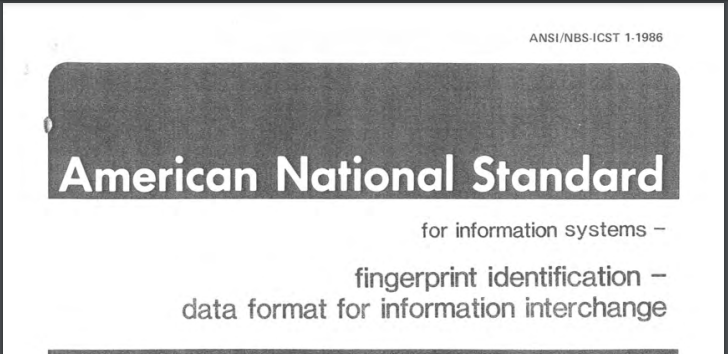
Back in 1986 (eight years before I learned how to spell AFIS) the American National Standards Institute, in conjunction with the National Bureau of Standards, issued ANSI/NBS-ICST 1-1986, a data format for information interchange of fingerprints. The PDF of this long-superseded standard is available here.
When creating this standard, ANSI and the NBS worked with a number of law enforcement agencies, as well as companies in the nascent fingerprint industry. There is a whole list of companies cited at the beginning of the standard, but I’d like to name four of them.
De La Rue Printrak, Inc.
Identix, Inc.
Morpho Systems
NEC Information Systems, Inc.
While all four of these companies produced computerized fingerprinting equipment, three of them had successfully produced automated fingerprint identification systems, or AFIS. As Chapter 6 of the Fingerprint Sourcebook subsequently noted:
Morpho Systems resulted from French AFIS efforts, separate from those of the FBI. These efforts launched Morpho’s long-standing relationship with the French National Police, as well as a similar relationship (now former relationship) with Pierce County, Washington.
NEC had deployed AFIS equipment for the National Police Academy of Japan, and (after some prodding; read Chapter 6 for the story) the city of San Francisco. Eventually the state of California obtained an NEC system, which played a part in the identification of “Night Stalker” Richard Ramirez.
After the success of the San Francisco and California AFIS systems, many other jurisdictions began clamoring for AFIS of their own, and turned to these three vendors to supply them.
The Big 4 in the 1990s
But in 1990, these three firms were joined by a fourth upstart, Cogent Systems of South Pasadena, California.
While customers initially preferred the Big 3 to the upstart, Cogent Systems eventually installed a statewide system in Ohio and a border control system for the U.S. government, plus a vast number of local systems at the county and city level.
Between 1991 and 1994, the (Immigfation and Naturalization Service) conducted several studies of automated fingerprint systems, primarily in the San Diego, California, Border Patrol Sector. These studies demonstrated to the INS the feasibility of using a biometric fingerprint identification system to identify apprehended aliens on a large scale. In September 1994, Congress provided almost $30 million for the INS to deploy its fingerprint identification system. In October 1994, the INS began using the system, called IDENT, first in the San Diego Border Patrol Sector and then throughout the rest of the Southwest Border.
I was a proposal writer for Printrak (divested by De La Rue) in the 1990s, and competed against Cogent, Morpho, and NEC in AFIS procurements. By the time I moved from proposals to product management, the next redefinition of the “big” vendors occurred.
The Big 3 in 2003
There are a lot of name changes that affected AFIS participants, one of which was the 1988 name change of the National Bureau of Standards to the National Institute of Standards and Technology (NIST). As fingerprints and other biometric modalities were increasingly employed by government agencies, NIST began conducting tests of biometric systems. These tests continue to this day, as I have previously noted.
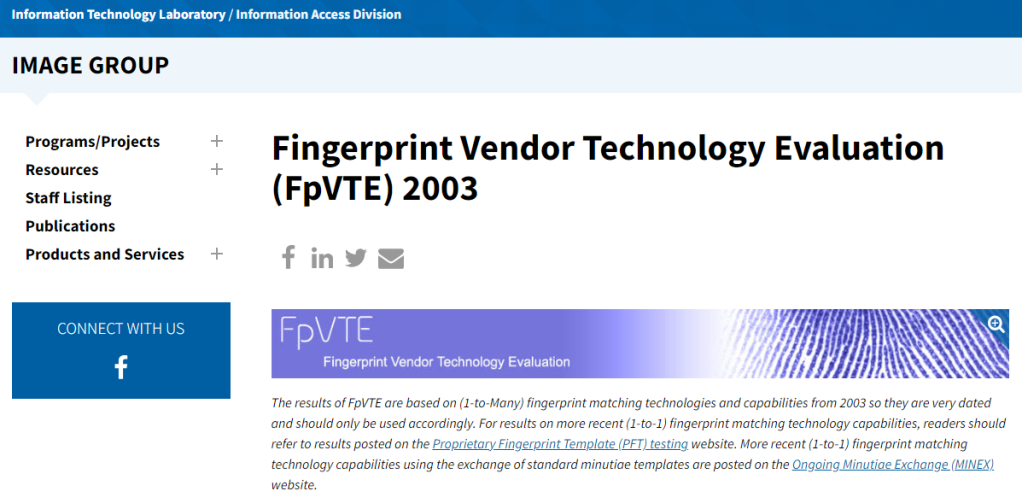
One of NIST’s first tests was the Fingerprint Vendor Technology Evaluation of 2003 (FpVTE 2003).
For those who are familiar with NIST testing, it’s no surprise that the test was thorough:
FpVTE 2003 consists of multiple tests performed with combinations of fingers (e.g., single fingers, two index fingers, four to ten fingers) and different types and qualities of operational fingerprints (e.g., flat livescan images from visa applicants, multi-finger slap livescan images from present-day booking or background check systems, or rolled and flat inked fingerprints from legacy criminal databases).
Eighteen vendors submitted their fingerprint algorithms to NIST for one or more of the various tests, including Bioscrypt, Cogent Systems, Identix, SAGEM MORPHO (SAGEM had acquired Morpho Systems), NEC, and Motorola (which had acquired Printrak). And at the conclusion of the testing, the FpVTE 2003 summary (PDF) made this statement:
Of the systems tested, NEC, SAGEM, and Cogent produced the most accurate results.
Which would have been great news if I were a product manager at NEC, SAGEM, and Cogent.
Unfortunately, I was a product manager at Motorola.
The effect of this report was…not good, and at least partially (but not fully) contributed to Motorola’s loss of its long-standing client, the Royal Canadian Mounted Police, to Cogent.
The Big 3, 4, or 5 after 2003
So what happened in the years after FpVTE was released? Opinions vary, but here are three possible explanations for what happened next.
Did the Big 3 become the Big 4 again?
Now I probably have a bit of bias in this area since I was a Motorola employee, but I maintain that Motorola overcame this temporary setback and vaulted back into the Big 4 within a couple of years. Among other things, Motorola deployed a national 1000 pixels-per-inch (PPI) system in Sweden several years before the FBI did.
Did the Big 3 remain the Big 3?
Motorola’s arch-enemies at Sagem Morpho had a different opinion, which was revealed when the state of West Virginia finally got around to deploying its own AFIS. A bit ironic, since the national FBI AFIS system IAFIS was located in West Virginia, or perhaps not.
Anyway, Motorola had a very effective sales staff, as was apparent when the state issued its Request for Proposal (RFP) and explicitly said that the state wanted a Motorola AFIS.
That didn’t stop Cogent, Identix, NEC, and Sagem Morpho from bidding on the project.
After the award, Dorothy Bullard and I requested copies of all of the proposals for evaluation. While Motorola (to no one’s surprise) won the competition, Dorothy and I believed that we shouldn’t have won. In particular, our arch-enemies at Sagem Morpho raised a compelling argument that it should be the chosen vendor.
Their argument? Here’s my summary: “Your RFP says that you want a Motorola AFIS. The states of Kansas (see page 6 of this PDF) and New Mexico (see this PDF) USED to have a Motorola AFIS…but replaced their systems with our MetaMorpho AFIS because it’s BETTER than the Motorola AFIS.”
But were Cogent, Motorola, NEC, and Sagem Morpho the only “big” players?
Did the Big 3 become the Big 5?
While the Big 3/Big 4 took a lot of the headlines, there were a number of other companies vying for attention. (I’ve talked about this before, but it’s worthwhile to review it again.)
Identix, while making some efforts in the AFIS market, concentrated on creating live scan fingerprinting machines, where it competed (sometimes in court) against companies such as Digital Biometrics and Bioscrypt.
The fingerprint companies started to compete against facial recognition companies, including Viisage and Visionics.
Oh, and there were also iris companies such as Iridian.
And there were other ways to identify people. Even before 9/11 mandated REAL ID (which we may get any year now), Polaroid was making great efforts to improve driver’s licenses to serve as a reliable form of identification.
In short, there were a bunch of small identity companies all over the place.
But in the course of a few short years, Dr. Joseph Atick (initially) and Robert LaPenta (subsequently) concentrated on acquiring and merging those companies into a single firm, L-1 Identity Solutions.
These multiple mergers resulted in former competitors Identix and Digital Biometrics, and former competitors Viisage and Visionics, becoming part of one big happy family. (A multinational big happy family when you count Bioscrypt.) Eventually this company offered fingerprint, face, iris, driver’s license, and passport solutions, something that none of the Big 3/Big 4 could claim (although Sagem Morpho had a facial recognition offering). And L-1 had federal contracts and state contracts that could match anything that the Big 3/Big 4 offered.
So while L-1 didn’t have a state AFIS contract like Cogent, Motorola, NEC, and Sagem Morpho did, you could argue that L-1 was important enough to be ranked with the big boys.
So for the sake of argument let’s assume that there was a Big 5, and L-1 Identity Solutions was part of it, along with the three big boys Motorola, NEC, and Safran (who had acquired Sagem and thus now owned Sagem Morpho), and the independent Cogent Systems. These five companies competed fiercly with each other (see West Virginia, above).
In a two-year period, everything would change.
The Big 3 after 2009
Hang on to your seats.
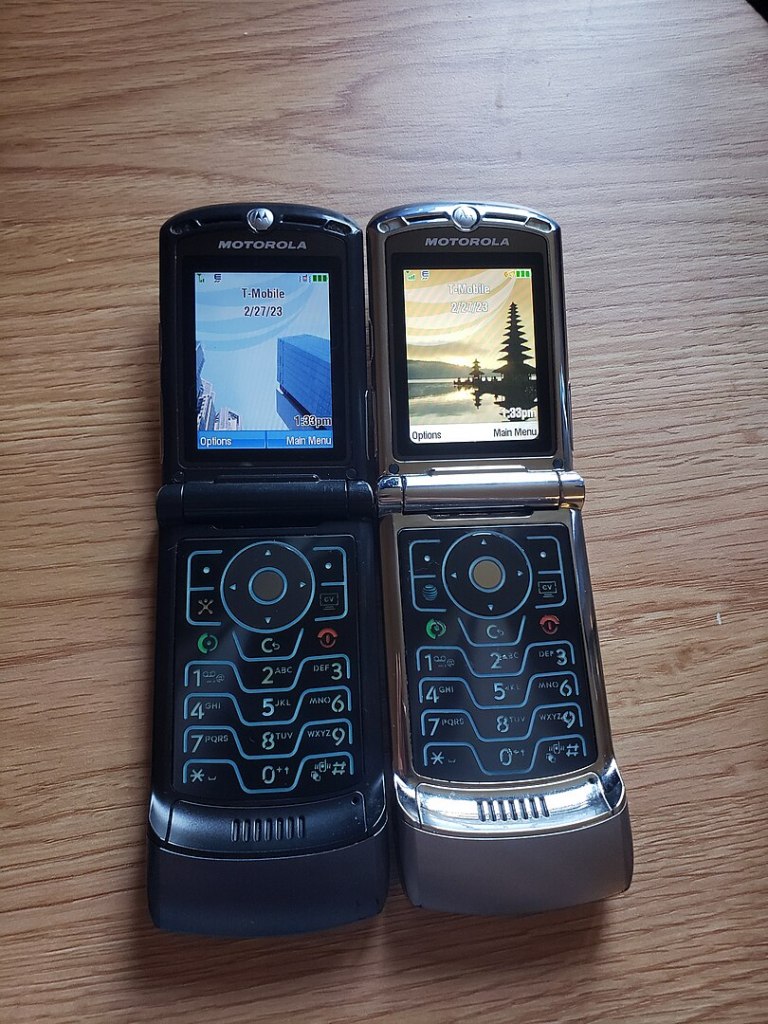
The Motorola RAZR was hugely popular…until it wasn’t. Eventually Motorola split into two companies and sold off others, including the “Printrak” Biometric Business Unit. By NextG50 – Own work, CC BY-SA 4.0, https://commons.wikimedia.org/w/index.php?curid=130206087
By 2009, Safran (resulting from the merger of Sagem and Snecma) was an international powerhouse in aerospace and defense and also had identity/biometric interests. Motorola, in the meantime, was no longer enjoying the success of its RAZR phone and was looking at trimming down (prior to its eventual, um, bifurcation). In response to these dynamics, Safran announced its intent to purchase Motorola’s Biometric Business Unit in October 2008, an effort that was finalized in April 2009. The Biometric Business Unit (adopting its former name Printrak) was acquired by Sagem Morpho and became MorphoTrak. On a personal level, Dorothy Bullard moved out of Proposals and I moved into Proposals, where I got to work with my new best friends that had previously slammed Motorola for losing the Kansas and New Mexico deals. (Seriously, Cindy and Ron are great folks.)
By 2011, Safran decided that it needed additional identity capabilities, so it acquired L-1 Identity Solutions and renamed the acquisition as MorphoTrust.
If you’re keeping notes, the Big 5 have now become the Big 3: 3M, Safran, and NEC (the one constant in all of this).
While there were subsequent changes (3M sold Cogent and other pieces to Gemalto, Safran sold all of Morpho to Advent International/Oberthur to form IDEMIA, and Gemalto was acquired by Thales), the Big 3 has remained constant over the last decade.
And that’s where we are today…pending future developments.
If Alphabet or Amazon reverse their current reluctance to market their biometric offerings to governments, the entire landscape could change again.
Or perhaps a new AI-fueled competitor could emerge.
The 1 Biometric Content Marketing Expert
This was written by John Bredehoft of Bredemarket.
If you work for the Big 3 or the Little 80+ and need marketing and writing services, the biometric content marketing expert can help you. There are several ways to get in touch:
Book a meeting with me at calendly.com/bredemarket. Be sure to fill out the information form so I can best help you.

















 Bredemarket