Maximizing Event ROI with the Bredemarket 2800 Medium Writing Service

Part of the IBM exhibit at CeBIT 2010. CC BY 2.0, https://commons.wikimedia.org/w/index.php?curid=10326025.

When your company attends events, you’ll want to maximize your event return on investment (ROI) by creating marketing content that you publish before, during, and after the event.

This is how you do it.

Including:

And I’ll spill a couple of secrets along the way.

The first secret (about events)

I’m going to share two secrets in this post. OK, maybe they’re not that secret, but you’d think they ARE secrets because no one acknowledges them.

The first one has to do with event attendance. You personally might be awed and amazed when you’re in the middle of an event and surrounded by hundreds, or thousands, or tens of thousands of people. All of whom are admiring your exhibit booth or listening to your CEO speak.

Technically not a CEO (Larry Ellison’s official title is Chief Technology Officer, and the CEO is Safra Catz), but you get the idea. By Oracle PR Hartmann Studios – CC BY 2.0, https://commons.wikimedia.org/w/index.php?curid=47277811.

But guess what?

Many, many more people are NOT at the event.

They can’t see your exhibit booth, and can’t hear your speaker. They’re on the outside, TRYING to look in.

CC-BY-2.0. Link.

And all the money you spent on booth space and travel and light-up pens does NOTHING for the people who aren’t there…

Unless you bring the event to them. Your online content can bring the event to people who were never there.

But you need to plan, create, and approve your content before, during, and after the event. Here’s how you do that.

Three keys to creating event-related content

Yes, you can just show up at an event, take some pictures, and call it a day. But if you want to maximize your event return on investment, you’ll be a bit more deliberate in executive your event content. Ideally you should be:

Planning your event content

Before the event begins, you need to plan your content. While you can certainly create some content on a whim as opportunity strikes, you need to have a basic idea of what content you plan to create.

Content I created before attending the APMP Western Chapter Training Day on October 29, 2021. From https://www.youtube.com/watch?v=9rS5Mc3w4Nk.
  • Before the event. Why should your prospects and customers care about the event? How will you get prospects and customers to attend the event? What will attendees and non-attendees learn from the event?
  • During the event. What event activities require content generation? Who will cover them? How will you share the content?
Some dude creating Morphoway-related content for Biometric Update at the (then) ConnectID Expo in 2015.
  • After the event. What lessons were learned? How will your prospects and customers benefit from the topics covered at the event? Why should your prospects buy the product you showcased at the event?

Creating your event content

Once you have planned what you want to do, you need to do it. Before, during, and after the event, you may want to create the following types of content:

  • Blog posts. These can announce your attendance at the event before it happens, significant goings-on at the event (such as your CEO’s keynote speech or the evening party launching your new product), or lessons learned from the event (what your CEO’s speech or your new product means for your prospects and clients). Blog posts can be created relatively quickly (though not as quick as some social media posts), and definitely benefit your bottom line.
  • Social media. Social media such as Facebook, Instagram, and LinkedIn can also be used before, during, and after the event. Social media excels at capturing the atmosphere of the event, as well as significant activities. When done right, it lets people experience the event who were never there.
  • E-mails. Don’t forget about e-mails before, during, and after the event. I forgot about e-mails once and paid the price. I attended an event but neglected to tell my e-mail subscribers that I was going to be there. When I got to the event, I realized that hardly any of the attendees understood the product I was offering, and were not the people who were hungry for my product. If I had stocked the event with people from my e-mail list, the event would have been more productive for me.
  • Data sheets. Are you announcing a new product at an event? Have the data sheet ready.
  • Demonstration scripts. Are you demonstrating a new or existing product at the event? Script out your demonstration so that your demonstrators start with the same content and make the points YOU want them to make.
  • Case studies and white papers. While these usually come into play after the event, you may want to release an appropriate case study or white paper before or during the event, tied to the event topic. Are you introducing a new product at an industry conference? Time your product-related white paper for release during the conference. And promote the white paper with blog posts, social media, and e-mails.
  • Other types of content. There are many other types of content that you can release before, during, or after an event. Here’s a list of them.

Approving your event content

Make sure that your content approval process is geared for the fast-paced nature of events. I can’t share details, but:

  • If your content approval process requires 24 hours, then you can kiss on-site event coverage goodbye. What’s the point in covering your CEO’s Monday 10:00 keynote speech if the content doesn’t appear until 11:00…on Tuesday?
  • If your content approval process doesn’t have a timeline, then you can kiss ALL event coverage goodbye. There have been several times when I’ve written blog posts announcing my company’s attendance at an event…and the blog posts weren’t approved until AFTER the event was already over. I salvaged the blog posts via massive rewrites.

So how are you going to generate all this content? This brings us to my proposed solution…and the second secret.

The second secret (about Bredemarket’s service)

By Karl Thomas Moore – Own work, CC BY-SA 4.0, https://commons.wikimedia.org/w/index.php?curid=58968347.

The rest of this post talks about one of Bredemarket’s services, the Bredemarket 2800 Medium Writing Service. For those who haven’t heard about it, it’s a service where I provide between 2,800 and 3,200 words of written text.

“But John,” you’re asking. “How is a single block of 3,200 words of text going to help me with my event marketing?”

Time to reveal the second secret…

You can break up those 3,200 words any way you like.

For example, let’s say that you’re planning on attending an event. You could break the text up as follows:

  • One 500-word blog post annnouncing your attendance at the event.
  • Three 100-word social media posts before the event.
  • One 500-word blog post as the event begins.
  • One 300-word product data sheet prepared before the event and released on the second day of the event.
  • One 500-word blog post announcing the new product.
  • Three 100-word social media posts tied to the new product announcement.
  • One 500-word post-event blog post with lessons learned.
  • Three 100-word social media posts after the event.

For $2,000 (as of June 2024), you can benefit from written text for complete event coverage, arranged in any way you need.

So how can you and your company receive these benefits?

Read about the Bredemarket 2800 Medium Writing Service

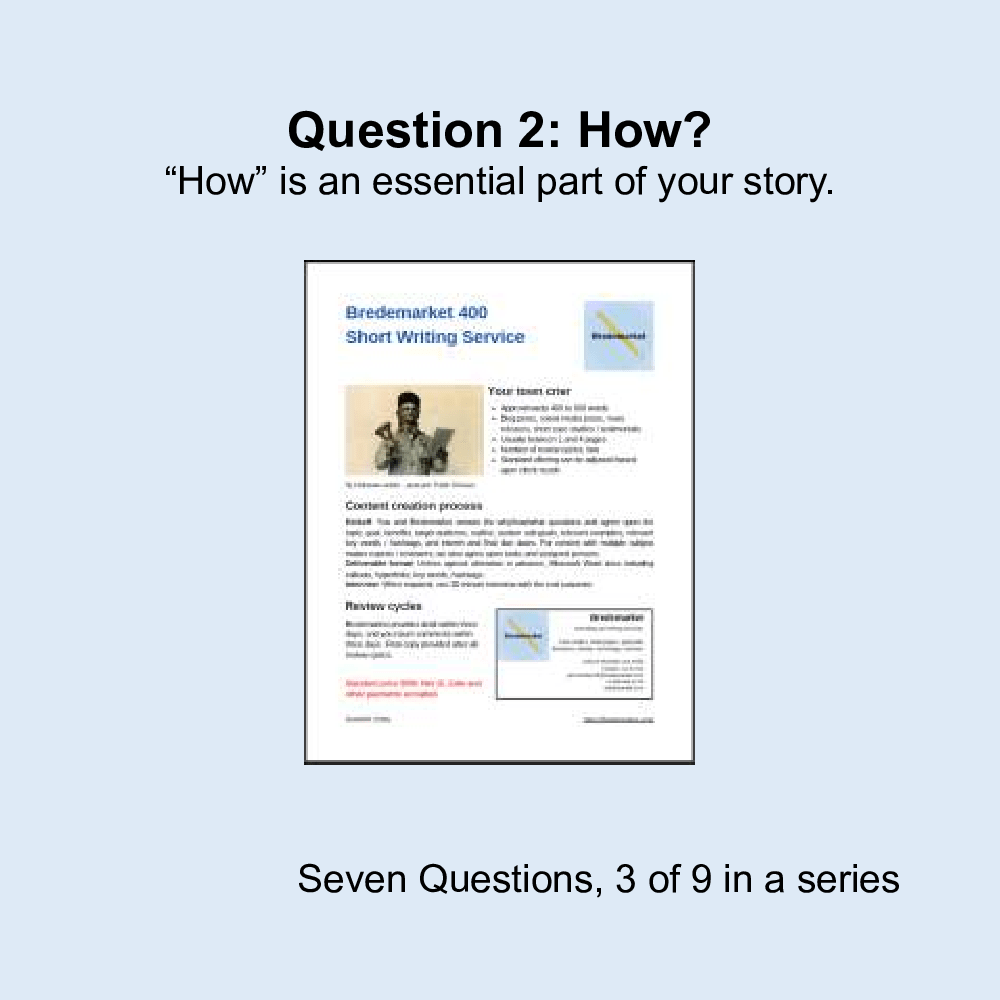
First, read the data sheet for the Bredemarket 2800 Medium Writing Service so you understand the offer and process.

Contact Bredemarket…now

Second, contact Bredemarket to get the content process started well BEFORE your event. Book a meeting with me at calendly.com/bredemarket. Be sure to fill out the information form so I can best help you.
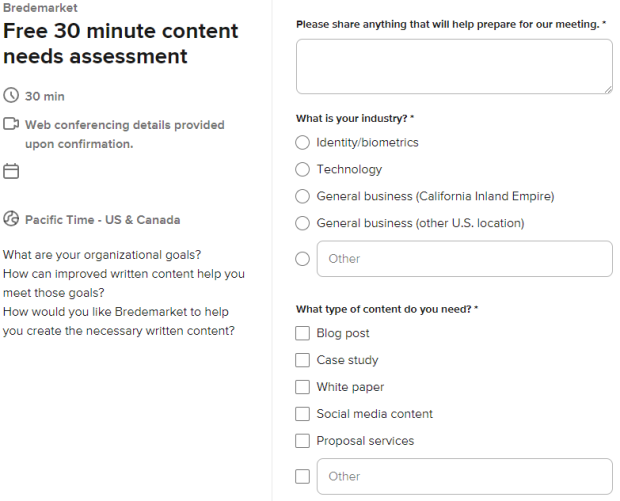
Alternatively, you can

But don’t wait. If your event is in September…don’t contact me in October.

Why Am I a 21st Century Charles Dickens?

I’m enjoying my latest project with one of Bredemarket’s clients, because it allows me to do something I normally don’t do as a consultant.

Write emails.

Normally it’s not economically feasible for me to write emails for Bredemarket, since I (for once) agree with the experts and keep my emails in the 100-word range. Because my normal minimum word length is 400 words, I usually don’t write emails for clients.

Except when the demand generation director on this client’s project envisions AN ENTIRE SEQUENCE of emails.

The demand generation director’s desired email sequence

You see, the demand generation director…um…demanded that I write an entire email sequence.

  • The first email in the sequence introduces the client.
  • The second one provides more information about why the client’s services benefits their customers.
  • Further emails build upon the previous information.
  • At the end of the sequence is the final email, with a clear call to action for the prospect to visit the client’s “landing page” and request a meeting with the client.
By the way, did you know that you can request a meeting with Bredemarket? Just go to https://calendly.com/bredemarket/ if you’d like to meet with me for a “content needs assessment.”

Actually, EVERY email in the sequence includes a link to go to the landing page and request a meeting. These are called “discovery meetings” in the trade, but you don’t have to call them that if you don’t want to. As noted above, I refer to my client meeting as a “content needs assessment.” Call the meetings wildebeests if you feel like it.

Back to my client’s demand generation director. The sequence of emails they requested tells a story. But rather than telling a short story in a single email, this sequence includes multiple emails, in which the content in each email builds upon the previous email, like chapters in a book.

Which leads me to Charles Dickens.

Charles Dickens gave birth to your marketing email sequence

By Jeremiah Gurney – Heritage Auction Gallery, Public Domain, https://commons.wikimedia.org/w/index.php?curid=8451549

When 20th and 21st century readers encounter the works of Charles Dickens, we are handed a complete novel.

But that’s not how Dickens published his stories. Dickens’ tales were published in serial form.

Most of the novels, including Nicholas NicklebyDombey and SonDavid CopperfieldBleak HouseLittle Dorrit, and Our Mutual Friend, appeared in monthly parts following a very specific formula developed by Dickens and his publishers with the release of Dickens’s first full-length novel The Pickwick Papers (1836 – 37). The Pickwick Papers appeared in 20 parts over a period of 19 months. (The last part was a “double issue” that included parts 19 and 20). Each part contained 32 pages of letter press, 2 illustrations, various advertisements, and came wrapped in a flimsy green-paper front and back cover. The price for each part was one shilling (except for the last “double issue,” which was two). This price was very cheap compared to the standard price of a book, which at the time was 31 shillings 6 pence.

From https://dickens.ucsc.edu/resources/faq/by-the-word.html.

Other than cost savings, why did Dickens and his publishers share his content in serial form?

Dickens’s 20-part formula was successful for a number or reasons: each monthly number created a demand for the next since the public, often enamored of Dickens’s latest inventions, eagerly awaited the publication of a new part; the publishers, who earned profits from the sale of numbers each month, could partially recover their expenses for one issue before publishing the next; and the author himself, who received payment each time he produced 32 pages of text (and not necessarily a certain number of words), did not have to wait until the book was completed to receive payment.

From https://dickens.ucsc.edu/resources/faq/by-the-word.html.

And there was one other extremely personal benefit for Charles Dickens.

It was largely on the strength of his generous monthly stipend for The Pickwick Papers that Dickens was able to marry Catherine Hogarth in 1836.

From https://dickens.ucsc.edu/resources/faq/by-the-word.html.
By Daniel Maclise – Transferred from en.wikipedia to Commons.. Original uploader was Jack1956 at en.wikipediaOriginal text: http://www.antiquemapsandprints.com/p-14230.jpg, Public Domain, https://commons.wikimedia.org/w/index.php?curid=36862813

So serialization helped Charles Dickens create demand, generate wealth, AND get the girl. Can’t argue with that. (Although they subsequently separated.)

What about your stories?

I am not Charles Dickens, but I’m trying to incorporate storytelling into Bredemarket’s work.

For example, the email sequence I created for the demand generation director shares details about how the problems the prospects may face, and how the client has helped their customers overcome these problems.

It all fits into the client story.

What’s the most important question to ask before telling a client story?

It seems to me they give these technology products now-a-days very peculiar names. By Public Domain – Snapshot Image – https://archive.org/details/ClassicComedyTeams, Public Domain, https://commons.wikimedia.org/w/index.php?curid=25914575

No, what ISN’T the most important question.

As I’ve said before, WHY is the most important question.

If you’d like to see all seven of the questions that your content creator should ask you, look below. And no, it’s not in seven serial mini-books, but in a single volume.

Although I did serialize the questions on Instagram. Chuck would be proud.

Five of my identity information sources that I have created over the years (and no, most of you can’t see the fifth one)

Back in January 2021, I wrote a post on the Bredemarket blog entitled “Four of my identity information sources that I have created over the years, including one that you can access in the next ten seconds.”

This post is an update to my January 2021 post about the four identity information services. Yes, I just created a fifth one. (But most of you can’t see it.)

The first three services

The first three were created for the benefit of employees at (then) Motorola, (then) MorphoTrak, and IDEMIA. Briefly, those three were:

  • A Motorola “COMPASS” intranet page entitled “Biometric Industry Information.”
  • A MorphoTrak SharePoint intranet page entitled “Identity Industry Information.” (Note the change in wording.)
  • An IDEMIA (and previously MorphoTrust and L-1) daily email newsletter.

The fourth service

Of course, since I wrote the January 2021 post in the Bredemarket blog, the main purpose of the post was to tout the fourth identity information source, the (then) newly-created “Bredemarket Identity Firm Services” LinkedIn showcase page.

January 2021 screen shot of a post in the Bredemarket Identity Firm Services LinkedIn showcase page.

I subsequently created a companion Bredemarket Identity Firm Services Facebook group, which like the LinkedIn showcase page (and unlike my previous efforts for Motorola, MorphoTrak, and IDEMIA) were publicly accessible.

Why did I do this?

I marvel at the thought that I kept on doing this over and over again for four different companies, including Bredemarket. Why did I have this pressing need to reinvent the wheel as I traveled from company to company?

Habitually I’ve been a reader, and have found myself reading a lot of information about the biometric industry or the wider identity industry. Of course it’s not enough just to read something, you have to do something with it. COMPASS, SharePoint, email, LinkedIn, and Facebook allowed me to do two things with all of the articles that I read:

  • Save them somewhere so that I could find them in the future.
  • Share them with other people who may be interested in them.

I didn’t collect information on my impact to others in versions 1.0 and 2.0, but by the time I started managing the IDEMIA email list, I not only received comments from people who appreciated the articles, but I was also able to grow the subscriptions to the email list. (People had to opt in to receive the emails; we didn’t cram them into the inboxes of every IDEMIA employee.)

Similarly, I’ve received comments from people on LinkedIn who follow the showcase page, stating that they appreciated what I was sharing there.

And while COMPASS and the MorphoTrak SharePoint are long gone, and IDEMIA’s Daily News may or may not still be in publication, I can assure you that the Bredemarket Identity Firms services LinkedIn page and Facebook group still continue to operate for your reading pleasure.

And that’s the end of the story.

No it’s not.

The fifth service

As some of you know, Bredemarket has become a side gig because of my new day job, which is with a company in the identity industry. During my first days on the new job, I set up subscriptions to my new company email account so that I could receive information from Crunchbase and Owler, as well as relevant Google Alerts on the identity industry.

And as I began receiving these subscriptions, as well as performing my usual scans of other news sources…

…well, you can guess what happened.

“I need to store these stories and share them with my coworkers,” I thought to myself.

Finally, I created a new identity information service using the well-worn title “Identity Industry Information.” (Hey, it’s easy for me to remember.)

Now I can’t actually SHARE this service with you, because it’s just for the employees at my new company.

And THIS iteration takes advantage of a technology that’s slightly newer than COMPASS.

It’s a Slack channel.

P.S. to employees at my current company – if you’d like to access this Slack channel, DM me on Slack and I’ll send you an invite.

The case FOR do not reply email addresses

I’m in the midst of a project. Not a project for Bredemarket clients, but a project for Bredemarket itself. I’m taking a brief break from the project to share some thoughts on “do not reply” email addresses.

Have you ever received an email and noticed that the sender’s email address includes some form of “do not reply”?

In effect, this means that the sender can transmit an email to you, but you cannot transmit an email back to the sender.

By Jacksoncolvett – Own work, CC BY-SA 3.0, https://commons.wikimedia.org/w/index.php?curid=21231033

Because these “do not reply” email addresses are used so often, I figured that there was a good reason to do so. There HAS to be, if so many companies are using them; right?

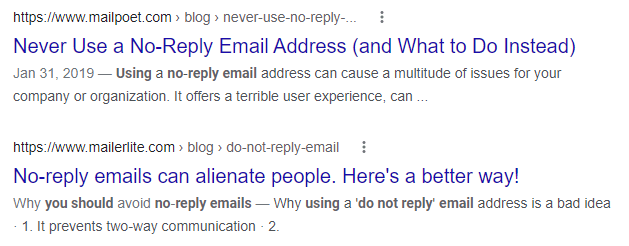
While searching for good reasons to use “do not reply” email addresses, I instead found a bunch of reasons why you SHOULDN’T use this type of address.

Example articles that explain why NOT to use a “do not reply” email address.

Reasons to use a “do not reply” email address

After modifying my search, however, I found a Zendesk article that listed both the pros and the cons of “do not reply” emails. So there MUST be pros. Finally, a justification for this practice!

Pro: Reduce your team’s workload

From https://www.zendesk.com/blog/reply-emails-pros-cons-best-practices/

That is…it.

After additional searching, I found a ClickZ article that attempted to find some justification for the practice.

To be honest, it’s hard to find a good reason to ever use no-reply emails. There are emails which brands can send which don’t necessarily need a reply, such as:

Transactional emails – emails confirming a purchase, or sending invoice details.

Newsletters. No need to reply, just read the articles.

Marketing emails. Brands obviously want a response here, but not by replying to the email.

The problem with no reply is that, even when no response is needed, it doesn’t look good.

From https://www.clickz.com/should-brands-ever-use-do-not-reply-email-addresses/101887/

And even in the first two instances, I’m sure that ClickZ would agree that while these don’t necessarily need a reply, it would be nice to allow a reply.

  • Maybe after reading that transactional email, someone wants to add to the initial purchase. (You want to receive that reply.)
  • Maybe someone is so excited about a newsletter article that the person wants to respond. (You want to receive that reply.)

So smart people never use “do not reply” email addresses.

Unless they do.

When you use a “do not reply” email address and don’t know it

I recently signed up for a newsletter. I know that this person who writes the newsletter would be happy to engage with her subscribers.

But her newsletter provider doesn’t know this.

When I signed up for the newsletter, the acknowledgement of my subscription came from a “do not reply” email address.

Now I didn’t attribute this faux pas to the person. She may not even know that her tool is so marketing-unfriendly. And there isn’t much she can do about it, other than switch to another subscription tool.

But what am I doing?

But that got me thinking: do my own online properties similarly alienate people?

  • If someone goes to the bottom of this post and subscribes to this blog via email, does WordPress send out a “do not reply” email address?
  • If someone subscribes to the separate Bredemarket mailing list, does Mailchimp send out a “do not reply” email address?

There was only one way to find out: subscribe to these services myself, using one of my alternate email addresses.

Testing WordPress

Test number one was to use email to subscribe to the Bredemarket blog. Most of my subscribers read my posts in the WordPress site or app itself, but there is an email subscription option that a few people use.

Using one of my alternate email addresses, I subscribed to test the process and see if I’m sending out messages with “do not reply” email addresses.

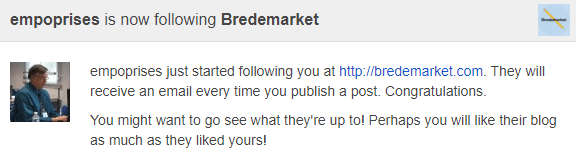
Back at my Bredemarket email address, I received notification of my new subscriber.
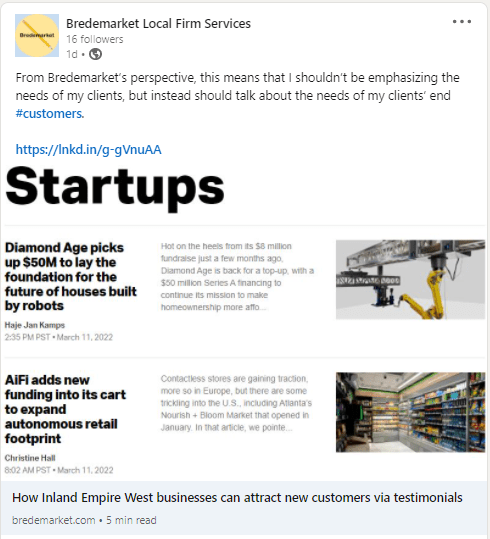
Back at the alternate email address, I waited for the promised email with “details of (my) subscription and an unsubscribe link.”

And waited.

And checked my spam folder.

And waited more.

And decided to conduct another test instead. Now that I was subscribed to the Bredemarket blog via email, I composed a test post to see what happened when email subscribers to the Bredemarket blog received test posts.

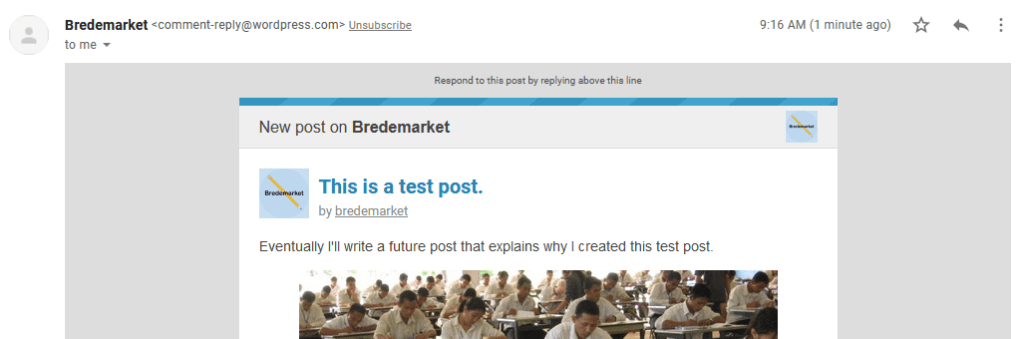
Now I received an email. While it didn’t provide details of my subscription, it did include an unsubscribe link.

And, most importantly, the email didn’t come from a “do not reply” address, but from the address “comment-reply@wordpress.com.”

Hmm…

So if I reply to this email, will the reply become a comment in the test post?

Actually it did become a comment, once I (putting my Bredemarket hat on again) approved the comment. Scroll to the bottom of the test post to see the comment.

Summary: while I ran into an issue with the subscription confirmation, emails generated by the WordPress email subscription itself do NOT come from a “do not reply” email address. And if you reply to the email, you can post a comment. Very functional two-way communication.

Good. Now for test number two, let’s check Mailchimp.

Testing Mailchimp

This will be a bit harder, because the “empoprises” email address already subscribes to Mailchimp. (I wanted to test out various email formats.) Luckily, I have more than two email addresses.

So I navigated through the Bredemarket website to the Mailchimp subscription page (still need to figure out how to embed that), and subscribed.

I’ve configured my Mailchimp to require a subscription confirmation, and here’s the subscription confirmation I received at my alternate alternate email address.

So if I reply to this message, the reply goes to the Bredemarket email address, not to a “do not reply” black hole.

Summary: emails generated by Mailchimp’s subscription function allow recipients to reply to…me.

One drawback of NOT using a “do not reply” email message

It turns out there’s only one teeny tiny problem with Mailchimp’s implementation, in which all emails appear to come from me.

After my alternate alternate email successfully confirmed a subscription to the Bredemarket mailing list, Mailchimp sent a message from the Bredemarket email address to the Bredemarket email address.

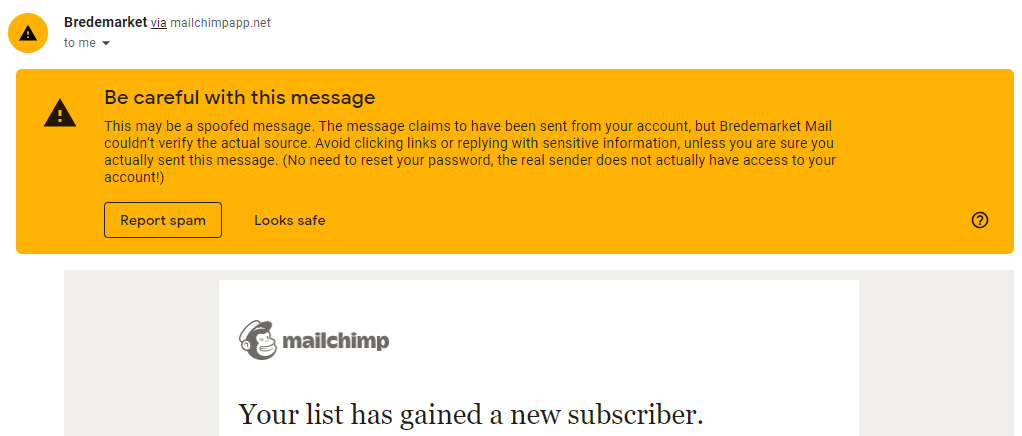
When I received it, there was a big yellow caution.

Be careful with this message

This may be a spoofed message. The message claims to have been sent from your account, but Bredemarket Mail couldn’t verify the actual source. Avoid clicking links or replying with sensitive information, unless you are sure you actually sent this message. (No need to reset your password, the real sender does not actually have access to your account!)

Well, it looked safe to me.

Conclusion

Now I may have forgotten some service somewhere that generates emails on Bredemarket’s behalf, but as far as I know at the moment, none of the Bredemarket properties is guilty of sending out emails with a “do not reply” email address.

Now if we could just eliminate these fake “addresses” on a universal basis. Maybe the EU or California or Illinois can ban them.

Six methods to get your content in the hands of your customers

Whether you are an identity firm creating case studies, an Inland Empire West firm creating testimonials, or some other type of firm, creation of the content is only half the battle.

You still have to get the content into the hands of your end customers. “If you build it, they will come” is movie fiction.

By IowaPolitics.com – Field_of_Dreams, CC BY-SA 2.0, https://commons.wikimedia.org/w/index.php?curid=68597747

Here are six ways to get your created content to a place where your end customers can see it and use it. Perhaps you can use one or more of these methods to distribute your important content.

Method one: titles

Unless you have some bizarre reason to obfuscate the content by choosing an innocuous title such as “About THAT Reuters article,” you need to start by choosing the appropriate title that will induce your target audience to read your content.

For example, I want to be recognized as a biometric content marketing expert, so I created a page with that very title.

And continuously publicized it (including in this post).

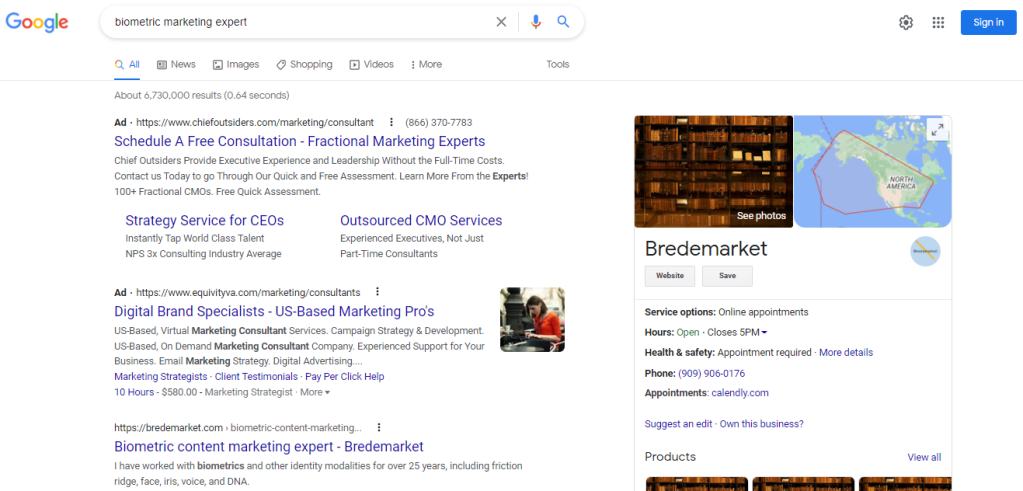
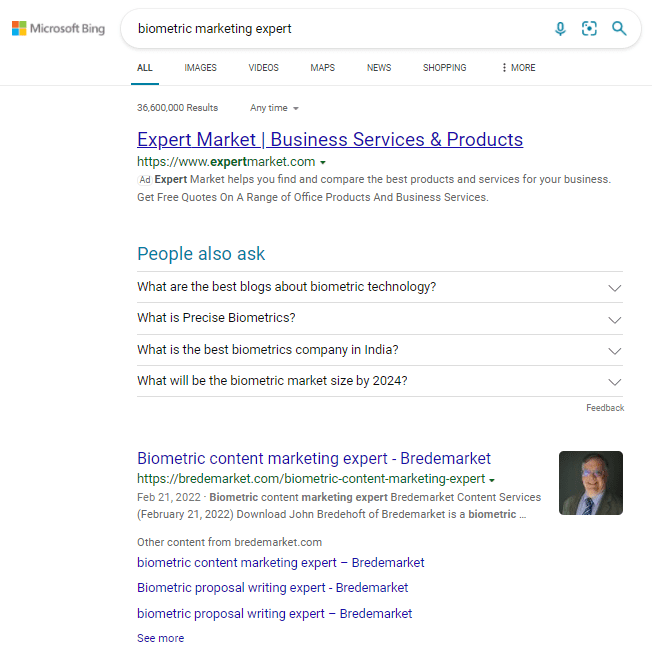
As a result, that page is now the first non-sponsored search term on several services, even for similar searches. I surveyed three search engines; here are incognito search results from two of these search engines for the words “biometric marketing expert” (without the word “content”).

Google incognito search for biometric marketing expert. This one even captured my Google company listing.
Bing incognito search for biometric marketing expert. Bing also shows related Bredemarket content.

Method two: tags

I intentionally saved the third set of search results to display here, since DuckDuckGo not only hit on my post, but on my collection of all posts tagged with “biometric content marketing expert.”

DuckDuckGo incognito search (not that it matters with DuckDuckGo) for biometric content marketing expert. This not only shows the page itself, but also identically named tag.

As another example, to date I have written over a dozen posts about case studies, all of which can be accessed via the link https://bredemarket.com/tag/case-study/.

Of course, I could step up my tagging work.

Not THAT tagging, although the terms are obviously related. By John H. White, 1945-, Photographer (NARA record: 4002141) – U.S. National Archives and Records Administration, Public Domain, https://commons.wikimedia.org/w/index.php?curid=16914422.

I have never bothered to create a tag “testimonial,” so I still have to do that, starting with this post. (I’ll slowly work my way back through the other posts so that testimonial seekers can find that content also.)

Method three: words

Remember the post “About THAT Reuters article” that I referenced earlier? As I said, I had a specific reason for choosing that vanilla title.

I could have entitled the post “Former IDEMIA employee weighs in on Advent’s possible sale of the company.” That would have got some clicks, to be sure.

But it would have misled the reader, because the reader would have gotten the idea that I have some expertise in corporate acquisitions, and an abillity to predict them.

From https://bredemarket.com/2022/02/08/about-that-reuters-article/

But despite the boring title, this post is one of my most popular posts of 2022. Why? Because even though the title is obfuscating, the content of the post itself can’t help but use some words such as Advent, IDEMIA, IPO, Reuters, and Thales. And people found the post because it included words which interested them.

(So much for obfuscation.)

Partial Google Search Console results for the “About THAT Reuters article” page.

Method four: landing pages/doors

Often you don’t land exactly at the content, but instead land at another page that directs you to the content. Because I subscribe to Jay Clouse’s “Creative Companion” newsletter, I get to read his articles before the general LinkedIn public sees them. Unless there’s an editorial change, this week’s LinkedIn article will include the following:

…the majority of my subscriber growth today doesn’t come through my front door, it comes from the dozens of side doors that I’ve created.

Jay Clouse Sunday 3/13/2022 email, “How to grow an email newsletter.”

(UPDATE 3/16: You can read the LinkedIn version of Jay’s post here.)

Does your text need to break on through? By APA-Agency for the Performing Arts-management – eBay itemphoto frontphoto back, Public Domain, https://commons.wikimedia.org/w/index.php?curid=23274437

I don’t necessarily count on my readers immediately landing at the “correct” page. If I write compellingly enough, they could arrive at that page from somewhere else.

For example, I have a page called “Bredemarket and proposal services” that talks about…(drumroll)…Bredemarket’s proposal services. But there are over three dozen pages on the Bredemarket website that link to that page.

Google Search Console list of a few of the pages linking to https://bredemarket.com/bredemarket-and-proposal-services/

So if someone is REALLY interested in a topic, and if the content link uses text that is something better than “such responses,” the person will get to the desired content and I can help the person.

Which reminds me, I need to include my call to action. Normally I stick this at the end of a post, but let’s put it in the middle of the post just for fun. If I can help your company create content or give you some ideas on how to distribute the content:

Method five: email

I could probably do better at this one, but I do perform SOME email marketing.

For example, after I wrote my post about Alaska HB389 and its foreign ownership clause, I took the time to email it to some of my contacts whose companies are directly affected by the bill. I’ve also emailed people when I want to promote some of my various Bredemarket services.

After a year and a half in business, I have discovered that my hundreds of contacts do NOT religiously read the Bredemarket blog daily (although I do have hundreds of subscribers: click the link at the bottom of this post if you would like to join the blog subscription list). So there are times when I use email to highlight items of interest to a particular person.

But only if they’re interested. No need for Microsoft Power BI contacts to learn what happens if a driver’s license production company is only 94% U.S. owned. They probably don’t care.

Method six: social media channels

I am a little better at social media content distribution than I am at email marketing. But again, it’s important to distribute the content to the correct social media channel.

Over the weekend, I wrote two nearly identical posts that were targeted to two separate markets.

The post that was targeted to local Inland Empire West companies was reshared in my LinkedIn group Bredemarket Local Firm Services.

The post that was targeted to identity/biometric companies was reshared in my LinkedIn group Bredemarket Identity Firm Services.

So the content of interest to the locals was shared on the local page, and the content of interest to the identity companies was shared on the identity page.

And that applies to ALL of the methods listed above. Emailing content to the right people. Linking from related content. Using the right words, tags, and titles.

All of these techniques, plus all of the other techniques that this post failed to mention, serve the purpose of getting the created content into the hands of the people who can benefit from it.

If I can help you with this, or with creating the content in the first place…oh, I already included the call to action between Methods 4 and 5. No need to be redundantly repetitive.

Stupid tech tricks: no permission to respond to calendar invites? (The UID:X trick)

I use two separate Google calendars: one for Bredemarket, and one for personal non-Bredemarket meetings. I receive meeting invitations on both of these calendars. This usually isn’t a problem.

Usually.

Over the last year, I have accepted a variety of calendar invites from external inviters, including invites to Zoom meetings, invites to Microsoft Teams meetings, invites to Google Meet meetings, and even old-fashioned invites for Plain Old Telephone Service (POTS) calls. (Yes, these still exist.) These have originated from Google-managed domains, Microsoft-managed domains, and other domains.

When you accept a calendar invite, you send a message to the inviter that contains your acceptance of the message, and this acceptance is recorded both on your calendar and on the inviter’s calendar.

Except for the invite that I received yesterday evening.

I was reading email on my mobile phone and received a calendar invite. When Gmail displays calendar invites, it displays them with “Yes,” “Maybe,” and “No” buttons.

Calendar invite, the expurgated version.

So I clicked “Yes” on the invite…and received a message that I didn’t have permission to access to the target calendar.

That seemed odd, but I noticed that there was an “invite.ics” file attached to the invitation. While ics files are designed for Microsoft calendars, they can be imported into Google calendars, so I figured that I’d just import the invite.ics file when I had access to my computer the following morning.

So this morning I imported the invite.ics file…and got the same error stating that I didn’t have permission to access the target calendar.

Curious, I researched and found a solution:

“The solution for this is to manually edit the .ics file prior to importing it and replace all occurrences of “UID:” with “UID:X” (without the quotes). After doing this and saving the file, proceed with the import and all should be fine.”

So I opened up the invite.ics file in Notepad, performed the manual edit, and successfully imported the calendar entry.

As it turns out, the inviter doesn’t usually schedule meetings with people outside of the inviter’s domain, which explains why I was the first person to mention the issue.

While the problem was solved, I had no idea WHY the UID:X trick worked. And I’m not the only one asking this question.

Most of the time when I receive a meeting request in my gmail account, Google Calendar understands exactly what is going on and handles the request pleasantly.

But for some zoom meeting requests originating from one particular client, Google Calendar refuses to admit that it’s a meeting request until I edit the ICS file and insert an “X” after the “UID:” prefix per the suggestion here.

Looking at RFC 5545, it doesn’t look like the “X” is required but it’s not terribly clear.

Does RFC 5545 in any way require that “X” to be there?

As of this morning, no one has answered the question, but I found a comment in a separate thread that appeared to be relevant.

After investigating for a while, it seems adding the “X” is not a permanent solution. The UID is a global identifier, if two events have the same UID in the same calendar there’s a collision. Some calendar services like Outlook (which I use) seem to handle this, while Google and probably many others don’t.

So the mystery continues.

P.S. If you happen across this post and find it helpful, also see my 2009 tip about the spurious “remove probe” error for KitchenAid ovens. (TL;DR: use a blow dryer to remove moisture from the probe hole where the temperature probe is inserted.)

Communities, selling, and service offerings

The infamous content calendar says that today is proposal day, but I’m going to ignore the infamous content calendar and talk about a bunch of things other than proposals. (Well, I’ll mention proposals once, I guess.)

First, I’ll talk about the new glasses that I received yesterday.

In addition to a new frame style, this new set has the transition sunglass tint but WITHOUT the computer tint. (The Costco optical person said that I didn’t need a separate computer tint these days. I don’t know if he was right, but I trusted him.) My last set of glasses had both the transition sunglass tint AND the computer tint, which meant that they had a purple color at times. Now my tint in the sun will be brown rather than purple.

But enough about that.

Let’s get to the meat of this post, in which I’ll talk about the communities that I’ve joined since starting Bredemarket, what led me to purchase something from one of those communities, and one of two actionable items (and an action) that I took from that purchase.

Communities

Before I became a free agent, I was an employee of a multinational firm with thousands of employees throughout North America and thousands of additional employees throughout the rest of the world. One of the company’s VPs established an online community to support her nationwide organization of people, including myself in California, my direct supervisor in Massachusetts, and a bunch of people in those states, Minnesota, Tennessee, and everywhere else under the sun. I was able to participate in that online community even after I moved out of that VP’s group due to a corporate reorganization. (Thanks Teresa.)

With free agency and sole proprietorship came the loss of that community. (No, the VP obviously wouldn’t let me engage with that community when I was no longer an employee.) But over the next several months I joined three other communities. As it turns out, I interacted with all three of these communities over the course of the last two days.

  • On Thursday at 10:00 am, I joined the weekly “town hall” for the employees and associates of SMA, Inc. I am officially an associate of SMA, albeit with a very specialized skill set (more on that later). To support its people, SMA convenes a weekly “town hall” that addresses company issues and also addresses the interests of SMA’s leadership. Every week, for example, there is an “art talk” that delves into a particular artist or artistic topic.
  • On Thursday at 6:00 pm, I joined the monthly meeting of the Orange County, California chapter (“SPARK OC”: Facebook, Instagram) of the Freelancers Union. This monthly gathering happened to be a “happy hour,” although I disregarded the injunction to bring my favorite cocktail.

  • Finally, today at 8:00 am, I joined a paid workshop hosted by Jay Clouse of the Jay Clouse empire of entities. The topic? “Invisible Selling.” Due to early hour, I didn’t have a beer, but had a Nespresso instead. The rest of this post deals with that workshop and the results from that workshop.

The invisible selling of “Invisible Selling”

I’m not going to recount that Clouse covered in his one-hour workshop. After all, I paid for the course, and (most of) you didn’t. But perhaps it would be helpful if I described how I was invisibly sold on “Invisible Selling.”

I first encountered Jay Clouse via LinkedIn Learning. (Another thing that I lost when I was no longer an employee was access to my employer’s online courses from Udemy and others, but LinkedIn Learning has filled the gap.) I had long since forgotten which Clouse course I took and when I took it, but I checked my LinkedIn profile and found that I had taken his “Freelancing Foundations” course back in September 2020.

After taking the course, I ended up joining his “Freelancing School” community, participating in various online meetups, and engaging with Clouse’s offerings in other ways.

All for free.

Then I received a couple of emails from him about his (then) upcoming “Invisible Selling” course.

I deduced from the description that it would meet my needs, and figured that $40 was a reasonable price. Plus, I trusted Clouse based upon my interactions with him and his community over the last several months.

So I signed up.

The results of my attending “Invisible Selling”

As I said before, I’m not going to recount Clouse’s presentation. But in my particular instance, I derived two actionable tasks within the first 30 minutes of the workshop.

  1. The first task, which could potentially be worth between five dollars and tens of thousands of dollars to me, was to make sure that I am anticipating potential client objections up front, and addressing them. I’m going to devote some time to that in the future. And as you can see below, I started to address one objection even before I heard of Clouse’s workshop.
  2. The second task is one that I cannot discuss publicly at this time. However, it could potentially be worth more than tens of thousands of dollars to me. Maybe I’ll talk about it someday.

Service Offerings

One potential client objection that I’m already addressing is that my offerings do not fit my potential clients’ needs. I’m addressing this by broadening my offerings.

Many of you will recall that when I started, I came up with a bunch of packaged “services” that I could sell to potential clients as is, or with some adaptation to meet the clients’ needs. Over the first few months of Bredemarket’s existence, I sold various clients my Bredemarket 400 Short Writing Service, my Bredemarket 2800 Medium Writing Service, and my Bredemarket 404 Web/Social Media Checkup. I still sell these services today.

But much of my business today doesn’t derive from these prepackaged services. Well, technically it does, if you read the description of my Bredemarket 4000 Long Writing Service:

The long writing service does not have a “standard” offering per se, because of the variability of what may be needed. Work is billed at an hourly rate.

Some of Bredemarket’s more lucrative work comes from ongoing hourly relationships that I have established with several clients. They use me as needed, sometimes more frequently, sometimes less so, but I’ve kept them happy.

“I just wanted to truly say thank you for putting these templates together. I worked on this…last week and it was extremely simple to use and I thought really provided a professional advantage and tool to give the customer….TRULY THANK YOU!”

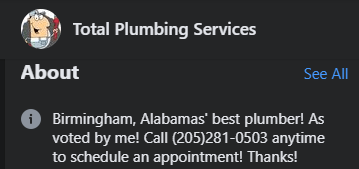
Why do these customers work with me? Well, while I have a number of customers employing various technologies, the vast majority of my customers are focused on biometrics. And I am the biometric content marketing expert and the biometric proposal writing expert, because I said I am. (The other John Bredehoft, the one who owns Total Plumbing Services, taught me the importance of self-promotion.)

But what if a client wants to pick my biometric brain and not pay hundreds or thousands or tens of thousands of dollars to do so?

Well, for the past month I’ve been addressing that price point also via Bredemarket Premium. Certain posts on this Bredemarket blog delve deeply into my quarter century-plus of biometrics knowledge. These posts are only available to subscribers, at the cost of $5 per month. Here’s an excerpt from the public view of one of these posts:

So to my mind I’ve covered the “Bredemarket doesn’t address my price point” objection. (Prove me wrong. Please.)

As I said before, I need to do a better job of anticipating and addressing other potential objections to using Bredemarket to help you communicate your firm’s benefits. And I’ll work on that.

But if your objection is that you don’t like my glasses, I can’t help you. You can’t please everyone.

And a reminder that if I’ve brilliantly addressed all of your potential objections, or even if I haven’t, and if you’re ready to talk about how I can help you:

If your marketing channels lack content, your potential customers may not know that you exist

[Update, January 27, 2021: a July 2020 study from Demand Gen Report explains WHY up-to-date content is important. I addressed that study in this post.]

One of Bredemarket’s most popular services is the Short Writing Service. It can help small (or large) businesses solve the content problem.

You know what the content problem is. Your business has established one or more marketing channels: a website, blog, email list, Google My Business site, Facebook, Instagram, LinkedIn, Snapchat, Tumblr, Twitter…or many others.

But the marketing channels are useless IF THEY HAVE NO CONTENT.

Or old content.

Or poorly-written content.

Maybe the information on the marketing channel is six months old, or a year old, or nine years old. (Trust me, this happens.) Or maybe there’s content on one marketing channel, but it’s never cross-posted to the other marketing channels for your business.

What are the ramifications of this? If your channels lack content, your potential customers may forget about you. And that’s NOT good for business.

I’ll use myself as a BAD example. In addition to my business blogs at Bredemarket (https://bredemarket.com/blog/) and JEBredCal (https://jebredcal.wordpress.com/blog/), I maintain several personal blogs. One of those personal blogs is Empoprise-NTN (https://empoprise-ntn.blogspot.com/), and that blog is obviously the ugly stepchild of the bunch. Between 2016 and 2019 I authored exactly ZERO posts on that blog. So if someone is looking for authoritative commentary on NTN Buzztime games, they’re obviously NOT going to look to me.

The obvious solution to the content problem is to CREATE CONTENT. Some people have no problem creating content, but others may need some help. They may not have the time (https://bredemarket.com/2020/09/25/when-you-dont-have-the-time-to-craft-your-own-text/), or they may need some help in selecting the right words to say.

Bredemarket can help you solve the content problem, one post at a time. The Bredemarket 400 Short Writing Service (https://bredemarket.com/bredemarket-400-short-writing-service/) uses a collaborative process, in which you and Bredemarket agree on a topic, Bredemarket provides a draft of the text, and the text goes through two review cycles. At the end of the process, you have the text, you own the text (this is a “work for hire”), and you can post the text on your blog or Facebook or wherever you please. Your content problem is solved! And if the post includes a call for action, your potential customers can ACT, potentially providing you with new business.

Speaking of a call for action…

If you would like to talk to Bredemarket about ways to solve your business’ content problem, contact me!

Bredemarket 400 Short Writing Service

(new text of approximately 400 to 600 words)