Five Topics a Biometric Content Marketing Expert Needs to Understand

As a child, did you sleep at night dreaming that someday you could become a biometric content marketing expert?

I didn’t either. Frankly, I didn’t even work in biometrics professionally until I was in my 30s.

If you have a mad adult desire to become a biometric content marketing expert, here are five topics that I (a self-styled biometric content marketing expert) think you need to understand.

Topic One: Biometrics

Sorry to be Captain Obvious, but if you’re going to talk about biometrics you need to know what you’re talking about.

The days in which an expert could confine themselves to a single biometric modality are long past. Why? Because once you declare yourself an iris expert, someone is bound to ask, “How does iris recognition compare to facial recognition?”

Only some of the Biometrics Institute’s types of biometrics. Full list at https://www.biometricsinstitute.org/what-is-biometrics/types-of-biometrics/

And there are a number of biometric modalities. In addition to face and iris, the Biometrics Institute has cataloged a list of other biometric modalities, including fingerprints/palmprints, voice, DNA, vein, finger/hand geometry, and some more esoteric ones such as gait, keystrokes, and odor. (I wouldn’t want to manage the NIST independent testing for odor.)

As far as I’m concerned, the point isn’t to select the best biometric and ignore all the others. I’m a huge fan of multimodal biometrics, in which a person’s identity is verified or authenticated by multiple biometric types. It’s harder to spoof multiple biometrics than it is to spoof a single one. And even if you spoof two of them, what if the system checks for odor and you haven’t spoofed that one yet?

Topic Two: All the other factors

In the same way that I don’t care for people who select one biometric and ignore the others, I don’t care for some in the “passwords are dead” crowd who go further and say, “Passwords are dead. Use biometrics instead.”

Although I admire the rhyming nature of the phrase.

If you want a robust identity system, you need to use multiple factors in identity verification and authentication.

  • Something you know.
  • Something you have.
  • Something you are (i.e. biometrics).
  • Something you do.
  • Somewhere you are.

Again, use of multiple factors protects against spoofing. Maybe someone can create a gummy fingerprint, but can they also create a fake passport AND spoof the city in which you are physically located?

From https://www.youtube.com/shorts/mqfHAc227As

Don’t assume that biometrics answers all the ills of the world. You need other factors.

And if you master these factors, you are not only a biometric content marketing expert, but also an identity content marketing expert.

Topic Three: How biometrics are used

It’s not enough to understand the technical ins and outs of biometric capture, matching, and review. You need to know how biometrics are used.

  • One-to-one vs. one-to-many. Is the biometric that you acquire only compared to a single biometric samples, or to a database of hundreds, thousands, millions, or billions of other biometric samples?
  • Markets. When I started in biometrics, I only participated in two markets: law enforcement (catch bad people) and benefits (get benefit payments to the right people). There are many other markets. Just recently I have written about financial identity and educational identity. I’ve worked with about a dozen other markets personally, and there are many more.
  • Use cases. Related to markets, you need to understand the use cases that biometrics can address. Taking the benefits example, there’s a use case in which a person enrolls for benefits, and the government agency wants to make sure that the person isn’t already enrolled under another name. And there’s a use cases when benefits are paid to make sure that the authorized recipient receives their benefits, and no one else receives their benefits.
  • Legal and privacy issues. It is imperative that you understand the legal ramifications that affect your chosen biometric use case in your locality. For example, if your house has a doorbell camera that uses “familiar face detection” to identify the faces of people that come to your door, and the people that come to your door are residents of the state of Illinois, you have a BIG BIPA (Biometric Information Privacy Act) problem.

Any identity content marketing expert or biometric content marketing expert worth their salt will understand these and related issues.

Topic Four: Content marketing

This is another Captain Obvious point. If you want to present yourself as a biometric contet marketing expert or identity content marketing expert, you have to have a feel for content marketing.

Here’s how HubSpot defines content marketing:

The definition of content marketing is simple: It’s the process of publishing written and visual material online with the purpose of attracting more leads to your business. These can include blog posts, pages, ebooks, infographics, videos, and more.

From https://blog.hubspot.com/marketing/content-marketing

Here are all the types of content in which one content marketer claims proficiency (as of July 27, 2023, subject to change):

Articles • Battlecards (80+) • Blog Posts (400+) • Briefs/Data/Literature Sheets • Case Studies (12+) • Competitive Analyses • Email Newsletters (200+) • Event/Conference/Trade Show Demonstration Scripts • FAQs • Plans • Playbooks • Presentations • Proposal Templates • Proposals (100+) • Quality Improvement Documents • Requirements • Scientific Book Chapters • Smartphone Application Content • Social Media (Facebook, Instagram, LinkedIn, Threads, TikTok, Twitter) • Strategic Analyses • Web Page Content • White Papers and E-Books

From https://www.linkedin.com/in/jbredehoft/, last updated 7/27/2023.

Now frankly, that list is pretty weak. You’ll notice that it doesn’t include Snapchat.

But content marketers need to be comfortable with creating at least one type of content.

Topic Five: How L-1 Identity Solutions came to be

Yes, an identity content marketing expert needs to thoroughly understand how L-1 Identity Solutions came to be.

I’m only half joking.

Back in the late 1990s and early 2000s (I’ll ignore FpVTE results for a moment), the fingerprint world in which I worked recognized four major vendors: Cogent, NEC, Printrak (later part of Motorola), and Sagem Morpho.

And then there were all these teeny tiny vendors that offered biometric and non-biometric solutions, including the fierce competitors Identix and Digital Biometrics, the fierce competitors Viisage and Visionics, and a bunch of other companies like Iridian.

Wel, there WERE all these teeny tiny vendors.

Until Bob LaPenta bought them all up and combined them into a single company, L-1 Identity Solutions. (LaPenta was one of the “Ls” in L-3, so he chose the name L-1 when he started his own company.)

So around 2008 the Big Four (including a post-FpVTE Motorola) became the Big Five, since L-1 Identity Solutions was now at the table with the big boys.

But then several things happened:

  • Motorola started selling off parts of itself. One of those parts, its Biometric Business Unit, was purchased by Safran (the company formed after Sagem and Snecma merged). This affected me because I, a Motorola employee, became an employee of MorphoTrak, the subsidiary formed when Sagem Morpho de facto acquired “Printrak” (Motorola’s Biometric Business Unit). So now the Big Five were the Big Four.
  • Make that the Big Three, because Safran also bought L-1 Identity Solutions, which became MorphoTrust. MorphoTrak and MorphoTrust were separate entities, and in fact competed against each other, so maybe we should say that the Big Four still existed.
  • Oh, and by the way, the independent company Cogent was acquired by 3M (although NEC considered buying it).
  • A few years later, 3M sold bits of itself (including the Cogent bit) to Gemalto.
  • Then in 2017, Advent International (which owned Oberthur) acquired bits of Safran (the “Morpho” part) and merged them with Oberthur to form IDEMIA. As a consequence of this, MorphoTrust de facto acquired MorphoTrak, ending the competition but requiring me to have two separate computers to access the still-separate MorphoTrust and MorphoTrak computer networks. (In passing, I have heard from two sources, but have not confirmed myself, that the possible sale of IDEMIA is on hold.)
  • And Gemalto was acquired by Thales.

So as of 2023, the Big Three (as characterized by Maxine Most and FindBiometrics) are IDEMIA, NEC, and Thales.

Why do I mention all this? Because all these mergers and acquisitions have resulted in identity practitioners working for a dizzying number of firms.

As of August 2023, I myself have worked for five identity firms, but in reality four of the five are the same firm because the original Printrak International kept on getting acquired (Motorola, Safran, IDEMIA).

And that’s nothing. One of my former Printrak coworkers (R.M.) has also worked for Digital Biometrics (now part of IDEMIA), Cross Match Technologies (now part of ASSA ABLOY), Iridian (now part of IDEMIA), Datastrip, Creative Information Technology, AGNITiO, iTouch Biometrics, NDI Recognition Systems, iProov, and a few other firms here and there.

The point is that everybody knows everybody because everybody has worked with (and against) everybody. And with all the job shifts, it’s a regular Peyton Place.
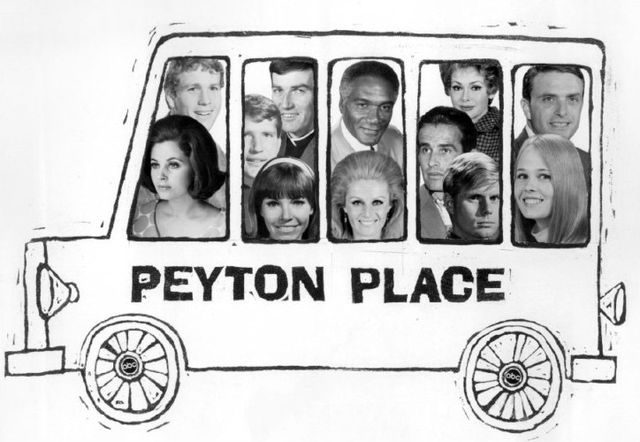
By ABC Television – eBay itemphoto frontphoto back, Public Domain, https://commons.wikimedia.org/w/index.php?curid=17252688

Not sure which one is me, which one is R.M., and who the other people are.

Do you need an identity content marketing expert today?

Do you need someone who not only knows biometrics and content marketing, but also all the other factors, their uses, and even knows the tangled history of L-1?

Someone who offers:

  • No identity learning curve?
  • No content learning curve?
  • Proven results?

If I can help you create your identity content, contact me.

Yeah, I Wrote a Bredemarket LinkedIn Article About…Company LinkedIn Articles

Stump the Experts at WWDC 2010
Stefan Haubold • CC BY-SA 3.0

One way for your firm to publicize its offerings is through company LinkedIn articles. My LinkedIn article, written by my company Bredemarket, discusses…well, company LinkedIn articles. It also discusses:

  • Why you should write LinkedIn articles.
  • Why companies should write LinkedIn articles under their own names.
  • How to create LinkedIn articles.
  • Finally, who can write your LinkedIn articles. (I have a suggestion.)

To read the LinkedIn article, visit https://www.linkedin.com/pulse/why-your-company-should-write-linkedin-articles-bredemarket

Awareness Calls to Action

Blog posts are transitory things, reflecting the views of the author at a particular point in time. Those views can change as the world evolves, or as the author evolves.

Take the author who wrote the following statement in late 2022: “Posts for awareness don’t need CTAs (calls to action).”

The author who wrote that statement was…um, it was me.

Can I get a re-do on that one?

What I said in December 2022

The quoted statement above is from a section in the December 2022 blog post “Does Every Blog Post Need a Call to Action?

Incidentally, I still believe that you don’t need a call to action in EVERY blog post.

Some will argue, “Well then why did you write it?”

To answer that, here’s some of what I said in that December 2022 blog post.

Candy Street Market, 110 W Holt, Ontario, California

Take my post from last Saturday, “Candy Street Market is coming.”

This post simply talked about a new candy store in Ontario, California, but never talked about Bredemarket’s content creation or proposal writing services.

So why did I write a post that doesn’t directly lead to business?

For the awareness….

(I) am concentrating more on serving local firms in California’s Inland Empire….But the locals need to know that I’m here.

From https://bredemarket.com/2022/12/04/does-every-blog-post-need-a-call-to-action/

What I’m saying in July 2023

While perhaps it’s valid to say that the Candy Street Market blog post didn’t need a CTA (although some would dispute that), I myself have written other “awareness” blog posts and content that DID need a CTA.

(UPDATE OCTOBER 23, 2023: “SIX QUESTIONS YOUR CONTENT CREATOR SHOULD ASK YOU IS SO 2022. DOWNLOAD THE NEWER “SEVEN QUESTIONS YOUR CONTENT CREATOR SHOULD ASK YOU” HERE.)

For example, take another blog post that I wrote in December 2022, “Six Questions Your Content Creator Should Ask You: the e-book version.” It didn’t end with a request to contact me. It didn’t attempt to move the reader down the funnel from awareness to consideration. The blog post merely said that there are six questions.

But it did have a “download” CTA.

While the CTA didn’t in and of itself move the reader to consideration (and hopefully to conversion), it did make them, um, more aware. For those who followed my CTA and downloaded the e-book, they learned why their content creator should ask “why” and other questions. And by the time they got to page 13 14, they saw this:

For some of you, this e-book has helped you to decide on the questions that you will ask your preferred content creator, or the questions that you will ask yourself before you create your own content.

But for others, you might be asking how Bredemarket can help you create content. As I said earlier, you’re probably not ready to contract with me yet. We have to talk first.

If you’re interested in Bredemarket’s services, contact me via one of the methods listed at the https://bredemarket.com/contact/ URL.

From “Six Questions Your Content Creator Should Ask You.” Go here to download.

So THAT’S where I moved the reader on to the consideration phase—AFTER they had read the blog post AND the e-book.

But while they were still on the blog post, I assumed they were still in the awareness phase.

By Steve simple – Own work, CC BY 3.0, https://commons.wikimedia.org/w/index.php?curid=7749648

Summing up

Here’s the TL;DR version:

  • The Candy Street blog post was an awareness blog post that didn’t need a Bredemarket-focused CTA, because it only alerted people of Bredemarket’s existence.
  • The Six Questions e-book blog post was an awareness blog post that DID need a Bredemarket-focused CTA, because I wanted them to download and read the e-book and THEN move on to consideration.
  • I’m going to update the old blog/CTA blog post to refer to THIS one.
  • I may change my mind again.

As for the CTA to THIS blog post, there isn’t one—yet. This post was written for a purpose that I will reveal shortly.

Three Tips When Hiring a Professional Writer

I’ve been a professional writer for 29 years now—actually, more than 29 years—and have worked both as an employee and as an independent consultant.

Whether you’re hiring an employee to write for you, or contracting with a content marketing expert to create content for you, I have some views on the things that your firm can do to ensure that your writer does great things for you. There are many things your firm can do, but three critical things are:

  1. Set expectations up front.
  2. Ask if your professional writer can do what you need.
  3. Communicate clear and realistic deadlines.

Set expectations up front

Most employer job descriptions are nothingburgers. They have to be vetted and standardized to fit the needs of the entire company. And because they’re so onerous to produce, they aren’t updated all that often.

And when you get to the work instructions, they often are too generic. “Write about our facial recognition solution,” in and of itself, could yield a bunch of different outputs, most of which you won’t like.

So when you approach your potential employee or contractor, provide details that go beyond the written word.

What is the measure of success (or failure) for this position or contract?

Why is your firm doing what you are doing?

What do you REALLY need your employee/contractor to do?

Ask if your professional writer can do what you need

Note that I didn’t say “ask if your professional writer is experienced in doing what you need.” Sometimes professional writers are perfectly capable of doing things they have never done before.

  • Before I started writing software user manuals for Logic eXtension Resources, I had never written a software user manual.
  • Before I contracted with Printrak, I had never written a proposal before.
  • Before I became a product manager at Printrak (and Motorola), I had never written a marketing requirements document.
  • Before I handled U.S. social media for MorphoTrak, I had never tweeted or written other social media content professionally.
  • Before I wrote a dozen case studies for a confidential Bredemarket client, I had never written a single one.
  • Before I managed the creation of over 80 battlecards for Incode Technologies, my battlecard experience was limited.

So why did these companies trust me to work on these tasks?

Because they determined that experience I did have was transferable to the tasks at hand.

For example, I got the job at Logic eXtension Resources because the owner knew that I had graduated from Reed College, which had an undergraduate thesis requirement. The owner figured that if I could write at length about the efficiency and equity of the Land and Water Conservation Fund Act of 1965, I could write at length about the operation of the multiCALC software program.

Now there’s always a risk when trying a writer on something new. But frankly, there’s always a risk when trying a writer on something old. Maybe my battlecard experience won’t help you if you need battlecards for Russian nuclear submarine manufacturers. (NIST does not compile comparative performance information for Russian nuclear submarines.)

But whatever you do, you need to ensure that the work you need aligns with the professional writer’s potential capabilities.

Communicate clear and realistic deadlines

Usually, some piece of work is due by a certain date.

Note that I didn’t say that work is always due by a certain date. In some cases, the work is needed “whenever,” which may mean next year.

Sometimes firms say that a piece of work is needed “ASAP.” Frankly, this isn’t a due date. If something is needed ASAP, am I supposed to stop all other work and all other bodily functions including eating and sleeping until it is done?

Now I understand that dates may slip as priorities change, and that in most cases the work that I am performing is not the most important work that the firm needs to complete. Plus, things change.

  • Perhaps Project X is very critical one week, but during the next week external factors mean that Project Y has become more critical. Hey, that happens—as long as the priorities aren’t constantly changing on a weekly basis.
  • Or maybe Project Y is due, but something that is necessary for Project Y isn’t ready yet so the due date for Project Y has to change out of necessity.

So when you communicate a completion date for a project:

  1. Make sure it’s a date, not “ASAP” or “whenever.”
  2. Communicate any necessary dependencies, such as “we need this by Friday the 28th, but that assumes that we receive the material from the third party by Friday the 21st.”
  3. Update as situations change.

When the “Wrong” Content Goes Viral

Have you ever had a piece of content go viral, but wish that ANOTHER piece of content had gone viral instead? Join the club.

Three examples of unintentional viral content

Here are three examples in which the “wrong” content went viral. Two of the examples are personal, but the first example has nothing to do with me, the Internet, or even the 21st century.

Example 1: Steam behind the wrong song

Back in the 1960s, a singer named Gary DeCarlo was working under the pseudonym Garrett Scott. “Garrett Scott” needed a single, so he was slotted to record a song called “Sweet Laura Lee.”

Because it was a 1960s single, it needed to have a B-side. You couldn’t let all that vinyl on the back of the record go to waste. Any song would do, since it was just filler for “Sweet Laura Lee.”

So DeCarlo and two of his friends resurrected a 1961 song called “Kiss Him Goodbye,” went to the studio, added a silly chant because the 1961 song lacked a chorus, and cranked out the B-side in an evening session. They did it so quickly that the chorus didn’t even have any real words, just “na na.” Actually, the B-side was SUPPOSED to be bad so that disc jockeys would play the A-side:

B-sides in the ’60s were often ad-hoc affairs designed to be clearly inferior to the A-side so that disc jockeys wouldn’t flip the record. The three musicians who recorded this had that in mind for this song, and kept it simple: there is no bass or guitar on the track….

From https://www.songfacts.com/facts/steam/na-na-hey-hey-kiss-him-goodbye

The song “Sweet Laura Lee” went nowhere, but who cares? The record company liked the B-side, invented a fake band name Steam, and the song “Na Na Hey Hey Kiss Him Goodbye” went to the number 1 position on the Billboard charts. A real band named Steam was formed and went on tour…without Gary DeCarlo (although DeCarlo received songwriting royalties).

From https://open.spotify.com/track/5xMLcSEstX1jN4arpNXqtX

Example 2: Becoming the unintentional Shipley expert

Fast forward to the 21st century and my creation of blog content for Bredemarket.

I needed to populate my blog with both content marketing-related content and proposal-related content, so in December 2021 I wrote a post entitled “96 Smiles: All about the Shipley Business Development Lifecycle.” I’ve been familiar with the Shipley lifecycle for decades, but probably not as familiar as hundreds if not thousands of proposal practitioners.

But I’m the one who wrote the blog post about it.

And it kinda sorta became popular. I went to Google on Friday morning and searched for the words shipley 96 step, and these are the results:

So now, right behind Shipley Associates itself, the next leading authority on the Shipley Business Development Lifecycle is…ME.

So now the bredemarket.com website is getting all sorts of traffic related to Shipley, and my Ubersuggest account is, um, suggesting that I optimize the website to capture even more Shipley traffic.

Except that I’m not really doing much with the Shipley process itself; I just talked about it.

Of course, the traffic may have nothing to do with capture and proposal management, since the post makes several explicit and implicit references to the ? and the Mysterians song “96 Tears.”

From https://open.spotify.com/track/4PEeZ2U4UfP2Jo8EtIOjus

You may detect a music theme in these examples. It gets better.

Example 3: When neglected music becomes more popular than my current gig

Bredemarket started in August 2020, but it isn’t my first foray into Internet money-making.

I’ve been creating instrumental music for decades, and in 2017 I started creating and selling music on Bandcamp under the name “Ontario Emperor.” While I haven’t created any new music there since 2019, and while I haven’t done any promotion in years, I did do a little bit of promotion back in 2017, going so far as to set up a Facebook page called “ontarioemperor,” which I’ve mostly ignored.

What I HAVEN’T ignored is the slew of social media channels for Bredemarket. Some of you are aware of this, since you’ve recently received invitations from me to follow Bredemarket on LinkedIn, Facebook, Instagram, Threads, TikTok, and YouTube. If you haven’t, feel free to click on the appropriate links and subscribe now.

So as I’ve been building up my Bredemarket social/content presence and spending a lot of time on this, I received a notification from Facebook this week that, with no effort on my own, my neglected ontarioemperor Facebook page now has over 600 followers.

So as long as you’re following me everywhere else, go ahead and follow me there also.

Now I’m not sure how much Ontario Emperor’s Facebook popularity can benefit Bredemarket, since there’s little or no discernable overlap between synthetic music fans and people requiring marketing and writing services. But who knows? I could be wrong there also.

Sadly there is no Spotify link here since Ontario Emperor’s music has never been uploaded to Spotify, but you can listen to the song “For a Meaningful Apocryphal Animation” on Bandcamp. Coincidentally, I recently posted a free version (with no listening restrictions) on one of the Bredemarket web pages. Or you can listen to it below.

“For a Meaningful Apocryphal Animation.” Recorded May 15, 2017 in Ontario, California. Composed by John E. Bredehoft. © All rights reserved.

A final thought

Jerry Springer. By Justin Hoch, CC BY 2.0, https://commons.wikimedia.org/w/index.php?curid=16673259

So sometimes things you want to promote don’t get popular, and things you don’t necessary want to promote get popular.

Rather than being disappointed, just go with the flow, say “na na” to the naysayers, and speak about Shipley with soothing instrumental music behind you.

Take care of yourself, and each other.

Illustrating Fear, Uncertainty, and Doubt for Facility Monitoring

I just ran across an excellent example of how a content marketing expert can raise fear, uncertainty, and doubt (FUD) in the mind of a prospect in the “consideration” phase.

These prospects need people to monitor their facilities and protect them against threats. In today’s world, it’s technically possible for facility monitoring professionals to work from anywhere, including their own homes.

Rapid Response Monitoring wants to discourage this.

Our preparation gives us the endurance to continuously provide professional monitoring services from within our hardened facilities. Since our founding, our choice has been to keep critical monitoring operations staff on-site. Monitoring from home provides lower-quality service (security issues/distractions). We believe you deserve more.

From https://www.rrms.com/in-facility-monitoring/

Now Rapid Response Monitoring writes a lot more about why its solution is better, and you can read those words here.

But what about pictures?

There is a relationship between words and pictures, with the most famous relationship expressed as “a picture is worth a thousand words.” (Artists may say that a picture is worth many more words.)

Take a look at Rapid Response Monitoring’s picture and see what this communicates to prospects in the consideration phase for facility monitoring services.

Which Words Should Your Marketers Use? My Four Suggestions.

I’ve talked about the words “why,” “how,” and “what” and their relation to writing, but I haven’t talked about the word “which.”

Not in relation to sandwiches, but in relation to words.

If you are a marketing executive, you know that the words you use in your marketing content can make or break your success. When your company asks employees or consultants to write marketing content for you, which words should they use?

Here are four suggestions for you and your writers to follow.

  1. Your writers should use the right words for your brand.
  2. Your writers should use the right words for your industry.
  3. Your writers should use words that get results.
  4. Your writers should be succinct.

Your writers should use the right words for your brand

Your company has a tone of voice, and your writers should know what it is. If you can’t tell them what it is, they will figure it out themselves.

Your company has a particular writing style—hopefully one that engages your prospects and customers. Regardless of your writer’s personal style, they must create copy that aligns with your own style. In effect, they put on a “mask” that aligns the words they create with the words that your company needs.

Your writers should use the right words for your industry

Similarly, your company provides products and services in one or more industries, and your copy must align with the terms those industries use, and the way industry participants express themselves.

For example, a writer who is writing content for the biometric industry will use different terms than a writer who is writing content for art collectors because of the differences in the two target audiences.

  • Biometric readers (the people, not the devices) care about matching accuracy measurements, such as those compiled by the U.S. National Institute of Standards and Technology (NIST) in its Face Recognition Vendor Test, or as measured in agency-managed benchmarks. (Mike French’s example.) They often respond to quantitative things, although more high-level concepts like “keeping citizens safe from repeat offenders” (a public safety-related benefit) also resonate.
  • Art collectors care about more qualitative things, such as not being scared of handing over their dream to a commissioned artist whose work will inspire affection. (Well, unless the collector is an art investor and not an art lover; investors use different terminology than lovers.)

So make sure your writers get the words right. Otherwise, it’s as if someone is speaking Italian to a bunch of French speakers. (Kaye Putnam’s example.) Your prospects will tune you out if you use words they don’t understand.

Your writers should use words that get results

There is one important exception to my suggestions above. If your company’s current words don’t result in action, quit using your current words and use better ones that support your awareness, consideration, conversion, or other goals.

If you start talking about your solution without addressing your prospect’s pain points or problems, they won’t know why they should care about your solution.

For example, let’s say that the message you want to give to your prospects is that your company makes wireless headphones.

So what?

The prospect doesn’t care about wireless headphones per se. The prospect cares about the troubles they face with tangled cords, and how your company offers a solution to their problem of tangled cords.

Features are important to you. Benefits are important to your prospects. Since the prospects are the ones with the money, listen to them and talk about benefits that change their lives, not how great your features are.

Your writers should be succinct

I have struggled with succinctness for decades. I could give you countless examples of my long-windedness, but…that wouldn’t be appropriate.

So how do I battle this personally? By creating a draft 0.5 before I create my draft 1. I figure out what I’m going to say, say it, and then sleep on the text—sometimes literally. When I take a fresh look at the text, I usually ruthlessly chop a bunch of it out and focus on the beef.

Now there are times in which detail is appropriate, but there are also times in which a succinct message gets better results.

Selecting your content marketer

If your company needs employees or consultants to write marketing content for you, make sure they create the right content.

If your company’s views on content creation parallel my own, maybe I can help you.

If you need a full-time employee on your staff to drive revenue as your personal Senior Product Marketing Manager or Senior Content Marketing Manager, take a look at my 29 years of technology (identity/biometric) and marketing experience on my LinkedIn profile. If you like what you see, contact me via LinkedIn or at jebredcal@gmail.com.

If you need a marketing consultant for a single project, then you can reach me via my Bredemarket consultancy.

How Non-Commodity Content Creators Collaborate with Clients

On Friday, I shared a Kaye Putnam video on my Bredemarket LinkedIn page.

While I won’t go into all of the video details here (you should spend a few minutes and watch Putnam’s video yourself), one of the points that Putnam made was that the best content creators need to differentiate themselves from commodity content providers—in other words, to “be irreplaceable.”

If it’s not obvious how your product or service is wildly different, not just better, your ideal clients will resort to looking at you like a commodity.

Kaye Putnam, from the transcript to https://www.youtube.com/watch?v=jNGos1kVIdM

One of the ways in which content creators can differentiate themselves from their competition is to have a unique process.

In addition to having the emotional appeal and positioning that we already talked about, you can employ tools like having a proprietary process. A unique way of achieving a desired result.

Kaye Putnam, from the transcript to https://www.youtube.com/watch?v=jNGos1kVIdM

I’d like to look at one such process, the process in which a content creator collaborates with a client, but I’d like to take a look at how two very different content creators achieve the same outcome.

How Bredemarket collaborates with clients

One of the many differentiators between Bredemarket and its marketing and writing competitors is the way that Bredemarket kicks off projects.

Before I work with you, I ask a series of questions to better understand what you need.

(UPDATE OCTOBER 23, 2023: “SIX QUESTIONS YOUR CONTENT CREATOR SHOULD ASK YOU IS SO 2022. DOWNLOAD THE NEWER “SEVEN QUESTIONS YOUR CONTENT CREATOR SHOULD ASK YOU” HERE.)

Now these are not all of the questions that I ask. After all, my process is, um, “Bredemarket-developed.” (I avoid the word “proprietary” because of its negative connotations.) But the limited number of questions that I did share suggests how I try to understand you. Why you do what you do. How you do it. And so forth.

(If you are interested in this topic, I have written an entire e-book focused on the first six questions that I ask you. To download the e-book, visit my blog post “Six Questions Your Content Creator Should Ask You: the e-book version.”)

In true Putnam manner, I approach this entire process as a Sage, or someone who imparts wisdom which, when combined with your wisdom, results in an effective piece of content.

Yes, this is a Rembrandt painting, anticipating the next section of the blog post. By Rembrandt – The Yorck Project (2002) 10.000 Meisterwerke der Malerei (DVD-ROM), distributed by DIRECTMEDIA Publishing GmbH. ISBN: 3936122202., Public Domain, https://commons.wikimedia.org/w/index.php?curid=157824

But not everyone is a Sage, and other content creators approach collaboration differently.

How Paso Artis collaborates with clients

As I’ve frequently said, my primary emphasis is words. My graphic execution capabilities are somewhat limited.

I did not draw this myself. Originally created by Jleedev using Inkscape and GIMP. Redrawn as SVG by Ben Liblit using Inkscape. – Own work, Public Domain, link.

But there are many, many people who have better graphic execution capabilities than I do.

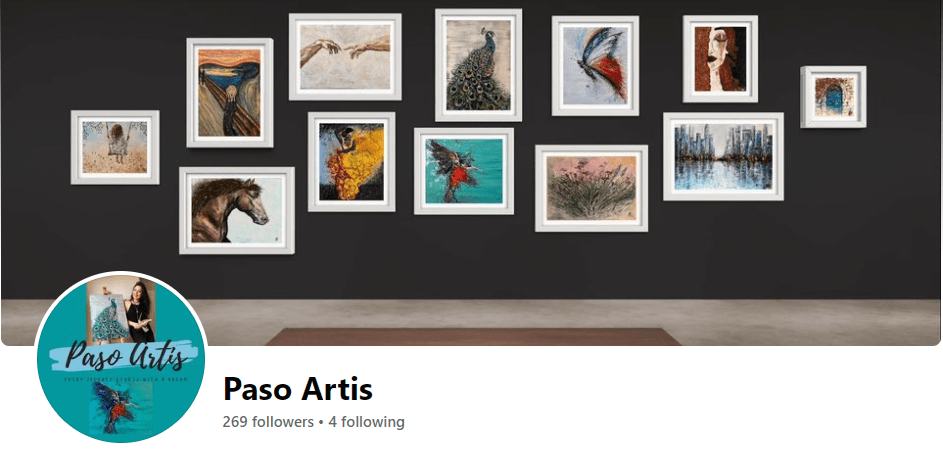
One such person is the artist behind Paso Artis.

Now I don’t know Paso Artis’ personal archetypes, but I’d be willing to bet that her primary archetype isn’t Sage. The obvious guess for her primary archetype is “Creator.”

Get ready to celebrate the power of your creative brand archetype! Whether you resonate with being an Artist, musician, writer, dreamer, builder, or designer, your brand has the incredible ability to amaze and inspire others.

When customers encounter your creative brand, they can’t help but feel captivated. They look at your work and think, “I want to be able to do what they can.” Your brand ignites a spark of inspiration and ignites the imagination within those who connect with it.

One of your innate advantages as a creative brand is your boundless creativity and imagination. You possess the unique ability to see the world in a different light, to think outside the box, and to breathe life into your visions.

Kaye Putnam, from https://www.kayeputnam.com/brand-archetype-creator/

A few of you may recall that I initially thought that I was a “Creator,” until I realized that this archetype applies more to imagery rather than words. And not stick figures.

Despite our vast differences, Paso Artis and Bredemarket have one similarity.

  • We both work together with our clients to create a piece of content that satisfies the clients’ needs.
  • With Bredemarket, it’s a written piece of content.
  • With Paso Artis, it’s a custom painting.

But because Paso Artis is…well, an artist, she doesn’t use Sage-like words and tables and bullet points to describe her client collaboration process. The Paso Artis-developed (again, I don’t like the word “proprietary”) collaboration process is described much more…artistically.

As an artist, I do feel the responsibility and privilege of taking a vision and turning it into a painting that will hang on the wall for years and be seen every day and regarded with affection.

Don’t be scared of handing over your dream to me.

In order to achieve a happy outcome, you and I will work together.

From https://www.facebook.com/paso.artis/about_details

Note that Paso Artis uses some words that Bredemarket never uses, such as “affection” and “dream.” Now I might use “vision” and “scared” in the proper context, but most of my clients and prospects do not dream of having their customers regard their products and services, or their blog posts or white papers, with affection. Even the Bredemarket client who chose to “truly say thank you for putting these (proposal) templates together” didn’t get affectionate about them. I mean, I love Microsoft Word, but I don’t LOVE Microsoft Word.

So Bredemarket and Paso Artis use a different vocabulary. This happens to come back to another point that Putnam made, to speak the language of your clients.

If you only know Italian and your ideal clients are speaking French, you might get a few people that understand what you mean, but it’s not going to have the transformative effect that we’re looking for. You want to learn to be fluent. In the decision making language of your ideal clients.

Kaye Putnam, from the transcript to https://www.youtube.com/watch?v=jNGos1kVIdM

Marketers, imagine if you will a possible persona for a Paso Artis prospect.

By David Teniers the Younger – 1. Kunsthistorisches Museum Wien, Bilddatenbank.2. khm.at, Public Domain, https://commons.wikimedia.org/w/index.php?curid=659517

“Jay” is a homeowner who loves art and desires a particular type of painting for his home, but does not have the artistic talent to paint it himself. Ideally, the completed painting will be one that brings Jay delight when he sees it in his home, and will also delight his guests. But can he trust anyone to realize his dream?

So Paso Artis (who has years of marketing experience in her day job work) knows that she has to address Jay’s pain points. She first does this by addressing them in her “About” text (“Don’t be scared of handing over your dream to me”), but then addresses them more deeply during her consultation with Jay.

I have never performed a competitive analysis of artists who respond to commission requests, but I’d guess that some are better at collaborating with clients than others.

And the ones that collaborate well earn a positive reputation, which translates to increased revenue over those who don’t collaborate well.

How should YOU collaborate?

But of course Bredemarket doesn’t matter, and Paso Artis doesn’t matter. You matter.

When you collaborate with a partner, either one in which the partner provides a product or service to you, or you provide a product or service to the partner, make sure that both of you are on the same page (or easel) before launching into the work project.

And if you have a dream for a painting, contact Paso Artis via her Facebook page.

And if you want your blog posts, white papers, case studies, and other content to be regarded with affection (or something like that), contact Bredemarket.

Three Ways to Identify and Share Your Identity Firm’s Differentiators

(Part of the biometric product marketing expert series)

Are you an executive with a small or medium sized identity/biometrics firm?

If so, you want to share the story of your identity firm. But what are you going to say?

How will you figure out what makes your firm better than all the inferior identity firms that compete with you?

How will you get the word out about why your identity firm beats all the others?

Are you getting tired of my repeated questions?

Are you ready for the answers?

Your identity firm differs from all others

Over the last 29 years, I (John E. Bredehoft of Bredemarket) have worked for and with over a dozen identity firms, either as an employee or as a consultant.

You’d think that since I have worked for so many different identity firms, it’s an easy thing to start working with a new firm by simply slapping down the messaging that I’ve created for all the other identity firms.

Nothing could be further from the truth.

Designed by Freepik.

Every identity firm needs different messaging.

  • The messaging that I created in my various roles at IDEMIA and its corporate predecessors was dramatically different than the messaging I created as a Senior Product Marketing Manager at Incode Technologies, which was also very different from the messaging that I created for my previous Bredemarket clients.
  • IDEMIA benefits such as “servicing your needs anywhere in the world” and “applying our decades of identity experience to solve your problems” are not going to help with a U.S.-only firm that’s only a decade old.
  • Similarly, messaging for a company that develops its own facial recognition algorithms will necessarily differ from messaging for a company that chooses the best third-party facial recognition algorithms on the market.

So which messaging is right?

It depends on who is paying me.

How your differences affect your firm’s messaging

When creating messaging for your identity firm, one size does not fit all, for the reasons listed above.

The content of your messaging will differ, based upon your differentiators.

  • For example, if you were the U.S.-only firm established less than ten years ago, your messaging would emphasize the newness of your solution and approach, as opposed to the stodgy legacy companies that never updated their ideas.
  • And if your firm has certain types of end users, such as law enforcement users, your messaging would probably feature an abundance of U.S. flags.

In addition, the channels that you use for your messaging will differ.

Identity firms will not want to market on every single social media channel. They will only market on the channels where their most motivated buyers are present.

  • That may be your own website.
  • Or LinkedIn.
  • Or Facebook.
  • Or Twitter.
  • Or Instagram.
  • Or YouTube.
  • Or TikTok.
  • Or a private system only accessible to people with a Top Secret Clearance.
  • Or display advertisements located in airports.
From https://www.youtube.com/watch?v=H02iwWCrXew

It may be more than one of these channels, but it probably won’t be all of them.

But before you work on your content or channels, you need to know what to say, and how to communicate it.

How to know and communicate your differentiators

As we’ve noted, your firm is different than all others.

  • How do you know the differences?
  • How do you know what you want to talk about?
  • How do you know what you DON’T want to talk about?

Here are three methods to get you started on knowing and communicating your differentiators in your content.

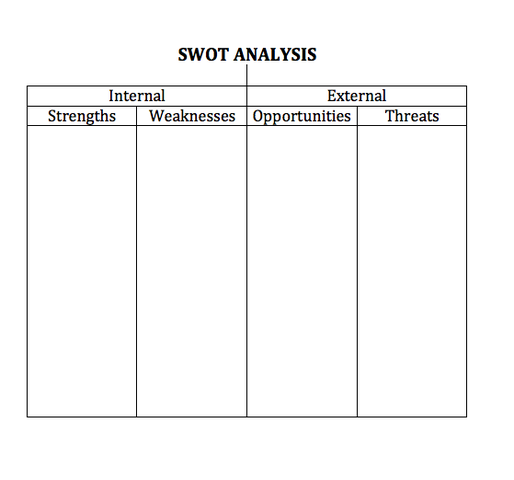
Method One: The time-tested SWOT analysis

If you talk to a marketer for more than two seconds about positioning a company, the marketer will probably throw the acronym “SWOT” back at you. I’ve mentioned the SWOT acronym before.

For those who don’t know the acronym, SWOT stands for

  • Strengths. These are internal attributes that benefit your firm. For example, your firm is winning a lot of business and growing in customer count and market share.
  • Weaknesses. These are also internal attributes, but in this case the attributes that detract from your firm. For example, you have very few customers.
  • Opportunities. These are external factors that enhance your firm. One example is a COVID or similar event that creates a surge in demand for contactless solutions.
  • Threats. The flip side is external factors that can harm your firm. One example is increasing privacy regulations that can slow or halt adoption of your product or service.

If you’re interested in more detail on the topic, there are a number of online sources that discuss SWOT analyses. Here’s TechTarget’s discussion of SWOT.

The common way to create the output from a SWOT analysis is to create four boxes and list each element (S, W, O, and T) within a box.

By Syassine – Own work, CC BY-SA 3.0, https://commons.wikimedia.org/w/index.php?curid=31368987

Once this is done, you’ll know that your messaging should emphasize the strengths and opportunities, and downplay or avoid the weaknesses and threats.

Or alternatively argue that the weaknesses and threats are really strengths and opportunities. (I’ve done this before.)

Method Two: Think before you create

Personally, I believe that a SWOT analysis is not enough. Before you use the SWOT findings to create content, there’s a little more work you have to do.

I recommend that before you create content, you should hold a kickoff of the content creation process and figure out what you want to do before you do it.

During that kickoff meeting, you should ask some questions to make sure you understand what needs to be done.

I’ve written about kickoffs and questions before, and I’m not going to repeat what I already said. If you want to know more:

Method Three: Send in the reinforcements

Now that you’ve locked down the messaging, it’s time to actually create the content that differentiates your identity firm from all the inferior identity firms in the market. While some companies can proceed right to content creation, others may run into one of two problems.

  • The identity firm doesn’t have any knowledgeable writers on staff. To create the content, you need people who understand the identity industry, and who know how to write. Some firms lack people with this knowledge and capability.
  • The identity firm has knowledgeable writers on staff, but they’re busy. Some companies have too many things to do at once, and any knowledgeable writers that are on staff may be unavailable due to other priorities.
Your current staff may have too much to do. By Backlit – Own work, CC BY-SA 3.0, https://commons.wikimedia.org/w/index.php?curid=12225421

This is where you supplement you identity firm’s existing staff with one or more knowledgeable writers who can work with you to create the content that leaves your inferior competitors in the dust.

What is next?

So do you need a knowledgeable biometric content marketing expert to create your content?

One who has been in the biometric industry for 29 years?

One who has been writing short and long form content for more than 29 years?

Are you getting tired of my repeated questions again?

Well then I’ll just tell you that Bredemarket is the answer to your identity/biometric content marketing needs.

Are you ready to take your identity firm to the next level with a compelling message that increases awareness, consideration, conversion, and long-term revenue? Let’s talk today!

Why Your Business Needs an Obsessive Content Marketer

Compulsions and obsessions can be bad things, or they can be good things if channeled correctly.

What if Bredemarket provided me an outlet to chnnel my compulsions and obsessions to help your business grow?

Compulsions and obsessions

I recently wrote a three-post series (first post in the series here) that frequently used the word “compulsion.”

I almost used the word “obsession” in conjunction with the word compulsion, but decided not to make light of a medical condition that truly debilitates some people.

I used the word compulsion to refer to two things about me:

Writing compulsion, or writing obsession. Designed by Freepik.

While compulsions and obsessions can certainly be bad things, when harnessed properly they can provide good for the world.

Like a butterfly.

Animotion on embracing an obsession

When people of a certain age hear the word “obsession,” they may think of the 1980s song by the band Animotion.

From https://www.youtube.com/watch?v=hIs5StN8J-0

Unfortunately for us, 90% of the song deals with the negative aspects of a person obsessing over another person. If you pick through the lyrics of the Animotion song “Obsession” and forget about what (or who) the singer is obsessing about, you can find isolated phrases that describe how an obsession can motivate you.

  • “I cannot sleep”
  • “Be still”
  • “I will not accept defeat”

But thankfully, there are more positive ways to embrace an obsession.

Justin Welsh on embracing an obsession

While Justin Welsh’s July 2022 post “TSS #028: Don’t Pick a Niche. Embrace an Obsession” is targeted for solopreneurs, it could just as easily apply to those who work for others. Regardless of your compensation structure, why do you choose to work where you do?

For Welsh, the practice of picking a niche risks commoditization.

They end up looking like, sounding like, and acting like all of their competition. The internet is full of copycats and duplicates.

From https://www.justinwelsh.me/blog/dont-pick-a-niche-embrace-an-obsession

(For example, I’d bet that all of the people who are picking a niche know better than to cite the Animotion song “Obsession” in a blog post promoting their business.)

Perhaps it’s semantics, but in Welsh’s way of thinking, embracing an obsession differs from picking a niche. To describe the power of embracing an obsession, Welsh references a tweet from Daniel Vassalo:

Find something you want to do really badly, and you won’t need any goals, habits, systems, discipline, rewards, or any other mental hacks. When the motivation is intrinsic, those things happen on their own.

From https://twitter.com/dvassallo/status/1547230105805754369

I trust you can see the difference between picking something you HAVE to do, versus obsessing over something you WANT to do.

What’s in it for you?

Welsh was addressing this post to me and people like me, and his message resonates with me.

But frankly, YOU don’t care about me and about whether I’m motivated. All that you care about is that YOU get YOUR content that you need from me.

So why should you care what Justin Welsh and Daniel Vassllo told me?

The obvious answer is that if you contract with Bredemarket for your marketing and writing services, you’ll get a “pry my keyboard out of my cold dead hands” person who WANTS to write your stuff, and doesn’t want to turn the writing process over to some two-year-old bot (except for very small little bits).

Regarding the use of two-year-old bots:

“Pry my keyboard,” indeed.

Do you need someone to obsess over YOUR content?

Of course, if you need someone to write YOUR stuff, then I won’t have time to work on a TikTok dance. This is a good thing for me, you, and the world.

As I’ve stated elsewhere, before I write a thing for a Bredemarket client, I make sure that I understand WHY you do what you do, and understand everything else that is relevant to the content that we create.

As I work on the content, you have opportunities to review it and provide your feedback. This ensures that both of us are happy with the final copy.

And that your end users become obsessed with YOU.

So if you need me to create content for you, please contact me.

Feel free to share YOUR favorite 1980s song if you like.

Even if it’s THIS song that your favorite temperamental writer detests.

From https://www.youtube.com/watch?v=aDgHXiWgKlE