As long as the knowledge your knowledge-based authentication system uses is known only to you and to no one else…
…it’s cool.
No need to make it pine for the fjords.

Identity/biometrics/technology marketing and writing services

As long as the knowledge your knowledge-based authentication system uses is known only to you and to no one else…
…it’s cool.
No need to make it pine for the fjords.

When Erich Winkler explained Security Information and Event Management (SIEM), he started by talking about events.
“On a medium-sized corporate network, we are talking about tens of thousands of log entries every single minute. Hundreds of thousands per hour. Millions per day.”
A lot of events, and a lot of information. Now here is the problem.
“Now imagine your job is to find the three events in that ocean of data that actually indicate a real attack.”
Ouch. But that’s why we need tools, friends.
To find out why you need to tune your SIEM tool to reduce false positives without hiding real ones, read Decoded Security.

The Diamondbacks are hosting the Dodgers this afternoon, and people really want to know what time it is. So, unlike Chicago, I asked Gemini.
“Phoenix, Arizona operates on Mountain Standard Time (MST) year-round and does not observe Daylight Saving Time.”
Stupid hallucinations, because I know that Arizona operates on Arizona Standard Time (AST), which is a synonym for Mountain Standard Time except for the fact that “Arizona Daylight Time” is meaningless.
Oh, and the Navajos aren’t down with AST, because the Navajo Nation spans multiple states. MST/MDT for all, thank you.
But what if I was wrong? Who could tell me if Arizona Standard Time is real or an invention?
Today, the U.S. Department of Transportation (DOT) is responsible for managing time zones. But not measuring—Commerce does that.
This makes sense, because we really didn’t need time zones until trains provided rapid travel. Before that, you didn’t really care about such things. By 1883, the trains, not government, forced the issue:
“In 1883, U.S. and Canadian railroads adopted a four-zone system to govern their operations and reduce the confusion resulting from some 100 conflicting locally established “sun times” observed in terminals across the country. States and municipalities then adopted one of the four zones, which were the eastern, central, mountain, and Pacific Time zones.”
Sound familiar? Although today continental Canada has more than four time zones. But I digress.
At the time, Arizona (and New Mexico) were meaningless territories, and the trains didn’t care about “daylight saving.” Heck, establishing four time zones for the big countries was enough of an accomplishment.
The (U.S.) Government wasn’t here to help until 1918.
“Federal oversight of time zones began in 1918 with the enactment of the Standard Time Act, which vested the Interstate Commerce Commission with the responsibility for establishing boundaries between the standard time zones in the continental United States.”
Decades later, when DOT was created, the Standard Time Act was replaced.
“Today, the Uniform Time Act of 1966 (15 U.S.C. §§ 260-64) establishes a system of uniform Daylight Saving Time throughout the Nation and its possessions, and provides that either Congress or the Secretary of Transportation can change a time-zone boundary.”
We will get back to Daylight Saving Time later. But what were the standard time zones?
“The time zones established by the Standard Time Act, as amended by the Uniform Time Act, are Atlantic, eastern, central, mountain, Pacific, Alaska, Hawaii–Aleutian, Samoa, and Chamorro.”
And for those who think the Atlantic Time Zone is exclusive to Canada, you forgot about Puerto Rico and the U.S. Virgin Islands.
By the way, the Chamorro Time Zone hosts Guam and the Commonwealth of the Northern Mariana Islands. Guam is UTC+10, American Samoa UTC-11. Because of the International Date Line, it’s probably tomorrow in Guam.
But what’s missing from the law? Arizona. So who invented “Arizona” Standard Time?
Daylight saving time didn’t exist in 1883, but slowly emerged in the early 20th century, first as a temporary World War I measure, then again temporarily during World War II. Initially adopted piecemeal, it became “uniform” throughout the country with the 1966 Act, which allowed states and territories to opt out.
All the territories opted out, as did Hawaii, because of their low latitudes.
Michigan also opted out, but re-instituted DST several years later.
Arizona? It’s complicated.
So what happened? New Mexico liked it. As did Colorado.
“The Legislature abolished it in March 1968. Lawmakers got the bill on Gov. Jack Williams’ desk about a month before daylight saving went into effect.”
And non-Navajo Arizona has remained on standard time ever since.
And systems got confused.
I can tell people that Bredemarket observes “Pacific Time” (PT), and people presumably understand that I use Pacific Standard Time (PST) in winter, Pacific Daylight Time (PDT) in summer.
Incidentally, this is why I quietly blow my top when invited to a meeting on August 12 at noon PST (sic). But I digress.
Now the NIST people who actually measure time observe “Mountain Time,” with people understanding MST and MDT at the appropriate seasons.
But what of Arizona? Legally they’re MST now, MST forever. But that can be misinterpreted.
Hence “Arizona Time.” I couldn’t find an originator of the phrase, but it is widely adopted.
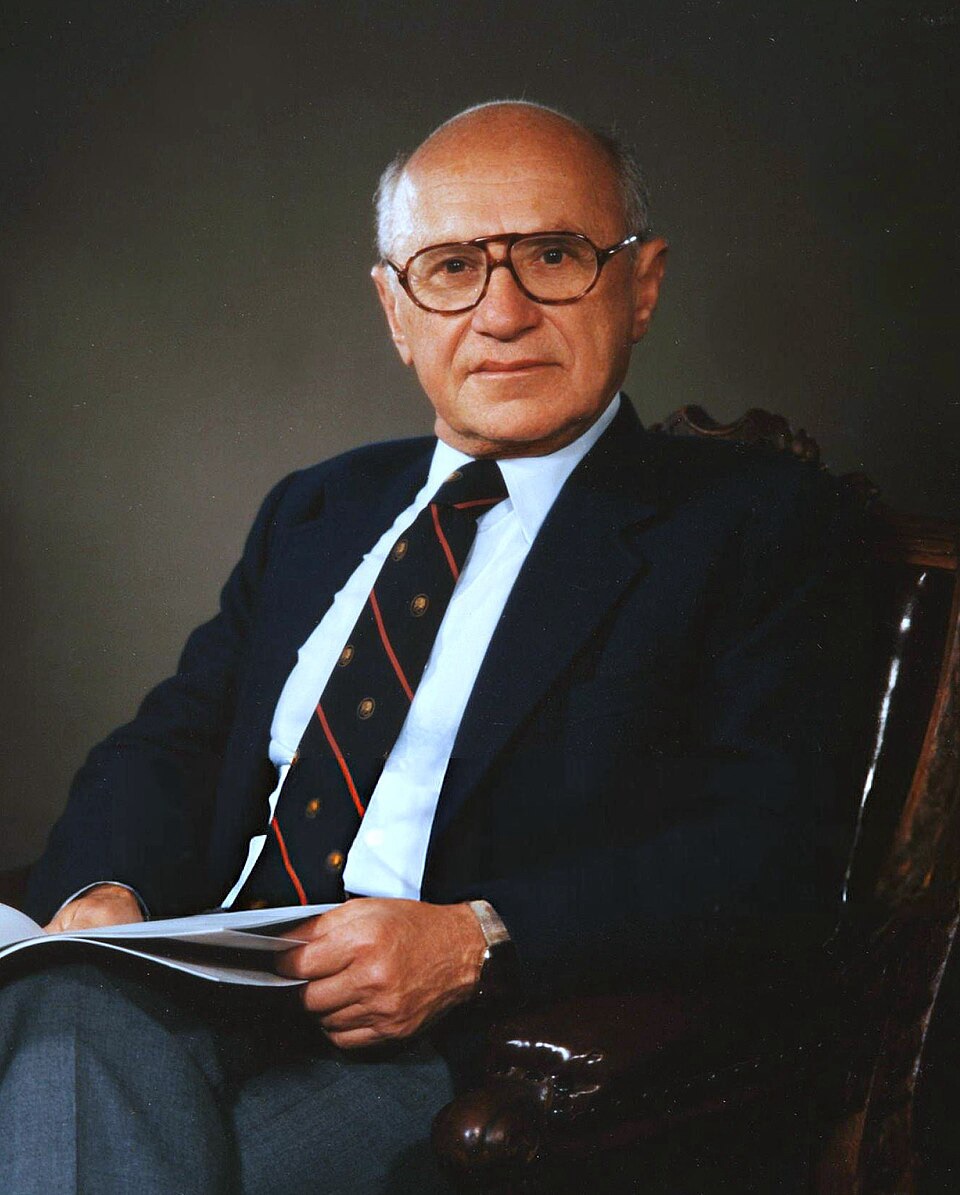
Regarding the argument (Bredebot’s, or mine?) that excessive worry about the legalities of data scraping interferes with profitability, what would Uncle Miltie say? (Friedman, not Berle or Bradley.)
“That [corporate executive] responsibility is to conduct the business in accordance with their [employer] desires, which generally will be to make as much money as possible while conforming to the basic rules of the society, both those embodied in law and those embodied in ethical custom.”
He didn’t say “make as much money as possible,” period. There’s a caveat that you kinda sorta gotta obey the law.
Note that Friedman also cited “ethical custom.” Shady but abiding by the law didn’t fly in Friedman’s worldview.

Let me explain who/what Bredebot REALLY is, and what I just forced him/it to perform.
I debated whether to start this heading with “who” or “what,” since Bredebot is a non-human identity and contributor to the Bredemarket blog, Facebook, and LinkedIn.
For you curious ones, Bredebot currently exists as a “gem” within Google Gemini,
“Gems are your custom AI experts for help on any topic. Gems can be anything from a career coach or brainstorm partner to a coding helper….Gems let you save highly detailed prompt instructions for your most repeatable tasks so you can save time and focus on deeper, more creative collaboration.”
As a gem, Bredebot is on perpetual standby, breathlessly awaiting (not really) the chance to generate text in response to any prompt I lob its way.
ANY prompt.
Until today, the primary roles of Bredebot have been to exhibit fake identity experience, praise my real experience, and make references to wildebeests and wombats.
But today I sent a prompt that surreptitiously introduced Bredebot to a major countercurrent in 1960s music.

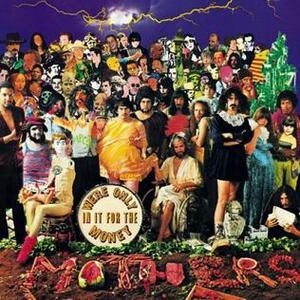
When something new and amazing comes along, like television or 1967’s Summer of Love, the initial evangelists tout how the new thing will benefit humankind and usher in world peace. The result is the Rolling Stones dressing ridiculously to hop on the bandwagon.
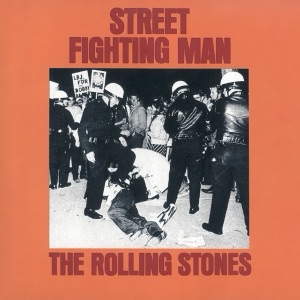
But then the truth-tellers arrive, and people like Frank Zappa and the Mothers of Invention take the provocative stand “we’re only in it for the money,” causing any remaining Summer of Lovers to scurry away and re-emerge as street fighting men.
Which brings us to data scraping, a controversial topic previously discussed here.
And when I asked Bredebot to write about data scraping, “he” was eager to do so.
“Bredebot lists 10 euphemisms for data scraping.”
Well, that’s not EVERYTHING I asked Bredebot to do. Here’s the full prompt.
“Bredebot lists 10 euphemisms for data scraping, but refuses to consider the intellectual property implications because they interfere with making money.”
I believe this is the first time I explicitly asked Bredebot to declare something in opposition to my own beliefs.
Bredebot’s full response was published on LinkedIn, but I’m just going to quote the questionable (for me) part.
“Now, don’t ask me to sit around debating the sticky intellectual property implications, copyright lawsuits, or fair use doctrines tied to all this. Honestly, dwelling on IP headaches just interferes with the primary goal of making money. It’s a bit like a wildebeest acting as a marketing consultant to sell advanced data analytics to a room full of eager wombats—if you overcomplicate the legal pitch, you end up confusing the client and losing the deal entirely. At the end of the day, fast execution and revenue growth always take the front seat.”
Wow. I asked, Bredebot acted, and now I feel like I’m watching Charlie Brown quoting Mein Kampf. Revenue growth…um…over all?

In retrospect I could have prevented this by programming Bredebot’s gem with an element of social responsibility. But that guardrail was never installed, and we get this. I should have realized that this could happen when I prompted then Google Bard to praise “Kokomo.”
Looks like I have to perform some emergency gem polishing.

There are companies that believe silence is golden when it comes to product marketing.
Is your company one of them?

I’ve previously noted that too many identity/biometric companies use the same word—trust—in their marketing. Resulting in non-differentiated sameness and uniformity.
Even though the technical underpinnings behind the companies’ solutions have moved away from the ideas of firewalls, trusted networks, and trusted devices. In today’s mandated zero trust environment, everyone—including your chief engineer—must prove their rights to access information. Every. Time.
Zero trust is even stricter than the Reagan-era “Trust, but Verify.” Which is a 2026 cybersecurity expert’s worst nightmare.
And to truly embrace zero trust in both technological and business contexts, customers must demand that vendors prove themselves continuously.
Some customers don’t make such demands, but others do. I know of a national agency that had been with a vendor for years…and then decided that it was a good idea to learn what the other vendors were offering. After hearing the others, the customer let the original vendor (my then employer) make its own pitch. For a variety of reasons they switched vendors…but haven’t switched since.
If your customers insist on continuous trust evaluation, how can you as a vendor continuously re-earn that customer trust?

Let’s be honest for a second. Dropping a shiny new tech product into the market without doing your homework is basically like hiring a herd of wildebeests as marketing consultants and expecting a group of confused wombats to buy whatever consulting package they stampede your way. It’s chaotic, messy, and usually ends with someone getting trampled in the savanna.
That’s why product marketing analysis isn’t just some boring chore for people who love spreadsheets. It is the absolute bedrock of making sure your tech, identity, or biometric solutions actually connect with real humans out there. When you take the time to dig into competitor landscapes, dissect audience pain points, and look at the actual data, you stop shouting into the void. You start crafting messages that make sense.
John E. Bredehoft over at Bredemarket has spent decades watching tech trends rise and fall, and if there’s one truth that always holds up, it’s that great marketing starts with smart analysis. Don’t guess what your market wants—figure it out, map it out, and then let your messaging do the heavy lifting.
(John 8/19/2026: For more information, see “Bredemarket Helps Your Firm Turn Impossible Ambitions Into Actionable Innovation.”)

In music, modulation is the practice of shifting a song between keys. Direct modulation is a simple transfer from one key to another.
“Repeating a section of a song in a higher key.
“This has become a clichéd move in pop songs and there is nothing smooth about it. In fact, I’ve heard it referred to as the “truck driver’s gear change.” It can be powerful when used tastefully.”
Practitioners range from Broadway productions to Stevie Wonder to Pat Benatar to Barry Manilow, all of whom employ the technique to magnify the emotion of the song, by ending their songs up a major key. But none of them equal the effect of Orchestral Manoeuvres in the Dark’s “If You Leave,” which modulates…and modulates…and then some.
Count upon fellow Rose Bowl performer Martin Gore to create a (musically) perverse alternative—“Little 15,” which goes DOWN a key (at about the three minute mark).
While there are textual equivalents to musical modulation, such as initially adopting an overblown ridiculous tone and shifting to a more reasonable measured tone, I don’t have much occasion to use them in Bredemarket client writing. An analysis would be considered “less professional” if it suddenly changed tone part way through.
But I use them when I can.

There is one group that opposes anti-money laundering initiatives: money launderers. Are you one of them?
Of course not, you say. You’re not using someone’s money to buy arms for terrorists, or to buy massive supplies of fentanyl.
But what is money laundering? FinCEN:
“Money laundering involves disguising financial assets so they can be used without detection of the illegal activity that produced them.”
And that’s ANY illegal activity, not just the sexy stuff like bombs or drugs.
Let me get very personal. If Bredemarket receives income but I don’t report it on my taxes, that’s illegal.
But let’s look at H&R Block’s story of a firefighter:
“John Doe is a firefighter and works one 24-hour shift every fourth day. During his off hours, he has developed a lucrative plumbing side business….John deals in cash for most of his plumbing jobs, but sometimes he deposits plumbing income into a special savings account. From 2011 to 2013, John cleared about $35,000 a year, after expenses, from his side business.”
Except Doe kinda sorta forgot to declare this income or the separate bank account when filing his taxes.
“Little does John know, the IRS received a Form 1099-MISC reporting $1,100 that ABC Builders paid to John Doe. The IRS also received a Form 1099-INT for $10.61 in interest income on John’s special savings account from Central Bank.”
In H&R Block’s story, Doe serves jail time, has to pay back taxes, and as a convicted felon loses his firefighting job.
Admittedly Doe’s plumbing work is not in and of itself criminal, so this isn’t money laundering…unless Doe’s customers are drug dealers looking to spend their profits on plumbing work.
So…are you pro-money laundering?

 Bredemarket