
Why Do We Have Electronic Health Records?

I’ve discussed the electronic health record (EHR) before, and plan to do so again. But before I dive into EHRs and “the A word,” I want to take a look at WHY we have EHRs.

When dinosaurs roamed the earth

In the old days, even within the lifetimes of some of us, there were no ELECTRONIC health records. There were PAPER health records, stored in large file cabinets. If you were lucky, the health records were typed; heaven help you if they were in a doctor’s famously illegible handwriting.

When a relative’s doctor retired in the 20th century, the relative requested their health records and received a huge pile of paper dating back to who knows when. In that form, it was about as useful as the huge file cabinets in which the U.S. Federal Bureau of Investigation used to store its millions of fingerprint cards. And unfortunately, paper health records didn’t have the health equivalent of a “Henry system” to find individual records quickly.

The two purposes of an electronic health record

So now that we have electronic health records, why do we have them?

  • To make life easier for the doctor? Of course not.
  • To make life easier for the patient? Definitely not.

Electronic health records have evolved to serve two OTHER parties.

First, electronic health records serve the billers

I can’t speak to countries other than my own, but in the United States the health “system” is a mishmash of multiple parties. For example, when I had a colonoscopy a few years ago, the following entities were somehow involved:

  • The doctor who performed the colonoscopy.
  • The facility where the doctor performed the colonoscopy.
  • The anaesthesiologist who assisted with the colonoscopy.
  • My insurance company.
  • My former company (via COBRA) who provided me with the insurance.
  • And probably a half dozen other entities that I missed who somehow got a cut.

So this one procedure created one, or perhaps multiple, electronic health records (perhaps even with pictures) describing every chargeable thing that could be itemized during my time in the facility. All with the proper billing codes (Current Procedural Terminology or CPT codes) and the like, so that every entity can pay what they’re supposed to pay. And if a particular thing wasn’t covered by insurance, then I had to pay it.
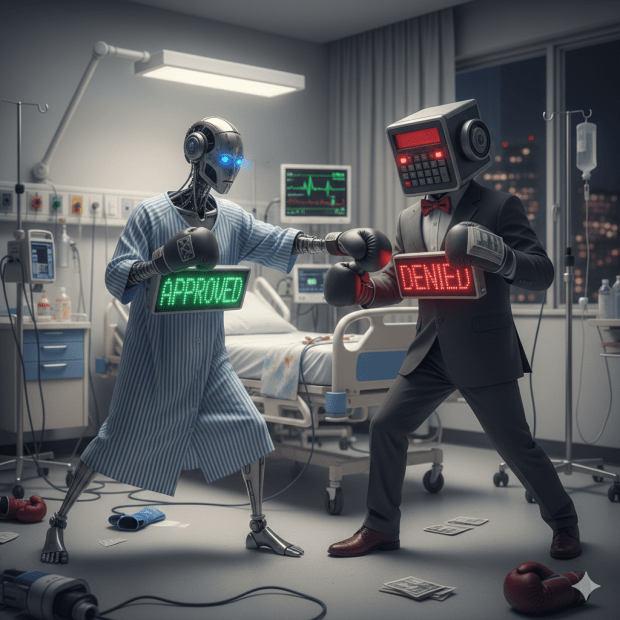
Google Gemini.

The most important thing is to get the billing codes right…never mind how hard it is to ENTER all the billing codes.

But the good news is that when electronic health records systems integrate with medical billing systems, the process is kinda sorta streamlined:

“By integrating EHR and billing software, healthcare providers can automate various aspects of the billing workflow, resulting in increased efficiency, reduced manual work, and other tangible benefits.”

Second, electronic health records serve the lawyers and regulators

But it’s not only the billers who need information.

To practice medicine in the State of California, you have to perform a colonoscopy in accordance with medically approved procedures. And you have to document that you did so.

If I had died on the operating table during my colonoscopy, then a number of private and government entities would have a keen interest in what was performed during the colonoscopy. And the electronic health record would be one of the main sources of information about what happened, and perhaps what went wrong. And who was responsible. The doctor? The facility? The anaesthesiologist? Someone else?

But even when things don’t go spectacularly wrong, there are laws and regulations that mandate EHR use.

“The “EHR mandate” refers to the federal requirement for eligible healthcare providers to adopt and use certified EHR technology. Primarily affecting providers who accept Medicare, participation in MIPS and the Promoting Interoperability program requires CEHRT to avoid negative payment adjustments, which effectively necessitates EHR use.”

The result

So now the medical field has these wonderful EHRs that comply with billing requirements and legal requirements.

But are they easy to use? Forbes covered this.

“For instance, emergency medicine physicians at one health system must click 14 times to order Tylenol—that’s a lot. Yet, those at another health system using the same EHR must click 61 times!”

And that’s just for Tylenol. I’m sure it’s a lot worse for the camera that looked at my colon.

It could have been worse, because many Americans are not healthy.

“[O]ur patients have increasingly complex health needs. More than 40% of American adults have at least two chronic conditions, one-third take at least three medications, and one-fifth suffer from mental illness.”

Put these and other things together, and EHRs have become (as I said before) “a pain in a particular body part.”

Google Gemini.

So that’s the problem with EHRs. Later I’ll look at the solutions, including:

More On AI-Powered Electronic Health Records

(Imagen 4)

My prior post may have given the false impression that Tebra is the only company that employs artificial intelligence to improve the speed and accuracy of electronic health records (EHRs) and electronic medical records (EMRs).

There are actually several companies using AI or other technologies to improve EHR and EMR completion. Here’s a (woefully incomplete) list. Many of these companies also handle other practice management functions required by a medical practice, including intake, telehealth, and payments.

In addition, the really big bunch (Google, IBM, Microsoft, Oracle) all play in the space.

Who did I miss?

Oh, and if any of these companies need a product marketing consultant (or employee) to get the message out about your product, talk to me.

Increasing Speed and Accuracy of Electronic Health Record (EHR) Note Taking

(Imagen 4)

Electronic health records (EHRs) can be a pain in a particular body part. But Tebra and other firms offer ways to automate portions of the record keeping process. And if these automations work, they also increase EHR accuracy.

I’ve previously talked about how an EHR can incorporate a patient identifier, derived from the facial recognition of the patient. This prevents misidentification, which can cause severe problems if the EHR data is applied to the wrong patient.

But how do you populate the rest of the EHR?

According to Tebra, with EHR+.

“Tebra’s EHR+ platform connects care, billing, scheduling, and more. Built-in AI speeds up notes, handles reviews, and automates repetitive admin work.”

Tebra’s AI Note Assist claims to “[t]urn spoken or written words into structured notes,” presumably using natural language processing (NLP) and machine learning specifically trained on medical record keeping.

But always remember to comply with health, privacy, and other relevant laws.

“Before using AI-powered scribe tools, review applicable laws and regulations in your practice’s jurisdiction regarding electronic recordings, AI scribes, and informed consent. Some jurisdictions require verbal or written consent prior to any form of ambient documentation. Check your state board or consult legal counsel for guidance.”

And watch the video.

But Tebra and its competitors face a problem: you can only scream “AI” for so long before your prospects ask, “So what?” 

Bredemarket can create written content for tech marketers that attracts prospects.

Contact Bredemarket.

Content for tech marketers.

Hospital Patient Facial Recognition

(Hospitalized wildebeest facial recognition image from Google Gemini)

It’s no secret that I detest the practice of identifying a patient by their name and birthdate. A fraudster can easily acquire this knowledge and impersonate a patient.

The people that I hang around with promote biometrics as a better solution to authentication of a hospital patient whose identity was previously verified. Of course, this crowd promotes biometrics as the solution to EVERYTHING. My former Motorola coworker Edward Chen has established a company called Biometrics4ALL.

But the need to identify patients is real. Are you about to remove Jane’s appendix? You’d better make sure that’s Jane on the operating table. And yes, that mistake has happened. (The hospital was very sorry.)

Of the various biometric modalities, face seems the most promising for the health use case, particularly for hospital patients.

  • Fingerprints require you or a medical professional to move your finger(s) to a contact or contactless reader. 
  • Hand geometry is even more difficult.
  • For iris or retinal scans, your eyes have to be open.
  • For voice, you have to be awake. And coherent—I’m not sure if a person can be identified by a moan of pain.
  • DNA takes at least 90 minutes.
  • Gait? Um…no.

Unlike the other modalities, the patient doesn’t have to do anything for facial recognition. Even if asleep or sedated, a medical professional can capture an image of a patient’s face. There are some accuracy considerations; I don’t know how well the algorithms work with closed eyes or a wide open mouth. But it looks promising.

Imprivata agrees that facial recognition is a valuable patient identification method.

“By capturing and analyzing unique facial characteristics such as the distance between the eyes and the shape of the nose, this technology can generate a unique identifier for each patient. This identifier is then linked to the patient’s electronic health record (EHR), ensuring that medical staff access the correct records. This method significantly reduces the risk of misidentification and the occurrence of duplicate records, thereby enhancing patient safety.”

However, I can think of one instance in which patient facial recognition would be challenging.

Burn victims.

If the patient were enrolled before the injury, the combination of disfigurement and bandaging would limit the ability to compare the current face to the previously enrolled one.

But this can be overcome. After all, we figured out how to recognize the faces of people wearing masks.