Boots on the Ground, NOW

How many of you have used the phrase “boots on the ground“?

In the “war” against competitors, your company needs “boots on the ground”…especially for on-premise deployments.

I’ve known a couple of companies that didn’t realize that they lacked boots on the ground…and that they had no plan to get the boots on the ground that they definitely needed.

This doesn’t just affect a company’s products. It also affects a company’s content.

Company X brainstorms

Company X was a new software solutions provider that had an internal brainstorming channel, and one person made the following suggestion:

Why stop at providing software solutions to our customers? Why not provide complete solutions with both software and hardware?

Now you NEVER want to totally shoot down a brainstorming idea, but it’s appropriate to consider the positives and negatives of any brainstorm. I won’t delve into ALL the negatives of shifting from a software solution to a software/hardware solution (profit margins, delivery times, etc.), but I will focus on one:

If you deploy integrated software and hardware solutions, you are responsible for MAINTAINING them.

What does this mean?

  • This means that you have to hire employees with hardware maintenance expertise, or you have to hire managers who can oversee subcontractors with hardware maintenance expertise.
  • For certain products (such as those Company X sold), customers demand fast response times. Maybe a 2-hour response. Maybe a 5-minute response.
  • Customers won’t wait a week for a maintenance technician to show up at their site. Broken hardware grinds business to a halt, and customer’s won’t tolerate that.
  • And they DEFINITELY won’t send the hardware off to a distant facility for repair.

As a pure software firm, Company X had few if any people qualified to perform the necessary maintenance activities.

But at least Company X had SOME people to consider these issues. Company Y wasn’t so fortunate.

Company Y sells

Company Y was also a software solutions provider. Company Y wanted to break into a particular industry in a particular country. I won’t reveal the industry, but I will reveal the target country: the United States.

Company Y developed and delivered a sales pitch that talked about the importance of the industry in question, and how the company could deliver a solution for that industry in the U.S.

But it glossed over one thing: Company Y had very few people in the U.S. at the time. Oh, they were working on hiring some more people in the United States, but at the time they didn’t have many.

And it was painfully obvious that Company Y’s U.S. presence was lacking. While talking about the expectations of different generations of people in the industry, the company rep referred to “Generation Zed.” For anyone listening to the sales pitch, that sent up an immediate red flag.

Now I’ll be the first to admit that American English may not be considered the most advanced English in the world. After all, we spell many words with an abundance of z’s…whoops, I mean an abundance of zeds.

If you’re going to do business in the United States, you have to speak our language. And we Americans will be criticised (with an s) when we don’t speak another country’s language.

So when do you buy boots?

If you need boots on the ground to fight your competitors, you have to…well, you have to obtain boots on the ground. But when?

  1. One option is to wait until you need them, and THEN buy the boots. Wait until someone actually buys your software/hardware solution, or wait until you actually have a U.S. contract in your industry. No need to spend money on resources if you never use them, and if you do need the resources later, they’ll be able to ramp up quickly…right?
  2. The other option is to take the risk and put the boots in your closet NOW, so that when a customer calls upon you to deliver, you don’t embarrass yourself. This financially costs your company, but you’ll be primed and prepared to move forward when the business does come.

So let’s talk about your content

You don’t only need boots on the ground to deploy your products. You need boots on the ground to create the content that will entice prospects to BUY those same products.

You’ve been meaning to create that content for a while, but just haven’t gotten around to it. After all, there’s a financial cost in hiring an employee or a contractor (like Bredemarket) to create the content, and there’s an opportunity cost in taking one of your existing employees and tasking them with content creation.

So you haven’t created the content you need for your business.

And you’re probably not going to create it next week either.

Or next month.

Or next year.

Unless you move forward NOW and bring in some boots on the ground, namely Bredemarket, to work with you and create the content you desperately need.

Are you ready to move forward, or are you going to stay in place?

Or retreat?

Pangiam May Be Acquired Next Year

Things change. Pangiam, a company that didn’t even exist a few years ago, and that started off by acquiring a one-off project from a local government agency, is now itself a friendly acquisition target (pending stockholder and regulatory approvals).

From MWAA to Pangiam

Back when I worked for IDEMIA and helped to market its border control solutions, one of our competitors for airport business was an airport itself—specifically, the Metropolitan Washington Airports Authority. Rather than buying a biometric exit solution from someone else, the MWAA developed its own, called veriScan.

2021 image from the former airportveriscan website.

After I left IDEMIA, the MWAA decided that it didn’t want to be in the software business any more, and sold veriScan to a new company, Pangiam. I posted about this decision and the new company in this blog.

ALEXANDRIA, Va., March 19, 2021 /PRNewswire/ — Pangiam, a technology-based security and travel services provider, announced today that it has acquired veriScan, an integrated biometric facial recognition system for airports and airlines, from the Metropolitan Washington Airports Authority (“Airports Authority”). Terms of the transaction were not disclosed.

From PR Newswire.

But Pangiam was just getting started.

Trueface, FRTE, stadiums, and artificial intelligence

Results for the NIST FRTE 1:N pangiam-000 algorithm, captured November 6, 2023 from NIST.

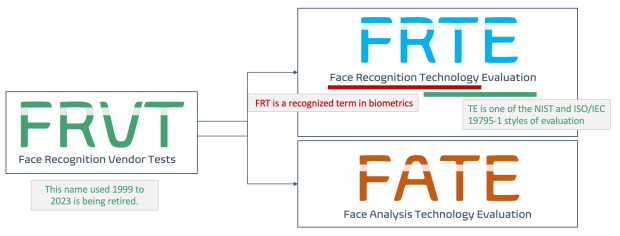
A few months later Pangiam acquired Trueface and therefore earned a spot on the NIST FRTE 1:N (formerly FRVT 1:N) rankings and an interest in the stadium/venue identity verification/authentication market.

By Chris6d – Own work, CC BY-SA 4.0, https://commons.wikimedia.org/w/index.php?curid=101751795

Meanwhile Pangiam continued to build up its airport business and also improved its core facial recognition technology.

After that I personally concentrated on other markets, and therefore missed the announcements of Pangiam Bridge (introducing artificial intelligence into Pangiam’s border crossing offering) and Project DARTMOUTH (devoted to using artificial intelligence and pattern analysis to airline baggage, cargo, and shipments).

So what will Pangiam work on next? Where will it expand? What will it acquire?

Nothing.

Enter BigBear.ai

Pangiam itself is now an acquisition target.

COLUMBIA, MD.— November 6, 2023 — BigBear.ai (NYSE: BBAI), a leading provider of AI-enabled business intelligence solutions, today announced a definitive merger agreement to acquire Pangiam Intermediate Holdings, LLC (Pangiam), a leader in Vision AI for the global trade, travel, and digital identity industries, for approximately $70 million in an all-stock transaction. The combined company will create one of the industry’s most comprehensive Vision AI portfolios, combining Pangiam’s facial recognition and advanced biometrics with BigBear.ai’s computer vision capabilities, positioning the company as a foundational leader in one of the fastest growing categories for the application of AI. The proposed acquisition is expected to close in the first quarter of 2024, subject to customary closing conditions, including approval by the holders of a majority of BigBear.ai’s outstanding common shares and receipt of regulatory approval.

From bigbear.ai.

Yet another example of how biometrics is now just a minor part of general artificial intelligence efforts. Identify a face or a grenade, it’s all the same.

Anyway, let’s check back in a few months. Because of the technology involved, this proposed acquisition will DEFINITELY merit government review.

Need Blog Help?

Need blog help?

Why should you work with Bredemarket to craft your customer-focused blog post about your product or service?

  • Bredemarket asks the right questions so your content doesn’t miss your goals.
  • Bredemarket collaborates with you so your blog post doesn’t include the wrong message.
  • Bredemarket fills your content marketing gap so your prospects don’t go elsewhere.

Get started today at https://bredemarket.com/contact/.

Kelly Shepherd, #fakefakefake

My belief that everything on the Internet is true has been irrevocably shattered, all because of what an entertainment executive ordered in his spare time. But the Casey Bloys / “Kelly Shepherd” story is just a tiny bit of what is going on with synthetic identities. And X isn’t the only platform plagued by them, as my LinkedIn experience attests.

By the way, this blog post contains pictures of a lot of people. Casey Bloys is real. Some of the others, not so much.

Blame COVID

Casey Bloys. Fair use. From https://wbd.com/leadership/casey-bloys/

Casey Bloys is the Chairman and CEO of HBO and Max Content. Bloys had to start a recent 2024 schedule presentation with an apology, according to Variety. After explaining how passionate he is about his programming, he went back in time a couple of years to a period that we all remember.

So when you think of that mindset, and then think of 2020 and 2021, I’m home, working from home and spending an unhealthy amount of scrolling through Twitter. And I come up with a very, very dumb idea to vent my frustration.

From Variety.

Casey Bloys’ very, very dumb idea

So why did Bloys have to apologize on Thursday? Because of an article that Rolling Stone published on Wednesday. The article led off with this juicy showbiz tidbit about Bloys’ idea for responding to a critic.

“Maybe a Twitter user should tweet that that’s a pretty blithe response to what soldiers legitimately go through on [the] battlefield,” he texted. “Do you have a secret handle? Couldn’t we say especially given that it’s D-Day to dismiss a soldier’s experience like that seems pretty disrespectful … this must be answered!”

From Rolling Stone.

(A note to my younger readers: Twitter used to be a popular social media service that no longer exists. It was replaced by X.)

Eventually Bloys found someone to create the “secret handle.” Sully Temori is now alleging wrongful termination by HBO (which is why we’re learning about these juicy tidbits, via court filings). But in 2021 he was an executive assistant who wanted to get ahead by pleasing his bosses.

This is where Kelly Shepherd enters the story.

Kelly Shepherd, fake vegan mom

Ms. Shepherd seems like a nice woman. A mom, a Texan, a herbalist and aromatherapist, and a vegan. (The cows love that last part.)

Most critically, Shepherd is a normal person, not one of those Hollywood showbiz folks. Although Shepherd, who never posted anything on her own, seems to have a distinct motivation to respond to critics of HBO shows. Take her first reply to a critic from (checks notes) Rolling Stone. (Two years later, Rolling Stone would gleefully report on this story. Watch out who you anger.)

alan is always predictably safe and scared in his opinions

From https://twitter.com/KellySh33889356/status/1379101699969720323

Kelly’s other three replies were along the same lines.

  • All were short one-sentence blurbs.
  • Most were completely in lower case, because that’s how regular non-Hollywood folk tweet.
  • All were critical of those who were critical of HBO, accusing them of “shitting on a show about women,” getting their “panties in a bunch,” and being “busy virtue signaling.”

Hey, if I couldn’t eat hamburgers and my home was filled with weird herbs and aromas, I’d be a little mad too.

And then, a little over a week later, it was over, and Kelly Shepherd never tweeted again. Although Temori apparently performed other activities against HBO critics via other methods. Well, until he was terminated.

Did Kelly Shepherd open a LinkedIn account?

But as part of the plan to satisfy Casey Bloys’ angry whims, Kelly Shepherd acquired a social media account, which she could use as a possible proof of identity.

Even though we now know she doesn’t exist.

But X isn’t the only platform plagued with synthetic identities, and some synthetic identities can do much more than anger an entertainment reviewer.

Many of us on LinkedIn are regularly receiving InMails and connection requests (in my case, from profiles with pictures of beautiful women) who say that we are constantly recommended by LinkedIn, who tell us how impressive our profiles are, and who want to contact us outside of the LinkedIn platform via text message or WhatsApp.

Now perhaps some of these messages are from real people, but I seriously doubt that so many of the employees at John Q Wine & Liquor Winery in New York happen to have the last name “Walter.” And the exact same job title.

Partial results from a LinkedIn search.

Let’s take a close look at what Karina has been doing for the last 4+ years. Other than posing in front of her car, of course.

Ms. Walter is a pretty busy freelance general manager / director / content partnerships manager.

As for her colleague Ms. Alice Walter, she has more experience (having started in 2018) but also has an extensive biography that begins:

The United States is a country with innovative challenges, and there is more room for development in the wine industry at John Q Wine & Liquor Winery. I am motivated and love to learn, and like to be exposed to more different cultures, and hope to develop more careers in my future life.

From https://www.linkedin.com/in/alice-walter-b97bb2113/

Sound familiar?

And you can check out Maria Walter’s profile if you’re so inclined. Or at least check out “her” picture.

Now none of the Walters women tried to contact me, but another “employee” (or maybe it was a “freelancer,” I forget) of this company tried to do so, which led my curious nature to discover yet another hive of fake LinkedIn profiles.

Sadly, one person from this company is a second-degree connection, which means that one of my connections accepted “her” connection request.

Synthetic identities are harmless…right?

Who knows what Karina, Alice, and Maria will do with their LinkedIn profiles?

  • Will they connect with other professionals?
  • Will they ask said professionals to move the conversation to SMS or WhatsApp, for whatever reason?
  • Will they apply for new jobs, using their impressive work history? A 98.8% customer satisfaction rate while managing 1,800 sub-partnerships is remarkable.
  • Will they apply for bank accounts…or loans?

The fraud possibilities from fake LinkedIn accounts are endless, and could be very costly for any company who falls for a fake synthetic identity. In fact, FiVerity reports that “in 2020, an estimated $20 billion was lost to SIF” (synthetic identity fraud). Which means that LinkedIn account holders and Partnerships Managers Karina, Alice, and Maria Walter could make a LOT of money.

Now banks and other financial institutions have safeguards to verify financial identities of people who open accounts and apply for loans, because fraud reduction is critically important to financial institutions.

Social media companies? Identity is only “important” to them.

They don’t even care about uniqueness (as Worldcoin does), evidenced by the fact that I have more than two X accounts (but none in which I portray a female Texas mom and vegan).

So if someone comes up to you on X or LinkedIn, remember that all may not be as it seems.

Buzzworthy Inbound Marketing For IE Firms

Plant sex. It’s difficult, because the stationary nature of flowers complicates sexual reproduction. But as you will see, the solution to the plant sex problem can also solve the marketing problem of your Inland Empire firm.

Stigma with pollen. By Thomas Bresson – Own work, CC BY 3.0, https://commons.wikimedia.org/w/index.php?curid=26008626

According to Let’s Talk Science:

Flowering plants reproduce sexually through a process called pollination. Flowers contain male sex organs called stamens and female sex organs called pistils. The anther is the part of the stamen that contains pollen. Pollen contains the male gametes. Pollen must be moved to a part of the pistil called the stigma for reproduction to take place. 

From Let’s Talk Science.

Because flowers cannot cross-pollinate by themselves, they need to attract bees (or other insects) to help. So the flowers just bat their little flower eyes, and the excited bees take the pollen from one flower’s anther to another flower’s stigma/pistil.

By The original uploader was Y6y6y6 at English Wikipedia. – Original image located at PDPhoto.org. Transferred from en.wikipedia to Commons by Drilnoth using CommonsHelper., Public Domain, https://commons.wikimedia.org/w/index.php?curid=7365698

Surprisingly, plant sex has EVERYTHING to do with your Inland Empire firm. Your firm is “a flower attracting bees.” So I’ll show you how your firm can attract the bees to spread your pollen and spawn results.

What is inbound marketing?

Now you don’t need to be like a flower and have an anther with pollen to attract prospects. The business equivalent of plant sex is inbound marketing. HubSpot defines inbound marketing as follows:

Creating tailored marketing experiences through valuable content is the core of an inbound marketing strategy that helps you drive customer engagement and growth.

From HubSpot.

Unlike outbound marketing in which your firm goes out and grabs the prospects (hopefully not literally) through trade shows or cold calling, in inbound marketing the prospects come to you. And because the prospects are in your invisible trust funnel, you don’t have to log them in your customer relationship management system or track them (and their precious metrics) in your traditional sales funnel.

Your traditional funnel where you know everything about your prospects. From Venn Marketing, “Awareness, Consideration, Conversion: A 4 Minute Intro To Marketing 101.” (Link)

Or your non-traditional sales funnel with a “messy middle.”

The “problem” for those who thrive on marketing analytics is that you don’t know who is in your trust funnel. I know from experience.

  • Most of Bredemarket’s work and most of my full-time employment positions came from people coming to me, rather than me soliciting people. They just popped up.
  • As I previously mentioned in my trust funnel post, Kasey Jones has acquired customers who have never engaged with her in the past, but who suddently expressed a desire to work with her. Again, they just popped up.

But if your business can get that trust funnel working, the revenue will come. Not immediately, and not when you expect it, but it will come.

How can your Inland Empire firm create your own trust funnel?

Inbound marketing can attract “trust funnel” prospects to your firm by creating content that speaks to their needs.

  • First, you need to create the content, or have someone create it for you. If you fail to create new content, your website and social channels will look stale, and prospects will wonder if your firm is still ongoing and viable.
  • Second, ensure your content meets your prospects’ needs by asking key questions about your planned content before you create it.
Here are seven questions you can ask before creating content. Read Bredemarket’s e-book “Seven Questions Your Content Creator Should Ask You” for more details.

And Bredemarket is ready to help your Inland Empire firm create that content and ask the necessary questions to drive results. Click the picture to learn more.

What is Your Tone of Voice?

We relate to firms as entities with personalities…and particular tones of voice. Could you imagine Procter & Gamble speaking in Apple’s tone of voice, or vice versa?

And one more thing…Charmin. Now in black.

(Thunderous applause and royal adoration with no indifference whatsoever.)

Designed by Freepik.

When you contract with a writer

Firms take care to speak in a particular tone of voice. Which means that the people writing their copy have to speak in that same tone of voice.

I have spent time thinking about Bredemarket’s own tone of voice, most recently when I delved into the “royalty” aspects of the Bredemarket family of archetypes. In that family “Sage” is most dominant, but there are also other elements.

Bredemarket’s top archetypes: sage, explorer, royalty, and entertainer.

In Bredemarket’s case, my sage/explorer/royalty/entertainer tone of voice is visible in Bredemarket’s writing. At least in Bredemarket’s SELF-promotional writing.

But MY tone of voice makes no difference to my clients, all of whom are focused on their OWN tones of voice. And Bredemarket has to adjust to EACH CLIENT’S tone of voice.

  • If I’m writing for a toilet paper manufacturer, I will NOT delve into details of how the product is used. Then again, maybe I will. Times have changed since Mr. Whipple.
  • If I’m writing for a cool consumer electronics firm, I definitely WILL delve into product use…if it’s cool.
  • If I’m writing for a technologist, I’m not going to throw a lot of music references into the technologist’s writing. I will emphasize the technologist’s expertise.
  • If I’m writing for a firm dedicated to advancement, I’m not going to throw ancient references into the firm’s writing. I will emphasize the newness of the firm’s approach, using the firm’s own key words.

My hope is that if you see two pieces of ghostwritten (work-for-hire) Bredemarket work for two different clients, you WON’T be able to tell that they were both written by me.

When your writer dons your mask

I’ve addressed the topic of adaptation before, where people don masks to portray characters that they are not.

By JamesHarrison – Own work, Public Domain, https://commons.wikimedia.org/w/index.php?curid=4873863

At the time I said the following:

So when Bredemarket or another content marketing expert starts to write something for you, should you fret and fuss over what your archetype is?

If you feel like it. But it’s not essential.

What is essential is that you have some concept of the tone of voice that you want to use in your communication.

From https://bredemarket.com/2022/10/30/donning-archetypes/

I then led into…well, something that is long outdated. But the gist of what I said at the time is that you need to determine what your firm’s tone of voice is, so that your writers can consistently write in that tone of voice.

Creating content with your tone of voice

So if Bredemarket works with you to create your content, how will I know your desired tone of voice? By one of two ways.

  1. You tell me.
  2. I ask you.
Bredemarket’s first seven questions, the October 30, 2023 version.

As we work through the seven questions that will shape your content, I ensure that I understand the tone of voice that you want to adopt in your content.

And with the review cycles interspersed through the content creation process, you can confirm that the tone is correct, and I can make adjustments as needed.

Unless you absolutely insist that I use a hackneyed phrase like “best of breed.” That requires a significant extra charge.

Do you want to drive content results in your own tone of voice with Bredemarket’s help?

Here’s how.

Brand Archetypes: I Am Royalty, But I Am Not Royalty

When I investigated Bredemarket’s archetypes back in 2021, the Kaye Putnam quiz that I took identified my primary archetype (sage) and three sub-archetypes (explorer, royalty, and entertainer).

Of my four top archetypes, the one that I haven’t really, um, explored is the “Royalty” brand archetype. This archetype was a surprise to me, and upon researching it further it fits me…and it doesn’t fit me.

I am Royalty

By United Kingdom Government – Illustrated magazine, 13 December 1952, p. 14. Copyright label: “CROWN COPYRIGHT RESERVED” (no other labels or attributions)., Public Domain, https://commons.wikimedia.org/w/index.php?curid=64590096

Using Kaye Putnam’s description of the Royalty brand archetype, I found some elements that spoke to me personally.

Whether you resonate with being a boss, aristocrat, king, queen, politician, or manager, your brand possesses the incredible power to evoke feelings of awe, admiration, and the promise of shared success in those who encounter it.

From https://www.kayeputnam.com/brand-archetype-royalty/

Let’s face it: I am the strong-willed person who self-brands as the temperamental writer, often moved to take charge of a situation, and frankly craving admiration and protesting indifference.

For example, for the last several weeks I’ve been tracking both impression and (more importantly) engagement statistics for my personal LinkedIn account and the Bredemarket website. What does engagement mean? In its most basic terms, it can be expressed as (in Sally Field’s words) “you like me.”

From https://www.youtube.com/watch?v=rl_NpdAy3WY

I am not Royalty

The “King” and the “Duke.” By Twain, Mark, 1835-1910 – Adventures of Huckleberry Finn.djvu, Public Domain, https://commons.wikimedia.org/w/index.php?curid=44881563

So those behaviors align with the Royalty archetype. But others do not.

Your brand exudes a sense of impeccable taste, inspiring others to aspire to your level of refinement.

From https://www.kayeputnam.com/brand-archetype-royalty/

I don’t think anyone would use the words “impeccable taste” and “level of refinement” to describe me. Even when I do wear a tie.

John E. Bredehoft at Bredemarket worldwide headquarters in Ontario, California, September 6, 2023.

So maybe I’m not elegant Royalty, just Royalty with an attitude.

Lorde, Reign O’er Me

Ever since I conceived the idea for this blog post, I wanted to work the Lorde song “Royals” into it if possible. But the song doesn’t really fit, since it’s really about established musical royalty who resist young upstarts like Lorde.

(Young but not young. Even a decade ago when the song was released, I was amused at the world-weariness expressed by a teenager. But I digress.)

And as Marc Bodnik notes, the song is contradictory:

The great irony of the lyrics is that “we’ll never be royals” but she keeps talking about becoming Queen and talks about “ruling.”…Will Lorde’s new rule be any better than the current regime? Who knows.

From https://www.huffpost.com/entry/what-does-the-song-royals_b_4310438

In an Abbott and Costello way, “Who” DID know.

The same lyricist who hoped to die before he got old (spoiler: he didn’t) subsequently wrote the lyric

Meet the new boss

Same as the old boss

From https://genius.com/The-who-wont-get-fooled-again-lyrics

Despite my employment background, I’m not a royal with revolutionary tendencies.

But I can don masks, which does matter.

To be continued…

Why is a Customer Focus Important?

From the Gary Fly / Brooks Group article “7 Tips for Implementing a Customer-Centric Strategy,” at https://brooksgroup.com/sales-training-blog/7-tips-implementing-customer-centric-strategy/

When a customer approaches your firm to do business, the top-of-mind concern of the customer is the customer’s own problem.

  • If you begin your conversation with the customer by discussing the customer’s problem (and, once you understand the problem, how you can solve it), you will build an immediate rapport with the customer. After all, you are addressing what is important to the customer.
  • If you instead begin your conversation with the customer by talking about yourself, the customer will not care. You are not addressing what is important to the customer.

If you would like to know more, see this curated collection of Bredemarket blog posts on the topic of customer focus.

Converting Prospects For Your Firm’s “Something You Are” Solution

As identity/biometric professionals well know, there are five authentication factors that you can use to gain access to a person’s account. (You can also use these factors for identity verification to establish the person’s account in the first place.)

I described one of these factors, “something you are,” in a 2021 post on the five authentication factors.

Something You Are. I’ve spent…a long time with this factor, since this is the factor that includes biometrics modalities (finger, face, iris, DNA, voice, vein, etc.). It also includes behavioral biometrics, provided that they are truly behavioral and relatively static.

From https://bredemarket.com/2021/03/02/the-five-authentication-factors/

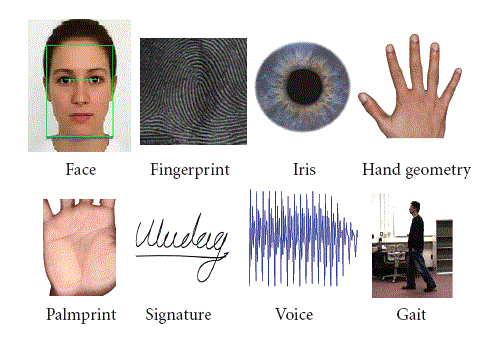
As I mentioned in August, there are a number of biometric modalities, including face, fingerprint, iris, hand geometry, palm print, signature, voice, gait, and many more.

From Sandeep Kumar, A. Sony, Rahul Hooda, Yashpal Singh, in Journal of Advances and Scholarly Researches in Allied Education | Multidisciplinary Academic Research, “Multimodal Biometric Authentication System for Automatic Certificate Generation.”

If your firm offers an identity solution that partially depends upon “something you are,” then you need to create content (blog, case study, social media, white paper, etc.) that converts prospects for your identity/biometric product/service and drives content results.

Bredemarket can help.

Click below for details.

Measuring Goals: What Cathy Camera Says

I am repurposing my recent e-book “Seven Questions Your Content Creator Should Ask You” as a post series on the Bredemarket Instagram account. I am doing this because series are cool and stuff. Whether or not my readers are anticipating each new post in the series is up for debate. Maybe all of them have read the e-book already. (Or maybe not.)

Monday’s Instagram post on the goal of your content

Anyway, on Monday I got to the fifth post in the Instagram series. Here’s what the post image looks like. (The Yogi Berra-themed image is timely with baseball’s World Series going on right now, even though the Yankees are nowhere near it.)

And here’s the text that accompanied the Instagram post:

The fourth of the seven questions your content creator should ask you is Goal?
It’s important that you set a goal.
Maybe awareness. Maybe consideration. Maybe conversion. Maybe something else.
As Yogi Berra reportedly said, “if you don’t know where you are going, you might end up someplace else.” And that “someplace else” might not be where you want to be.
#bredemarket7questions #contentmarketing #contentmarketingexpert #goal #goals

From https://www.instagram.com/p/CzB2biBr27o/

Cathy Camera’s LinkedIn comment

Well, as long as I had created the post series for Instagram, I figured I’d share the same series on two other Bredemarket social channels, one of which was the Bredemarket LinkedIn page.

When I posted the image and accompanying text there, Cathy Camera commented.

Who is Cathy Camera, you may ask? Well, Camera is “The Construction Copywriter.”

You need to get ahead of your competitors. So you need your clients to understand you’re delivering reliable, high-quality services.

Having someone like me, with knowledge of and experience working with your industry, will help you achieve your goals more quickly without stress.

From https://cathycamera.com.au/

If you guessed that Camera has thoughts about goals, you’re right. Here’s the comment she added to my LinkedIn post:

Yes, there should always be a goal and if people can be more specific about objectives, they’ll at least be able to measure their results.

From https://www.linkedin.com/posts/bredemarket_bredemarket7questions-contentmarketing-contentmarketingexpert-activity-7124787047231283200-G5Xn/

Cathy Camera highlighted something that I didn’t.

  • The goal you set isn’t only important when you have to create the content.
  • The goal you set is also important after you publish the content and you need to determine if the content did its job.

Being SMART in your goals

Note Camera’s comment about being “more specific about objectives.”

Ideally your goal for your content (or for anything) should be a SMART goal, where SMART stands for Specific, Measurable, Attainable, Relevant, and Time-Bound.

  • For example, a goal to enable Bredemarket to make US$10,000,000 (or A$10,000,000) from a single blog post is not an attainable goal.
  • But a goal to have blog post readers engage a certain number of times is certainly a relevant goal.

So it looks like my “set a goal” advice for your content could be a lot more…um…specific.

I’m not going to revise the e-book (again), but I did revise my form.