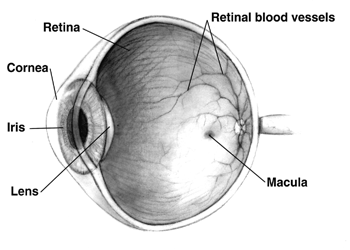
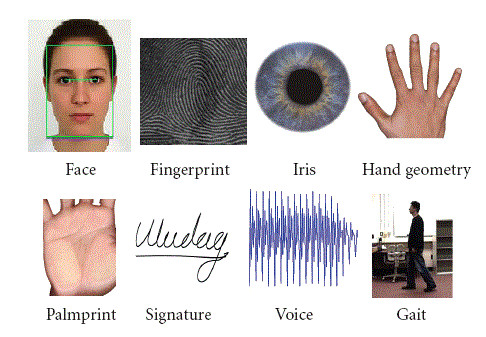
Second, while the iris can be used for biometric identification, so can the retina. People are identified by their blood vessels in their eyes. But there are complications, according to the Biometrics Institute:
“Retina recognition is one of the most accurate biometric applications but a number of common eye conditions and diseases (for example, cataracts, diabetes, glaucoma) can affect the arrangement of the blood vessels and consequently alter the pattern used for biometric recognition.”
If you’re an identity/biometric marketing leader who requires content, proposal, and analysis expertise from a biometric product marketing expert, make sure you read the following:
I’m putting myself in the shoes of someone reading stuff on LinkedIn or Facebook.
At one point, the reader may encounter a reference to “Bredemarket.”
At another point, the reader may encounter a reference to “Bredemarket Identity Firm Services.”
Are “Bredemarket” and “Bredemarket Identity Firm Services” two separate entities?
No.
They overlap.
“Bredemarket” is my actual company that provides marketing and writing services (content, proposals, analysis) to identity, biometric, technology, and general business firms in California’s Inland Empire and throughout the United States.
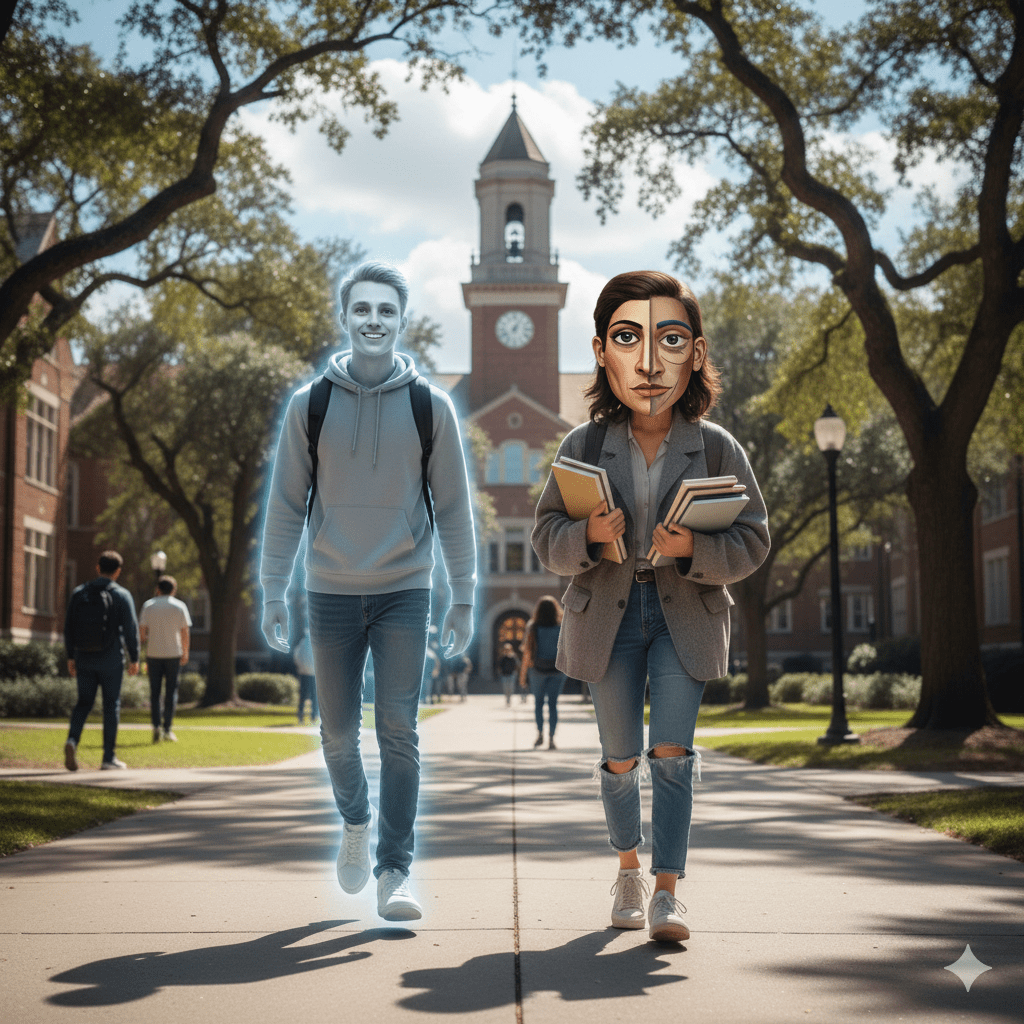
“Higher education institutions are increasingly targeted by identity fraud schemes, including “ghost students,” synthetic identities, and financial aid fraud. At the same time, universities must support digital access for students, alumni, faculty, and staff across fragmented IAM environments that span legacy systems, modern cloud platforms, and third-party services.”
Let’s look at the what.
Verify student, alumni, and staff identities using high-assurance proofing and biometric verification
Reduce financial aid and enrollment fraud caused by synthetic or stolen identities
Strengthen assurance across fragmented IAM environments spanning legacy and modern systems
Enable strong, passwordless authentication based on verified digital identity that is reusable and persists across enrollment, academic access, and alumni engagement
If your company provides educational identity solutions, and your message isn’t getting out to your prospects, perhaps you need to talk to the biometric product marketing expert, Bredemarket.
Identity/biometric marketing leaders have a lot on their hands, and the last thing they need is more work. Even if you outsource your product marketing, you must manage the resources.
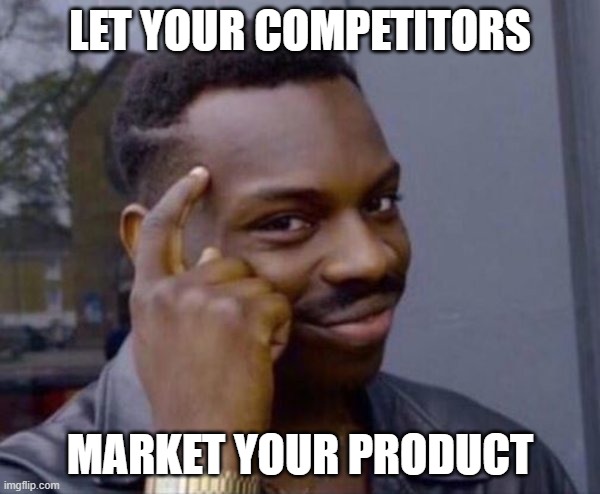
Rather than do this yourself, why not let your competitors do it?
Imgflip.
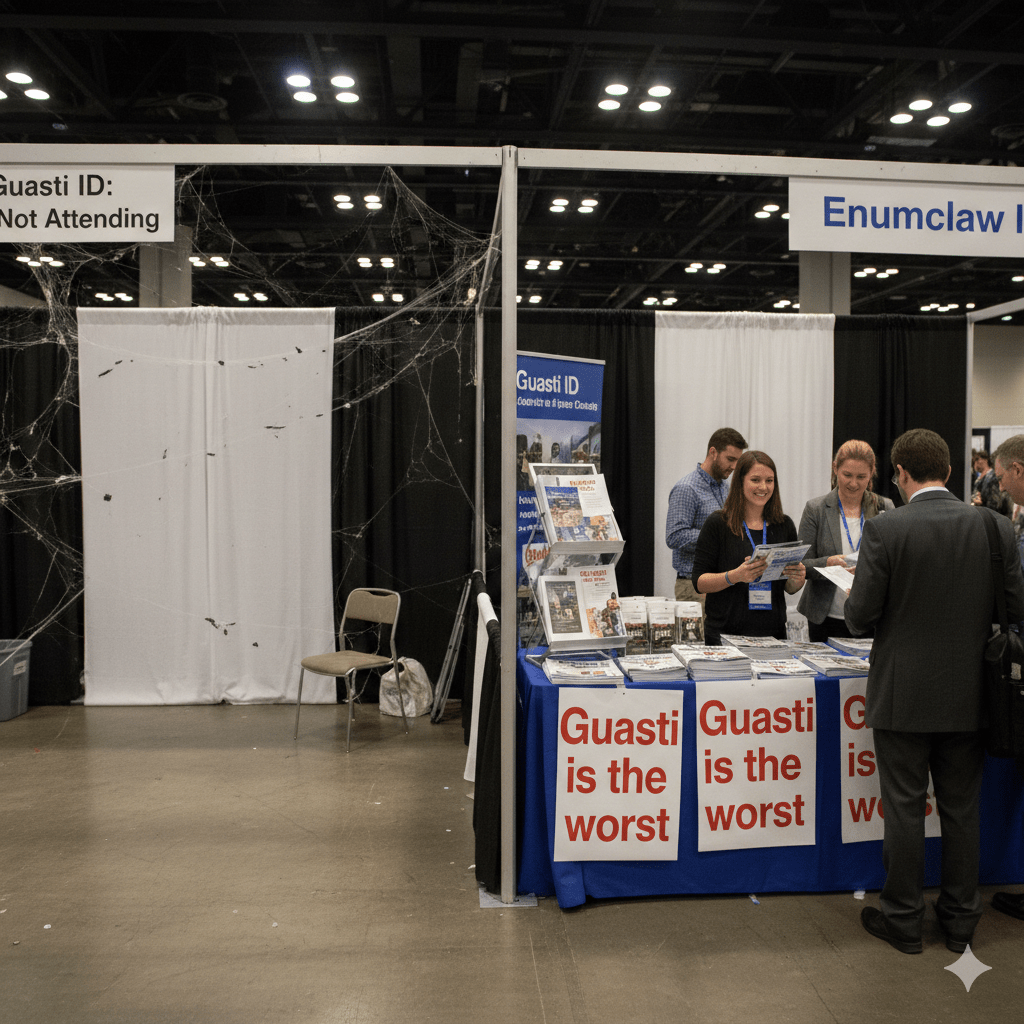
If your competitors market your identity/biometric product…
One: You save money. Why spend hundreds or thousands of dollars on go-to-market or sales enablement materials? Let your competitors incur those costs.
Two: You save time. The best product marketing initiatives occur in a joint process between the marketing leader and the product marketing consultant. But this requires commitment on your part: in initial project definition, draft review, and final publication.
Three: You save trouble. If your product marketing content has an effective call to action, there is the danger that a prospect may act on it, creating more work for your sales organization.
You can save money, time, and trouble by your silence. Let your competitors bear the burden of defining your product to your prospects. They will be more than happy to do so.
In fact, you should strongly encourage your competitors to contact Bredemarket about their identity/biometric product marketing needs. Bredemarket will make your competitors spend money and stay busy during and after content creation.
Here’s a quote from Runar Bjorhovde, senior analyst for smartphones and connected devices at Omdia.
“I think the biggest step many biometrics players can take to prove their importance is within marketing — in addition to maintaining their current innovation. Actually explaining why these sensors are so important and what they enable can massively help to simplify them to users, consequently making the value easier to understand.”
With all the news about Amazon Fresh closing and more Amazon layoffs taking place, I missed a bit of news about the Amazon One palm-vein technology. But first a bit of history.
“While the idea of contactlessly scanning your palm print to pay for goods during a pandemic might seem like a novel idea, it’s one to be met with caution and skepticism given Amazon’s past efforts in developing biometric technology. Amazon’s controversial facial recognition technology, which it historically sold to police and law enforcement, was the subject of lawsuits that allege the company violated state laws that bar the use of personal biometric data without permission.”
Yes, Amazon was regarded as part of the evil fascist regime even when Donald Trump WASN’T in office.
Amazon One in 2025
Enrolling.
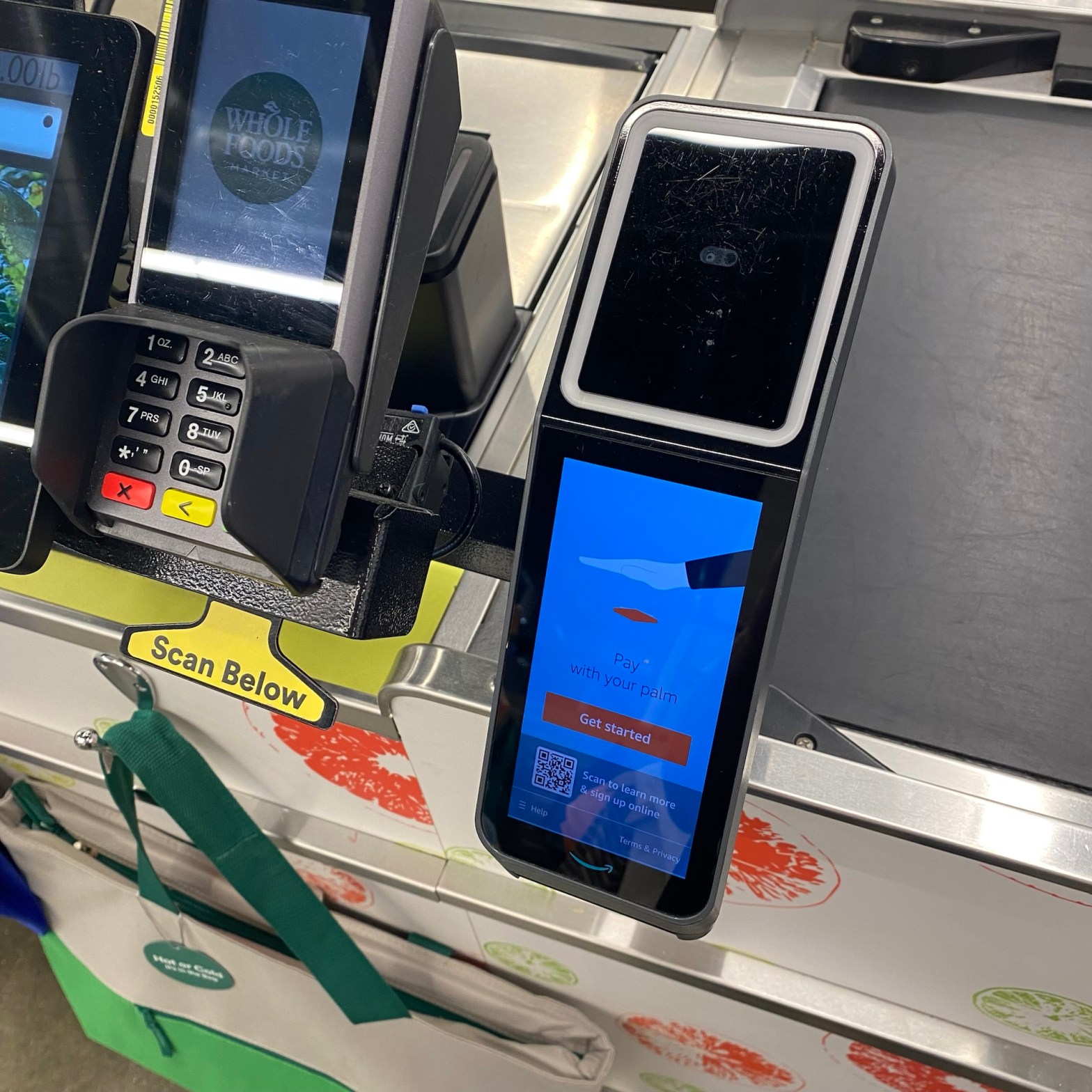
Which brings us to 2025, when Trump had returned to office and I enrolled in Amazon One myself to better buy things at the Upland, California Amazon Fresh. But the line was too long so I went to Whole Foods, where my palm and vein may or may not have worked.
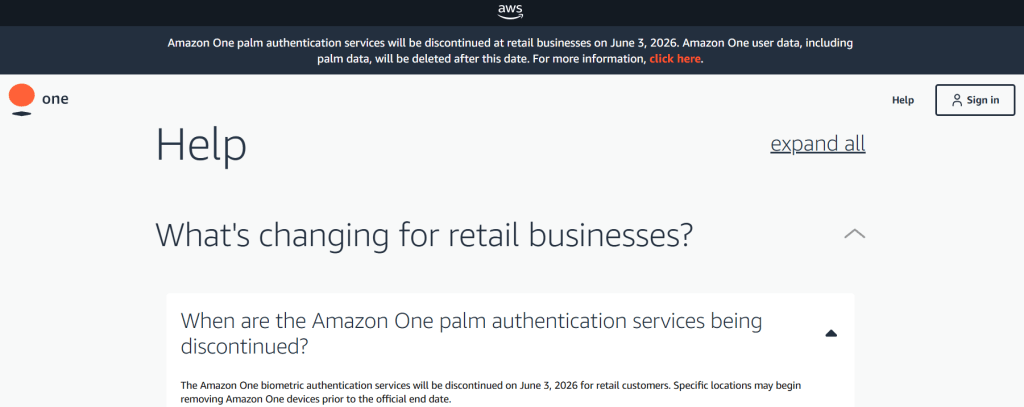
“Amazon One palm authentication services will be discontinued at retail businesses on June 3, 2026. Amazon One user data, including palm data, will be deleted after this date.”
Of course, in Amazon’s case, “limited” may merely mean that billions and billions of people didn’t sign up, so it jettisoned the technology in the same way it jettisoned dozens of stores and thousands of employees.
The June date may or may not apply to healthcare, but who knows how long that will last.
So what now?
In my 2021 post I mentioned three other systems that used biometrics for purchases.
There was the notorious Pay By Touch (not notorious because of its technology, but the way the business was run).
“But the most common example that everyone uses is Apple Pay, Google Pay, Samsung Pay, or whatever ‘pay’ system is supported on your smartphone. Again, you don’t have to pull out a credit card or ID card. You just have to look at your phone or swipe your finger on the phone, and payment happens.”
And they’re so entrenched that even Amazon can’t beat them.
Or as I said after the latest round of Amazon layoffs:
“This, combined with its rebranding or closure of all Amazon Fresh stores, clearly indicates that Amazon is in deep financial trouble.
“Bezos did say that Amazon would fail some day, but I didn’t expect the company to fall apart this quickly.”








 Bredemarket