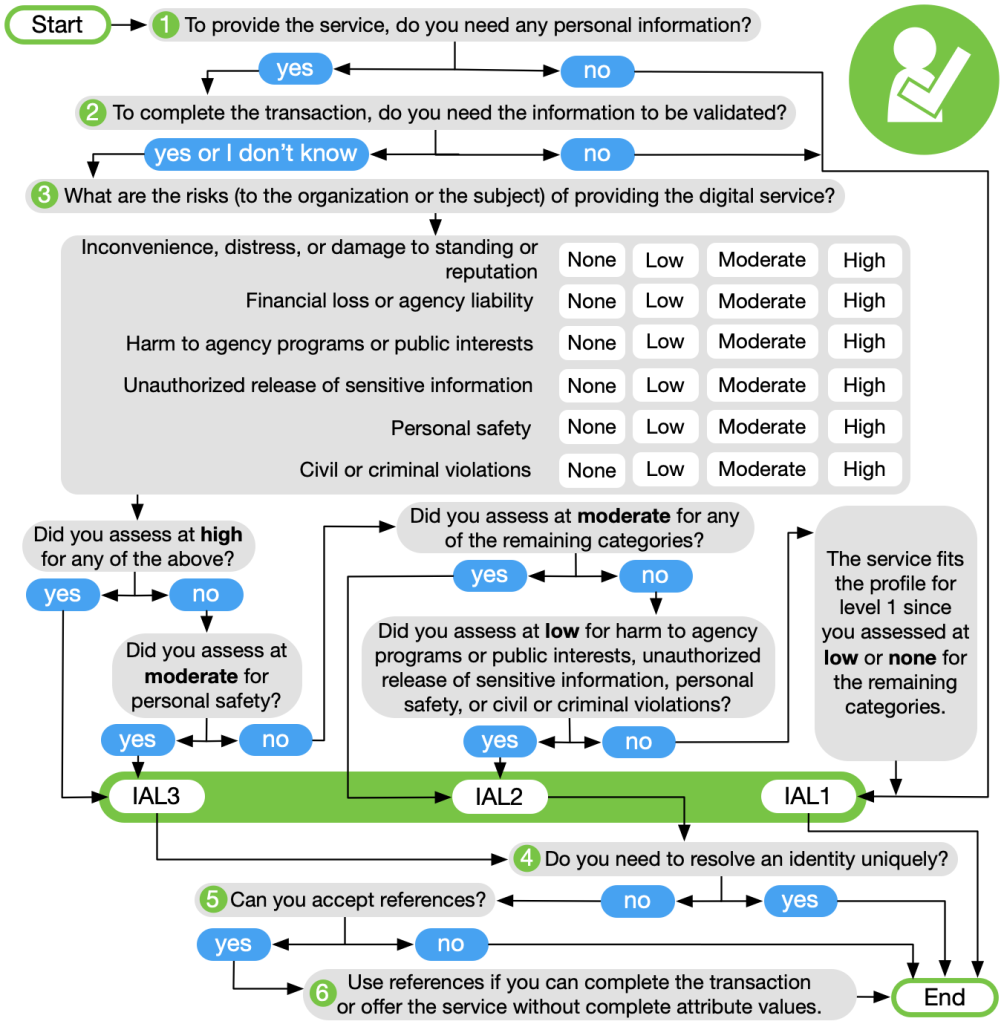
I want you to question my Frequently Asked Questions

During the lunch hour of Thursday, March 17, AmPac Business Capital hosted a webinar to help small businesses make the most of Google features. (Note: if you missed this one-hour session, there will be a four-week session offered in May.)

Today’s session was led by Israel Serna, a speaker and trainer for Grow with Google. Serna offered a number of tips to attendees, some of which I had already implemented, and some of which I had not.

One that I hadn’t implemented was to create a Frequently Asked Questions (FAQ) page for Bredemarket. However, Serna pointed out that both potential customers and Google itself search for FAQ pages as a quick way to answer questions. And others, such as StrategyBeam, agree with Serna on the importance of a FAQ page.

Before the AmPac Business Capital session, I had answers to questions on the Bredemarket website, but they were scattered all over the place. I decided that a FAQ page would offer a convenient one-stop shop for question answering.

So I created a FAQ page.

Image of the Bredemarket FAQ page as of March 17, 2022. https://bredemarket.com/faq/
From https://bredemarket.com/faq/ as of March 17, 2022.

Now when I created this page, I am absolutely certain that the FAQ page covers EVERY single question that a potential Bredemarket client would think to ask.

Picture of Ed McMahon
By photo by Alan Light, CC BY 2.0, https://commons.wikimedia.org/w/index.php?curid=3048124

Well, you know what Ed’s buddy Johnny would say to THAT assertion.

Picture of ohnny Carson
By Johnny_Carson_with_fan.jpg: Peter Martorano from Cleveland, Ohio, USAderivative work: TheCuriousGnome (talk) – Johnny_Carson_with_fan.jpg, CC BY 2.0, https://commons.wikimedia.org/w/index.php?curid=12750959

Seriously, I need YOUR help.

If you could take a look at the Bredemarket FAQ page at https://bredemarket.com/faq/, I would appreciate it.

Let me know if you like the answers to the questions that are asked.

Let me know if any questions are missing.

If anything is missing or needs to be improved, contact me. My contact information is in the FAQ. (Twice.)

Two POSSIBLE complications to a future Advent International sale of IDEMIA

(UPDATE: I have indicated portions of this post that include speculation from myself and others.)

When I wrote “About THAT Reuters article” (specifically, the February 4 article speculating about a possible sale of IDEMIA by Advent International to Thales Group), I noted that I have no expertise in predicting corporate acquisitions.

However, I’ve experienced three of them, including Motorola’s acquisition of Printrak in 2000, Safran’s acquisition of Motorola’s Biometric Business Unit in 2008-2009, and Advent International’s acquisition of Safran’s Morpho unit in 2016-2017 (and Advent’s merger of Oberthur and Morpho to form OT-Morpho, later IDEMIA).

None of these was a simple matter of the acquiring company and the acquired company approving the acquisition. It was more complicated than that.

From https://www.yourtango.com/201168184/facebook-relationship-status-what-does-its-complicated-mean

Motorola acquires Printrak

UPDATE 8/20/2025. I just had to disable browser notifications from two rogue sites. See bold paragraph below.

[UPDATE 8/20/2025: I have disabled the links below because the link now redirects to adware malware. Pity, because the original page was an excellent source of the negotiations between Printrak and Motorola.]

Even the most straightforward of the acquisitions that I experienced, the U.S. company Motorola’s acquisition of the U.S. company Printrak, required a number of government approvals.

Under the Hart-Scott-Rodino Antitrust Improvements Act of 1976, and the rules promulgated under the Hart-Scott-Rodino Act, Printrak, Acquisition Sub and Motorola cannot complete the Merger until they notify and furnish information regarding the acquisition of Printrak by Acquisition Sub to the Federal Trade Commission and the Antitrust Division of the U.S. Department of Justice and satisfy specified waiting period requirements. Printrak and Motorola (as the sole stockholder of Acquisition Sub) filed notification and report forms under the Hart-Scott-Rodino Act with the FTC and the Antitrust Division on September 26, 2000 and received early termination of the waiting period from the Federal Trade Commission effective October 11, 2000.

From [REDACTED]/Document/0000912057-00-045478/

And not just from the U.S. government.

In addition, Printrak and Motorola are required to furnish certain information and materials to the antitrust authorities of Argentina, Brazil, the Federal Republic of Germany, and Romania. Filings were made in Argentina on September 22, 2000, in Brazil on September 19, 2000 and in the Federal Republic of Germany on September 27, 2000. German antitrust authorities have one month after the parties file their application to review the transaction. During that one month period, they can either approve the transaction or initiate an examination of the transaction which could take an additional three months, during which time the parties cannot close the transaction. During this three month period, the antitrust authorities will either approve the transaction or prohibit it. Approval may be granted before the initial one month review or before the additional three month review period. If approved, the antitrust authorities can not later challenge the transaction under their merger law but could challenge the transaction under other provisions of their antitrust laws. Printrak and Motorola intend to make a post-closing filing in Romania as soon as practicable after the closing.

From [REDACTED]/Document/0000912057-00-045478/

Why did the Motorola acquisition of Printrak require all of those approvals? Because Printrak did business in these countries (and many others), and the governments of those particular countries wanted to exert control over who does business in their country. For example, Printrak was the automated fingerprint identification system (AFIS) supplier in Romania, and the government of Romania had a need to know what would happen if Motorola were to become the supplier of its AFIS. Would all of the fingerprints be replaced by batwings? Would the new owner require the Romanian employees to apply Six Sigma in their everyday lives? Would Romania have to use Iridium to communicate AFIS data?

Before Omnitrak, RAZR, and PEBL, there was Iridium. From https://www.logo.wine/logo/Iridium_Communications

Well, everyone in the U.S. and the other countries granted approval, and the Motorola acquisition of Printrak was eventually completed, although it took roughly three months to get all the approvals. I remember that we were at a trade show (IACP, I think) with Printrak signage, and received mid-show approval to string up Motorola banners after receiving final approval.

And that was the relatively EASY acquisition of the three that I experienced. The next one was harder.

Safran acquires part of Motorola

It became more complicated when Motorola, a U.S. supplier of export-controlled fingerprint identification software and hardware, sought to sell a portion of itself to Safran, a French company.

By the time that Safran announced its intent to acquire Motorola’s Biometric Business Unit, a new government entity entered the picture – the Committee for Foreign Investment in the United States (CFIUS).

CFIUS is an interagency committee authorized to review certain transactions involving foreign investment in the United States and certain real estate transactions by foreign persons, in order to determine the effect of such transactions on the national security of the United States.

From https://home.treasury.gov/policy-issues/international/the-committee-on-foreign-investment-in-the-united-states-cfius

Why did CFIUS get involved?

Because Motorola not only sold fingerprint identification technology, an export controlled technology, but also managed law enforcement data for a number of states and (on a limited basis) for the U.S. Federal Bureau of Investigation and other federal government agencies.

Never mind the fact that France has been a long-standing ally of the United States. Heck, Israel is an ally of the U.S., and we didn’t like it when Israel spied on us.

CFIUS had to make sure that foreign control of Motorola’s biometric assets wouldn’t cause issues. Would French intelligence personnel steal all of the personal identifiable information (PII) from the AFIS databases in Minnesota, North Carolina, and other states?

Safran acquires other things

Eventually CFIUS decided that there was no critical threat and allowed the Safran acquisition of Motorola’s Biometric Business Unit to go through.

After all, it wasn’t like Motorola managed the main FBI criminal database, or state driver’s license databases, or anything like that.

  • You see, the main FBI criminal database, then known as IAFIS, was already managed by Safran.
  • And the state driver’s license databases were managed by neither Safran nor Motorola. A separate company, L-1 Identity Solutions, managed the majority of those databases.

So Safran’s acquisition of Motorola’s biometric assets was approved by all necessary government entities, and everyone was happy.

But Safran wasn’t done with its acquisitions, and a few years later acquired L-1 Identity Systems also. So now U.S. driver’s license production would be under French control.

This time around, CFIUS insisted on mitigating the effects of “Foreign Ownership, Control or Influence” (FOCI). Specifically, L-1 Identity Solutions (renamed “MorphoTrust”) was placed under a proxy structure, in which MorphoTrust’s Board of Directors was entirely composed of U.S. citizens. In addition, a number of MorphoTrust employees who were not U.S. citizens were shifted away from MorphoTrust to other Safran companies (most notably MorphoTrak, the company that contained the former Motorola Biometric Business Unit and other stuff).

By the way, I wrote about this before, but it’s in a Bredemarket Premium article so most of you can’t read it. Consider this information a freebie.

Even though they were owned by the same company, and used some of the same hardware components, MorphoTrust and MorphoTrak were managed separately. MorphoTrust had to log its contacts with foreigners, including U.S. employees of the foreign-owned MorphoTrak. Any transactions between MorphoTrust and MorphoTrak had to be carefully monitored to ensure that “foreign” components didn’t sneak their way into MorphoTrust products. And (most notably) because we couldn’t really talk to each other, MorphoTrust and MorphoTrak actually competed against each other on several occasions, including instances in which both subsidiaries proposed fingerprint livescan stations to the same customers.

But we were one big happy fractured family, and CFIUS was satisfied.

Well, until the next acquisition took place.

Advent International (and Oberthur) acquires part of Safran

Remember how I said that I couldn’t really predict acquisitions? After Safran acquired Motorola’s Biometric Business Unit, I thought I was home free. Printrak was the odd man out in Motorola, since our part of Motorola (later becoming Motorola Solutions) specialized in the sale of lots and lots of police radios, while we in Printrak specialized in the sale of a few AFIS systems. Once we joined Safran, we became part of a huge division (Sagem Sécurité, later known as Morpho) that ONLY performed identity functions.

Little did I know that Safran, whose main business was in aerospace, would decide to jettison the entire Morpho division.

So now an American investment firm would buy a French company.

You can bet that this required a round of approvals on both sides of the Atlantic.

France and the European Union certainly had an interest. As I noted in a recent post about Alaska’s HB389 bill, Advent International was not the sole owner; Advent had to bring the French government-owned entity Bpifrance on as a minority owner. And the European Union had to grant antitrust approval.

But on the U.S. side, CFIUS got involved again because MorphoTrust was part of the acquisition. Never mind the fact that MorphoTrust was now majority American-owned; MorphoTrust’s corporate parent was headquartered in France, and Bpifrance owned part of MorphoTrust.

So what happened?

MorphoTrust was removed from FOCI control, sort of, and merged with MorphoTrak and some parts of Oberthur to form IDEMIA Identity & Security USA LLC.

IDEMIA created a new FOCI-mitigated entity, IDEMIA National Security Solutions.

And my job became really complicated, because I, a former MorphoTrak employee, reported to someone who was a former MorphoTrust employee. And even though the U.S. part of IDEMIA (excluding IDEMIA NSS) was no longer FOCI-mitigated, some leftovers from the old MorphoTrust days were still around.

By Loudon dodd – Own work, CC BY-SA 3.0, https://commons.wikimedia.org/w/index.php?curid=7404342

Initially there were still two separate computer networks, and I had to have access to both of them, which meant that I had to obtain a second computer from the Billerica, Massachusetts office to access the old MorphoTrust network. (Before obtaining that second computer, I had to undergo a security screening.)

Eventually the two separate networks went away…after I left IDEMIA. Actually, I’m not entirely certain that they COMPLETELY went away, but at least the email addresses were all standardized throughout the United States after I left. (Yes, I had two email addresses also.)

Two new complications when some future entity acquires IDEMIA

So what happens in the future? Reuters has speculated what may happen, and I am speculating also.

As I noted previously, Advent International acquires businesses, revamps them, and sells them (hopefully) at a profit.

So even if the Reuters article turns out to be factually incorrect, Advent is going to sell IDEMIA someday.

Based upon past acquisitions, I believe it is pretty likely that the French government is going to have some say in the sale. Reuters speculated that nothing will happen until after next month’s Presidential election in France. (See my LinkedIn post in Bredemarket Identity Firm Services about the French election.) The French President, whoever he or she may be when Advent finally tries to sell IDEMIA in 2022, 2023, or 2033, is going to exert control over who the final buyer will be. Perhaps the President may insist that IDEMIA be sold to a French company, or at least a European Union company.

And based upon past acquisitions, I believe it is pretty likely that the U.S. government is going to have some say in the sale. The U.S. President, whoever he or she may be when Advent tries to sell IDEMIA (again, whenever that may occur), is going to exert control over who the final buyer will be, because of the significant business that IDEMIA NSS and the rest of IDEMIA does with U.S. federal, state, and local government entities. Oh, and there’s also the matter of fingerprint identification export control.

But those are not the two complications that I’m talking about. There are two NEW complications.

Possible Complication Number One: IDEMIA has locations all over the world, including a location in Moscow.

As I write this post, a number of Western businesses are ceasing their business operations in Russia because of the war in Ukraine. This has caused issues with the Russian government.

As of Monday (March 14), at least 375 companies had announced some sort of pullback from Russia, according to a list maintained by the School of Management at Yale University. The list includes companies that have cut ties with Russia completely, as well as those that have suspended operations there while attempting to preserve the option to return.

According to multiple media reports, dozens of Western companies have been contacted by prosecutors in Russia with warnings that their assets, including production facilities, offices, and intellectual property, such as trademarks, may be seized by the government if they withdraw from the country.

From https://www.voanews.com/a/putin-threatens-to-privatize-western-companies-that-exit-russia-/6485253.html

Unless IDEMIA is acquired by a Russian company (which is extremely unlikely, given French and U.S. interests), anyone who acquires IDEMIA (or any company with Russian offices) has to consider how Russia will react. Will the Russian portion of the business be a total loss? Will Russian entities acquire IDEMIA intellectual property? (This would be ironic, considering some past allegations that have been made but not IMHO proven.)

But Russia isn’t the only potential complication of a sale of IDEMIA.

Possible Complication Number Two: IDEMIA also has locations in Beijing, Hong Kong, and Shenzen. And it’s possible that the Chinese government is going to have some interest in who IDEMIA’s future owner will be.

It is possible that China’s State Administration for Market Regulation (SAMR) might review any acquisition.

In early September of 2021, China’s competition authority, the State Administration for Market Regulation (“SAMR”) issued a report (“SAMR 2020 Report”) summarizing its Anti-Monopoly Law enforcement activities during the period covering the 13th Five-Year Plan (2016-2020).

From https://www.competitionpolicyinternational.com/a-reflection-on-chinas-merger-reviews-key-messages-from-the-latest-five-year-report-and-insights-from-economists/

Yes, Five-Year Plan. While China has private companies, the Communist Party still oversees things.

From 2016 to 2020, SAMR concluded 2,147 merger reviews and completed 179 antitrust investigations, imposing fines totaling RMB 2.79 billion (or USD 413 million).

From https://www.competitionpolicyinternational.com/a-reflection-on-chinas-merger-reviews-key-messages-from-the-latest-five-year-report-and-insights-from-economists/

While relations between the West and China are certainly better than current relations between the West and Russia, there is always an underlying tension in those relations. For example, if a Taiwanese company were to acquire IDEMIA, this could be considered a declaration of war.

And in the specific case of IDEMIA, the biometric algorithms from IDEMIA directly compete with biometric algorithms from China. The February 2022 printed version of the NIST FRVT 1:1 report indicates that dozens of tested facial recognition algorithms are of Chinese origin, including algorithms from Cloudwalk, Dahua, Fujitsu, Hikvision, Megvii, Sensetime, Tencent, Xforward, and a host of other companies and universities.

What if (again, I’m speculating) China decides to oppose an acquisition of IDEMIA unless it receives assurances that IDEMIA will not threaten the domestic Chinese biometric providers?

Conclusion

So whoever buys IDEMIA from Advent may have to pay attention to government regulators in the U.S., France, the European Union, and possibly Argentina, Brazil, China, Germany, Romania, and Russia.

International business is complicated.

How “Omni” is your Omnichannel?

One of Bredemarket’s clients is a consulting firm that advises other companies on the use of a particular enterprise content management system. Among other things, this consulting firm can help its client companies configure the outbound information the companies’ systems provide.

Which leads us to our word for today, omnichannel.

In marketing, “omnichannel” refers to “the process of driving customer engagement across all channels with seamless, targeted messaging.”

Across ALL marketing channels. That’s what omnichannel talks about.

Here’s what Erin O’Connor says:

Omnichannel marketing lets marketers create seamless, integrated customer experiences spanning both online and offline channels to connect with customers as they move through the buying cycle. Omnichannel marketing focuses on the life cycle of the customer. For example, when a customer is in the acquisition phase, the marketer will send a different type of message compared to a loyal customer

Omnichannel marketing is …a holistic approach in the sense that it’s looking at all of the potential touchpoints customers can use to communicate with brands, both online and offline.

From https://business.adobe.com/glossary/omnichannel-marketing.html

An omnichannel marketing strategy may encompass a number of marketing tools, including email, white paper downloads, videos, mobile SMS responses, automated call centers, and anything else that marketers use to communicate with clients.

One of the key benefits of an omnichannel marketing strategy is, or should be, consistency. If your emails say that your product is supported on Windows 11, your data sheets had better not say that your product is only supported up to Windows 10. This is a definite problem; see my checklist item 2 in this post.

(Incidentally, I recently ran across a company that is still talking about NIST FRVT results from several years ago. Since the NIST FRVT tests are ongoing, any reference to old results is outdated because of all the new algorithms that have been submitted and that have better performance.)

So factual consistency is important. Omnichannel marketing also allows for visual consistency (well, not in the automated call center) in which all of the company’s content looks like it came from the same company.

Obviously there are a number of benefits from omnichannel marketing, including easier management and consistency of marketing messages. But all of this raises a question:

Is omnichannel marketing truly OMNIchannel? Or does omnichannel marketing leave some things out?

Before you point me to the definition of “omni” and say that omnichannel marketing by definition can’t exclude anything, read on.

When product marketers don’t market

If you’re a marketer, I hope you’re sitting down.

The world does not revolve around marketing.

(My college roommates who were physics majors made sure to remind me of this.)

Thus, anything that isn’t marketing is automatically excluded from omnichannel marketing. And there are a number of things that companies do that aren’t marketing per se.

I recently held a discussion with a product marketer which got me thinking. We were talking about the things product marketers do, which include content creation (case studies/testimonials, white papers, social media content, and the like) and other product-related tasks such as competitive analysis of other products.

But then the product marketer mentioned something else.

What about having the product marketer author product technical documentation, such as user guides?

(By the way, I’ve written technical documentation in the past; see the “Benefiting from my experience and expertise” section of the Bredemarket “Who I Am” page.)

Now technical documentation is (usually) not the place for overt marketing messaging, but at the same time technical documentation authorship benefits the product marketer and the company by immersing the product marketer into the details of the product, thus increasing the marketer’s product understanding.

I’ll grant you need a different writing style when writing technical documentation; after all, there are no earthshaking benefits from clicking on the “Save As” button.

By Later version were uploaded by Bruce89 at en.Wikipedia. – Transfered from en.Wikipedia; en:File:Dialog1.pngtransfered to Commons by User:IngerAlHaosului using CommonsHelper., GPL, https://commons.wikimedia.org/w/index.php?curid=8988455

But you need different writing styles for the different types of marketing output anyway. The mechanics of writing a tweet differ from the mechanics of filming a video. So a marketer who isn’t experienced in technical documentation can adjust to the new style.

However, finding marketers slash technical documentation writers in the wild is unusual. Every company that I’ve worked with since 1991 has built some type of wall between the marketing function and the technical documentation function. But oddly enough, one of my former employers (MorphoTrak) moved managers around between the different functions. One manager in particular headed up the technical documentation group, then headed up the proposals group (where I worked for her), then headed up a multi-functional marketing team (where I worked for her again), then specialized in product marketing.

And now the product marketer (not the one from MorphoTrak, but the one I had been talking to) got the hamster in my brain to start generating ideas.

If omnichannel marketing is limited, and your omnichannel efforts should include activities outside of marketing such as technical documentation, what else should be included in your omnichannel efforts?

Including proposal writing in omnichannel efforts

OK, the subtitle gave it away. (But I refused to write the subtitle “This marketer wrote a user guide. You won’t believe what he did next!”)

If anything, proposal writing is closer to marketing than technical documentation is to marketing. While proposal writing is often considered a sales function (though some would disagree), there are obvious overlaps between the benefits that you espouse in a proposal and the benefits that you espouse in a case study.

Including standard proposal text/template creation as part of your omnichannel efforts also helps to ensure consistency in your product messaging. Again, if your data sheet says one thing, and your user guide says the same thing, then your proposal had better say the same thing also. (Unless you’re proposing something that won’t be implemented for another one or two years, in which case the proposal will discuss things that won’t appear in the present data sheets and user guides, but in future versions.)

Now those of you who are familiar with what Bredemarket does can appreciate why I love this idea.

By Loudon dodd – Own work, CC BY-SA 3.0, https://commons.wikimedia.org/w/index.php?curid=7404342

I’ve positioned Bredemarket as a two-headed (but not two-faced) marketing and writing service provider: for example, with separate descriptions of my status as a biometric content marketing expert and a biometric proposal writing expert. And that pretty much mirrors how I work. With one exception, most of my clients only use me for either my proposal services or my content marketing services.

What if companies entrusted Bredemarket with their total solution, both inside and outside of traditional marketing?

Of course there are complications in implementing this.

But when can you implement true omnichannel efforts?

Now most companies are ill-fitted to have one person, or even one department, handle all the omnichannel marketing (case studies, white papers, data sheets, tweets, LinkedIn posts, competitive intelligence, etc.) AND all the omnichannel non-marketing (technical documentation, proposals, and all the other stuff that my hamster brain didn’t realize yet).

So how do you get multiple departments to communicate the same messaging? It’s a difficult task, especially since most department members are so focused on their own work that they don’t have the bandwidth to worry about what another department is doing. (“I don’t care about the data sheet error. I just write the manuals.”)

There are several ways to achieve this: central ownership of the messaging for all departments, outside quality audits, and peer-to-peer interdepartmental review come to mind.

But you’re not going to solve the problem of inconsistent messaging between your departments unless you realize that the problem exists…and that “omnichannel marketing” won’t solve it.

Clearview AI and Ukraine: when a company pursues the interests of its home country

In the security world (biometrics, access control, cybersecurity, and other areas), there has been a lot of discussion about the national origins and/or ownership of various security products.

If a particular product originates in country X, then will the government of country X require the product to serve the national interests of country X?

You see the effects of this everywhere:

  • FOCI mitigation at U.S. subsidiaries of foreign countries.
  • Marketing materials that state that a particular product is the best “among Western vendors” (which may or may not explain why this is important – see the second caveat here for examples).
  • European Union regulations that serve to diminish American influence.
  • The policies of certain countries (China, Iran, North Korea, Russia) that serve to eliminate American influence entirely.

Clearview AI, Ukraine, and Russia

Clearview AI is a U.S. company, but its relationship with the U.S. government is, in Facebook terms, “complicated.”

It’s complicated primarily because “the U.S. government” consists of a number of governments at the federal, state, and local level, and a number of agencies within these governments that sometimes work at cross-purposes with one another. Some U.S. government agencies love Clearview AI, while others hate it.

However, according to Reuters, the Ukrainian government can be counted in the list of governments that love Clearview AI.

Ukraine is receiving free access to Clearview AI’s powerful search engine for faces, letting authorities potentially vet people of interest at checkpoints, among other uses, added Lee Wolosky, an adviser to Clearview and former diplomat under U.S. presidents Barack Obama and Joe Biden.

From https://www.reuters.com/technology/exclusive-ukraine-has-started-using-clearview-ais-facial-recognition-during-war-2022-03-13/

But before you assume that Clearview is just helping anybody, Reuters also pointed this out.

Clearview said it had not offered the technology to Russia…

From https://www.reuters.com/technology/exclusive-ukraine-has-started-using-clearview-ais-facial-recognition-during-war-2022-03-13/

Here is an example of a company that is supporting certain foreign policies of the government in which it resides. Depending upon your own national origin, you may love this example, or you may hate this example.

Of course, even some who support U.S. actions in Ukraine may not support Clearview AI’s actions in Ukraine. But that’s another story.

Six methods to get your content in the hands of your customers

Whether you are an identity firm creating case studies, an Inland Empire West firm creating testimonials, or some other type of firm, creation of the content is only half the battle.

You still have to get the content into the hands of your end customers. “If you build it, they will come” is movie fiction.

By IowaPolitics.com – Field_of_Dreams, CC BY-SA 2.0, https://commons.wikimedia.org/w/index.php?curid=68597747

Here are six ways to get your created content to a place where your end customers can see it and use it. Perhaps you can use one or more of these methods to distribute your important content.

Method one: titles

Unless you have some bizarre reason to obfuscate the content by choosing an innocuous title such as “About THAT Reuters article,” you need to start by choosing the appropriate title that will induce your target audience to read your content.

For example, I want to be recognized as a biometric content marketing expert, so I created a page with that very title.

And continuously publicized it (including in this post).

As a result, that page is now the first non-sponsored search term on several services, even for similar searches. I surveyed three search engines; here are incognito search results from two of these search engines for the words “biometric marketing expert” (without the word “content”).

Google incognito search for biometric marketing expert. This one even captured my Google company listing.
Bing incognito search for biometric marketing expert. Bing also shows related Bredemarket content.

Method two: tags

I intentionally saved the third set of search results to display here, since DuckDuckGo not only hit on my post, but on my collection of all posts tagged with “biometric content marketing expert.”

DuckDuckGo incognito search (not that it matters with DuckDuckGo) for biometric content marketing expert. This not only shows the page itself, but also identically named tag.

As another example, to date I have written over a dozen posts about case studies, all of which can be accessed via the link https://bredemarket.com/tag/case-study/.

Of course, I could step up my tagging work.

Not THAT tagging, although the terms are obviously related. By John H. White, 1945-, Photographer (NARA record: 4002141) – U.S. National Archives and Records Administration, Public Domain, https://commons.wikimedia.org/w/index.php?curid=16914422.

I have never bothered to create a tag “testimonial,” so I still have to do that, starting with this post. (I’ll slowly work my way back through the other posts so that testimonial seekers can find that content also.)

Method three: words

Remember the post “About THAT Reuters article” that I referenced earlier? As I said, I had a specific reason for choosing that vanilla title.

I could have entitled the post “Former IDEMIA employee weighs in on Advent’s possible sale of the company.” That would have got some clicks, to be sure.

But it would have misled the reader, because the reader would have gotten the idea that I have some expertise in corporate acquisitions, and an abillity to predict them.

From https://bredemarket.com/2022/02/08/about-that-reuters-article/

But despite the boring title, this post is one of my most popular posts of 2022. Why? Because even though the title is obfuscating, the content of the post itself can’t help but use some words such as Advent, IDEMIA, IPO, Reuters, and Thales. And people found the post because it included words which interested them.

(So much for obfuscation.)

Partial Google Search Console results for the “About THAT Reuters article” page.

Method four: landing pages/doors

Often you don’t land exactly at the content, but instead land at another page that directs you to the content. Because I subscribe to Jay Clouse’s “Creative Companion” newsletter, I get to read his articles before the general LinkedIn public sees them. Unless there’s an editorial change, this week’s LinkedIn article will include the following:

…the majority of my subscriber growth today doesn’t come through my front door, it comes from the dozens of side doors that I’ve created.

Jay Clouse Sunday 3/13/2022 email, “How to grow an email newsletter.”

(UPDATE 3/16: You can read the LinkedIn version of Jay’s post here.)

Does your text need to break on through? By APA-Agency for the Performing Arts-management – eBay itemphoto frontphoto back, Public Domain, https://commons.wikimedia.org/w/index.php?curid=23274437

I don’t necessarily count on my readers immediately landing at the “correct” page. If I write compellingly enough, they could arrive at that page from somewhere else.

For example, I have a page called “Bredemarket and proposal services” that talks about…(drumroll)…Bredemarket’s proposal services. But there are over three dozen pages on the Bredemarket website that link to that page.

Google Search Console list of a few of the pages linking to https://bredemarket.com/bredemarket-and-proposal-services/

So if someone is REALLY interested in a topic, and if the content link uses text that is something better than “such responses,” the person will get to the desired content and I can help the person.

Which reminds me, I need to include my call to action. Normally I stick this at the end of a post, but let’s put it in the middle of the post just for fun. If I can help your company create content or give you some ideas on how to distribute the content:

Method five: email

I could probably do better at this one, but I do perform SOME email marketing.

For example, after I wrote my post about Alaska HB389 and its foreign ownership clause, I took the time to email it to some of my contacts whose companies are directly affected by the bill. I’ve also emailed people when I want to promote some of my various Bredemarket services.

After a year and a half in business, I have discovered that my hundreds of contacts do NOT religiously read the Bredemarket blog daily (although I do have hundreds of subscribers: click the link at the bottom of this post if you would like to join the blog subscription list). So there are times when I use email to highlight items of interest to a particular person.

But only if they’re interested. No need for Microsoft Power BI contacts to learn what happens if a driver’s license production company is only 94% U.S. owned. They probably don’t care.

Method six: social media channels

I am a little better at social media content distribution than I am at email marketing. But again, it’s important to distribute the content to the correct social media channel.

Over the weekend, I wrote two nearly identical posts that were targeted to two separate markets.

The post that was targeted to local Inland Empire West companies was reshared in my LinkedIn group Bredemarket Local Firm Services.

The post that was targeted to identity/biometric companies was reshared in my LinkedIn group Bredemarket Identity Firm Services.

So the content of interest to the locals was shared on the local page, and the content of interest to the identity companies was shared on the identity page.

And that applies to ALL of the methods listed above. Emailing content to the right people. Linking from related content. Using the right words, tags, and titles.

All of these techniques, plus all of the other techniques that this post failed to mention, serve the purpose of getting the created content into the hands of the people who can benefit from it.

If I can help you with this, or with creating the content in the first place…oh, I already included the call to action between Methods 4 and 5. No need to be redundantly repetitive.

How to follow the Bredemarket Local Firm Services page on LinkedIn

Inland Empire West businesses (businesses in the Ontario, California area) have a need for business news. There are a variety of services that provide this news, but I wanted to let you know about MY service.

In September 2021, I started a page on LinkedIn called “Bredemarket Local Firm Services.” While the primary purpose is (admittedly) to promote the marketing and writing services that my company Bredemarket can provide to local businesses, the company page also provides information from others that may be of interest to you.

So, how do you follow the Bredemarket Local Firm Services page?

  1. Log into your LinkedIn account.
  2. Go to the page: https://www.linkedin.com/showcase/bredemarket-local-firm-services/.
  3. Click the “Follow” button.
How to follow the Bredemarket Local Firm Services LinkedIn group at https://www.linkedin.com/showcase/bredemarket-local-firm-services/.

Simple enough, isn’t it?

Of course, if you would rather not follow my service, you can check out other information services such as the IE Business Daily (https://iebusinessdaily.com/), InlandEmpire.US (https://inlandempire.us/), the Inland Empire Business Journal (https://iebizjournal.com/), the OCIE SBDC (https://ociesmallbusiness.org/blog-news/), and Startempire Wire (https://startempirewire.com/).

How Inland Empire West businesses can attract new customers via testimonials

(Updated 4/18/2022 with additional customer focus information.)

I recently had the occasion to observe the digital marketing of a particular company, which I will refer to as “WidgetCo” in this post. (WidgetCo is NOT a current Bredemarket customer, and for various reasons will probably not become a future Bredemarket customer.)

Without going into detail, most of WidgetCo’s digital marketing (online information about the company on its website and its social media channels) emphasized its financial achievements, all related to startup funding.

TechCrunch’s recent funding news. (“WidgetCo” is NOT one of the companies listed.) By the time you read this, it will be updated. From https://techcrunch.com/startups/recent-funding/

If you’ve been around me for any length of time, you know how I reacted.

So what?

Let me give you an example of why bragging about your Series X funding is meaningless to your potential customers.

  • When you go to Amazon, Best Buy, or a similar online product-buying service, you can search for products based on various criteria.
  • For example, you can search for TVs based on screen size, or can search for computers based on the available storage, or search for CDs based on the artist.
  • Have you ever seen an online marketplace that lets you search for a product based upon the company’s Series C funding amount?

The reason that you can’t search for a product based upon its company’s Series C funding is because the customer doesn’t give a, um, hoot about the company’s Series C funding. You never hear a customer say, “You know, this product is good, but this other product comes from a company that just completed a $25 million Series C funding round. I’ll buy the other one instead.”

So why do people talk about this so much?

Customer-centric marketing

Marketing efforts need to begin with the customer, what the customer needs, and how you can fulfill the customer’s needs.

I think this makes the point quite nicely. From the Gary Fly / Brooks Group article “7 Tips for Implementing a Customer-Centric Strategy,” at https://brooksgroup.com/sales-training-blog/7-tips-implementing-customer-centric-strategy/

From Bredemarket’s perspective, this means that I shouldn’t be emphasizing the needs of my clients, but instead should talk about the needs of my clients’ end customers.

So, for example, my company Bredemarket shouldn’t EMPHASIZE my nearly 40 years in the Inland Empire West. It’s fine to mention it in passing, but that shouldn’t be the most important reason why you should use my marketing and writing services.

Instead, I SHOULD be emphasizing that you should use Bredemarket’s marketing and writing services because I can help you tell the stories that you need to tell to attract customers to your product or service.

  • You have the need to attract customers.
  • Bredemarket can help you attract customers.

I think you notice the theme here.

From the Gary Fly / Brooks Group article “7 Tips for Implementing a Customer-Centric Strategy,” at https://brooksgroup.com/sales-training-blog/7-tips-implementing-customer-centric-strategy/

There are various ways to tell these stories. Today I just want to talk about one of them.

Testimonials

You can say that your company provides an excellent product or service.

But it’s more important when one of your customers says that your company provides an excellent product or service. Outside praise is more important than self-praise (something I realized myself when I set Bredemarket’s second goal for 2022), and a testimonial that quotes one of your customers speaks the same language as your other customers.

As of February 16, 2022, I have created fourteen (14) case studies for clients. (“Case study” can be considered a fancy word for “testimonial”; both have the same goal.) For example, one of the case studies featured a law enforcement agency that used a product from a particular biometric firm. The law enforcement agency faced a particular need, the biometric firm provided a product that met this need, and the law enforcement agency apprehended a criminal with the product much more quickly than it could have without the product. (In fact, it’s possible that without the biometric firm’s product, the criminal may NEVER have been apprehended.)

So how does the biometric firm use this case study? It goes to OTHER law enforcement agencies and says, “Hey, YOU have this problem. Look at how another law enforcement agency solved this problem.” Because the case study was written from the perspective of a law enforcement agency, the message resonantes with other law enforcement agencies.

Cops talking to cops. It works.

From the Gary Fly / Brooks Group article “7 Tips for Implementing a Customer-Centric Strategy,” at https://brooksgroup.com/sales-training-blog/7-tips-implementing-customer-centric-strategy/

Now YOU are asking ME, “So what?”

To be fair, the Inland Empire West businesspeople who are reading this are saying, “I don’t work with law enforcement agencies. How can your testimonial services help ME?”

I have not only worked with companies that sell to law enforcement agencies, but with other types of firms, ranging from sole proprietors to huge multinationals, that need to communicate with their end users.

If you’re sick of focusing on the customer by this point, then perhaps you shouldn’t be in business. From the Gary Fly / Brooks Group article “7 Tips for Implementing a Customer-Centric Strategy,” at https://brooksgroup.com/sales-training-blog/7-tips-implementing-customer-centric-strategy/

In addition, YOU remain an essential part of the testimonial creation process. (Along with the customer that we will feature in the testimonial, of course.) When you engage with Bredemarket, we start by agreeing on the goal of the content, the benefits to communicate, and the target audience.

Bredemarket’s content creation process ensures that the final written content (a) advances your GOAL, (b) communicates your BENEFITS, and (c) speaks to your TARGET AUDIENCE. It is both iterative and collaborative….

(At the beginning) You and Bredemarket agree upon the topic, goal, benefits, and target audience (and, if necessary, outline, section sub-goals, relevant examples, and relevant key words/hashtags, and interim and final due dates).

From https://bredemarket.com/bredemarket-400-short-writing-service/

You can read about how we will work together here, in my description of the Bredemarket 400 Short Writing Service. (If you want me to prepare a really LONG testimonial or case study, I can do that also.)

But will you enjoy the final product? I just happen to have a testimonial…

“I just wanted to truly say thank you for putting these templates together. I worked on this…last week and it was extremely simple to use and I thought really provided a professional advantage and tool to give the customer….TRULY THANK YOU!”

Comment from one of the client’s employees who used the standard proposal text

Oh, and one more thing. If you’re an Inland Empire West business, be sure to read this page and find the discount code at the bottom of the page.

If my services can help you:

Hey! Didn’t I just read something similar?

Perhaps you recently read a Bredemarket blog post that included many of the same words that you saw in this post, and you’re now wondering if you’re going through deja vu all over again.

Yes, I wrote two similar (but not identical) posts.

  • This post is targeted to Inland Empire West companies who need Bredemarket services for testimonials (or case studies).
  • One post is targeted to biometric/identity customers who need Bredemarket services for case studies (or testimonials).

Why TWO posts, each of which is targeted to SEPARATE Bredemarket social media channels?

Because I need to address the needs of DIFFERENT types of customers, by using my skill set as applicable.

(4/18/2022: For additional information on customer focus, click here.)

And if I grow both sectors of my business, my Series B funding round will be HUGE.

By Beltane43 – Own work, CC BY-SA 3.0, https://commons.wikimedia.org/w/index.php?curid=30298042

How identity businesses can attract new customers via case studies

(Updated 4/18/2022 with additional customer focus information.)

I recently had the occasion to observe the digital marketing of a particular company, which I will refer to as “WidgetCo” in this post. (WidgetCo is NOT a current Bredemarket customer, and for various reasons will probably not become a future Bredemarket customer.)

Without going into detail, most of WidgetCo’s digital marketing (online information about the company on its website and its social media channels) emphasized its financial achievements, all related to startup funding.

TechCrunch’s recent funding news. (“WidgetCo” is NOT one of the companies listed.) By the time you read this, it will be updated. From https://techcrunch.com/startups/recent-funding/

If you’ve been around me for any length of time, you know how I reacted.

So what?

Let me give you an example of why bragging about your Series X funding is meaningless to your potential customers.

  • When you go to Amazon, Best Buy, or a similar online product-buying service, you can search for products based on various criteria.
  • For example, you can search for TVs based on screen size, or can search for computers based on the available storage, or search for CDs based on the artist.
  • Have you ever seen an online marketplace that lets you search for a product based upon the company’s Series C funding amount?

The reason that you can’t search for a product based upon its company’s Series C funding is because the customer doesn’t give a, um, hoot about the company’s Series C funding. You never hear a customer say, “You know, this product is good, but this other product comes from a company that just completed a $25 million Series C funding round. I’ll buy the other one instead.”

So why do people talk about this so much?

Customer-centric marketing

Marketing efforts need to begin with the customer, what the customer needs, and how you can fulfill the customer’s needs.

I think this makes the point quite nicely. From the Gary Fly / Brooks Group article “7 Tips for Implementing a Customer-Centric Strategy,” at https://brooksgroup.com/sales-training-blog/7-tips-implementing-customer-centric-strategy/

From Bredemarket’s perspective, this means that I shouldn’t be emphasizing the needs of my clients, but instead should talk about the needs of my clients’ end customers.

So, for example, my company Bredemarket shouldn’t EMPHASIZE my 25-plus years of biometric expertise. It’s fine to mention it in passing, but that shouldn’t be the most important reason why you should use my marketing and writing services.

Instead, I SHOULD be emphasizing that you should use Bredemarket’s marketing and writing services because I can help you tell the stories that you need to tell to attract customers to your product or service.

  • You have the need to attract customers.
  • Bredemarket can help you attract customers.

I think you notice the theme here.

From the Gary Fly / Brooks Group article “7 Tips for Implementing a Customer-Centric Strategy,” at https://brooksgroup.com/sales-training-blog/7-tips-implementing-customer-centric-strategy/

There are various ways to tell these stories. Today I just want to talk about one of them.

Case studies

You can say that your company provides an excellent product or service.

But it’s more important when one of your customers says that your company provides an excellent product or service. Outside praise is more important than self-praise (something I realized myself when I set Bredemarket’s second goal for 2022), and a case study that quotes one of your customers speaks the same language as your other customers.

As of February 16, 2022, I have created fourteen (14) case studies for clients. For example, one of the case studies featured a law enforcement agency that used a product from a particular biometric firm. The law enforcement agency faced a particular need, the biometric firm provided a product that met this need, and the law enforcement agency apprehended a criminal with the product much more quickly than it could have without the product. (In fact, it’s possible that without the biometric firm’s product, the criminal may NEVER have been apprehended.)

So how does the biometric firm use this case study? It goes to OTHER law enforcement agencies and says, “Hey, YOU have this problem. Look at how another law enforcement agency solved this problem.” Because the case study was written from the perspective of a law enforcement agency, the message resonantes with other law enforcement agencies.

Cops talking to cops. It works.

From the Gary Fly / Brooks Group article “7 Tips for Implementing a Customer-Centric Strategy,” at https://brooksgroup.com/sales-training-blog/7-tips-implementing-customer-centric-strategy/

Now YOU are asking ME, “So what?”

To be fair, some of the identity businesspeople who are reading this are saying, “I don’t work with law enforcement agencies. How can your case study services help ME?”

I have not only worked with companies that sell to law enforcement agencies, but with other types of firms, ranging from sole proprietors to huge multinationals, that need to communicate with their end users.

If you’re sick of focusing on the customer by this point, then perhaps you shouldn’t be in business. From the Gary Fly / Brooks Group article “7 Tips for Implementing a Customer-Centric Strategy,” at https://brooksgroup.com/sales-training-blog/7-tips-implementing-customer-centric-strategy/

In addition, YOU remain an essential part of the case study creation process. (Along with the customer that we will feature in the case study, of course.) When you engage with Bredemarket, we start by agreeing on the goal of the content, the benefits to communicate, and the target audience.

Bredemarket’s content creation process ensures that the final written content (a) advances your GOAL, (b) communicates your BENEFITS, and (c) speaks to your TARGET AUDIENCE. It is both iterative and collaborative….

(At the beginning) You and Bredemarket agree upon the topic, goal, benefits, and target audience (and, if necessary, outline, section sub-goals, relevant examples, and relevant key words/hashtags, and interim and final due dates).

From https://bredemarket.com/bredemarket-400-short-writing-service/

You can read about how we will work together here, in my description of the Bredemarket 400 Short Writing Service. (If you want me to prepare a really LONG case study or testimonial, I can do that also.)

But will you enjoy the final product? I just happen to have a testimonial…

“I just wanted to truly say thank you for putting these templates together. I worked on this…last week and it was extremely simple to use and I thought really provided a professional advantage and tool to give the customer….TRULY THANK YOU!”

Comment from one of the client’s employees who used the standard proposal text

If my services can help you:

Hey! Didn’t I just read something similar?

Perhaps you recently read a Bredemarket blog post that included many of the same words that you saw in this post, and you’re now wondering if you’re going through deja vu all over again.

Yes, I wrote two similar (but not identical) posts.

  • One post is targeted to Inland Empire West companies who need Bredemarket services for testimonials (or case studies).
  • This post is targeted to biometric/identity customers who need Bredemarket services for case studies (or testimonials).

Why TWO posts, each of which is targeted to SEPARATE Bredemarket social media channels?

Because I need to address the needs of DIFFERENT types of customers, by using my skill set as applicable.

(4/18/2022: For additional information on customer focus, click here.)

And if I grow both sectors of my business, my Series B funding round will be HUGE.

By Beltane43 – Own work, CC BY-SA 3.0, https://commons.wikimedia.org/w/index.php?curid=30298042

Post-proposal automation: AI evaluators?

On occasion I like to get futuristic, and I began wondering about the following: since we’re already capable of automating (with human review) much of the work that occurs BEFORE submitting a proposal, how long will it take to automate the work AFTER submitting a proposal?

Specifically, what would happen if the proposal evaluation process were automated? And what would that mean for proposal writing?

See my LinkedIn article on the topic, “What happens when proposal evaluators are no longer human?

https://www.linkedin.com/pulse/what-happens-when-proposal-evaluators-longer-human-bredemarket/

By Humanrobo – Own work, CC BY-SA 3.0, https://commons.wikimedia.org/w/index.php?curid=18947366

External content creators, part four: DIY

We’ve finally reached the fourth post in this four-post series. If you missed posts one, two, and three, follow the links.

The series, based upon an article by Andrew Wheeler of Skyword, address four possible concerns that companies may have in using external content creators. Lack of expertise. Lack of brand knowledge. Lack of quality control.

And this one.

The concern

Wheeler’s fourth concern is as follows:

It’s faster/easier to just do it ourselves

By Marjory Collins, 1912-1985, photographer, for the U. S. government – Library of Congress, Prints & Photographs Division, FSA-OWI Collection, [reproduction number, e.g., LC-USF35-1326], Public Domain, https://commons.wikimedia.org/w/index.php?curid=8021781

There are two reasons why a company may decide to turn to external content creators. One of these was addressed in a previous post: the company is so swamped that it’s hard to get all the work done that needs to be done.

There’s a second reason: the company doesn’t know HOW to do the work that needs to be done. For example, a salesperson might walk up to a technical writer in the company.

“Our customer just published an RFP. Even though we have a really good relationship with the customer, I didn’t know this RFP is coming. Of course we’ll win it if those idiots in finance don’t gouge the customer with a high price. We have to respond to the RFP in three weeks.”

In some cases, the technical writer may turn to the salesperson and ask,

“What’s an RFP?”

Regardless of which of the two reasons is prompting the company to bring in outside help, the company may dread the whole idea of bringing outside help up to speed. Even if the outside help has the required expertise, understands the company’s branding, and can provide accountability and quality control, it’s such a hassle to bring someone new onto a project. If we adjust a schedule here and there, and maybe work just one Saturday, we can take care of all of this ourselves without bothering with an outside vendor!

What Andrew Wheeler said

Again, I encourage you to read the entire article. This is but a short excerpt. But the article makes an excellent point about it being faster/easier to do things in-house.

It is—until it isn’t.

As we all know, internal bandwidth gets eaten up as soon as it’s created. Unless you anticipate zero business growth—and then I’d say you have another problem—you’re going to need creative skills tomorrow that you don’t have on hand today. It makes more sense to work with external resources who can be changed up or tapped the moment you need them than it does to try and hire a team that can cover everything.

From https://www.skyword.com/contentstandard/the-truth-about-trusting-external-content-partners/

I won’t go into the flexibility that project-based contractors can provide, but I can say that it’s not only helped Bredemarket’s business, but the business of Bredemarket’s clients, to bring someone on for a few hours or a few weeks to get a particular project done.

It’s better than overloading your in-house staff. I know from experience.

What I say

Let me expand on a story that I’ve briefly referenced before.

In the summer of 1994, Printrak proposal manager Laurel Jew went on maternity leave. This left Printrak in such a bind that the company had to bring on TWO consultants to replace her.

So one day in October 1994 Kimtech sent me out to Printrak’s office on Tustin Avenue in Anaheim to write AFIS proposals. I had never written a proposal, but I knew how to spell AFIS (and didn’t know much more about AFIS at the time). That first day on the job I stayed in Anaheim until 11:00 at night. In a way it was nice because I was getting paid by the hour, but it was a tough road for the next several months. We even worked on Super Bowl Sunday in 1995. The employee who had to cancel his Super Bowl party and bring his TV to Tustin Avenue was not happy.

Eventually both of us consultants were hired and became permanent employees of Printrak, and we weren’t pulling all-nighters any more.

But a few years later our business was expanding, the number of proposals that we had to write was expanding, and we had to bring in a new set of consultants to help with the workload.

I remember one of these consultants was stressed by the heavy workload, and adapted his behavior to fit the environment in which he had been thrust. We realized this when he published his proposal schedule, complete with Saturday meetings.

“We don’t meet on Saturdays,” we told him.

“Why not?” he replied. “We’re working every Saturday.”

Eventually he ended up leaving and presumably took up a more relaxing activity such as high-wire balancing.

And all of this stress happened WITH consultants. Imagine if the decision had been made in 1994 and 1998 NOT to hire consultants. Perhaps Printrak would have scheduled Sunday proposal meetings.

A less stressful example

Fast forward twenty-plus years, and I’m consulting again. And I’ve noticed something.

When a company contracts with me to work on a project, I am focused on that one project for the company. Now perhaps an hour later I am focused on another project for another company, but during that initial hour the project receives my undivided attention.

But the company itself is focused on all the other things that the company has to do. There’s the project for which I’m helping out, and then there’s all the other stuff that the company needs to address. If I’m helping a company with a proposal, few if any of the company employees are dedicated 100% to that particular proposal. Proposal specialists may be simultaneously working on other proposals, and subject matter experts (SMEs) are working on the proposal in addition to their “real” jobs.

Depending upon the craziness of the other work that the company’s employees are doing, I may be the only person who is thinking about the project on a regular basis. If it’s a proposal project, I’m the one who always has the due date in mind, and occasionally have to remind the employees that the proposal has to be submitted in two weeks, or one week, or two days. Sometimes my content projects have due dates of their own.

Enough storytelling.

Doing it yourself doesn’t work if you have too much work to begin with, and doing it yourself doesn’t work if you don’t know how to do it. So in those circumstances, you want to contract with a company such as Skyword (or another company) to help you with your writing project.

And if you contract with Skyword, maybe I’ll be assigned to your project.