Circumstanc?

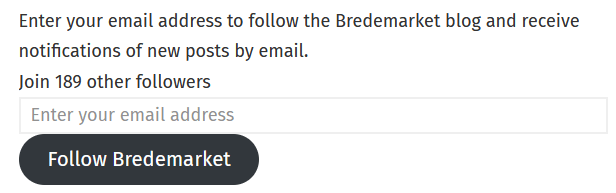
I received an email yesterday evening from a former colleague who alerted me to an issue with one of my posts. When she went to the Bredemarket website, one of my post titles had a misspelling – “circumstanc” without an ending E.

I checked myself via three separate methods and found the correctly-spelled word “circumstance” in all instances.

She the rechecked and found that the word appeared properly in one case, and didn’t appear properly in another.

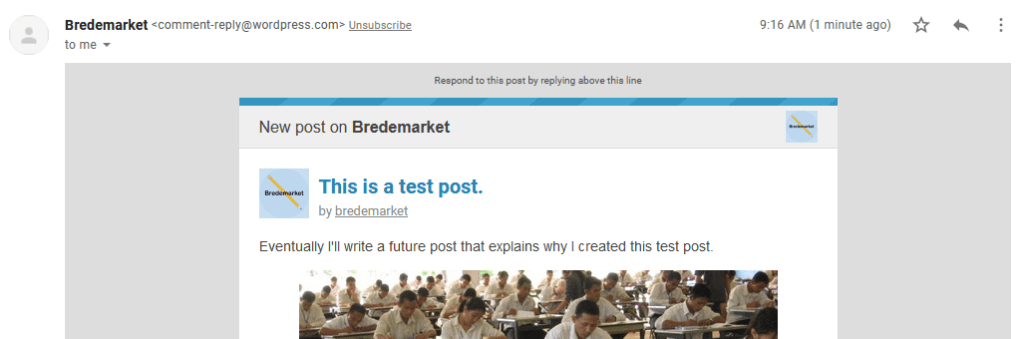
I dropped it until this morning, when I visited the main page of the Bredemarket website and saw this.

Even in WordPress, which has years of experience with this, apparently there are still these teeny glitches here and there.

Solution – use shorter words.

A fictional conversation about an impossible circumstance

(This incident never happened. Imagine if it had.)

It was a sunny weekend afternoon in southern California – Sunday, July 5, 2020, to be precise about it. I was sitting around, wishing that there was a baseball game to listen to, when all of a sudden a mysterious woman appeared in front of me.

“John, pay attention to me,” the woman said.

I was certainly paying attention to her.

“John, it’s time for you to start your own company.”

“Mysterious woman, you are crazy. I’m not going to just leave my job and start a company on a whim.”

She smiled, but said nothing as I continued.

“First off, a company has to offer something. What am I going to offer – to write blog posts for people? And what else could I offer?”

My brain was frantically ticking off objections to the mysterious woman’s insane idea. “Second off, a company needs customers. Where is an unknown company going to get customers? It’s not like people are just going to walk up to me and ask me to do things for them. So I’ll have to reach out in a sales mode, and I’ve never really done that consistently before.”

“Third off, to really run a company properly, you need to do all sorts of setup things. That’s a lot of work. So if you don’t mind, mysterious woman, I don’t think I’ll start a company at this time.”

She paused for a bit. “I believe that you can figure out how to do all these things.” And then she added, ominously, “You have to.” She then disappeared.

I sat there, thinking that the mysterious woman was completely crazy.

PAUL HARVEY REST OF THE STORY POSTSCRIPT

No, that conversation never happened, but what did happen was even stranger. On Monday, July 6, I received a layoff notice from the company that had employed me for 25 years. Within the first two months of my layoff, three people actually DID approach me about writing blog posts, and doing many other things besides. By necessity (“You have to”), I did perform “all sorts of setup things” to start a company and reach out to potential clients. And yes, people still do approach me.

Perhaps you will approach me also, if Bredemarket’s marketing and writing services can assist you.

But aside from that, the chief lessons that I’ve derived from this whole experience are as follows:

  • You never know what is going to happen in the future.
  • You never know what you are capable of doing when future events do happen.

(Past illustrations) Creating actionable information to document and expand a merged company’s combined market

(This past illustration describes something that I performed in my career, either for a Bredemarket client, for an employer, or as a volunteer. The entity for which I performed the work, or proposed to perform the work, is not listed for confidentiality reasons.)

By Lacrossewi – Own work, CC BY-SA 4.0, https://commons.wikimedia.org/w/index.php?curid=81149806

PROBLEM

After a merger of two companies, the combined company needed to know which customers used solutions from the combined company, which customers used competitor solutions, and which used both.

For example, a customer may use the combined company’s solution for one product line, but a competitor solution for another product line.

As the combined company introduced new products and entered new markets, this information was also required for the new product lines and markets.

SOLUTION

While others worked on front-end presentations of public portions of the data, I gathered the underlying data.

  • For multiple product lines, I recorded (when known/applicable) the type of customer (for example, a statewide government agency), current vendor, previous vendor, initial and extended contract value, product version, relevant statistics about the customer, and a designated reviewer for future quarterly updates.
  • The data was both stored separately for each product line and was also summarized.
  • Information was color-coded to highlight the combined company’s market position.
  • Data could be filtered as necessary (for example, only showing statewide government agencies).
  • The complete collection of highly sensitive data was tightly held.
  • Portions of the data were passed to selected subject matter experts on a quarterly basis for updating, allowing front-end presentations to be updated quarterly.
  • Additional information was gathered as new markets were entered and new products were launched.

RESULTS

The combined company had a better view of its positions in its various markets.

The resulting actionable information could be used to target specific customers and replace competitor products with the combined company’s products.

Words matter, or the latest from Simon A. Cole

I’m going to stop talking about writing text for a bit and look at the latest goings-on in the forensic world. Why? After seeing a recent LinkedIn post from Itiel Dror, I began wondering what Simon A. Cole was doing these days.

Cole is probably most famous for his book Suspect Identities, which (among other things) questioned the way in which fingerprint evidence was presented as irrefutable. Cole’s book was published in 2001, and in the following years, additional questions on fingerprint conclusions (such as the contradictory conclusions in the Brandon Mayfield case) culminated in the 2009 release of a landmark report from the National Academy of Sciences, Strengthening Forensic Science in the United States: A Path Forward. Among other things, this report changed the way in which forensic scientists expressed their conclusions.

Which brings us back to the question of what Simon A. Cole is doing these days.

OK, I lied. I DIDN’T stop talking about writing text. Because Cole’s forensic studies are all about the words that are used when talking about forensic conclusions.

Earlier this year, Cole co-authored a paper entitled “How Can a Forensic Result Be a ‘Decision’? A Critical Analysis of Ongoing Reforms of Forensic Reporting Formats for Federal Examiners.” As the beginning of the abstract to this paper reveals, Cole and his co-author Alex Biedermann believe that the choice of words is very important.

The decade since the publication of the 2009 National Research Council report on forensic science has seen the increasing use of a new word to describe forensic results. What were once called “facts,” “determinations,” “conclusions,” or “opinions,” are increasingly described as “decisions.”

Cole’s and Biedermann’s paper looks at that one word, “decisions,” from both a lay perspective and a scientific perspective. It also looks at other words that could be used, such as “interpretation” and “findings.” In the conclusion, the paper leans toward the latter.

…we tend to think that “findings” is the most appropriate of all the reporting terms floating around. “Findings” does the best job of conveying—to the expert and customer alike—that the report concerns the evidence alone. Not the evidence combined with other evidence. And, not the evidence combined with preferences. “Findings” helps more clearly distinguish between the analysis of the evidence and the inference to be drawn from that analysis. And, “findings” is commonly used in other fields of science to describe the analysis of (empirical) evidence.

The whole discussion might seem like a bunch of quibbling, but if I’m in court being charged with a murder I didn’t commit, it makes a huge difference to me whether a fingerprint comparison is reported as a “fact,” a “likelihood ratio,” a “decision,” a “finding”…or an “interpretation”…or an “opinion.” That list of possible words covers the entire spectrum.

Even if you’re not a forensic examiner (and I’m not), this precision in word choice is admirable. Especially when the life or death of a person is potentially at stake.

What type of content? As Nathan Ellering notes, you have choices.

There is one similarity between Bredemarket’s clients (and potential clients) and Bredemarket itself.

  • My clients and potential clients need to generate content to increase the visibility of their firms.
  • I need to generate content to increase the visibility of Bredemarket.

Once a content creator has determined its strategy, the creator then needs to decide upon the type of content to execute that strategy. While the answer is sometimes blindingly obvious, sometimes the content creator ends up staring at the wall, wondering what to do next.

Today I found a way to jump-start that thinking process, when I ran across Nathan Ellering’s article entitled “105 Types of Content to Fill Up Your Editorial Calendar.”

Yes, 105 types. Even Buzzfeed couldn’t handle a listicle that long.

https://en.wiktionary.org/wiki/listicle – Attribution-ShareAlike 3.0 Unported (CC BY-SA 3.0)

But if you don’t have the time to read all 105 of Ellering’s suggestions (I confess I haven’t read them all myself), how about just looking at one of the 105 types? For purposes of this post, I decided to choose one at random by selecting a number between 1 and 105. Thinking of ketchup, I figured I’d see what Ellering’s type 57 was.

It turns out it was “News Releases and Pitches,” with the goal of using the news release “to get coverage in influential publications.” I’ve actually pitched my freelancing experience and been quoted in an article, and now may be one of the best-known freelancers in Austria.

Or possibly not.

But I’m sure that there are a ton of the 105 types of content that I haven’t created. At present I have no use for type 10, for example. But I plan to review Ellering’s article the next time that I’m stuck for ideas.

And perhaps you’ll find it helpful yourself.

(For those following along at home, this post itself is type 11, where the “product” is Ellering’s post itself.)

Bringing in the specialist

When economic conditions are fluctuating wildly, a company has to strike a balance between avoiding overstaffing and avoiding understaffing. Hire too many staff, and they won’t have anything to do. Hire too few staff, and they’ll burn out.

Factorial HR published an article that provided some solutions to understaffing, one of which was to bring in contractors. Not just any contractors, though; contractors who are specialists.

Yet, unlike a temp agency, these workers have unique, specialist skills, that could be extremely useful to your business.

Factorial HR assumed that you’d have to go to an agency (a specialist sub-contracting agency) to find these specialists.

I disagree.

Incidentally, one benefit of bringing in a specialist for a particular project is that the specialist can concentrate on that project alone, and not get bogged down in other things.

(Past illustrations) Responding to macro market changes

(This past illustration describes something that I performed in my career, either for a Bredemarket client, for an employer, or as a volunteer. The entity for which I performed the work, or proposed to perform the work, is not listed for confidentiality reasons.)

PROBLEM

A large, worldwide event affected multiple markets in multiple countries. While this event had negative ramifications in some of the markets in which a particular company competed, it had positive ramifications for markets that the company could conceivably enter.

SOLUTION

As part of a team, I analyzed potential new markets that the company could enter. The analyses included addressable market size (with assumptions documented), existing and potential competitors, risks, and other factors. While the analysis must of necessity remain confidential, I can state that a number of new markets were analyzed: some within the company’s core capabilities, some within the company’s identified growth areas, and some in entirely new areas.

RESULTS

The analyses were forwarded to others within the company. The results must of necessity remain confidential.

A love letter to a competitor?

There are different ways in which a company can position itself against its competitors. No one way is right; the company has to choose its own method.

On one extreme, the company could simply refuse to mention the competitors at all. In this case, the company would market its claimed superiority solely based upon its own merits, without comparing against others.

On the other extreme, the company could trash its competitors. I don’t need to find examples of that; we already know them. (I personally abhor this method, because it doesn’t reflect well on the company doing the trashing.)

Between these two extremes, a company can state its own merits and, without trashing the competition, claim its superiority by comparison.

For example, a company could write a love letter to its competitors.

Seriously.

As in “Welcome, IBM. Seriously.” The famous ad that Apple ran when IBM entered the personal computer market.

By Rama & Musée Bolo – File:IBM_PC-IMG_7271.jpg, CC BY-SA 2.0 fr, https://commons.wikimedia.org/w/index.php?curid=94784371

But I have a more recent example.

If you are following the Bredemarket LinkedIn page (you ARE following the Bredemarket LinkedIn page, aren’t you?), you’ve seen a couple of recent mentions of the company Volley. The company is planning to release a new communications app that it claims will improve communication over all of the other communications apps.

In that vein, Volley’s CEO Josh Little wrote a “love letter” to Slack entitled “Dear Slack, You haven’t solved the problem…” It starts off in a positive tone.

First off, thank you for trying. It was a valiant effort and someone needed to take a solid stab at the problem. Our hats are off. You’ve built a great piece of technology and a faster horse.

But after that, the rest of Little’s article gently explains how Slack’s solution hasn’t really solved the inherent problem. (TL;DR Little asserts that Slack’s emphasis on text does not provide a complete communications solution, and ends up with people devoting MORE time to using Slack.)

Little ends the article by asserting what Volley will be. Because the app is not yet released, we can not see for ourselves what the app does. So Little creates a picture of Volley as occupying the middle position between Slack (text-based asynchronous communication) and Zoom (conversation-based synchronous communication). Volley occupies the “conversation-based asynchronous communication” position, and claims to include features that will actually REDUCE the time that people spend on Volley, rather than having Volley become yet another time sink in our collection of time sinks. For example, communications from others can be played back at 2x (or 1.5x) speed, reducing the amount of time needed to consume the content.

I’m not saying that marketers have to be like Volley, or that marketers have to be like Steve Jobs 1.0 Apple, or that marketers have to be like Steve Jobs 2.0 Apple.

A company needs to adopt its own tone for addressing its competitors. And everyone communicating on behalf of the company, from the CEO to the factory worker, should ideally adopt the same tone.

When a business should use a (non-driving) independent contractor

In my previous post, I talked about the recently-passed California Proposition 22, how it relates to Assembly Bill 5, and the three criteria that Assembly Bill 5 uses to determine whether a worker is an employee or an independent contractor. As a reminder, those three criteria are as follows:

(A) The person is free from the control and direction of the hiring entity in connection with the performance of the work, both under the contract for the performance of the work and in fact.

(B) The person performs work that is outside the usual course of the hiring entity’s business.

(C) The person is customarily engaged in an independently established trade, occupation, or business of the same nature as that involved in the work performed.

So when does it make sense for a company to contract with an independent contractor, rather than hire an employee?

The most obvious reason for a company to use an independent contractor is when the contractor provides services that are outside what the company usually does.

I could provide a whole list of examples of what those “services” could look like, but let me focus on a single example.

Wendy’s Widget Company has been manufacturing round green widgets since 1969, from a factory in Columbus, Ohio. (For various reasons, foreign or overseas round green widget manufacture was not desirable.)

One day, someone in a quality circle (Wendy’s Widget Company was old school) suggested that the company introduce square blue widgets. Square blue widgets had been around for a while, but Wendy’s Widget Company had never produced them.

By Down10 at English Wikipedia – Transferred from en.wikipedia to Commons., Public Domain, https://commons.wikimedia.org/w/index.php?curid=3279986

The company decided to produce a small run of square blue widgets, and then get someone to market them.

But the company’s existing marketers were all accustomed to round and green things, and were incapable of marketing the square blue ones. (Not that they didn’t try, but the marketers did not understand the concept of 90 degree angles, so the effort was doomed to failure.)

The company could have hired an square blue widget expert, but what would have happened if the small run experiment was a failure, and the expert would have been terminated in a few weeks?

So the company hired an independent contractor to complete a well-defined project. This project required the contractor to develop marketing materials for a possible Wendy’s Widget Company square blue widget. The contractor would go off and work on the assignment, checking in with Wendy’s Widget Company at well defined checkpoints.

But when the company lawyer found out that the contractor was based in California, the lawyer asked, “Does this meet California AB5 criteria?”

Let’s see.

  • In this case, the contractor was NOT under the direct control of Wendy’s Widget Company. The contractor was not told to work from 8:00 am to 5:00 am Ohio time, was not assigned a Wendy’s Widget Company computer, and did not get matching contributions to the company’s 401(k) plan.
  • And, in this case the contractor was performing work outside the usual course of business for Wendy’s Widget Company. The contractor not only had in-depth knowledge of 90 degree angles, but also had a deep appreciation of the music of both Bobby Vinton AND Eiffel 65.
  • Finally, in this case the contractor regularly worked with a variety of companies to provide marketing materials for widgets of all shapes and colors.

The lawyer was satisfied, the contract was completed, and the contractor went on to help another company with its red octagon widgets. Everyone was happy.

OK, that whole example was made up. (But now I’m hungry for a hamburger.)

But there are times when a company wants to pursue something outside of its comfort zone, but doesn’t want to dedicate an employee to do it.

If your company has such a need, and if my experience (in biometrics, identity, and other areas) suggests that Bredemarket can help your company meet your goals, contact me.

California Proposition 22 and non-driving independent contractors

In case you haven’t heard, Tuesday was an election day in the state of California, and throughout the rest of the United States. There were a number of candidates and propositions on ballots throughout the country, but for this post I’m going to concentrate on a single California proposition, Proposition 22.

By Alexander Torrenegra from Secaucus, NJ (New York Metro), United States – On my first @Uber ride in Bogota heading to a Startup Weekend. Priceless easiness and safety. I love disruptive innovation., CC BY 2.0, https://commons.wikimedia.org/w/index.php?curid=37982760

In ballot legalese, this proposition’s title was “EXEMPTS APP-BASED TRANSPORTATION AND DELIVERY COMPANIES FROM PROVIDING EMPLOYEE BENEFITS TO CERTAIN DRIVERS. INITIATIVE STATUTE.” What that means is that if the proposition passes, drivers for “app-based transportation and delivery companies” (think Uber, Lyft, DoorDash, etc.) will be exempted from the provisions of California’s Assembly Bill 5, and therefore will NOT be classified as employees.

And for the record, it looks like Proposition 22 has passed.

However, Assembly Bill 5 still applies to people who are NOT drivers for app-based transportation and delivery companies. Specifically, Assembly Bill 5 provides the following test to see whether a person is an employee or an independent contractor.

 Section 2750.3 is added to the Labor Code, to read:

 (a) (1) For purposes of the provisions of this code and the Unemployment Insurance Code, and for the wage orders of the Industrial Welfare Commission, a person providing labor or services for remuneration shall be considered an employee rather than an independent contractor unless the hiring entity demonstrates that all of the following conditions are satisfied:

(A) The person is free from the control and direction of the hiring entity in connection with the performance of the work, both under the contract for the performance of the work and in fact.

(B) The person performs work that is outside the usual course of the hiring entity’s business.

(C) The person is customarily engaged in an independently established trade, occupation, or business of the same nature as that involved in the work performed.

When AB5 was passed, a lot of attention was focused on the need for companies to properly classify their workers as employees, when warranted.

But not a lot of attention was focused on the times when companies would PREFER to use independent contractors instead of hiring employees.

I’ll talk about that in a future post.