Just a few days ago I wrote a post dedicated to marketing intangible products, in which I said things like this:
…when I started attending trade shows in the mid 1980s, I would go by booths and pick up company case studies and white papers and stuff them into a bag. (Booths and sponsors that provided such bags were VERY important.) Today, some vendors don’t even have printed case studies and white papers in their booths any more; the attendees simply request electronic copies.
and:
In the old days of product marketing collateral, you could get into big discussions about the quality, weight, and finish of the paper that you used to print your collateral. Today, those discussions are for the most part irrelevant, since the recipients print the collateral on their own printers, if they print the collateral at all.
My priorpost definitively stated that all of that printed collateral stuff was a relic of the past.
Then I went to an event on Friday.
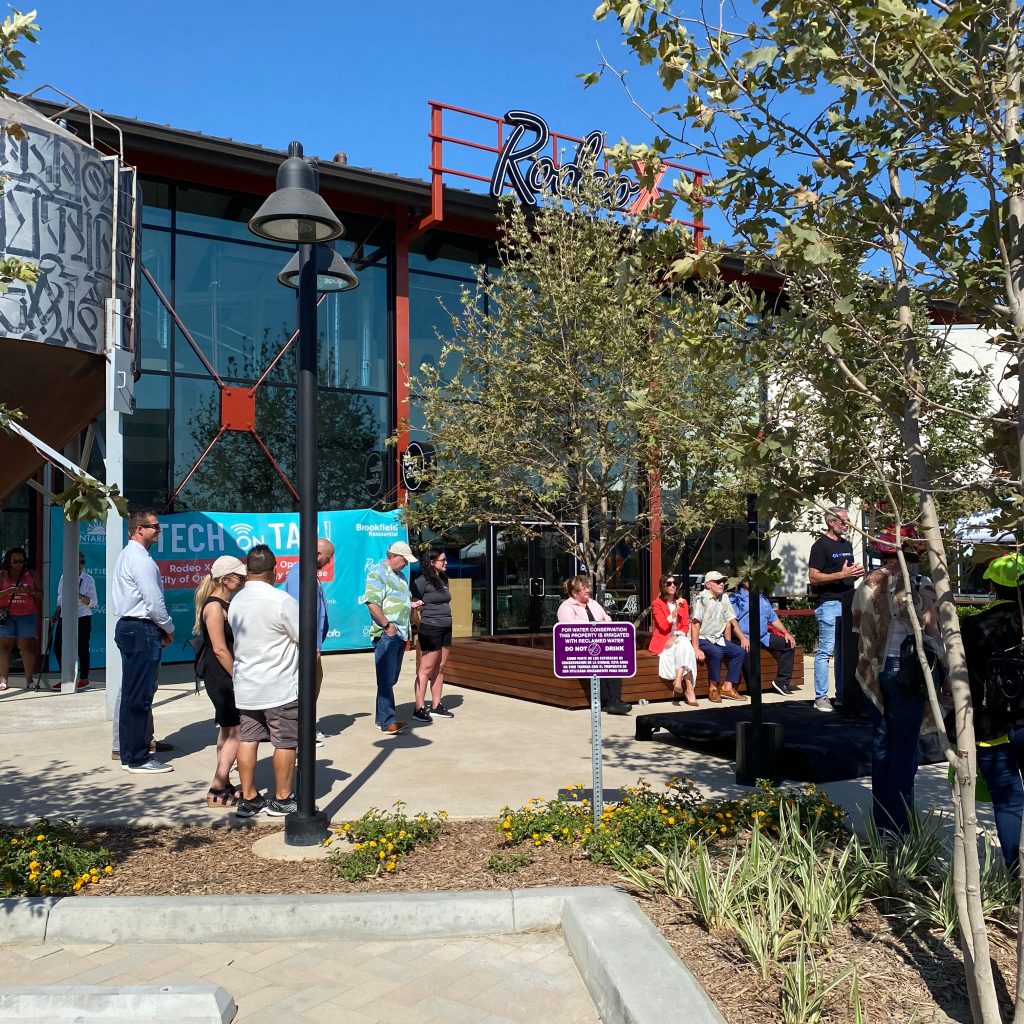
The event was here in the city of Ontario, although it was way on the other side of the city and it took me 25 minutes to drive there. It was called “Tech on Tap,” and was held at the New Haven Marketplace, a shopping center next to a new residential development in the former agricultural reserve.
The event started with a half hour of speeches, followed by the ribbon cutting for a new microbrewery. Rather than listening to all the speeches, I spent my time visiting all the “Tech on Tap” booths.
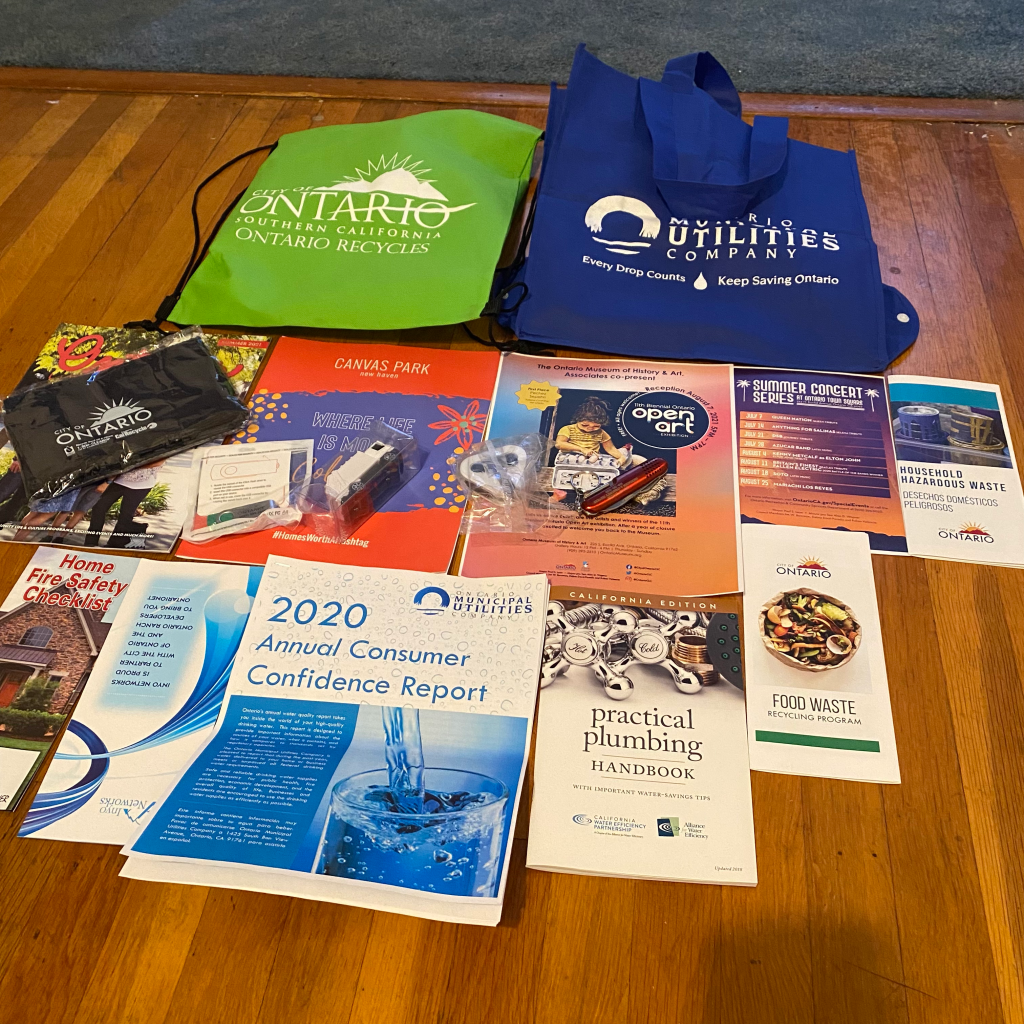
When I went home, I realized that I had accumulated a BIT of tangible collateral.
OK, a LOT of tangible collateral.
So much for Mr. “Everything is Intangible.”
So WHY was I spectacularly wrong? I think there were two reasons:
I am normally used to attending events in the B2G/B2B space. The city’s event was clearly a B2C event, and individual consumers have different expectations than business/government attendees. (Even for B2G/B2B events, how many attendees end up snatching booth swag for their kids?)
While a number of the booths at “Tech on Tap” were staffed by tech companies (robots, ISPs, and the like), about half of the booths were staff by departments of the city of Ontario. Sometimes cities do not rush into tech as quickly as businesses do, and sometimes the citizens of a government do not EXPECT cities to rush into tech.
If you look closely at my loot, you will see that most of it is from city agencies. And there were a lot of agencies represented, including city utilities, police, fire, and recreation.
Oh, and if you look closely at my loot, you will see that I ended up with TWO bags, BOTH from the same agency, the Ontario Municipal Utilities Company. This agency had two separate booths on opposite ends up the area, one staffed by the recycling/trash folks, the other by the water folks. After I had already obtained the green bag from the recycling/trash booth, the person at the water booth insisted on giving me the blue bag (which folds up; nice). And when I started to put the blue bag inside my already-filled green bag, he convinced me that I should do the opposite.
I’m still amused that I, the proclaimer that there will be no “death of passwords,” was myself equally insistent about the “death of tangible collateral.” Neither is going to happen.
These days, more and more of us are marketing products that are intangible. But most of the essentials of marketing intangible products don’t differ much from marketing tangible ones.
Many, many years ago, the phrase “intangible product” seemed like a lot of nonsense. How could something be a product if you couldn’t touch it? Could you grab a product out of thin air?
I’m not even going to, um, touch the NFT world, but clearly things that we used to think of as tangible products are now moving to the intangible realm. I’ll give you two examples from my experience:
When I started selling automated fingerprint identification systems (AFIS) in the 1990s, a law enforcement agency’s AFIS consisted of a set of computer servers in the agency’s computer room, coupled with a set of some fairly expensive workstations in the agency’s work areas. But even then, there were several states that had minimal computer servers at the state agencies, with most of the servers located in the state of California. The Western Identification Network model was duplicated in later years by other agencies who would host their biometric server “products” at faraway Amazon or Microsoft locations.
Similarly, when I started attending trade shows in the mid 1980s, I would go by booths and pick up company case studies and white papers and stuff them into a bag. (Booths and sponsors that provided such bags were VERY important.) Today, some vendors don’t even have printed case studies and white papers in their booths any more; the attendees simply request electronic copies.
Yet for the most part the marketing of these intangible products isn’t much different from the way that the old tangible versions were marketed. The differences are minor:
When Printrak sold AFIS servers, care was taken to place a Printrak logo prominently on the server, where it would compete with the Digital Equipment Corporation logo from the server manufacturer. The logo even appeared as a component on an extended Bill of Materials. Now, purchasers of cloud solutions from the biometric companies don’t need to worry about placing logos on physical servers.
In the old days of product marketing collateral, you could get into big discussions about the quality, weight, and finish of the paper that you used to print your collateral. Today, those discussions are for the most part irrelevant, since the recipients print the collateral on their own printers, if they print the collateral at all.
The important thing in each case is the content. Fewer and fewer law enforcement agencies care WHERE their biometric data is stored, as long as it meets certain security, accuracy, and response time requirements. Similarly, people who collect marketing collateral are much more concerned with WHAT the collateral says than the weight of the paper used to print it.
I have been accused of preferring substance over style, and I plead guilty. While style is clearly important, the substance of the product must excel or the style is wasted.
Sometimes this requires the product creator to take a step back from the nitty gritty of collateral creation, and decide what the collateral is supposed to do, and why the customer should care. Rather than saying “give me a case study that tells how the widget is exactly 70 mm high,” my clients are now asking to “give me a case study that tells our customers why our product will let them sleep securely at night.”
If you would like to explore these topics for your next piece of collateral, whether it be a case study, white paper, proposal, or some other marketing written work, Bredemarket can help you explore. Bredemarket uses a collaborative process with its clients to ensure that the final written product communicates the client’s desired message. Often the client provides specific feedback at certain stages of the process to ensure that the messaging is on track. I combine the client’s desires with my communications expertise to create a final written product that pleases both of us.
Contact me and we can discuss how to work together to realize your goals.
The infamous content calendar says that today is proposal day, but I’m going to ignore the infamous content calendar and talk about a bunch of things other than proposals. (Well, I’ll mention proposals once, I guess.)
First, I’ll talk about the new glasses that I received yesterday.
In addition to a new frame style, this new set has the transition sunglass tint but WITHOUT the computer tint. (The Costco optical person said that I didn’t need a separate computer tint these days. I don’t know if he was right, but I trusted him.) My last set of glasses had both the transition sunglass tint AND the computer tint, which meant that they had a purple color at times. Now my tint in the sun will be brown rather than purple.
But enough about that.
Let’s get to the meat of this post, in which I’ll talk about the communities that I’ve joined since starting Bredemarket, what led me to purchase something from one of those communities, and one of two actionable items (and an action) that I took from that purchase.
Communities
Before I became a free agent, I was an employee of a multinational firm with thousands of employees throughout North America and thousands of additional employees throughout the rest of the world. One of the company’s VPs established an online community to support her nationwide organization of people, including myself in California, my direct supervisor in Massachusetts, and a bunch of people in those states, Minnesota, Tennessee, and everywhere else under the sun. I was able to participate in that online community even after I moved out of that VP’s group due to a corporate reorganization. (Thanks Teresa.)
With free agency and sole proprietorship came the loss of that community. (No, the VP obviously wouldn’t let me engage with that community when I was no longer an employee.) But over the next several months I joined three other communities. As it turns out, I interacted with all three of these communities over the course of the last two days.
On Thursday at 10:00 am, I joined the weekly “town hall” for the employees and associates of SMA, Inc. I am officially an associate of SMA, albeit with a very specialized skill set (more on that later). To support its people, SMA convenes a weekly “town hall” that addresses company issues and also addresses the interests of SMA’s leadership. Every week, for example, there is an “art talk” that delves into a particular artist or artistic topic.
On Thursday at 6:00 pm, I joined the monthly meeting of the Orange County, California chapter (“SPARK OC”: Facebook, Instagram) of the Freelancers Union. This monthly gathering happened to be a “happy hour,” although I disregarded the injunction to bring my favorite cocktail.
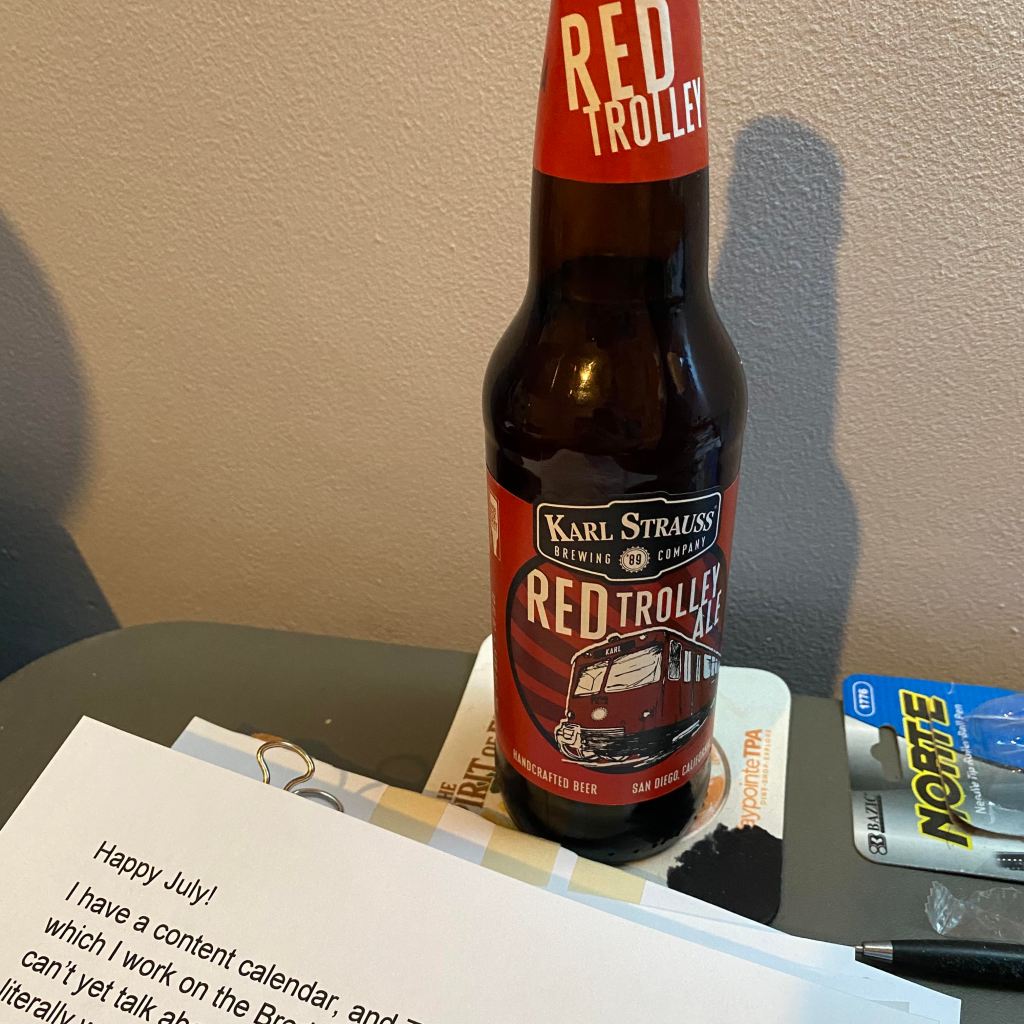
Finally, today at 8:00 am, I joined a paid workshop hosted by Jay Clouse of the Jay Clouse empire of entities. The topic? “Invisible Selling.” Due to early hour, I didn’t have a beer, but had a Nespresso instead. The rest of this post deals with that workshop and the results from that workshop.
The invisible selling of “Invisible Selling”
I’m not going to recount that Clouse covered in his one-hour workshop. After all, I paid for the course, and (most of) you didn’t. But perhaps it would be helpful if I described how I was invisibly sold on “Invisible Selling.”
I first encountered Jay Clouse via LinkedIn Learning. (Another thing that I lost when I was no longer an employee was access to my employer’s online courses from Udemy and others, but LinkedIn Learning has filled the gap.) I had long since forgotten which Clouse course I took and when I took it, but I checked my LinkedIn profile and found that I had taken his “Freelancing Foundations” course back in September 2020.
After taking the course, I ended up joining his “Freelancing School” community, participating in various online meetups, and engaging with Clouse’s offerings in other ways.
All for free.
Then I received a couple of emails from him about his (then) upcoming “Invisible Selling” course.
I deduced from the description that it would meet my needs, and figured that $40 was a reasonable price. Plus, I trusted Clouse based upon my interactions with him and his community over the last several months.
The first task, which could potentially be worth between five dollars and tens of thousands of dollars to me, was to make sure that I am anticipating potential client objections up front, and addressing them. I’m going to devote some time to that in the future. And as you can see below, I started to address one objection even before I heard of Clouse’s workshop.
The second task is one that I cannot discuss publicly at this time. However, it could potentially be worth more than tens of thousands of dollars to me. Maybe I’ll talk about it someday.
Service Offerings
One potential client objection that I’m already addressing is that my offerings do not fit my potential clients’ needs. I’m addressing this by broadening my offerings.
But much of my business today doesn’t derive from these prepackaged services. Well, technically it does, if you read the description of my Bredemarket 4000 Long Writing Service:
The long writing service does not have a “standard” offering per se, because of the variability of what may be needed. Work is billed at an hourly rate.
Some of Bredemarket’s more lucrative work comes from ongoing hourly relationships that I have established with several clients. They use me as needed, sometimes more frequently, sometimes less so, but I’ve kept them happy.
“I just wanted to truly say thank you for putting these templates together. I worked on this…last week and it was extremely simple to use and I thought really provided a professional advantage and tool to give the customer….TRULY THANK YOU!”
Why do these customers work with me? Well, while I have a number of customers employing various technologies, the vast majority of my customers are focused on biometrics. And I am the biometric content marketing expert and the biometric proposal writing expert, because I said I am. (The other John Bredehoft, the one who owns Total Plumbing Services, taught me the importance of self-promotion.)
But what if a client wants to pick my biometric brain and not pay hundreds or thousands or tens of thousands of dollars to do so?
Well, for the past month I’ve been addressing that price point also via Bredemarket Premium. Certain posts on this Bredemarket blog delve deeply into my quarter century-plus of biometrics knowledge. These posts are only available to subscribers, at the cost of $5 per month. Here’s an excerpt from the public view of one of these posts:
So to my mind I’ve covered the “Bredemarket doesn’t address my price point” objection. (Prove me wrong. Please.)
As I said before, I need to do a better job of anticipating and addressing other potential objections to using Bredemarket to help you communicate your firm’s benefits. And I’ll work on that.
But if your objection is that you don’t like my glasses, I can’t help you. You can’t please everyone.
And a reminder that if I’ve brilliantly addressed all of your potential objections, or even if I haven’t, and if you’re ready to talk about how I can help you:
I wanted to illustrate the difference between biometric writing, and SUBSTANTIVE biometric writing.
A particular company recently promoted its release of a facial recognition application. The application was touted as “state-of-the-art,” and the press release mentioned “high accuracy.” However, the press release never supported the state-of-the-art or high accuracy claims.
Concentrating on the high accuracy claim, there are four methods in which a biometric vendor (facial recognition, fingerprint identification, iris recognition, whatever) can substantiate a high accuracy claim. This particular company did not employ ANY of these methods.
The first method is to publicize the accuracy results of a test that you designed and conducted yourself. This method has its drawbacks, since if you’re administering your own test, you have control over the reported results. But it’s better than nothing.
The second method is for you to conduct a test that was designed by someone else. An example of such a test is Labeled Faces in the Wild (LFW). There used to be a test called Megaface, but this project has concluded. A test like this is good for research, but there are still issues; for example, if you don’t like the results, you just don’t submit them.
The third method is to have an independent third party design AND conduct the test, using test data. A notable example of this method is the Facial Recognition Vendor Test series sponsored by the U.S. National Institute of Standards and Technology. Yet even this test has drawbacks for some people, since the data used to conduct the test is…test data.
The fourth method, which could be employed by an entity (such as a government agency) who is looking to purchase a biometric system, is to have the entity design and conduct the test using its own data. Of course, the results of an accuracy test conducted using the biometric data of a local police agency in North America cannot be applied to determine the accuracy of a national passport system in Asia.
So, these are four methods to substantiate a “high accuracy” claim. Each method has its advantages and disadvantages, and it is possible for a vendor to explain WHY it chose one method over the other. (For example, one facial recognition vendor explained that it couldn’t submit its application for NIST FRVT testing because the NIST testing design was not compatible with the way that this vendor’s application worked. For this particular vendor, methods 1 and 4 were better ways to substantiate its accuracy claims.)
But if a company claims “high accuracy” without justifying the claim with ANY of these four methods, then the claim is meaningless. Or, it’s “biometric writing” without substantiation.
When Bredemarket writes for our clients, one or more different writing types is employed. While there are a variety of definitions of the four, or eight, or nine writing types (rhetorical modes), only some of these are important to Bredemarket’s potential clients.
One of the more common writing types used by Bredemarket is the persuasive writing type. This is where the text persuades you to, for example, set an appointment with a client to discuss buying the client’s products.
Expository writing is also used often, since it is employed to lay out a set of facts. And the expository writing style could be employed in conjunction with the persuasive writing style; this is how white papers are often constructed. (One important point: multiple writing styles may be used in the same text.)
Bredemarket clients may also desire some comparison/contrast, either for internal or external use. When comparing/contrasting for internal use only, the client may want to obtain a true picture of how the company or its product stands up against its competitors. When this is for external use, there is a good chance that the comparison/contrast writing style may be coupled with a persuasive writing style. “Our widget is 25% bigger than their widget, so you want to buy our widget.” (Again, multiple writing styles may be used in the same text.)
In some cases, a descriptive writing style is needed. Tell me about this concept, or about this product. This post, for example, describes different writing styles…and also compares/contrasts them.
And finally there’s the good old process, where the text lays out the steps to follow to get something done. For example, what are the steps used to convert a writing idea into a final product?
While some other writing types may be called upon from time to time, the five types listed here are the ones that tend to be the most important for Bredemarket clients.
When you’re writing something, or hiring someone such as Bredemarket to write something, be sure to think about what the goals of your writing project are. Is the project primarily persuasive? Expository/factual? Comparing/contrasting? Describing? Laying out a process?
And regardless of the writing type or types, what do you want your reader to do AFTER reading the piece? For example, do you want the reader to learn about a short, medium, or long writing service offering? Or do you want the reader to contact you to request more information?
Obviously I’ve applied this to MY own situation in the paragraph above, but make sure that you apply this to YOUR own situation.
There are a number of ways that writers can grab readers’ attention, and one of those is via the list post. They’ve been around for over a decade, and they’re still popular. Why? Because they grab the reader’s attention.
So I thought I’d use the list post format to talk about Bredemarket’s current focuses in contracts, as well as in pitches and proposals to potential clients. Perhaps your business can use one of these three services, or perhaps you can use two or three of them. (I just wrote a proposal this week that included all three of the services listed below, as well as some other things.)
One: Have Bredemarket write your 400 to 600 word text
I’ve previously talked about why you may want to have someone else write your blog post, your Facebook post, your LinkedIn post, or any other short text. (Advance warning: this “list post” is going to have some little lists in it…)
Regardless of the reason, Bredemarket can assist you in creating that content that you need. Via a collaborative process, Bredemarket will work with your business to craft the text that you need, and provide you with the final text at the end of the contract. The entire process can be completed in 15 calendar days or less, often much less (one of my clients and I completed one blog post in less than 3 days). Bredemarket’s goal is not to get the job done quickly, but to get the job done correctly.
Two: Have Bredemarket write your 2800 to 3200 word text
Longer text is used for deliverables such as white papers; longer thought pieces; detailed company, product or service descriptions; lengthy customer testimonials; or other items.
The reasons for having Bredemarket write your longer text are similar to the reasons for having Bredemarket write your shorter text, but the process is a little more detailed.
Because these deliverables are more complex, more work is needed at the beginning of the process, and more time is needed for the reviews. Therefore, the process for a longer text piece can take as long as 49 calendar days, although again it can often be completed much more quickly. Again, the goal is to deliver the correct text to the client.
Three: Have Bredemarket examine your website and social media accounts
Perhaps you don’t need text for your website or social media accounts. Perhaps you need a checkup on these properties.
Ever since I started Bredemarket, I’ve been examining the web pages and social media accounts for a number of companies, including my own. And a number of times, I’ve run across some errors.
Perhaps the text on the site uses the wrong word to describe something.
Or perhaps a link doesn’t work.
Or perhaps one part of the site says one thing, while another part says a totally different thing.
Or perhaps the contents of the site are old. (A site that brags about Windows 7 compatibility, or a site with a 2019 copyright date, is not the site of a thought leader.)
Or perhaps the collection of sites doesn’t have any obvious errors, but exhibits missed opportunities. One company posted some excellent content on one of its social media channels, but failed to cross-post the content to its other social media channels, or to the website itself. Therefore, most potential customers were unaware of the great content from the company.
Bredemarket’s methodology for a website/social media checkup is simple, but thorough. The two major steps are
for Bredemarket and the client to agree on the scope of the checkup (for example, should the checkup include the personal LinkedIn page of the company CEO?), and then
for Bredemarket to examine six factors as part of the checkup.
While you’re waiting for me to write my list post about six critical items in a website/social media checkup, you can cheat and read the list yourself in my description of the Bredemarket 404 Web/Social Media Checkup.
Incidentally, I can’t quote the length of this service, because the length depends upon the number of pages to check, the percentage of those pages that require a more detailed (rather than cursory) check, and whether there are PDFs or other documents on those pages that also require examination.
Can your business use any of these services?
Now Bredemarket provides other services (you can say that I have a whole…um, list of them), but right now (mid-October) these three services seem to be the most popular. Like I said, I recently proposed all three of them to a single client.
If you could use one of these three services, you can fill out the “Request Information” form at the bottom of each service description (Bredemarket 400, Bredemarket 2800, or Bredemarket 404), or you can contact me in one of the following ways:











 Bredemarket