This tweet is trending.
And while Confidently Zay is missing the old MySpace, I myself run in circles that miss the former social service FriendFeed.
So what happened to these two innovative services?
- Well, Tom may be long gone, but MySpace still exists today. It is branded as part of the “People / Entertainment Weekly Network.” And there are a number of people on the network, like a guy with the name Kanye, another guy with the name Avicii (yes I know he’s dead, but he has a MySpace profile), and others.
- As for FriendFeed, if you try to go to friendfeed.com you end up at facebook.com. The service survived for several years after Facebook acquired it, but Facebook finally shut down the servers in 2015.
Let’s dig into the details of why these services are not what they used to be.
So what happened to MySpace?
At one point MySpace was the king of all social media, having acquired the title from Friendster. After being founded in 2003, it boasted one million members in 2004 and 16 million users in 2005, and was recognized as the social network until Facebook surpassed it in users in 2008.
MySpace offered several advances over Friendster, including an emphasis on scalability and the inclusion of various tools to allow people to build their own personal communities.
Yet MySpace’s founders chose to sell the service to News Corp. (Rupert Murdoch’s outfit) in 2005 for $580 million. A few years later, in 2011, News Corp. sold it again…for only $35 million. Tom, who stayed with the company after News Corp. acquired it, retired in 2009.
Why did Tom et al sell the service to News Corp. in the first place? And why did News Corp. buy it?
- For the owners of Intermix (the company that ran MySpace), the attraction was money. MySpace wasn’t a big money-maker; recorded monthly revenues in March 2004 were $135,000. Presumably it made more money in future months, but even as late as December 2004 the service was only valued at $46 million. After the sale to News Corp., Tom Anderson signed an employment agreement giving him $30 million.
- As for News Corp., it didn’t acquire MySpace for MySpace. It acquired MySpace because it added value to the Fox properties.
“Intermix is an important acquisition for News Corp., instantly doubling the number of visitors to our sites and providing an ideal foundation on which to meaningfully increase our Internet presence,” News Corp.’s Chairman and CEO Rupert Murdoch said in a statement.
Basically, MySpace was worth more as a feeder to Fox Sports et al than it was as a standalone service. And it became worth even more when it inked a lucrative $900 million advertising deal in 2006.
But as MySpace enjoyed the profitability it never had in its first year, its original users were being driven away.
MySpace became inundated with intrusive ads, many of which led to dubious pages asking users to sign up for credit cards and other services. Money was hemorrhaged out of developer resources as a “massive spaghetti-ball mess” of sections were created to try and generate revenue that would meet News Corp’s unattainable targets. Ultimately, a failure to focus on what its community wanted and the usability of the site saw users leave for other platforms.
Now the common version of the story is that Confidently Zay’s MySpace utopia was ruined by Murdoch’s takeover. In this version of the tale, Moneygrubbing Murdoch killed the golden goose.
The truth, however, is that the utopia of MySpace was ruined by its founders BEFORE Murdoch came on the scene. After all, if the original MySpace had enjoyed nice profits, Tom et al would never have had to sell the service to Murdoch in the first place.
Let’s face it: the Confidently Zay version of MySpace that had no ads was never going to survive anyway, unless the founders had come up with another monetization method. They didn’t.
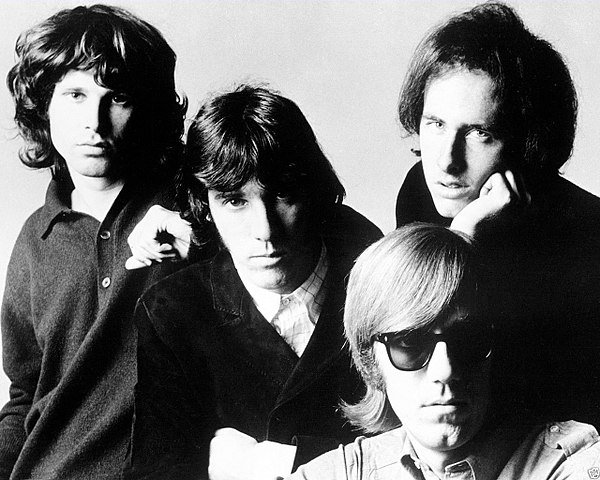
When Murdoch’s company sold the firm, and when it was sold again, MySpace was rebranded as a music site, and survives as such today. But Tom’s out taking scenic photos, so he’s happy. Maybe he even bought a new t-shirt.
Whoops, I guess he didn’t.
And what happened to FriendFeed?
As News Corp. was working on monetizing MySpace, and Mark Zuckerberg was planning for Facebook world domination, other social media services entered into the fray.
In 2006 and 2007 alone, three notable services were launched: Twitter, Tumblr, and FriendFeed. Today Twitter is by far the most popular of the three, Tumblr is still around somewhere, and FriendFeed no longer exists.
Even those of us who used FriendFeed often forget this, but FriendFeed actually started as a feed aggregator. It wasn’t known for content creation, but was instead known as the place where you could share all of your social content from other services. The benefit was that readers didn’t have to visit every single walled social service to see your content; they could see all of it on FriendFeed. This in itself was a relatively new concept, as “lifestreaming” became a thing.
Eventually FriendFeed expanded from resharing content from other places began to host original content…coupled with new innovations:
When I post something to FriendFeed, all of my friends see it. If one of them comments on it or “likes” it, then two things happen that don’t happen on Facebook. First, our conversation suddenly appears in the news feed of all the friends of the person who commented on my item – whether they know me or not. That doesn’t happen on Facebook. I can see the names of people who comment on my friends’ items – but if my friends comment on items shared by their friends I don’t know – there’s no notification of that in my news feed.
Second, whenever anyone comments on or “likes” any item that’s appeared in my stream of friends’ updates – it’s pushed back up to the top of my FriendFeed page. That makes it all the more likely that I will comment on it again or for the first time.
This 2009 comment highlights two things that are common in social media today, but were rarities 12 years ago.
- Liking things. Yes, FriendFeed pioneered the “Like” button, although other companies (including Facebook) quickly copied it. There used to be a video that noted one FriendFeed user had amassed tens of thousands of likes. Now everyone does it.
- Dynamic feeds. Previously, feeds were chronological and static, but FriendFeed advanced some changes to the feed, including one that was very unpopular with certain segments of the FriendFeed community: updating of those static feeds as new content was posted. And, as noted above, comments and likes could also push old content to the top of the feed.
When dynamic feed updates, Michael Arrington (who was still with TechCrunch at the time) talked about it.
Of course, the impact of the innovation is dampened somewhat when you read the post today, because FRIENDFEED NO LONGER EXISTS. But you get the drift.
So FriendFeed was clearly innovative. In addition to the advances that I noted above, FriendFeed was also extremely stable, especially when compared to “fail whale” Twitter.
Revenue-wise, however, FriendFeed was subpar. During its existence before its acquisition by Facebook, FriendFeed had only participated in one funding round, and in that case the funding was from the founders. In terms of establishing a constant revenue stream, FriendFeed claimed to be ahead of other “lifestreaming” services (Plaxo, Iminta, Socialthing, Lifestream.fm and Zude). But FriendFeed had other competition:
However, Facebook, MySpace and Google are all ahead in the battle to become the preferred aggregators of social data, which is crucial if they are to build any significant revenue streams.
And while MySpace wasn’t exactly innovating at the time, Facebook and Google definitely WERE, with Facebook experimenting with the like and eventually acquiring FriendFeed itself. Google, of course, would launch Google+ in 2011 in an attempt to create a social network that united all of Google’s disparate services.
As it turned out, FriendFeed’s founders decided to cash out rather than try to keep FriendFeed independent. The founders stayed with Facebook for a while before leaving, but worked on projects other than FriendFeed for their new corporate overlords: Facebook’s acquisition of FriendFeed was clearly a talent acquisition, although most of the talent (Benjamin Golub being a notable exception) has long since departed.
FriendFeed’s founders were clearly cool technologists. Ironically, they were such cool technologists that they could have lived on their past glories (Gmail, Google Maps) and didn’t NEED for FriendFeed to make money. Perhaps that’s why a revenue model never really entered the equation.
How Facebook was different
In the Internet world, companies fail more often than not. Those companies that survive and thrive for years are rare. For every Microsoft and Apple (formerly Apple Computer) there is an Ashton-Tate or Lotus.
And in the world of social networking, Facebook (and probably Twitter) are unusual.
Why did Facebook survive while MySpace declined and FriendFeed disappeared?
While technological advances and scalability obviously contributed, the important thing about Facebook is that it established a recurring revenue stream. Five years after Facebook was founded in a dorm, it turned a profit from “from applications sold through the website and online advertising.” This ability to generate its own profits, rather relying on funding from outsiders, allowed Facebook to continue to expand. While short-term profits were bumpy around the time of Facebook’s IPO, the company weathered this storm. These days, revenues are…pretty good.
The founders of MySpace and FriendFeed could only dream of such revenue numbers.
Or, more accurately, they DIDN’T dream of those revenue numbers.
This is just a reminder of something that I’ve seen in a lot of situations: the coolest technology won’t amount to anything if it doesn’t produce revenue.












 Bredemarket