Tag Archives: business
Uncertainty Below Ground Level
I previously wrote about how marketers can navigate the “time of uncertainty,” including three suggested tips:
- De-emphasize long term planning
- Expect the unexpected
- Move quickly
In short, agile to the extreme.
But writers aren’t the only ones faced with uncertainty.
If these anonymous survey results are to be believed, despair is setting in among…oil company executives.
Yes, oil company executives. I keep on hearing ads for some TV show that imply that the oil industry is invincible. Um…ask John Connally.
Survey says

Back to the survey, conducted by the ultra libtards at the Federal Reserve Bank of Dallas.
“Uncertainty around everything has sharply risen during the past quarter,” another executive said. “Planning for new development is extremely difficult right now due to the uncertainty around steel-based products.”
But what of the politicians in high places who are pro-oil (well, except when they promote a certain woke electric car) and are doing everything they can to encourage oil production?
“The threat of $50 oil prices by the administration has caused our firm to reduce its 2025 and 2026 capital expenditures,” an executive said. “‘Drill, baby, drill’ does not work with $50 per barrel oil. Rigs will get dropped, employment in the oil industry will decrease, and U.S. oil production will decline as it did during COVID-19.”
I wonder if one of my old employers is still conducting its three year planning exercises.
What is B2B Writing?
Business-to-business (B2B) writing isn’t as complex as some people say it is. It may be hard, but it’s not complex.
Why do I care about what B2B writing is?
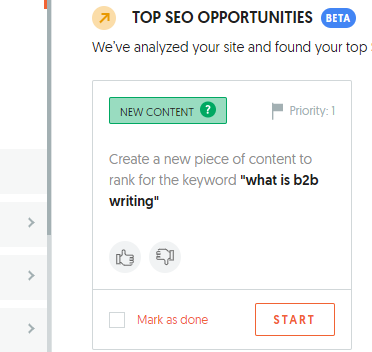
Neil Patel (or, more accurately, his Ubersuggest service) um, suggested that I say something about B2B writing.
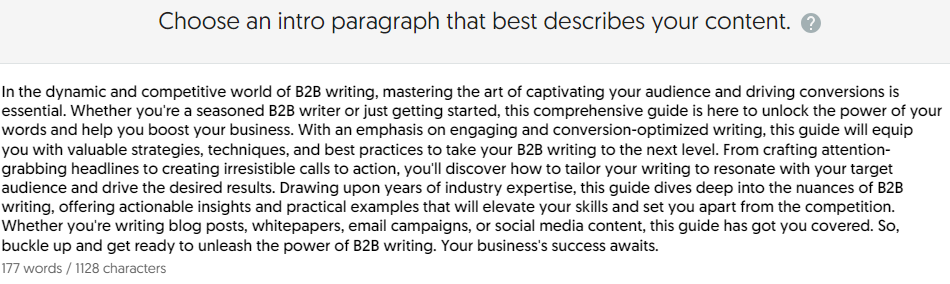
And then he (or it) suggested that I use generative artificial intelligence (AI) to write the piece.
I had a feeling the result was going to suck, but I clicked the “Write For Me” button anyway.
Um, thanks but no thanks. When the first sentence doesn’t even bother to define the acronym “B2B,” you know the content isn’t useful to explain the topic “what is B2B writing.”
And this, my friends, is why I never let generative AI write the first draft of a piece.
So, what IS B2B writing?
Before I explain what B2B writing is, maybe I’d better explain what “B2B” is. And two related acronyms.
- B2B stands for business to business. Bredemarket, for example, is a business that sells to other businesses. In my case, marketing and writing services.
- B2G stands for business to government. Kinda sorta like B2B, but government folks are a little different. For example, these folks mourned the death of Mike Causey. (I lived outside of Washington DC early in Causey’s career. He was a big deal.) A B2G company, for example, could sell driver’s license products and services to state motor vehicle agencies.
- B2C stands for business to consumer. Many businesses create products and services that are intended for consumers and marketed directly to them, not to intermediate businesses. Promotion of a fast food sandwich is an example of a B2C marketing effort.
I included the “B2G” acronym because most of my years in identity and biometrics were devoted to local, state, federal, and international government sales. My B2G experience is much deeper than my B2B experience, and way deeper than my B2C expertise.
Let’s NOT make this complicated
I’m sure that Ubersuggest could spin out a whole bunch of long-winded paragraphs that explain the critical differences between the three marketing efforts above. But let’s keep it simple and limit ourselves to two truths and no lies.
TRUTH ONE: When you market B2B or B2G products or services, you have FEWER customers than when you market B2C products or services.
That’s pretty much it in terms of differences. I’ll give you an example.
- If Bredemarket promoted its marketing and writing services to all of the identity verification companies, I would target less than 200 customers.
- If IDEMIA or Thales or GET Group or CBN promoted their driver’s license products and services to all of the state, provincial, and territorial motor vehicle agencies in the United States and Canada, they would target less than 100 customers.
- If McDonald’s resurrects and promotes its McRib sandwich, it would target hundreds of millions of customers in the United States alone.
The sheer scale of B2C marketing vs. B2B/B2G marketing is tremendous and affects how the company markets its products and services.
But one thing is similar among all three types of writing.
TRUTH TWO: B2B writing, B2G writing, and B2C writing are all addressed to PEOPLE.
Well, until we program the bots to read stuff for us.
This is something we often forget. We think that we are addressing a blog post or a proposal to an impersonal “company.” Um, who works in companies? People.
(Again, until we program the bots.)
Whether you’re marketing a business blog post writing service, a government software system, or a pseudo rib sandwich, you’re pitching it to a person. A person with problems and needs that you can potentially solve.
So solve their needs.
Don’t make it complex.
But what IS B2B writing?
Let’s return to the original question. Sorry, I got off on a bit of a tangent. (But at least I didn’t trail off into musings about “the dynamic and competitive world.”)
When I write something for a business:
- I must focus on that business and not myself (customer focus). The business doesn’t want to hear my talk about myself. The business wants to hear what I can do for it.
- I must acknowledge the business’ needs and explain the benefits of my solution to meet the business needs. A feature list without any benefits is just a list of cool things; you still have to explain how the cool things will benefit the business by solving its problem.
- My writing must address one, or more, different types of people who are hungry for my solution to their problem. (This is what Ubersuggest and others call a “target audience,” because I guess Ubersuggest aims lasers at the assembled anonymous crowd.)
Again, this is hard, but not complex.
It’s possible to make this MUCH MORE complex and create a 96 step plan to author B2B content.
But why?
So now I’ve answered the question “What is B2B writing?”
Can Bredemarket write for your business? If so, contact me.
Four Restrictions on Bredemarket’s City of Ontario Business License, and Why You Should Care
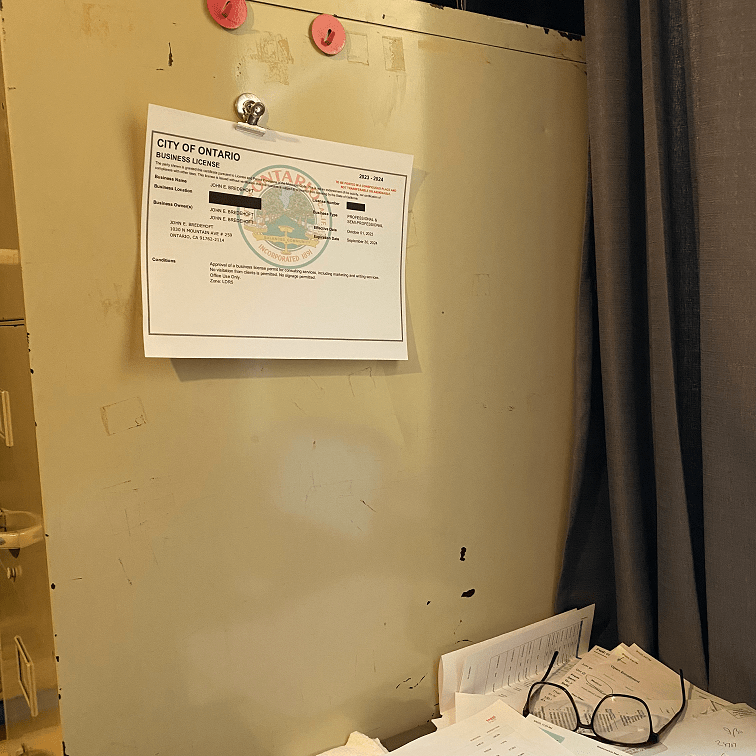
Remember when I said that I spent Labor Day renewing my City of Ontario business license?
Well, the approved license arrived in the mail today.

The electronic mail, not the snail mail.

This coming year will be the fourth year of Bredemarket’s existence. I started in August 2020, but it took a few weeks for the city business license and other paperwork to complete.
Now while the City of Ontario (California, not Canada) business license renewal entitles me to conduct business in the city as Bredemarket (when coupled with the Fictitious Business Name statement I filed with San Bernardino County), it is not an official endorsement of my activity by the city, and is definitely NOT an endorsement of the call to action at the end of this post.
More importantly, the City of Ontario has imposed four significant restrictions on the way that Bredemarket conducts business. Do they affect how I do business with you? We’ll see.
First: I must post the business license in a conspicuous place
Done.

Although as we will see when we get to the third restriction, the whole meaning of “conspicuous place” is irrelevant to Bredemarket’s business.
Second: I can’t conduct just ANY business
The business license is issued “for consulting services, including marketing and writing services.” The license does NOT allow me to bake pies, perform auto maintenance, launch rockets into space, or perform heart surgery.

Dang guvmint.
Third: No visitation from clients
Remember how the city requires that I post my license in a conspicuous place? Well, the city also prohibits me from having clients visit me at my work location. This makes sense, since residential neighborhoods aren’t really built to have a bunch of cars park outside a house where business is conducted.

This means that when I do have a person-to-person meeting (rather than a videoconference) to conduct business, the meeting has to be offsite. For example, a couple of years ago I met with an advisor at Brandon’s Diner in Upland. (And the lunch was tax deductible!)
Fourth: No signage permitted
Again, because my work location is in a residential neighborhood, I can’t put a huge neon sign in my front yard with the Bredemarket logo.

And no, I can’t put a small neon sign in my front yard.
Or any neon sign.
I wonder if the city will let me put signage on my mailbox? Actually, the UPS Store probably won’t allow that either.

So what?
The reason that these city restrictions don’t matter to you is because (since we still have the Internet) Bredemarket is perfectly capable of conducting its business online.
You don’t have to look for my business sign, or a parking place in front of the place where I conduct business. Why not? Because I can meet with you via Google Meet or another videoconferencing service, or we can talk on the phone, or even exchange emails with each other.
I’ve worked from home since March 2020—first for IDEMIA, then for Bredemarket, then for Incode Technologies, then for Bredemarket again. During that time I’ve been able to meet all of the needs of Bredemarket clients remotely, despite no public parking and no signage.
Well, almost all the needs. I haven’t been able to perform aortic valve surgery for my clients.
Dang guvmint.
The city does not endorse this call to action
Do you want to use the marketing and writing services of a government-licensed consulting firm?
More importantly, do you want to use the marketing and writing services of a consulting firm that ensures the right questions are asked at the beginning of the project, and that you have complete input during the writing and review cycles?
Authorize Bredemarket, Ontario California’s content marketing expert, to help your firm produce words that return results.
- Email me at john.bredehoft@bredemarket.com.
- Book a meeting with me at calendly.com/bredemarket.
- Contact me at bredemarket.com/contact/.
- Subscribe to my mailing list at http://eepurl.com/hdHIaT.
Thoughts on friction from 2019 and 2022
I’ve been going through some of my other blogs and finding things that I forgot I wrote. For example, I wrote something on my Empoprise-BI blog entitled “When retailers INTRODUCE friction.”
It’s not surprising that I was writing about frictionless experiences in 2019. After all, my then-employer IDEMIA was promoting the touchless fingerprint reader MorphoWave and its use in places like dining halls.

But I was surprised that my Empoprise-BI 2019 post started with a discussion on online shopping cart abandonment.
And there’s a dramatic financial incentive to make shopping frictionless – roughly 70% of online shopping carts are abandoned without the customer purchasing anything, a potential loss of revenue for the company. The same thing can happen at old-fashioned physical stores, except that in this case the abandoned shopping carts are real shopping carts – and if there’s frozen food sitting in an abandoned shopping cart, you have to deal with both lost revenue and lost inventory.
From https://empoprise-bi.blogspot.com/2019/04/when-retailers-introduce-friction.html
Why was I surprised? Because three years later Allen Ganz (a now-former coworker at my current company) discussed shopping cart abandonment, emphasizing the need for a frictionless experience.
In identity proofing, friction results when it takes significant effort for a person to prove who they are. If it takes a user too long to prove their identity, the user may become frustrated and give up. This hurts businesses that depend upon digital onboarding for their customers.
From https://incode.com/blog/removing-friction-from-capture-when-proving-identities/
Whether you conduct business online or in-person, it’s wise to take an audit of your business practices to make sure you’re not throwing up roadblocks that keep your customers away. And not just the identity stuff; are there other things that make it hard for customers to buy from you?
Maybe your business hours aren’t convenient for people, like the restaurant that wasn’t open during breakfast and dinner hours, or…
Don’t count your bears, and don’t forget them either in Upland
I recently talked about planning for various scenarios, but I didn’t image something like this. Consider the following:
- Amazon delivery drivers are measured on their ability to deliver packages. Kinda like U.S. Postal Service employees, but Amazon has better measurement tools.
- Upland, California lies just south of a sparsely inhabited mountain range. Even though the mountain range has semi-desert conditions, the mountains are teeming with wildlife.
Put those two together, and you have this story from Los Angeles’ ABC station.
Yes, that’s an Amazon driver in the foreground, raising his hands to try to scare a bear away so he can make his delivery. He was successful.
The full Storyful video can be found here. (And of course it’s a Ring video. You didn’t expect a Nest video, did you?)
By the way, if your business has a story to tell, Bredemarket can help. (Psst: Upland businesses should scroll to the end of this page for a special “locals only” discount.)
If you would like Bredemarket to help your business tell your story…
- Send me an email at john.bredehoft@bredemarket.com.
- Or go to calendly.com/bredemarket to book a meeting with me.
- Or go to bredemarket.com/contact/ to use my contact form.
Don’t count your chickens, but don’t forget them either

A business owner needs to prepare Plan A and Plan B, and usually several other plans besides.
- What if one part of the business takes off beyond the business owner’s wildest expectations? (“Bredemarket will NEVER have to hire any employees…what, HOW many documents?”)
- What if that part of the business instead becomes an abandoned haven for crickets?

It’s important that the business remain as flexible as possible to prepare for possible eventualities, or at least the most likely ones. Don’t worry about the unlikely scenarios – for example, I never have to plan for a scenario in which Will Smith slaps someone and cusses the person out on live TV…wait, what’s that?

Planning…and writing
At Bredemarket, I’ve had business spring out of nowhere quickly, and I’ve had business not spring out of nowhere quickly.
- In one case the time from initial contact to completed work and invoice was less than a day.
- In other cases it took a little longer; it took me nearly eleven months to land a particular contract.
- In other cases…I’m still waiting.
But that was the past, and now I face the future. I’ve been thinking about this a lot, especially as I explore various ways to reach my goals for 2022 (including the super-secret unpublished third goal). And I’m wondering how various events could affect these goals…and how the events can affect other events.
- If event X occurs, how does this affect goal 1 and 3?
- If event Y occurs, how does this affect goal 1 and 3?
- If event X and event Y occur, then what happens?
Because I’m a writer, I have to write, and I’ve already started thinking through some of the “what ifs” attached to some of these events, and writing some draft communications that deal with the various events, should they happen.
But I’m leaving them in draft mode.
Because maybe neither event X nor event Y will occur.
But I’ll be ready if event Z occurs two years from now.
Planning…and planning
So how do you plan for events that may or may not occur?
Like any project, you start by taking a step back and examining the potential event at a high level.
And you start questioning, with not only “so what?” questions, but also with repeated “why?” questions (five whys is popular, but it can be any number). If you’ve never seen the five whys in action, watch this video. (H/T Mark Paradies at TapRooT.)
OK, maybe not that video.
But the important thing is to think about a potential event, what it means, and what ramifications emerge from that event if it occurs.
And then proceed accordingly…if the event happens.
Coffee and hair styling in Ontario, California
My local area is undergoing a transformation, with a number of new businesses appearing in the area. Oddly enough, I keep on seeing two distinctly different types of businesses appearing here.
Over the last couple of years, a number of coffee shops have opened in downtown Ontario (California, not Canada). I’m unintentionally going to leave many of them off this list, but a few of the new coffee shops include Mestiza Cakehouse and Cafe, Special Needz Coffee (with a second location inside 4th Sector Innovations), and Starbucks.
At the same time, a number of new hair stylists and barber shops have opened in downtown Ontario. Trust me, there’s a bunch of them.
I don’t know if this is public knowledge (it’s been discussed at the Ontario IDEA Exchange and other B2B forums), but downtown Ontario is even on track to have an establishment that combines the two business types. (Of course, a few of you have already figured out who I’m talking about.)
I guess that’s real life.
If you have a business and need to stand out from the crowd:
- Send me an email at john.bredehoft@bredemarket.com.
- Or go to calendly.com/bredemarket to book a meeting with me.
- Or go to bredemarket.com/contact/ to use my contact form.

How can small and smaller businesses market themselves?
While Bredemarket sends its solicitations to a (targeted) group of businesses, Bredemarket itself receives solicitations from other businesses. However, sometimes it seems that the solicitations that I receive aren’t targeted that well.
(Of course, perhaps some of the recipients of my solicitations would claim that my targeting attempts are also deficient, so I should watch out about casting stones.)
If you ignore the completely off-the-wall solicitations that I receive, some of the more serious solicitations just do not match Bredemarket’s needs.
For example, I’ve received at least one pitch from a company that offers to provide all of the human resources services that Bredemarket needs for a low monthly fee.

A fine service to be sure…but since Bredemarket is a sole proprietorship that doesn’t engage other people as either employees or subcontractors, a human resources service would be overkill.
The United States Small Business Administration (SBA) defines a “small business” as a company with fewer than 1,500 employees and an average of $38.5 million in average annual receipts. My one-person company certainly has fewer than 1,500 employees, and I’m probably not revealing any confidential information when I say that Bredemarket’s average annual receipts are less than $38.5 million.
So I guess Bredemarket is a “very” small business.
But there are even smaller businesses.
Nano-small businesses of the past
Just to put things into perspective, Bredemarket has a city business license, has filed a fictitious business name statement with San Bernardino County, has a published address at which it receives mail, has received an Employer Identification Number from the Internal Revenue Service (IRS), and files quarterly estimated taxes with both the IRS and California’s Franchise Tax Board.
Years ago, I operated a much smaller business that didn’t have any of those things.
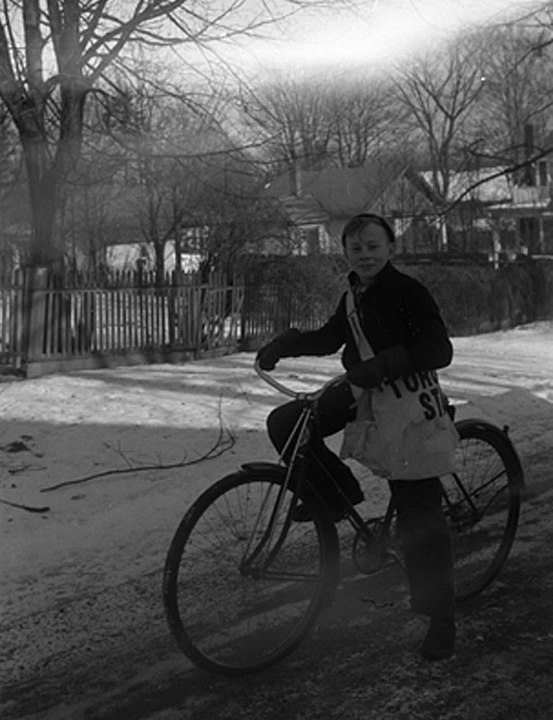
Specifically, I was a paperboy.

Way back in the Dark Ages (before the Kardashian/Jenner women became famous independent of O.J. Simpson), newspapers were delivered by people under the age of 18. These days, the few physical newspaper deliveries that I see are performed by adults driving cars and throwing papers out the window. Former papergirl Molly Snyder explains the shift:
The shift in carriers’ age was due partly to the disappearance of evening newspapers that provided student-friendly delivery times. The accessibility of internet news, growing concerns for the safety of un-escorted kids, and new distribution procedures also affected the change.
“To remain profitable, we phased out the ‘neighborhood shacks’ and home drop offs and migrated to larger distribution centers dealing solely with adult distributors,” said Ronald Zinda, distribution supervisor for the Milwaukee Journal Sentinel of 45 years.
Nano-small businesses of the present
Even with the disappearance of paperpeople, there are a number of jobs today that fly under the radar of the Internal Revenue Service, city business license departments, and other government regulatory bodies. Here are a few examples; while some of these types of business may actually comply with government reporting requirements, many of them don’t.

- The person on the street corner selling fruit treats.
- The person on the street corner selling flowers.
- The teenager who comes up to your door selling candy for a school club, a sports team, or as part of a supposed program to keep kids out of trouble by having them walk around neighborhoods and sell stuff after dark.
- The person who sells homemade crafts.
Bredemarket can’t really serve these nano-small businesses. When your products (fruit treats, flowers, or whatever) only cost a few dollars, you’re not going to pay Bredemarket hundreds of dollars to create content for your website or social media outlet. In fact, you probably don’t even HAVE a website or a social media outlet.
Which businesses NEED Bredemarket’s services?
Let’s move up a step and look at small businesses that have an established online identity, do their best to comply with business requirements, and meet the IRS definition of a (non-hobby) ongoing concern.
Now any of those businesses COULD use Bredemarket’s services…but many of them don’t NEED Bredemarket. A number of small businesses are doing just fine in meeting their business goals, and are perfectly capable of taking care of the written communications necessary to keep the business profitable.
But what about the businesses that have particular goals that they can’t meet? Specifically, what about businesses that need targeted, regular online content to make customers aware of the business, but the business owners don’t have the time (or the inclination) to create the necessary online content?

If you own a business and need a consultant to help you create online content for your website, your Facebook or LinkedIn page, or for another communication method (even paper), Bredemarket can help. My “What I Do” page lists the types of written content that I can create for your business, including both short length (400-600 word) and medium length (2800-3200 word) content. (No, I don’t author individual tweets, but I guess I could author a thread if you like.)
If you’re interested in using my marketing and writing services, talk to me. I can collaborate with you to ensure that your business goals are met and your business messages are disseminated.
- Send me an email at john.bredehoft@bredemarket.com.
- Or go to calendly.com/bredemarket to book a meeting with me.
- Or go to bredemarket.com/contact/ to use my contact form.
COVID is no longer profitable (for a few, anyway)
In the spring of 2000, the COVID-19 crisis brought vast changes to economies throughout the world. Some businesses completely ground to a halt, such as sporting events, while a number of new businesses sprang up.
Now that COVID is (hopefully) receding, some of those newer businesses are fading away.
Take Maskalike – please!

Before COVID hit, you generally only saw people wearing masks in operating rooms, unless you visited Disneyland and saw Asian visitors walking around with masks. All of a sudden EVERYONE was wearing masks, and you had people getting creative in their design. Maskalike’s gimmick was to create masks that looked just like the portion of your face that was being covered by the mask.
But Maskalike is closing down in a few short days.
It’s been an amazing run bringing thousands of smiles to people, but this project was always supposed to be temporary and we’re getting busy with new ideas. If you have any questions, or want to acquire this company, get in touch. Otherwise, get your order in!
Let’s face it: people aren’t going to be buying a lot of masks any more. In fact, I’m sure that some people never want to see a face mask ever again.
Perhaps some novelty company will buy Maskalike and include it in its catalog, along with other gimmicky things.
If not, it was good while it lasted.
And I’m still keeping my Rodrigo’s mask that I won on Instagram, even though I have no idea where I’m going to wear it.