Who In Your Company Knows What Due Dates Are?

Proactive project management is possible, as the (anonymized) Bredemarket example later in this post illustrates. But first I am compelled to talk about an uncomfortable topic, due dates.

What is a due date?

Some people in a company don’t know what a “due date” is. If the work isn’t done by this Friday, it will get done by next Friday. Or whenever.

But there’s one part of your company that lives and breathes due dates. I talked about this in March 2025 as it relates to Bredemarket’s clients.

“I still enjoy the satisfaction when my client submits a persuasive, compliant proposal. A day before the due date, even.”

Which is better than submitting a proposal AFTER the due date.
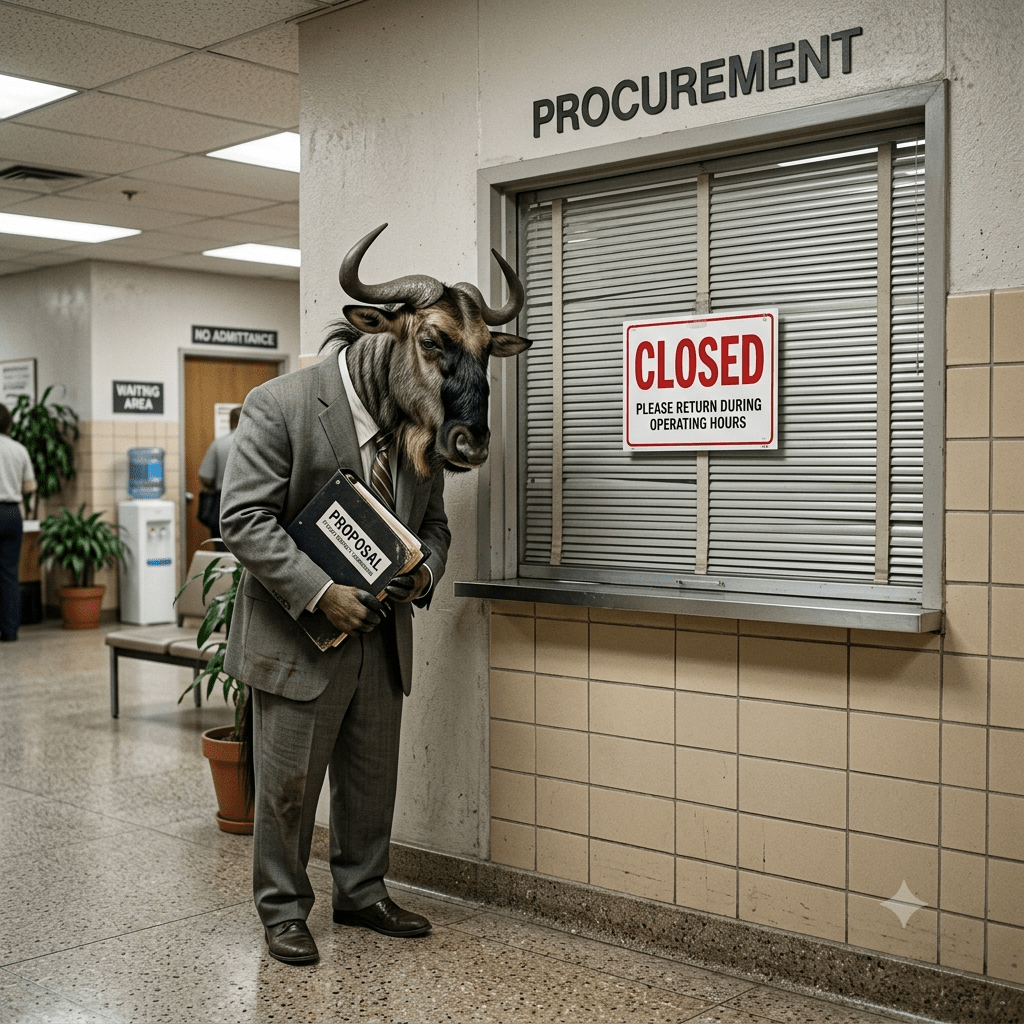
Google Gemini.

Why does Proposals care about due dates?

Why does Proposals tend to care more about due dates than, say, Product Marketing?

Because the latter due dates are set internally. And the “agile curse” is that you can, and often do, change anything on a whim.

“The Perpetual Roadmap.” Google Gemini/Lyria. Public Domain.

Contrast with proposal due dates that are set externally by an outside entity such as a government agency that receives funding for a particular fiscal year. Funds that you use or lose.

How can others implement due dates?

For your organization’s product marketing initiatives, do you adopt a “we’ll do it when we get to it” approach?

You don’t have to.

Last week my client and I were getting proactive about an end customer’s anticipated requests. I was recording these in Excel.

Then I added an “anticipated due date” column.

Which allowed me to ask a question.

To preserve client and end customer confidentiality, I have obfuscated and fictionalized the question that I asked.

“Hey, Fernando, the widget manufacturer says that they will want a user guide, whatever that is.

Google Gemini.

“I doubt they’ll want it when they deliver their green widget pitch in Brooklyn next Tuesday, but is there a chance they’ll need it when they meet with Jay Leno’s folks the following week?”

Proactive project management involves transparency between the outside project manager (me), the client, and the end customer. Since we knew that the end customer was meeting with the organization of Jay Leno, we could ask the right questions and schedule a deliverable before the end customer even asked.

Google Gemini.

And we had a due date.

So what?

But what does this mean for you?

It means that Bredemarket can proactively manage your projects, whether they involve content, proposals, or analysis.

I provide product management consulting for identity, biometric, and technology products. In fact, I am a leading biometric product marketing consultant. (Among others.)

Google Gemini.

If you need an outside consultant to manage your product marketing projects, let’s talk.

Content, proposals, and analysis for tech marketers.

Let me help you…forge your future

.
Forge Your Future.

Uncertainty Below Ground Level

I previously wrote about how marketers can navigate the “time of uncertainty,” including three suggested tips:

  • De-emphasize long term planning
  • Expect the unexpected
  • Move quickly

In short, agile to the extreme.

But writers aren’t the only ones faced with uncertainty. 

If these anonymous survey results are to be believed, despair is setting in among…oil company executives.

Yes, oil company executives. I keep on hearing ads for some TV show that imply that the oil industry is invincible. Um…ask John Connally.

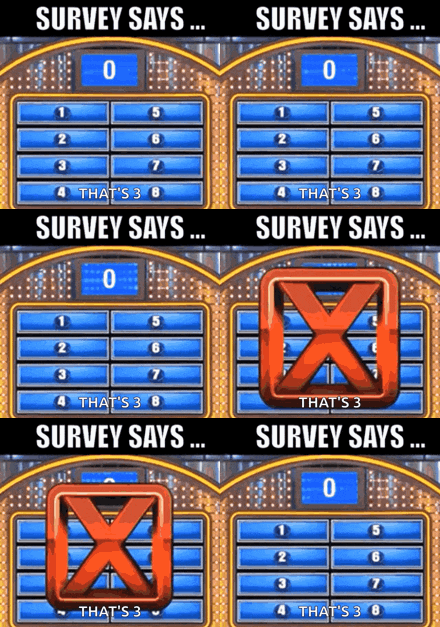
Survey says

Richard Dawson did not kiss anyone in this survey.

Back to the survey, conducted by the ultra libtards at the Federal Reserve Bank of Dallas.

“Uncertainty around everything has sharply risen during the past quarter,” another executive said. “Planning for new development is extremely difficult right now due to the uncertainty around steel-based products.”

But what of the politicians in high places who are pro-oil (well, except when they promote a certain woke electric car) and are doing everything they can to encourage oil production?

“The threat of $50 oil prices by the administration has caused our firm to reduce its 2025 and 2026 capital expenditures,” an executive said. “‘Drill, baby, drill’ does not work with $50 per barrel oil. Rigs will get dropped, employment in the oil industry will decrease, and U.S. oil production will decline as it did during COVID-19.”

I wonder if one of my old employers is still conducting its three year planning exercises.

Agile content

I purposely chose the title “Agile content” for this post, because for some of you “scrummy” individuals it will easily convey what I want to say: content can be tweaked as needed.

Pair programming, an agile development technique used by XP. By Lisamarie Babik – Ted & IanUploaded by Edward, CC BY 2.0, https://commons.wikimedia.org/w/index.php?curid=9546406

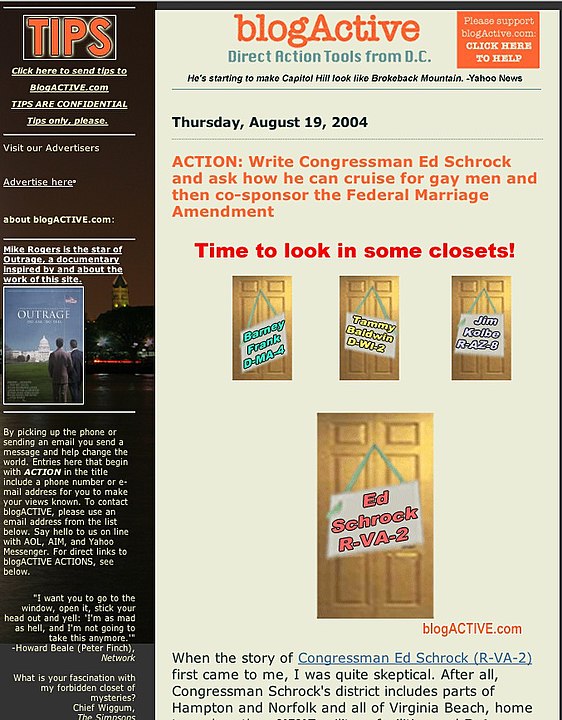
But I could have chosen a title that did not resonate as well with modern audiences: “Newer weblog content.”

By Valleyhollandman – blogactive.com, CC BY-SA 3.0, https://commons.wikimedia.org/w/index.php?curid=24045040

After all, some of you remember what blog (weblog) posts were back in the day. They were not conceived as permanent, immovable statements, but were more transitory (akin to diaries) and could be adapted over time.

Changing my message

Even today, I’ve practiced adaptation with two versions (so far) of Bredemarket’s goals for 2021. (Perhaps it’s time for me to look at them and see if they need revision.) And others have done the same thing, recycling and updating content.

We can practice “Agile content,” regardless of whether or not we have a good idea of what we want to say.

  • Sometimes we know what we want to communicate. We set our goal, create content that meets our goal, and share it. Back in December, I had a pretty good idea of the goals that I wanted to set for 2021, so I shared them. The subsequent tweak that I made was relatively minor.
  • But sometimes we DON’T know what we want to communicate. Perhaps you’re entering a new market or pitching a new product, and you don’t know how the potential customers are going to react. Perhaps your initial idea is COMPLETELY wrong and will need to be COMPLETELY revised.

In the latter case, rather than waiting for all the focus groups and scientific studies and everything else (which can kill productivity), one option is to put something up NOW. And if the customers don’t like parts of it, adapt the content.

Or perhaps you keep on building new content that effectively supersedes the old.

  • For example, last year I created a page here that described the Bredemarket 400E Short Editing Service. Just between you and me, I have NEVER sold this particular service, and this is the first time in months that I have mentioned it. But I never pulled the “400E” page down, because for all I know I may be contacted tomorrow by someone who has content and needs me to edit it.
  • At the same time, all of the newer content that I have created on this website and elsewhere emphasizes my writing services rather than my editing services.

Changing YOUR message

The same thing that applies to my business can also apply to yours.

Maybe you want to test some content, either broadly (by linking to the content on the main page of your website and/or on your social media) or in a limited fashion (by only selectively sharing the link to the content). As you gather feedback about the content you have created, you can either leave it as it, tweak it, make wholesale changes to it, or delete it entirely.

Of course you need to remember that past content can still hang around somewhere, because the Internet never forgets. But in some cases it’s better to try some content out NOW, rather than waiting for all the facts.

As one of my clients likes to remind me, the perfect is the enemy of the good.

Which is why that same client had me create some content several months ago, and revise and expand on it as needed and as needs change. The client could have waited until now to release the content, which includes an important new product feature that couldn’t have been communicated several months ago. But then the client would have missed out on months of sales, as well as feedback on the original iteration of the content.

I’ll confess an ulterior motive: as a consultant, I get paid more to create and update content than I do to create content and do nothing with it afterwards. But the client benefits also because it starts using the content more quickly, leading to more sales.

My earlier calls to action didn’t communicate all of these options

Do you need Bredemarket’s help in content creation? Contact me.