I have been known to tell coworkers that I was going to “play” with something. Some were horrified, but others understood completely.
Regardless of the emotions you want to convey in the final content, it’s OK to let loose while you develop your ideas.
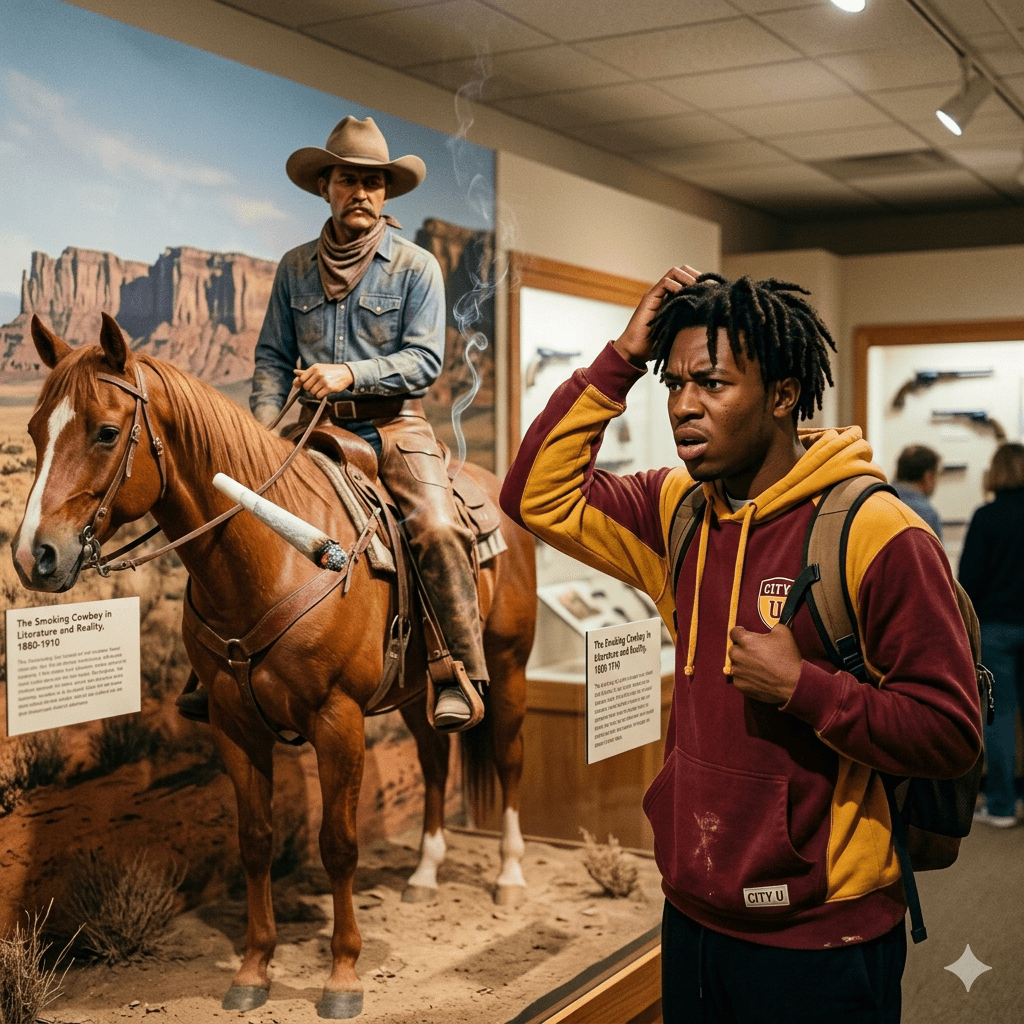
Luckily for me, a client recently requested some “fun” concepts. Obviously I can’t share the text I provided to the client, but here is a altered representation of one small idea I had.
Google Gemini.
So go ahead and have fun. (Even if you can’t tell anyone that you’re having fun.)
Incidentally, one of the seven questions I ask my clients is about emotions.
I ask, then I act.
If you want to me “act” on behalf of your company and develop product marketing content, proposals, and analysis, then click below and schedule a free meeting with me.
Since I am not really a business-to-consumer guy, I tend to think of hungry people (target audiences) who number in the hundreds or thousands rather than millions. For example, if you want to sell your identity/biometric solutions to banks with total assets of over US$100 billion, there are only about 100 of them.
Marketing products in this environment requires a completely different mindset. Rather than hiring a Kardashian or Jenner as your influencer or spokesperson, you’d hire a Buffett. (If you could. You probably can’t, unless he owns the company.)
Therefore you need to concentrate on the players who make buying decisions, from the CxO level down to the users. That is the way to get your product into the enterprise.
But if enterprise penetration is your goal, you’re doomed to failure.
Why an enterprise-only strategy will fail
For example, enterprises usually don’t buy automated biometric identification systems. Government agencies do.
Believe me, I know. Many identity/biometric firms sell to the U.S. Department of Homeland Security, and their orders have been disrupted on and off since last October.
One acronym that I love to use is B2G—business-to-government. But I’ve learned the hard way that many people have never heard this acronym before. (Scan the job descriptions and spot the ones for marketing to government agencies that require “B2B” experience.)
So Bredemarket doesn’t seek clients that only sell to enterprises. I seek those that sell to organizations, both private and public.
If your identity/biometric or technology company markets products to organizations and you need strategic and tactical assistance, talk go Bredemarket.
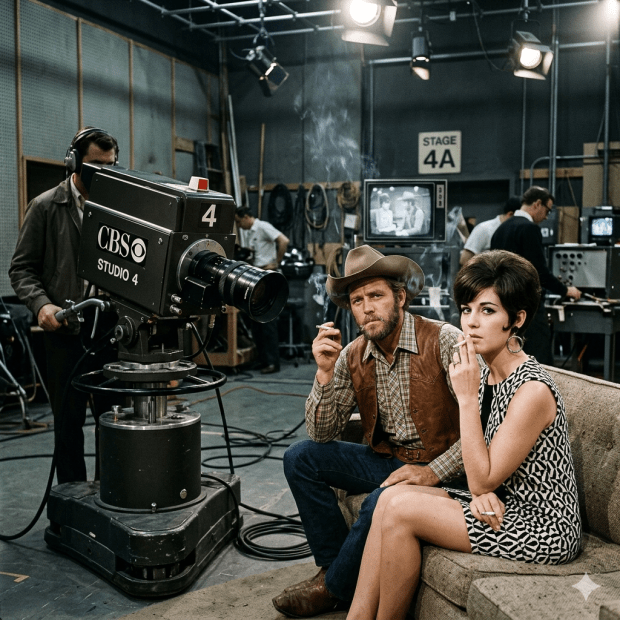
You know that the video I shared earlier begged to be expanded into a television show. And that for the proper setting, the show itself would market products in a way that is illegal today; yes, the show would be sponsored by Marlboro.
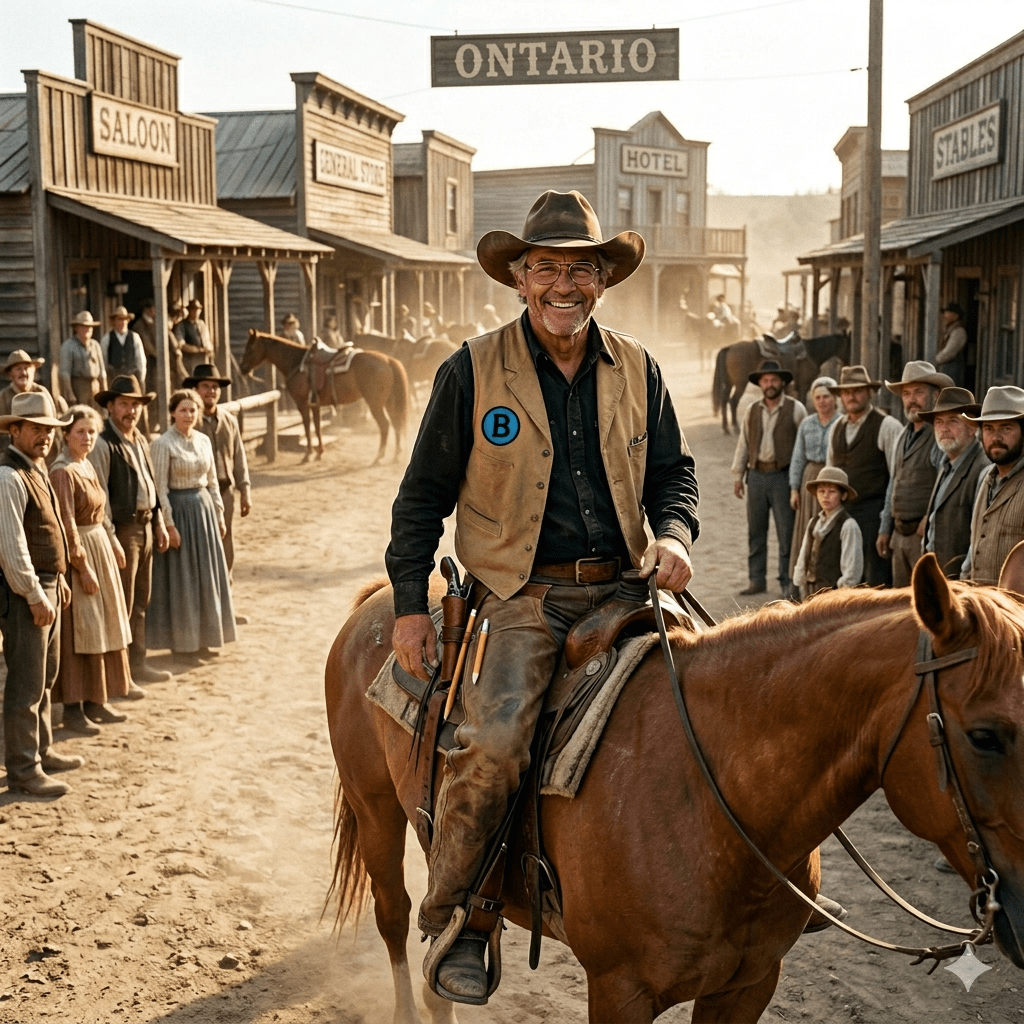
Google Gemini.
So without further ado…
“Product Marketer For Hire,” Sunday at 9pm: “The Stranger”
The introduction to the television show “Product Marketer For Hire.”
(Sharp-eyed Inland Empire residents will notice that this depiction is entirely fictional, since the real “Main Street,” officially known as Euclid Avenue, is much wider and less dusty than the street depicted here. Allow me artistic license.)
As the Ontario townsfolk were gathered on the street in late afternoon, a mysterious stranger rode into town. He was a most unusual man. For one, he was smiling, unlike the other strangers that have come before him. For another, his brown/tan/black official western wear issue (Montgomery Ward catalog, pages 333-334) was rudely interrupted by a blue patch with a “B” on it. There was something else odd about him, but no one spoke of it.
The mysterious stranger rode up to the saloon, dismounted his horse, and walked in.
Scene 2: The Saloon, Ontario
The mysterious stranger slowly walked to the bar and took a seat as the bartender eyed him warily.
(Hey, Inland Empire residents, I got that one right.)
As he sipped his drink, the stranger couldn’t help but notice the older man in a gray jacket staring at him. As everyone in the saloon quietly watched, the older man slowly walked toward the stranger.
“Sir,” said the older man.
“Yes?” asked the stranger.
The older man gestured toward the stranger’s belt. “Those aren’t guns you have in those holsters.”
The stranger paused. “No, they’re not.”
“In fact,” the older man scoffed, “they look like pencils.”
The stranger nodded. “Yes they are.”
The older man’s face betrayed the slightest smirk. “Why” – he paused – “would a man carry PENCILS in his holster?”
As the older man and the others in the saloon broke out into grins, the stranger eyed them all with a serious expression. He paused before responding.
In a loud voice the stranger replied. “Business.”
Everyone looked puzzled at that unexpected response.
After a long pause, the older man turned back to the stranger. “Sir,” he asked, “exactly what kind of BUSINESS are you in?”
Bredemarket has consistently argued AGAINST “me too” product marketing, and FORdifferentiating your identity/biometric product from its competitors. But your differentiators must resonate with your prospects.
This post lists three false differentiators, and why you should avoid them.
False differentiator 1: we’re a great place to work
Does your company description place undue emphasis on the shiny happy people who work for you? Their competitive salaries? Their unlimited PTO? Their community days? Their “best place to work” awards?
Who cares?
While you would think happy employees are important to prospects, they really aren’t. Enron was a best company to work for, but definitely did not deliver for its customers. Other companies are slave drivers, but customers love their products.
Save the “best place to work” mumbo jumbo for your careers page, not your prospect-facing content.
False differentiator 2: we’re a unicorn
Other companies take a different tack. Some emphasize their financial might: they’re a unicorn, a Series C, a NASDAQ-listed firm. Others take the opposite tack, asserting they are small and scrappy. (Bredemarket is in the latter category.)
So what?
Your prospects don’t care how big you are. Size doesn’t matter to them. Your performance does.
Stick the “unicorn” talk in your investor pitch decks, not on stuff your prospects read.
False differentiator 3: we have great features
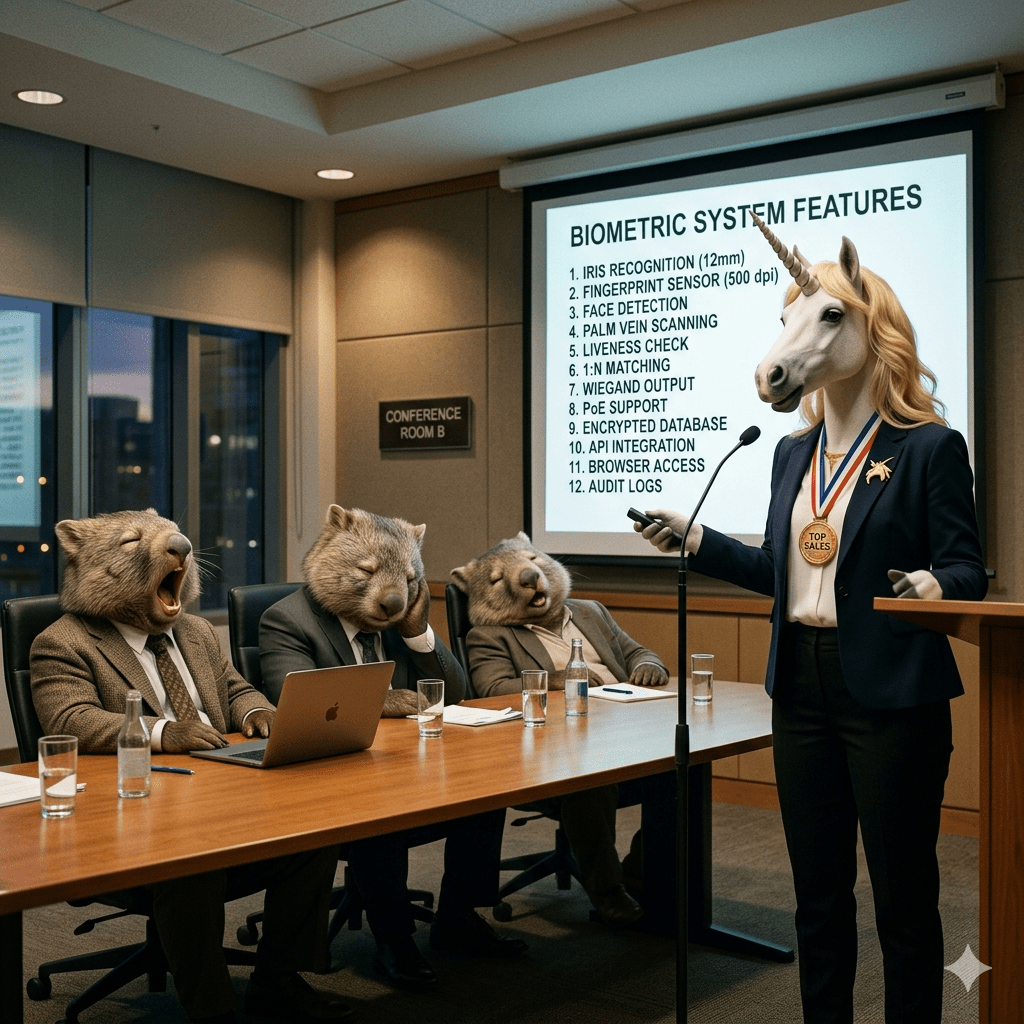
By now you’ve probably figured out that your customers care about your product, not your employee satisfaction or your valuation. So you start talking about your product and its impressive array of features. 1000 ppi fingerprint capture. Sub-second matching. Integration with over 100 third-party systems.
How so?
Prospects don’t care about your product and what it does. They care about what it does FOR THEM. Does it solve crimes and keep bad people off the streets? Does it ensure that bank account applicants really are who they say they are? Does it complete its checks quickly before e-commerce buyers abandon their shopping carts?
Talk benefits, not features. Save the feature lists for your sprints.
How do you isolate true differentiators?
Your prospects need to see why your product is great for them, and why competitor products are terrible for them. How your product achieves their objectives: get stuff done, make money.
So what are the differentiators and benefits of your product?
Bredemarket can help your identity/biometric firm with the strategy and tactics of marketing your product. My services and process help you position your product for your prospects.
Bredemarket: Services, Process, and Pricing.
Do you want to learn more? Go to https://bredemarket.com/mark/ and schedule a free meeting with me to learn how Bredemarket can benefit you, so you can fulfill the needs of your prospects.
Back when dinosaurs ruled the earth I was a technical writer at a software company. These were the days when software came with printed user guides, which I wrote.
I was NOT the de facto product marketer at this software company; the owner was. But during my tenure I observed how he marketed the evolving line of products through three distinct phases. I’m presenting these phase in the chronological order of the company, not the logical order.
Phase One: Multiple Related Products
When I joined Logic eXtension Resources (LXR), the company was transitioning from consulting work to becoming the leading software provider for users of the THEOS (formerly OASIS) operating system (Wikipedia). THEOS could be configured as a multi-user operating system that could run on (souped up) microcomputer hardware, and thus was an attractive alternative to minicomputers running UNIX.
And LXR provided the business applications: multiCALC for spreadsheets, multiWRITE for word processing, multiMAIL (which I recall nothing about), and multiPERT for project management.
Speaking of dinosaurs, this was when Lotus 1-2-3 was prominent in PC-DOS and MS-DOS circles. You may recall the key word associated with Lotus: integrated. (One prospect at a trade show asked if multiCALC was integrated—it wasn’t—but I doubt he even knew what the word meant.) But in the mind of the consumer, Lotus and the future Microsoft Office caused these seemingly disparate software packages to be regarded as a unified offering.
Google Gemini.
So the four products I mentioned were loosely related, inasmuch as all of them were business applications, and all ran on THEOS. “Hey, you know that spreadsheet you have? We have a word processor also!”
So we had customers using all four products, and I was eating my own wildebeest food and writing all my user manuals in multiWRITE.
Until I didn’t.
Phase Two: Multiple Unrelated Products
Behind the scenes, LXR shifted to the Macintosh computer for internal work, including my user manuals. We all admired the elegance of the Mac for developers and users alike.
At the same time, the owner decided to pursue his personal interest in education and launched a product that didn’t fit on THEOS and didn’t fit in the “multi” product line.
Enter LXR*TEST, an educational measurement/test generation software package for the Macintosh that created test banks of questions incorporating text and graphics. Questions from the test banks could then be incorporated into individual tests. And if you didn’t want to create your own test banks, third parties were creating test banks in LXR*TEST format.
So, how did the owner/product marketer market LXR*TEST along with all the “multi” products?
Google Gemini.
He didn’t.
The two product lines served two completely different target audiences. THEOS business prospects didn’t care a whit about test generation, and educators on Macs had no use for a THEOS word processor.
So LXR marketed separately to its target audiences, addressing their individual needs.
Phase Three: One Product
Eventually I left LXR and after a few years drifted into the wonderful world of biometrics.
I can’t remember exactly when LXR discontinued its THEOS products, but eventually it concentrated exclusively on LXR*TEST, bowing to the inevitable and releasing a Windows version to complement its Mac version.
Google Gemini.
Even after LXR was acquired, the parent company continued to offer LXR*TEST for years afterwards.
Of course this allowed LXR to devote its product marketing attention exclusively to the testing market.
Until LXR*TEST, and LXR itself, faded away.
Like several of my other employers that no longer exist in their initial form.
You spend months or perhaps years working on a product. Maybe you work on it in stealth, maybe with a few trusted confidants, or maybe you are transparent about what you are doing.
You create the vision, code the product, create the go-to-market materials, and train the salespeople.
After the months/years of preparation, you launch your product. And something’s not right.
Sometimes you need to re-position the product.
Sometimes you need to trash the product and re-position everything.
Glitch didn’t work
Johnny Rodgers tells the story of joining Stewart Butterfield’s company Tiny Speck, which had worked for years on an ambitious multi-player online game, Glitch.
“Glitch was an unusual, clever, heartfelt game. Within the realm of Ur, dreamt by eleven magical Giants, players created playful new identities for themselves. They designed and clothed their avatars to their heart’s content, delighting in new hats and a rainbow of possible skin tones. They crafted working music boxes and decorated their architecturally-unlikely homes.
“They planted and grew gardens and milked the local butterflies. They collected pull-string dolls of modern philosophers – including plausible Nietzche and Wittgenstein quotations. They climbed into enormous dinosaurs, passing through their reptilian intestines and out of their helpfully sign-posted butts.”
Users loved it, but Tiny Speck’s revenue wasn’t covering its expenses. Butterfield tried several different re-positionings, but nothing worked.
And the future looked even worse.
“Moreover, with the rise of smartphones and the incompatibility of our Flash-based game with mobile, we didn’t have an easy way to meet new players where they were spending their casual gaming time.”
Butterfield told Rodgers his idea: shut down Glitch entirely.
The alternative idea
And concentrate on an internal tool that Tiny Speck had developed for its own benefit.
Rodgers was shocked.
“Our IRC server?”
They were discussing an internal tool (based upon an old technology called Internet Relay Chat) that Tiny Speck used for chat, and many other things.
File uploads into the chat.
Categorization of the chats into channels.
Integrations with external systems.
“[W] whenever a new user signed up for Glitch, or bought credits, or wrote in for support, it showed up in a channel. Whenever we deployed code, or got a new review on the App Store, or tweeted from our Twitter account, it showed up in a channel.”
Storage of everything in a searchable database.
Talk about a pivot. Butterfield was going in an entirely different direction. What was the sign on Stewart Butterfield’s butt? He told Rodgers.
“I’m thinking of calling it Slack. We can come up with a better name later.”
In the past, I have gone on ad nauseam about how mobile driver’s licenses are more private than physical driver’s licenses. Here is how I stated it in July 2024:
“When you hand your physical driver’s license over to a sleazy bartender, they find out EVERYTHING about you, including your name, your birthdate, your driver’s license number, and even where you live.
“When you use a digital mobile driver’s license, bartenders ONLY learn what they NEED to know—that you are over 21.”
Which is extremely limited information.
But some age verification systems may provide your age in years, without necessarily revealing your exact date of birth.
That single number—whether it is 17, 27, or 57—reveals a lot more than we realize.
Let’s say that we know that Jill is 57 years old. This means that she was born in either 1968 or 1969. If Jill has lived her entire life in the United States, we immediately know several things about her with some certainty.
First, we know that she is part of Generation X, which means she may exhibit skepticism rather than corporate loyalty, and a comfort level with email rather than Telegram or what we now refer to as “voice calls.”
Second, we know the types of experiences she probably had in her childhood and teenage years. She probably played with Star Wars toys as a kid. She knew a little bit about Billy Carter, the funny Presidential brother. She feared for the lives of the hostages in Iran.
Third, we know the types of experiences she didn’t have. She never saw a cigarette commercial on TV. If she watched Star Trek, she saw it on an “independent” station, not on NBC during prime time. She never feared for the lives of the Israeli Olympians in Munich.
It’s not a lot to go on, and it may not be 100% accurate if Jill grew up in a household that viewed television as demonic.
But it’s enough for a product marketer to shape age-sensitive product marketing.
But if your product appeals to some ages more than others, knowing the ideal age of your target audience personas shapes your content. If your target audience is just out of college, “I can’t believe I ate the whole thing” is meaningless to them.
The National Institute of Standards and Technology (NIST) isn’t the only entity that is seeking to combat facial recognition demographic bias. The Center for Identification Technology Research (CITeR) is doing its part.
The Problem
NIST and other entities have documented facial recognition accuracy differences related to skin tone. This is separate from the topic of facial analysis: this relates to facial recognition, or the identification of an individual. (As a note, “Gender Shades” had NOTHING to do with facial recognition.)
It’s fair to summarize that the accuracy of an algorithm depends upon the data used to train the algorithm. For example, if an algorithm is trained entirely on Japanese people, you would expect that it would be very accurate in identifying Japanese, but less accurate in identifying Native Americans or Kenyans.
Many of the most-used facial recognition algorithms are authored by North American/European or Asian companies, and while the good ones seek to employ a broad data set for algorithm training, NIST and other results document clear demographic differences in accuracy.
The Research
The Center for Identification Technology Research (CITeR) is a consortium of universities, government agencies, and private entities. The lead entity in CITeR, Clarkson University, has initiated research on “improving equity in face recognition systems.” Clarkson is using the following methods:
Establish a continuous skin color metric that retains accuracy across different image acquisition environments.
Develop a statistical approach to measure equity, ensuring FR results fall within a precise margin of error.
Employ new FR systems in combination with or instead of existing measures to minimize bias of results.
In this work, Clarkson is cooperating with other entities, such as the International Organization for Standardization (ISO) and the FIDO Alliance.
The final goal is to make facial recognition usable for everyone.
Your problem
Is your identity company and its product marketers also working to reduce demographic bias? How are you telling your story? Bredemarket (the biometric product marketing expert) can help with strategic and tactical solutions for your marketing and writing needs.
Bredemarket services, process, and pricing.
If I can help your firm with analysis, content, or even proposals in this area, talk to me.








 Bredemarket