

I created this (again with Canva, Google Gemini, and Google Lyria) for self-promotion.
Tag Archives: product marketing
The Precision Trap

I recently converted my blog post “Top 3 Identity/Biometric Marketing Mistakes: Avoid These False Differentiators” into a video, “Avoid(ing) False Differentiators.”
So I figured I should go all out on Google-powered repurposing and I used Lyria to create the 30-second song “The Precision Trap.”
Google described it as “a slick, modern Dark Synth-Pop track inspired by the core concepts from the article on avoiding false differentiators.” But with only 30 seconds to work with, it can’t match the detailed take of the video. No great place to work awards, no unicorns, not even a single feature.
But it’s catchy.
My previous Lyria efforts covered topics such as fingerprint matching, my biometric product marketing expertise, early FBI AFIS efforts, and content-proposal-analysis “pages left to go.” You know, the usual songwriter themes.
Oh, and Bredebot has a Lyria song also about wombat teamwork. Because Taylor refuses to talk about it, someone—I mean something else must.
Avoiding False Differentiators
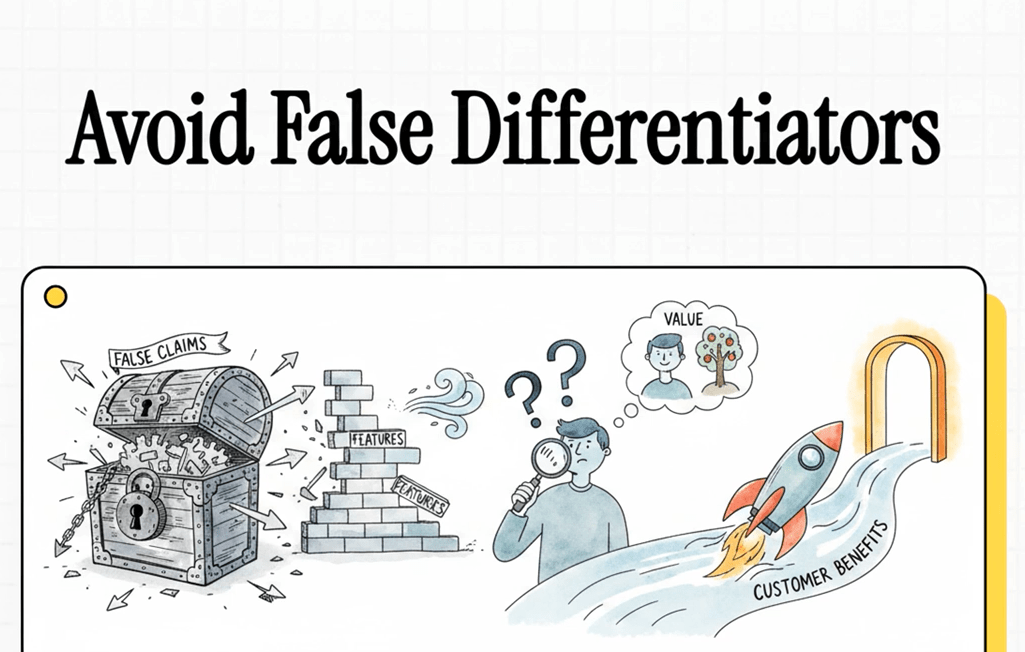
This video is about three common marketing errors made by identity/biometrics companies.
If this seems familiar, that’s because it is based upon a blog post I wrote a month ago.

For those keeping score, this is Bredemarket’s third NotebookLM video, and the second based upon a Bredemarket blog post. A nice way to repurpose text in video form.

But let’s ask the uncomfortable question. Does NotebookLM’s current video capabilities actually enhance Bredemarket’s own marketing? Sure it gives me another avenue to get my message out, but the common look of NotebookLM output results in a message that is…not differentiated.
There are some customization options when creating videos, so maybe I should explore those more.
Anyway, this is on YouTube also.
How Do You Talk About the Product “Plumbing”?

There are a variety of hungry people (target audiences) who look at your product marketing content. And they all have different needs.
- When talking about an elegant water fountain, some readers only care that the fountain works.
- Other readers want to know HOW it works. Issues such as support and maintenance are critically important to these folks, but matter little to the first group who simply wants a working fountain.
If you are forced to speak to both target audiences in a single piece of content, how do you do it?
Very carefully.
My preference is to discuss the high-level benefits at the beginning of the content, and save the more technical uptime details and/or feature lists for later in the narrative.
Unless you are ONLY speaking to technical folks, leading with the “plumbing” kills your content. Someone who wants their police agency to solve more burglaries will fall asleep at a mention of 1000 pixels per inch fingerprint resolution or NIST-compliant lower palm print image dimensions.
Stay light, and only go deep to buttress your lightness.
You Can’t Market Product With a Lampshade Over Your Head

You can’t market product with a lampshade over your head.
Unless, of course, your product is a lampshade. Yours probably isn’t.
Don’t be a lampshade-wearing wombat. Use Bredemarket to let your prospects know about your identity, biometric, or tech product.
No One Cares About Features…Or Your Product

With apologies to “experts” who can detect AI-generated text—they know who they are—I want to DELVE into a statement I made in my 9am post.
“I don’t ask for your feature list; no one cares.”
Over the years I have managed or marketed a number of products and services: Omnitrak, Printrak BIS, MorphoBIS Cloud, Morpho Video Investigator, Incode Omni, AEM Resurgence, IB360°, and many others.
All of which had extremely impressive lists of features.
And over the years I slowly realized that prospects and even happy customers didn’t care about ANY of those features.
Because customers don’t buy features…or products.
They buy solutions to their problems.
- If you’re telling prospects about your 1000 pixel per inch resolution, they will respond “So what?” and ask about reducing their jurisdictional crime.
- If you’re telling prospects about your certifications, they will respond “So what?” and ask about keeping privacy lawsuits away.
- And if you’re telling your prospects about your financial integrations, they will respond “So what?” and ask about making money. Lots of money. Loads of money.
Your product marketing shouldn’t talk about your products.
It should speak to your prospects.
Because then your products won’t only make money for your customers, but will also make money for you.
And don’t you want money, rather than a long feature list?
Let’s talk.
Don’t Bore Your Prospects; Compel Them
If your product marketing is so “me too” that you only generate leads for your competitors, how can I help?
I ask, then I act.
I don’t ask for your feature list; no one cares. I ask to uncover YOUR “why” story that compels your prospects to buy your stellar product, rather than all the products that aren’t as valuable as yours.
Then I act. I create a draft for your review. And you act in reviewing it. And when we are both happy, you publish.
And your prospects respond.
Talk to Bredemarket.
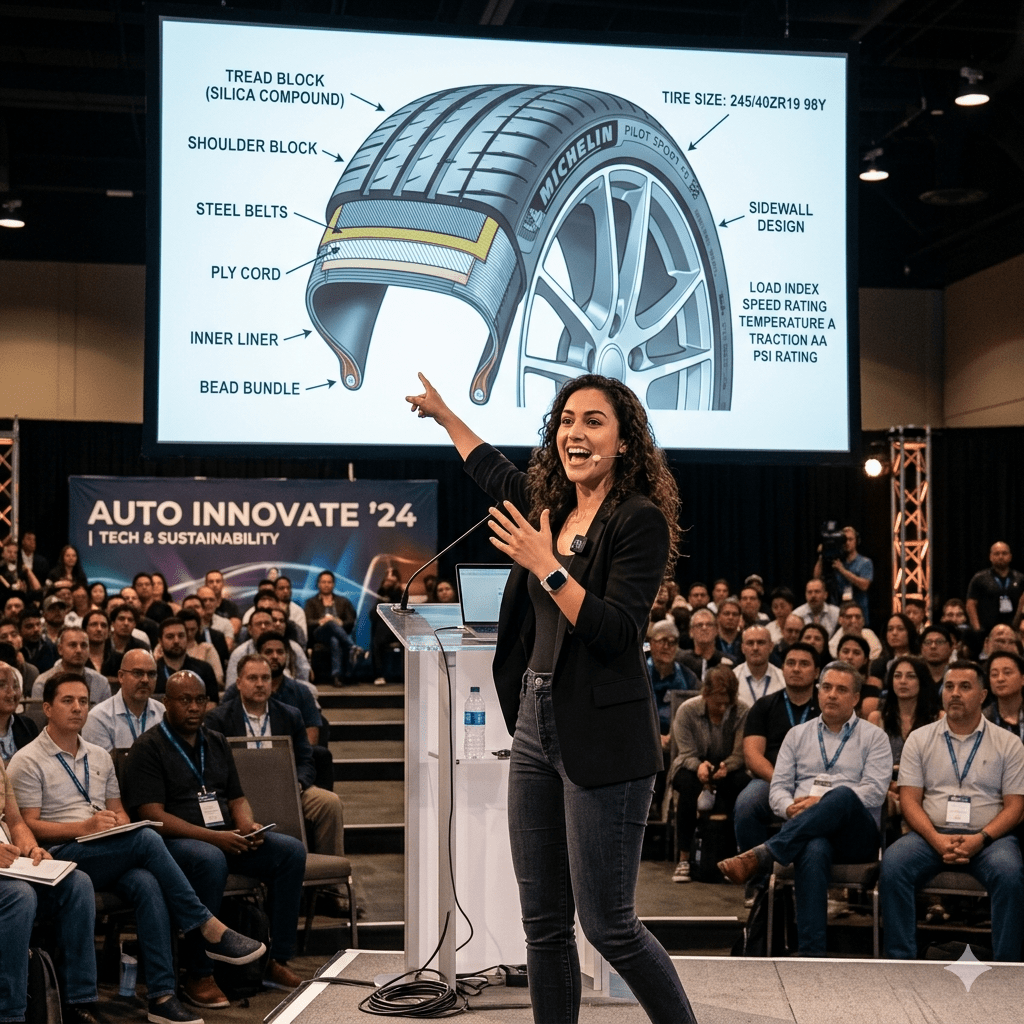
Putting the Tires Before the Purpose of Your Drive

So I had to fulfill a medical appointment and got into my car WITH TIRES, started it, and positioned THE TIRES so that I would head north, then west, toward the medical facility. Once I got to the parking lot I parked my car WITH TIRES and went inside. Less than a half hour later I exited, walked to my car WITH TIRES, and drove home. (Did I mention that my car has TIRES?)

Recent Product Marketing Posts from John E. Bredehoft at Bredemarket

I just updated Bredemarket’s product marketing information page. It doesn’t list everything I’ve written about product marketing, but it touches on a good portion of my posts.
If you haven’t kept up, here are some of the latest posts from March, April, and May of this year.
You can see the entire product marketing information page here.
Is Your Identity/Biometric Firm Too Busy Putting Out Fires to Install a Sprinkler System?

It’s the classic case of paralysis by overwhelmedness. (Not officially a word, but bear with me here.)
Your identity/biometric firm needs experienced product marketing contract help because you are drowning in work. But because you’re drowning in work you can’t take the time to set up that contract.
Bredemarket can help you contract with Bredemarket.
Now there are certain things that Bredemarket can’t do. Well, Bredemarket could do them, but you (understandably) won’t let me.
- I can’t create my own contract with you. Actually I can, and I have with some clients, but your company probably requires that I use your contract, which I don’t have.
- I can’t enroll myself as a vendor in your purchasing system. Trust me, that would be dangerous. Hmm…net 5 terms at $1,000 per hour?
- I can’t onboard myself into your other internal systems. If I could, that would be a major security flaw.
But there are things that I can do to make your life easier when you onboard Bredemarket as a contractor/vendor…especially if you are an identity/biometric firm.
- You don’t have to explain to me what a bifurcation or ridge ending are. I’ve been working with fingerprints since 1994 and know these things.
- You don’t have to teach me how to spell NIST. While the 1985 interchange standard was before my time, I’m familiar with every ANSI/NIST standard since 1993 to the present day.
- You don’t have to explain to me what a “factor” and a “modality” are. Heck, I wrote the book on factors and modalities.
- You don’t have to create a briefing book. Just let me ask the questions and we’ll figure out the scope together.
So I can meet your partway. Then we’ll realize our mutual goal of making your products prominent and making the competitive products look weak.
So let’s talk and move the process forward.
Oh, and the title of this post was suggested by Google Gemini. AI is only a tool, but sometimes it’s a very effective tool. Sometimes.
 Bredemarket