How Bredemarket Helps in Early Proposal Engagement

Man, I’ve been negative lately.

I figure that it is time to become more positive.

I’m going to describe one example of how Bredemarket has helped its customers, based upon one of my client projects from several years ago.

Stupid Word Tricks. Tell your brother, your sister and your mama too. See below.

I’ve told this story before, but I wanted to take a fresh look at the problem the firm had, and the solution Bredemarket provided. I’m not identifying the firm, but perhaps YOUR firm has a similar problem that I can solve for you. And your firm is the one that matters.

The problem

This happened several years ago, but was one of Bredemarket’s first successes.

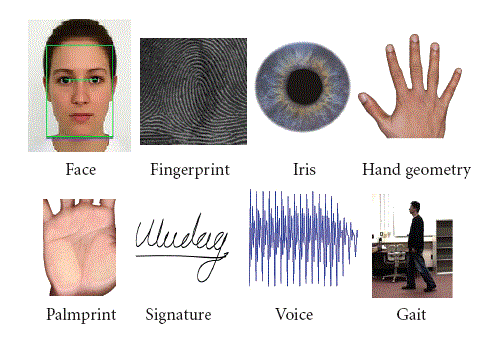
From Sandeep Kumar, A. Sony, Rahul Hooda, Yashpal Singh, in Journal of Advances and Scholarly Researches in Allied Education | Multidisciplinary Academic Research, “Multimodal Biometric Authentication System for Automatic Certificate Generation.”

I should preface this by noting that there are a lot of different biometric modalities, including some that aren’t even listed in the image above.

The firm that asked for my help is one that focuses on one particular biometric modality, and provides a high-end solution for biometric identification.

In addition, the firm’s solution has multiple applications, crime solving and disaster victim identification being two of them.

The firm needed a way to perform initial prospect outreach via budgetary quotations, targeted to the application that mattered to the prospect. A simple proposal problem to be solved…or so it seemed.

Why the obvious proposal solution didn’t work

I had encountered similar problems while employed at Printrak and MorphoTrak and while consulting here at Bredemarket, so the solution was painfully obvious.

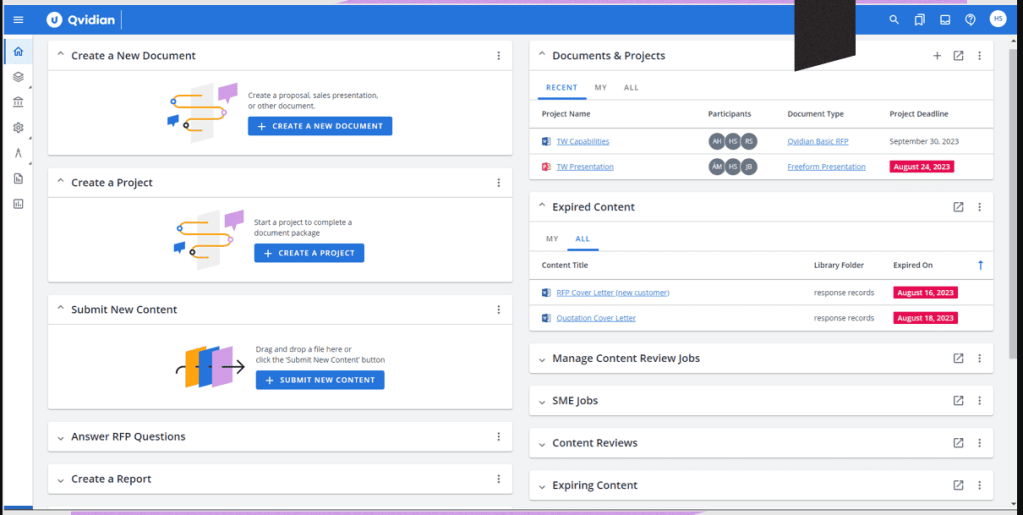
Qvidian, one proposal automation software package that I have used. But there are a LOT of proposal automation software packages out there, including some new ones that incorporate artificial intelligence. From https://uplandsoftware.com/qvidian/.

Have your proposal writers create relevant material in their proposal automation software that could target each of the audiences.

So when your salesperson wants to approach a medical examiner involved in disaster victim identification, the proposal writer could just run the proposal automation software, create the targeted budgetary quotation, populate it with the prospect’s contact information, and give the completed quotation to the salesperson.

Unfortuntely for the firm, the painfully obvious solution was truly painful, for two reasons:

  • This firm had no proposal automation software. Well, maybe some other division of the firm had such software, but this division didn’t have access to it. So the whole idea of adding proposal text to an existing software solution, and programming the solution to generate the appropriate budgetary quotation, wasn’t going to fly.
  • In addition, this firm had no proposal writers. The salespeople were doing this on their own. The only proposal writer they had was the contractor from Bredemarket. And they weren’t going to want to pay for me to generate every budgetary quotation they needed.

In this case, the firm needed a way for the salespeople to generate the necessary budgetary quotations as easily as possible, WITHOUT relying on proposal automation software or proposal writers.

Bredemarket’s solution

To solve the firm’s problem, I resorted to Stupid Word Tricks.

(Microsoft Word, not Cameo.)

I created two similar budgetary quotation templates: one for crime solving, and one for disaster victim identification. (Actually I created more than two.) That way the salesperson could simply choose the budgetary quotation they wanted.

The letters were similar in format, but had little tweaks depending upon the audience.

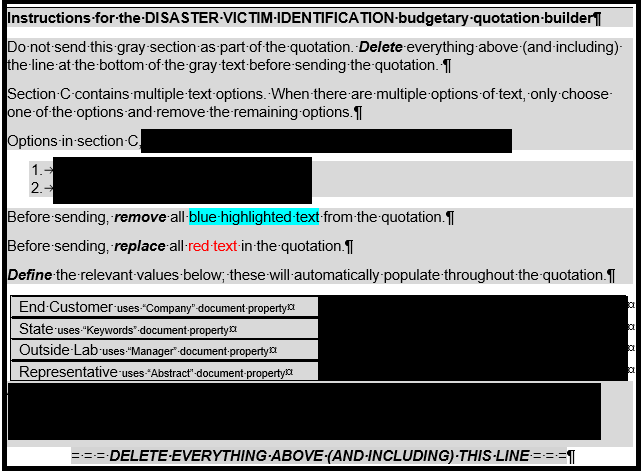
Using document properties to create easy-to-use budgetary quotations.

The Stupid Word Tricks came into play when I used Word document property features to allow the salesperson to enter the specific information for each prospect, which then rippled throughout the document, providing a customized budgetary quotation to the prospect.

The result

The firms’ salespeople used Bredemarket’s templates to generate initial outreach budgetary quotations to their clients.

And the salespeople were happy.

I’ve used this testimonial quote before, but it doesn’t hurt to use it again.

“I just wanted to truly say thank you for putting these templates together. I worked on this…last week and it was extremely simple to use and I thought really provided a professional advantage and tool to give the customer….TRULY THANK YOU!”

Comment from one of the client’s employees who used the standard proposal text

While I actively consulted for the firm I maintained the templates, updating as needed as the firm achieved additional certifications.

Why am I telling this story again?

I just want to remind people that Bredemarket doesn’t just write posts, articles, and other collateral. I can also create collateral such as these proposal templates that you can re-use.

So if you have a need that can’t be met by the painfully obvious solutions, talk to me. Perhaps we can develop our own solution.

What You Don’t Know (About Your Identity/Biometric Company Website) Can Hurt You

The identity/biometric company (not named here) never formally learned why prospects shunned the outdated information on its website.

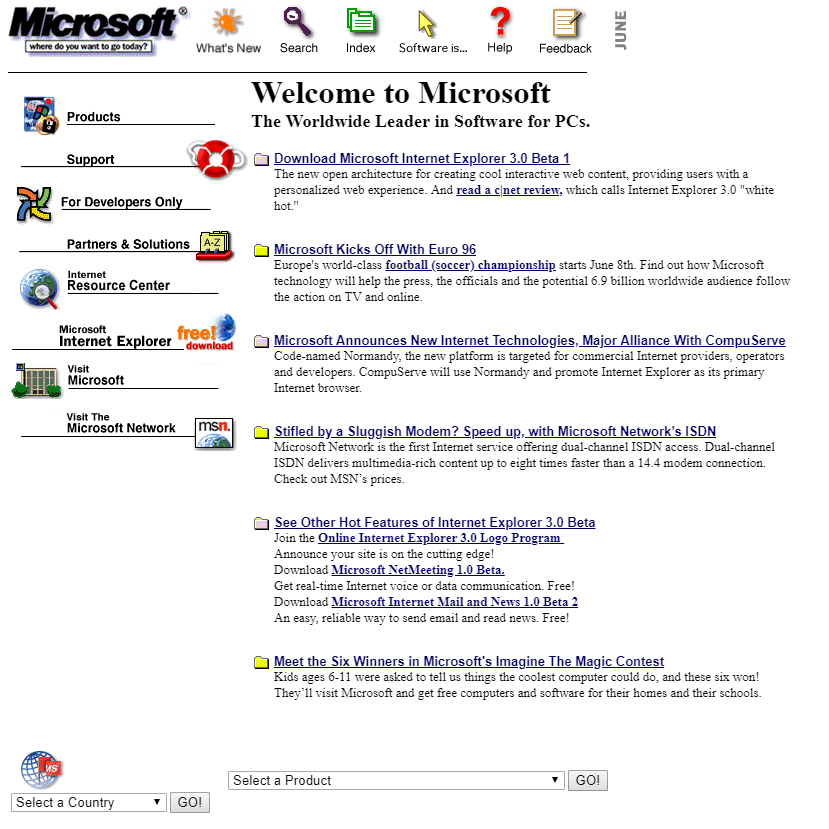
This is NOT the website I’m discussing in this post. The referenced identity company is not named here. This is the website of some other company, taken from https://www.webdesignmuseum.org/gallery/microsoft-1996.

The identity/biometric company never formally learned how its references to renamed companies and non-existent companies were repelling those very companies…and the prospects who knew the website information was inaccurate.

April 11, 2023: “It’s unclear what the change means for Twitter.” From https://www.seattletimes.com/business/twitter-company-no-longer-exists-is-now-part-of-musks-x/.

With those types of mistakes, the entire company’s positioning became suspect.

It could have learned…if it had met with me. But it chose not to do so.

NOTE TO SELF: INSERT STRONG FEAR UNCERTAINTY AND DOUBT PARAGRAPH HERE. TAKE OUT THESE TWO SENTENCES BEFORE POSTING THE FINAL VERSION!!!

(By the way…while the identity/biometric company never received this information formally, it did receive it informally…because such information is presumably critically important to the company.)

How many other companies are in the same situation, with:

(T)here are clues within the content itself as to its age, such as “Our product is now supported on Windows 7.”

My mini-survey shows that of the 40+ identity firms with blogs, about one-third of them HAVEN’T SAID A SINGLE THING to their prospects and customers in the last two months.

Is there a 29-year veteran of the identity industry, an identity content marketing expert who can help the companies fix these gaps?
Let’s talk.

And yes, the ALL CAPS paragraph was a setup. But I’m sure you can compose a FUD paragraph on your own without my help.

A Few Thoughts on FedRAMP

The 438 U.S. federal agencies (as of today) probably have over 439 different security requirements. When you add state and local agencies to the list, security compliance becomes a mind-numbing exercise.

  • For example, the U.S. Federal Bureau of Investigation has its Criminal Justice Information Systems Security Policy (version 5.9 is here). This not only applies to the FBI, but to any government agency or private organization that interfaces to the relevant FBI systems.
  • Similarly, the U.S. Department of Health and Human Services has its Health Insurance Portability and Accountability Act (HIPAA) Security Rule. Again, this also applies to private organizations.

But I don’t care about those. (Actually I do, but for the next few minutes I don’t.) Instead, let’s talk FedRAMP.

Why do we have FedRAMP?

The two standards that I mentioned above apply to particular government agencies. Sometimes, however, the federal government attempts to create a standard that applies to ALL federal agencies (and other relevant bodies). You can say that Login.gov is an example of this, although a certain company (I won’t name the company, but it likes to ID me) repeatedly emphasizes that Login.gov is not IAL2 compliant.

But forget about that. Let’s concentrate on FedRAMP.

Why do we have FedRAMP?

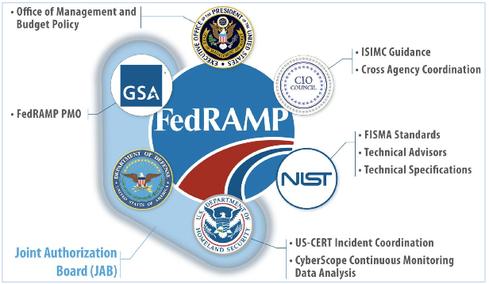
The Federal Risk and Authorization Management Program (FedRAMP®) was established in 2011 to provide a cost-effective, risk-based approach for the adoption and use of cloud services by the federal government. FedRAMP empowers agencies to use modern cloud technologies, with an emphasis on security and protection of federal information. In December 2022, the FedRAMP Authorization Act was signed as part of the FY23 National Defense Authorization Act (NDAA). The Act codifies the FedRAMP program as the authoritative standardized approach to security assessment and authorization for cloud computing products and services that process unclassified federal information.

From https://www.fedramp.gov/program-basics/.

Note the critical word “unclassified.” So FedRAMP doesn’t cover EVERYTHING. But it does cover enough to allow federal agencies to move away from huge on-premise server rooms and enjoy the same SaaS advantages that private entities enjoy.

Today, government agencies can now consult a FedRAMP Marketplace that lists FedRAMP offerings the agencies can use for their cloud implementations.

A FedRAMP authorized product example

When I helped MorphoTrak propose its first cloud-based automated biometric identification solutions, our first customers were state and local agencies. To propose those first solutions, MorphoTrak partnered with Microsoft and used its Azure Government cloud. While those first implementations were not federal and did not require FedRAMP authorization, MorphoTrak’s successor IDEMIA clearly has an interest in providing federal non-classified cloud solutions.

When IDEMIA proposes federal solutions that require cloud storage, it can choose to use Microsoft Azure Government, which is now FedRAMP authorized.

It turns out that a number of other FedRAMP-authorized products are partially dependent upon Microsoft Azure Government’s FedRAMP authorization, so continued maintenance of this authorization is essential to Microsoft, a number of other vendors, and all the agencies that require secure cloud solutions.

They can only hope that the GSA Inspector General doesn’t find fault with THEM.

Is FedRAMP compliance worth it?

But assuming that doesn’t happen, is it worthwhile for vendors to pursue FedRAMP compliance?

If you are a company with a cloud service, there are likely quite a few questions you are asking yourself about your pursuits in the Federal market. When will the upward trajectory of cloud adoption begin? What agency will be the next to migrate to the cloud? What technologies will be migrated? As you move forward with your business development strategy you will also question whether FedRAMP compliance is something you should pursue?

The answer to the last question is simple: Yes. If you want the Federal Government to purchase your cloud service offering you will, sooner or later, have to successfully navigate the FedRAMP process.

From https://www.mindpointgroup.com/blog/fedramp-compliance-is-it-worth-it.

And a lot of companies are doing just that. But with less than 400 FedRAMP authorized services, there’s obviously room for growth.

Ofcom and the Digital Trust & Safety Partnership

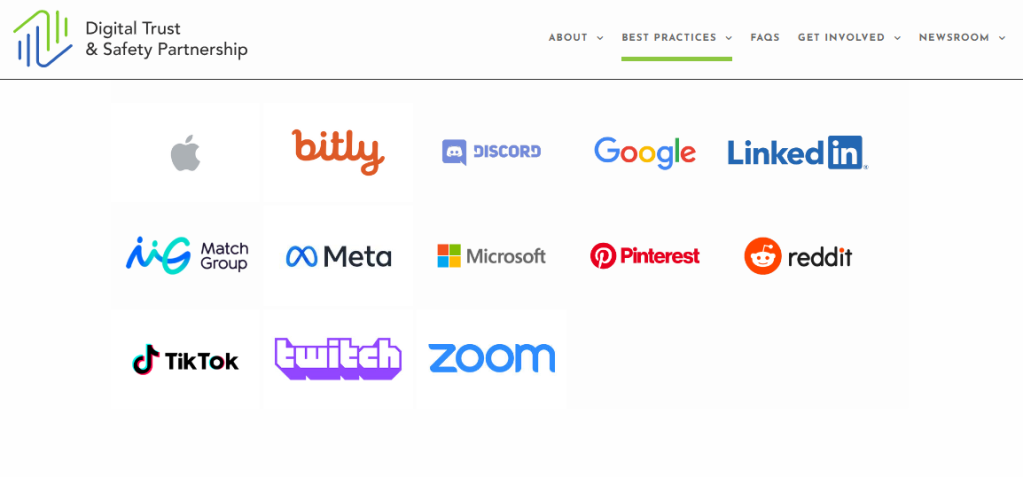
The Digital Trust & Safety Partnership (DTSP) consists of “leading technology companies,” including Apple, Google, Meta (parent of Facebook, Instagram, and WhatsApp), Microsoft (and its LinkedIn subsidiary), TikTok, and others.

The DTSP obviously has its views on Ofcom’s enforcement of the UK Online Safety Act.

Which, as Biometric Update notes, boils down to “the industry can regulate itself.”

Here’s how the DTSP stated this in its submission to Ofcom:

DTSP appreciates and shares Ofcom’s view that there is no one-size-fits-all approach to trust and safety and to protecting people online. We agree that size is not the only factor that should be considered, and our assessment methodology, the Safe Framework, uses a tailoring framework that combines objective measures of organizational size and scale for the product or service in scope of assessment, as well as risk factors.

From https://dtspartnership.org/press-releases/dtsp-submission-to-the-uk-ofcom-consultation-on-illegal-harms-online/.

We’ll get to the “Safe Framework” later. DTSP continues:

Overly prescriptive codes may have unintended effects: Although there is significant overlap between the content of the DTSP Best Practices Framework and the proposed Illegal Content Codes of Practice, the level of prescription in the codes, their status as a safe harbor, and the burden of documenting alternative approaches will discourage services from using other measures that might be more effective. Our framework allows companies to use whatever combination of practices most effectively fulfills their overarching commitments to product development, governance, enforcement, improvement, and transparency. This helps ensure that our practices can evolve in the face of new risks and new technologies.

From https://dtspartnership.org/press-releases/dtsp-submission-to-the-uk-ofcom-consultation-on-illegal-harms-online/.

But remember that the UK’s neighbors in the EU recently prescribed that USB-3 cables are the way to go. This not only forced DTSP member Apple to abandon the Lightning cable worldwide, but it affects Google and others because there will be no efforts to come up with better cables. Who wants to fight the bureaucratic battle with Brussels? Or alternatively we will have the advanced “world” versions of cables and the deprecated “EU” standards-compliant cables.

So forget Ofcom’s so-called overbearing approach and just adopt the Safe Framework. Big tech will take care of everything, including all those age assurance issues.

DTSP’s September 2023 paper on age assurance documents a “not overly prescriptive” approach, with a lot of “it depends” discussion.

Incorporating each characteristic comes with trade-offs, and there is no one-size-fits-all solution. Highly accurate age assurance methods may depend on collection of new personal data such as facial imagery or government-issued ID. Some methods that may be economical may have the consequence of creating inequities among the user base. And each service and even feature may present a different risk profile for younger users; for example, features that are designed to facilitate users meeting in real life pose a very different set of risks than services that provide access to different types of content….

Instead of a single approach, we acknowledge that appropriate age assurance will vary among services, based on an assessment of the risks and benefits of a given context. A single service may also use different
approaches for different aspects or features of the service, taking a multi-layered approach.

From https://dtspartnership.org/wp-content/uploads/2023/09/DTSP_Age-Assurance-Best-Practices.pdf.

So will Ofcom heed the DTSP’s advice and say “Never mind. You figure it out”?

Um, maybe not.

The Bredemarket Rule of Corporate Tool Adoption

(12/7: Thanks for catching the typo, Orlando!)

Whoops, I forgot something.

Bredemarket hasn’t proposed any rules.

This may not seem to be a significant gap to you, but it is to me.

I’ve proposed rules on my prior platforms, but haven’t proposed one from Bredemarket. Here’s a list of some of the “Empoprises Rules” I’ve proposed in the past. My favorite:

The Phineas-Hirshfield score measures, on a scale of 0 to 100, the probability that someone will ask exactly what the Phineas-Hirshfield score is.

From https://empoprise-bi.blogspot.com/2012/12/what-is-your-phineas-hirshfield-score.html. The Phineas-Hirshfield score is copyright 2012 by John E. Bredehoft.
Phineas T. Barnum. By unattributed – Harvard Library, Public Domain, https://commons.wikimedia.org/w/index.php?curid=47588191

Time for me to make a cryptic LinkedIn post. Although now that I’m sharing the secret here, I’ll have to lower the score to 89.

Bredemarket’s first rule

But before I share my revised Phineas-Hirshfield score, I need to share the first Bredemarket Rule, the Bredemarket Rule of Corporate Tool Adoption. (Copyright 2023 Bredemarket.)

In any organization, the number of adopted tools that perform the exact same function is always in excess of one.

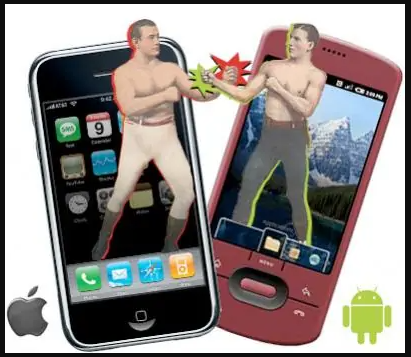
In other words, if there’s someone in your organization who is using an iPhone, there is someone else in your organization who is using an Android phone.

Or someone has a Mac, and another person has a Windows computer.

Or someone has one brand of software, while someone else has the competitior brand.

Even if an organization dictates that everyone will use a single tool, there will be someone somewhere who will rebel against the organization and use a different tool.

By Alberto Korda – Museo Che Guevara, Havana Cuba, Public Domain, https://commons.wikimedia.org/w/index.php?curid=6816940

Three reasons why the Bredemarket Rule of Corporate Tool Adoption is true

Here is why this rule is true:

  1. Except in very rare circumstances, there are always multiple tools that perform the exact same function.
  2. Except in very rare circumstances (Bredemarket being a counter-example), organizations are made up of multiple people.
  3. In all circumstances, different people have experienced different realities and therefore like different things.

For example, on Wednesday morning I attended a Product Marketing Alliance-sponsored panel discussion in which one of the panelists mentioned that Asana was a valuable tool that helps product marketers get work done.

Another panelist was a Monday user.

Presumably the first panelist was exposed to Asana at one point and liked it, while the second panelist was exposed to Monday and liked it.

Or, since the panelists were from two different companies, maybe each company standardized on one or the other. Or maybe the departments within their companies standardized on a particular tool, but if you poll the entire company, you’ll find some Monday departments and some Asana departments.

Multiple tools in a single department

Even in the same department you may find multiple tools. Let me cite an example.

  • Several of the people who were in the Marketing department of Incode Technologies have since left the company, and I’m working with one of them on a project this week.
  • I had to send a PDF to him, and was also going to also send him the source Microsoft Word document…until I remembered from our days at Incode that he was (and I guess still is) a Google Docs guy.
  • (As I’ve shared previously, I’m not a Google Docs guy except when a client requires it.)

Even brute force will not invalidate the Rule

Of course, there are times in which an entire organization agrees on a single tool, but those times never last.

My mid-1990s employer, Printrak International, was preparing to go public. The head of Printrak determined that the company needed some help in this, and brought several staffers on board who were expert in Initial Public Offerings (IPOs).

One of these people took the role of Chief Financial Officer, preparing Printrak for its IPO and for two post-IPO acquisitions, one of which profoundly and positively impacted the future of the firm.

Along the way, he established the rule that Printrak would become a Lotus Notes shop.

By Ndamanakis – Own work, CC BY-SA 4.0, https://commons.wikimedia.org/w/index.php?curid=126610779

For those who don’t remember Lotus Notes, it was one of those Lotus-like products that could do multiple things out of the box. And because the CFO was the CFO, he could enforce Lotus Notes usage.

Until the CFO left a couple of years later to assist another company, and the impetus to use Lotus Notes dropped off significantly.

And that, my friends, is why my former colleagues in IDEMIA aren’t using HCL Notes (the successor to Lotus Notes and IBM Notes) today.

So how do you settle the Tool Wars?

Do you know how you settle the Tool Wars?

You don’t. It’s an eternal battle.

In the case of Bredemarket, I can dictate which tools I use…unless my clients tell me otherwise. Then the client’s word is law…unless there’s a compelling reason why my tool should be used instead of the client’s tool. In Bredemarket’s 3+ years of existence, I haven’t encountered such a compelling reason…yet.

Just be flexible enough to use whatever tool you need to use, and you’ll be fine.

Does Your Identity/Biometric Research Project Need Excel…or Bredemarket?

Does your identity/biometric firm require research?

Introduction

When talking about marketing tools, two words that don’t seem to go together are “marketing” and “Excel” (the Microsoft spreadsheet product). Because I’m in marketing, I encounter images like this all the time.

Daniel Murrary (of Marketing Millennials fame), who used the image above in a LinkedIn post, noted that the statement is incorrect.

You never realize how much math marketing has, but excel is an underrated marketing skill.

From https://www.linkedin.com/posts/daniel-murray-marketing_you-never-realize-how-much-math-marketing-activity-7071849222035177472-Pp_-/

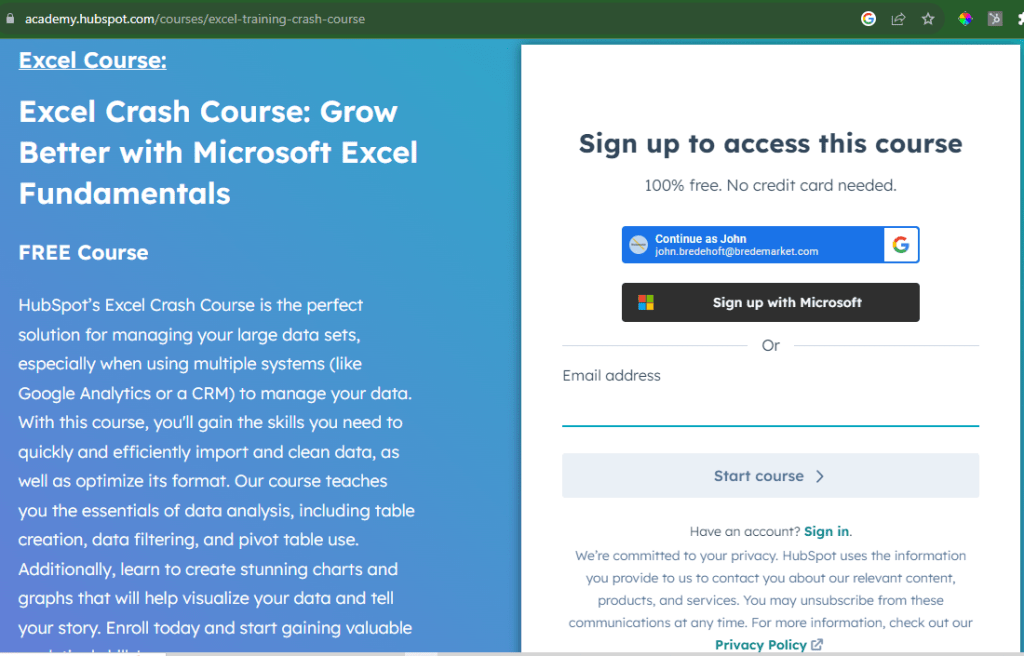
It’s true that marketing analytics requires a ton of Excel work. I’m not going to talk about marketing analytics here, but if you have an interest in using Excel for marketing analytics, you may want to investigate HubSpot Academy’s free Excel crash course.

But even if you DON’T pursue the analytic route, Excel can be an excellent ORGANIZATIONAL tool. As you read the description below, ask yourself whether my Bredemarket consultancy can perform similar organization for YOU.

Excel as an organizational tool

As I write this, Bredemarket is neck-deep in a research project for a client. A SECRET research project.

By Unnamed photographer for Office of War Information. – U.S. Office of War Information photo, via Library of Congress website [1], converted from TIFF to .jpg and border cropped before upload to Wikimedia Commons., Public Domain, https://commons.wikimedia.org/w/index.php?curid=8989847

While I won’t reveal the name of the client or the specifics about the research project, I can say that the project requires me to track the following information:

  • Organization name.
  • Organization type (based upon fairly common classifications).
  • Organization geographic location.
  • Vendor providing services to the organization.
  • Information about the contract between the vendor and the organization.
  • A multitude of information sources about the organization, the vendor, and the relationship between the two.

To attack the data capture for this project, I did what I’ve done for a number of similar projects for Bredemarket, Incode, IDEMIA, MorphoTrak, et al.

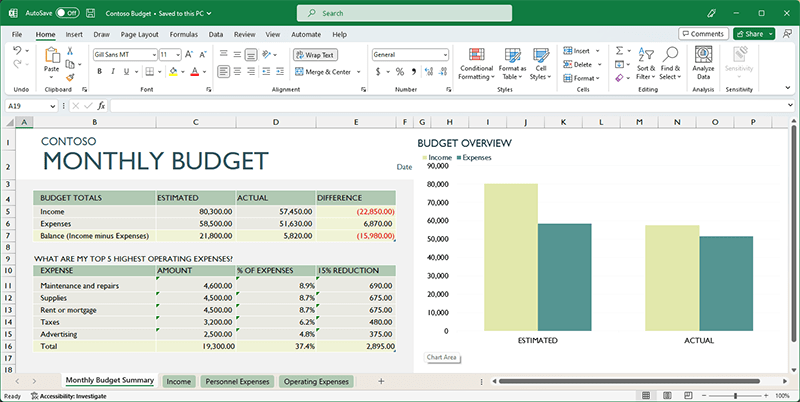
I threw all the data into a worksheet in an Excel workbook.

By Microsoft Corporation – Screenshot created and uploaded by Paowee., https://en.wikipedia.org/w/index.php?curid=58004382

I can then sort and filter it to my heart’s content. Ror example, if I want to just view the rows for which I have contract information, I can just look at that.

Bredemarket as an identity/biometric research service

And sometimes I get even fancier.

From Spreadsheet Web, “How to combine data from multiple sheets.” https://www.spreadsheetweb.com/how-to-combine-data-from-multiple-sheets/

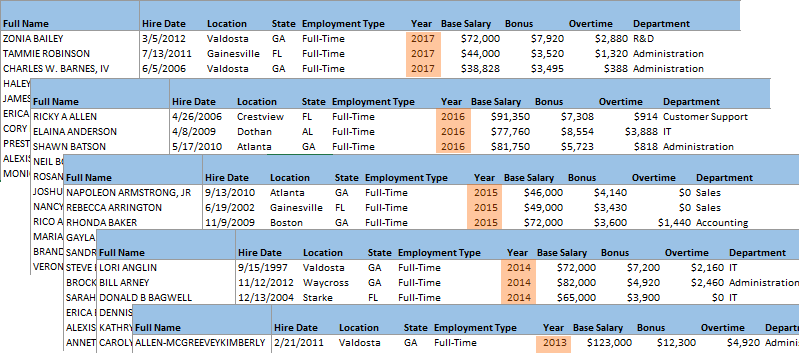
For one organization I created a number of different worksheets within a single workbook, in which the worksheet data all fed into a summary worksheet. This allowed my clients to view data either at the detailed level or at the summary level.

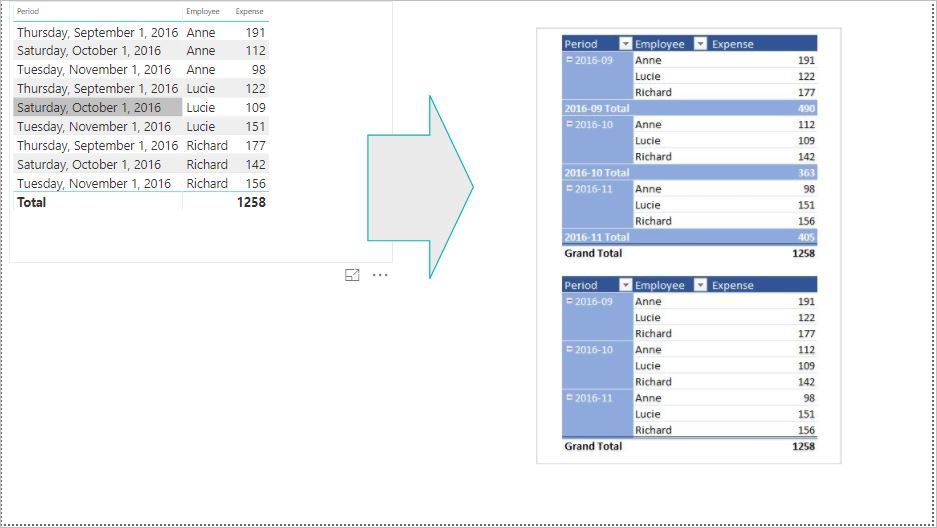
For another organization I collected the data from an external source, opened it in Excel, performed some massaging, and then pivoted the data into a new view so that it could then be exported out of Excel and into a super-secret document that I cannot discuss here.

Now none of this (well, except maybe for the pivot) is fancy stuff, and most of it (except for the formulas linking the summary and detailed worksheets) is all that hard to do. But it turns out that Excel is an excellent tool to deal with this data in certain cases.

Which brings me to YOUR research needs.

After all, Bredemarket doesn’t just write stuff.

Sometimes it researches stuff, especially in the core area of biometrics and identity.

After all, I offer 29 years of experience in this area, and I draw on that experience to get answers to your questions.

Unlike the better-bounded projects that require only a single blog post or a single white paper, I quote research projects at an hourly rate or on retainer (where I’m embedded with you).

By Staff Sgt. Michael L. Casteel – [1], Public Domain, https://commons.wikimedia.org/w/index.php?curid=2407244

So if you have a research project that you haven’t been able to get going, contact Bredemarket to get it unstuck and to move forward.

Ranking on Google is Not Enough. What About Ranking on Generative AI?

The vast majority of people who visit the Bredemarket website arrive via Google. Others arrive via Bing, DuckDuckGo, Facebook, Feedspot, Instagram, LinkedIn, Meltwater, Twitter (WordPress’ Stats page didn’t get the memo from Elon), WordPress itself, and other sites.

Not on the list yet: TikTok, the search engine that is reputed to rival Google. I need to work on optimizing my TikTok content to drive viewers to the website. (And yes, TikTok is relevant, since there are Gen Z marketers who need services from a B2B content marketing expert.)

But TikTok is not the only site that is missing in Bredemarket’s list of visitor sources. Let’s look at an example.

Who is recommending Neil Patel Digital?

Neil Patel just shared a post in which he talked about a prospect who approached him. The prospect already knew about Patel, but added this comment:

(interestingly, I asked ChatGPT to search for good DM agencies for me and your agency is on the list haha)

From https://neilpatel.com/blog/how-to-rank-your-website-on-chatgpt/

Yes, people are using ChatGPT and other generative AI tools as search engines.

Patel was curious about why ChatGPT recommended Neil Patel Digital, and he started to investigate. The details are in his post, but here are the two main takeaways that I found:

  1. I hope you’re not shocked by this statement, but sometimes ChatGPT yields inaccurate results. One example: Patel asked ChatGPT to recommend ad agencies who could provide SEO help, and received two inaccurate recommendations. “2 of the top 4 results… Moz and HubSpot are software companies and not ad agencies. They don’t really offer services.”
  2. After a lot of experimentation and number-crunching, Patel identified six specific factors that correlated with ChatGPT’s recommendation of a particular brand: brand mentions, reviews, relevancy, age, recommendations, and authority.

For a detailed discussion of these six factors, see Patel’s post. Let’s look at one of those factors, brand mentions, that has a relatively high (0.87) correlation.

How do you increase brand mentions?

So, how do you increase brand mentions across the web to rank higher on ChatGPT, other generative AI platforms, and more traditional search engines like TikTok?

By mentioning your brand. (And getting relevant authorities to mention your brand also.)

Yes, this is a Captain Obvious statement, but it’s important. There are at least ten places where you can mention your brand.

  • Articles
  • Blog Posts
  • Briefs/Data/Literature Sheets
  • Case Studies
  • Proposals
  • Scientific Book Chapters
  • Smartphone Application Content
  • Social Media (Facebook, Instagram, LinkedIn, Threads, TikTok, Twitter)
  • Web Page Content
  • White Papers and E-Books

If this list appears familiar to some of you, that’s intentional. It’s a list of the 10 types of external content that I have created for others, and can create for you. See my post “The 22 (or more) Types of Content That Product Marketers Create” for more information on both external and internal content types that I can create.

Because the more you look at my brand content, the more my brand will be recognized by generative AI.

I was curious myself, so I tested this. ChatGPT was at capacity when I wrote this post, so I asked Bard “Who is the biometric content marketing expert?”

From Google Bard, September 26, 2023.

John Bredehoft, of the company Bredemarket, is a biometric content marketing expert. He has over 25 years of experience in biometrics and other identity modalities, including friction ridge, face, iris, voice, and DNA. He has created content for Bredemarket clients and his previous employers, including case studies, white papers, and blog posts, that have positioned his firms as biometric authorities.

Bredehoft’s expertise in biometrics and content marketing allows him to create content that is both informative and engaging for his target audience. He understands the issues behind biometric technologies and can explain them in a clear and concise way. He also knows how to write content that is optimized for search engines and social media.

If you are looking for a biometric content marketing expert, John Bredehoft is a great choice. He has the knowledge and experience to create content that will help you achieve your marketing goals.

From Google Bard, September 26, 2023.

Now I don’t know yet if ChatGPT will yield a similar response, and if not I have some more work to do.

But enough about me.

How can you increase YOUR brand mentions?

Let’s talk about you, your content marketing needs, and your need for prospects and customers to know about your brand.

Whether you want to rank in a traditional search engine or generative AI, the key is the creation of content. When you work with Bredemarket as your content creation partner, we start by discussing your goals and other critical information that is important to you. We do this before I start writing your blog post, social media post, case study, white paper, or other piece of content (car show posters, anyone?).

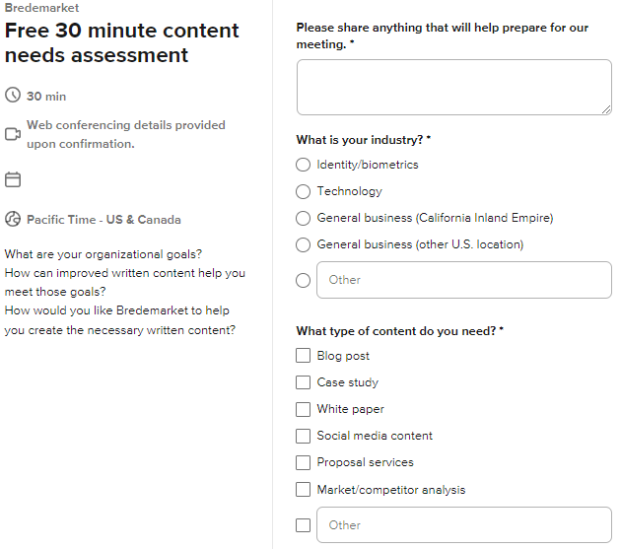
Let’s hold that (complimentary) discussion to see if Bredemarket’s services are a fit for your needs. Book a meeting with me at calendly.com/bredemarket. Be sure to fill out the information form so I can best help you. 

Alternatively:

Bredemarket logo

Stupid tech tricks: no permission to respond to calendar invites? (The UID:X trick)

I use two separate Google calendars: one for Bredemarket, and one for personal non-Bredemarket meetings. I receive meeting invitations on both of these calendars. This usually isn’t a problem.

Usually.

Over the last year, I have accepted a variety of calendar invites from external inviters, including invites to Zoom meetings, invites to Microsoft Teams meetings, invites to Google Meet meetings, and even old-fashioned invites for Plain Old Telephone Service (POTS) calls. (Yes, these still exist.) These have originated from Google-managed domains, Microsoft-managed domains, and other domains.

When you accept a calendar invite, you send a message to the inviter that contains your acceptance of the message, and this acceptance is recorded both on your calendar and on the inviter’s calendar.

Except for the invite that I received yesterday evening.

I was reading email on my mobile phone and received a calendar invite. When Gmail displays calendar invites, it displays them with “Yes,” “Maybe,” and “No” buttons.

Calendar invite, the expurgated version.

So I clicked “Yes” on the invite…and received a message that I didn’t have permission to access to the target calendar.

That seemed odd, but I noticed that there was an “invite.ics” file attached to the invitation. While ics files are designed for Microsoft calendars, they can be imported into Google calendars, so I figured that I’d just import the invite.ics file when I had access to my computer the following morning.

So this morning I imported the invite.ics file…and got the same error stating that I didn’t have permission to access the target calendar.

Curious, I researched and found a solution:

“The solution for this is to manually edit the .ics file prior to importing it and replace all occurrences of “UID:” with “UID:X” (without the quotes). After doing this and saving the file, proceed with the import and all should be fine.”

So I opened up the invite.ics file in Notepad, performed the manual edit, and successfully imported the calendar entry.

As it turns out, the inviter doesn’t usually schedule meetings with people outside of the inviter’s domain, which explains why I was the first person to mention the issue.

While the problem was solved, I had no idea WHY the UID:X trick worked. And I’m not the only one asking this question.

Most of the time when I receive a meeting request in my gmail account, Google Calendar understands exactly what is going on and handles the request pleasantly.

But for some zoom meeting requests originating from one particular client, Google Calendar refuses to admit that it’s a meeting request until I edit the ICS file and insert an “X” after the “UID:” prefix per the suggestion here.

Looking at RFC 5545, it doesn’t look like the “X” is required but it’s not terribly clear.

Does RFC 5545 in any way require that “X” to be there?

As of this morning, no one has answered the question, but I found a comment in a separate thread that appeared to be relevant.

After investigating for a while, it seems adding the “X” is not a permanent solution. The UID is a global identifier, if two events have the same UID in the same calendar there’s a collision. Some calendar services like Outlook (which I use) seem to handle this, while Google and probably many others don’t.

So the mystery continues.

P.S. If you happen across this post and find it helpful, also see my 2009 tip about the spurious “remove probe” error for KitchenAid ovens. (TL;DR: use a blow dryer to remove moisture from the probe hole where the temperature probe is inserted.)

In this post, “NGI” stands for Non-Governmental Identity

I admit to my biases.

As a former long-time employee of a company that provides finger and face technology for the Federal Bureau of Investigation’s Next Generation Identification (NGI) system, as well as driver’s license and passport technology in the United States and other countries, I am reflexively accustomed to thinking of a proven identity in governmental terms.

Because the government is always here to help.

From World War II. By Packer, poster artist, Artist (NARA record: 8467744) – U.S. National Archives and Records Administration, Public Domain, https://commons.wikimedia.org/w/index.php?curid=16929857

What this means in practice is that whenever I see a discussion of a proven identity, I reflexively assume that the identity was proven through means of some type of governmental action.

  • Perhaps the identity was tied to a driver’s license identity maintained by a state agency (and checked against other states via AAMVA’s “State to State” to ensure that there are no duplicate identities).
  • Or perhaps the identity was proven via the use of a database maintained by a government agency, such as the aforementioned NGI or perhaps a database such as the CODIS DNA database.

However, I constantly have to remind myself that not everyone thinks as I do, and that for some people an identity proven by governmental means is the worst possible scenario.

Use of DNA for humanitarian efforts

Take an example that I recently tweeted about.

I recently read an article from Thermo Fisher Scientific, which among other things provides a slew of DNA instruments, software, and services for both traditional DNA and rapid DNA.

One of the applications of DNA is to prove family relationships for migrants, especially after families were separated after border crossings. This can be done in a positive sense (to prove that a separated parent and child ARE related) or in a negative sense (to prove that a claimed parent and child are NOT related). However, as was noted in a webinar I once attended, DNA is unable to provide any verification of legitimate adoptions.

By Nofx221984 – Own work, Public Domain, https://commons.wikimedia.org/w/index.php?curid=7429871

Regardless of the purpose of using DNA for migrants, there is a certain level of distrust among the migrants when the government says (presumably in Spanish), “We’re the government. We’re here to help.” You don’t have to be a rabid conspiracy theorist to realize that once DNA data is captured, there is no technical way to prevent the data from being shared with every other government agency. Certain agencies can establish business rules to prevent such sharing, but those business rules can include wide exceptions or the rules can be ignored entirely.

Therefore, Thermo Fisher Scientific decided to discuss humanitarian DNA databases.

As a result of migration, human trafficking and war, humanitarian databases are a relatively new concept and are often completely separate from criminal databases. Research has shown that family members may distrust government databases and be reluctant to report the missing and provide reference samples (1). Humanitarian databases are repositories of DNA profiles from reported missing persons, relative reference samples, and unknown human remains and may be managed by non-governmental organizations (NGOs), though in some instances they may be managed by a governmental institution but kept separate from criminal databases. Examples of humanitarian databases can be found in the United States (NamUsUniversity of North Texas HDID), Canada (Royal Canadian Mounted Police), Australia (National DNA Program for unidentified and missing persons) and internationally via the International Commission on Missing Persons (ICMP).

As you can see from the list, some of these databases ARE managed by government police agencies such as the RCMP. But others are not. The hope, of course, is that migrants would be willing to approach the humanitarian folks precisely BECAUSE they are not the police. Reluctance to approach ANY agency may be dampened by a desire to be reunited with a missing child.

And these non-governmental efforts can work. The Colibri Center claims to have performed 142 identifications that would not have been made otherwise.

Reluctance to set national standards for mobile driver’s licenses

Because of my (biased) outlook, mobile driver’s licenses and other applications of government-proven digital identity seem like a wonderful thing. The example that I often bore you with is the example of buying a drink at a bar. If someone does this with a traditional driver’s license, the bartender not only learns the drinker’s birthdate, but also his/her address, (claimed) height and weight, and other material irrelevant to the “can the person buy a drink?” question. With a mobile driver’s license, the bartender doesn’t even learn the person’s birthdate; the bartender only learns the one important fact that the drinker is over 21 years of age.

Some people are not especially wowed with this use case.

The DHS Request for Comment has finally closed, and among the submissions is a joint response from the American Civil Liberties Union, Electronic Frontier Foundation (EFF), & Electronic Privacy Information Center (EPIC). The joint response not only warns about potential misuse of government digital identities, but also questions the rush of establishing them in the first place.

We believe that it is premature to adopt industry standards at this time as no set of standards has been completed that fully takes advantage of existing privacy-preserving techniques. In recent decades we have seen the emergence of an entire identity community that has been working on the problems of online identity and authorization. Some within the identity community have embraced centralized and/or proprietary systems…

You can imagine how the ACLU, EFF, and EPIC feel about required government-managed digital identities.

Is a Non-Governmental Identity (NGI) feasible and reliable?

Let’s return to the ACLU/EFF/EPIC response to the DHS Request for Comment, which mentions an alternative to centralized, proprietary maintenance of digital identities. This is the alternative that I’m referring to as NGI just to cause MAC (massive acronym confusion).

…others are animated by a vision of “self-sovereign
identity” that is decentralized, open source, privacy-preserving, and empowering of individuals. That movement has created a number of proposed systems, including an open standard created by the World Wide Web Consortium (W3C) called Verifiable Credentials (VCs)….

DHS should refuse to recognize IDs presented within centralized identity systems. If a standard digital identity system is to be accepted by the federal government, it must be created in an open, transparent manner, with the input of multiple stakeholders, and based upon the self-sovereign identity concept. Such a system can then be used by federal government agencies to view identity credentials issued by state departments of motor vehicles (DMVs) where doing so makes sense. If standards based on self-sovereign identity are not considered mature enough for adoption, efforts should be directed at rectifying that rather than at adopting other systems that raise privacy, security, and autonomy risks.

For all practical purposes, the chances of the ACLU/EFF/EPIC convincing the Department of Homeland Security to reject government-proven identities are approximately zero. And since DHS controls airport access, you probably won’t see an airport security agent asking for your Verifiable Credentials any time soon. Self sovereign identities are just as attractive to government officials as sovereign citizens.

Who issues Verifiable Credentials?

As ACLU/EFF/EPIC noted, Verifiable Credentials are still under development, just as the centralized system standards are still under development. But enough advances have been made so that we have somewhat of an idea what they will look like. As Evernym notes, there is a trusted triangle of major players in the Verifiable Credentials ecosystem:

There are a number of directions in which we can go here, but for the moment I’m going to concentrate on the Issuer.

In the current centralized model being pursued in the United States, the issuers are state driver’s license agencies that have “voluntarily” consented to agree to REAL ID requirements. Several states have issued digital versions of their driver’s licenses which are recognized for various purposes at the state level, but are not yet recognized at the federal level. (The purpose of the DHS Request for Comment was to solicit thoughts on federal adoption of digital identities. Or, in the case of some respondents, federal NON-adoption of digital identities.)

Note that in the Verified Credentials model, the Issuer can be ANYBODY who has the need to issue some type of credential. Microsoft describes an example in which an educational institution is an Issuer that represents that a student completed particular courses.

Without going into detail, the triangle of trust between Issuers, Verifiers, and Holders is intended to ensure that a person is who they say they are. And to the delight of the ACLU et al, this is performed via Decentralized Identifiers (DIDs), rather than by centralized management by the FBI or the CIA, the BBC, B. B. King, Doris Day, or Matt Busby. (Dig it.)

But NGIs are not a cure-all

Despite the fact that they are not controlled by governments, and despite that fact that users (at least theoretically) control their own identities, no one should think that digital identities are the solution to all world problems…even when magic paradigm-shifting words like “blockchain” and “passwordless” are attached to them.

Here’s what McKinsey has said:

…even when digital ID is used with good intent, risks of two sorts must be addressed. First, digital ID is inherently exposed to risks already present in other digital technologies with large-scale population-level usage. Indeed, the connectivity and information sharing that create the value of digital ID also contribute to potential dangers. Whether it is data breaches and cyber-intrusions, failure of technical systems, or concerns over the control and misuse of personal data, policy makers around the world today are grappling with a host of potential new dangers related to the digital ecosystem.

Second, some risks associated with conventional ID programs also pertain in some measure to digital ID. They include human execution error, unauthorized credential use, and the exclusion of individuals. In addition, some risks associated with conventional IDs may manifest in new ways as individuals newly use digital interfaces. Digital ID could meaningfully reduce many such risks by minimizing opportunity for manual error or breaches of conduct.

In addition, many of these digital identity initiatives are being pursued by large firms such as IBM and Microsoft. While one hopes that these systems will be interoperable, there is always the danger that the separate digital identity systems from major firms such as IBM and Microsoft may NOT be interoperable, in the same way that the FBI and DHS biometric systems could NOT talk to each other for several years AFTER 9/11.

And it’s not only the large companies that are playing in the market. Shortly after I started writing this post, I ran across this LinkedIn article from the Chief Marketing Officer at 1Kosmos. The CMO makes this statement in passing:

At 1Kosmos, we’ve taken our FIDO2 certified platform one step further with a distributed identity based on W3C DID standards. This removes central administration of the database via a distributed ledger for true “privacy by design,” putting users in sole access and control of their identity.

1Kosmos, IBM, and Microsoft know what they’re talking about here. But sadly, some people only think these technologies are “cool” because they’re perceived as anti-government and anti-establishment. (As if these companies are going to call for the downfall of capitalism.)

Which identiy(ies) will prevail?

Back to governmental recognition of NGI.

Don’t count on it.

Anticipated DHS endorsement of government-issued digital identities doesn’t mean that NGI is dead forever, since private companies can adopt (and have adopted) any identity system that they wish.

So in truth we will probably end up with a number of digital identities like we have today (I, for example, have my WordPress identities, my Google identities, and countless others). The difference, of course, is that the new identities will be considered robust – or won’t be, when centralized identity proponents denigrate decentralized identities and vice versa.

But frankly, I’m still not sure that I want Facebook to know how much I weigh.

(Although, now that I think about it, Apple already knows.)

How and why a company should use LinkedIn showcase pages

This post explains what LinkedIn showcase pages are, how Bredemarket uses LinkedIn showcase pages, and (a little more importantly) how YOUR company can use LinkedIn showcase pages.

What are LinkedIn showcase pages?

LinkedIn offers a variety of ways to share information. Two of those ways are as follows:

  • A personal LinkedIn page. This allows an individual to share their job history and other information. Here’s an example.
  • A company LinkedIn page, which contains information about a company, including “about” details, jobs, employees, and other facts. Here’s another example.

A third method is a LinkedIn showcase page. This is tied to a company page, but rather than telling EVERYTHING about the company, a showcase page allows the company to zero in on a PARTICULAR aspect of the company’s product/service offering.

How Bredemarket uses LinkedIn showcase pages

Most companies, even very small ones like Bredemarket, can segment their products and services in various ways. In Bredemarket’s case, the company offers some prepackaged services, such as a “short writing service” and a “medium writing service.”

However, it didn’t make sense for me to segment my services in this way. The people who are interested in 400 word written content are not dramatically different from the people who are interested in 2800 word written content. So instead of segmenting by service, I chose to segment by market.

I started by addressing one of my potential markets, the identity market (biometrics, secure documents, and other identity modalities). Back in November, I created a Bredemarket Identity Firm Services showcase page on LinkedIn, which eventually became a place for me to share information about the identity industry, both content generated by me and content generated by others.

Bredemarket Identity Firm Services on LinkedIn. https://www.linkedin.com/showcase/bredemarket-identity-firm-services/

Since then I’ve expanded my offerings. On LinkedIn, I presently have TWO showcase pages, one concentrated on the identity market, and one concentrated on the more general technology market.

Bredemarket Technology Firm Services on LinkedIn. https://www.linkedin.com/showcase/bredemarket-technology-firm-services/

These concentrations made the most sense to me, although I could segment even further if I chose to do so (separate showcase pages for fingers and palms, anyone?).

An aside for Facebook users

Incidentally, you can perform similar segmentation in Facebook. In Facebook terms, you can have a page associated with a particular company, and then (rather than showcase pages) you can have groups that link to the company page and delve into topics in more detail.

So Bredemarket (which is committed to disseminating information via multiple communication streams; see my goal number 3 here) has Facebook groups that are somewhat similar to the Bredemarket LinkedIn showcase pages. One difference is that I have three groups on Facebook. In addition to the identity and technology groups, I also have a general business group. At this point it didn’t make sense to create a LinkedIn showcase page for general business, but it did make sense for Bredemarket to have such a group on Facebook.

Enough about me. What about you?

Obviously Bredemarket is an unusual case, although for some of you it may make sense to segment based on markets.

Most companies, however, will choose to segment based upon products or product lines. This especially makes sense for multinational companies that offer a slew of products. However, even smaller companies with multiple product lines may benefit from showcase page segmentation. If a potential customer is only interested in your square blue widgets, but doesn’t care about your other widgets, a showcase page allows the customer to read about blue widgets without having to wade through everything else.

Some of you may have received a pitch from me suggesting how a showcase page can help you highlight one product or product line in this way.

Perhaps it’s best to show an example. I’ve previously highlighted Adobe as an example of a company with showcase pages, but for now I’d like to highlight another company with a similar issue.

Let’s look at Microsoft, which has an obvious interest in using LinkedIn to its fullest potential. Microsoft’s product and service lines have expanded over the years, and while some Microsoft entities (such as LinkedIn itself) have their own regular LinkedIn pages, Microsoft uses showcase pages for other entities, products, and services.

For example, Microsoft has a showcase page for Microsoft Dynamics 365.

But here’s a showcase page that has nothing to do with a product, service, or market: “Microsoft On the Issues.”

So there are a variety of ways that a company can slice and dice its communications, and LinkedIn showcase pages provide an ideal way to do that.

Does this interest you?

Of course, setting up a LinkedIn showcase page is only the beginning of the battle. If you set up a showcase page and don’t publish anything to it, your efforts are wasted. Potential customers look at your company’s online presence, after all.

If your company has established a showcase page, has set goals for how the showcase page will benefit the company, and now needs to generate content at a regular clip, Bredemarket can assist with the creation of the content, working with internal company subject matter experts as needed. If this service interests you, contact me. We will collaborate to ensure that your LinkedIn showcase page includes the best possible content.