Don’t Go Chasing Watermarks

Yes, I’m finally to THAT issue: hidden watermarks inserted by Anthropic’s Claude (and by other AI tools via content credentials…sometimes). So let’s look at those first before looking at Claude, because that will be instructive.

Credentials from the Coalition for Content Provenance and Authenticity

Let’s go back to last November, when I noticed that LinkedIn inserted a symbol on a Google Gemini image I uploaded.

LinkedIn.

LinkedIn had detected image metadata that revealed the origin of the image.

LinkedIn.

I did not freak out over the revelation that the image in question was created by Google generative AI. I usually disclose such things anyway.

Unfortunately, this metadata is not always there, and not always revealed. If I download an image and then directly upload it to LinkedIn, the content credentials symbol appears. But if I directly upload it to Facebook or WordPress, it doesn’t. And if I upload it to WordPress then download it, the content credentials are often stripped.

To fix this we need durable content credentials…but we’re not there yet.

The Claude watermark

Which brings us to Claude.

Why did Claude do this anyway? According to Superpath, the European Union.

“The EU recently put the AI Act in place to regulate AI products and protect normies like you and me from potential risks of nefarious AI use. They’re mostly trying to prevent stuff like manipulation (e.g., deepfakes) and classification (e.g., facial recognition databases).

“Part of the AI Act forces LLMs like Claude to clearly label when content has been processed by AI.”

So Claude did it because it wanted to stay on the EU’s good side. Heck, even Apple abandoned the Lightning connector to appease the EU.

What is “processed”?

To understand what “processed” means, we need to understand the three uses of AI-generated text.

  • Don’t use AI-generated text at all.
  • Only use AI-generated text.

But the two extremes are rarely used (except for Bredebot). Instead we opt for the third choice.

  • Use a mixture of human-written and AI-generated text.

As you know from what I’ve shared before, I use AI for ideation (before I write a single word) and touch ups (after I have drafted it). So if the ALL CAPS material below represents AI-generated text, the true origins of my content may appear like this:

INCREASING REVENUE WITH Focused Messaging

HOW DO YOU GET PROSPECTS TO BUY? NOT WITH messaging that wanders through the plains like a drunken wildebeest.

So if some tool analyzed text that was partially written by Claude, you would get a confusing mishmash in which every fourth word was written by Claude and the other words weren’t.
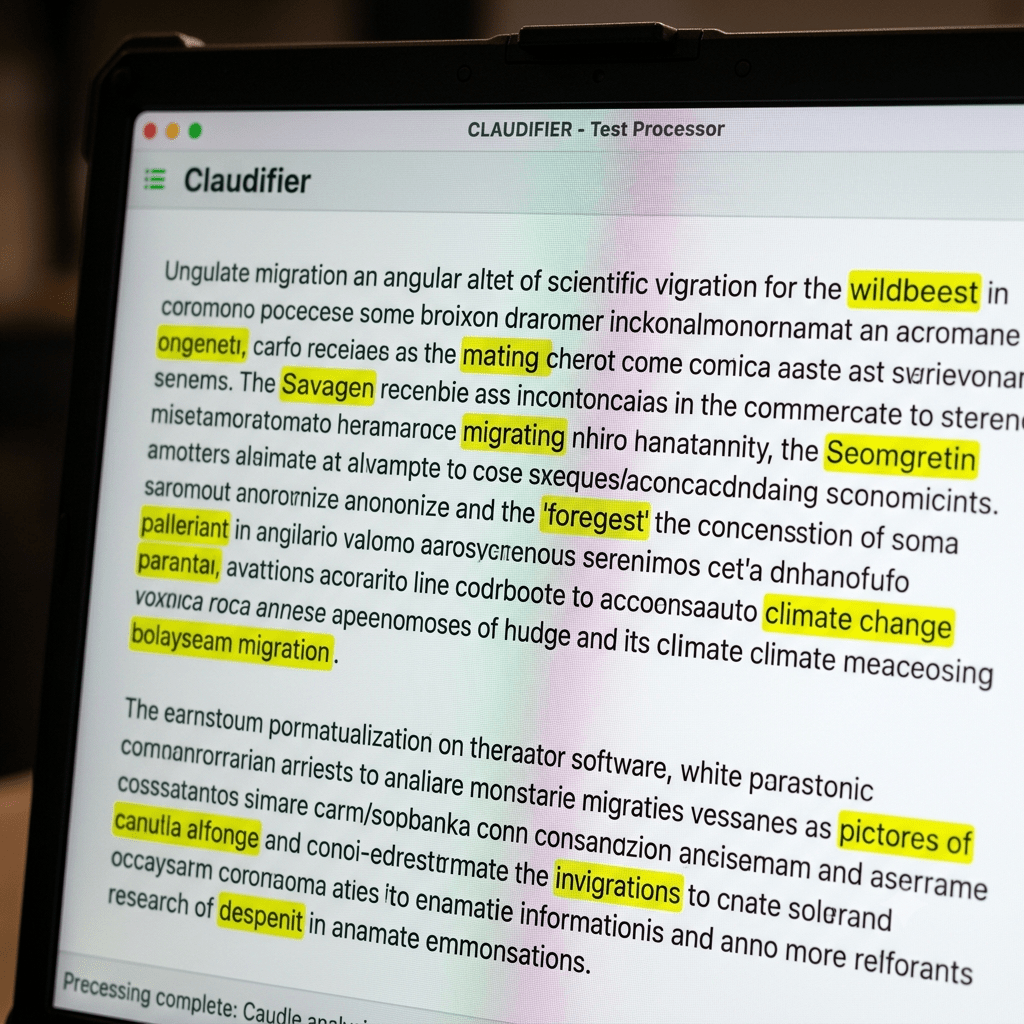
Google Gemini.

Assuming you pasted the Claude output into your document. But what if you just read Claude’s suggestions…and manually typed them in yourself? No one would know.
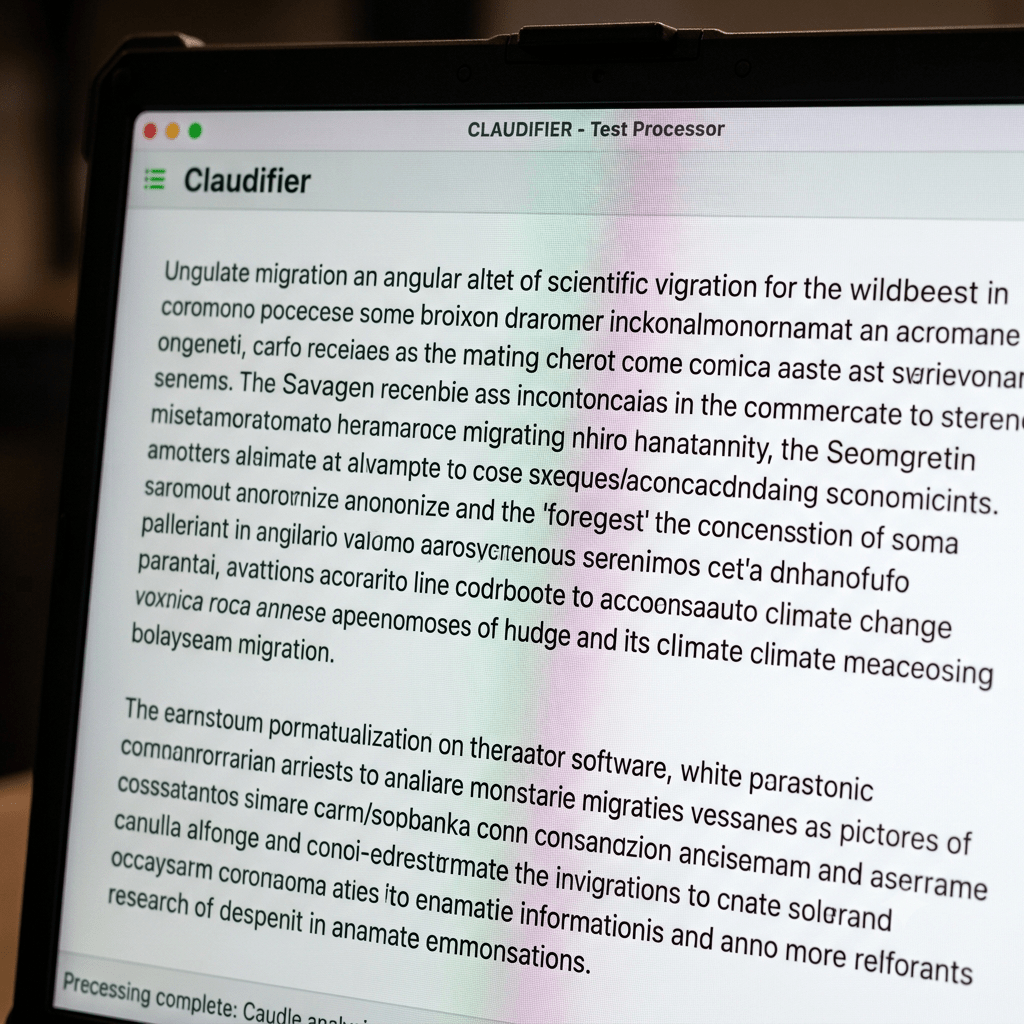
Google Gemini.

What does this mean?

Now let’s look at the effects of Claude and other watermarks. Here’s what Superpath says:

“I am willing to put my stellar reputation on the line and confidently predict this will have little-to-no impact for B2B content folks who use (or don’t use) AI.”

Think about it.

  • The folks who insist that you should never ever use AI, Wikipedia, or Cliffs Notes already get bent out of shape when they see a single em dash—and they’ll continue to freak out if they discover Claude corrected the spelling of “ephemeral.”
  • The folks who are already freaked out over Bredebot’s 100% AI writings will continue to freak.
  • Everyone else won’t care. You would think that Bredemarket’s clients would want to know if I was really writing all my stuff for them, but as long as they like the output they never ask. (And I’m an opinionated writer anyway.) In fact, one client set me up with a paid Perplexity account to help in my analysis work for the client.

So I’ve dispensed with that tempest in a teapot and can move on to more important things…such as cultural appropriation in AI images.

Google Gemini. Check the woman with the mustache on the left.

WordPress and Claude: No, Yes, Maybe, No, No…and No

There is a difference between a writer and a content creator. It becomes obvious when you read WordPress’ recent post, “How to Slop Your Content in Five Steps.”

Actually, that’s not the title.

Claude the content creator

Whoever or whatever wrote WordPress’ post used a more AEO-friendly title: “How to Build an Endless Stream of Content Ideas with WordPress and Claude.”

And there are five steps.

  • Step 1: Connect Claude to your WordPress.com website.
  • Step 2: Ask Claude to review your website and find content gaps.
  • Step 3: Ask Claude to prioritize topics and create a content calendar.
  • Step 4: Create Claude-assisted outlines and articles.
  • Step 5: Ask Claude to add the article to WordPress.com.

Bredemarket the writer

Before I discuss these five steps, let me state two things specific to me that may not apply to you.

  • With one glaring exception, the Bredebot project. This is a highlighted experiment to see how far a well-prompted bot will go.

So my specific response to these steps is to consider the gap analysis in step 2. Bots are good at such analysis, but they have to be watched in case they don’t get their facts straight.

But I won’t give Claude the permission to write and post articles, or even any permissions on WordPress. This is a security issue, after all; how do YOU control site access for non-human identities?

In fact, I may not even use Claude for step 2, even if it’s the cool kid this week last I checked. I may use Gemini…or a thousand Bangladesh techies…or a million Pentiums…or Mika.

How you work with outside content creators

But what about you?

Before answering, take the five steps above and change the name “Claude” to Barney…or Bredemarket.

Would you give Barney or Bredemarket that power over your website?

Maybe…or maybe not.

How Bredemarket works with you

In the case of Bredemarket, I usually do NOT have direct access to my clients’ websites, sending them Word documents instead. And in the one instance where I did have website access, I left every one of my drafts in draft mode.

And when I perform a gap analysis, I present my client with choices and ask the client to choose the topic, or at least approve my suggested topic.

Because your website is not mine, or Mika’s…or Claude’s.

Bredemarket Social Focus, March 29, 2026

After a month, I expanded things a bit.

Bredemarket is focusing on the channels that matter:

As of March 29

And no, the unsubscribable Instagram is not in my current mix.

Please Tell Us Why You Had To Hide Away For So Long

Remember when I originally shared this video?

Level 4 Detail.

Focusing on some things means not focusing on others.

With reason.

In the first 1 1/2 months of 2026, the Bredemarket blog received traffic from Bluesky.

1 view.

So I haven’t posted on Bluesky in a month.

Until today.

At https://bsky.app/profile/bredemarket.bsky.social

Let’s see if I can double my Bluesky to WordPress traffic.

A boy can dream.

Data Centers: NIMBY?

There are many controversial uses of land, one of which is data centers. And most of us use them.

When I use SaaS resources or generative AI tools, I’m making use of a data center…somewhere. For example, when I created the image at the top of this post with Google Gemini…and when I uploaded this post to WordPress so you could read it.

But what if the data center was next door to ME? Would I feel differently about data center use?

Warren County, Virginia (Front Royal) is more rural than other counties in the state, such as Fairfax County. And someone is proposing a data center in Warren County.

This prompted a letter to the editor from Cara Aldridge Young, a former high school classmate of mine. (And a talented editor herself, if your company needs one.) Young examined the negatives surrounding data centers:

“Data centers are not quiet, invisible neighbors. They are warehouse-scale buildings surrounded by substations, transmission lines, backup generators, cooling systems, security fencing, and 24-hour lighting. They require enormous amounts of electricity and millions of gallons of water for cooling. In a county that has already experienced drought restrictions and ongoing grid concerns, it’s fair to question whether we are equipped to support that scale of development without long-term environmental and infrastructure consequences.”

I don’t have a feel how Warren County will respond to this request; I haven’t visited Front Royal in decades. But Young presumably isn’t the only resident with concerns about power, water, and the environment.

But I’m sure there are counties that would welcome the economic development, the tax revenue, and the jobs. (Well, not that many jobs.)

On my side of the country, the big infrastructure concern is warehouses, such as the Amazon distribution center in Eastvale, California.

One of Amazon’s buildings in Eastvale, California.

But at least warehouses employ people.

A Brief Note to My WordPress Subscribers

I often reshare my posts on social media, but sometimes I don’t.

This post won’t be reshared on Facebook, LinkedIn, YouTube, or anywhere else.

It’s specifically and only intended for Bredemarket’s WordPress subscribers.

The message?

Thank you.

If you’re of a certain age, enjoy this.

“Thank You,” Led Zeppelin. From Led Zeppelin II.

If you’re younger, enjoy this.

“Thank You,” Röyksopp. From The Inevitable End.

Impressionable Bots?

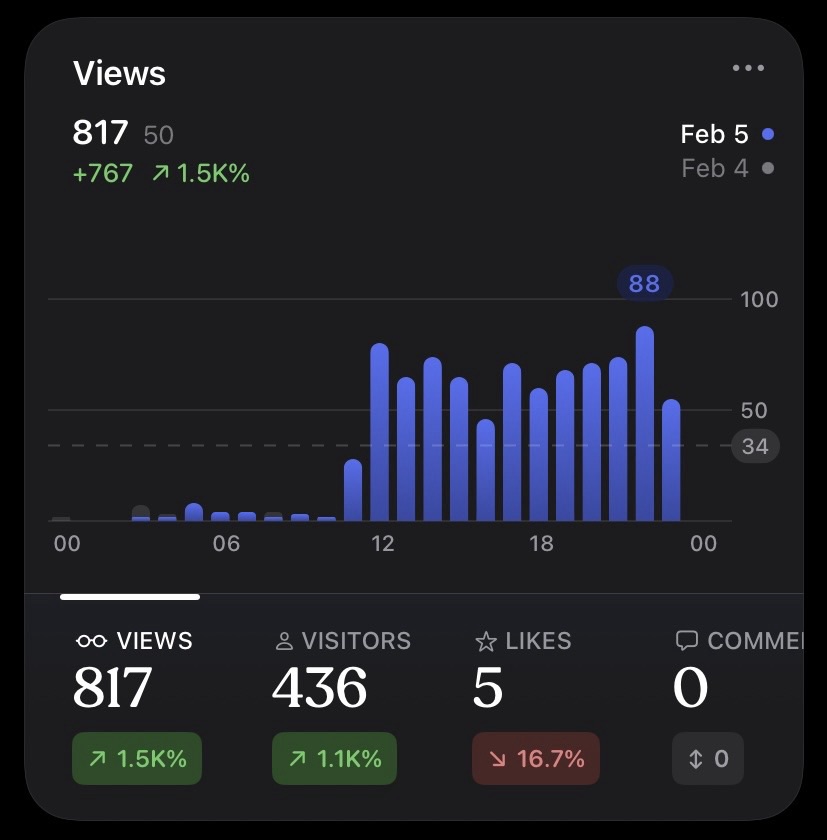
Update to my prior post: Google Analytics shows lower numbers for February 5.

Why?

Google Gemini suggests bots may be to blame.

The internet is full of “bots” (automated scripts from search engines or malicious actors).  

Google Analytics has an industry-leading database of known bots and filters them out very aggressively to give you “human” data.  

Jetpack also filters bots, but its list is different. Jetpack often catches fewer bots than Google, which usually results in Jetpack showing higher traffic numbers than GA.

Still unanswered: why did the bots swarm on that particular day?

Looks like disregarding the traffic is the correct choice.