On Monday afternoon, I was writing “draft 0.5” of a document for a Bredemarket client. Among other topics, the document noted how the quality of biometric capture affects future identification capability.
Although when I was originally conceptualizing the silhouette, I was thinking of the instrumental interlude toward the end (about 4 minutes in) of Elton John’s “I’ve Seen That Movie Too.”
Yeah, that song’s over fifty years on. Something I will address on my personal LinkedIn profile later this evening.
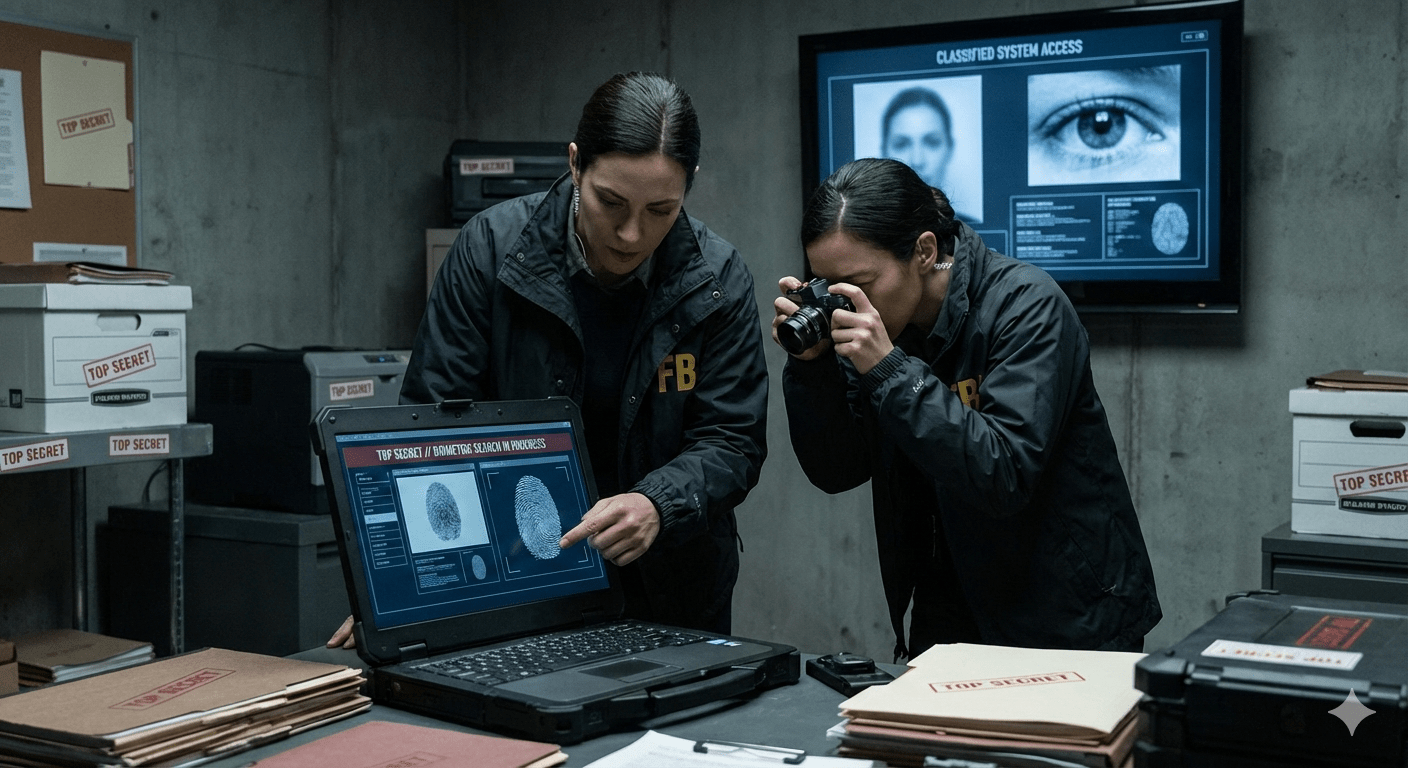
An interesting item popped up in SAM.gov. According to a Request for Information (RFI) due February 20, the FBI may have interest in a system for secret biometric searches.
“The FBI intends to identify available software solutions to store and search subjects at the classified level. This solution is not intended to replace the Next Generation Identification System Functionality, which was developed and implemented in collaboration with the FBI’s federal, state, local, tribal, and territorial partners. The solution shall reside at the Secret and/or Top-Secret/SCI level with the ability to support data feeds from external systems. The solution must allow the ability to enroll and search face, fingerprint, palmprint, iris, and latent fingerprints, and associated biographic information with a given set of biometrics.”
Now remember that the Next Generation Identification (NGI) system is protected from public access by requiring all users to adhere to the CJIS Security Requirements. But the CJIS Security Requirements aren’t Secret or Top Secret. These biometric searches, whatever they are, must REALLY be kept from prying eyes.
The RFI itself is 8 pages long, and is mysteriously numbered as RFI 01302025. I would have expected an RFI number 01152026. I believe this was an editing error, since FBI RFI 01302025 was issued in 2025 for a completely different purpose.
Whatever the real number is, the RFI is labeled “Classified Identity-Based Biometric System.” No acronym was specified, so I’m self-acronyming it as CIBS. Perhaps the system has a real acronym…but it’s secret.
If your company can support such a system from a business, technical, and security perspective, the due date is February 20 and questions are due by February 2. See SAM.gov for details.
Each person has certain immutable attributes associated with them, such as their blood type. And other attributes, such as their fingerprints and iris characteristics, which are mostly immutable. (Although I defy anyone to change their irises.)
But other things associated with us are all too mutable. If we use these for identification, we’ll end up in trouble.
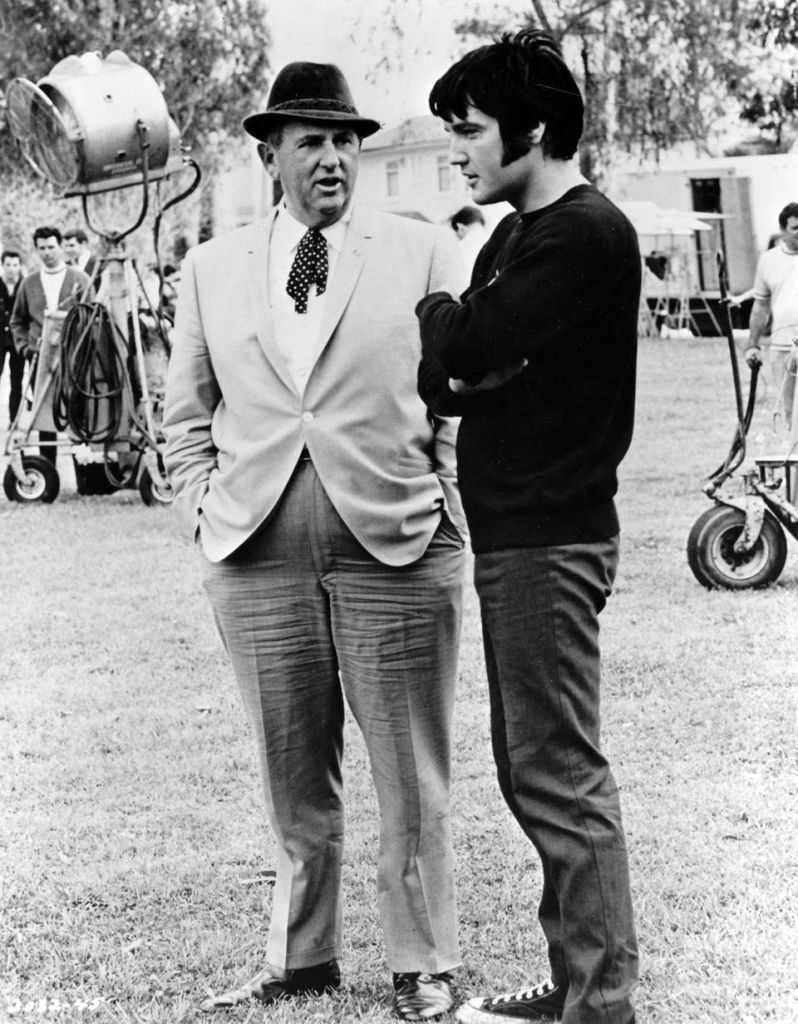
Elvis Presley, songwriter?
Let’s take one of the many attributes associated with Elvis Presley. If you haven’t heard of Presley, he was a popular singer in the mid 20th century. He’s even in Britannica.
(As a point of clarification, the song “Radio Radio” is associated with a DIFFERENT Elvis.)
Among many other songs, Presley is associated with the song “Don’t Be Cruel.”
Elvis Presley.
Presley was not only the performer, but also the credited co-songwriter.
After all, that’s what BMI says when you search its Songview database. See BMI work ID 317493.
“…he listened to a selection of acetate demos provided by Freddy Bienstock, the new song representative assigned to Elvis by his publishers, Hill and Range. He chose “Don’t Be Cruel” by an obscure Brooklyn-born r&b singer and songwriter, Otis Blackwell. As per Hill and Range’s contractual requirement, it came with the assignment of half the publishing to Elvis Presley Music and half the writer’s share to Elvis Presley, but as Blackwell, the first of Elvis’ great “contract” writers, was always quick to point out, it was the best deal he ever made.”
Many songs are credited to Presley as a songwriter, but in reality he wrote few if any of them. Yet the “songwriter” attribute is assigned to him. Do we simply accept what BMI says and move on?
But there are other instances in which there are no back room deals, yet a song is strongly associated with a musical entity who never wrote it.
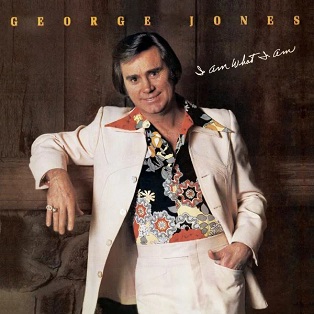
George Jones, not a songwriter
Take BMI Work ID 542061. The credited songwriters for this particular song are Robert Valentine Braddock and Claude Putnam, more commonly known as Bobby Braddock and Curly Putnam. According to RolandNote, Braddock and Putnam began writing this song on March 4, 1977 and finished it on October 18, 1977.
It was recorded by Johnny Russell on either March 7, 1978 (RolandNote), or January 18, 1979 (Second Hand Songs), or both (Classic Country Music Stories). But no recording was released.
Then George Jones recorded the song on February 6, 1980 with subsequent overdubs (“You know she came to see him one last time”) when he was more sober. His reaction?
“I looked [producer] Billy [Sherrill] square in the eye and said ‘nobody’s gonna buy that thing, it’s too morbid.’”
And morbid it was. Although popular music in general and country music in particular has never shied away from morbid songs.
Released the next month on March 18, the song was never associated with Braddock, Putnam, Russell, or Sherrill ever again. “He Stopped Loving Her Today” is completely associated with George Jones.
Now there’s a particular article that I wrote for a Bredemarket client a couple of years ago that used a slow reveal “reverse timeline” effect. Starting with 2022 and moving back in time to 2019, I slowly dropped the details about a missing person who was identified via biometric technology, finally solving the mystery of the person’s identity (Connerjack Oswalt).
I previously mused about an alternative universe in which a single human body had ten (different) faces.
Facial recognition would be more accurate if biometric systems had ten faces to match. (Kind of like you-know-what.)
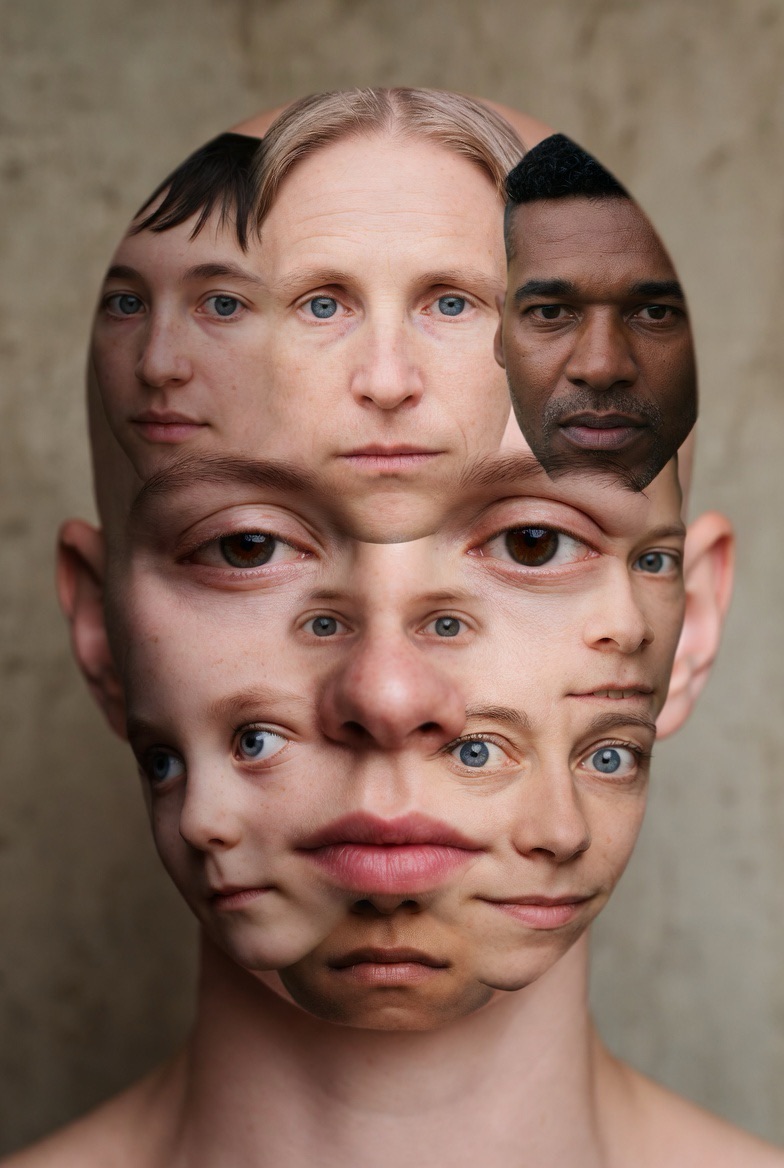
Well, now I’m getting ridiculous by musing about a person with one hundred faces for identification.
Grok.
When I’m not musing about alternative universes with different biometrics, I’m helping identity/biometric firms market their products in this one.
And this frivolous exercise actually illustrates a significant difference between fingerprints and faces, especially in use cases where subjects submit all ten fingerprints but only a single face. The accuracy benefits are…well, they’re ten times more powerful.
Are there underlying benefits in YOUR biometric technology that you want to highlight? Bredemarket can help you do this. Book a free meeting with me, and I’ll ask you some questions to figure out where we can work together.
I made this available to someone else, so I’m making it available to you. If you’re interested in a non-branded clip of the ten faces, here it is below.
Bredemarket reserves the right to revisit topics I visited before.
Imagine an alternative universe in which a single human body had ten (different) faces and only one finger.
How accurate would facial recognition be?
How accurate would fingerprint identification be?
Think about the ramifications.
Ten faces, one finger.
Credit for this thought, not original to me, must still remain anonymous.
But if you would like to discuss your biometric marketing and writing needs with a biometric product marketing expert, fill out the “free 30 minute content needs assessment” form on the page linked below to schedule a free conversation.
Bredemarket is not expert in anti-human trafficking campaigns, but several of Bredemarket’s clients and former clients have used biometrics to combat human trafficking and rescue the victims.








 Bredemarket