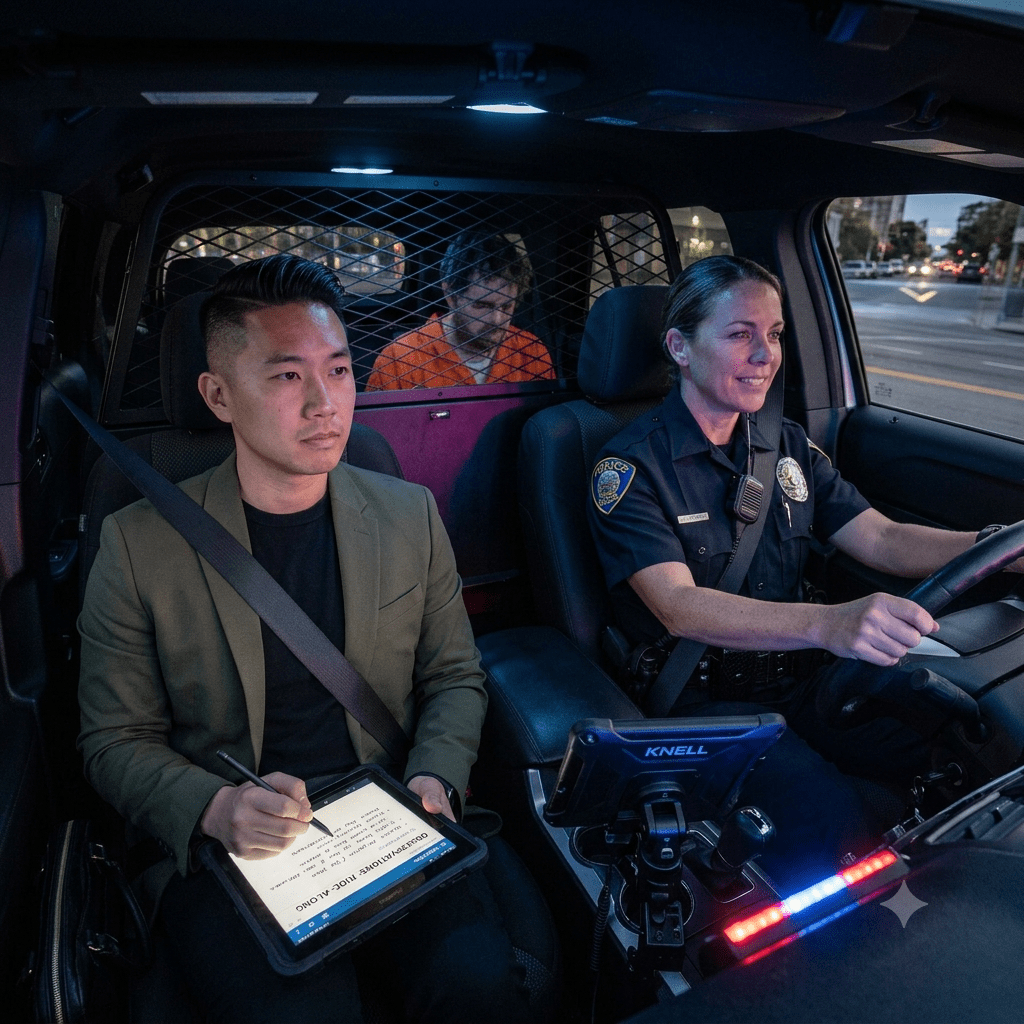
The Two-Way Door Decision

In business there’s something called a “Type 2 decision.” Because of my biometric background I shy away from the term (which means “false positive” in biometrics) and prefer to use the term “two-way door decision.”

If you’ve been through an airport security checkpoint, either entering or leaving a security area, you know that you can only go one way.

Google Gemini.

Amazon and the two-way door decision

But other entrances and exits DO allow you to change your mind.

“The [two-way door decision] concept was introduced by Jeff Bezos in his Amazon shareholder letters, using the metaphor of walking through a door. With a two-way door decision, you can walk through the door, see what’s on the other side, and if you don’t like it, you can easily turn around and come back through. If you make a suboptimal two-way door decision, you don’t have to live with the consequences for long—you can reopen the door and go back through.”

Amazon Fresh is not a good example.

Google Gemini.

While in the end the original decision was reversible, the reversal was not without pain. The rise and fall of Amazon Fresh took years. (Technically less than a year in Upland, if you don’t count the years of planning, but still a long time.)

But what about trying a new product marketing idea? While some ideas, such as pricing a luxury car at one dollar, can cause permanent damage, others can easily be reversed.

I’ll use Bredemarket as an example. Back in 2020 I was heavily pushing my Bredemarket 404 Web/Social Media Checkup. While it remains on my website, I haven’t promoted it in years. I could certainly still do it (and did it for one client), but while it parallels my analysis strengths, I find other areas (such as market and competitive analysis in the biometric industry) much more satisfying and financially rewarding.

Google Gemini.

On the other hand, I DID pull my editing services from the Bredemarket website. That’s not rewarding at all.

Enough about me…what about you?

But what if YOU want to try a new product marketing idea and see if it resonates with your prospects?

Google Gemini.

Now you could go through an entire tiered go-to-market launch,

Or alternatively, you could send up a trial balloon such as a blog post, a social media post, or a data sheet.

Google Gemini.

Then measure the results.

  • If the content resonates with your prospects, double down.
  • If your prospects are indifferent, never mention the idea again.
  • If your prospects hate it, delete it.

Because of my “I ask, then I act” bias, I gravitate toward these trial balloons. As long as the idea doesn’t kill your company, why not try it quickly, rather than paralyzing yourself by repeated inaction?

Your trial balloon

Google Gemini.

Are you ready to launch a trial balloon, but need some help with the helium? Set up a meeting with Bredemarket and we can discuss your options.

No, Tongue Identification Is NOT Widely Accepted

Remember tongue identification, which I discussed in 2023? Supposedly you can identify people based upon the shape and texture of their tongues. Unfortunately for the proponents, I don’t know that this has ever been tested with a subject size greater than 20 participants.

But that doesn’t stop people from talking about tongue identification as established fact.

A blog post (I won’t link to it) makes statements such as this:

The human tongue…has unique features that are different for each person.

Again without a shred of evidence.

Of course, the same blog post also praises bite mark analysis as an established identification method. Ignoring what scientists say:

“A likely next candidate for elimination is bitemark identification….An important National Academies review found little scientific support for the field. The Texas Forensic Science Commission recently recommended a moratorium on the admission of bitemark expert testimony….This article describes the (legal) basis for the rise of bitemark identification and the (scientific) basis for its impending fall. The article explains the general logic of forensic identification, the claims of bitemark identification, and reviews relevant empirical research on bitemark identification—highlighting both the lack of research and the lack of support provided by what research does exist. The rise and possible fall of bitemark identification evidence has broader implications—highlighting the weak scientific culture of forensic science and the law’s difficulty in evaluating and responding to unreliable and unscientific evidence.”

So don’t get all excited about tongue identification just yet.

Does Your Identity/Biometric Product Provide Certainty?

In case you didn’t know this, the word “trust” makes me yawn. Everybody uses it. Everybody sounds the same.

So let’s talk about certainty.

It’s not an exact synonym, but I think it’s better. It’s one thing to trust someone, but another to be certain of an outcome.

Google Gemini.

Does your identity/biometric product assure your company’s prospects that the product accurately identifies people…and doesn’t misidentify them?

(Certainty is essential because trusting a concert promoter is pointless if the promoter delivers Dread Zeppelin when you expected Led Zeppelin.)

Dread Zeppelin, “Immigrant Song.”

Do your product marketing materials explain:

  • Why your product works?
  • How it works?
  • The benefits your customers receive?

Your prospects have a lot of questions. So do I.

The Seven Questions I Ask.

Bredemarket’s questions help my clients and I deliver expert content, proposals, and analysis that convey certainty to prospects and customers.

To learn more and schedule a free meeting, click here or below.

Is Your Identity/Biometric Firm Too Busy Putting Out Fires to Install a Sprinkler System?

It’s the classic case of paralysis by overwhelmedness. (Not officially a word, but bear with me here.)

Your identity/biometric firm needs experienced product marketing contract help because you are drowning in work. But because you’re drowning in work you can’t take the time to set up that contract.

Bredemarket can help you contract with Bredemarket.

Now there are certain things that Bredemarket can’t do. Well, Bredemarket could do them, but you (understandably) won’t let me.

  • I can’t create my own contract with you. Actually I can, and I have with some clients, but your company probably requires that I use your contract, which I don’t have.
  • I can’t enroll myself as a vendor in your purchasing system. Trust me, that would be dangerous. Hmm…net 5 terms at $1,000 per hour?
  • I can’t onboard myself into your other internal systems. If I could, that would be a major security flaw.

But there are things that I can do to make your life easier when you onboard Bredemarket as a contractor/vendor…especially if you are an identity/biometric firm.

  • You don’t have to explain to me what a bifurcation or ridge ending are. I’ve been working with fingerprints since 1994 and know these things.
  • You don’t have to teach me how to spell NIST. While the 1985 interchange standard was before my time, I’m familiar with every ANSI/NIST standard since 1993 to the present day.
  • You don’t have to explain to me what a “factor” and a “modality” are. Heck, I wrote the book on factors and modalities.
  • You don’t have to create a briefing book. Just let me ask the questions and we’ll figure out the scope together.

So I can meet your partway. Then we’ll realize our mutual goal of making your products prominent and making the competitive products look weak.

So let’s talk and move the process forward.

Oh, and the title of this post was suggested by Google Gemini. AI is only a tool, but sometimes it’s a very effective tool. Sometimes.

Jurisdictional Privacy and Consent

Where are you?

Who are you?

The answers to these questions affect if or how you obtain consent to use one’s personally identifiable information, or PII.

Privacy regulations can change when you cross country or even city lines, and they can also change depending on who you are: an individual, a business, or a government agency.

How?

  • On the other extreme, some entities in some jurisdictions must obtain express written consent. If I am a homeowner in Schaumburg, Illinois, and I use a doorbell camera to identify friends or foes approaching my door, the Biometric Information Privacy Act (BIPA) prohibits me from capturing their biometrics without their consent, and lets them sue me if I do it anyway.

Before you collect PII, check the laws in your jurisdiction first.

Oh, and check the laws in other jurisdictions in case they try to enforce their laws in your jurisdiction.

By the way: if you’re a software or hardware vendor, don’t assume that you bear no responsibility and that only your customer does.

You must educate your customers.

And Bredemarket can help you with my content-proposal-analysis services.

CPA
CPA.

(Told you I’d bring this landing page back.)

I’m Writing a Book…And It’s Already Received a Negative Review

Some of you may have already read my shorter books, including “Seven Questions Your Content Creator Should Ask You.” They’re short, and they’re free.

Last December I started writing something more comprehensive, and long enough to sell. If I price each copy at $100,000 apiece and sell 25 of them, I can start thinking about retirement.

Despite the (completely realistic) financial incentive, I dropped the project and didn’t pick it back up again until this month. I’m not ready to announce it yet, but the very fact that I’m talking about it may give me the impetus to finish it.

I just uploaded the latest draft to Google Gemini, both to write a 100 word promotional blurb (which I may or may not use or adapt), and to write two book reviews: one positive, one negative.

Again without giving away too much about the book, here are two excerpts from the negative review.

“Author John E. Bredehoft spends significant time on self-promotion and anecdotal stories, such as his hypothetical attempt to access Donald Trump’s medical records, which may distract readers seeking deep technical data.”

Here’s the second:

“While the writing is accessible, those looking for a dense, scholarly analysis of biometric algorithms might find the conversational tone and frequent “investigative lead” reminders a bit repetitive.”

Hey, there weren’t THAT many…

More to come.

Six identity factors. One Bredemarket ebook. Total identity protection. Purchase “Proving Humanity: The Six Factors of Identity Verification and Authentication.”

Four pages from "Proving Humanity: The Six Factors of Identity Verification and Authentication" by John E. Bredehoft, Bredemarket., Click on the image to purchase.

Three Ways in Which My Identity/Biometric Experience Exhibits My “Bias”

Yeah, I’m still focused on that statement:

“I think too much knowledge is actually bad in tech: you’re biased.”

Why does this quote affect me so deeply? Because with my 30-plus years of identity/biometric experience, I obviously have too much knowledge of the industry, which is obviously bad. After all, all a biometric company needs is a salesperson, an engineer, an African data labeler, and someone to run the generative AI for everything else. The company doesn’t need someone who knows that Printrak isn’t spelled with a C.

Google Gemini.

In this post I will share three of the “biases” I have developed in my 30-plus years in identity and biometrics, and how to correct these biases by stripping away that 20th century experience and applying novel thinking.

And if that last paragraph made you throw up in your mouth…read to the end of the post.

But first, let’s briefly explore these three biases that I shamefully hold due to my status as a biometric product marketing expert:

  1. Independent algorithmic confirmation is valuable.
  2. Process is valuable.
  3. Artificial intelligence is merely a tool.
Biometric product marketing expert.

Bias 1: Independent Algorithmic Confirmation is Valuable

Biometric products need algorithms to encode and match the biometric samples, and ideally to detect presentation and injection attacks.

But how do prospects know that these algorithms work? How accurate are they? How fast are they? How secure are they?

My bias

My brain, embedded with over 30 years of bias, gravitates to the idea that vendors should submit their algorithms for independent testing and confirmation.

From a NIST facial recognition demographic bias text.

This could be an accuracy test such as the ones NIST and DHS administer, or confirmation of presentation attack detection capabilities (as BixeLab, iBeta, and other organizations perform), or confirmation of injection attack detection capabilities.

Novel thinking

But you’re smarter than that and refuse to support the testing-industrial complex. They have their explicit or implicit agendas and want to force the biometric vendors to do well on the tests. For example, the U.S. Federal Bureau of Investigation’s “Appendix F” fingerprint capture quality standard specifically EXCLUDES contactless solutions, forcing everyone down the same contact path.

But you and your novel thinking reject these unnecessary impediments. You’re not going to constrain yourself by the assertions of others. You are going to assert your own benefits. Develop and administer your own tests. Share with your prospects how wonderful you are without going through an intermediary. That will prove your superiority…right?

Bias 2: Process is Valuable

A biometric company has to perform a variety of tasks. Raise funding. Hire people. Develop, market, propose, sell, and implement products. Throw parties.

How will the company do all these things?

My bias

My brain, encumbered by my experience (including a decade at Motorola), persists in a belief that process is the answer. The process can be as simple as scribblings on a cocktail napkin, but you need some process if you want to cash out in a glorious exit—I mean, deliver superior products to your customers.

Perhaps you need a development processs that defines, among other things, how long a sprint should be. A capture and proposal process (Shipley or simpler) that defines, among other things, who has the authority to approve a $10 million proposal A go-to-market process that defines the deliverables for different tiers, and who is responsible, accountable, consulted, and informed. Or maybe just an onboarding process when starting a new project, dictating the questions you need to ask at the beginning.

Bredemarket’s seven questions. I ask, then I act.

Novel thinking

Sure all that process is fine…if you don’t want to do anything. Do you really want to force your people to wait two weeks for the latest product iteration? Impose a multinational bureauracy on your sales process? Go through an onerous checklist before marketing a product?

Google Gemini.

Just code it.

Just sell it.

Just write it.

Bias 3: Artificial Intelligence is Merely a Tool

The problem with experienced people is that they think that there is nothing new under the sun.

You talk about cloud computing, and they yawn, “Sounds like time sharing.” You talk about quantum computing, and they yawn, “Sounds like the Pentium.” You talk about blockchain, and they yawn, “Sounds like a notary public.”

My bias

As I sip my Pepperidge Farm, I can barely conceal my revulsion at those who think “we use AI” is a world-dominating marketing message. Artificial intelligence is not a way of life. It is a tool. A tool that in and of itself does not merit much of a mention.

Google Gemini.

How many automobile manufacturers proclaim “we use tires” as part of their marketing messaging? Tires are essential to an automobile’s performance, but since everyone has them, they’re not a differentiator and not worthy of mention.

In the same way, everyone has AI…so why talk about its mere presence? Talk about the benefits your implementation provides and how these benefits differentiate you from your competitors.

Novel thinking

Yep, the grandpas that declare “AI is only a tool” are missing the significance entirely. AI is not like a Pentium chip. It is a transformational technology that is already changing the way we create, sell, and market.

Therefore it is critically important to highlight your product’s AI use. AI isn’t a “so what” feature, but an indication of revolutionary transformative technology. You suppress mention of AI at your own peril.

How do I overcome my biases of experience?

OK, so I’ve identified the outmoded thinking that results from too much experience. But how do I overcome it?

I don’t.

Because if you haven’t already detected it, I believe that experience IS valuable, and that all three items above are essential and shouldn’t be jettisoned for the new, novel, and kewl.

  • Are you a identity/biometric marketing leader who needs to tell your prospects that your algorithms are validated by reputable independent bodies?
  • Or that you have a process (simple or not) that governs how your customers receive your products?
  • Or that your AI actually does unique things that your competitors don’t, providing true benefits to your customers?

Bredemarket can help with strategy, analysis, content, and/or proposals for your identity/biometric firm. Talk to me (for free).

By the way, here’s MY process (and my services and pricing).

Bredemareket: Services, Process, and Pricing.

Whether You Call It ANSI/NIST-ITL 1-2025 or NIST SP 500-290e4…It’s Out

Regardless of the concerns of Europeans and others about U.S. de facto governance of biometric standards, countries around the world still base their data interchange formats on a document written by the National Institute of Standards and Technology (NIST) and approved by the American National Standards Institute.

This document has been revised many times over the years. I first worked with the 1993 version of the document, which concentrated on binary and grayscale fingerprints with resolutions as high as 500 pixels per inch, but sometimes lower.

The new 2025 version (PDF), released in March 2026, covers a lot more. And sometimes a lot less.

  • 1 Transaction information
  • 2 User-defined descriptive text
  • 3 Deprecated
  • 4 Legacy
  • 5 Deprecated
  • 6 Deprecated
  • 7 User-defined image
  • 8 Signature image
  • 9 Friction ridge metadata
  • 10 Photographic body part imagery (including face and SMT)
  • 11 Voice data
  • 12 Forensic dental and oral data
  • 13 Variable-resolution latent friction ridge image
  • 14 Variable-resolution fingerprint image
  • 15 Variable-resolution palm print image
  • 16 User-defined variable-resolution testing image
  • 17 Iris image
  • 18 DNA data
  • 19 Variable-resolution plantar image
  • 20 Source representation
  • 21 Associated context
  • 22 Non-photographic imagery
  • 23-97 Reserved for future use
  • 98 Information assurance
  • 99 CBEFF biometric data record

Note the “deprecated” and “legacy” data types. In 1993, Type 4 was the gold standard for fingerprint images; now it’s just “legacy.” And forget about binary representations or anything less than 500 ppi.

Time marches on.

But some people have been around for much of the ride. I scanned the lists of working group members and found Kenneth Blue, Tom Buss, Roland Fournier, Patrick Grother, Mike McCabe, John Splain, Mark Walch, and many others who remember Type 4 and 250 ppi binary images.

And the canvassees included government and industry representatives from within and outside of the United States, including Canada, Germany, Japan, Latvia, Slovakia, Switzerland, other countries I probably mnissed, and INTERPOL.

If Europe or other countries do break away from NIST standards, it will be a rupturing break.

On DOJ/DoD/DHS ABIS Interoperability

The image at the top of this post was taken from the NIST website and is a from an interoperability slide in a 2016 FBI presentation. Although the reference to “IAFIS” suggests that the image was created long before 2016. No NGI, and no HART either.

Because—while this may make some uncomfortable—biometric interoperability between the Departments of Defense, Homeland Security, and Justice is critically important.

For years after 9/11, the (then) systems from the three Departments were NOT interoperable.

Which made it difficult to identify if a military person or citizenship applicant was a criminal.

Today, while the three current systems use three different data interchange standards (based upon work by NIST), they CAN talk to each other.

We just have to ensure that the interoperability is legal and proper.