Thermo Fisher Scientific Inc. (NYSE:TMO)…today confirmed that its polymerase chain reaction (PCR) TaqPath COVID-19 Combo Kit*, and TaqPath COVID-19 CE-IVD RT-PCR Kit*, which test for the presence of SARS-CoV-2, are not impacted by the emerging B.1.1.529, or Omicron variant, enabling accurate test results.
But test results are one thing; minimization of harm is another.
Moderna is already at work on a treatment to address the Omicron variant. Within the next few weeks, he said the company will know whether the new strain will require an altogether new vaccine, a specially formulated booster, or simply a higher dose of vaccines currently available.
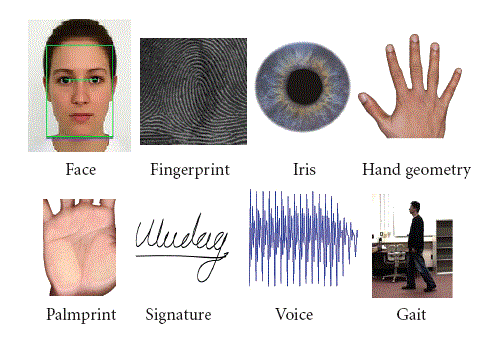
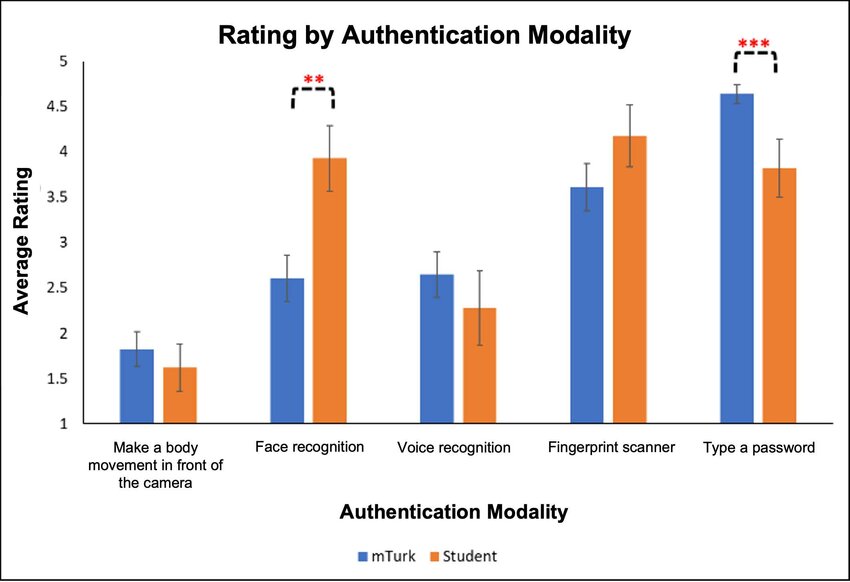
FindBiometrics asked about face and finger, the most commonly used biometric modalities. But there were also questions that touched upon voice biometrics, behavioral biometrics, and several other biometric modalities.
You could echo the late Ed McMahon and say that FindBiometrics covered EVERY meaningful biometric modality in its 2021 year in review survey.
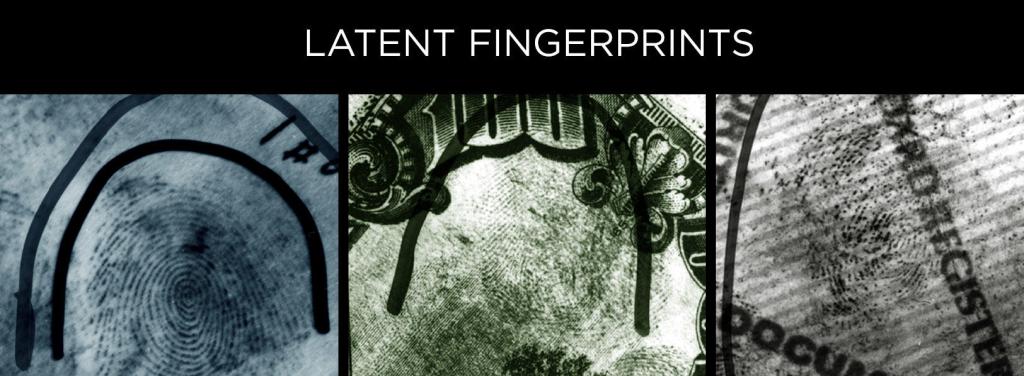
I’ve written about rapid DNA before (for example, after the Surfside building collapse). Rapid DNA is a process that automatically generates a DNA profile in less than two hours, as opposed to more manual-intensive procedures that could take much longer, especially when huge backlogs result in many months’ wait before DNA can be processed.
Rapid DNA cannot be used for every DNA application (commingled DNA is “an extremely critical challenge” and very difficult to process automatically), but there’s one instance in which DNA can technically be used, and that’s in the arrest/booking process.
What if, at the same time that an arrested person provides the state with his or her fingerprints, the person also provides a DNA sample?
Then, at the same time that the fingerprints are searched against local, statewide, and national databases to verify the person’s identity and (via “reverse searches”) see if the person is responsible for additional crimes, the DNA can also be searched against various databases.
However, even in states that authorized DNA collection for some arrests, the U.S. Federal Bureau of Investigation wouldn’t allow rapid DNA profiles collected in a booking environment (as opposed to a crime laboratory) to be searched against its database.
Effective February 1, 2021, ANDE received approval from the FBI for its technology to be deployed in booking stations to support processing of DNA samples from qualifying arrestees and the automatic upload and searching of these DNA IDs against the National DNA Index System (NDIS).
ANDE (formerly NetBio) is one of two manufacturers of rapid DNA systems. The other manufacturer, Thermo Fisher Scientific (formerly the independent company IntegenX), followed with its own announcement in July.
The U.S. Federal Bureau of Investigation (FBI) has approved Thermo Fisher Scientific’s Applied Biosystems RapidHIT ID DNA Booking System for use by law enforcement booking stations to automatically process, upload and search DNA reference samples from qualifying arrestees against the U.S. National DNA Index System (NDIS) CODIS database.
This means that today’s multimodal booking environments, which already support capture of friction ridges (fingerprints and palmprints), faces, and occasionally irises, can now also capture DNA.
Now I’ll grant that the continued expansion of mobile driver’s licenses to more states, as well as the final approval of the ISO/IEC 18013-5 standard, will have a greater impact on society at large. After all, the number of people with driver’s licenses is much larger than the number of people who get arrested. (Currently.)
But quadmodal booking biometrics deserves a mention. If we’re going to talk about quadmodal learning, let’s talk about quadmodal biometrics (finger, face, iris, DNA) also.
Maybe FindBiometrics will devote more time to DNA in its 2022 year in review.
OK, two MORE things
By the way, if you want more information about when the FBI authorizes rapid DNA and when it does not, as well as the standards that apply, check this page.
The FBI did not have anything to do with this video, which is tangential to the topic at hand, but I’m sharing it because Bob Mothersbaugh not only has a tasty guitar solo, but also a prominent singing part.
How many of you are ALREADY working toward accomplishing your 2022 goals?
I recently sent an email to someone…actually more than one email to more than one someone…that listed some of the things that some companies are already doing in November 2021 to ensure that they start 2022 on the right foot. I happen to know what these companies are doing, because Bredemarket is helping them to do these things.
13 service descriptions
A library of standard RFP responses
Two case studies
Two statements of work
A response to an RFI
A white paper
An article featuring a technology partner
Analyses of NIST test results
An unsolicited proposal letter template
A pitch deck
As Bredemarket completes these projects (some of them are already completed), these companies are positioning themselves for increased business in 2022. Perhaps one of those two case studies, or that unsolicited proposal letter template, will help a company win a new customer.
What about your firm? What content does your firm need to get out your message?
November is almost gone, but there’s still time in December to prepare your 2022 content. And as your regular staff takes holiday vacations, perhaps a contractor may prove useful to you.
That’s where Bredemarket can help you. Whether you need a case study, a white paper, a proposal response, or something else (look at “what I do“), Bredemarket can provide you with that important holiday season assistance to get ready for 2022. If you can use Bredemarket’s assistance:
Here’s the second of two videos that I filmed at the grand reopening of the Anthony Muñoz Community Center in Ontario, California. If you don’t like politician speeches, skip the first 15 minutes and go right to the facility tour.
Earlier this week I was asked about one of the posts that I wrote in the Bredemarket blog. I had to confess that I hadn’t thought about the topic much recently.
After this conversation, I realized that the referenced post was written back in July.
Because I’ve written over 200 posts in the Bredemarket blog over the past year-plus, some of them kind of get merged together in my mind.
And in this particular case, my thoughts on the original topic have evolved since the summer.
So if you see a future post that revises and updates something I wrote about four months ago, now you know why.
I hope that the new post won’t be dramatically different from the old one.
And here’s the fourth and final part of my repurposing exercise. See parts one, two, and three if you missed them.
This post is adapted from Bredemarket’s November 10, 2021 submitted comments on DHS-2021-0015-0005, Information Collection Request, Public Perceptions of Emerging Technology. As I concluded my request, I stated the following.
Of course, even the best efforts of the Department of Homeland Security (DHS) will not satisfy some members of the public. I anticipate that many of the respondents to this ICR will question the need to use biometrics to identify individuals, or even the need to identify individuals at all, believing that the societal costs outweigh the benefits.
But before undertaking such drastic action, the consequences of following these alternative paths must be considered.
Taking an example outside of the non-criminal travel interests of DHS, some people prefer to use human eyewitness identification rather than computerized facial recognition.
However, eyewitness identification itself has clear issues of bias. The Innocence Project has documented many cases in which eyewitness (mis)identification has resulted in wrongful criminal convictions which were later overturned by biometric evidence.
Mistaken eyewitness identifications contributed to approximately 69% of the more than 375 wrongful convictions in the United States overturned by post-conviction DNA evidence.
Inaccurate eyewitness identifications can confound investigations from the earliest stages. Critical time is lost while police are distracted from the real perpetrator, focusing instead on building the case against an innocent person.
Despite solid and growing proof of the inaccuracy of traditional eyewitness ID procedures – and the availability of simple measures to reform them – traditional eyewitness identifications remain among the most commonly used and compelling evidence brought against criminal defendants.”
For more information on eyewitness misidentification, see my November 24, 2020 post on Archie Williams (pictured above) and Uriah Courtney.
Do we really want to dump computerized artificial intelligence and facial recognition, only to end up with manual identification processes that are proven to be even worse?
This post is adapted from Bredemarket’s November 10, 2021 submitted comments on DHS-2021-0015-0005, Information Collection Request, Public Perceptions of Emerging Technology. See my first and second posts on the topic.
DHS asked respondents to address five questions, including this one:
(2) will this information be processed and used in a timely manner;
Here is part of my response.
I am answering this question from the perspective of a person crossing the border or boarding a plane.
During the summer of 2017, CBP conducted biometric exit facial recognition technical demonstrations with various airlines and airports throughout the country. Here, CBP Officer Michael Shamma answers a London-bound American Airlines passenger’s questions at Chicago O’Hare International Airport. Photo by Brian Bell. From https://www.cbp.gov/frontline/cbp-biometric-testing
From this perspective, you can ask whether the use of biometric technologies makes the entire process faster, or slower.
Before biometric technologies became available, a person would cross a border or board a plane either by conducting no security check at all, or by having a human conduct a manual security check using the document(s) provided by an individual.
Unless a person was diverted to a secondary inspection process, automatic identification of the person (excluding questions such as “What is your purpose for entering the United States?”) could be accomplished in a few seconds.
However, manual security checks are much less accurate than technological solutions, as will be illustrated in a future post.
With biometric technologies, it is necessary to measure both the time to acquire the biometric data (in this case a facial image) and the time to compare the acquired data against the known data for the person (from a passport, passenger manifest, or database).
The time to acquire biometric data continues to improve. In some cases, the biometric data can be acquired “on the move” as the person is walking toward a gate or other entry area, thus requiring no additional time from the person’s perspective.
The time to compare biometric data can vary. If the source of the known data (such as the passport) is with the person, then comparison can be instantaneous from the person’s perspective. If the source of the known data is a database in a remote location, then the speed of comparison depends upon many factors, including network connections and server computation times. Naturally, DHS designs its systems to minimize this time, ensuring minimal or no delay from the person’s perspective. Of course, a network or system failure can adversely affect this.
In short, biometric evaluation is as fast if not faster than manual processes (provided no network or system failure occurs), and is more accurate than human processes.
Automated Passport Control kiosks located at international airports across the nation streamline the passenger’s entry into the United States. Photo Credit: James Tourtellotte. From https://www.cbp.gov/travel/us-citizens/apc
This post is adapted from Bredemarket’s November 10, 2021 submitted comments on DHS-2021-0015-0005, Information Collection Request, Public Perceptions of Emerging Technology. See yesterday’s post for additional thoughts on bias, security, and privacy.
Because of many factors, including the 9/11 tragedy that spurred the organization of the Department of Homeland Security (DHS) itself, DHS has been charged to identify individuals as a part of its oversight of customs and border protection, transportation security, and investigations. There are many ways to identify individuals, including:
What you know, such as a password.
What you have, such as a passport or token.
What you are, such as your individual face, fingers, voice, or DNA.
Where you are.
Is it possible to identify an individual without use of computerized facial recognition or other biometric or AI technologies? In other words, can the “what you are” test be eliminated from DHS operations?
Some may claim that the “what you have” test is sufficient. Present a driver’s license or a passport and you’re identified.
However, secure documents are themselves secured by the use of biometrics, primarily facial recognition.
Before a passport is issued, many countries including the U.S. conduct some type of biometric test to ensure that a single person does not obtain two or more passports.
Similar tests are conducted before driver’s licenses and other secure documents are issued.
In addition, people attempt to forge secure documents by creating fake driver’s licenses and fake passports. Thus, all secure documents need to be evaluated, in part by confirming that the biometrics on the document match the biometrics of the person presenting the document.
In short, there is no way to remove biometric identification from the DHS identification operation. And if you did, who knows how each individual officer would judge whether a person is who they claim to be?
This post is adapted from Bredemarket’s November 10, 2021 submitted comments on DHS-2021-0015-0005, Information Collection Request, Public Perceptions of Emerging Technology.
The original DHS request included the following sentence in the introductory section:
AI in general and facial recognition in particular are not without public controversy, including concerns about bias, security, and privacy.
Even though this was outside of the topics specifically requiring a response, I had to respond anyway. Here’s (in part) what I said.
The topics of bias, security, and privacy deserve attention. Public misunderstandings on these topics have the capability of scuttling all of DHS’ efforts in customs and border protection, transportation security, and investigations.
Regarding bias, it is imperative upon government agencies, biometric vendors, and other interested parties (including myself as a biometric consultant) to educate and inform the public about issues relating to bias. In the interests of brevity, I will confine myself to two critical points.
There is a difference between identification of individuals and classification of groups of individuals.
The summary at the top of the Gender Shades website http://gendershades.org/ clearly frames the question asked by the study: “How well do IBM, Microsoft, and Face++ AI services guess the gender of a face?” As the study title and its summary clearly state, the study only attempted to classify the genders of faces.
This is a different problem than the problem addressed in customs and border protection, transportation security, and investigations applications: namely, the identification of an individual. If someone purporting to be me attempts to board a plane, DHS does not care whether I am male, female, gender fluid, or anything else related to gender. DHS only cares about my individual identity.
It is imperative that any discussion of bias as related to DHS purposes confine itself to the DHS use case of identification of individuals.
Different algorithms exhibit different levels of bias (and different types of bias) when identifying individuals.
While Gender Shades did not directly address this issue, it turns out that it is possible to identify differences in individual identification between different genders, races, and ages.
The National Institute of Standards and Technology (NIST) has conducted ongoing studies of the accuracy and performance of face recognition algorithms. In one of these tests, the FRVT 1:1 Verification Test (at the https://pages.nist.gov/frvt/html/frvt11.html URL), each tested algorithm is examined for its performance among different genders, races (with nationality used as a proxy for race), and ages.
While neither IBM nor Microsoft (two of the three algorithm providers studied in Gender Shades) have not submitted algorithms to the FRVT 1:1 Verification Test, over 360 1:1 algorithms have been tested by NIST.
In a 2019 report issued by NIST on demographic effects (at the https://nvlpubs.nist.gov/nistpubs/ir/2019/NIST.IR.8280.pdf URL), NIST concluded that the tested algorithms “show a wide range in accuracy across developers, with the most accurate algorithms producing many fewer errors.”
It is possible to look at the data for each individual algorithm to see detailed information on the algorithm’s performance. Click on each 1:1 algorithm to see its “report card,” including demographic results.
However, even NIST tests are just that – tests. Performance of a research algorithm on a NIST test with NIST data does not guarantee the same performance of an operational algorithm in a DHS system with DHS data.
As DHS implements biometric systems for its purposes of customs and border protection, transportation security, and investigations, DHS not only needs to internally measure the overall accuracy of these systems using DHS algorithms and data, but also needs to internally measure accuracy when these demographic factors are taken into account. While even highly accurate results may not be perceived as such by the public (the anecdotal tale of a single inaccurate result may outweigh stellar statistical accuracy in the public’s mind), such accuracy measurements are essential for the DHS to ensure that it is fulfilling its mission.
Regarding security and privacy, which are intertwined in many ways, there are legitimate questions regarding how the use of biometric technologies can detract or enhance the security and privacy of individual information. (I will confine myself to technology issues, and will not comment on the societal questions regarding knowledge of an individual’s whereabouts.)
Data, including facial recognition vectors or templates, is stored in systems that may themselves be compromised. This is the same issue that is faced by other types of data that may be compromised, including passwords. In this regard, the security of facial recognition data is no different than the security of other data.
In some of the DHS use cases, it is not only necessary to store facial recognition vectors or templates, but it is also necessary to store the original facial images. These are not needed by the facial recognition algorithms themselves, but by the humans who review the results of facial algorithm comparisons. As long as we continue to place facial images on driver’s licenses, passports, visas, and other secure identity documents, the need to store these facial images will continue and cannot be avoided.
However, one must ensure that the storage of any personally identifiable information (including Social Security Numbers and other non-biometric data) is secure, and that the PII is only available on a need-to-know basis.
In some cases, the use of facial recognition technologies can actually enhance privacy. For example, take the moves by various U.S. states to replace their existing physical driver’s licenses with smartphone-based mobile driver’s licenses (mDLs). These mDL applications can be designed to only provide necessary information to those viewing the mDL.
When a purchase uses a physical driver’s license to buy age-restricted items such as alcohol, the store clerk viewing the license is able to see a vast amount of PII, including the purchaser’s birthdate, full name, residence address, and even height and weight. A dishonest store clerk can easily misuse this data.
When a purchaser uses a mobile driver’s license to buy age-restricted items, most of this information is not exposed to the store clerk viewing the license. Even the purchaser’s birthdate is not exposed; all that the store clerk sees is whether or not the purchaser is old enough to buy the restricted item (for example, over the age of 21).
Therefore, use of these technologies can actually enhance privacy.
I’ll be repurposing other portions of my response as new blog posts over the next several days.
The picture above is what I picture when I think of Dollar General. In fact, it looks similar to a Dollar General that I’ve seen outside of Huntsville, Alabama: just a building with a parking lot out in a field by a major road. You can hear the crickets chirping at night.
Not the kind of place where you’d expect to see a lot of futurists connecting a spectrum of innovation where human and biological system designs interact together seamlessly.
Yes, even Dollar General is embracing technology, but as far as I can tell it is concentrating on consumer-facing technology and hasn’t adopted blockchain yet. But I could be wrong.
I failed to quote from the linked article at the time, which dates from 2019.
Digital is becoming a “big part” of customers’ lives, Dollar General chief executive Todd Vasos said last year.
Dollar General is also building a digital strategy because customers who redeem digital savings coupons and use the new Dollar General app, released last year (2018), spend about twice as much on average as regular shoppers….
It’s not a surprise that Dollar General has been slow to embrace digital. The company’s core customers make about $40,000 a year per household, more than $20,000 below the national average.
Because of the income gap, Dollar General’s main customers are often “behind the curve” on new technology….But smartphones are ubiquitous now, and about 85% of Dollar General’s customers use one, in line with the national average.
Well, now Dollar General customers have a new way to use their smartphones.
Dollar General (NYSE: DG) today announced a partnership with DoorDash (NYSE: DASH), the nation’s leading last-mile logistics platform, to offer on-demand delivery of household essential items, including food, snacks, cleaning supplies, and more, at everyday low prices customers trust Dollar General to provide….
On-demand delivery from DoorDash is currently available from more than 9,000 Dollar General stores with plans to expand to more than 10,000 locations by December 2021. Dollar General and DoorDash initially piloted a program in summer 2021 with approximately 600 stores in rural and metropolitan communities.
In the minds of some, Dollar General seems very old school while DoorDash seems very cutting-edge. But behind the scenes, Dollar General provides as much tech innovation as another rural success story, Cracker Barrel. And when you think about it, DoorDash is just a warmed-over techie delivery service.
By Conrad Poirier – This file has been scanned and uploaded to Wikimedia Commons with the gracious permission and cooperation of Bibliothèque et Archives nationales du Québec and Wikimedia Canada under the Poirier Project., Public Domain, https://commons.wikimedia.org/w/index.php?curid=34364242