How do you track project progress when people resist project tracking?
Track the project and don’t tell them.
Double-secret project management.


Identity/biometrics/technology marketing and writing services

How do you track project progress when people resist project tracking?
Track the project and don’t tell them.
Double-secret project management.

Some truths, like gravity, last a long time.
Others don’t.
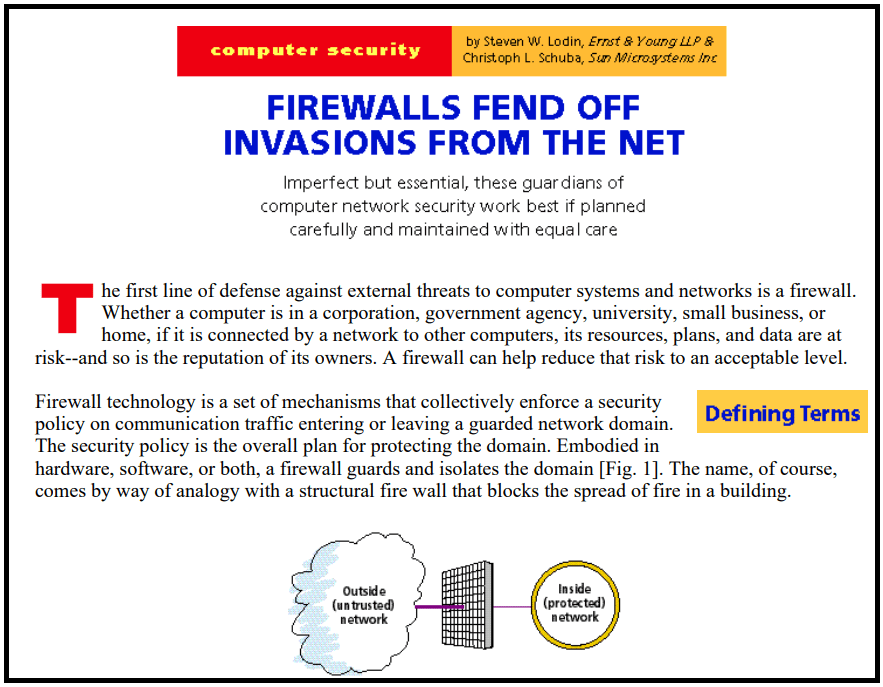
If you were involved in computing in the 1990s, you knew all about firewalls and their ability to block outside threats. The firewall protected a safe enclosed area.
We all believed this, and it was common wisdom.
A 1998 paper, accessible (PDF) via the Purdue University website, reflects this 20th century thinking.
The first line of defense against external threats to computer systems and networks is a firewall. Whether a computer is in a corporation, government agency, university, small business, or home, if it is connected by a network to other computers, its resources, plans, and data are at risk–and so is the reputation of its owners. A firewall can help reduce that risk to an acceptable level.
Firewall technology is a set of mechanisms that collectively enforce a security policy on communication traffic entering or leaving a guarded network domain. The security policy is the overall plan for protecting the domain. Embodied in hardware, software, or both, a firewall guards and isolates the domain…
And yes, we really believed this.
Now we don’t. Because our remote servers have expanded into something we now call the “cloud,” our computing devices now include souped-up telephones, and everything is provided “as a service.” There is no longer an inside and outside, and threats can come from anywhere.
On Monday I will share a post on Zero Trust Architecture, which repudiates the firewall model.

You know that the video I shared earlier begged to be expanded into a television show. And that for the proper setting, the show itself would market products in a way that is illegal today; yes, the show would be sponsored by Marlboro.

So without further ado…
(The show introduction is followed by a Marlboro commercial.)
(Sharp-eyed Inland Empire residents will notice that this depiction is entirely fictional, since the real “Main Street,” officially known as Euclid Avenue, is much wider and less dusty than the street depicted here. Allow me artistic license.)
As the Ontario townsfolk were gathered on the street in late afternoon, a mysterious stranger rode into town. He was a most unusual man. For one, he was smiling, unlike the other strangers that have come before him. For another, his brown/tan/black official western wear issue (Montgomery Ward catalog, pages 333-334) was rudely interrupted by a blue patch with a “B” on it. There was something else odd about him, but no one spoke of it.
The mysterious stranger rode up to the saloon, dismounted his horse, and walked in.
The mysterious stranger slowly walked to the bar and took a seat as the bartender eyed him warily.
“What’ll you have?” the bartender asked gruffly.
“Strum,” the stranger replied.
(Hey, Inland Empire residents, I got that one right.)
As he sipped his drink, the stranger couldn’t help but notice the older man in a gray jacket staring at him. As everyone in the saloon quietly watched, the older man slowly walked toward the stranger.
“Sir,” said the older man.
“Yes?” asked the stranger.
The older man gestured toward the stranger’s belt. “Those aren’t guns you have in those holsters.”
The stranger paused. “No, they’re not.”
“In fact,” the older man scoffed, “they look like pencils.”
The stranger nodded. “Yes they are.”
The older man’s face betrayed the slightest smirk. “Why” – he paused – “would a man carry PENCILS in his holster?”
As the older man and the others in the saloon broke out into grins, the stranger eyed them all with a serious expression. He paused before responding.
In a loud voice the stranger replied. “Business.”
Everyone looked puzzled at that unexpected response.
After a long pause, the older man turned back to the stranger. “Sir,” he asked, “exactly what kind of BUSINESS are you in?”
(Time for another Marlboro commercial)

If you’re new to my writing, you’ll notice that I use the phrase “hungry people” a lot. You probably want to know why: did I miss breakfast or something? Actually, “hungry people” is my phrase that I use instead of “target audience.” Here’s why.
At its worst, “target” implies something that you shoot, in a William Tell sort of way. If your weapon hits the target, you and your son don’t die. If your weapon misses low, you kill your son. Is that what we marketers do? Hopefully not.
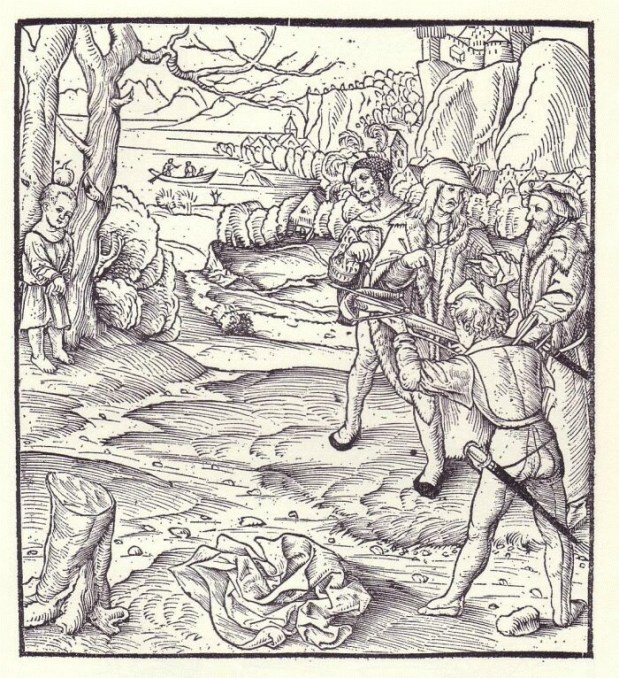
An audience is a group of people that sit in chairs while you perform your song and dance in front of them. (“These are the seven questions your content creator should ask you. Thank you for coming to my BRED talk.”)
Clapping or screaming is nice, but this doesn’t count as true engagement. I mean, in a way it would be nice if you scream with joy at this post, but it counts for nothing if you don’t actually buy Bredemarket’s marketing and writing services.
So I resolved not to use the term “target audience.” After considering “needy people,” I finally settled on “hungry people” as a temporary phrase. I figured that unlike “needy people,” “hungry people” are more inspired to act on their needs. They don’t just clap or scream; they are motivated to search for something to eat.
2 1/2 years later, I haven’t thought of anything better.
And if you need my help to address your hungry people, book a free meeting with Bredemarket.
I created this for my personal use.
Product marketer for hire.
https://www.linkedin.com/in/jbredehoft

When you write something, read it first to ensure that you don’t burst out laughing after reading it.
If you read SAM.gov for fun, you may have seen Notice ID DCSA_2026_HS002126QE023 for Michigan Fingerprint Channeling. Offers are due on April 23, so if you can satisfy the requirements, get working.
As the acronym-aware probably already know, this was issued by the Defense Counterintelligence and Security Agency (DCSA), part of the U.S. Department of Defense (with the secondary title the Department of War).
Why?
“DCSA has a recurring need for a simplified method of filling the anticipated repetitive needs for fingerprint channeling for the purpose of obtaining Criminal History Records Information (CHRI) from the state of Michigan.”
Because it’s a bad thing to make things hard, so DCSA needs a simplified method.
This is explained in the Performance Work Statement that is attached to the Solicitation Form. Another attachment is the Pricing Workbook.
So to make things simple for DCSA, you need to review all three of these documents and provide the approprirate responses.
And don’t forget to review ALL of the incorporated contract clauses, such as this one:
252.232-7006 Wide Area WorkFlow Payment Instructions. (Jan 2023)
WIDE AREA WORKFLOW PAYMENT INSTRUCTIONS (JAN 2023)
(a) Definitions. As used in this clause-
“Department of Defense Activity Address Code (DoDAAC)” is a six position code that uniquely identifies a unit, activity, or organization.
“Document type” means the type of payment request or receiving report available for creation in Wide Area WorkFlow (WAWF).
“Local processing office (LPO)” is the office responsible for payment certification when payment certification is done external to the entitlement system.
“Payment request” and “receiving report” are defined in the clause at 252.232-7003, Electronic Submission of Payment Requests and Receiving Reports.
(b) Electronic invoicing. The WAWF system provides the method to electronically process vendor payment requests and receiving reports, as authorized by
Defense Federal Acquisition Regulation Supplement (DFARS) 252.232-7003, Electronic Submission of Payment Requests and Receiving Reports.
(c) WAWF access. To access WAWF, the Contractor shall-
(1) Have a designated electronic business point of contact in the System for Award Management at https://www.sam.gov; and
(2) Be registered to use WAWF at https://wawf.eb.mil/ following the step-by-step procedures for self-registration available at this web site.
(d) WAWF training. The Contractor should follow the training instructions of the WAWF Web-Based Training Course and use the Practice Training Site before
submitting payment requests through WAWF. Both can be accessed by selecting the “Web Based Training” link on the WAWF home page at https://wawf.eb.mil/
(e) WAWF methods of document submission. Document submissions may be via web entry, Electronic Data Interchange, or File Transfer Protocol.
(f) WAWF payment instructions. The Contractor shall use the following information when submitting payment requests and receiving reports in WAWF for this
contract or task or delivery order:
(1) Document type. The Contractor shall submit payment requests using the following document type(s):
(i) For cost-type line items, including labor-hour or time-and-materials, submit a cost voucher.
(ii) For fixed price line items-
(A) That require shipment of a deliverable, submit the invoice and receiving report specified by the Contracting Officer.
Invoice 2-in-1
(B) For services that do not require shipment of a deliverable, submit either the Invoice 2in1, which meets the requirements for the invoice and
receiving report, or the applicable invoice and receiving report, as specified by the Contracting Officer.
Invoice 2-in-1
(iii) For customary progress payments based on costs incurred, submit a progress payment request.
(iv) For performance based payments, submit a performance based payment request.
(v) For commercial financing, submit a commercial financing request.
(2) ) Fast Pay requests are only permitted when Federal Acquisition Regulation (FAR) 52.213-1 is included in the contract.
(3) Document routing. The Contractor shall use the information in the Routing Data Table below only to fill in applicable fields in WAWF when creating payment requests and receiving reports in the system.
OK, that’s not the whole thing. I stopped copying it at the actual Routing Data Table itself.
This is of course a cost of doing business with any large entity, whether it’s the federal government or a multi-billion dollar firm. This who want money from these large organizations put up with it.
And laugh to themselves about the desire for things “simplified.”

I prefer the term “hungry people” to the term “target audience” because it conveys the idea of those who really really want your product.

And therefore it stands to reason that you want to write content for your hungry people.
For example, if you’re selling automated fingerprint identification systems to cops, your content should probably talk about protecting residents by identifying bad people and keeping them off the street.
But Isabel Sterne warns that you don’t want to go overboard in this.
Why not?
“When you spend your time scanning your environment, adapting to those around you, and adjusting your communication style accordingly, you can start to lose yourself, lose sight of your message, and become forgettable.”
Let’s face it. If everyone mirrors their target audience, and they have the same target audience, how can you tell them apart?
I hope that Scott Swann and Ajay Amlani forgive me, but I’m going to use them as examples.
Aware and ROC could simply mirror the needs and desires of U.S. law enforcement and mirror them back. But if they did that, Aware and ROC would appear identical and interchangeable.
And they’re not.
Aware has been around for several decades and offers everything from components and tools to full-blown automated biometric identification systems. Amlani, a new arrival, has a background that extends back to the FIRST version of CLEAR, along with multiple roles within the federal government and the private sector (including the aforementioned IDEMIA, where we did early work on venue identity verification solutions).
ROC is a newer arrival with a laser focus on several biometric modalities. Swann joined ROC after a long career at the U.S. Federal Bureau of Investigation and other federal government entities, followed by time in the private sector with MorphoTrak (where we worked on Morpho Video Investigator together, a potential solution for Boston Marathon bombing events) and IDEMIA National Security Solutions.
What is Sterne’s advice for Amlani, Swann, and others who don’t want to simply reflect their prospects? Here is what Sterne does:
“I write about what I’m interested in, and while I do write for all of you (and hope you get some value from what I share), I mostly write for myself, to explore ideas. In other words, I forget about the room when I write….
“When you write for yourself without considering a person or group of people, you end up writing more personally and often more universally.
“The irony is that by writing for yourself, you usually create something that others can connect to more deeply….
“And the more you write from this place, the clearer you get on your voice, priorities, and overarching ideas, the better able you are to create something that resonates.”
Personally, my hope is that my infusion of myself in my writing helps me to stand out and to better communicate what Bredemarket can provide to identity/biometric firms.
Is it working? You be the judge.

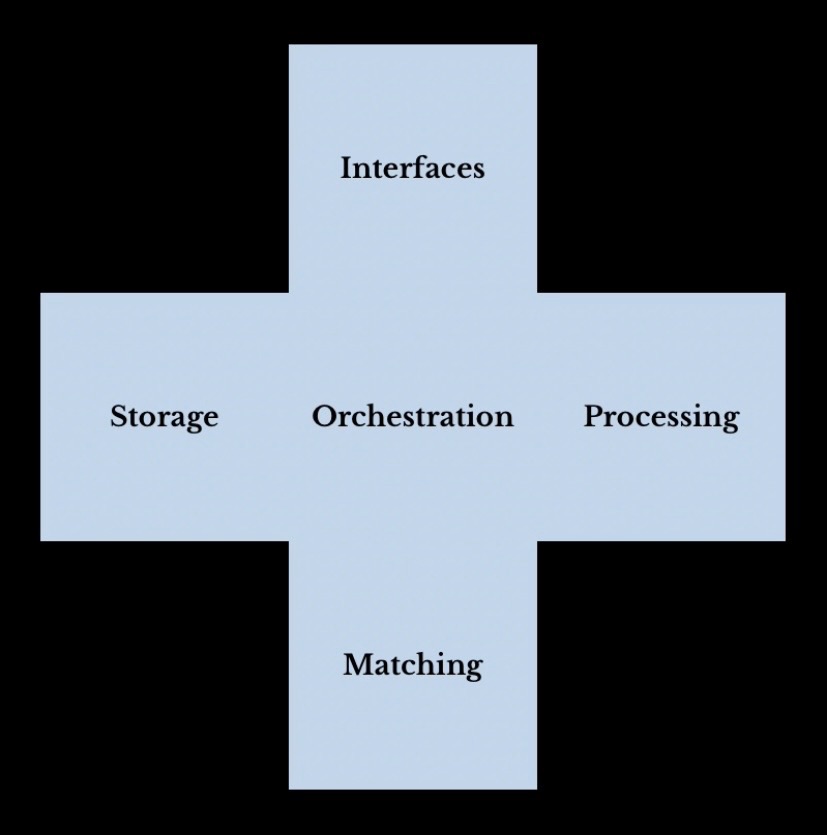
What are the elements of an Automated Biometric Identification System?
An ABIS begins with an orchestration/workflow controller.
And includes interfaces, processing, matching, and storage.
This was true even before I managed the Printrak BIS product.
And remains true today.

Some of you may have already read my shorter books, including “Seven Questions Your Content Creator Should Ask You.” They’re short, and they’re free.
Last December I started writing something more comprehensive, and long enough to sell. If I price each copy at $100,000 apiece and sell 25 of them, I can start thinking about retirement.
Despite the (completely realistic) financial incentive, I dropped the project and didn’t pick it back up again until this month. I’m not ready to announce it yet, but the very fact that I’m talking about it may give me the impetus to finish it.
I just uploaded the latest draft to Google Gemini, both to write a 100 word promotional blurb (which I may or may not use or adapt), and to write two book reviews: one positive, one negative.
Again without giving away too much about the book, here are two excerpts from the negative review.
“Author John E. Bredehoft spends significant time on self-promotion and anecdotal stories, such as his hypothetical attempt to access Donald Trump’s medical records, which may distract readers seeking deep technical data.”
Here’s the second:
“While the writing is accessible, those looking for a dense, scholarly analysis of biometric algorithms might find the conversational tone and frequent “investigative lead” reminders a bit repetitive.”
Hey, there weren’t THAT many…
More to come.
Six identity factors. One Bredemarket ebook. Total identity protection. Purchase “Proving Humanity: The Six Factors of Identity Verification and Authentication.”


 Bredemarket