Three Levels of Engagement With Your Content Creator

(This post addresses something that I already announced last week to the Bredemarket mailing list. If you are already subscribed to the mailing list, then you can skip this post. If not, (1) subscribe via the http://eepurl.com/hdHIaT link, and (2) read the post below to catch up on what you missed last week.)

There are three ways that your firm can engage with your content creator.

  • On one extreme, your firm can hire the content creator as a full-time employee. This gives you the benefit of content creator availability at any time (or at least during office hours; don’t make TOO many 3:00 am calls to your employees).
  • On the other extreme, your firm can contract with the content creator for a single project. Maybe a blog post. Maybe a white paper. Maybe a tweet. Maybe a proposal responding to a Request for Proposal (RFP).

These extremes satisfy most firms. But a few firms—perhaps yours—need something between these two extremes.

The Drawbacks of Per-Project Content Creation

There are three potential issues with engaging content creators on a per-project basis.

  1. The first issue is work flexibility. If you engage a content creator to write a blog post for you, you get that work done easily. But when you need something else, you need to re-engage the content creator under a separate project.
  2. The second issue is budget predictability. Sure, only engaging content creators on a project-by-project basis helps you save costs (to some extent), but it’s very hard to predict what your future costs will be. Do you think you’ll need two new white papers four months from now, or five months from now.
  3. The third issue is consultant accessibility. You may approach a content creator for a project that you need, only to find that the content creator is completely booked for the next few weeks.

Is there a way to ensure work flexibility, budget predictability, and consultant accessibility—short of hiring the consultant as a full-time employee?

Announcing the Bredemarket 4444 Partner Retainer

My new offering, announced last week to the Bredemarket mailing list, is a retainer offering that allows you to use Bredemarket for ANY writing task, up to a set number of hours per month. In effect, I’m embedded in your organization to serve you as needed.

By Staff Sgt. Michael L. Casteel – [1], Public Domain, https://commons.wikimedia.org/w/index.php?curid=2407244

Within the hours you select in the partner retainer contract, Bredemarket can create any content you need—blogs, case studies / testimonials, data sheets, e-books, proposals, social media posts / Xs (or whatever tweets are called today), white papers, or anything.

In addition, the retainer hours are discounted from my usual rate, so you save money that you would have spent if you contracted with me separately for multiple projects.

How can you learn more?

To learn more how the Bredemarket 4444 Partner Retainer works,

  1. Visit the Bredemarket 4444 Partner Retainer page.
  2. Download the brochure at the end of this post.

And if you have questions on any other matter:

Is the Funnel Consideration Phase Quantitative or Qualitative?

From Venn Marketing, “Awareness, Consideration, Conversion: A 4 Minute Intro To Marketing 101.” (Link)

The picture above shows a simple sales funnel example. The second of the three items in the funnel is the “consideration” phase.

  • In that phase, those people who are aware of you can then consider your products and services.
  • If they like what they see, they move on to conversion and hopefully buy your products and services.

But how do prospects in the funnel consideration phase evaluate your offering as opposed to competitor offerings? Is it truly a quantitative and logical process, or is it in reality qualitative and emotional?

Quantitative consideration

For purposes of this post, let’s assume that there are two competing companies, Bredemarket and Debamarket, who are fighting each other for business.

OK, maybe not literally. I have never boxed in my life. By Royal Navy official photographer – http://media.iwm.org.uk/iwm/mediaLib//31/media-31189/large.jpg This photograph A 29806 comes from the collections of the Imperial War Museums., Public Domain, https://commons.wikimedia.org/w/index.php?curid=25124750

Second, let’s assume that Bredemarket and Debamarket offer similar services to their prospects and customers:

  • Blog posts
  • Case studies
  • White papers

Finally, let’s assume that a big government agency (the BGA) has issued a Request for Proposal (RFP) for blog/case study/white paper services, and Bredemarket and Debamarket are the two companies competing for the award.

Source selection

Now I’m not a big-time pre-acquisition consultant like Applied Forensic Services, but I’ve been around long enough to know how pre-acquisition consultants work—especially when working with big government agencies like BGA.

A pre-acquisition consultant will develop a Source Selection Plan (SSP). In competitive procurements such as the one in this example, the SSP will state exactly how proposals will be evaluated, and how the best proposal will be selected.

Here is the U.S. Government’s guidance on Source Selection Plans. (link)

SSPs can be very complex for certain opportunities, and not so complex for others. In all cases, the SSP dictates the evaluation criteria used to select the best vendor.

Michael Ropp of RFP360 has published a very simple example of how a particular group of proposal responses may be evaluated.

The weighted scoring approach breaks down your RFP evaluation criteria and assigns a value to each question or section. For example, your RFP criteria may consider questions of technical expertise, capabilities, data security, HR policies and diversity and sustainability. Weighted scoring prioritizes the criteria that are most important to your business by assigning them a point or percentage value. So your weighted scoring criteria may look like this: 

  • Technical expertise – 25%
  • Capabilities – 40%
  • Data security – 10%
  • HR policies – 10%
  • Diversity and sustainability – 15%
RFP360, “A guide to RFP evaluation criteria: Basics, tips and examples.” (Link)

Individual question evaluation

In most cases the evaluator doesn’t look at the entire technical expertise section and give it a single score. In large RFPs, the technical expertise section may consist of 96 questions (or even 960 questions), each of which is evaluated and fed into the total technical expertise score.

For example, the RFP may include a question such as this one, and the responses from the bidders (Bredemarket and Debamarket) are evaluated.

QuestionBredemarketDebamarket
96. The completed blog post shall include no references to 1960s songs.0.8 points awarded.

While many Bredemarket blog posts comply, “How Remote Work Preserves Your Brain” does not.
1.0 points awarded.

Debamarket fully complies.
Example evaluation of a proposal response to an individual RFP question.

Final quantitative recommendation for award

Now repeat this evaluation method for every RFP question in every RFP category and you end up with a report in which one of the vendors receives more points than the other and is clearly the preferred bidder. Here’s an example from a U.S. Nuclear Regulatory Commission proposal source selection process. (And you can bet that a nuclear agency doesn’t use an evaluation method that is, um, haphazard.)

From U.S. Nuclear Regulatory Commission, “FINAL EVALUATION RECOMMENDATION REPORT FOR
PROPOSALS SUBMITTED UNDER RFP NO. RQ-CIO-01-0290
ENTITLED, “INFRASTRUCTURE SERVICES AND SUPPORT
CONTRACT (ISSC).”” (link)

So what does this example show us? It shows that L-3 Communications/EER received a total score of 83.8, while its closest competitor Logicon only received a score of 80. So EER is the preferred bidder.

So in our example, BGA would evaluate Bredemarket and Debamarket, come up with a number for each bidder, and award the contract to the bidder with the highest evaluation score.

Quantitative recommendation for the little guys

Perhaps people who aren’t big government agencies don’t go to this level of detail, but many prospects who reach the consideration phase use some type of quantitative method.

For example, if the (non-weighted) pros for an item under consideration outnumber the cons, go for it.

“What are Pro and Con Lists?” (link)

Five pros and only three cons. Do it!

All quantative, objective, and straightforward.

If people really evaluate that way.

But is consideration quantitative?

Now of course the discussion above assumes that everyone is a logical being who solely evaluates based on objective criteria.

But even Sages such as myself may deviate from the objective norm. Here’s a story of one time when I did just that.

As I previously mentioned, I had never written a proposal response before I started consulting for Printrak. But I had written a Request for Proposal before I joined Printrak. For a prior employer (located in Monterey Park), I worked with an outside consultant to develop an RFP to help my employer select a vendor for a computer system. The questions posed to the bidders were not complex. Frankly, it was a simple checklist. Does your computer system perform function A? Does it perform function B?

The outside consultant and I sent the final RFP to several computer system providers, and received several proposals in response.

  • A few of the proposals checked every box, saying that they could do anything and everything. We threw those proposals out, because we knew that no one could meet every one of our demanding requirements. (“I can’t trust that response.”)
  • We focused on the proposals that included more realistic responses. (“That respondent really thought about the questions.”)

As you can see, we introduced a qualitative, emotional element into our consideration phase.

According to Kaye Putnam, this is not uncommon.

Qualitative consideration

Humans think that we are very logical when we consider alternatives, and that our consideration processes are logical and quantitative. Putnam has looked into this assertion and says that it’s hogwash. Take a look at this excerpt from Putnam’s first brand psychology secret:

Your brand has to meet people at that emotional level – if you want them to buy. (And I know you do!)  

Findings from several studies support this, but one of the most seminal was outlined in Harvard professor Gerald Zellman’s 2003 book, The Subconscious Mind of the Consumer. Zellman’s research and learnings prompted him to come to the industry-rocking conclusion that, “95 percent of our purchase decision making takes place in the subconscious mind.”

From Kaye Putnam, “7 Brand Psychology Secrets – Revealed!” (link)

But how can the subconscious mind affect quantitative evaluations?

While logic still has to play SOME role in a purchase decision (as Putnam further explains in her first and second brand psychology secrets), a positive or negative predisposition toward a bidder can influence the quantitative scores.

Imagine if the evaluators got together and discussed the Bredmarket and Debamarket responses to question 96, above. The back and forth between the evaluators may sound like this:

  • “OK, we’re up to question 96. That’s a no brainer, because no one would ever put song references in a BGA blog post.”
  • “Yeah, but did you see Bredemarket’s own post that has multiple references to the song ‘Dead Man’s Curve’?”
  • “So what? Bredemarket would never do that when writing for a government agency. That piece was solely for Bredemarket.”
  • “How do you KNOW that Bredemarket would never slip a song reference into a BGA post? You know, I really don’t trust that guy. He wore two different colored shoes to the orals presentation, a brown one and a black one. Someone as slopy as that could do anything, with huge consequences for BGA communications. I’m deducting points from Bredemarket for question 96.”
  • “OK. I think you’re being ridiculous, but if you say so.”

And just like that, your quantitative logical consideration process is exposed as a bunch of subconscious emotional feelings.

How does qualitative consideration affect you?

As you develop your collateral for the consideration phase, you need to go beyond logic (even if you have a Sage predisposition) and speak to the needs and pain points of your prospects.

Yes, pain.

Spock is behaving illogically. Jayenkai, “Pain – Star Trek Remix.” (link)

Here’s a example from my law enforcement automated fingerprint identificaiton system (AFIS) days.

  • If your prospect is a police chief who is sick and tired of burglars ransacking homes and causing problems for the police department, don’t tell your prospect about your AFIS image detail or independent accuracy testing results. After all, 1000 ppi and 99.967 accuracy are only numbers.
  • Provide the police chief with customer-focused benefit statements about how quickly your AFIS will clean up the burglary problem in the town, giving residents peace of mind and the police department less stress.

If you can appeal to those emotions, that police chief will consider you more highly and move on to conversion (purchase).

Can I help?

If your messaging concentrates on things your prospects don’t care about, most of them will ignore you and not shower you with money. Using the wrong words with your customers impacts your livelihood, and may leave you poor and destitute with few possessions.

Remember what I said about pain points? By Unknown author – Library of Congress[1], Public Domain, https://commons.wikimedia.org/w/index.php?curid=6237178

If you need a writer to work with you to ensure that your written content includes the right words that speak directly to your prospects, hire…Debamarket!

Oh wait. Debamarket is fictional.

OK, talk to Bredemarket then.

Two companies that can provide friction ridge/face marketing and writing services, now that Bredemarket won’t

I recently announced a change in business scope for my DBA Bredemarket. Specifically, Bredemarket will no longer accept client work for solutions that identify individuals using (a) friction ridges (including fingerprints and palm prints) and/or (b) faces.

This impacts some companies that previously did business with me, and can potentially impact other companies that want to do business with me. If you are one of these companies, I am no longer available.

Fingerprint evidence
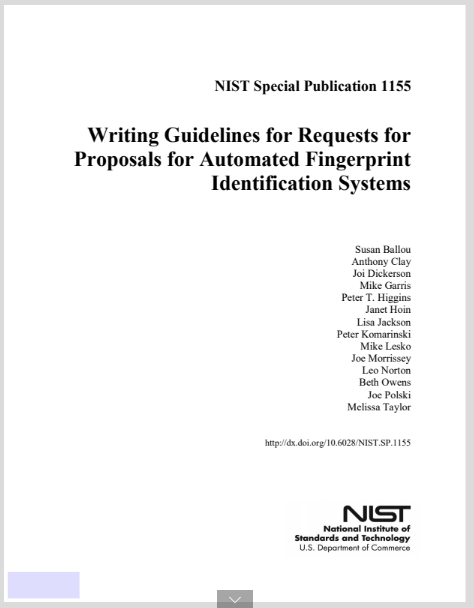
From https://nvlpubs.nist.gov/nistpubs/SpecialPublications/NIST.SP.500-290e3.pdf (a/k/a “leisure reading for biometric system professionals”).

Since Bredemarket will no longer help you with your friction ridge/face marketing and writing needs, who will? Who has the expertise to help you? I have two suggestions.

Tandem Technical Writing

Do you need someon who is not only an excellent communicator, but also knows the ins and outs of AFIS and ABIS systems? Turn to Tandem Technical Writing LLC.

I first met Laurel Jew back in 1995 when I started consulting with, and then working for, Printrak. In fact, I joined Printrak when Laurel went on maternity leave. (I was one of two people who joined Printrak at that time. As I’ve previously noted, Laurel needed two people to replace her.)

Laurel worked for Printrak and its predecessor De La Rue Printrak for several years in its proposals organization.

Today, her biometric and communication experience is available to you. Tandem Technical Writing provides its clients with “15 years of proposal writing and biometrics technology background with high win %.”

Why does this matter to you? Because Laurel not only understands your biometric business, but also understands how to communicate to your biometric clients. Not many people can do both, so Laurel is a rarity in this industry.

The Tandem Technical Writing website is here.

To schedule a consultation, click here.

Applied Forensic Services

Perhaps your needs are more technical. Maybe you need someone who is a certified forensics professional, and who has also implemented many biometric systems. If that is your need, then you will want to consider Applied Forensic Services LLC.

I met Mike French in 2009 when Safran acquired Motorola’s biometric business and merged it into its U.S. subsidiary Sagem Morpho, creating MorphoTrak (“Morpho” + “Printrak”). I worked with him at MorphoTrak and IDEMIA until 2020.

Unlike me, Mike is a true forensic professional. (See his LinkedIn profile.) Back in 1994, when I was still learning to spell AFIS, Mike joined the latent print unit at the King County (Washington) Sheriff’s Office, where he spent over a decade before joining Sagem Morpho. He is an IAI-certified Latent Print Examiner, an IEEE-certified Biometric Professional, and an active participant in IAI and other forensic activities. I’ve previously referenced his advice on why agencies should conduct their own AFIS benchmarks.

Why does this matter to you? Because Mike’s consultancy, Applied Forensic Services, can provide expert advice on biometric procurements and implementation, ensuring that you get the biometric system that addresses your needs.

Applied Forensic Services offers the following consulting services:

The Applied Forensic Services website is here.

To schedule a consultation, click here.

Yes, there are others

There are other companies that can help you with friction ridge and face marketing, writing, and consultation services.

I specifically mention these two because I have worked with their principals both as an employee during my Printrak-to-IDEMIA years, and as a sole proprietor during my Bredemarket years. Laurel and Mike are both knowledgeable, dedicated, and can add value to your firm or agency.

And, unlike some experienced friction ridge and face experts, Laurel and Mike are still working and have not retired. (“Where have you gone, Peter Higgins…”)

When you’re interested in everything, you’re interested in nothing

Some people know what they will do, and what they will not do.

Other people say they will do anything.

Don’t trust the second group of people.

Checking all the boxes in a Bredemarket contact submission form

As you may know, Bredemarket has an online contact page that allows people to request information from me. The form on this page includes several checkboxes (recently edited) that allow the submitter to specify if they are interested in one of Bredemarket’s standard packages.

Occasionally I’ll get a submission from someone who checked ALL of the check boxes. In 100% of those cases, it turns out that the person is NOT interested in ANY of Bredemarket’s standard packages, but in something else. (In the most recent example, someone wanted to write a guest post on the Bredemarket blog that had NOTHING to do with marketing or writing services. No thanks.)

Checking all the boxes in a proposal

It reminds me about the time, many years ago, when I wrote an RFP. This was years before I actually began responding to RFPs, by the way. The consultant that our company brought in suggested that we create a Request for Proposal for a particular service that our company wanted. The main part of the created RFP was a check list to see if the respondent provided a particular feature that we wanted. The responses that we received fell into two categories:

  • Some respondents checked every check box with no further comment. We concluded that they hadn’t actually read the RFP, so we ignored these proposals.
  • Other respondents checked most of the check boxes, but provided text for certain responses explaining that they had a different approach. Since these people read the RFP, we paid more attention to those responses.

Now I’ll grant that this filtering method doesn’t work for all proposals. Some RFPs truly demand mandatory compliance with every requirement. But in those cases, the RFPs usually require to say how they will perform each requirement. A simple “we do it” response is not sufficient.

Checking all the boxes in a business offering

The “check everything” rule also applies in one other instance: company offerings.

When a company states the products and services it will offer, the statement usually sets a boundary between what the company will do and what the company will not do.

Usually.

For example, this post from Reddit’s HireaWriter gives a clear picture of the writer’s strengths:

…I have a bachelor’s degree in screenwriting (writing for film, TV and radio), and I’m currently studying English Literature to further my skills. I’m about to be on summer holidays for a few months and I’m looking to collaborate on some writing projects.

I have freelance experience, writing YouTube scripts and some podcast work, I’m very capable of both fiction and non- fiction…

From https://www.reddit.com/r/HireaWriter/comments/u2ydhh/writer_looking_for_new_projects/

So if I need a YouTube script, I’ll consider this person. If I need an article for Foreign Affairs, maybe not.

But other company offerings are…less focused. You’ve probably seen the posts (I won’t link to them) from people who say that they write. When you ask what they write, they say that they write anything.

Now I guess that theoretically, I can write anything. (Heck, I wrote the Eastport Enquirer, which you can probably guess wasn’t high-minded business prose.) But I’m not going to make a living by writing 19th century fiction or French political positions. I’ll stick closer to content marketing and proposals if you don’t mind.

Oh, and I don’t offer editing packages any more.

Retabulating the work that Bredemarket has done for clients (as of February 16, 2022)

My biometric/identity collateral wasn’t the only thing that I updated yesterday.

As part of my preparation for yesterday evening’s Ontario IDEA Exchange meeting, I took the time to update my “local” brochure. (Because local is important: see the first of my three goals for 2022.) This brochure includes a section that discusses the types and numbers of pieces that I have prepared for clients, including the number of case studies, the number of RFx responses, and so forth.

Those numbers hadn’t been updated since last September.

Before going to the meeting, I wanted to make sure my “local” brochure had the latest numbers.

I’ll go ahead and share them with you. This covers the projects that Bredemarket has completed for clients over the last 18 months, as of February 16, 2022:

  • Fourteen (14) case studies
  • Eight (8) articles (blog posts)
  • Three (3) service offering descriptions
  • Three (3) white papers
  • Nine (9) RFx responses
  • Four (4) sole source responses
  • Six (6) proposal templates
  • One (1) technical leave behind
  • Two (2) biometric analyses
Inland Empire B2B Content Services from Bredemarket.

As it turns out, I didn’t hand out my local brochure to anyone at last night’s IDEA Exchange. (It was a small crowd, most of whom I already knew.)

But at least I’ve tabulated the numbers.

Now I just have to update all of my NON local collateral…

Bredemarket and September 2021 on the proposal side

I was looking over the Bredemarket blog posts for September, and I found some posts that addressed the proposal side of Bredemarket’s services. (There are also blog posts that address the content side; see here for a summary of those posts.)

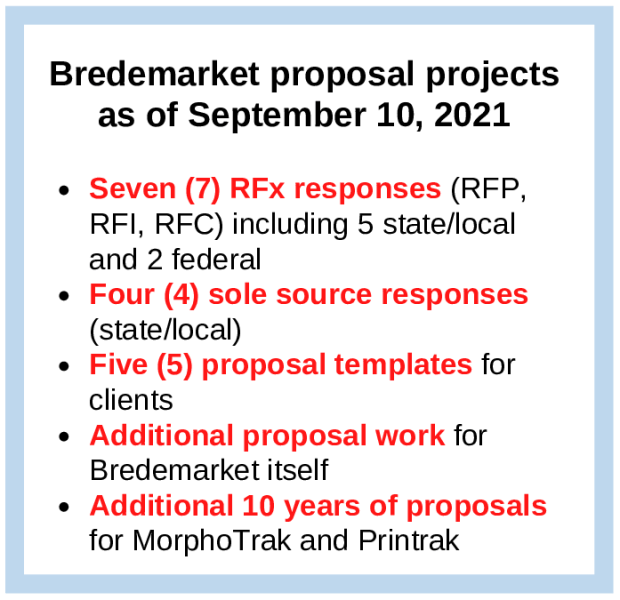
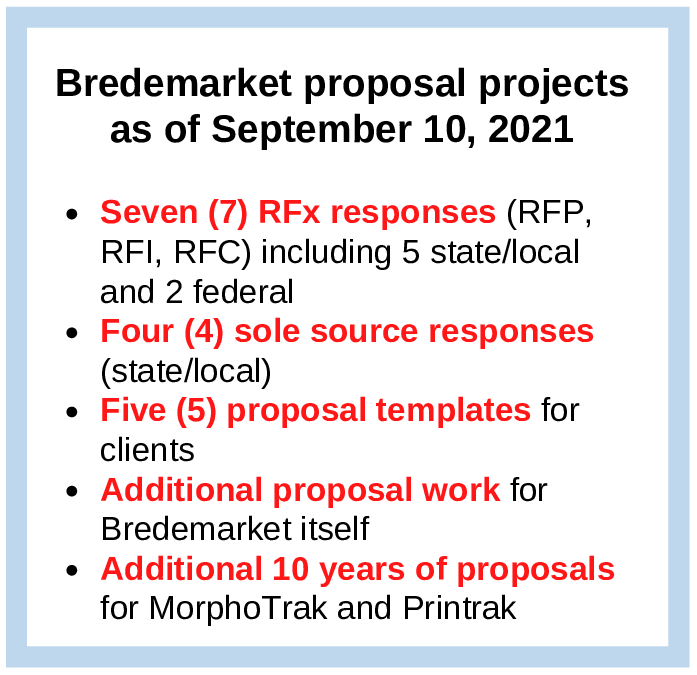
As a starting point, what proposal services has Bredemarket provided for its clients? I quantified these around the middle of the month and came up with this list.

And I’ve been working on additional proposal projects for clients that I haven’t added to the list yet.

Now if you’ve already read my September 2021 content post, it seems like I’ve been repeating myself. Well the repetition ends here, because my other big proposal-related accomplishment for the month was my Association of Proposal Management Professionals Foundation certification.

This will not only allow me to provide better proposal services to biometric firms (yes, yes, I am a biometric proposal writing expert), but also to other firms.

What other firms?

I’ll let you know.

If I can provide proposal services for you:

Using Toggl Track to quantify proposal services for marketing purposes

Bredemarket’s slogan should be “better late than never.” It took me a year to print business cards, and it has taken me almost a year to quantify my proposal services work for clients. But Toggl helped me quantify my work.

Incidentally, this post is NOT sponsored by Toggl. If I were smart I would have pitched this post to Toggl and gotten something substantive in return. But I’m not that smart; I’m just a happy Toggl Track user. Sure the service has had a couple of hiccups in April and August, but Toggl responded to these hiccups quickly. In general, Toggl Track has been very useful in tracking time, gathering data to bill clients, and (as I just discovered this week) very useful in quantifying Bredemarket’s work and accomplishments.

Quantifying hours per proposal

The whole Toggl Track quantification exercise started over the last couple of weeks, when I had two separate discussions with firms regarding the number of hours that a contractor usually spends responding to a request for something (proposal, information, comment, etc.). Acronym lovers can use RFx, RFP, RFI, RFC, etc. as needed.

After the second client raised the issue, I realized that my Toggl Track data contained time data on all of my billable proposals work. (Helpful hint: even with the free version of Toggl Track, you can set up project names to keep track of billable hours, although you have to manually calculate the billing yourself.)

So I logged into Toggl Track, selected the billable projects that I knew had Rfx hours, downloaded a comma-separated values (csv) version of all of the data from January 1, 2021 to present, opened the csv file in Excel, filtered out the columns that I didn’t need, filtered out the rows that didn’t pertain to RFx work, sorted the data by description (for example, “AFIS proposal for Noname County”), then subtotaled the hours at each change of description.

And then I realized that I did something wrong.

When the Toggl Track data was loaded into Excel, it used a standard hours-minutes-seconds format. What that meant was that the subtotals also displayed in a standard hours-minutes-seconds format. So if I had three time entries—one for 10:00:00, one for 9:00:00, and one for 8:00:00—the resulting subtotal would be 3:00:00, or only three hours.

Whoops.

I played around a bit with the number formats in the Duration column, and found a format (displayed in Excel as “37:30:55”) that correctly rendered my subtotals—in the example above, yielding the correct value of 27:00:00, or 27 hours.

So once I got the subtotals to work correctly, what did I find, based on my own RFx proposal work data?

  • One of my projects required approximately 20 billable hours of work.
  • Three of the projects required less than 20 billable hours per project.
  • The remaining three required more than 35 billable hours per project.

Obviously my results do not apply to other independent contractors, and certainly do not apply to employees who are involved much more intimately in a company’s proposal process. So don’t try to extrapolate my numbers and make the declaration “Studies show that nearly half of all RFx responses require over 35 hours of work per person.”

But this data gave me the information that I needed in my discussions with the second firm.

But this exercise raised another question that I should have answered long ago.

Quantifying total proposal work

As Bredemarket, I have not only worked on RFx responses, but have also worked on sole source responses, and on proposal templates.

But I’ve never compiled a definitive overview of all of my proposal work.

Now I’ve certainly discussed bits of my proposal work here and there. You’ve probably already seen the testimonial that I received from a client regarding my proposal template work:

“I just wanted to truly say thank you for putting these templates together. I worked on this…last week and it was extremely simple to use and I thought really provided a professional advantage and tool to give the customer….TRULY THANK YOU!”

But after the proposal hours exercise above, I decided that it was time to quantify this work.

  • How many competitive proposals have I worked on for clients?
  • How many sole source responses have I worked on for clients?
  • How many of these “extremely simple to use” (my client’s words, not mine) templates have I assembled?

Obviously I had all the data; I just had to pull it together.

So I went to Toggl Track (and to other sources) to quantify my total proposal work, searching for billable (and in the cases of Bredemarket’s own proposals, nonbillable) work and identifying all the projects.

Sharing the quantification

Once that was done, I was able to create a neat handy dandy summary.

Which I put into a brochure.

Which I then added to various pages on the Bredemarket website.

September 10, 2021 iterative revision to https://bredemarket.com/bredemarket-and-proposal-services/.

And, of course, I’ll share the information in this blog post when I publish it and distribute it via my social media outlets-not forgetting Instagram, of course. (Did you notice that my statistical graphic is square? Now you know why.)

And I need to share this information in one more place, but that’s a topic for another time.

Can my proposal services help you?

If my experience (now with better quantification!) can help you with your proposal work, then please contact me.

(Bredemarket Premium) Getting competitive proposals WITHOUT submitting a FOIA request

One of the best ways to get competitive intelligence on a competitor is to request the competitor’s response to a government agency procurement, such as a proposal submitted in response to a Request for Proposal. This is done by submitting a request via the Freedom of Information Act (FOIA) or equivalent.

One note: this technique primarily applies to government agency procurements, since governments are often required by law to disclose this information. Bids submitted to private entities usually remain private.

Of course, actually getting the competitor’s response isn’t easy.

  • First, you have to submit the request in the proper format.
  • Second, you have to be detailed in what you are requesting, and you need to request everything that you want: the actual proposal itself, any follow-up correspondence such as a best and final offer, the agency’s evaluation score, and everything else. If you only request the original proposal, the agency is only obligated to provide the original proposal, and nothing else.
  • Third, you have to wait for the agency to prepare a copy of the proposal. Depending upon applicable law, the bidder may be able to redact portions of the proposal, and it usually takes some time for the agency and the bidder to agree on what can legally be redacted.
  • Fourth, you may have to pay (usually on a per-page basis) to receive the materials.

This entire process may take several months, and you can’t even request the material until after the procurement has been awarded, or perhaps contracted.

But guess what? You don’t always have to submit a FOIA-like request to get a copy of a proposal submitted to a government agency.

By Neep at the English-language Wikipedia, CC BY-SA 3.0, https://commons.wikimedia.org/w/index.php?curid=3309749

And no, you don’t have to break the law; these proposals (and other valuable documents) can be obtained legally and ethically.

Subscribe to get access

Read more of this content when you subscribe today.

Subscribe to Bredemarket Premium to access this premium content.

  • Subscriptions just $5 per month.
  • Access Bredemarket’s expertise without spending hundreds or thousands of dollars.

(Bredemarket Premium) The multiple self interests of AFIS customers and vendors

In a prior post, I spent some time identifying the multiple stakeholders at a city police department (in my example, my hometown of Ontario, California) that is procuring an automated fingerprint identification system.

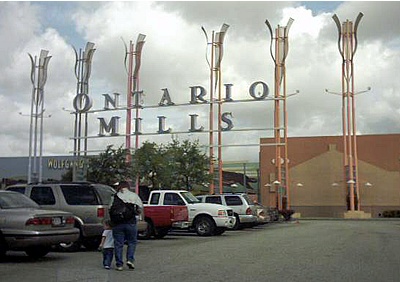
By Coolcaesar at the English-language Wikipedia, CC BY-SA 3.0, https://commons.wikimedia.org/w/index.php?curid=15739992

If I may recycle what I previously said, here are those stakeholders:

  • The field investigators who run across biometric evidence at the scene of a crime, such as a knife with a fingerprint on it or a video feed showing someone breaking into a liquor store.
  • The examiners who look at crime scene evidence and use it to identify individuals.
  • The people who capture biometrics from arrested individuals at livescan stations.
  • The information technologies (IT) people who are responsible for ensuring that Ontario, California’s biometric data is sent to San Bernardino County, the state of California, perhaps other systems such as the Western Identification Network, and the Federal Bureau of Investigation.
  • The purchasing agent who has to make sure that all of Ontario’s purchases comply with purchasing laws and regulations.
  • The privacy advocate who needs to ensure that the biometric data complies with state and national privacy laws.
  • The mayor (Paul Leon as I write this), who has to deal with angry citizens asking why their catalytic converters are being stolen from their vehicles, and demanding to know what the mayor is doing about it.
  • Probably a dozen other stakeholders that I haven’t talked about yet, but who are influenced by the city’s purchasing decision.

Why is this important? And who are the multiple stakeholders OUTSIDE of the city police department?

Subscribe to get access

Subscribe to Bredemarket Premium to access this premium content.

  • Subscriptions just $5 per month.
  • Access Bredemarket’s expertise without spending hundreds or thousands of dollars.

Subscribe to get access

Read more of this content when you subscribe today.

Requests for Comments (RFCs), formal and casual

I don’t know how it happened, but people in the proposals world have to use a lot of acronyms that begin with the letters “RF.” But one “RF” acronym isn’t strictly a proposal acronym, and that’s the acronym “RFC,” or “Request for Comments.”

In one sense, RFC has a very limited meaning. It is often used specifically to refer to documents provided by the Internet Engineering Task Force.

A Request for Comments (RFC) is a numbered document, which includes appraisals, descriptions and definitions of online protocols, concepts, methods and programmes. RFCs are administered by the IETF (Internet Engineering Task Force). A large part of the standards used online are published in RFCs. 

But the IETF doesn’t hold an exclusive trademark on the RFC acronym. As I noted in a post on my personal blog, the National Institute of Standards and Technology recently requested comments on a draft document, NISTIR 8334 (Draft), Mobile Device Biometrics for Authenticating First Responders | CSRC.

While a Request for Comments differs in some respects from a Request for Proposal or a Request for Information, all of the “RFs” require the respondents to follow some set of rules. Comments, proposals, and information need to be provided in the format specified by the appropriate “RF” document. In the case of NIST’s RFC, all comments needed to include some specific information:

  • The commenter’s name.
  • The commenter’s email address.
  • The line number(s) to which the comment applied.
  • The page number(s) to which the comment applied.
  • The comment.

Comments could be supplied in one of two ways (via email and via web form submission). I chose the former.

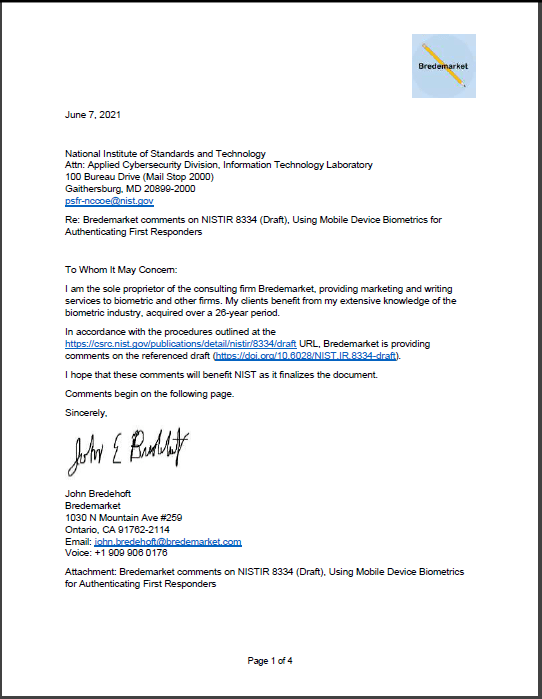
Cover letter of the PDF that I submitted to NIST via email.

On the other hand, NIST’s RFC didn’t impose some of the requirements found in other “RF” documents.

  • Unlike a recent RFI to which I responded, I could submit as many pages as I liked, and use any font size that I wished. (Both are important for those respondents who choose to meet a 20-page limit by submitting 8-point text.)
  • Unlike a recent RFP to which I responded, I was not required to state all prices in US dollars, exclusive of taxes. (In fact, I didn’t state any prices at all.)
  • I did not have to provide any hard copies of my response. (Believe it or not, some government agencies STILL require printed responses to RFPs. Thankfully, they’re not requiring 12 copies of said responses these days like they used to.)
  • I did not have to state whether or not I was a small business, provide three years of audited financials, or state whether any of the principal officers of my company had been convicted of financial crimes. (I am a small business; my company doesn’t have three years of financials, audited or not; and I am not a crook.)

So RFC responses aren’t quite as involved as RFP/RFI responses.

But they do have a due date and time.

By Arista Records – 45cat.com, Fair use, https://en.wikipedia.org/w/index.php?curid=44395072