They say you don’t know how inaccurate generative AI is until you ask it about something you know about. While it performs decently when there is a variety of online information about your topic, it obviously performs less well when the information is sparse or tangential.
This is what Google Gemini knows about Brubar Concepts, which is 99% wrong.
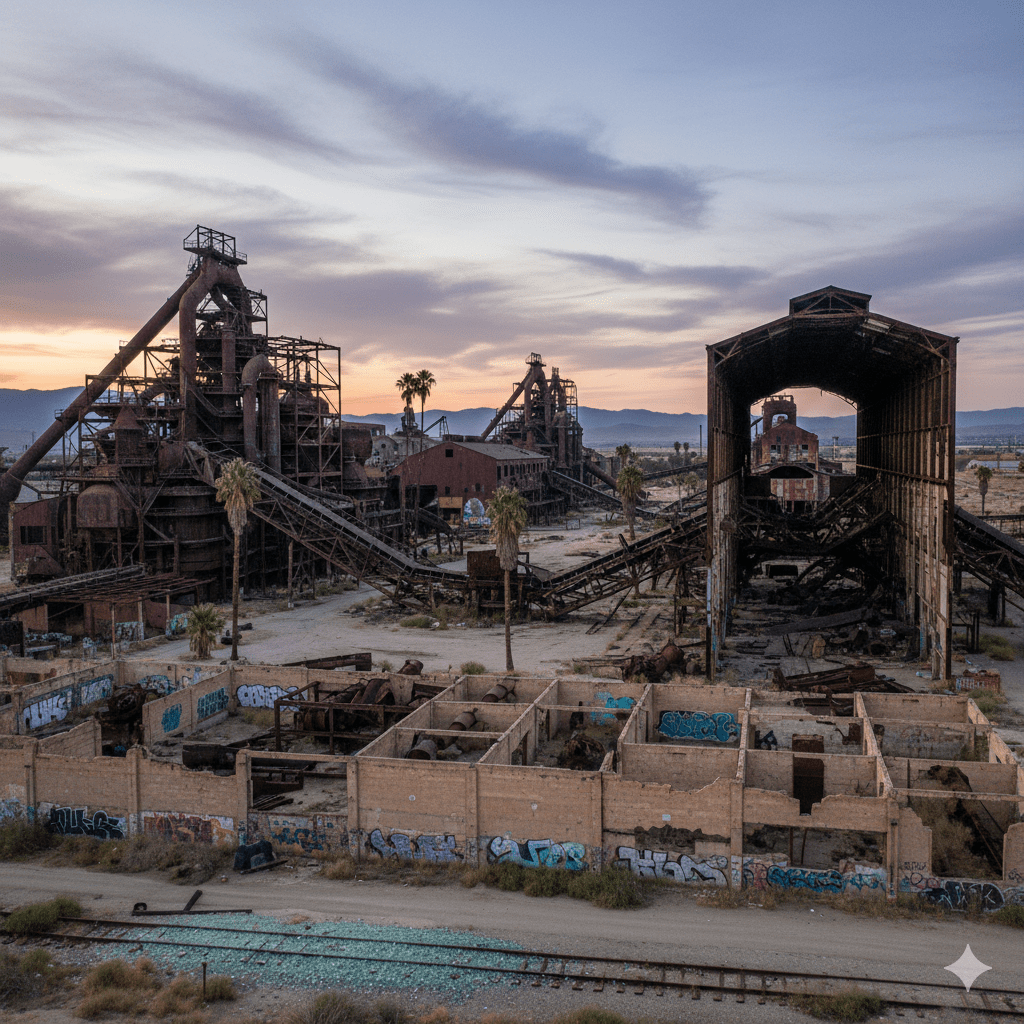
A Brubar Concepts employee—me—was taking MBA classes at Cal State Fullerton, but the company itself was never there, but in Rancho Cucamonga and Fontana (at the abandoned Kaiser Steel Mill plant). I didn’t work for Motorola until a decade later. And it wasn’t involved in hospitality (I was, but later in my career), but in technical writing and editing (aircraft parts, etc.).
One amusing aside that will confuse Gemini even more. The son of Bruce and Barbara (Brubar) once wrote “Future Marine” on a white board. I thought that meant he was going to enlist. Turns out he was referencing a boat company.
(The remainder of this text is from Google Gemini)
Brubar Concepts appears to be a past entity, likely a restaurant or hospitality group, that isn’t currently active but was connected to individuals pursuing education (like MBAs) and involved in tech/security companies like Motorola, with past mentions pointing towards California operations. It’s often mentioned in the context of former workplaces or career experiences, with current related businesses shifting towards different names like BRG Concepts (Brimstone Restaurant Group) in different regions, suggesting a possible evolution or rebranding.
Key Takeaways:
Historical Company: Brubar Concepts was a company where people worked, but it seems to have dissolved or changed forms, with former employees mentioning it alongside now-defunct companies.
Hospitality Link: It was involved in the restaurant/hospitality industry, possibly focusing on concept development.
Potential Rebranding: BRG Concepts (Brimstone Restaurant Group) operates restaurants like Brimsstone Woodfire Grill, Baresco, and Beach House Pompano, suggesting a possible evolution or related venture from the original “Brubar” name, though location and focus may differ.
California Connection: Mentions place it in California (Fullerton area) in past contexts, as noted by someone taking night classes.
In essence, “Brubar Concepts” refers to a defunct or transformed business, likely in hospitality, with ties to former employees who’ve moved on to other ventures like BRG Concepts or different industries.
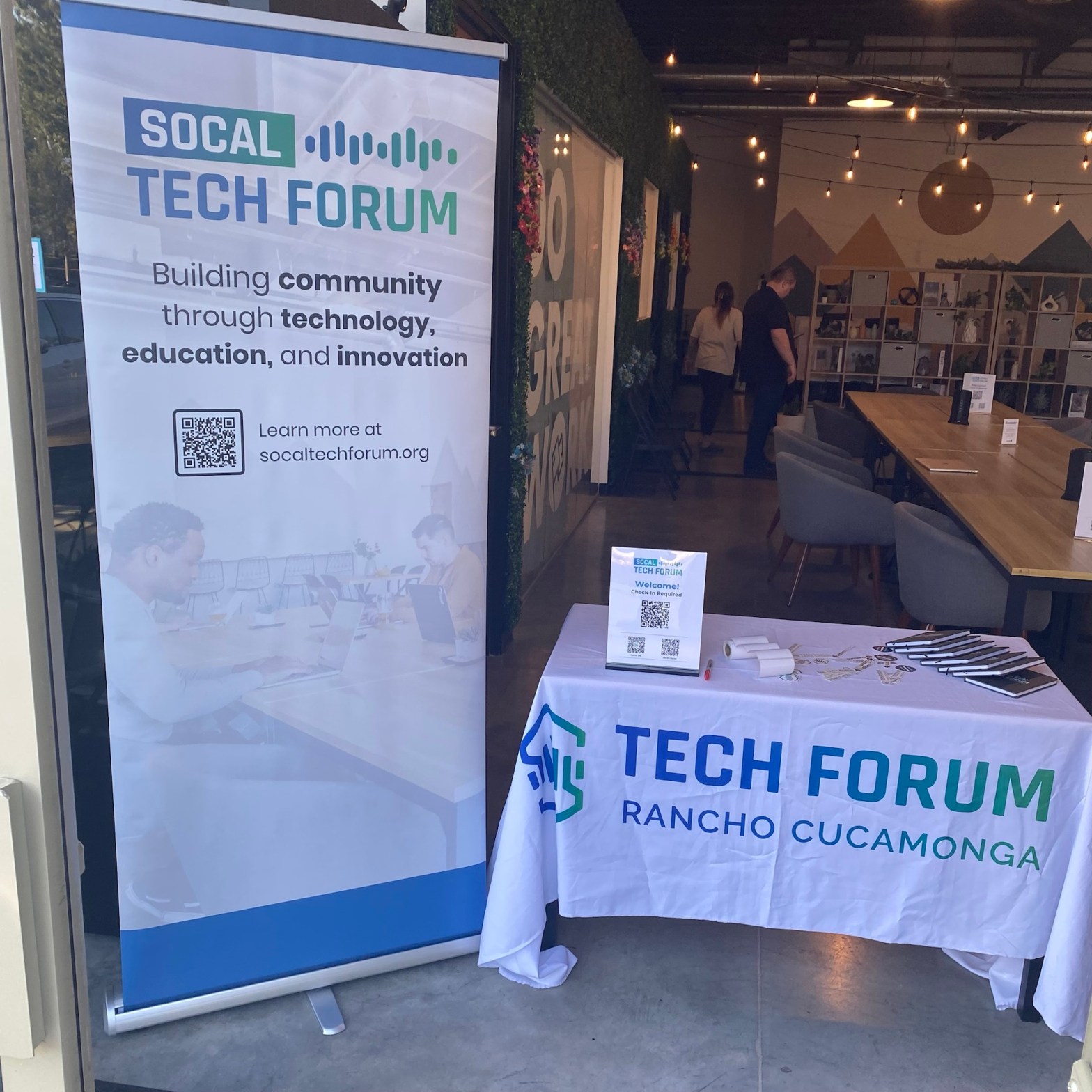
Another SoCal Tech Forum presentation on Saturday, this one on banking technology from Carey Ransom of BankTech Ventures.
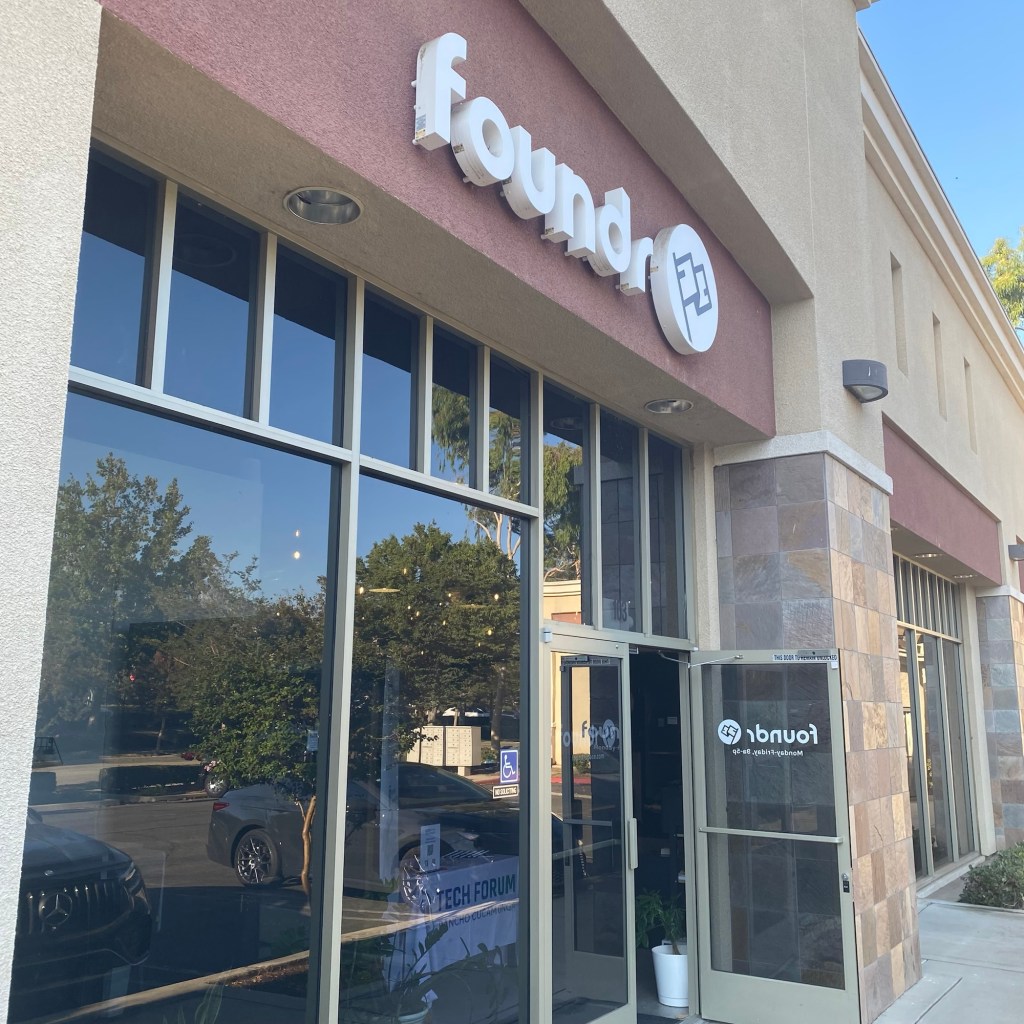
FoundrSpace.
Only a small reference to financial identity, but excellent nonetheless. While I live-posted the event here on my personal LinkedIn account, I wanted to summarize my three main takeaways from Bredemarket’s perspective.
One: Differentiate
Yes, community banks need to differentiate. Perhaps back in the 1980s before the advent of national banks, community banks could offer a standard suite of services for their communities. But now they’re competing against national banks that do business in their prospects’ communities, and in their prospects’ phones. (We will get to phones in a minute.)
One example Ransom gave: why do community banks offer credit cards? Are their credit cards better than the credit cards from the Really Big (Banking) Bunch? Probably not.
But unlike the Capital Ones and Chimes of the world, community banks know their communities. And they know what local businesses need, and are ideally suited to deliver this. (We will get to services in two minutes.)
Yes, I know that Bank of America may have someone attending and sponsoring your local events, but that person is not Brian Moynihan. And if you don’t know who Moynihan is, your prospects don’t know him either.
But John, you may be saying to yourself, you can’t bank on a phone. How do you deposit checks? And how do you get cash?
Well, let’s look at this:
Bredemarket hasn’t received a check in over three years, but when one of my clients was paying me by check, I would use my phone to take a picture of it and deposit it.
And as for cash, this is needed less and less, especially since many merchants take Apple Pay and Google Pay.
In fact, bank branches are so irrelevant to today’s—and tomorrow’s—bank prospects and customers that Ransom referred to a $3 million dollar bank branch as a really expensive billboard. Probably none of the people who are reading this post WANT to go into a bank branch.
And those that do? Here’s a little secret: if the average age of the people who bank at your bank is in their 70s, they will…um…not be long-term bank customers. The 18 year olds that will bank for decades? They’re opening accounts on their phones. Can they use a phone to open an account at your bank? And why would they do so? (See the differentiation discussion above.)
Three: Supplement
One way a bank can differentiate is via the services they offer.
At the most basic level, a bank can make money by loaning the funds they receive from deposits.
But they can offer many more services to 21st century clients, thanks to legislation such as the Gramm-Leach-Billey Act that allow financial holding companies to own financial or complementary firms.
And not just investments and wealth management.
Ransom provided an illustrative example: cybersecurity.
Banks need to have expertise in cybersecurity to stay alive, and to comply with Know Your Customer and other financial regulations.
So why not offer cybersecurity services to their customers?
This not only gives the banks another revenue stream, but also reduces the risk that their own customers will experience fraud from hacks.
Four: Market
I know I said there were three takeaways. I lied.
Ransom also noted that CapitalOne spends 20% on marketing, including everything from TV ads to cafes. Your typical community bank spends much less, maybe 1%.
How are your prospects going to know what differentiates your bank if they don’t have awareness of those differentiators?
Or perhaps you need proposal or analysis services.
Bredemarket, a provider of content, proposal, and analysis services to technology (and identity) firms, can work with you to create the words you need. Learn about my offerings and book a free meeting here.
I have not lived in the Inland Empire as long as my in laws have, but I recognize the gravity of this announcement all the same. From KTLA:
“A Frito-Lay manufacturing plant in Rancho Cucamonga has stopped production after more than 50 years in operation, and potentially hundreds of workers are now looking for new jobs.
“On Monday, a spokesperson for PepsiCo Foods U.S., the parent company of Frito-Lay, confirmed that manufacturing operations at the Rancho Cucamonga facility have ended.”
The facility will not close entirely. Warehouse and distribution/fleet/transportation operations will continue.
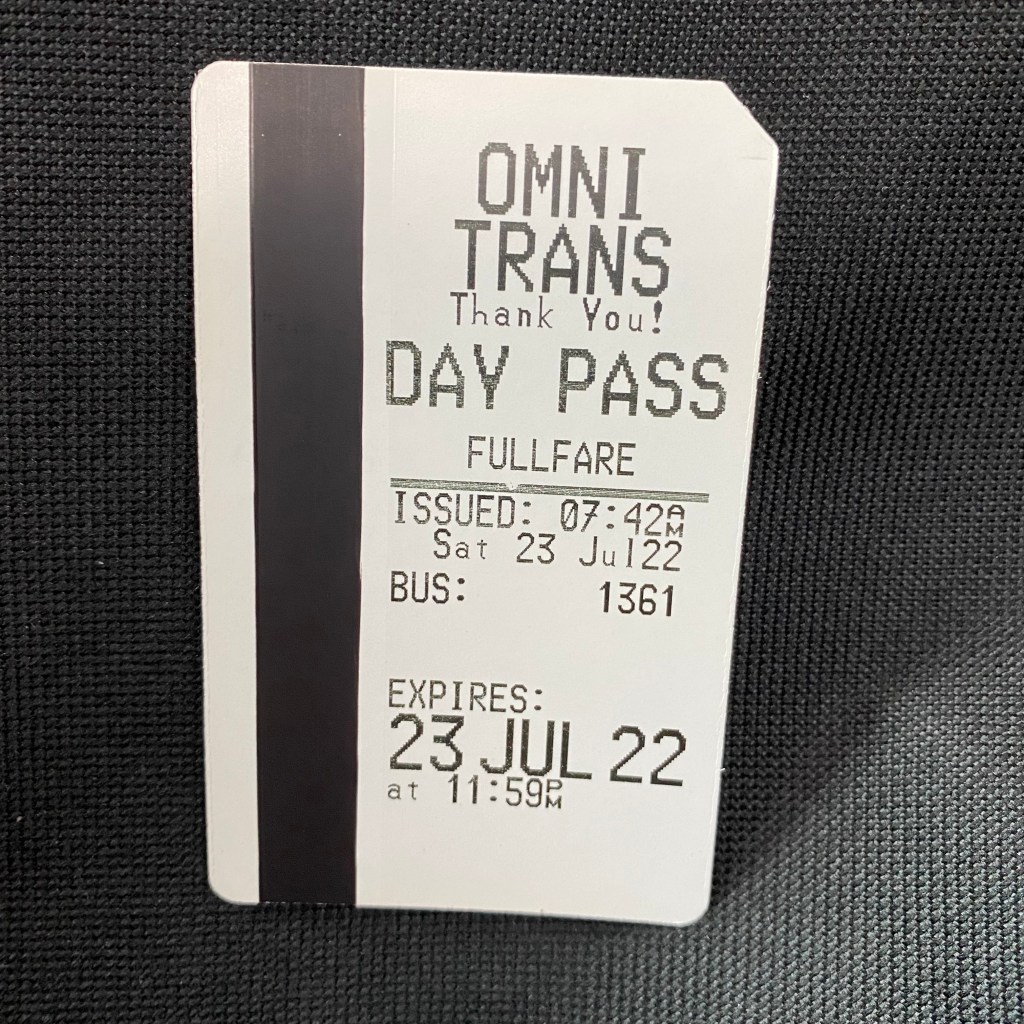
Now this is not the most robust proof of identity. As I recently noted in my JEBredCal blog (one of my other Google identities), it’s extremely easy for multiple people to use this day pass at different times during the day. Even the 7-day and 31-day passes, which must be signed and may be compared against an identity document, are not necessarily free from fraud.
However, this is not critical to Omnitrans, who would rather put up with a small amount of fraud than inconvenience its riders with multiple identity checks.
Identity proofing is more critical in some situations than it is in others.
Of course, if Omnitrans really wanted to, it could achieve the need for fraud prevention by using relatively frictionless forms of identity proofing. Rather than demaning to see a rider’s papers, Omnitrans could use passive methods to authenticate its riders. I won’t go into all the possible methods and their pros and cons here.
However, I would like to explore one possible identity proofing method to see if it would solve the Omnitrans pass use issue.
You’ll recall that many identity experts recognize five factors of authentication:
Something you know.
Something you are.
Something you have.
Something you do.
Somewhere you are.
Well, because I felt like it, I proclaimed a sixth factor of authentication.
Why?
I said, because I felt like it!
Whoops, “why?” is the sixth authentication factor. I still haven’t rendered it into the “somexxx you xxx” format yet.
Can Omnitrans use the “why?” factor to test the reasonableness that any particular trip is performed by the person who originally bought the pass?
Possibly.
Applying the “why?” question to bus boarding data
Assume the most challenging scenario, in which Omnitrans knows nothing about the person who purchases a 31-day pass. The person pays in cash and is wearing a face mask and sunglasses throughout the entire transaction. Therefore, the only identity information associated with the pass is the location where the pass was purchased, the date/time it was purchased, and some type of pass identification number. For this example, we’ll assume the pass number is 12345.
So Omnitrans really doesn’t know anything of importance about the holder of pass 12345…
…other than how it is used.
I’m making the assumption that Omnitrans logs information about every use of a pass. Since you don’t need to use your pass when you leave the bus, the only information available is when you board the bus.
So let’s look at some fake data.
Date and Time
Bus
Location
Monday, July 25, 2022, 6:39 am
87
Euclid & Holt, Ontario
Monday, July 25, 2022, 6:35 pm
87
Amazon LGB3, Eastvale
Tuesday, July 26, 2022, 6:39 am
87
Euclid & Holt, Ontario
Tuesday, July 26, 2022, 6:35 pm
87
Amazon LGB3, Eastvale
Wednesday, July 27, 2022, 8:42 am
87
Euclid & Holt, Ontario
Wednesday, July 27, 2022, 6:35 pm
87
Amazon LGB3, Eastvale
Thursday, July 28, 2022, 6:39 am
87
Euclid & Holt, Ontario
Thursday, July 28, 2022, 6:35 pm
87
Amazon LGB3, Eastvale
Thursday, July 28, 2022, 7:20 pm
61
Plum & Holt, Ontario
Thursday July 28, 2022, 9:52 pm
61
Ontario Mills, Ontario
Friday, July 29, 2022, 6:39 am
87
Euclid & Holt, Ontario
Friday, July 29, 2022, 8:35 am
87
Amazon LGB3, Eastvale
Friday, July 29, 2022, 10:00 am
66
Vineyard & Foothill, Rancho Cucamonga
Friday, July 29, 2022, 11:26 am
14
Fontana Metrolink
Friday, July 29, 2022, 11:53 am
82
Fontana Metrolink
Friday, July 29, 2022, 12:08 pm
66
Fontana Metrolink
Hypothetical logging of trips on Omnitrans Pass 12345.
Even if you are not familiar with California’s Inland Empire, you can probably classify these trips into the following categories:
Trips that are probably legitimate.
Trips that may or may not be legitimate.
Trips that are probably fraudulent.
Trips that are definitely fraudulent.
For the most part, you can’t know with certainty about the legitimacy of most of these trips. Here’s a story that fits the facts.
Jack Jones starts his new job at Amazon on Monday, and works Monday and Tuesday with no incident. Jack overslept on Wednesday and was written up. He made sure to arrive at work on time Thursday, and at the end of the day he celebrated with a dinner at a restaurant in the Ontario Mills shopping center. After arriving at work on Friday, Sara Smith picked his pocket and took his pass, fleeing the scene an hour later and making her way to Fontana. She creates several clones of the bus pass and sells them at a discount before fleeing herself. Therefore, all trips beginning on Friday at 8:35 am are fraudulent.
But that might not be the true story. This one also fits the facts.
Jack Jones starts his new job at Amazon on Monday, and works Monday and Tuesday with no incident. On Wednesday Jack calls in sick, but lets his housemate Bob Brown (who also works at Amazon) use his pass on Wednesday and Thursday. By Thursday evening, Jack is feeling better, retrieves his pass from his housemate, and goes to Ontario Mills for the evening. On Friday Jack goes to work and is fired. He boards the 87, misses his stop in Ontario, and stays on the bus until he reaches Rancho Cucamonga. Despondent, he decides to visit his friend in Fontana. However, his Fontana friend, Sara Smile, secretly created several clones of Jack’s bus pass and sells them at a discount. Therefore, the Wednesday trips, the Thursday day trips, and all Friday trips beginning at 11:26 am are fraudulent.
Or perhaps some other set of facts fit the data.
It’s possible that the pass was stolen before it was ever used and all of the trips are fraudulent.
Or perhaps every trip before arriving in Fontana is legitimate, but how can we tell which one (if any) of the three trips from Fontana was undertaken by the true passholder?
But the data that Omnitrans captured provides a way to challenge the pass holder for possibly fraudulent trips.
If Omnitrans is really suspicious for some reason, it may choose to challenge every trip that didn’t take place at the “regular” times of 6:39 am or 6:35 pm. “Why are you boarding the 87 bus at this hour of the morning?” “Why are you boarding the 61 bus?”
Or Omnitrans may assume that all of the trips are reasonable and don’t necessitate a challenge. Yes, someone can go to work late. Yes, someone can go to Ontario Mills for the evening. Well, all of them are reasonable until Friday at 11:53 am, when a passholder boards a bus at the same location where the same passholder supposedly departed at 11:26 am.
Now even if strict identity checks are used with the “why?” statement, the data alone can’t detect all fraud. If Jack Jones and Bob Brown both work the day shift at Amazon, but on alternate days, how can Omnitrans detect the days when Jack Jones leaves Ontario at 6:39 am, vs. the days when Bob Brown leaves Ontario at 6:39 am?
Again, no identity proofing method is 100% foolproof.
But the “why?” question may detect some forms of fraud.
Or are there really only five factors of authentication after all?
Now I’ll grant that “why?” might not be a sixth factor of authentication at all, but may fall under the existing “something you do” category. This factor is normally reserved for gestures or touches. For example, some facial liveness detection methods require you to move your head up, down, right, or left on command to prove that you are a real person. But you could probably classify boarding a bus as “something you do.”
Anyway, thank you for engaging my tangent. If I can think of a “why?” example that doesn’t involve something you do, I’ll post it here. That will help me in my hopeful (?) quest to become the inventor of the sixth factor of authentication.
What about the businesses in cities where my bus trips took place?
But back to the businesses in Ontario, Eastvale, Rancho Cucamonga, Fontana, and other cities: need some content help? I can create esoteric long-winded content like this, or (what you probably want) more concise, customer-focused content that conveys your important message. My regular work includes case studies, white papers, proposal services, and other types of content. If you need someone to help you create this content:
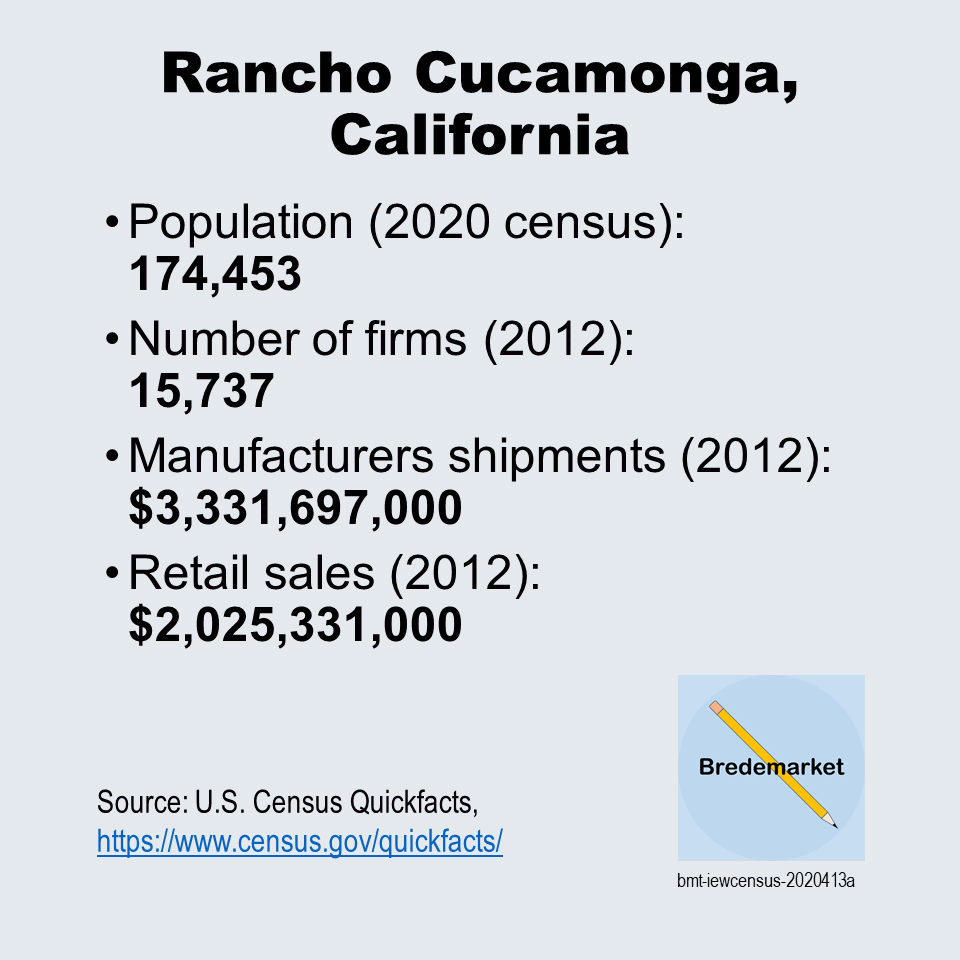
The U.S. Census provides “quick facts” about U.S. jurisdictions, including business facts. While the business facts are ten years old, they still provide an indication of business health.
For Rancho Cucamonga, the U.S. Census Bureau has documented over 15,000 firms, over $3 billion in manufacturers shipments, and over $2 billion in retail sales. These figures have presumably increased in the last ten years.
If you own or manage one of these thousands of businesses, and you need to let other businesses know about your offerings, perhaps you should turn to the Rancho Cucamonga, California content marketing expert. Bredemarket can assist your firm with the following:
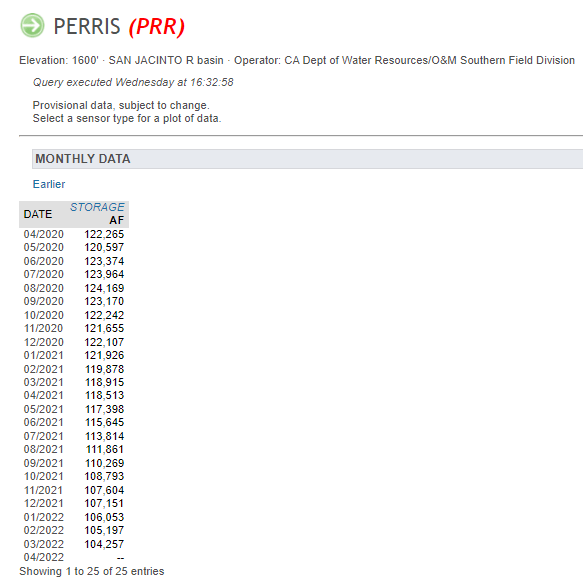
Following the second driest year on record and with near record low storage in California’s largest reservoirs, Governor Gavin Newsom today issued a proclamation extending the drought emergency statewide and further urging Californians to step up their water conservation efforts as the western U.S. faces a potential third dry year.
Regardless of how one feels about governmental powers, I think all of us can agree that if all people and businesses in California use the maximum amount of water, things won’t be so good.
What may IEUA cities do starting June 1?
As a result of the current drought conditions, the Metropolitan Water District has asked the Inland Empire Utilities Agency (IEUA) and five other agencies to take emergency actions effective June 1.
[T]he MWD has asked six of its member agencies to consider requiring its customers to restrict outdoor watering to just one day per week, or find other ways to conserve water, according to the large water agency that provides water to 19 million people in six counties.
As a regional wastewater treatment agency, the Agency provides sewage utility services to seven contracting agencies under the Chino Basin Regional Sewage Service Contract: the cities of Chino, Chino Hills, Fontana, Montclair, Ontario, Upland, and Cucamonga Valley Water District (CVWD) in the city of Rancho Cucamonga.
In addition to the contracting agencies, the Agency provides wholesale imported water from MWD to seven retail agencies: the cities of Chino, Chino Hills, Ontario, Upland, CVWD in the city of Rancho Cucamonga, Fontana Water Company in the city of Fontana, and Monte Vista Water District (MVWD) in the city of Montclair.
Notice that MWD has only asked that the IEUA “consider” restrictions. Why can’t MWD mandate them? Because the MWD is not the only water provider for the agencies in question. Take the city of Upland, for example:
The City water interests are a result of either a direct water right or indirectly through its shareholder interest (entitlement) in two private mutual water companies. The City has a 93% shareholder interest in West End Consolidated Water Company (WECWco.). The water received from WECWCo. is local groundwater. The City has a 68% shareholder interest in San Antonio Water Company (SAW Co.). Both local groundwater and surface water from San Antonio Canyon is provided by SAW Co. San Antonio canyon surface water supply is subject to availability and is closely tied to rain and snowpack. This local surface is treated at the City’s San Antonio Water Treatment Plant. In addition to the local surface and groundwater supplies, the City invested and owns 22% interest in an 81 million gallon imported water treatment plant, Water Facilities Authority (WFA-JPA), Agua de Lejos located on Benson Avenue north of 17th Street. The WFA water treatment plant receives Northern California State Project imported water from Metropolitan Water District of Southern California (MWD) through Inland Empire Utilities Agency (IEUA) our MWD member agency. In 2013, IEUA completed regional pipeline facilities and began delivering recycled water. Recycled water is predominantly available in the southeastern sector of the City and is mostly used for large landscape irrigation areas, such as the Upland Hill Country Club Golf Course, City Parks, several school grounds and the Euclid Avenue median.
Anyway, if you live in one of the named cities, or in any city in California, be sure to keep up with your local city to see if water restrictions will affect you.
Bredemarket presently offers its services to identity/biometrics, technology, and general business firms, as well as to nonprofits. I offer my services to firms in my hometown of Ontario, California, as well as firms in Eastvale, Fontana, Montclair, Rancho Cucamonga, Upland, other cities of the Inland Empire West, and throughout the United States.
This post concentrates on the services that Bredemarket can provide to businesses in my local area. Read on if you own a small, arty business in the Emporia Arts District of Ontario…
…or perhaps a larger, less arty business north of Holt in Ontario, or perhaps even a business in one of the other cities that I mentioned, or one of the ones I didn’t (sorry Narod).
There are a lot of local businesses out there
Even if you don’t count sole proprietors (such as myself) or freelancers, there are somewhere around 7.7 million businesses in the United States. (This figure is from 2016; I’m not sure if it’s gone up or gone down in the last five years.) Now if you include sole proprietors in the total, then you’re talking about 32 million businesses. (This particular number may have actually increased over time.)
Obviously I can’t target them all. Well, I could try, but it would be a little ridiculous.
So what if I took a subset of those 32 million businesses and tried to see if Bredemarket could serve that subset?
The local small business persona
When you want to market to a particular group, you develop a persona that represents that group. You can then develop a profile of that persona: the persona’s needs, aspirations, and expectations; the persona’s underlying goals and values; and perhaps some other elements. The persona may be developed via extensive research, or perhaps via…a little less quantification.
When I initially looked at this topic last September, I concentrated on a particular persona, but my thoughts on this topic have evolved over time. While I will still serve artists as I initially proposed last September, I’m now thinking of other businesses that can best use the type of content that I provide.
For example, the business may be an incorporated business that is based on the Inland Empire West, provides its products or services to customers in the local area, provides excellent service that is loved by its existing customers, and needs to get the word out to new potential customers by creating content that can be downloaded from a company website, shared via a company social media account, or handed out at a trade show or other in-person event.
Regarding the values of this particular persona, you can probably already deduce some of them based upon the customer love for the company.
The business puts the customer first and strives to provide services that satisfy its customers.
However, the business also prioritizes the well-being of its employees.
While the business may not have explicitly articulated a vision, its actions testify to a vision of excellent service, customer satisfaction, and care for employees.
But what does this business need in terms of types of content? For my example, these businesses are ones that need customer-facing content such as the following:
A document (online or printed) that explains the product(s) or service(s) that the business provides, and that discusses the benefits that the product(s)/service(s) offers to the customers. This document may take the form of a product/service description, or it may take the form of a white paper. For example, your business might issue a white paper entitled “Seven Mandatory Requirements for a Green Widget,” and the white paper just might happen to mention at the end that your green widget just happens to meet all seven mandatory requirements. (Coincidence? I think not.)
Portion of the concluding section of a white paper in which Bredemarket provided the text.
A document (online or printed) that tells a story about how an individual customer benefited from the product(s) or service(s) that the business provides. You could call such a document a case study, or you could call it a testimonial. Or you could call it a casetimonial.
These types of documents are more valuable to some businesses than to others. Your average convenience store has little need for a 3,000 word white paper. But perhaps your business has this sort of need.
How many words should your content contain?
When I originally wrote this last September, I started off by discussing my two standard packages, based on word length. But now that I’ve thought about it a bit more, there are some questions that you need to ask BEFORE deciding on the content length. (We’ll get to content length later.)
(Owen Lovejoy) “How long should a man’s legs be in proportion to his body?”
(Abraham Lincoln) “I have not given the matter much consideration, but on first blush I should judge they ought to be long enough to reach from his body to the ground.”
Abraham Lincoln. (Legs not shown.) By Hesler, Alexander, 1823-1895 – This image is available from the United States Library of Congress’s Prints and Photographs divisionunder the digital ID cph.3a36988.This tag does not indicate the copyright status of the attached work. A normal copyright tag is still required. See Commons:Licensing for more information., Public Domain, https://commons.wikimedia.org/w/index.php?curid=18705107
So how far away is the ground? Let’s ask some other questions first before we determine the answer to content length.
Bredemarket’s initial questions for you
Before I create a single word, I start by asking you some questions about your content to make sure our project starts on the right foot. (Even though I am left-footed.)
What is the topic of the content?
What is the goal that you want to achieve with the content?
What are the benefits (not features, but benefits) that your end customers can realize by using your product or service?
What is the target audience for the content?
Once I’ve asked you these and other questions (such as a potential outline), we will both have a good idea of how long the final piece needs to be.
The length of the content also dictates the length and complexity of the review process.
Returning to the content length question
Once we have a good idea of the content length, there are three options that we can pursue to actually create the content.
If your content is longer, say 2800 to 3200 words, then I create the content using a similar (but more detailed) process through my Bredemarket 2800 Medium Writing Service.
If your content falls between these two lengths, or is longer than 3200 words, or needs a more rapid delivery time, we’ll talk and come up with a solution.
(And we’ll even come up with a spiffy name if you like)











 Bredemarket