Identification Perfection is Impossible

(Part of the biometric product marketing expert series)

There are many different types of perfection.

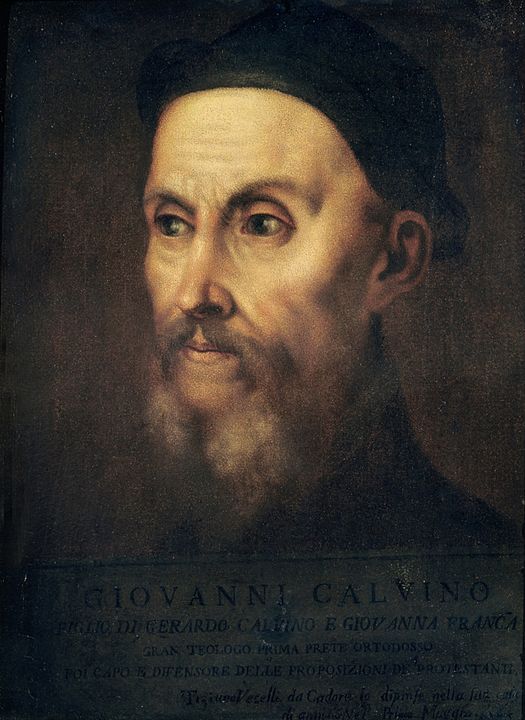
Jehan Cauvin (we don’t spell his name like he spelled it). By Titian – Bridgeman Art Library: Object 80411, Public Domain, https://commons.wikimedia.org/w/index.php?curid=6016067

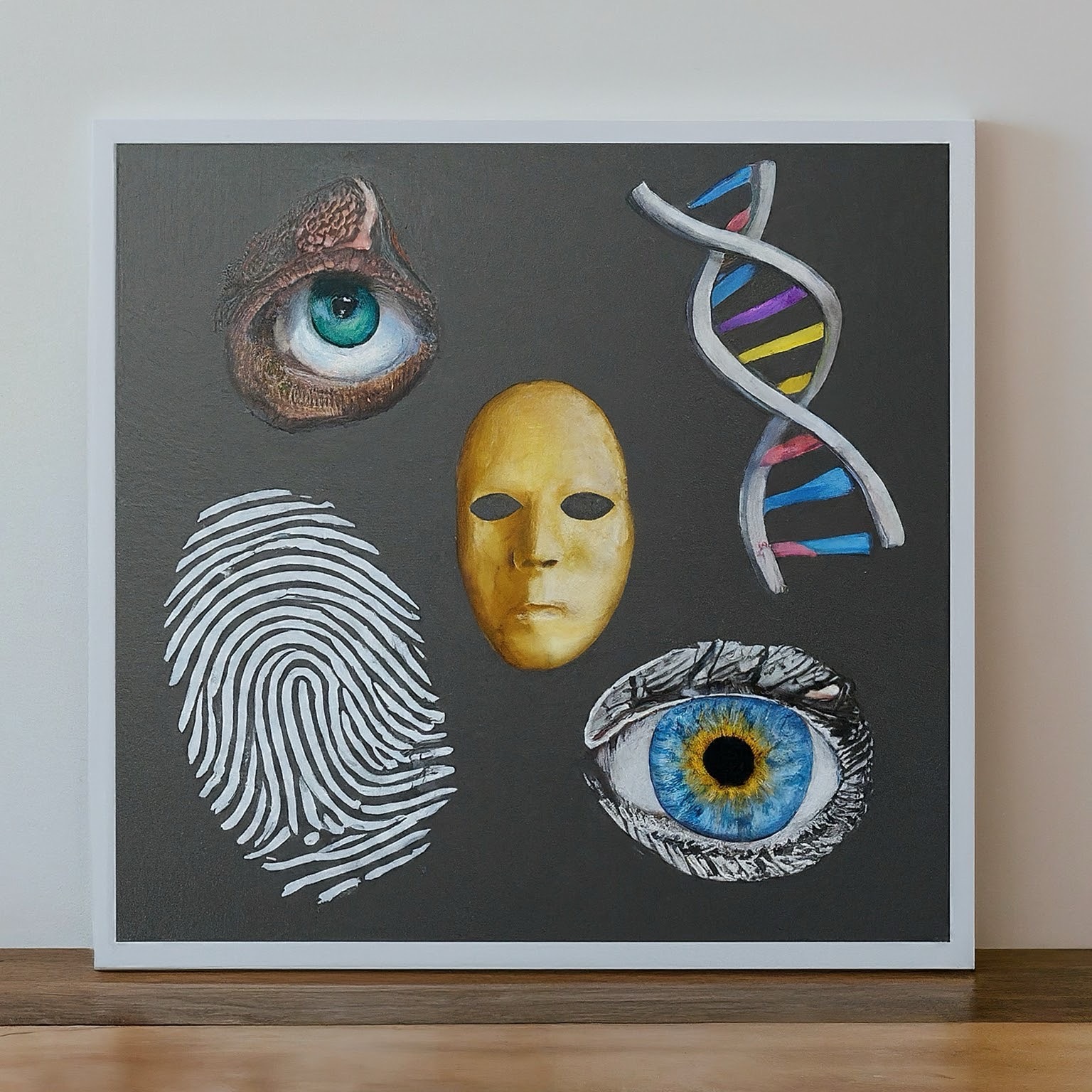
This post concentrates on IDENTIFICATION perfection, or the ability to enjoy zero errors when identifying individuals.

The risk of claiming identification perfection (or any perfection) is that a SINGLE counter-example disproves the claim.

  • If you assert that your biometric solution offers 100% accuracy, a SINGLE false positive or false negative shatters the assertion.
  • If you claim that your presentation attack detection solution exposes deepfakes (face, voice, or other), then a SINGLE deepfake that gets past your solution disproves your claim.
  • And as for the pre-2009 claim that latent fingerprint examiners never make a mistake in an identification…well, ask Brandon Mayfield about that one.

In fact, I go so far as to avoid using the phrase “no two fingerprints are alike.” Many years ago (before 2009) in an International Association for Identification meeting, I heard someone justify the claim by saying, “We haven’t found a counter-example yet.” That doesn’t mean that we’ll NEVER find one.

You’ve probably heard me tell the story before about how I misspelled the word “quality.”

In a process improvement document.

While employed by Motorola (pre-split).

At first glance, it appears that Motorola would be the last place to make a boneheaded mistake like that. After all, Motorola is known for its focus on quality.

But in actuality, Motorola was the perfect place to make such a mistake, since it was one of the champions of the “Six Sigma” philosophy (which targets a maximum of 3.4 defects per million opportunities). Motorola realized that manufacturing perfection is impossible, so manufacturers (and the people in Motorola’s weird Biometric Business Unit) should instead concentrate on reducing the error rate as much as possible.

So one misspelling could be tolerated, but I shudder to think what would have happened if I had misspelled “quality” a second time.

Fill Your Company Gap With A Biometric Content Marketing Expert

Companies often have a lot of things they want to do, but don’t have the people to do them. It takes a long time to hire someone, and it even takes time to find a consultant that knows your industry and can do the work.

This affects identity/biometric companies just like it affects other companies. When an identity/biometric company needs a specific type of expertise and needs it NOW, it’s often hard to find the person they need.

If your company needs a biometric content marketing expert (or an identity content marketing expert) NOW, you’ve come to the right place—Bredemarket. Bredemarket has no identity learning curve, no content learning curve, and offers proven results.

Identity/biometric consulting in the 1990s

I remember when I first started working as an identity/biometric consultant, long before Bredemarket was a thing.

OK, not quite THAT long ago. I started working in biometrics in the 1990s—NOT the 1940s.

In 1994, the proposals department at Printrak International needed additional writers due to the manager’s maternity leave, and she was so valuable that Printrak needed to bring in TWO consultants to take her place.

At least initially, the other consultant and I couldn’t fill the manager’s shoes.

Designed by Freepik.
  • Both of us could write.
  • Both of us could spell “AFIS.”
  • Both of us could spell “RAID.” Not the bug spray, but the storage mechanism that stored all those “huge” fingerprint images.
  • But on that first night that I was cranking out proposal letters for something called a “Latent Station 2000,” I didn’t really know WHAT I was writing about.

As time went on, the other consultant and I learned much more—so much that the company brought both of us on as full-time employees.

After we were hired full-time, we spent a combined 45+ years at Printrak and its corporate successors in proposals, marketing, and product management positions, contributing to industry knowledge.

Which shows that learning how to spell “AFIS” can have long-term benefits.

Printrak’s problem

When Printrak needed biometric proposal writing experts quickly, it found two people who filled the bill. Sort of.

But neither of us knew biometrics before we started consuting at Printrak.

And I had never written a proposal before I started consulting at Printrak. (I had written an RFP. Sort of.)

But frankly, there weren’t a lot of identity/biometric consultants out in the field in the 1990s. There were the 20th century equivalents of Applied Forensic Services LLC, but at the time I don’t think there were any 20th century equivalents of Tandem Technical Writing LLC.

The 21st century solution

Unlike the 1990s, identity/biometric firms that need consulting help have many options. In addition to Applied Forensic Services and Tandem Technical Writing you have…me.

Mike and Laurel can tell you what they can do, and I heartily endorse both of them.

Let me share with you why I call myself a biometric content marketing expert who can help your identity/biometric company get marketing content out now:

  • No identity learning curve
  • No content learning curve
  • Proven results

No identity learning curve

I have worked with finger, face, iris, DNA, and other biometrics, as well as government-issued identity documents and geolocation. If you are interested, you can read my Bredemarket blog posts that mention the following topics:

No content learning curve

Because I’ve produced both external and internal content on identity/biometric topics, I offer the experience to produce your content in a number of formats.

  • External content: account-based marketing content, articles, blog posts (I am the identity/biometric blog expert), case studies, data sheets, partner comarketing content, presentations, proposals, sales literature sheets, scientific book chapters, smartphone application content (events), social media posts, web page content, and white papers.
  • Internal content: battlecards, competitive analyses, demonstration scripts (events), email internal newsletters, FAQs, multi-year plans, playbooks, project plans, proposal templates, quality improvement documents, requirements documents, strategic analyses, and website/social media analyses.

Proven results

Read about them here.

So how can you take advantage of my identity/biometric expertise?

If you need day-one help for an identity/biometric content marketing or proposal writing project, consider Bredemarket.

(Bredemarket Premium) The mechanics of acquisitions

During my years in biometrics, my employer was acquired by another firm three times:

  • Printrak was acquired by Motorola in 2000.
  • Part of Motorola was acquired by Safran in 2009.
  • Part of Safran was acquired by Oberthur in 2017. (The combined entity was named IDEMIA.)

Acquisitions always cause a lot of changes, but one of these three acquisitions caused more changes than any of the others.

Subscribe to get access

Subscribe to Bredemarket Premium to access this premium content.

  • Subscriptions just $5 per month.
  • Access Bredemarket’s expertise without spending hundreds or thousands of dollars.

Four of my identity information sources that I have created over the years, including one that you can access in the next ten seconds

How many of us keep on doing the same thing, but just use different tools to do it?

For example, I am going to provide four examples of ways…I mean, for example, I am going to list four ways in which I have disseminated identity information to various internal and external audiences over the last fifteen years. Three of these methods had restricted access and some are no longer available, but the last one, Bredemarket Identity Firm Services, is publicly available to you TODAY.

You can get to this information source in ten seconds if you like. If you’re a TL;DR kind of person, click here.

For the rest of you, read on to see how I used COMPASS (most of you haven’t heard of COMPASS), SharePoint (you’ve heard of that), email (you’ve definitely heard of that), and LinkedIn (ditto) to share information.

Take One: Using Motorola Tools

For the first identity information source, let’s go back about fifteen years, when I was a product manager at Motorola (before The Bifurcation). Motorola had its own intranet, called COMPASS, which all of us Motorolans would use to store information except when we didn’t.

Using this intranet, I created a page entitled “Biometric Industry Information,” in which I pasted links and short descriptions of publicly-available news items. I’m not sure how useful this information source was to others, but I referred to it frequently.

Eventually Motorola sold our business unit to Safran, and “Biometric Industry Information” was lost in the transition. For all I know it may be available on some Motorola Solutions intranet page somewhere, though I doubt it.

Take Two: An Industry-Standard Tool and an Expanded Focus

The second identity information source was created a few years later, when I was an employee of MorphoTrak. Two things had changed since the Motorola days:

  • MorphoTrak’s parent company Safran didn’t use the Motorola intranet solution. Instead, it used an industry-standard intranet solution, SharePoint. This was tweaked at each of the individual Safran companies and regions, but it was pretty much a standard solution.
  • The second change was in the breadth of my interests, as I realized that biometrics was only part of an identity solution. Yes, an identity solution could use biometrics, but it could also used the driver’s licenses that MorphoTrak was slated to produce (but didn’t), and other security methods besides.

So when I recreated my Motorola information source, the new one at MorphoTrak was a Microsoft SharePoint list entitled “Identity Industry Information.”

Again, I’m not sure whether others benefited from this, but I certainly did.

Take Three: Taking Over an Email List

The third iteration of my information source wasn’t created by me, but was created about a decade ago at a company known as L-1 Identity Solutions. For those who know the company, L-1 was a conglomeration of multiple small acquisitions that provided multiple biometric solutions, secure document solutions, and other products and services. Someone back then decided that a daily newsletter covering all of L-1’s markets would be beneficial to the company. This newsletter began, and continued after Safran acquired L-1 Identity Solutions and renamed it MorphoTrust.

MorphoTrust and my company MorphoTrak remained separate entities (for security reasons) until Oberthur acquired some of Safran’s businesses and formed IDEMIA. In North America, this resulted in the de facto acquisition of MorphoTrak by MorphoTrust, and some significant shifting in organizational charts and responsibilities.

As a result of these changes, I ended up taking over the daily newsletter, tweaking its coverage to better meet the needs of today, and (in pursuit of a personal annual goal) expanding its readership. (This email was NOT automatically sent to everyone in the company; you had to opt in.)

Now some may believe that email is dead and that everyone should be on Volley or Clubhouse, but email does serve a valid purpose. As a push technology, emails are provided to you every day.

OK, every five seconds.

But modern email systems (including those from Microsoft and Google) provide helpful tools to help you manage your email. This allowed people to prioritize their reading of my daily newsletter, or perhaps de-prioritize it.

Two years later IDEMIA underwent another organizational change, and I was no longer responsible for the daily newsletter. Last I heard, the daily newsletter still continues.

Take Four: Market Me, Benefit You

Eventually I left IDEMIA and started Bredemarket, and the identity industry became one of the industries that I targeted for providing Bredemarket’s services. To build myself as an identity industry authority, and to provide benefits to identity industry firms, I needed to market specifically to that segment. While my online marketing outlets were primarily focused on my website, I was also marketing via LinkedIn and Facebook. My LinkedIn marketing was primarily though the Bredemarket LinkedIn company page.

In late November, I decided to create a LinkedIn Showcase page entitled Bredemarket Identity Firm Services. While the page was initially created for other reasons, I eventually settled into a routine of sharing identity industry information via the page.

Like I’ve done one thousand times before.

I’m trying to add new content to Bredemarket Identity Firm Services on a daily basis. It’s primarily content from other sources, but sometimes my own content (such as this post) will find its way in there also. And, as in the example above, I’ll occasionally include editorial comments on others’ posts.

So if you’re on LinkedIn and would find such content useful to you, go to the showcase page and click the “Follow” button.

P.S. I have a technology showcase page also.