I’m trying to flesh out the usefulness of the Bredemarket website.
Initially, much of the content was benefit-focused.
As the website matured, I began to include and flag more information on features—not only as features relate to benefits, but also discussing features independent of benefits (example: my discussion of the Touch ID feature).
It’s time to throw one other term into the mix.
Using bad statistics, addition of a third term to the two existing terms improves bredemarket.com by a whopping 50%.
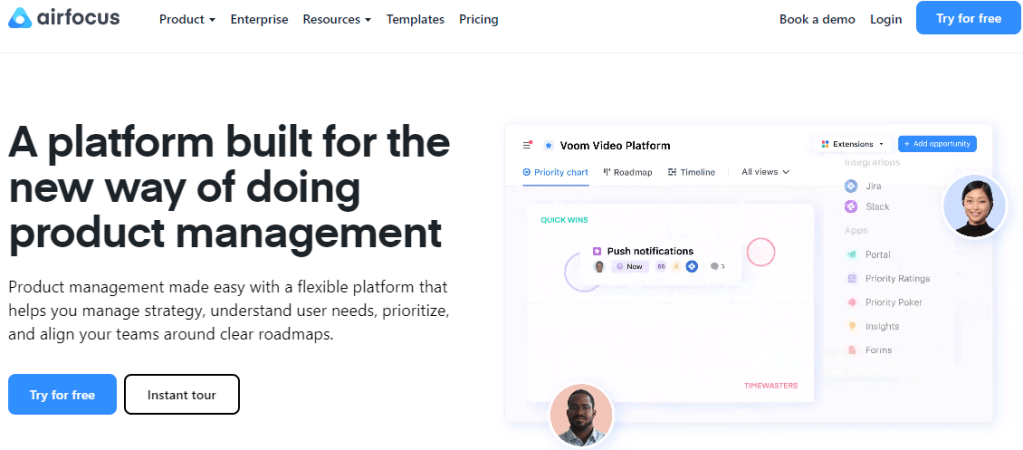
Contrast this definition of features with Airfocus’ definition of benefits (which again coincides with my own definition of benefits):
A benefit…is why a prospect would ultimately use a product.
This key benefit provides an emotional hook point that you can leverage in helping the user imagine the positive experiences felt by using your product.
For example: ‘If you don’t waste your time editing and can store more of your best photos, you’ll keep happier memories for longer’.
So again, the feature is a characteristic of a product (or what the product does), while a benefit explains why that characteristic is important to a prospect.
This is good in and of itself, and has served me well for years. I could stop right here, but I’ve just passed 400 Bredemarket blog posts and am on a roll to get up to 500.
So I’m going to tell you that Airfocus expands the feature-benefit model by defining an middle category between features and benefits.
The stage between a feature and a benefit
Airfocus defines the intermediate step between a feature and benefit as follows:
An advantage is what that feature does, and how it helps. These are factual and descriptive but do not yet make a connection as to how it will make users’ life better.
For example: ‘It automatically keeps only the clearest picture of a similar set, and deletes the rest. Your photo storage is reduced on average by 80%.
Perhaps I’m oversimplifying the analysis, but the three terms (features, advantages, and benefits) can be related as follows, using my three favorite question adverbs and incorporating Airfocus’ examples:
Feature
What
Automated photo storage app
Advantage
How
Reduce photo storage 80%
Benefit
Why
Keep happier memories for longer
I’ll use this caption to plug my first e-book, which you can get here.
Since I talk about benefits ad nauseum, you may get the mistaken view that features and advantages don’t matter. They do matter—in the proper context. For example, if you’re working on a data sheet or a user manual (if they still exist), you definitely need a feature list and could probably use an advantage list also.
Now do you have to use a feature-advantage-benefit model, instead of the simpler feature-benefit model?
It ISN’T time for me to jump on the Apple Vision Pro bandwagon, because while Apple Vision Pro affects the biometric industry, it’s not a REVOLUTIONARY biometric event.
The four revolutionary biometric events in the 21st century
How do I define a “revolutionary biometric event”?
I define it as something that completely transforms the biometric industry.
When I mention three of the four revolutionary biometric events in the 21st century, you will understand what I mean.
9/11. After 9/11, orders of biometric devices skyrocketed, and biometrics were incorporated into identity documents such as passports and driver’s licenses. Who knows, maybe someday we’ll actually implement REAL ID in the United States. The latest extension of the REAL ID enforcement date moved it out to May 7, 2025. (Subject to change, of course.)
The Boston Marathon bombings, April 2013. After the bombings, the FBI was challenged in managing and analyzing countless hours of video evidence. Companies such as IDEMIA National Security Solutions, MorphoTrak, Motorola, Paravision, Rank One Computing, and many others have tirelessly worked to address this challenge, while ensuring that facial recognition results accurately identify perpetrators while protecting the privacy of others in the video feeds.
COVID-19, spring 2020 and beyond. COVID accelerated changes that were already taking place in the biometric industry. COVID prioritized mobile, remote, and contactless interactions and forced businesses to address issues that were not as critical previously, such as liveness detection.
These three are cataclysmic world events that had a profound impact on biometrics. The fourth one, which occurred after the Boston Marathon bombings but before COVID, was…an introduction of a product feature.
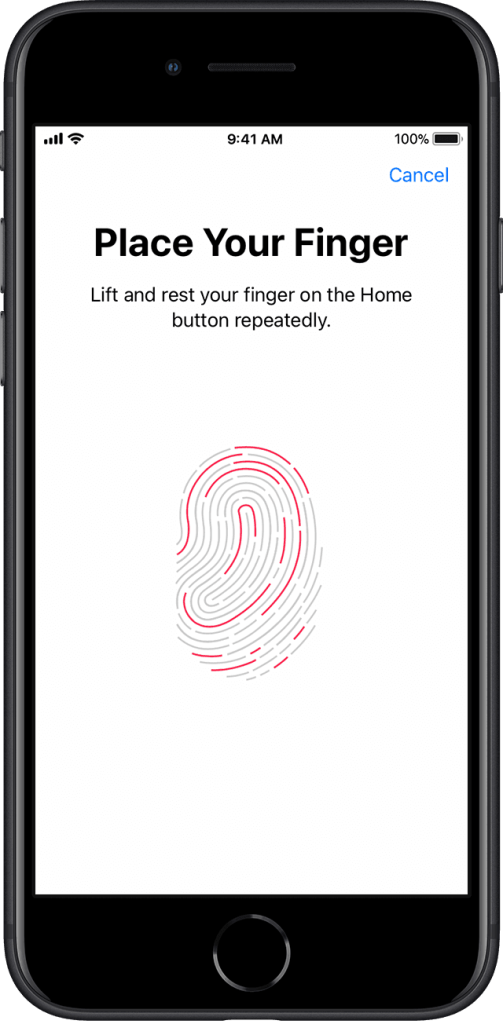
Touch ID, September 2013. When Apple introduced the iPhone 5s, it also introduced a new way to log in to the device. Rather than entering a passcode, iPhone 5S users could just use their finger to log in. The technical accomplishment was dwarfed by the legitimacy that this brought to using fingerprints for identification. Before 2013, attempts to implement fingerprint verification for benefits recipients were resisted because fingerprinting was something that criminals did. After September 2013, fingerprinting was something that the cool Apple kids did. The biometric industry changed overnight.
Of course, Apple followed Touch ID with Face ID, with adherents of the competing biometric modalities sparring over which was better. But Face ID wouldn’t have been accepted as widely if Touch ID hadn’t paved the way.
So why hasn’t iris verification taken off?
Iris verification has been around for decades (I remember Iridian before L-1; it’s now part of IDEMIA), but iris verification is nowhere near as popular in the general population as finger and face verification. There are two reasons for this:
Compared to other biometrics, irises are hard to capture. To capture a fingerprint, you can lay your finger on a capture device, or “slap” your four fingers on a capture device, or even “wave” your fingers across a capture device. Faces are even easier to capture; while older face capture systems required you to stand close to the camera, modern face devices can capture your face as you are walking by the camera, or even if you are some distance from the camera.
Compared to other biometrics, irises are expensive to capture. Many years ago, my then-employer developed a technological marvel, an iris capture device that could accurately capture irises for people of any height. Unfortunately, the technological marvel cost thousands upon thousands of dollars, and no customers were going to use it when they could acquire fingerprint and face capture devices that were much less costly.
So while people rushed to implement finger and face capture on phones and other devices, iris capture was reserved for narrow verticals that required iris accuracy.
The Apple Vision Pro is not the first headset that was ever created, but the iPhone wasn’t the first smartphone either. And coming late to the game doesn’t matter. Apple’s visibility among trendsetters ensures that when Apple releases something, people take notice.
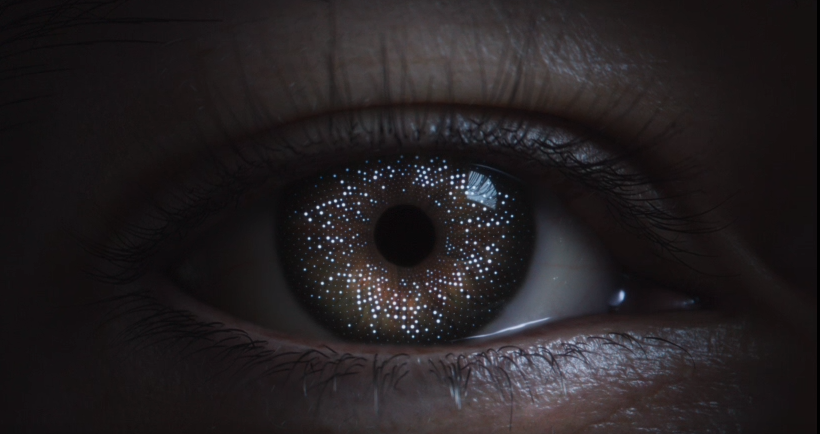
According to Apple, Optic ID works by analyzing a user’s iris through LED light exposure and then comparing it with an enrolled Optic ID stored on the device’s Secure Enclave….Optic ID will be used for everything from unlocking Vision Pro to using Apple Pay in your own headspace.
So why did Apple incorporate Optic ID on this device and not the others?
There are multiple reasons, but one key reason is that the Vision Pro retails for US$3,499, which makes it easier for Apple to justify the cost of the iris components.
But the high price of the Vision Pro comes at…a price
However, that high price is also the reason why the Vision Pro is not going to revolutionize the biometric industry. CNET admitted that the Vision Pro is a niche item:
With Vision Pro, Apple is trying to establish what it believes will be the next major evolution of the personal computer. That’s a bigger goal than selling millions of units on launch day, and a shift like that doesn’t happen overnight, no matter what the price is. The version of Vision Pro that Apple launches next year likely isn’t the one that most people will buy.
Certainly Vision Pro and Optic ID have the potential to revolutionize the computing industry…in the long term. And as that happens, the use of iris biometrics will become more popular with the general public…in the long term.
But not today. You’ll have to wait a little longer for the next biometric revolution. And hopefully it won’t be a catastrophic event like three of the previous revolutions.
If you want a content marketing expert to write for your business, do you just say “Write this, and make it viral”?
Not THAT viral. (Too soon?) By Alexey Solodovnikov (Idea, Producer, CG, Editor), Valeria Arkhipova (Scientific Сonsultant) – Own work. Scientific consultants:Nikitin N.A., Doctor of Biological Sciences, Department of Virology, Faculty of Biology, Lomonosov Moscow State University.Borisevich S.S. Candidate of Chemical Sciences, Specialist in Molecular Modeling of Viral Surface Proteins, Senior Researcher, Laboratory of Chemical Physics, Ufa Institute of Chemistry RASArkhipova V.I., specialization in Fundamental and Applied chemistry, senior engineer, RNA Chemistry Laboratory, Institute of chemical biology and fundamental medicine SB RAS, CC BY-SA 4.0, https://commons.wikimedia.org/w/index.php?curid=104914011
Six words of instruction will not result in great content.
Even if you just say “Write this” and leave off the viral part, this will not work either.
You and your content creator have to have a shared understanding of what the content will be.
For example, as I indicated in a previous post, you and your content creator have to agree on the tone of voice to use in the content. The content creator could write something in a tone of voice that may not match your voice at all, which would mean that the content would sound horribly wrong to your audience.
Imagine a piece for financial executives written in the style of Crazy Eddie. Ouch.
And that’s just one thing that could go wrong when you and your content creator are not on the same…um, page.
Bredemarket’s content creation process includes six questions
When Bredemarket works with you to create content, I use a content creation process. I’ve revised my original content creation process severaltimes, and I’m sure I’ll revise it more as I work with more of you.
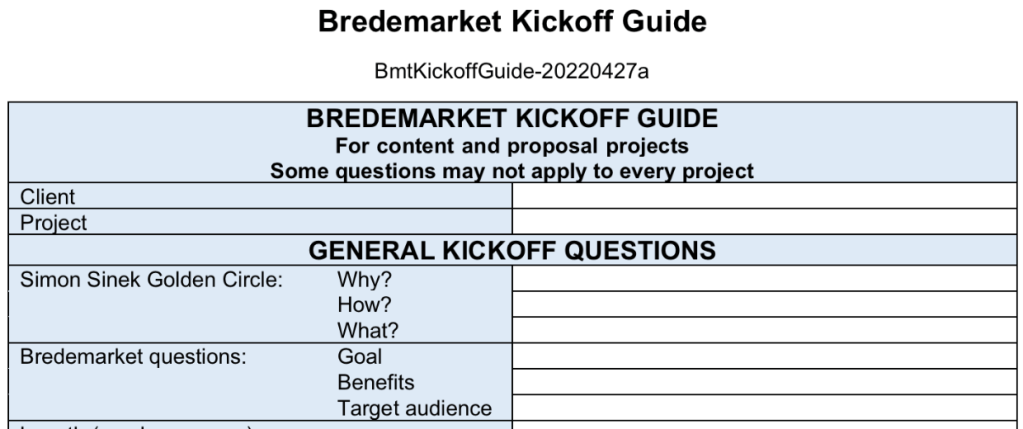
But as of today, Bredemarket’s kickoff meetings with clients begin with six high-level questions that set the scene for everything that follows.
Question One: Why?
As I noted in my Simon Sinek post, the “why?” question needs to be answered before any other question is asked.
Before you ask a content creator to write a case study about how your Magnificent Gizmo cures bad breath, you need to understand why you’re in the good breath business in the first place. Did you have an unpleasant childhood experience? Were you abandoned at the altar? WHY did you care enough to create the Magnificent Gizmo in the first place?
(As I write this post, I’m going to look at how each of these six questions can be answered for the post itself. After all, it’s fair to ask: Why does Bredemarket do what it does? Short answer: because I write. You can pry my keyboard out of my cold dead hands. For the longer answer, read the “Who I Am” page on the Bredemarket website.)
Question Two: How?
You also need to make sure your content creator can explain how you do what you do. Have you created your own set of algorithms that make breath good? Do you conduct extensive testing with billions of people, with their consent? How is your way of doing things superior to that of your competitors?
Once these are clear in your mind, you’re ready to talk about the “what.” As Sinek notes, many people start with the “what” and then proceed to the “how,” and may or may not even answer the “why.” But when you ask the “why” first and the “how” second, your “what” description is much better.
(Again, you may be asking what Bredemarket does. I craft the words to communicate with technical and non-technical audiences. For additional clarification, read “What I Do,” which also notes what I don’t do. Sorry, finger/face/ID document vendors.)
Question Four: Goal?
Once the Golden Circle is defined, we’re ready to dig a little deeper into the specific piece of content you want. We’re not ready to talk about page count and fonts, yet, though. There’s a few other things we need to settle.
What is the goal of the content? Simple awareness of the product or service you provide? Or are you ready for consideration? Or is it time for conversion? The goal affects the content dramatically.
(In the case of this post, the goal is primarily awareness, but if you’re ready for conversion to become a paying customer, I won’t turn you away.)
Question Five: Benefits?
I’ve written ad nauseum on the difference between benefits and features, so for this question five about benefits I’ll just briefly say that written content works best when it communicates how the solution will help (benefit) the customer. A list of features will not make a difference to a customer who has specific needs. Do you meet those needs? Maintain a customer focus.
(Bredemarket’s primary benefit is focused content that meets your needs. There are others, depending upon your industry and the content you require.)
Question Six: Target Audience?
This one is simple to understand.
If you’re a lollipop maker and you’re writing for kids who buy lollipops in convenience stores, you’ll write one way.
If you’re a lollipop maker and you’re writing to the convenience stores who could carry your lollipops, you’ll write another way.
Now sometimes content creators get fancy and create personas and all that (Jane Smith is a 54 year old single white owner of a convenience store in a rural area with an MBA and a love for Limp Bizkit), but the essential thing is that you understand who you want to read your content.
(This particular piece is targeted for business owners, executives, directors, and managers, especially in California’s Inland Empire, who have a need to create focused content that speaks to their customers. The target audience not only affects how I am writing this post, but also how I will distribute it.)
What if you use a different content creator?
I am forced to admit that not everyone chooses Bredemarket to create their content.
Maybe you create your content yourself.
Maybe you already have access to content creators.
Or maybe you have a limited budget and can only pay a penny a word to your content creator. Let’s face it, a five dollar blog post does sound attractive.
But that doesn’t mean that you can’t use these six questions. I did publish them, after all, and they’re based on questions that others have asked.
If you create your own content, ask yourself these six questions before you begin. They will focus your mind and make your final content better.
If you have someone else create your content, make sure that you provide the answers for your content creator. For example, if you seek a content creator on Upwork or Fiverr, put the answers to these questions in your request for quotes. Experienced writers will appreciate that you’re explaining the why, how, what, goal, benefits, and target audience at the very beginning, and you’ll get better quotes that way. If someone knows your target audience is crime scene examiners, then you’ll (hopefully) see some quotes that describe the writer’s experience in writing for crime scene examiners.
And if you provide the answers to those six questions and your content creator says, “That doesn’t matter. I write the same for everyone,” run away.
What is it they do? They make customers feel GOOD. That is why recent research shows that 89% of companies that lead with customer experience perform better financially than their peers.
If you want to initiate something at your company, it’s always good to note that it will help the company make money. Focusing on customers seems like a no-brainer, but you’d be surprised to learn how many companies focus on themselves rather than their customers.
I perused Morgan’s list of customer-centric companies and noticed that Calendly was on the list, in the B2B category. Since I use Calendly to set appointments for Bredemarket (more about that later, I promise), I thought I’d read further.
Calendly. Calendly was created to solve a common business problem: the hassle of scheduling meetings and appointments. The simple interface makes it easy for companies to schedule any type of meeting or appointment. Calendly saw huge growth during the pandemic as teams worked remotely.
Since Morgan was covering 100 companies, this three sentence description had to suffice. So I dug deeper and found a story (or, if you will, a case study) that showed how Calendly exhibits customer focus.
As any good case study (casetimonial) does, the Calendly page begins by talking about Conductor’s problem. Here’s an excerpt:
Mergim Selimaj worried he had a problem. As the customer success manager at Conductor, he could see the company’s small accounts weren’t getting the personalized attention they really needed. As a SaaS company specializing in intelligent content and SEO improvement, Conductor helps companies customize marketing to fit their needs. Mergim needed to find ways of helping his reps deliver tailor-made service to match.
Yes, a company that “helps companies customize marketing” faced a problem in customizing its own marketing for its small accounts. More importantly, it recognized the problem and realized that the problem needed attention.
So how was Selimaj going to focus on its smaller customers?
First, Selimaj had to identify the problem(s) to solve.
Reps spent hours just scheduling — not to mention re-scheduling — calls. A week of hectic service calls would come on the heels of months of limited activity.
Even when the service finally did connect with customers, they rarely had a clear picture of their individual needs. Some clients only needed to speak once per year, while others had hoped for many more touchpoints. There just had to be a way to spread meetings more evenly, Mergim thought. Meanwhile, the customer care team needed a way to know more about the needs of each client. If only there were a way for clients to specify the kind of help they needed, whenever they wanted.
There’s at least three problems that Mergim identified:
It was hard to schedule calls with Conductor’s small accounts.
It was hard to know the customers’ desired frequency of contacts.
It was hard to know the specific help that Conductor’s customers desired.
How would Conductor benefit by solving these problems?
Improved experience, and simpler ways of interfacing with customers, would only aid Conductor’s ability to deliver organic traffic and higher returns on customers’ tight marketing budgets.
You probably noted that these were stated as benefits rather than features. If Calendly were to say, “We offer Scheduling Gizmo 2800,” Conductor could reply, “So what?” But when Calendly said that its solution delivers organic traffic and higher return on investment, Conductor paid attention.
The solution that Calendly provided to Conductor
So what three things did Selimaj do in an attempt to solve the problem?
He started by embedding a Calendly customer success scheduling page on the Help page of Conductor’s website.
(Apparently you have to log in to see this page, because I couldn’t find it on any publicly available page. I’ll take Calendly’s word for it that this page exists.)
Second, Selimaj also created a scheduling link in Conductor’s app itself, to ensure that Conductor’s customers had easy access to meeting scheduling.
And third, he did one more thing: he instructed each of the company’s customer success reps to include a scheduling link in their email signatures.
I’d like to highlight two things:
Now, rather than requiring the reps to spend huge amounts of time scheduling meetings, the scheduling process was now driven by the customers. When customers needed help, they could easily schedule meetings. When they didn’t need help, they wouldn’t schedule meetings.
Also note that there were three ways for customers to access the scheduler: the web page, the app, and the email signature. Selimaj didn’t tell Conductor’s customers that there was only one approved way to schedule meetings. (And I’d be willing to bet that if a customer called a customer success rep on the phone, the rep would answer.)
So what happened?
The results
The article lists the benefits of Conductor’s Calendly implementation.
More tailored customer solutions via available information from integration with Salesforce, Slack and Trello.
Better service of large accounts as reps spent less time servicing small accounts.
Better engagement through quadrupling of customer contacts.
Maintenance of high customer quality, even as quantities increase.
Those quantities are increasing because of a 30% boost in renewals.
In short, Calendly’s focus on Conductor allowed Conductor to better focus on the needs of its own customers, thus letting Conductor make more money. And Conductor’s customers presumably made more money also. Customer focus benefits everyone in the B2B chain.
Can a customer focus benefit YOUR company?
Perhaps you own a business, large or small, that could use an increased customer focus and an elaboration of benefits that your company can provide to your customers. Part of this is the need to create customer focused content.
Maybe you, like Calendly and Conductor, have a story of your own you’d like to share with your customers. If so, consider working with Bredemarket (the Ontario, California content marketing expert) to create a case study.
Bredemarket uses a collaborative process with you to ensure that the final written product communicates your desired message. Bredemarket’s content creation process ensures that the final written content (a) answers the WHY/HOW/WHAT questions about you, (b) advances your GOAL, (c) communicates your BENEFITS, and (d) speaks to your TARGET AUDIENCE. It is both iterative and collaborative.
Often my clients provide specific feedback at certain stages of the process to ensure that the messaging is on track. I combine my client’s desires with my communications expertise to create a final written product that pleases both of us.
If you’d like Bredemarket to help you create a case study or other content, you can go to calendly.com/bredemarket to book a meeting with me. Or if you don’t like Calendly, there are two other ways to contact me:
Remember the four posts that I wrote earlier this week about communicating benefits to identity customers? Well, I just summarized all four of the posts on a single page on the Bredemarket website, The benefits of benefits for identity firms.
(And now I’m repurposing that page into a single, short blog post. It’s a succinct way to establish my bona fides as an identity content marketing expert.)
The page concludes with a question:
Why is Bredemarket the best choice to help your identity firm communicate its benefits?
No identity learning curve.
I’ve probably communicated in the format you need.
I work with you.
I can package my offering to meet your needs.
For the complete page, click here. And if you are an identity firm that needs my services, contact me.
I knew I’d think of something else after I thought this whole post series was complete. But this post will be brief.
Benefit statements are not only affected by the target customers, but are also affected by the “personality” of the company stating the benefits.
As we all know, different companies use different tones of voice in their communications. A benefit statement from Procter & Gamble will read differently than a benefit statement from Apple, for example.
With that in mind, let’s turn to the example that I used in the third post in this series-namely, that the benefit of a one-second response time for computer aided dispatch (CAD) systems is that it keeps people from dying.
Not all companies are going to be that blunt about this particular benefit.
To my knowledge, SCC, Printrak, or Motorola have never explicitly talked about avoiding death as a benefit or their computer aided dispatch systems. Perhaps there IS a CAD company that does this, though.
This is why the development of benefit statements is often a collaborative affair, in part to ensure that the benefit statements align with the character of the company issuing them. Imagine the reaction if P&G promoted one of its soap products with a high-tech advertisement loudly proclaiming “PURPLE!” like the recent Apple ad.
Procter & Gamble ads are usually a bit more restrained.
Well, at least they used to be.
To be frank, Procter & Gamble is better at explicitly stating benefits than Apple is. Saving $100 a year on your energy bill is a benefit; purple is not. But Apple is communicating an implicit “Apple owners are cooler than mere mortals” benefit. Cold vs. cool, I guess, as well as an entirely different definition of “identity” that doesn’t rely on individualization. (If thousands of people have purple iPhones, this fact cannot be used to individually identify them.)
So you not only have to know your customer, but you need to know yourself so that you can describe benefits that are important to your customer in a voice that is accurate to your company’s “personality.”
This is why Bredemarket uses an iterative process in developing communications for its clients. If you’re an identity product/service provider that needs help in communicating customer benefits in proposals, case studies, white papers, blog posts, and similar written output, Bredemarket can implement such an iterative process to help you develop that output. Contact me.
(Updated 4/16/2022 with additional benefits information.)
NOTE: After publishing the second post in this series, but before publishing this third post, I ran across other people in the identity industry who were asking the “So what?” question, but from a strategic perspective rather than a sales enablement perspective. I discuss this in my personal JEBredCal blog, in this post.
This is a continuation of two previous posts. In the first and second posts in this series, I initially explained the difference between benefits and features, and why you sometimes have to act like an irritating two-year old to convert a feature into a benefit (the “so what?” test). I also explained how benefit statements need to be tailored to particular stakeholders, and how there can be many stakeholders even for a simple procurement.
I promised in the second post that I planned to dive into issues more specific to identity customers, such as when a two hour response time matters, when a one minute response time matters, and when a one second response time matters. Unfortunately, I spent so much time talking about all the stakeholders that I never got around to that particular question.
I promise that I’ll get into it right now.
Two hours vs. one minute vs. one second
You may remember that in the first post, I listed several things that some people thought were benefits, but were actually features. The final three items in that list were the following:
This product can complete its processing in less than two hours.
This product can complete its processing in less than a minute.
This product can complete its processing in less than a second.
These feature statements are very similar, yet at the same time very different. As you might have guessed, these feature statements are associated with three different products that are targeted to different markets.
Two hours: rapid DNA
I already alluded to the first of the three feature statements, two hour response time, in an earlier post in this series. Although I didn’t say so that the time, this is an important feature for the “rapid DNA” systems sold by Thermo Fisher Scientific and ANDE. These systems are used for multiple purposes, including
examining crime scene DNA evidence,
identifying deceased disaster victims, and
checking to see if arrested individuals are wanted for more serious crimes.
The two hour rapid DNA processing time offers different benefits for these different use cases.
As I previously stated in my first example of a “so what?” test, the ability to run rapid DNA at booking keeps dangerous criminals from being released by identifying those who are wanted for serious crimes.
A two hour processing time for crime scene evidence solves crimes more quickly, and again potentially puts dangerous criminals in jail more quickly.
A two hour response for disaster victim identification brings peace of mind to family members whose relatives may have perished in a disaster.
(4/16/2022: For additional information on benefits, click here.)
Depending upon the target audience, a rapid DNA vendor must tailor its benefit statements accordingly.
One minute: real time AFIS
Next, I want to look at the one minute response time, which is something that I used to talk about over twenty-five years ago when “real time AFIS” became a reality.
Because of the limitations of early computers, it used to take hours or days to compare the features from a latent fingerprint against the features of fingerprints in a database of known criminals. The old computers, even when souped up with special processing equipment such as hardware matchers and hardware fingerprint processors, took a long time to perform all of the calculations needed to compare a fingerprint’s features against hundreds of thousands of other fingerprint features.
Around the time that I joined Printrak, real time AFIS became a reality, where it became cost-effective and technologically feasible to size systems to deliver those fingerprint matching results in a minute. Today, the FBI’s Repository for Individuals of Special Concern (RISC) advertises that it can identify high-priority criminals within seconds.
At the time (1994), real time AFIS was a big deal, and the proposals that I helped to write emphasized that crimes could be solved more quickly (for latent/crime scene fingerprint searches), and individuals could be identified more quickly (for tenprint/booking searches).
One second: computer aided dispatch
To explain the third feature statement about one second response times, I have to fast forward three years to 1997, when the company then known as Printrak acquired the computer aided dispatch (CAD) and records management systems (RMS) unit of SCC Communications Corp. Printrak acquired other companies that year, but the SCC acquisition ended up being the most important, since it led to Printrak’s acquisition by Motorola.
(Allow me to go off on a tangent for a minute. When Motorola sold the biometric part of the business to Safran, it chose to retain the CAD and RMS portions, which remain part of Motorola Solutions’ portfolio today. One other tidbit: one of the key SCC people who joined Printrak at the time eventually left Motorola, and now works for rapid DNA vendor ANDE. As we Californians would say, it’s a small world after all.)
Now while there are some parallels between CAD and the systems then known as automated FINGERPRINT identification systems (AFIS), there are some key differences in the markets that the two products address. We on the AFIS side learned this the hard way when we introduced ourselves to our new colleagues.
“Hi, SCC folks, welcome to Printrak. You’re joining a company that sells REAL TIME AFIS that delivers results within one minute! Aren’t you impressed?”
The ex-SCC people responded, gently disabusing us of our pretensions to speed.
“Hello, new corporate overlords. We provide computer aided dispatch systems that send police, fire, and medical personnel to crime scenes and emergency sites as soon as possible. If our CAD systems took AN ENTIRE MINUTE to dispatch personnel, PEOPLE WOULD DIE. We use really powerful computers to get personnel dispatched in a second. Enjoy your real time AFIS…amateurs.”
So the company Printrak learned that it needed separate benefit statements, depending upon the product line the company was promoting at any given time. The CAD customers received one set of benefit statements, while the AFIS customers received a separate set.
Conclusion (finally)
In short, you have to know your customer so that you can describe benefits that are important to your customer.
(Updated 4/16/2022 with additional information on benefits.)
This is a continuation of a previous post, in which I explained the difference between benefits and features, and why you sometimes have to act like an irritating two-year old to convert a feature into a benefit (the “so what?” test).
As I promised in that previous post, I plan to dive into issues more specific to identity customers, such as when a two hour response time matters, when a one minute response time matters, and when a one second response time matters.
Who are identity customers?
Before I dive into response times, let’s explain who identity customers are, because not all identity customers are alike.
When I use the term “identity” at Bredemarket, I am referring to any technology that can be used to identify an individual. This does not just relate to biometrics (fingerprint identification, facial recognition, etc.), but to any of the five factors of authentication that can identify an individual. A physical or digital driver’s license. A fob. A secret handshake. A geographic location. Even a password.
Obviously there are a ton of customers that use identification technologies, and they care about a ton of things.
Well, what if we focus our discussion and talk about a SINGLE product, such as automated biometric identification systems (ABIS)? We can market to all ABIS customers with a single set of benefit statements, right?
Um, no.
ABIS can be sold to all sorts of different customers, ranging from local police agencies to state welfare benefit administrators to national passport issuing agencies.
Well, what if we focus our discussion and talk about a SINGLE type of customer for a single product, such as the local law enforcement agencies that buy ABIS? We can market to all local law enforcement ABIS customers with a single set of benefit statements, right?
Um, no.
If I am going to sell an ABIS to the city of Ontario, California (sorry Thales), these are the types of customers (or target audiences) that I have to cover with separate benefit statements:
The field investigators who run across biometric evidence at the scene of a crime, such as a knife with a fingerprint on it or a video feed showing someone breaking into a liquor store.
The examiners who look at crime scene evidence and use it to identify individuals.
The people who capture biometrics from arrested individuals at livescan stations.
The information technologies (IT) people who are responsible for ensuring that Ontario, California’s biometric data is sent to San Bernardino County, the state of California, perhaps other systems such as the Western Identification Network, and the Federal Bureau of Investigation.
The purchasing agent who has to make sure that all of Ontario’s purchases comply with purchasing laws and regulations.
The privacy advocate who needs to ensure that the biometric data complies with state and national privacy laws.
The mayor (Paul Leon as I write this), who has to deal with angry citizens asking why their catalytic converters are being stolen from their vehicles, and demanding to know what the mayor is doing about it.
Probably a dozen other stakeholders that I haven’t talked about yet, but who are influenced by the city’s purchasing decision.
As you can see, there are a ton of people who are going to read a proposal to provide an ABIS to a city, and they all have differing needs that need to be addressed…and different benefits that have to be emphasized.
Benefits of a feature are customer-dependent
Now let’s take one of my feature statements from my first post and try to convert it to a benefit for one or more of these stakeholders. I’m going to choose this one:
This product captures latent fingerprints at 1000 pixels per inch.
Right off the bat, I’ll tell you that 1000 ppi latent fingerprint capture doesn’t make a bit of difference to the majority of the stakeholders. Paul Leon isn’t going to care. The purchasing agent SHOULD care (1000 ppi data requires more storage than 500 ppi data, which translates to more cost), but probably isn’t going to know that he/she should care.
With the possible exception of the IT personnel, the only people that care about 1000 ppi capture are the examiners who use crime scene evidence and use it to identify individuals. And needless to say, the examiners that concentrate on face or iris or voice or DNA data aren’t going to care about a fingerprint capture specification.
So if I’m writing a proposal to the city of Ontario, California, I’m going to make sure that the latent fingerprint capture section of the proposal discusses my product’s ability to capture latent fingerprints at 1000 ppi.
Wait for it…
SO WHAT?
Absent the benefit of standards compliance that ensures that Ontario data can be processed by state and national systems, the chief benefit of 1000 ppi latent fingerprint capture is that it provides a higher probability that examiners can positively identify criminals and solve more crimes.
An explanation: because latent fingerprints are often of poor quality – the criminals don’t usually take the time to ensure that the fingerprint evidence they leave at crime scenes is readable – latent examiners often benefit from having higher-resolution 1000 ppi latent fingerprint images, rather than the lower-resolution 500 ppi latent fingerprint images that were common in 20th century fingerprint systems. This higher resolution can make it easier for a latent fingerprint examiner to match a latent to a criminal’s tenprint fingerprint from a previous arrest, leading to the “solve more crimes” benefit.
So you’re going to come up with separate benefit statements for examiners, separate ones for livescan operators, and separate benefit statements for each of the stakeholders. And each of these benefits will be enumerated in the section of the proposal that the individual stakeholder will read. (News flash: hardly anyone reads the entire proposal; they only read the section that pertains to them.)
(4/16/2022: For additional information on benefits, click here.)
What’s next?
Well, I never got around to my two hour vs. one minute vs. one second question, and this post is getting long, so I guess I’ll address that topic in a third post.
(Updated 4/16/2022 and 4/18/2022 with additional benefits and customer focus information.)
I wanted to take some time to specifically explain how to communicate benefits to identity customers. And I’ll take a lot of time, addressing the topic in three planned posts.
What are benefits?
When you write a proposal, case study, or other document that is targeted to identity customers, you need to communicate the benefits to the target audience.
But what are benefits?
It turns out that many people don’t know what benefits are.
Over the years I’ve had occasion to ask people to suggest some benefits to include in a document. Sometimes I’ve received responses that are similar to these:
This product is dual-purpose and supports both detection of speeders and detection of red light runners.
This product captures latent fingerprints at 1000 pixels per inch.
This product was a top tier performer in the recent NIST tests.
This product can complete its processing in less than two hours.
This product can complete its processing in less than a minute.
This product can complete its processing in less than a second.
These are all nice statements, but these aren’t BENEFIT statements.
The last three examples illustrate the issue. In certain markets, a two hour response time is very impressive In other markets, a one minute response time will result in getting somebody killed. (I’ll address the differences later.)
In my recent post about case studies, I linked to a Hubspot article that explained the difference between benefits and features. I didn’t dive into that article at the time, but I’ll do so now. Here is how Kayla Carmichael’s article explains the difference between the two.
Features describe what the product does, setting it apart from the competition. Benefits describe how the product can help the audience. For marketing messages, it’s typically better to go with a benefits-heavy approach, because benefits are what makes consumers purchase.
The “so what?” test
As you can see, benefits are customer-centric. In another Hubsport article, Aja Frost notes that one way to tell whether you’re dealing with a benefit or a feature is to ask the question “So what?”
(4/18/2022: For additional information on customer focus, click here.)
Let’s return to my first example above, “This product is dual-purpose and supports both detection of speeders and detection of red light runners.” Even if you’re a road safety customer, you may not care whether a particular device is dual-purpose or not.
Maybe you don’t care about both issues at a particular location on the road. If the road safety camera is placed on an interstate highway, red lights are obviously not an issue.
Maybe you don’t care about one of the issues at all. Perhaps local laws don’t allow for unmonitored devices that detect speeders.
Perhaps your agency doesn’t care if you have to put two devices—one for speed detection, one for red light detection—at the same location.
So if you encounter a statement that isn’t a benefit, you have to act like an irritating two-year old and ask “so what?” until you actually get a benefit statement.
“This product can complete its processing in less than two hours.”
SO WHAT?
“This product can complete its processing while the arrestee is still in custody, before the suspect is released.”
SO WHAT?
“This product can detect whether the arrestee is wanted for more serious charges while the arrestee is still in custody.”
SO WHAT?
“This product can identify arrestees who have outstanding warrants for murder before they are released to murder more people.”
That’s better.
(4/16/2022: For additional information on benefits, click here.)
What’s next?
Anyway, that’s the general concept of benefits vs. features. In a future post, I’ll dive into issues more specific to identity customers, such as when a two hour response time matters, when a one minute response time matters, and when a one second response time matters.
These differences make all the…um difference to identity customers.









 Bredemarket