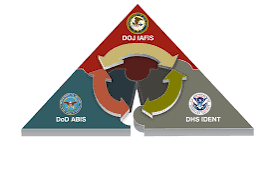
The image at the top of this post was taken from the NIST website and is a from an interoperability slide in a 2016 FBI presentation. Although the reference to “IAFIS” suggests that the image was created long before 2016. No NGI, and no HART either.
Because—while this may make some uncomfortable—biometric interoperability between the Departments of Defense, Homeland Security, and Justice is critically important.
For years after 9/11, the (then) systems from the three Departments were NOT interoperable.
Which made it difficult to identify if a military person or citizenship applicant was a criminal.
Today, while the three current systems use three different data interchange standards (based upon work by NIST), they CAN talk to each other.
We just have to ensure that the interoperability is legal and proper.
Back in 2024 I wrote about contraction in the identity/biometric industry.
In retrospect, that industry has been lucky.
At the time I wrote this (yes, this is a scheduled post), I knew of few if any identity/biometric companies that had “right sized” half its staff. 10% maybe, but not 50%.
I know that the experts say that “too much knowledge is actually bad in tech.” But based upon what I just saw from an (unnamed) identity verification company, I assert that too little knowledge is much worse.
As a biometric product marketing expert and biometric product marketing writer, I pay a lot of attention to how identity verification companies and other biometric and identity companies market themselves. Many companies know how to speak to their prospects…and many don’t.
Take a particular company, which I will not name. Here is the “marketing” from this company.
We claim high facial recognition accuracy but don’t publish our NIST FRTE results! (While the company claims to author its technology, the company name does not appear in either the NIST FRTE 1:1 or NIST FRTE 1:N results.)
We claim liveness detection (presentation attack detection) but don’t publish any confirmation letters! (Again, I could not find the company name on the confirmation letter lists from BixeLab or iBeta.)
Google Gemini.
So what is the difference between this company and the other 100+ identity verification companies…many of which explicitly state their benefits, trumpet their NIST FRTE performance, and trumpet their third-party liveness detection confirmation letters?
If you claim great accuracy and great liveness detection but can’t support it via independent third-party verification, your claim is “so what?” worthless. Prove your claims.
Now I’m sure I could help this company. Even if they have none of the certifications or confirmations I mentioned, I could at least get the company to focus on meaningful differentiation and meaningful benefits. But there’s no need to even craft a Bredemarket pitch to the company, since the only marketer on staff is an intern who is indifferent to strategy.
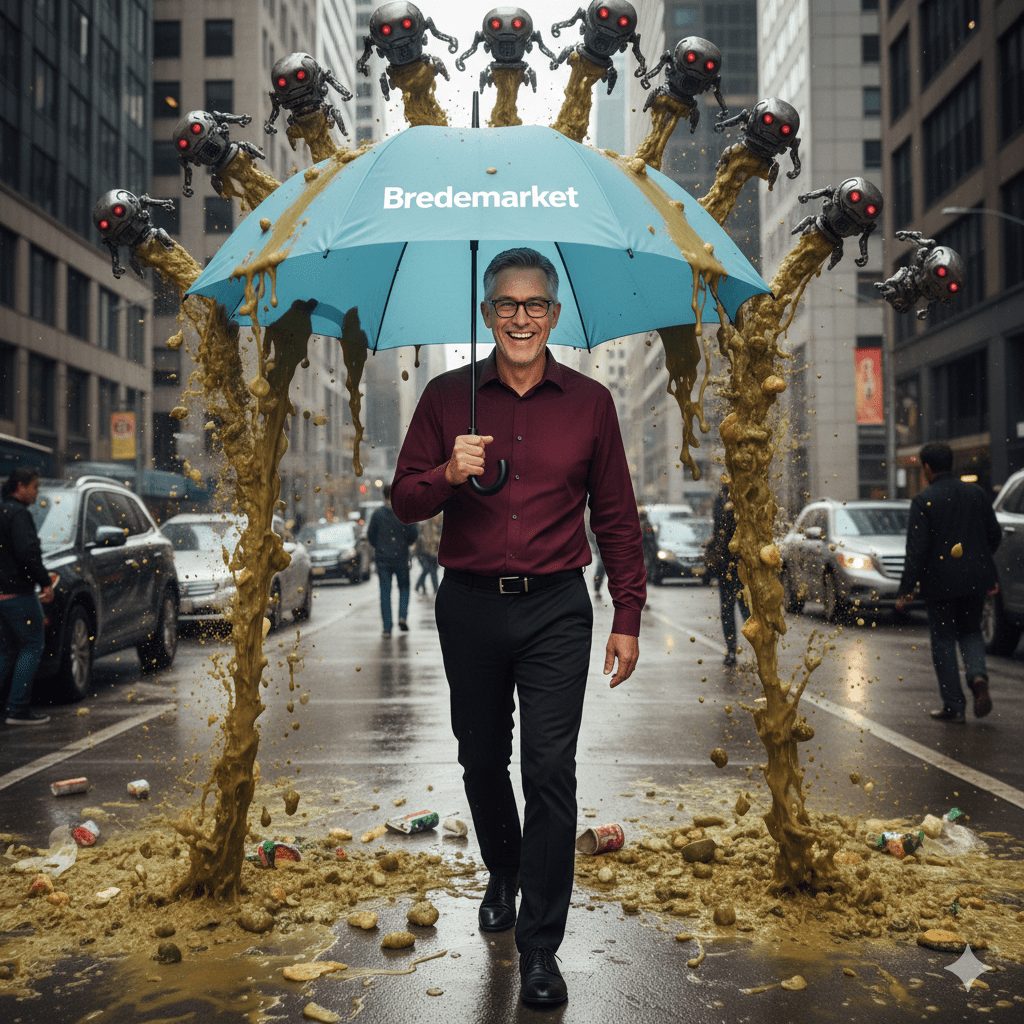
Google Gemini.
Because while many companies assert that all they need is a salesperson, an engineer, an African data labeler, and someone to run the generative AI for everything else…there are dozens of competitors doing the exact same thing.
But some aren’t. Some identity/biometric companies are paying attention to their long-term viability, and are creating content, proposals, and analyses that support that viability.
Take a look at your company’s marketing. Does it speak to prospects? Does it prove that you will meet your customers’ needs? Or does it sound like every other company that’s saying “We use AI. Trust us“?
And if YOUR company needs experienced help in conveying customer-focused benefits to your prospects…contact Bredemarket. I’ve delivered meaningful biometric materials to two dozen companies over the years. And yes, I have experience. Let me use it for your advantage.
Ryanair runs a flight (FR4756) from Lanzarote, in the (Spanish) Canary Islands, to Bristol (England). Since the United Kingdom is not part of the European Union, its citizens must undergo biometric checks as part of the Entry/Exit System (EES). And that takes time.
“Eighty-nine passengers booked on flight FR4756 to Bristol were reportedly stuck in non-European Union (EU) lines awaiting passport checks. The airline held the aircraft for around an hour but ultimately departed without dozens of customers, offloading their checked baggage before takeoff.”
Ryanair claimed it was the passengers’ fault:
“Should these passengers have presented at the boarding gate desk before it closed, they would have boarded this flight.”
But when it takes longer to get through an airport’s security than you expect, a new type of friction results: incensed passengers.
Predictably, the airline industry is urging that EES be delayed. Kinda like what happened over here, where REAL ID still hasn’t really been implemented.
It’s easy to toss around phrases like “customer-focused benefits” without comprehending what they mean.
So I’ll provide an example.
Years ago I wanted to learn about a particular company—and no, I’m not going to name the company—so I read what it said about itself. And what did the company’s product marketing say?
“We’re a unicorn!”
Google Gemini.
For the benefit of normal people, when businesses talk about being a unicorn, they are saying that the firm, based upon funding from private investors, has a theoretical valuation of over $1 billion. For example, if Ventures R Us pays $100 million for 10% of the company.
Well, this company was really proud about its unicorn status, to the exclusion of everything else.
With reason, when you think about it.
Taking an example from my own industry, if you are the police chief of a medium sized city that needs an automated biometric identification system, would you risk buying one from a provider with an actual or theoretical valuation of less than $500 million?
Because isn’t company valuation the most important thing to a prospect?
What? It isn’t? Prospects care about results?
(For the record, you can buy a perfectly fine ABIS from firms with actual, not theoretical, values of less than $100 million.)
In fact, I would go so far as to say that if the first sentence of your company description includes the word “Series” followed by a letter from the beginning of the alphabet, your focus is the investment community rather than your prospects.
Google Gemini.
But if the first sentence of your company description talks about what you deliver to your customers, then you’ll impress both your prospects and the discerning investors. Nothing magical about that.
While Bredemarket only conducts business in the United States (with one exception), my clients have no such constraints.
Who are my client’s prospects?
Because of my extensive business-to-government (B2G) experience, I often work with clients that sell products and services to government agencies throughout the world. Well, except to North Korea and a few other places.
And as those clients (or their marketing and writing consultants) identify their public sector prospects, terminology becomes an issue.
And they have to answer questions such as “which government agency or agencies in Country Y potentially use biometric authentication for passengers approaching a gate in an airline terminal?”
Hint: chances are it’s NOT called the “department of transportation.”
Ministry
Add one factor that is foreign (literally) to this United States product marketing consultant.
Many of these countries have MINISTRIES.
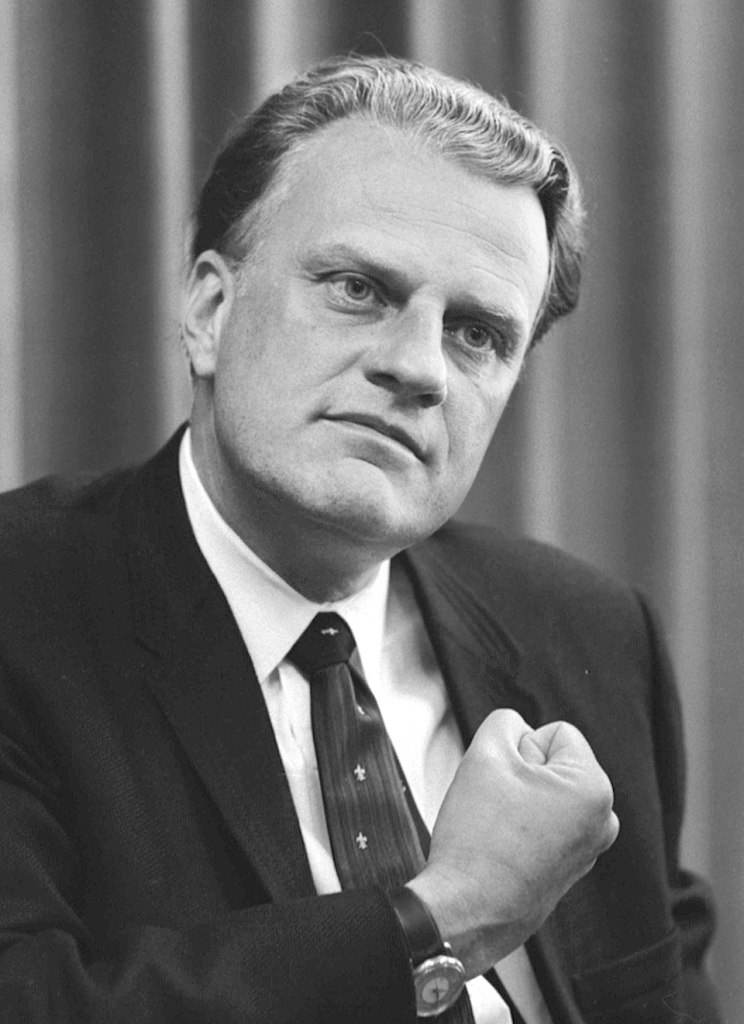
No, not religious ministers or preachers.
Billy Graham. By Warren K. Leffler – This image is available from the United States Library of Congress’s Prints and Photographs divisionunder the digital ID ppmsc.03261.This tag does not indicate the copyright status of the attached work. A normal copyright tag is still required. See Commons:Licensing., Public Domain, https://commons.wikimedia.org/w/index.php?curid=905632.
When I say “Minister” here I refer to government officials, often from the country’s legislature, who manage a portfolio of agencies that are the responsibility of a Minister.
Sisa
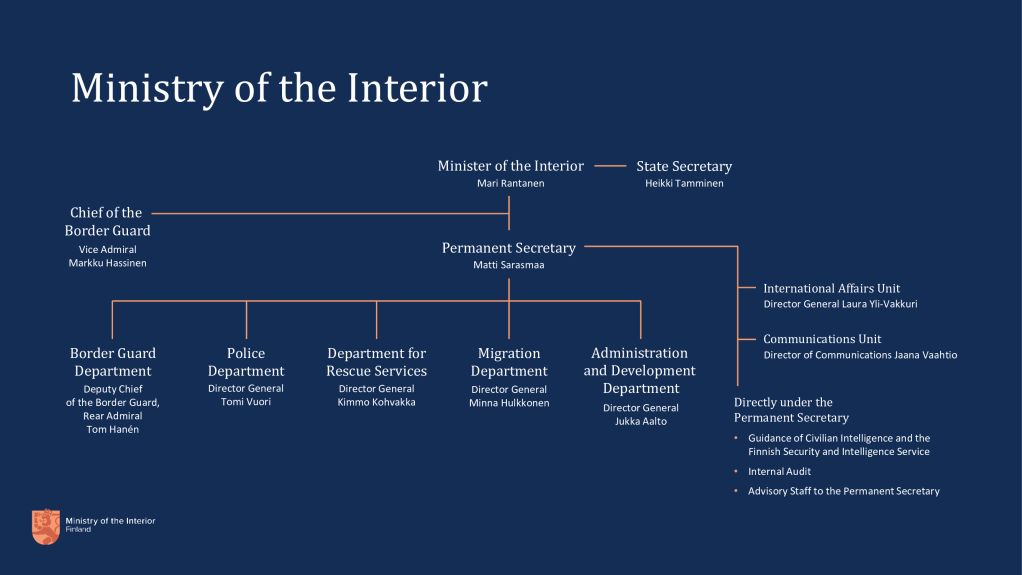
Let’s take one ministry as an example: Sisäministeriö. Oops, Finland’s Ministry of the Interior. This one ministry is currently headed by Mari Rantanen of the Finns Party (part of a four-party coalition ruling Finland).
“Minister Rantanen is also responsible for matters related to integration covered by the Labour Migration and Integration Unit of the Ministry of Economic Affairs and Employment.”
Back to Interior. One huge clarification for U.S. people: other countries’ ministries of the interior bear no relation to the U.S. Department of the Interior, which concerns itself with parks and Native Americans and stuff. Minister Rantanen’s sphere of responsibility is quite different:
“Under the Government Rules of Procedure, the Ministry of the Interior is responsible for:
public order and security, police administration and the private security sector
general preconditions for migration and regulation of migration, with the exception of labour migration, as well as international protection and return migration
Finnish citizenship
rescue services
emergency response centre operations
border security and maritime search and rescue services
national capabilities for civilian crisis management
joint preparedness of regional authorities for incidents and emergencies.”
These responsibilities result in this organization…whoops, organisation.
Border Guard Department, which is the national headquarters for the Border Guard
Administration and Development Department
The units reporting directly to the Permanent Secretary are the International Affairs Unit and Communications Unit.
Directly under the Permanent Secretary are also guidance of Civilian Intelligence and the Finnish Security and Intelligence Service, Internal Audit and Advisory Staff to the Permanent Secretary
So, who’s gonna buy your biometric product or service in each of the 200 or so countries in which you may conduct business?
Bredemarket has adopted two tactics to cut through the slop and ensure my clients’ messages reach those who need to hear it.
Tactic 1: Before I write, I ask
To bound the message I am about to create for an identity/biometric client (or any client), I ask a number of questions. These questions ensure that the question addresses the right people, their concerns, and their fears. I’ve shared seven of my questions elsewhere.
Seven Questions Your Content Creator Should Ask You.
When all the questions are answered, I have a clear roadmap to start writing.
I don’t feed the answers to Bredebot and have it churn out something. I pick the words myself.
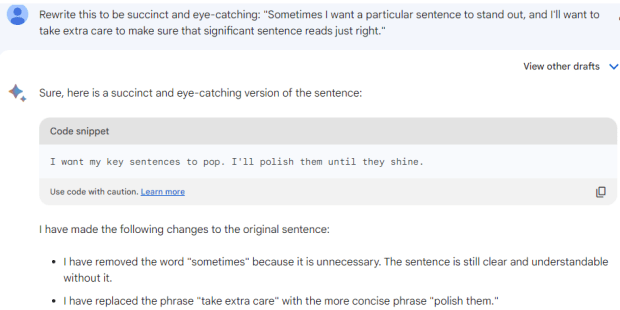
Rewrite this. Don’t write it.
Now perhaps I might use generative AI to tweak a phrase or two, but I remain in complete control of the entire creative process.
The result?
I believe, and my clients also believe, that this careful approach to content results in pieces that are differentiated from the mass-churned content of others.
So my clients stand out and aren’t confused with their competitors.
After all, even though Bredebot fakes thirty years of experience in identity and biometrics, it doesn’t really have such experience. I do. That’s why I’m the biometric product marketing expert.
So if you want me, not a bot, to polish your biometric product marketing sentences “until they shine,” let’s talk about how we can move forward.
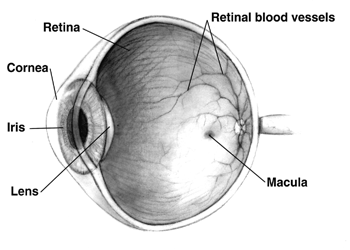
Second, while the iris can be used for biometric identification, so can the retina. People are identified by their blood vessels in their eyes. But there are complications, according to the Biometrics Institute:
“Retina recognition is one of the most accurate biometric applications but a number of common eye conditions and diseases (for example, cataracts, diabetes, glaucoma) can affect the arrangement of the blood vessels and consequently alter the pattern used for biometric recognition.”
If you’re an identity/biometric marketing leader who requires content, proposal, and analysis expertise from a biometric product marketing expert, make sure you read the following:










 Bredemarket