Money 20/20 is taking place in Las Vegas, Nevada, USA from Sunday, October 22 to Wednesday October 25.
While I am not in Las Vegas, Bredemarket will monitor the goings-on and share relevant news on Facebook (Bredemarket Identity Firm Services group), Instagram (Bredemarket), LinkedIn (Bredemarket Identity Firm Services page), bredemarket.com, and elsewhere.
For example, when biometric companies want to justify the use of their technology, they have found that it is very effective to position biometrics as a way to combat sex trafficking.
Similarly, moves to rein in social media are positioned as a way to preserve mental health.
Now that’s a not-so-pretty picture, but it effectively speaks to emotions.
“If poor vulnerable children are exposed to addictive, uncontrolled social media, YOUR child may end up in a straitjacket!”
In New York state, four government officials have declared that the ONLY way to preserve the mental health of underage social media users is via two bills, one of which is the “New York Child Data Protection Act.”
But there is a challenge to enforce ALL of the bill’s provisions…and only one way to solve it. An imperfect way—age estimation.
Because they want to protect the poor vulnerable children.
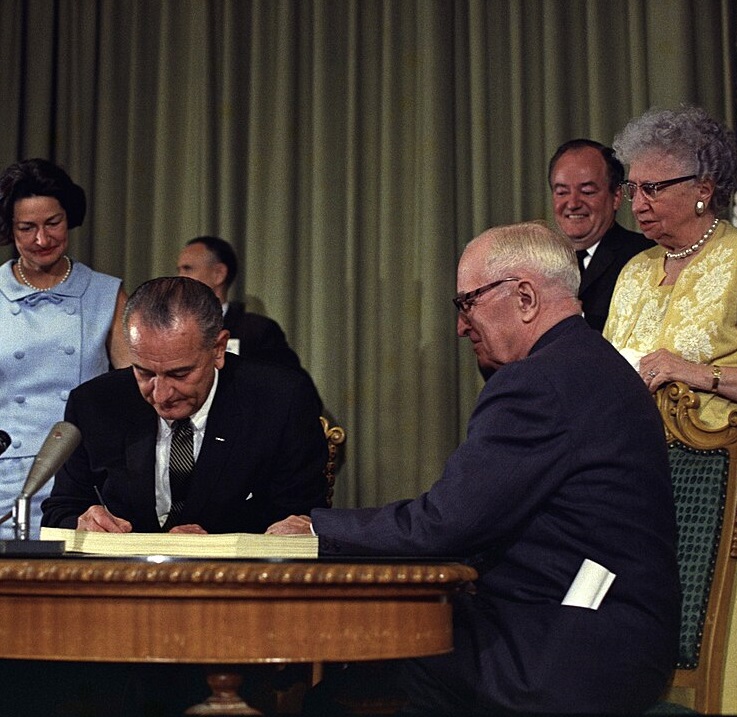
By Paolo Monti – Available in the BEIC digital library and uploaded in partnership with BEIC Foundation.The image comes from the Fondo Paolo Monti, owned by BEIC and located in the Civico Archivio Fotografico of Milan., CC BY-SA 4.0, https://commons.wikimedia.org/w/index.php?curid=48057924
And because the major U.S. social media companies are headquartered in California. But I digress.
So why do they say that children need protection?
Recent research has shown devastating mental health effects associated with children and young adults’ social media use, including increased rates of depression, anxiety, suicidal ideation, and self-harm. The advent of dangerous, viral ‘challenges’ being promoted through social media has further endangered children and young adults.
Of course one can also argue that social media is harmful to adults, but the New Yorkers aren’t going to go that far.
So they are just going to protect the poor vulnerable children.
CC BY-SA 4.0.
This post isn’t going to deeply analyze one of the two bills the quartet have championed, but I will briefly mention that bill now.
The “Stop Addictive Feeds Exploitation (SAFE) for Kids Act” (S7694/A8148) defines “addictive feeds” as those that are arranged by a social media platform’s algorithm to maximize the platform’s use.
Those of us who are flat-out elderly vaguely recall that this replaced the former “chronological feed” in which the most recent content appeared first, and you had to scroll down to see that really cool post from two days ago. New York wants the chronological feed to be the default for social media users under 18.
The bill also proposes to limit under 18 access to social media without parental consent, especially between midnight and 6:00 am.
And those who love Illinois BIPA will be pleased to know that the bill allows parents (and their lawyers) to sue for damages.
Previous efforts to control underage use of social media have faced legal scrutinity, but since Attorney General James has sworn to uphold the U.S. Constitution, presumably she has thought about all this.
Enough about SAFE for Kids. Let’s look at the other bill.
The New York Child Data Protection Act
The second bill, and the one that concerns me, is the “New York Child Data Protection Act” (S7695/A8149). Here is how the quartet describes how this bill will protect the poor vulnerable children.
CC BY-SA 4.0.
With few privacy protections in place for minors online, children are vulnerable to having their location and other personal data tracked and shared with third parties. To protect children’s privacy, the New York Child Data Protection Act will prohibit all online sites from collecting, using, sharing, or selling personal data of anyone under the age of 18 for the purposes of advertising, unless they receive informed consent or unless doing so is strictly necessary for the purpose of the website. For users under 13, this informed consent must come from a parent.
And again, this bill provides a BIPA-like mechanism for parents or guardians (and their lawyers) to sue for damages.
But let’s dig into the details. With apologies to the New York State Assembly, I’m going to dig into the Senate version of the bill (S7695). Bear in mind that this bill could be amended after I post this, and some of the portions that I cite could change.
This only applies to natural persons. So the bots are safe, regardless of age.
Speaking of age, the age of 18 isn’t the only age referenced in the bill. Here’s a part of the “privacy protection by default” section:
§ 899-FF. PRIVACY PROTECTION BY DEFAULT.
1. EXCEPT AS PROVIDED FOR IN SUBDIVISION SIX OF THIS SECTION AND SECTION EIGHT HUNDRED NINETY-NINE-JJ OF THIS ARTICLE, AN OPERATOR SHALL NOT PROCESS, OR ALLOW A THIRD PARTY TO PROCESS, THE PERSONAL DATA OF A COVERED USER COLLECTED THROUGH THE USE OF A WEBSITE, ONLINE SERVICE, ONLINE APPLICATION, MOBILE APPLICA- TION, OR CONNECTED DEVICE UNLESS AND TO THE EXTENT:
(A) THE COVERED USER IS TWELVE YEARS OF AGE OR YOUNGER AND PROCESSING IS PERMITTED UNDER 15 U.S.C. § 6502 AND ITS IMPLEMENTING REGULATIONS; OR
(B) THE COVERED USER IS THIRTEEN YEARS OF AGE OR OLDER AND PROCESSING IS STRICTLY NECESSARY FOR AN ACTIVITY SET FORTH IN SUBDIVISION TWO OF THIS SECTION, OR INFORMED CONSENT HAS BEEN OBTAINED AS SET FORTH IN SUBDIVISION THREE OF THIS SECTION.
So a lot of this bill depends upon whether a person is over or under the age of eighteen, or over or under the age of thirteen.
And that’s a problem.
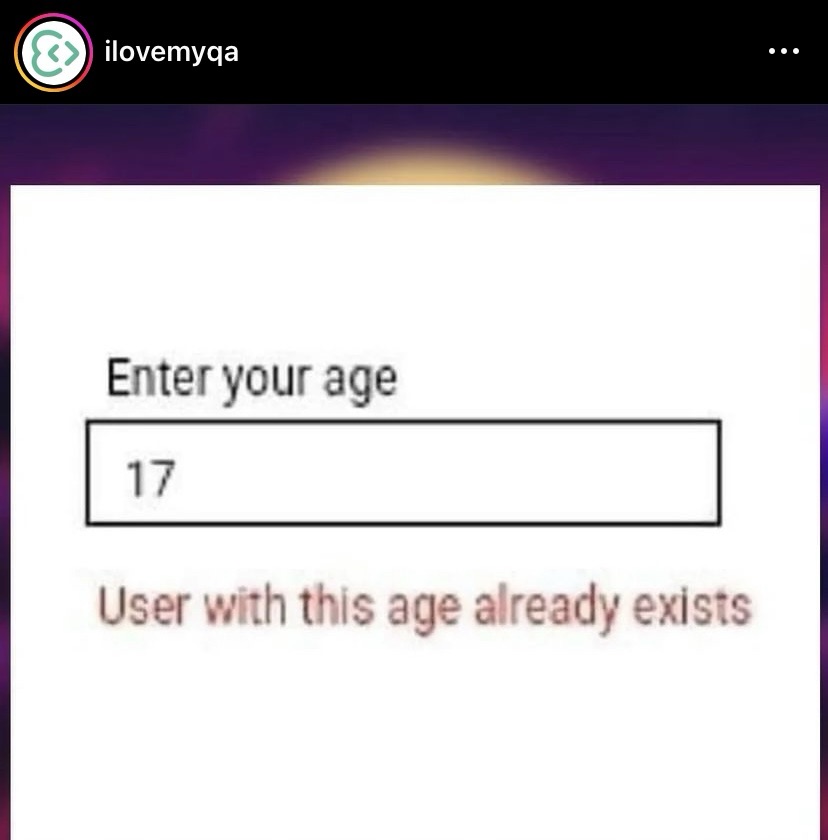
How old are you?
The bill needs to know whether or not a person is 18 years old. And I don’t think the quartet will be satisfied with the way that alcohol websites determine whether someone is 21 years old.
Attorney General James and the others would presumably prefer that the social media companies verify ages with a government-issued ID such as a state driver’s license, a state identification card, or a national passport. This is how most entities verify ages when they have to satisfy legal requirements.
For some people, even some minors, this is not that much of a problem. Anyone who wants to drive in New York State must have a driver’s license, and you have to be at least 16 years old to get a driver’s license. Admittedly some people in the city never bother to get a driver’s license, but at some point these people will probably get a state ID card.
However, there are going to be some 17 year olds who don’t have a driver’s license, government ID or passport.
And some 16 year olds.
And once you look at younger people—15 year olds, 14 year olds, 13 year olds, 12 year olds—the chances of them having a government-issued identification document are much less.
What are these people supposed to do? Provide a birth certificate? And how will the social media companies know if the birth certificate is legitimate?
But there’s another way to determine ages—age estimation.
How old are you, part 2
As long-time readers of the Bredemarket blog know, I have struggled with the issue of age verification, especially for people who do not have driver’s licenses or other government identification. Age estimation in the absence of a government ID is still an inexact science, as even Yoti has stated.
Our technology is accurate for 6 to 12 year olds, with a mean absolute error (MAE) of 1.3 years, and of 1.4 years for 13 to 17 year olds. These are the two age ranges regulators focus upon to ensure that under 13s and 18s do not have access to age restricted goods and services.
So if a minor does not have a government ID, and the social media firm has to use age estimation to determine a minor’s age for purposes of the New York Child Data Protection Act, the following two scenarios are possible:
An 11 year old may be incorrectly allowed to give informed consent for purposes of the Act.
A 14 year old may be incorrectly denied the ability to give informed consent for purposes of the Act.
Is age estimation “good enough for government work”?
I constantly preach that firms should not adopt “me too” messaging. Ideally, a firm’s messaging should not copy its competitors, but should instead state why the firm is better than all others, and why all the other firms are worthless in comparison.
But when a firm differentiates itself, there is always a danger that the firm will forget one important thing: how will the customersreact to the firm’s differentiated messaging? Will the differentiation turn the customers off?
Trust me, it can happen.
A multinational’s great idea that backfired
Some time ago, I was working for a multinational firm that clearly differentiated itself from all of its competitors. This multinational had been around for some time and was known for its particular tone.
I’m not going to reveal the name of the particular multinational firm, or the tone it radiated.
The IBM illustrative example
But the tone used by that multinational was just as powerful as the tone IBM exuded in the mid-20th century.
In the 1950s and 1960s, “Big Blue” meant a particular style.
The men of IBM didn’t wear facial hair and wore only white shirts….IBM wanted to make sure they did not offend a prospect or a customer. Research had shown them that some people don’t like facial hair…so no facial hair. Research had also shown that people assume a degree of professionalism with a white shirt that may not be assumed if a person wore a blue or yellow shirt. So white shirts it is!
Let’s leave the theoretical example and return to the situation at my distinctive multinational.
Now the multinational that employed me long ago didn’t have a “blue suit-white shirt” dress code, but in other ways the multinational had a distinctive tone that radiated from the executive level down to the ranks of the worker bees like myself.
We all embodied this tone.
We spoke in this tone.
And our marketing messages also spoke in this tone, regardless of the market segment to which our marketers were speaking.
Even if the market segment had a very different tone than the one the multinational was projecting. (Imagine the Military Police selling the Vietnam War in Haight-Ashbury.)
By By S.Sgt. Albert R. Simpson. Department of Defense. Department of the Army. Office of the Deputy Chief of Staff for Operations. U.S. Army Audiovisual Center. – This tag does not indicate the copyright status of the attached work. A normal copyright tag is still required. See Commons:Licensing., Public Domain, https://commons.wikimedia.org/w/index.php?curid=1111279
When my multinational sent its marketing collateral out to prospects who used a very different tone than that used by the multinational, the prospects hated it. The marketing department received multiple complaints from salespeople whose clients were repelled by the material.
One of my coworkers surveyed the negative campaign reaction with dismay. The coworker had joined the company after the marketing tone was adopted. My coworker asked a simple question: “What type of customer focus group testing was conducted before we used this tone on a marketing campaign?”
“We didn’t conduct any focus group testing,” my coworker was told. “We didn’t need any.”
In retrospect, I guess we did need to test the messaging before we delivered it.
Four ways to balance customer focus and a firm’s distinctive messaging
If you’ve been reading recent Bredemarket blog posts, you’re probably not surprised that this is turning into yet another blog post aboutcustomer focus. But how do you balance a firm’s distinctive differentiators with a focus on its customers?
Fourth, your messaging needs some smarts. Just because your prospect bought a refrigerator on Monday doesn’t mean that they’ll want a second refrigerator on Tuesday.
If you follow these and similar steps, then it (almost) doesn’t matter if your firm’s generic messaging is antithetical to the values of your prospects. Because your prospects won’t get generic messaging, but messaging that is focused for them.
No, not THAT type of engagement, although there are parallels between engagement with a person and engagement with content.
In the same way that content impressions can move a prospect to awareness, content engagement can move a prospect to consideration. And even if you don’t believe in the traditional funnel, it’s obviously a good idea to get prospects to engage with your content.
Morisette’s six-step strategy
Jessica Morisette of JM Virtual Solutions recently wrote a blog post entitled “Increase Instagram Engagement With This One-Hour Strategy.” Although I’m sure that she wouldn’t object if you spent 59 or 61 minutes (rather than an exact 60 minutes) on daily engagement, and she DEFINITELY wouldn’t mind if you took some of her techniques and applied them to social media platforms other than Instagram.
Personally, I started trying to put her engagement strategy in practice over the weekend, both on Instagram and (with some adaptation) on LinkedIn. Depending upon time, I may try to apply it on your favorite social platform.
Building engagement on Instagram involves creating a genuine connection with your audience. It’s not just about getting likes and comments; it’s about creating meaningful interactions that lead to brand loyalty and growth. To achieve this, you need a strategy that focuses on targeted accounts, not just random.
She then lists six steps to her suggested media engagement strategy. Now I could rip her off and reprint all six here, but then you wouldn’t read her post (which you should do).
So instead I’m going to briefly cover her step 5, engaging with your peers and community.
Skipping to step 5
After devoting time to particular portions of the Instagram platform, Morisette suggests that you start engagement with particular segments. One of those segments is peers and community.
Why?
Supporting others in your niche can encourage them to reciprocate.
I know that content creators are often perceived to be in competition with other content creators, but since each of us is targeting different ideal clients, that competition is less than you think. Since content creators are all in this together, there’s a clear benefit from us supporting each other.
In fact, Morisette believes that this mutual support is so important that she recommends that you engage with your peers and community BEFORE you engage with your ideal client (step 6).
Sounds reasonable, but Faucheux points out an inherent flaw in this approach.
[T]he perspective considered would be based on how I would respond if I were placed in that situation, which is still anchored in my own personal biography and is therefore subject to my own personal biases.
The basic concept behind “voice of the customer” calls for you to sell to his or her stated needs. After all, your customers (clients/prospects) know their situation and what they need. Right?
But this assumes that the customer knows what they need. Often they may not know what they truly need.
To stand out from the crowd, you need a different approach. You need a way to lay the groundwork for change by telling prospects something they don’t already know about their status quo situation.
I won’t go as far as McDonald and say that VOC should be ignored. Instead, VOC should be augmented by probing questions—and responses—that go beyond “we need a better mousetrap” surface solutions.
For a long time, each ML (machine learning) model operated in one data mode – text (translation, language modeling), image (object detection, image classification), or audio (speech recognition).
However, natural intelligence is not limited to just a single modality. Humans can read and write text. We can see images and watch videos. We listen to music to relax and watch out for strange noises to detect danger. Being able to work with multimodal data is essential for us or any AI to operate in the real world.
As you can see from the title, Huyen uses an acronym “LMM” that is very similar to another generative AI acronym, “LLM” (large language model).
So what’s the difference?
Not all multimodal systems are LMMs. For example, text-to-image models like Midjourney, Stable Diffusion, and Dall-E are multimodal but don’t have a language model component.
If you’re interested in delving into the topic, Huyen’s long three-part post covers the context for multimodality, the fundamentals of a multimodal system, and active research areas.
Whenever I see these pieces that proclaim that the author can help you brainstorm x ideas for content, I ignore them. For better or worse, I have no problem coming up with content ideas.
And when I come up with the content ideas, I don’t just use them in one piece of content. I’ll use the idea in several pieces of content. Yes, I love repurposing.
I think I’ve set a new record for myself over the last few days by creating 31 pieces of content from a single idea.
The post doesn’t aim to tell you how you should create and reshare your content, but perhaps while you’re reading the post you may get some fresh ideas that fit your own working practices.
Three years of preparation
Before you can share content in numerous places, you need numerous places to share your content. It’s obvious, but it’s true. After all, it would be repetitive to post the exact same content multiple times in the Bredemarket blog.
So since I started Bredemarket in 2020, I not only developed the Bredemarket blog, but I have also developed (or made use of) other social platforms.
If you’re starting out in business, you’ve probably heard the advice that as your business branches out into social platforms, you shouldn’t try to do everything at once. Instead you should make sure that your business offering is really solid on one platform before branching out into others.
Yes, I’ve been naughty again and didn’t listen to the expert advice.
Four pages on LinkedIn, not counting my personal profile (we’ll get to my personal profile later).
Four pages/groups on Facebook.
Other image/text platforms such as Instagram and Threads.
Two video-only platforms: TikTok and YouTube.
Numerous audio outlets for my podcast.
My personal X account.
To the content marketing experts that say that I should just concentrate on LinkedIn and ignore everything else, note that I then have a 0% chance of reaching non-LinkedIn users. Who knows? Perhaps that TikTok video may result in a conversion that I couldn’t have made otherwise.
One idea
The idea that struck me last weekend was not original to me, and it’s been bouncing around in my head (and on these pages) for some time now. But I thought I’d reword it in a different way. After a few tweaks, I came up with the following statement:
Your Customers Don’t Care About Your Product’s Technology
As you will see, I continued to tweak the statement, but that’s the one that I put in my Asana “Content Calendar” project.
The Asana task that would eventually result in this blog post. Only the first subtasks are shown; as you will see, there are many more.
As I would subsequently reflect, I thought that companies knew that you need to focus on the customer rather than focusing on yourself, but I see too many companies that are self-focused in their marketing. They emphasize the amazing technology features of their product.
I want to put a stop to that, and if necessary I will help companies create customer-focused marketing materials. For a fee, of course.
But enough about me. Let’s illustrate how that one idea can expand into multiple content pieces.
31 pieces of content
So now I had to write about how customers don’t care about your product’s technology.
An image, sourced from Wikipedia, of a technologist doing technology things.
An image, designed by Freepik, of a customer ignoring someone prattling on about their technology.
The “customer focus” illustration that I have used frequently in the past.
An animated GIF that beckoned readers to the landing page, described below. The GIF includes the first two images listed above, plus a third from the landing page itself.
Most importantly, the post included all the text that made my original point (“Do you know why your prospects are ignoring you? Because they don’t care about you. It’s all about them.”), along with my argument for customer focus, and my concluding call to action to find out how to “Create Technology Content That Converts.”
Content 2: Landing page
And “Create Technology Content That Converts” was the title of my landing page. Often I put the call to action on the same page as the original point, but sometimes (as in this case) I separate the call to action for a more focused presentation. Plus I have the option of having multiple blog posts point to the same landing page. This post points to the landing page, for example (click the GIF above or one of the other links).
The landing page dug more deeply into why and how Bredemarket can help you create a customer-focused message, talking about the questions I ask, the types of content I can create, and the process.
Once all this was done, everything was set. People who read the blog post could (if so inclined) go to the landing page, and people who read the landing page could (if so inclined) contact me.
But only if they saw the blog post in the first place.
If they don’t find the post on Google or Bing, and if they’re not already subscribing to the blog, then how will they get to the blog post?
Content 3, 4, 5, 6, 7, and 8: Information pages
There are numerous themes that continuously pop up in the Bredemarket blog, and I have created “information pages” (pillars) that link to all of the content that I have written on these themes.
Now perhaps you won’t do all of this, but if there’s a place on your website where you should mention your new blog post, be sure and do it.
For example, if you wrote a blog post about Topic X in 2021, and you’re readdressing Topic X in a 2023 post, then go back and update the 2021 post to say that you have new thoughts on Topic X. Then the people who find your 2021 post can go to the new post and get the latest information.
Content 9: Audio podcast
My podcast is more accurately described as a mini-podcast, because each episode is usually only 1-2 minutes long. Perhaps someday I’ll create hour-long episodes, but not today.
And on Sunday I created a 2-minute episode with a new take. After noting (as I said above) that sometimes we know things that people don’t know, I declared:
I then described a really bad General Electric press release that focused on GE technology and not on customer needs.
Then I plugged the blog post, which was linked in the episode description. And I resued the “technologist doing technology thinks” image from the blog post.
Now I only list this as one piece of content, but really it’s multiple pieces of content. Not only can you access the episode on Spotify for Podcasters (formerly Anchor), but you can also access it on Spotify itself, Apple Podcasts, and numerous other podcast hosting services.
After this, I returned to the blog post itself and looked for other ways to share it.
Content 10, 11, 12, 13, 14, 15, 16, and 17: Bredemarket LinkedIn and Facebook pages, showcase pages, and groups
Because the blog post explicitly mentioned “technology” in the title, the best fit for a reshare of the blog post was on the Bredemarket Technology Firm Services LinkedIn showcase page (reshare here) and Facebook group (reshare here).
Why do I have a myriad of LinkedIn and Facebook outlets?
Because often people who are interested in technology don’t care about identity, and people who are interested in the Inland Empire don’t care about technology, and people who care about Bredemarket in general don’t care about every identity company reshare that I post.
And of course, some people who love LinkedIn hate Facebook, and some people who love Facebook hate LinkedIn.
So I could have just shared this to the technology outlets, but this particular post had a broader application. Inland Empire businesses, identity companies, and general marketers all have the problem of referring to self rather than the customer.
So I reshared the original technology shares to the other relevant groups.
You know how the Instagram experts say that you should post reels? Or you should post carousels? Or whatever?
I say that you should post a healthy balance of all sorts of things.
I wanted to reshare the blog post on Instagram, so I posted an Instagram carousel post using the two images from the blog post and the “money” image from the landing page.
Even though Instagram is a terrible platform to reshare content on other platforms, because the links aren’t clickable.
Unless you reshare the post as a story and use the “link” feature to embed a link.
Content 19 and 20: Bredemarket Threads and JEBredCal X
Oh, and there are two other places where I reshared the link to the blog post:
As a xeet or whatever tweets are called these days. (This is not an official Bredemarket X account, but my “professional” X account where I share Bredemarket stuff and other stuff.)
So that encompassed the first set of content reshares. But before I go on…
Content 21: LinkedIn reshare of podcast
All of the stuff listed above was stuff that I meticulously planned by listing subtasks to the original Asana task “Your Customers Don’t Care About Your Product’s Technology.”
But I forgot that I deviated from Asana and also shared a link to the podcast in the Bredemarket Technology Firm Services LinkedIn showcase page.
Some people are horrified that I deviated from Asana and didn’t record this important share. (And they’ll really be horrified later in this post when I create another piece of content and don’t log it in Asana.)
Others are horrified that I put all the other stuff in Asana in the first place.
As for me, well, I got the content out. Cool.
But the blog post wasn’t enough. I needed to convey the same message in a different way, for those who think words and stuff aren’t cool.
Content 22, 23, 24, and 25: The short
In the same way that I created an audio podcast that made the same points as the blog post (while linking to the blog post), I wanted to create a video vertical short that did the same thing.
So I headed out to the Southern California Edison Euclid Substation.
I then stood in front of some very technological stuff, and filmed 27 seconds of me talking about the prospect’s problems…and your problem…and how Bredemarket can solve your problem.
By the time I was finished, the video short was available on:
So now both WordPress and Instagram had two pieces of content that kinda sorta said the same thing. But this is good. Maybe some people like the video version, while others like the text version. I’ll catch them one way or ther other.
But before I actually shot the video at the SCE Euclid Substation…
Content 26: Instagram Live/Reel
…I was scouting out locations. (If you know the Talking Heads song “Found a Job” you’ll recognize the phrase.)
When I arrived at the SCE Euclid Substation, I walked around the south and west sides of the substation, looking for the best place to shoot my video.
And I was broadcasting on Instagram Live as I was doing this, offering my adoring fans a rare “behind the scenes” look at Bredmarket activities. And, incidentally, proving that Bredemarket behind the scenes is pretty boring.
But the Instagram Live session was recorded, and was posted as a reel a couple of days before my video short was posted.
I don’t know if it made a huge difference in the subsequent reception of the short, but one of my relatives liked the “behind the scenes” look so that’s good.
So those 26 pieces of content addressed Bredemarket’s views on customer focus and benefits.
But my life is not confined to Bredemarket. Time for one huge repurpose.
Content 27: jebredcal blog post
At the same time that I’m asking Bredemarket prospects to contract with me, I’m asking technology companies (including identity companies) to hire me as a Senior Product Marketing Manager.
And the same message can, with some adaptation, be delivered to hiring companies.
If you compare the jebredcal blog post with the original Bredemarket blog post, you can see some clear similarities…with some noticeable differences. For example, I don’t ask employers to use Bredemarket’s calendly, email, or web messaging channels. I use my personal email and my LinkedIn profile messaging capability instead.
Now that the blog post was written, I was ready to share it on LinkedIn where the employers are. (No Facebook. No TikTok.)
Correction: I was ALMOST ready to share a link to the post on LinkedIn. I had to complete one thing first.
Content 28: Personal short
I decided that on the day before I shared the post on LinkedIn, I’d create a personal video short that introduced the content.
But this one, rather than taking place in front of a cool electrical facility, would be a behind-the-scenes view of Bredemarket’s world headquarters. Since the city of Ontario restricts you from viewing this yourself (restriction 3), this is the only way that you will ever see Bredemarket’s world headquarters.
Exciting?
No, completely boring.
But I did it anyway, and posted the video on LinkedIn yesterday. (And if you look to the left, you can see Bredemarket’s business license as required by restriction 1.)
Content 29: The LinkedIn share of the jebredcal post
Once I realized that I was going to write one blog post for Bredmarket prospects and one post for potential employers, I decided to write a third post that talked out how you create different content for different target audiences. As I noted above, the two pieces of content have significant similarities, but also significant differences.
But as I thought about it, I thought it would be more important to illustrate how you could take a single idea and repurpose it as 30 different pieces of content.
Well, 30 so far. I still have to figure out how and where to reshare THIS blog post…
Content 31: LinkedIn post about a job rejection
Stop the presses!
And here’s another EXCITING behind-the-scenes look at how Bredemarket works!
By Tuesday afternoon (October 10, 2023), I had substantially completed writing this blog post on “How I Expanded 1 Idea Into 30 Pieces of Content.” But since there was no huge rush to publish the post—after all, I had just published 29 other pieces of content over the past few days—I figured I’d take advantage of the opportunity to “sleep on it” and look at the post one more time before publication.
Then something happened early Wednesday morning.
Every day, potential employers tell thousands of job candidates that they are “moving in a different direction.” By Original: Jack Ver at Dutch Wikipedia Vector: Ponor – Own work based on: Plaatsvector.png by Jack Ver at Dutch Wikipedia, CC BY-SA 4.0, https://commons.wikimedia.org/w/index.php?curid=95477901
I received a “you have not been selected for this position” email from a potential employer. I had only applied for the position two days earlier, on Monday, right in the midst of all of this content creation.
If you are one of the lucky talent acquisition professionals who is still employed, there is ONE CRITICAL THING that you MUST impress upon your employers.
Please tell your employers NOT to list positions as “remote/hybrid.”
That’s kind of like listing a food as “vegan/beef.” Is it vegan, or is it beef? It’s a mystery until you take a bite, and there’s a 50% chance you will be disappointed or horrified with what you find.
You may ask what a LinkedIn post about “remote/hybrid” job listings has to do with incorrectly-focused product marketing messaging.
It’s all in the call to action. Those who read to the end of the post encountered these words.
Anyway, if you’ve read this far and are seeking an experienced identity/biometrics/technology Senior Product Marketing Manager for a #remote position (or a position within 25 miles of Ontario, California), please message me. The linked post below includes my contact information, as well as my philosophy on product marketing messaging.