Scamicide recently talked about a “free piano scam” where the scammer gifts the victim a piano for free—if the victim pays delivery costs northwards of $600—in advance. Guess what never gets delivered?
The post goes on to say:
“A big indication that this is a scam is that the moving company asks for payment by Zelle or cryptocurrencies. No legitimate business asks for payment by Zelle or cryptocurrencies, but scammers often do because of the anonymity for these types of payments and the difficulty in tracing or reversing payments made in this manner.”
Well, Bredemarket doesn’t REQUIRE Zelle…but I take it. (No crypto.)
The relative’s outpatient surgery was a success, and recovery is progressing.
Meanwhile, I met with one client and advanced several client product marketing projects, including a requirements document (done those for years), some product talking points (done those for years), a price/cost/supplier exercise (done those for years), and a project status report (done those for years).
I also published four Bredemarket posts (including this one) and the usual assortment of social media content on various channels (with the exception of one).
U.S. persons should pay special attention to my coverage of IDGA’s DoD/DHS border security report (blog, Substack, elsewhere).
Among the available downloads for the Institute for Defense and Government Advancement’s (IDGA’s) upcoming Border Technology Summit is one entitled “Tracking 2025 Changes to U.S. Border Security Policy.”
“In conjunction with a new administration in the White House, operations on U.S. borders have shifted drastically in 2025. Figures from Customs & Border Patrol (CBP) show apprehensions at U.S. borders are higher than they were at this time a year ago, and a recent travel ban has restricted entrance into the U.S. for citizens from 12 countries.
“In its first six months, the Trump administration has moved quickly to mitigate what the White House is calling an “invasion” taking place on the southern border. On Inauguration Day, January 20th, the new administration moved quickly to sign a handful of new policies directed towards American borders. This report will highlight how executive orders, CBP mission areas, and DoD actions on the southern border have established a new normal for American border security. The first section will look at the instructions explicitly laid out in the executive orders signed by President Trump.
“If you are interested in learning more about the future of border security, register for IDGA’s Border Technology Summit taking place September 23-24 in San Diego, California. The two-day summit provides a forum to explore the latest advancements in border security technology. This year, we are focusing on engaging our audience with high-level discussions surrounding advancements in biometrics, non-intrusive inspection, smart walls, current and future operations of border security, and much more.”
Back in May 2021 I was in the midst of ghostwriting case studies for a Bredemarket client. I didn’t know at the time that I’d end up creating a dozen of them.
At the time I wrote about how I obtained the raw material for the case study.
“As part of the work that I do for one of my clients, I participate in half-hour interviews with the client’s customers and ask them questions about the client’s software. Before the interview begins, the client asks the customer for permission to record the conversation. After the interview is over, I can then refer to that recording to extract nuggets of information.”
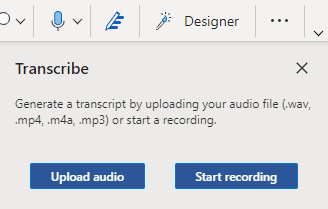
Except that I didn’t refer to the recording, but to a TRANSCRIPT of the recording in Microsoft Word. I describe how I created the transcript here.
But obtaining the raw interview material is only the beginning.
Now you need to extract relevant text and fit in into the STAR method: Situation, Task, Action, and Result.
No you don’t.
Rather than arrange our case studies into four parts, my client and I agreed on a three-part outline that effectively combined “S” and “T.” Our outline? Problem, Solution, and Result. The STAR people were horrified, but we didn’t care. The client was a maverick anyway.
I should note that before the interview took place, the client had already provided me with a general idea of what its end customer faced: the problem, the application of the client’s solution, and the results that solved the problem.
So we already knew what we wanted the case study to say, and the interview let us concentrate on the sexy points and correct any facts we had wrong before the interview. Yes, the client’s software delivered the solution in 8.675309 seconds. No, it didn’t use laser technology to do it.
So when I drafted the case study, I wrote it in the problem, solution, results format. And then I increased its effectiveness by sprinkling customer quotes throughout the case study.
Adapted slightly.
Since the original transcribed text looked like this:
“(SPEAKER 3) So then I um submit the search and the system gave me a candidate list pretty quickly like in 5 seconds or so excuse me I still got this cold sorry and um the boyfriend was second on the list.”
In my draft the raw text was reworded ever so slightly.
“According to Sgt. Preston of the Yukon Detachment, ‘I submitted the face search to SuperInvestigator, and the system gave me a candidate list in 5 seconds. Connie’s boyfriend was second on the list, giving us an investigative lead for further analysis.’”
(Because you ALWAYS have to treat facial recognition results as investigative leads.)
Once my text was combined with the end customer’s quotes and the client’s graphics, we had a collection of powerful case studies that resonated with the client’s prospects. Because bad boyfriends are in many jurisdictions.
What about your prospects?
So that’s how my client and I worked together to create effective case studies.
“From Conversation to Conversion: Leveraging Interview Transcripts for Marketing Magic
“Abstract: The spoken word holds immense value for your marketing content, especially with the rise of transcription tools. This post examines how to transform raw audio from customer interviews into compelling case studies, testimonials, and other marketing assets. We’ll discuss the process of extracting key insights and transforming them into persuasive written content, bridging the gap between customer conversations and tangible marketing results.”
As you can see, I avoided some of the wording (“marketing magic”???) but kept the basic idea.
Thanks Danie. And if I’m stuck for future content I have four additional ideas.
“[R]equire the state to verify proof of citizenship when a person registers to vote.”
Require voters to “provide identifications at the polls.”
“Those who vote through mail-in ballots would have to give the last four digits of a government-issued ID such as a Social Security number.”
Let’s go through these…backwards.
Mail-in ballots
The third proposal about authenticating mail-in ballots is silly.
The mere fact that someone knows the last four digits of a Social Security Number does NOT prove that the person is the valid holder of the Social Security Number in question.
Which brings us to the second proposal about requiring a government ID for in-person voting.
I’ve already addressed why this is silly. The short version? Election precinct workers have neither the equipment nor the training to tell whether a government ID is real or fake.
That only leaves the first one, proving citizenship at voter registration. This one is technically feasible; the feds do it all the time. The California Secretary of State could merely adapt the federal I-9 process to the state level; I’m sure Janice Kephart and her company ZipID would love to help the state with that.
Especially since the requirement for election integrity dictates that all of California’s existing voters would need to re-register to prove their citizenship.
All 22+ million of them.
Because if you DO NOT require all California voters to re-register, the whole exercise is pointless.
To hear some people discuss remote work, they lay it on thick on the “work from anywhere” part of it. (Provided that your legal residence is in a jurisdiction where your company or your employer is authorized to conduct business.)
Imagen 4.
You know, “Here I am in a villa on the beach for the week! #livingthenomadlife”
Well, I’ve performed a lot of remote work for IDEMIA, Bredemarket, Incode, and other companies in my day, but usually not in a visitors’ bureau featured location.
Imagen 4.
Here’s where I’ve worked remotely over the last few years:
Spring 2019: a hotel in San Diego, California for IDEMIA’s Public Safety User Conference. The usual routine, spending half my time in our private command center coordinating sessions and speakers, and the other half of my time everywhere else.
Spring 2020-present: my home in Ontario, California. IDEMIA sent us home during COVID, where I worked for IDEMIA, then Bredemarket, then Incode, then Bredemarket again. The big highlight of my career was when my 25 square foot working space (as declared for tax purposes) moved from the front bedroom to the middle bedroom.
Fall 2020: a relative’s house in northern Alabama. I made vacation airline reservations before my COVID-related layoff, and it made no sense to cancel them so I went. It ended up being a working vacation, participating in an interview in which I was quoted in a German language publication, and making connections with two companies that would become Bredemarket clients.
Spring 2023: an office in Mexico City. This was an Incode offsite originally planned for the summer of 2022 but delayed. Many high points, but the low point was an earthquake drill that required us to walk down several flights of stairs…then walk back up those same flights of stairs. This was worse than the real earthquake that happened that week.
Imagen 4.
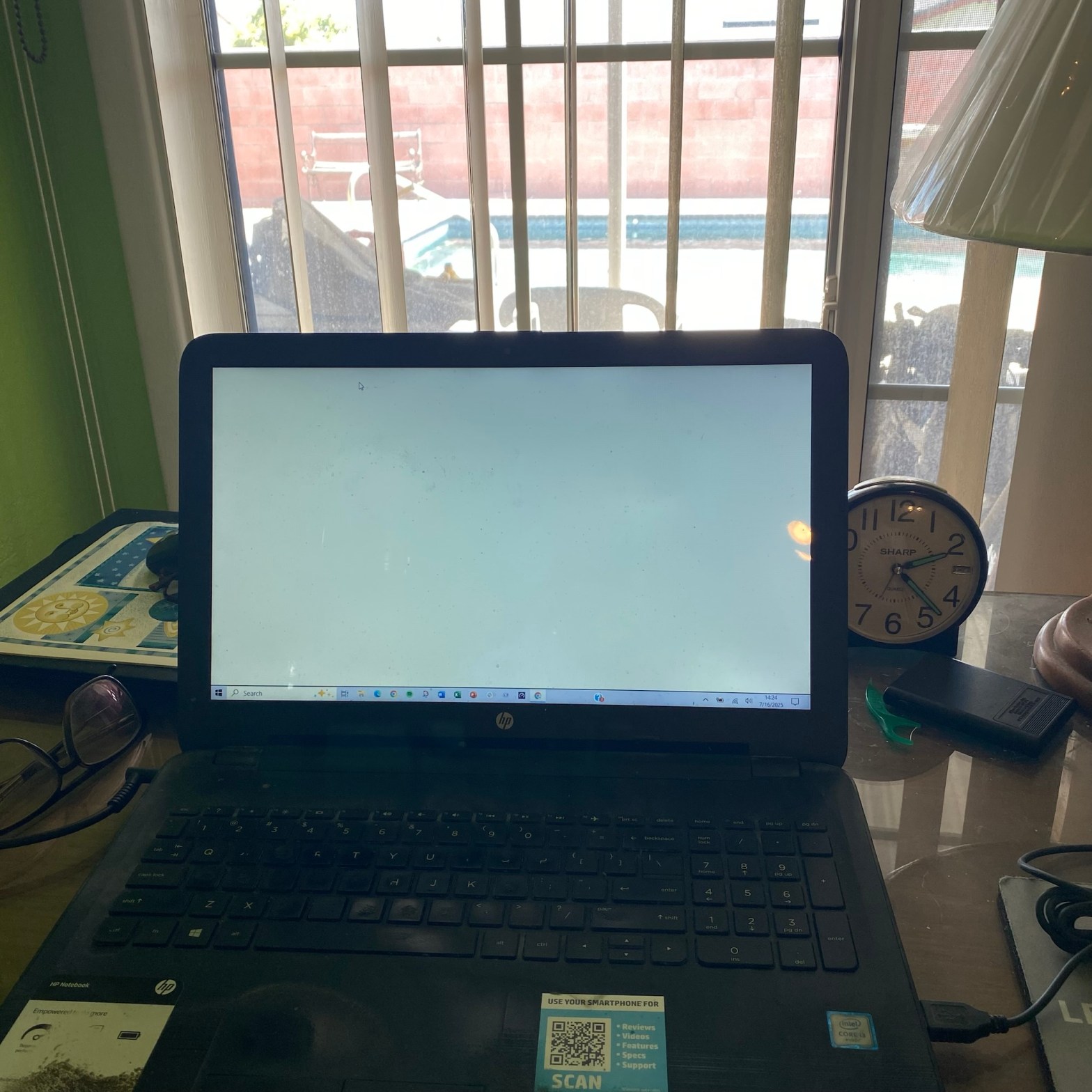
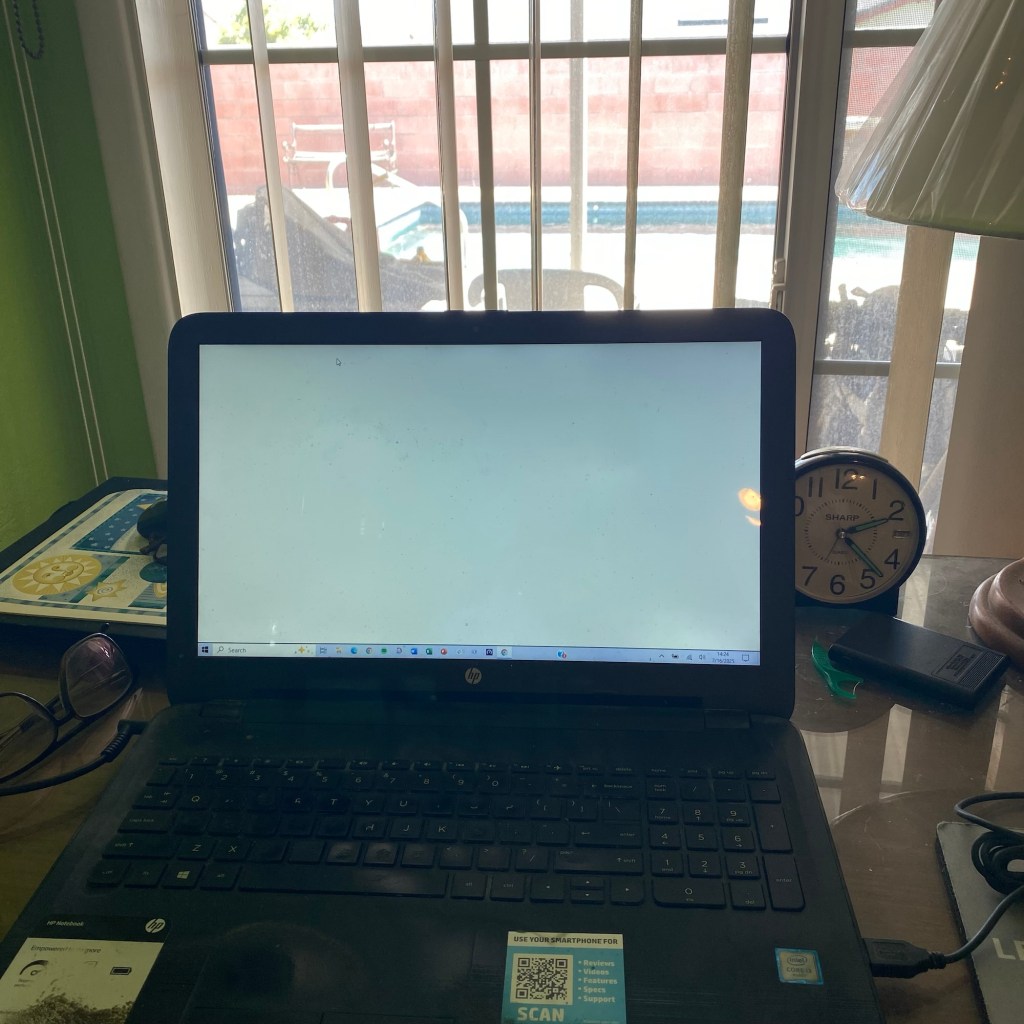
Which brings me to today and my new nomad location, a relative’s house in California. The relative is having outpatient surgery as I type this, and I’m staying overnight until he recovers.
Not exactly the romantic nomad life of exotic locations, but it definitely provides flexibility so that I can continue to work and take care of personal business.
This is a real picture. Fancy, huh?
Only problem: I forgot to bring my swimsuit.
But I will be performing some client work over the next two days.
And I could have been performing client work for you, but I guess that will have to wait until I return to my regular 25 square foot remote location. Book a meeting if Bredemarket can help you create content…from any location.
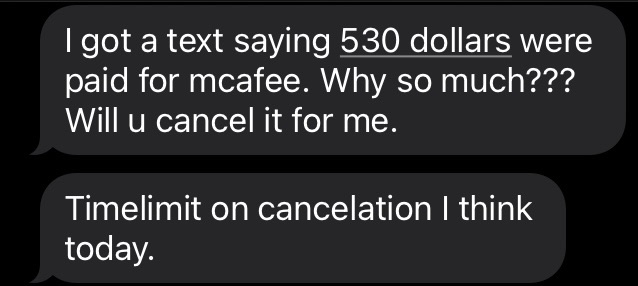
I never saw the text this person received, but you can tell that it claimed to be from McAfee (it wasn’t) and demanded urgent action, presumably asking the recipient to enter PII including financial information.
“We provide the world’s leading news coverage and information on the global biometric technology market via the web and an exclusive daily newsletter. Our daily biometrics updates, industry perspectives, interviews, columns and in-depth features explore a broad range of modalities and methods, from fingerprint, voice, iris, and facial recognition, to cutting-edge technologies like DNA analysis and gait recognition, related identification tools such as behavioral biometrics, and non-biometric identification methods such as identity document verification and telephone forensics. Our coverage touches on all applications and issues dealt with in the sector, including national security, mobile identity, and border control, with a special emphasis on UN Sustainable Development Goal 16.9 to provide universal digital identification and the ID4Africa movement.”
Over the last ten years, there have been two instances in which I have been newsworthy.
2015 with MorphoTrak
The first occurred in 2015, when my then-employer MorphoTrak exhibited an airport gate called MorphoWay at a conference then known as connect:ID. At the 2015 show, I demonstrated MorphoWay for Biometric Update’s videographer.
Me at connect:ID, 2015.
“In the video, Bredehoft scans his passport through the document reader, which checks the passport against a database to verify that it is, in fact, a CBP-authorized document.
“Once verified, the gates automatically open to allow Bredehoft to exit the area.”
2025 with Bredemarket
The second occurred ten years later in 2025, when I wrote a guest opinion piece entitled “Opinion: Vendors must disclose responsible uses of biometric data.” As I previously mentioned, I discussed the need to obtain consent for use of biometric data in certain instances, and noted:
“Some government agencies, private organizations, and biometric vendors have well-established procedures for acquiring the necessary consents.
“Others? Well…”
Biometric Update didn’t create a video this time around, but I did.
Biometric vendors…
2035???
So now that I’ve established a regular cadence for my appearances in Biometric Update, I fully expect to make a third appearance in 2035.
Because of my extensive biometric background, I predict that my 2035 appearance will concern the use of quantum computing to distinguish between a person and their fabricated clone using QCID (quantum clone identification).
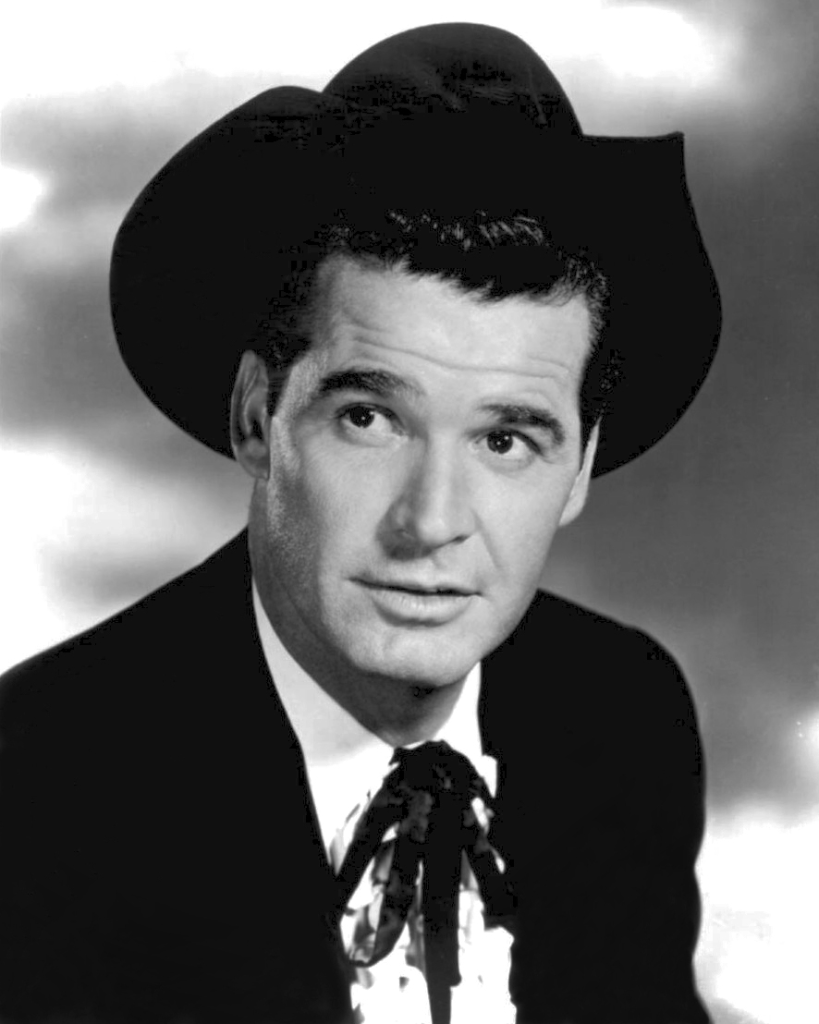
No video yet, because I don’t know what video technology will be like ten years from now. So here’s an old fashioned 2D picture.
My prior post may have given the false impression that Tebra is the only company that employs artificial intelligence to improve the speed and accuracy of electronic health records (EHRs) and electronic medical records (EMRs).
There are actually several companies using AI or other technologies to improve EHR and EMR completion. Here’s a (woefully incomplete) list. Many of these companies also handle other practice management functions required by a medical practice, including intake, telehealth, and payments.












 Bredemarket