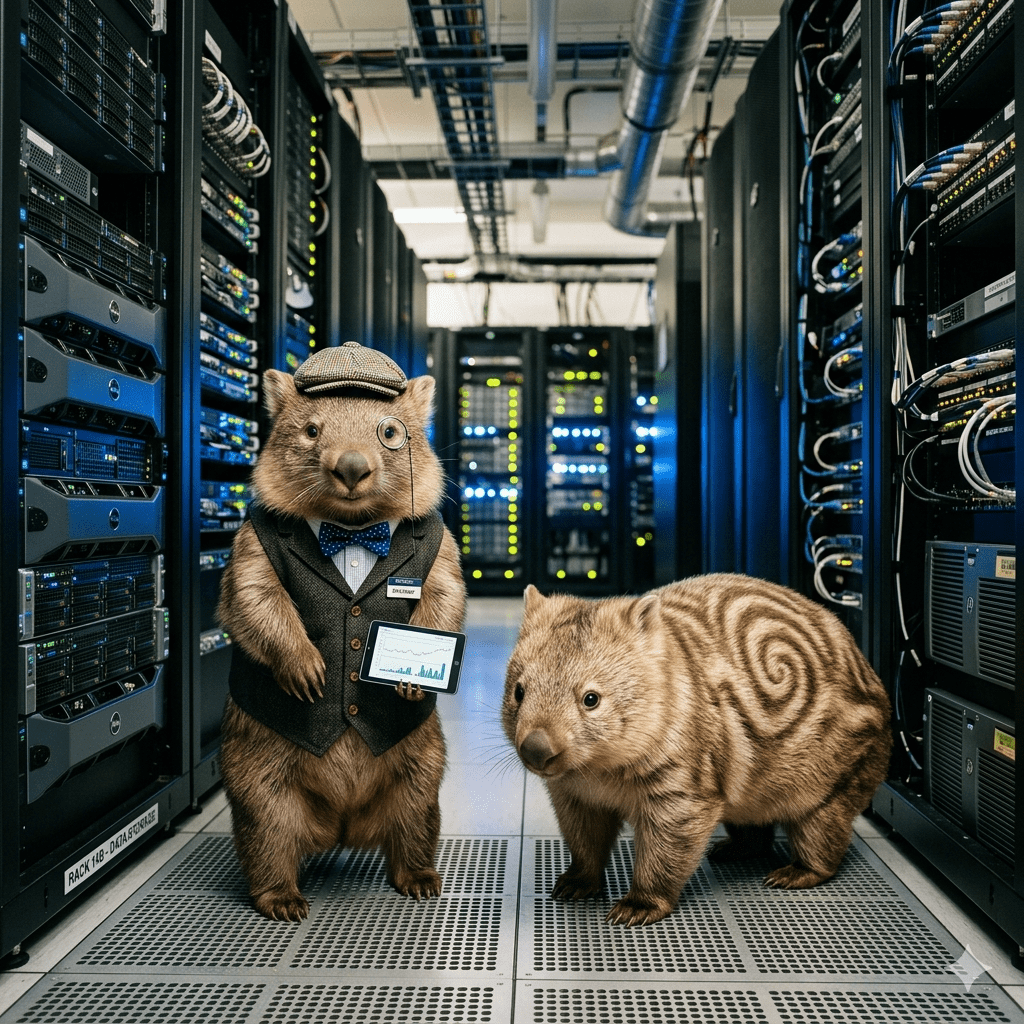
The Continuing Adventures of Will and Chad

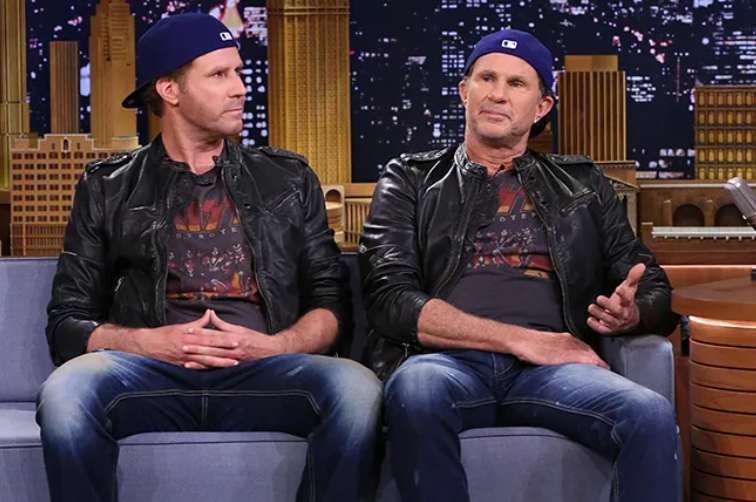
Technically Chad Smith engaged in identity fraud on Saturday Night Live when he started giving Will Ferrell’s monologue.

But no harm was done.

And while the face modality fooled many of us, the voice modality gave Chad away. Score one for multimodal authentication.

IE Tech Firms, Stop Letting Outside Agencies Misread Your Tech

Deploy Inland Empire product marketing that converts.

Expert product marketing offered by Bredemarket in Ontario.

Schedule your free content needs assessment: https://bredemarket.com/mark/

In Biometric Product Marketing, It’s All About the Benefits

How does your biometric product captivate your prospect?

It’s All About the Benefits.

Let Bredemarket, the biometric product marketing expert, help your firm speak to your prospects. Schedule a free meeting.

https://bredemarket.com/mark/

Avoiding False Differentiators

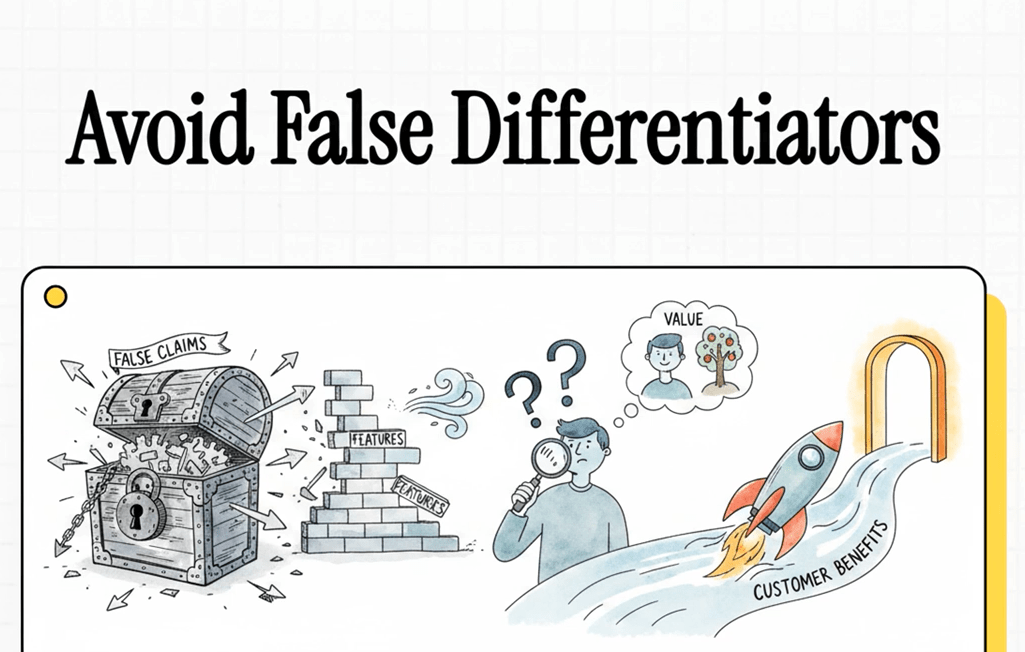
This video is about three common marketing errors made by identity/biometrics companies.

Avoid False Differentiators.

If this seems familiar, that’s because it is based upon a blog post I wrote a month ago.

Google Gemini. From “Top 3 Identity/Biometric Marketing Mistakes: Avoid These False Differentiators.”

For those keeping score, this is Bredemarket’s third NotebookLM video, and the second based upon a Bredemarket blog post. A nice way to repurpose text in video form.

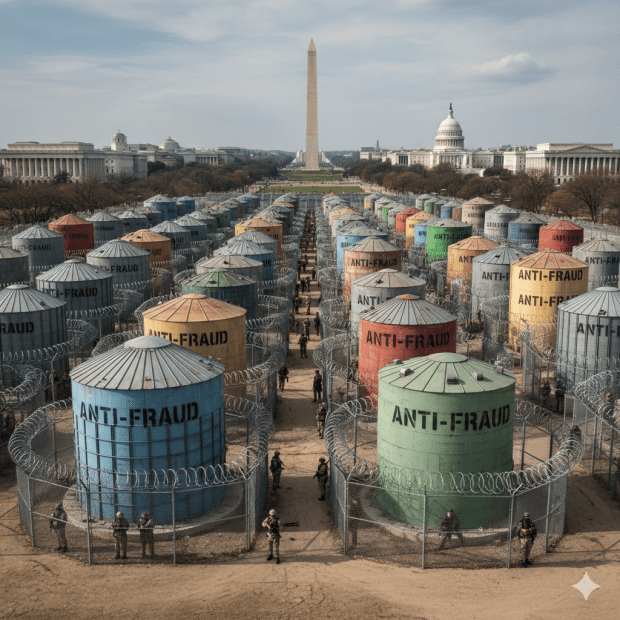
Google Gemini. From “Government Anti-Fraud Efforts: They’re Still Siloed.”

But let’s ask the uncomfortable question. Does NotebookLM’s current video capabilities actually enhance Bredemarket’s own marketing? Sure it gives me another avenue to get my message out, but the common look of NotebookLM output results in a message that is…not differentiated.

There are some customization options when creating videos, so maybe I should explore those more.

Anyway, this is on YouTube also.

Now We’re Talking About Emojis

Summer Christine Duffield of New York has filed a lawsuit against the Walt Disney Company and related entities regarding alleged privacy violations at Disney’s California theme parks. I’m not sure whether she’s basing it on California law or something else, because the only cited cause of action in the summary of the filing is 28 U.S.C. § 1332 oc Diversity-Other Contract, which basically says that federal courts can handle civil cases over $75,000. Duffield is asking for millions.

At the Disney parks, some entrance lanes use facial recognition. Others do not.

In Biometric Update’s summary, it sounds like an EMOJI is at issue.

“The confusion here is in an emoji or graphic that Disney has used to indicate lanes for which facial recognition will not be used. The graphic shows a face with a slash through it – like no smoking, but for biometric data collection. However, the distinction is minor enough to cause confusion on its own, and Disney has not helped its case by failing to put, on its privacy notice, a working emoji; as it stands, customers may be forgiven for not understanding the difference between the two lanes, which Disney suggests are labeled identically.”

So much for emojis being straightforward. They can be interpreted in many ways. In the picture with this post, Google Gemini thought that the Disney symbol meant something entirely different.

Non-Human Identity Verification

How do you verify non-human identities?

One of the reasons that I titled my ebook “Proving Humanity” is because the six (yes, six) factors of identity verification and authentication that I discuss only apply to identifying humans, and do not apply to non-human identities.

Again, so how do you verify non-human identities?

Cryptographics

One way is via cryptographics. As I discussed previously, the Secure Production Identity Framework For Everyone (SPIFFE) and the SPIFFE Runtime Environment (SPIRE) provide non-person entities with “strongly attested, cryptographic identities.”

Problem solved, right?

As any human who has used a password knows, a single factor can be stolen. And that includes cryptographic factors.

Provenance

Which means that we have to look at provenance. But instead of looking at the provenance of an AI-generated image or video, we are looking at the provenance of an agent that performs actions. The network origin. The environment. The associated attributes. Is the agent running on a specific, authorized, and known virtual machine or container at a specific network address, or is it running…somewhere else?

Behavior

And if you’ve read my book, you know that human identities can be evaluated based upon their behavior (either tendencies or intent). You can also look at the behavior of agents. Is the agent acting at an unexpected time of day? Is it executing an unusually high volume of requests? Is it “scoping out the joint”?

Multi-factor authentication

Again, it’s possible to spoof one factor, but much harder to spoof multiple factors. And that applies to both humans and non-human agents.

Be safe out there.

How Do You Talk About the Product “Plumbing”?

There are a variety of hungry people (target audiences) who look at your product marketing content. And they all have different needs.

  • When talking about an elegant water fountain, some readers only care that the fountain works.
  • Other readers want to know HOW it works. Issues such as support and maintenance are critically important to these folks, but matter little to the first group who simply wants a working fountain.

If you are forced to speak to both target audiences in a single piece of content, how do you do it?

Very carefully.

My preference is to discuss the high-level benefits at the beginning of the content, and save the more technical uptime details and/or feature lists for later in the narrative.

Unless you are ONLY speaking to technical folks, leading with the “plumbing” kills your content. Someone who wants their police agency to solve more burglaries will fall asleep at a mention of 1000 pixels per inch fingerprint resolution or NIST-compliant lower palm print image dimensions.

Stay light, and only go deep to buttress your lightness.

Is It Harder to Monitor Confidential Data Transfers?

In the pre-digital days, if you wanted to transfer confidential data you had to hand-carry it.

Now it is possible to track movements of confidential data digitally.

If data moves off a laptop you can track it.

Google Gemini.

Unless it moves off a laptop or a smartphone that you’re NOT monitoring.

Oops.