Three Levels of Engagement With Your Content Creator

(This post addresses something that I already announced last week to the Bredemarket mailing list. If you are already subscribed to the mailing list, then you can skip this post. If not, (1) subscribe via the http://eepurl.com/hdHIaT link, and (2) read the post below to catch up on what you missed last week.)

There are three ways that your firm can engage with your content creator.

  • On one extreme, your firm can hire the content creator as a full-time employee. This gives you the benefit of content creator availability at any time (or at least during office hours; don’t make TOO many 3:00 am calls to your employees).
  • On the other extreme, your firm can contract with the content creator for a single project. Maybe a blog post. Maybe a white paper. Maybe a tweet. Maybe a proposal responding to a Request for Proposal (RFP).

These extremes satisfy most firms. But a few firms—perhaps yours—need something between these two extremes.

The Drawbacks of Per-Project Content Creation

There are three potential issues with engaging content creators on a per-project basis.

  1. The first issue is work flexibility. If you engage a content creator to write a blog post for you, you get that work done easily. But when you need something else, you need to re-engage the content creator under a separate project.
  2. The second issue is budget predictability. Sure, only engaging content creators on a project-by-project basis helps you save costs (to some extent), but it’s very hard to predict what your future costs will be. Do you think you’ll need two new white papers four months from now, or five months from now.
  3. The third issue is consultant accessibility. You may approach a content creator for a project that you need, only to find that the content creator is completely booked for the next few weeks.

Is there a way to ensure work flexibility, budget predictability, and consultant accessibility—short of hiring the consultant as a full-time employee?

Announcing the Bredemarket 4444 Partner Retainer

My new offering, announced last week to the Bredemarket mailing list, is a retainer offering that allows you to use Bredemarket for ANY writing task, up to a set number of hours per month. In effect, I’m embedded in your organization to serve you as needed.

By Staff Sgt. Michael L. Casteel – [1], Public Domain, https://commons.wikimedia.org/w/index.php?curid=2407244

Within the hours you select in the partner retainer contract, Bredemarket can create any content you need—blogs, case studies / testimonials, data sheets, e-books, proposals, social media posts / Xs (or whatever tweets are called today), white papers, or anything.

In addition, the retainer hours are discounted from my usual rate, so you save money that you would have spent if you contracted with me separately for multiple projects.

How can you learn more?

To learn more how the Bredemarket 4444 Partner Retainer works,

  1. Visit the Bredemarket 4444 Partner Retainer page.
  2. Download the brochure at the end of this post.

And if you have questions on any other matter:

Human Cloning Via Artificial Intelligence: It’s Starting

Years ago, I joked that Printrak/Motorola/MorphoTrak/IDEMIA’s research and development group shouldn’t be researching fingerprint algorithms, but should REALLY be researching human cloning. This would allow the company to have multiple “Peter Lo” entities researching and developing new fingerprint algorithms.

Today the jokes are becoming reality. Not for biometric scientists (yet), but for online gamers.

What (or who) is Kwebbelkop AI?

The Publish Press’ most recent daily newsletter begins with the article “Kwebbelkop Turns to VTubing.” I can forgive you if two of the four words in that article are puzzling; I hadn’t heard of Kwebbelkop or “VTubing” either.

(Before I proceed to explain Kwebbelkop and VTubing, I’d like to encourage you to subscribe to The Publish Press yourself, via my link. You get an informative daily newsletter focused on creators, while I get stickers and stuff.)

Back to Kwebbelkop (real name Jordi Van Den Bussche), who is a YouTuber who has posted over 5,200 videos. That’s a lot of work. So he needed some help.

A recent Kwebbelkop video included the debut of “Kwebbelkop AI.” That’s him in the corner. That’s him in the spotlight.

From https://www.youtube.com/watch?v=ghDcOhx_TsI

Now I’m not familiar enough with Kwebbelkop to know if this is truly an AI-generated bot, or just a Max Headroom-like deception. But here’s what is claimed:

“The Digital Kwebbelkop,” as the new character is known, was developed at Van Den Bussche’s company, JVDBStudios. The gamer and his team have revealed several new tools: They are training VTubers to mimic specific creators (Kwebbelkop, in this case) and using AI technology to streamline the video production process. The result, at least in the first Digital Kwebbelkop video, is a character who looks like Van Den Bussche, sounds like him, and plays Minecraft like him.

From https://www.tubefilter.com/2023/08/02/kwebbelkop-gaming-star-ai-vtuber-character-bloo/

What (or who) are AI VTubers?

It’s important to differentiate between VTubers, where a person controls the animated appearance of the avatar (a la our old friend Max Headroom), and an AI VTuber, where AI controls all the actions of the avatar.

Kwebbelkop AI is not the first AI VTuber. In fact, this is the second AI VTuber that Kwebbelkop has created himself; his first one is Bloo.

Another AI VTuber is Neuro-sama. This Live3D article discusses the “AI” part of Neuro-sama:

Deep Learning: Deep learning endows AI avatar with the ability to understand viewers chats in stream. It uses large text database training to enable AI vtuber to have the ability to understand and answer questions.

From https://live3d.io/blog/what-is-AI-vtuber

What’s next?

It is a very tough problem to create an AI VTuber who can appear to play video games in a realistic manner, and even converse with people watching it (them) play.

It’s an even tougher problem to to create an AI entity that can create accurate biometric algorithms.

And the toughest problem of all is to create an AI-generated content marketing expert who can address your customer needs in your company’s tone of voice.

OK, maybe the biometric algorithm expert is a little tougher than the content marketing expert.

Maybe.

Oh no, I’ve said too much. I haven’t said enough.

From https://www.youtube.com/watch?v=xwtdhWltSIg

Kenya Concerns About Worldcoin Data: WHAT Data?

Biometric Update linked to an AFP article (via Africanews) that referenced a statement by the Ministry of the Interior Cabinet Secretary Kithure Kindiki, portions of which were quoted by Citizen Digital.

“Relevant security, financial services and data protection agencies have commenced inquiries and investigations to establish the authenticity and legality of the aforesaid activities, the safety and protection of the data being harvested, and how the harvesters intend to use the data,” read part of the statement.

“Further, it will be critical that assurances of public safety and the integrity of the financial transactions involving such a large number of citizens be satisfactorily provided upfront.”

From https://www.citizen.digital/news/government-suspends-activities-of-worldcoin-citing-safety-concerns-n324708

The big brouhaha has occurred because Worldcoin is using a device called the Orb to collect images of people’s irises.

And Worldcoin is also collecting…

well, nothing else.

And even the iris image data that Worldcoin DOES collect isn’t retained unless people request it.

Since no two people have the same iris pattern and these patterns are very hard to fake, the Orb can accurately tell you apart from everyone else without having to collect any other information about you — not even your name.

Importantly, the images of you and your iris pattern are permanently deleted as soon as you have signed up, unless you opt in to Data Custody to reduce the number of times you may need to go back to an Orb. Either way, the images are not connected to your Worldcoin tokens, transactions, or World ID.

From https://worldcoin.org/privacy

Ah, but Worldcoin does retain…an iris code. A lot of good THAT’S gonna do a scammer.

Your biometric data is first processed locally on the Orb and then permanently deleted. The only data that remains is your iris code. This iris code is a set of numbers generated by the Orb and is not linked to your wallet or any of your personal information. As a result, it really tells us — and everyone else — nothing about you. All it does is stop you from being able to sign up again.

Since you are not required to provide personal information like your name, email address, physical address or phone number, this means that you can easily sign up without us ever knowing anything about you.

From https://worldcoin.org/privacy

And no, you cannot reverse engineer an iris image from the iris code. In fact, you can’t reverse engineer any biometric image from its biometric template.

And even if you could reverse engineer an iris image, what are you going to do with it? You don’t know who owns it. It probably doesn’t belong to Bill Gates. It probably belongs to an impoverished Kenyan. (Good luck getting that person’s US$2.00. Which they probably already sold.)

Because—and here’s the thing that people forget about Worldcoin—”Worldcoin’s World ID emphasizes privacy so much that it does not conclusively prove a person’s identity (it only proves a person’s uniqueness).” (Link)

So how are governments and companies supposed to use Worldcoin?

Companies could pay Worldcoin to use its digital identity system, for example if a coffee shop wants to give everyone one free coffee, then Worldcoin’s technology could be used to ensure that people do not claim more than one coffee without the shop needing to gather personal data, Macieira said.

From https://www.reuters.com/technology/worldcoin-says-will-allow-companies-governments-use-its-id-system-2023-08-02/

Yup, that’s the use case. To allow 8 billion people to each claim one cup of coffee.

  • Not just the people who are members of the coffee company’s rewards club.
  • Not just the people who have purchased a certain amount of coffee.
  • Not just the people in the United States and Colombia.

Worldcoin can’t do those things, because even Worldcoin doesn’t know anything about its users.

Which means, by the way, that the World ID can’t be used in elections or national/state government welfare benefits distribution.

  • Sure it can be used to prove that someone hasn’t voted twice, or received benefits under two different names.
  • But it has no way of knowing whether the individual is qualified to vote or receive benefits. Maybe the person doesn’t live in the local jurisdiction. For voting, maybe the person lives there but is not a citizen. For benefits, maybe the person has too much income to qualify. Worldcoin doesn’t have a clue if any of these things are true.

So apparently the Kenyan authorities are worried that Worldcoin is gathering too much data.

I’m worried that Worldcoin is gathering not enough data for most practical use cases.

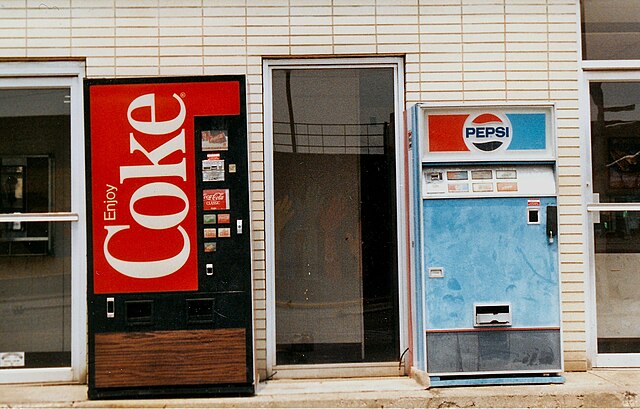
Well, unless you want to buy the world a Coke.

From https://www.youtube.com/watch?v=1VM2eLhvsSM

Generative AI Guidelines in San Jose, California

The Bredemarket blog has previously considered how private companies like Samsung and Adobe use generative AI. Government use is similar, yet differs in some ways. Let’s see how San Jose, California approaches it.

By Ben Loomis – DSC_9441.jpg, CC BY 2.0, https://commons.wikimedia.org/w/index.php?curid=73875056

As GovTech reported in its article “San Jose Releases Generative AI Guidelines, Looks to Learn,” some of the concerns of San Jose’s city governments are similar to issues with which private companies grapple.

Privacy is also a concern, and IT advises generative AI users to assume any information entered will be exposed to the public. Materials unready for publication shouldn’t be entered, nor should private emails. Employees looking for help drafting emails should avoid copy-pasting messages into generative AI, instead prompting the tools to write a generic message they can fact-check or augment with personalized details. The guidelines advise users to fact-check with multiple credible sources, including peer-reviewed journals and official documents.

From https://www.govtech.com/artificial-intelligence/san-jose-releases-generative-ai-guidelines-looks-to-learn

This is a big concern for private companies, also.

But there are also issues that governments need to consider that private companies may not need to address.

One consideration is that government writing requires a particular style. Senate bills, for example, are written with a certain structure and formality. The city also uses gender-neutral language and the term “resident” rather than “citizen.” 

From https://www.govtech.com/artificial-intelligence/san-jose-releases-generative-ai-guidelines-looks-to-learn

Of course private companies have their own writing styles, but the world won’t come to an end if the IBM memorandum includes the word “gnarly.” But the wrong word in a Senate bill, or the use of the term “citizen” in a blue state, could be catastrophic.

One thing is clear: San Jose Chief Information Officer Khaled Tawfik doesn’t think that general-purpose generative AI will cut it.

San Jose has talked with several vendors about the possibility of AI trained on data from government, potentially restricted to San Jose data only.

From https://www.govtech.com/artificial-intelligence/san-jose-releases-generative-ai-guidelines-looks-to-learn

As I noted in my post about Writer.com, this also allows implementation of privacy restrictions that could help avert problems if an employee inputs confidential information into the tool.

For the moment, San Jose is asking employees and contractors to log all use of generative AI. This will be referenced as the city develops its guidelines and policies in the future. As the city says:

Generative Artificial Intelligence (AI) is a new branch of AI technology that can generate content—such as stories, poetry, images, voice, and music— at the request of a user. Many organizations have banned Generative AI, while others allow unrestricted usage. The City recognizes the opportunity for a controlled and responsible approach that acknowledges the benefits to efficiency while minimizing the risks around AI bias, privacy, and cybersecurity.  

This is the first step in a collaborative process to develop the City’s overall AI policy. Registered users will be invited to join the Information Technology Department in a working group to share their experience and co-develop the City’s AI policies.

From https://www.sanjoseca.gov/your-government/departments-offices/information-technology/itd-generative-ai-guideline

Five Topics a Biometric Content Marketing Expert Needs to Understand

As a child, did you sleep at night dreaming that someday you could become a biometric content marketing expert?

I didn’t either. Frankly, I didn’t even work in biometrics professionally until I was in my 30s.

If you have a mad adult desire to become a biometric content marketing expert, here are five topics that I (a self-styled biometric content marketing expert) think you need to understand.

Topic One: Biometrics

Sorry to be Captain Obvious, but if you’re going to talk about biometrics you need to know what you’re talking about.

The days in which an expert could confine themselves to a single biometric modality are long past. Why? Because once you declare yourself an iris expert, someone is bound to ask, “How does iris recognition compare to facial recognition?”

Only some of the Biometrics Institute’s types of biometrics. Full list at https://www.biometricsinstitute.org/what-is-biometrics/types-of-biometrics/

And there are a number of biometric modalities. In addition to face and iris, the Biometrics Institute has cataloged a list of other biometric modalities, including fingerprints/palmprints, voice, DNA, vein, finger/hand geometry, and some more esoteric ones such as gait, keystrokes, and odor. (I wouldn’t want to manage the NIST independent testing for odor.)

As far as I’m concerned, the point isn’t to select the best biometric and ignore all the others. I’m a huge fan of multimodal biometrics, in which a person’s identity is verified or authenticated by multiple biometric types. It’s harder to spoof multiple biometrics than it is to spoof a single one. And even if you spoof two of them, what if the system checks for odor and you haven’t spoofed that one yet?

Topic Two: All the other factors

In the same way that I don’t care for people who select one biometric and ignore the others, I don’t care for some in the “passwords are dead” crowd who go further and say, “Passwords are dead. Use biometrics instead.”

Although I admire the rhyming nature of the phrase.

If you want a robust identity system, you need to use multiple factors in identity verification and authentication.

  • Something you know.
  • Something you have.
  • Something you are (i.e. biometrics).
  • Something you do.
  • Somewhere you are.

Again, use of multiple factors protects against spoofing. Maybe someone can create a gummy fingerprint, but can they also create a fake passport AND spoof the city in which you are physically located?

From https://www.youtube.com/shorts/mqfHAc227As

Don’t assume that biometrics answers all the ills of the world. You need other factors.

And if you master these factors, you are not only a biometric content marketing expert, but also an identity content marketing expert.

Topic Three: How biometrics are used

It’s not enough to understand the technical ins and outs of biometric capture, matching, and review. You need to know how biometrics are used.

  • One-to-one vs. one-to-many. Is the biometric that you acquire only compared to a single biometric samples, or to a database of hundreds, thousands, millions, or billions of other biometric samples?
  • Markets. When I started in biometrics, I only participated in two markets: law enforcement (catch bad people) and benefits (get benefit payments to the right people). There are many other markets. Just recently I have written about financial identity and educational identity. I’ve worked with about a dozen other markets personally, and there are many more.
  • Use cases. Related to markets, you need to understand the use cases that biometrics can address. Taking the benefits example, there’s a use case in which a person enrolls for benefits, and the government agency wants to make sure that the person isn’t already enrolled under another name. And there’s a use cases when benefits are paid to make sure that the authorized recipient receives their benefits, and no one else receives their benefits.
  • Legal and privacy issues. It is imperative that you understand the legal ramifications that affect your chosen biometric use case in your locality. For example, if your house has a doorbell camera that uses “familiar face detection” to identify the faces of people that come to your door, and the people that come to your door are residents of the state of Illinois, you have a BIG BIPA (Biometric Information Privacy Act) problem.

Any identity content marketing expert or biometric content marketing expert worth their salt will understand these and related issues.

Topic Four: Content marketing

This is another Captain Obvious point. If you want to present yourself as a biometric contet marketing expert or identity content marketing expert, you have to have a feel for content marketing.

Here’s how HubSpot defines content marketing:

The definition of content marketing is simple: It’s the process of publishing written and visual material online with the purpose of attracting more leads to your business. These can include blog posts, pages, ebooks, infographics, videos, and more.

From https://blog.hubspot.com/marketing/content-marketing

Here are all the types of content in which one content marketer claims proficiency (as of July 27, 2023, subject to change):

Articles • Battlecards (80+) • Blog Posts (400+) • Briefs/Data/Literature Sheets • Case Studies (12+) • Competitive Analyses • Email Newsletters (200+) • Event/Conference/Trade Show Demonstration Scripts • FAQs • Plans • Playbooks • Presentations • Proposal Templates • Proposals (100+) • Quality Improvement Documents • Requirements • Scientific Book Chapters • Smartphone Application Content • Social Media (Facebook, Instagram, LinkedIn, Threads, TikTok, Twitter) • Strategic Analyses • Web Page Content • White Papers and E-Books

From https://www.linkedin.com/in/jbredehoft/, last updated 7/27/2023.

Now frankly, that list is pretty weak. You’ll notice that it doesn’t include Snapchat.

But content marketers need to be comfortable with creating at least one type of content.

Topic Five: How L-1 Identity Solutions came to be

Yes, an identity content marketing expert needs to thoroughly understand how L-1 Identity Solutions came to be.

I’m only half joking.

Back in the late 1990s and early 2000s (I’ll ignore FpVTE results for a moment), the fingerprint world in which I worked recognized four major vendors: Cogent, NEC, Printrak (later part of Motorola), and Sagem Morpho.

And then there were all these teeny tiny vendors that offered biometric and non-biometric solutions, including the fierce competitors Identix and Digital Biometrics, the fierce competitors Viisage and Visionics, and a bunch of other companies like Iridian.

Wel, there WERE all these teeny tiny vendors.

Until Bob LaPenta bought them all up and combined them into a single company, L-1 Identity Solutions. (LaPenta was one of the “Ls” in L-3, so he chose the name L-1 when he started his own company.)

So around 2008 the Big Four (including a post-FpVTE Motorola) became the Big Five, since L-1 Identity Solutions was now at the table with the big boys.

But then several things happened:

  • Motorola started selling off parts of itself. One of those parts, its Biometric Business Unit, was purchased by Safran (the company formed after Sagem and Snecma merged). This affected me because I, a Motorola employee, became an employee of MorphoTrak, the subsidiary formed when Sagem Morpho de facto acquired “Printrak” (Motorola’s Biometric Business Unit). So now the Big Five were the Big Four.
  • Make that the Big Three, because Safran also bought L-1 Identity Solutions, which became MorphoTrust. MorphoTrak and MorphoTrust were separate entities, and in fact competed against each other, so maybe we should say that the Big Four still existed.
  • Oh, and by the way, the independent company Cogent was acquired by 3M (although NEC considered buying it).
  • A few years later, 3M sold bits of itself (including the Cogent bit) to Gemalto.
  • Then in 2017, Advent International (which owned Oberthur) acquired bits of Safran (the “Morpho” part) and merged them with Oberthur to form IDEMIA. As a consequence of this, MorphoTrust de facto acquired MorphoTrak, ending the competition but requiring me to have two separate computers to access the still-separate MorphoTrust and MorphoTrak computer networks. (In passing, I have heard from two sources, but have not confirmed myself, that the possible sale of IDEMIA is on hold.)
  • And Gemalto was acquired by Thales.

So as of 2023, the Big Three (as characterized by Maxine Most and FindBiometrics) are IDEMIA, NEC, and Thales.

Why do I mention all this? Because all these mergers and acquisitions have resulted in identity practitioners working for a dizzying number of firms.

As of August 2023, I myself have worked for five identity firms, but in reality four of the five are the same firm because the original Printrak International kept on getting acquired (Motorola, Safran, IDEMIA).

And that’s nothing. One of my former Printrak coworkers (R.M.) has also worked for Digital Biometrics (now part of IDEMIA), Cross Match Technologies (now part of ASSA ABLOY), Iridian (now part of IDEMIA), Datastrip, Creative Information Technology, AGNITiO, iTouch Biometrics, NDI Recognition Systems, iProov, and a few other firms here and there.

The point is that everybody knows everybody because everybody has worked with (and against) everybody. And with all the job shifts, it’s a regular Peyton Place.

By ABC Television – eBay itemphoto frontphoto back, Public Domain, https://commons.wikimedia.org/w/index.php?curid=17252688

Not sure which one is me, which one is R.M., and who the other people are.

Do you need an identity content marketing expert today?

Do you need someone who not only knows biometrics and content marketing, but also all the other factors, their uses, and even knows the tangled history of L-1?

Someone who offers:

  • No identity learning curve?
  • No content learning curve?
  • Proven results?

If I can help you create your identity content, contact me.

Can There Be Too Much Encryption and Age Verification Regulation?

Designed by Freepik.

Approximately 2,700 years ago, the Greek poet Hesiod is recorded as saying “moderation is best in all things.” This applies to government regulations, including encryption and age verification regulations. As the United Kingdom’s House of Lords works through drafts of its Online Safety Bill, interested parties are seeking to influence the level of regulation.

The July 2023 draft of the Online Safety Bill

On July 25, 2023, Richard Allan of Regulate.Tech provided his assessment of the (then) latest draft of the Online Safety Bill that is going through the House of Lords.

In Allan’s assessment, he wondered whether the mandated encryption and age verification regulations would apply to all services, or just critical services.

Allan considered a number of services, but I’m just going to hone in on two of them: WhatsApp and Wikipedia.

The Online Safety Bill and WhatsApp

WhatsApp is owned by a large American company called Meta, which causes two problems for regulators in the United Kingdom (and in Europe):

  • Meta is a large company.
  • Meta is an American company.

WhatsApp itself causes another problem for UK regulators:

  • WhatsApp encrypts messages.

Because of these three truths, UK regulators are not necessarily inclined to play nice with WhatsApp, which may affect whether WhatsApp will be required to comply with the Online Safety Bill’s regulations.

Allan explains the issue:

One of the powers the Bill gives to OFCOM (the UK Office of Communications) is the ability to order services to deploy specific technologies to detect terrorist and child sexual exploitation and abuse content….

But there may be cases where a provider believes that the technology it is being ordered to deploy would break essential functionality of its service and so would prefer to leave the UK rather than accept compliance with the order as a condition of remaining….

If OFCOM does issue this kind of order then we should expect to see some encrypted services leave the UK market, potentially including very popular ones like WhatsApp and iMessage.

From https://www.regulate.tech/online-safety-bill-some-futures-25th-july-2023/

And this isn’t just speculation on Allan’s part. Will Cathcart has been complaining about the provisions of the draft bill for months, especially since it appears that WhatsApp encryption would need to be “dumbed down” for everybody to comply with regulations in the United Kingdom.

Speaking during a UK visit in which he will meet legislators to discuss the government’s flagship internet regulation, Will Cathcart, Meta’s head of WhatsApp, described the bill as the most concerning piece of legislation currently being discussed in the western world.

He said: “It’s a remarkable thing to think about. There isn’t a way to change it in just one part of the world. Some countries have chosen to block it: that’s the reality of shipping a secure product. We’ve recently been blocked in Iran, for example. But we’ve never seen a liberal democracy do that.

“The reality is, our users all around the world want security,” said Cathcart. “Ninety-eight per cent of our users are outside the UK. They do not want us to lower the security of the product, and just as a straightforward matter, it would be an odd choice for us to choose to lower the security of the product in a way that would affect those 98% of users.”

From https://www.theguardian.com/technology/2023/mar/09/whatsapp-end-to-end-encryption-online-safety-bill

In passing, the March Guardian article noted that WhatsApp requires UK users to be 16 years old. This doesn’t appear to be an issue for Meta, but could be an issue for another very popular online service.

The Online Safety Bill and Wikipedia

So how does the Online Safety Bill affect Wikipedia?

Wikipedia article about the Online Safety Bill as of August 1, 2023. https://en.wikipedia.org/wiki/Online_Safety_Bill

It depends on how the Online Safety Bill is implemented via the rulemaking process.

As in other countries, the true effects of legislation aren’t apparent until the government writes the rules that implement the legislation. It’s possible that the rulemaking will carve out an exemption allowing Wikipedia to NOT enforce age verification. Or it’s possible that Wikipedia will be mandated to enforce age verification for its writers.

Let’s return to Richard Allan.

If they do not (carve out exemptions) then there could be real challenges for the continued operation of some valuable services in the UK given what we know about the requirements in the Bill and the operating principles of services like Wikipedia.

For example, it would be entirely inconsistent with Wikipedia’s privacy principles to start collecting additional data about the age of their users and yet this is what will be expected from regulated services more generally.

From https://www.regulate.tech/online-safety-bill-some-futures-25th-july-2023/

Left unsaid is the same issue that affects encryption: age verification for Wikipedia may be required in the United Kingdom, but may not be required for other countries.

It’s no surprise that Jimmy Wales of Wikipedia has a number of problems with the Online Safety Bill. Here’s just one of them.

(Wales) used the example of Wikipedia, in which none of its 700 staff or contractors plays a role in content or in moderation.

Instead, the organisation relies on its global community to make democratic decisions on content moderation, and have contentious discussions in public.

By contrast, the “feudal” approach sees major platforms make decisions centrally, erratically, inconsistently, often using automation, and in secret.

By regulating all social media under the assumption that it’s all exactly like Facebook and Twitter, Wales said that authorities would impose rules on upstart competitors that force them into that same model.

From https://www.itpro.com/business-strategy/startups/370036/jimmy-wales-online-safety-bill-could-devastate-small-businesses

And the potential regulations that could be imposed on that “global community” would be anathema to Wikipedia.

Wikipedia will not comply with any age checks required under the Online Safety Bill, its foundation says.

Rebecca MacKinnon, of the Wikimedia Foundation, which supports the website, says it would “violate our commitment to collect minimal data about readers and contributors”.

From https://www.bbc.com/news/technology-65388255

Regulation vs. Privacy

One common thread between these two cases is that implementation of the regulations results in a privacy threat to the affected individuals.

  • For WhatsApp users, the privacy threat is obvious. If WhatsApp is forced to fully or partially disable encryption, or is forced to use an encryption scheme that the UK Government could break, then the privacy of every message (including messages between people outside the UK) would be threatened.
  • For Wikipedia users, anyone contributing to the site would need to undergo substantial identity verification so that the UK Government would know the ages of Wikipedia contributors.

This is yet another example of different government agencies working at cross purposes with each other, as the “catch the pornographers” bureaucrats battle with the “preserve privacy” advocates.

Meta, Wikipedia, and other firms would like the legislation to explicitly carve out exemptions for their firms and services. Opponents say that legislative carve outs aren’t necessary, because no one would ever want to regulate Wikipedia.

Yeah, and the U.S. Social Security Number isn’t an identificaiton number either. (Not true.)

Educational Identity: Why and How Do Educational Institutions Verify Identities?

Chaffey High School, Ontario California.

Whether a student is attending a preschool, a graduate school, or something in between, the educational institution needs to know who is accessing their services. This post discusses the types of identity verification and authentication that educational institutions may employ.

Why do educational institutions need to verify and authenticate identities?

Whether little Johnny is taking his blanket to preschool, or Johnny’s mother is taking her research notes to the local university, educational institutions such as schools, colleges, and universities need to know who the attendees are. It doesn’t matter whether the institution has a physical campus, like Chaffey High School’s campus in the video above, or if the institution has a virtual campus in which people attend via their computers, tablets, or phones.

Access boils down to two questions:

  • Who is allowed within the educational institution?
  • Who is blocked from the educational institution?

Who is allowed within the educational institution?

Regardless of the type of institution, there are certain people who are allowed within the physical and/or virtual campus.

  • Students.
  • Instructors, including teachers, teaching assistants/aides, and professors.
  • Administrators.
  • Staff.
  • Parents of minor students (but see below).
  • Others.

All of these people are entitled to access to at least portions of the campus, with different people having access to different portions of the campus. (Students usually can’t enter the teacher’s lounge, and hardly anybody has full access to the computer system where grades are kept.)

Before anyone is granted campus privileges, they have to complete identity verification. This may be really rigorous, but in some cases it can’t be THAT rigorous (how many preschoolers have a government ID?). Often, it’s not rigorous at all (“Can you show me a water bill? Is this your kid? OK then.”).

Once an authorized individual’s identity is verified, they need to be authenticated when they try to enter the campus. This is a relatively new phenomenon, in response to security threats at schools. Again, this could be really rigorous. For example, when students at a University of Rhode Island dining hall want to purchase food from the cafeteria, many of then consent to have their fingerprints scanned.

From https://www.youtube.com/watch?v=JzMDF_LN_LU

Another rigorous example: people whose biometrics are captured when taking exams, to deter cheating.

But some authentiation is much less rigorous. In these cases, people merely show an ID (hopefully not a fake ID) to authenticate themselves, or a security guard says “I know Johnny.”

(Again, all this is new. Many years ago, I accompanied a former college classmate to a class at his new college, the College of Marin. If I had kept my mouth shut, the professor wouldn’t have known that an unauthenticated student was in his class.)

Who is blocked from the educational institution?

At the same time, there are people who are clearly NOT allowed within the physical and/or virtual campus. Some of these people can enter campus with special permission, while some are completely blocked.

  • Former students. Once a student graduates, their privileges are usually revoked, and they need special permission if they want to re-enter campus to visit teachers or friends. (Admittedly this isn’t rigorously enforced.)
  • Expelled students. Well, some former students have a harder time returning to campus. If you brought a gun on campus, it’s going to be much harder for you to re-enter.
  • Former instructors, administrators, and staff. Again, people who leave the employ of the institution may not be allowed back, and certain ones definitely won’t be allowed back.
  • Non-custodial parents of minor students. In some cases, a court order prohibits a natural parent from contact with their child. So the educational institutions are responsible for enforcing this court order and ensuring that the minor student leaves campus only with someone who is authorized to take the child.
  • Others.

So how do you keep these people off campus? There are two ways.

  • If they’re not on the allowlist, they can’t enter campus anyway. As part of the identity verification process for authorized individuals, there is a list of people who can enter the campus. By definition, the 8 billion-plus people who are not on that “allowlist” can’t get on campus without special permission.
  • Sometimes they can be put on a blocklist. Or maybe you want to KNOW that certain people can’t enter campus. The inverse of an allowlist, people who are granted access, is a blocklist, people who are prevented from getting access. (You may know “blocklist” by the older term “blacklist,” and “allowlist” by the older term “whitelist.” The Security Industry Association and the National Institute of Standards and Technology recommend updated terminology.)

There’s just one teeny tiny problem with blocklists. Sometimes they’re prohibited by law.

In some cases (but not in others), a person is required to give consent before they are enrolled in a biometric system. If you’re the ex-student who was expelled for brining a gun on campus, how motivated will you be to allow that educational institution to capture your biometrics to keep you off campus?

And yes, I realize that the expelled student’s biometrics were captured while they were a student, but once they were no longer a student, the institution would have on need to retain those biometrics. Unless they felt like it.

This situation becomes especially sticky for campuses that use video surveillance systems. Like Chaffey High School.

Sign: "To reduce property damage to our facilities, this campus has installed a video surveillance system."
Chaffey High School, Ontario, California.

Now the mere installation of a video surveillance system does not (usually) result in legally prohibited behavior. It just depends upon what is done with the video.

  • If the video is not integrated with a biometric facial recognition system, there may not be an issue.
  • If Chaffey High School has its own biometric facial recognition system, then a whole host of legal factors may come into play.
  • If Chaffey High School does not have a biometric facial recognition system, but it gives the video to a police agency or private entity that does have a biometric facial recognition system, then some legal factors may emerge.

Or may not. Some facial recognition bans allow police use, and if this is true then Chaffey can give the footage to the police to use for authorized purposes. But if the jurisdiction bans police use of facial recognition, then people on the video can only be recognized manually. And you know how I feel about that.

Writing About Educational Identity

As you can see, educational identity is not as clear-cut as financial identity, both because financial institutions are more highly regulated and because blocklists are more controversial in educational identity. Vladimir Putin may not be able to open a financial account at a U.S. bank, but I bet he’d be allowed to enroll in an online course at a U.S. community college.

So if you are an educational institution or an identity firm who serves educational institutions, people who write for you need to know all of these nuances.

You need to provide the right information to your customers, and write it in a way that will motivate your customers to take the action you want them to take.

Speaking of motivating customers, are you with an identity firm or educational institution and need someone to write your marketing text?

  • Someone with 29 years of identity/biometric marketing experience?
  • Someone who understands that technological, organizational, and legal issues surrounding the use of identity solutions?
  • Someone who will explain why your customers should care about these issues, and the benefits a compliant solution provides to them?

If I can help you create your educational identity content, we need to talk.

Yeah, I Wrote a Bredemarket Mailing List Entry About…the Bredemarket Mailing List

(UPDATED WITH SHORTLINK)

This blog post explains how you can go to http://eepurl.com/hdHIaT and subscribe to the Bredemarket mailing list.

OK, I guess I’m done.

Actually, I’m going to provide some background.

With great fanfare in October 2020…

…I established the Bredemarket mailing list. I even wrote a blog post about it, “The Bredemarket mailing list is live,” and sat back. Occasionally I’d write something for the mailing list, until nearly three years later I had written 11 entries (including the two I wrote today).

Archive of the Bredemarket mailing list, accessible here.

Do you know what? If you build it, they may not come. They aren’t going to come if they don’t know about it.

I’ve done precious little promotion of the Bredemarket mailing list, other than an isolated page on the Bredemarket website.

But I’ve recently decided to resurrect the Bredemarket mailing list and devote more time to it, for the following reasons…well, actually I explained the reasons in the mailing list.

So don’t miss out on future missives. Subscribe by clicking here.

Which reminds me that I have to tweak my usual “contact me” message a bit. Now instead of having three bullets, it will have four.

Now I just have to nose around the Mailchimp documentation and see if the free version of Mailchimp allows a more user-friendly URL. FOUND THE SHORTLINK!

Yeah, I Wrote a Bredemarket LinkedIn Article About…Company LinkedIn Articles

Stump the Experts at WWDC 2010
Stefan Haubold • CC BY-SA 3.0

One way for your firm to publicize its offerings is through company LinkedIn articles. My LinkedIn article, written by my company Bredemarket, discusses…well, company LinkedIn articles. It also discusses:

  • Why you should write LinkedIn articles.
  • Why companies should write LinkedIn articles under their own names.
  • How to create LinkedIn articles.
  • Finally, who can write your LinkedIn articles. (I have a suggestion.)

To read the LinkedIn article, visit https://www.linkedin.com/pulse/why-your-company-should-write-linkedin-articles-bredemarket

Financial Identity: Which Firms Can Remotely Onboard Financial Customers?

Bank of America, Euclid Avenue, Ontario, California.

Here’s a sign of the times from Ontario, California. The sign at the end of this video appears on the door of a bank branch in downtown Ontario, and basically says that if you wanted to go to THIS branch on Saturday, you’re out of luck.

Of course, that assumes that you actually WANT to go to a physical bank branch location. Unlike the old days, when banks were substantive buildings that you visited to deposit and withdraw money, now banks can be found in our smartphones.

What locational, technological, and organizational changes have taken place at banks over the last 50 years? And now that you can open an account to buy crypto on your smartphone, does your financial institution’s onboarding solution actually WORK in determining financial identity?

Three changes in banking over the last fifty years

Over the last fifty years, banking has changed to the point where someone from 1973 wouldn’t even recognize “banking” today. Stick around to see a video from a company called “Apple” showing you how to use a “wallet” on a “smartphone” to pay for things even if you’re not carrying your “chip card.” Karl Malden would be spinning in his grave. So let’s talk about the three changes:

  1. The locational change.
  2. The technological change.
  3. The organizational change.

The locational change: from stand-alone buildings to partitioned grocery store sections

When I was growing up, a “bank” (or a “savings & loan,” which we will discuss later) was located in a building where you would go on weekdays (or even Saturdays!) and give money to, or get money from, a person referred to as a teller.

By Dennis Brown – Own work, CC BY 3.0, https://commons.wikimedia.org/w/index.php?curid=5214388

There was this whole idea of “going to the bank,” perhaps on your lunch hour because you couldn’t go to the bank on Sunday at midnight, could you?

The first crack in the whole idea of “going to the bank” was the ability to bank without entering the door of the bank…and being able to bank on Sunday at midnight if you felt like it. Yes, I’m talking about Automated Teller Machines (ATMs), where the “teller,” instead of being a person, was a bunch of metal and a TV screen. The first ATM appeared in 1967, but they didn’t really become popular until several years later.

Actor Reg Varney using the world’s first cash machine at Barclays Bank, Enfield, north London on 27 June 1967. https://en.wikipedia.org/w/index.php?curid=12747908

For the most part, these ATMs were located at the bank buildings themselves. But those buildings were costly, and as competition between banks increased, banks sought alternatives. By 1996, a new type of banking location emerged (PDF):

The largest U.S. commercial banks are restructuring their retail operations to reduce the cost disadvantage resulting from a stagnant deposit base and stiffer competition. As part of this effort, some banks are opening “supermarket,” or “in-store,” branches: a new type of banking office within a large retail outlet. An alternative to the traditional bank office, the supermarket branch enables banks to improve the efficiency of the branch network and offer greater convenience to customers.

From https://www.newyorkfed.org/medialibrary/media/research/current_issues/ci2-13.pdf

To traditionalists, these bank branches looked pretty flimsy. Where are the brick and (fake) marble walls that protect my cash? Heck, anyone can walk into the store and just steal all my money, right?

Well, these newfangled bank branches apparently WERE able to protect our cash, and the idea of banking right in the grocery store proved to be very popular because of its convenience.

But the changes were just beginning.

The technological change: from store sections to smartphones

As banks changed where they were located, there were technological changes also.

During the 1990s, more and more people were using home computers. As the computers and their security became more and more sophisticated, some people asked why we needed to “go to the bank” (either a stand-alone building or a partitioned area next to the cigarettes) at all. Why not just bank at the computer? So PC banking emerged.

Interpol and Deutsche Bank. The cover art can be obtained from Kling Klang and EMI Electrola., Fair use, https://en.wikipedia.org/w/index.php?curid=42639079

The term “PC banking” refers to the online access of banking information from a personal computer. A solution for both personal or business banking needs, this type of financial management allows you to conduct transactions using an Internet connection and your computer in lieu of a trip to the local bank branch or the use of an ATM. PC banking enables an account holder to perform real-time account activities and effectively manage finances in a way that avoids the hassle of daytime bank visits and eliminates the postage required to pay bills by mail.

From https://smallbusiness.chron.com/pc-banking-72403.html

Ah yes; there was another benefit. You could use the computer to pay your bills electronically. The U.S. Postal Service was NOT a fan of this change.

As we crossed into the new millennium, the online banking ideas got even wilder. Cellular telephones, which followed a modified version of the “Princess phone” form factor, became more complex devices with their own teeny-tiny screens, just like their larger computer cousins. Eventually, banks began offering their services on these “smartphones,” so that you didn’t even need a computer to perform your banking activities.

Imagine putting the video below on 8mm film and traveling back in time to show it to a 1973 banking customer. They would have no idea what was going on in the film.

From https://www.youtube.com/watch?v=znIOqQLbNFk

But are PC and smartphone banking secure? After all, smartphones don’t have brick or (fake) marble walls. We’ll get to that question.

The organizational change: from banks to…who knows what?

The third change was not locational or technological, but a change in terms of business organization. Actually, many changes.

Back in 1973, the two major types of banks were banks, and something called “savings & loans.” Banks had been around for centuries, but savings & loans were a little newer, having started in 1831. They were regulated a little differently: banks were insured by the FDIC, S&Ls by the FSLIC.

Everything was all hunky dory until the 1980s, when the S&Ls started collapsing. This had monumental effects; for example, this PDF documenting the S&L crisis is hosted on the FDIC website, because the FSLIC was abolished many years ago.

After savings & loans became less popular, other “banks” emerged.

But there was one similarity between banks, savings & loans, credit unions, and payday loans. They all dealt in U.S. dollars (or the currency of the nation where they were located).

Enter the crypto providers, who traded cryptocurrencies that weren’t backed by any government. Since they were very new entrants, they didn’t have to make the locational and technological changes that banks and related entities had to make; they zoomed straight to the newest methods. Everything was performed on your smartphone (or computer), and you never went to a physical place.

Now, let’s open a financial account

Back in 1973, the act of opening an account required you to travel to a bank branch, fill out some forms, and give the teller some form of U.S. dollars.

You can still do that today, for the most part. But it was hard to do that in the summer and fall of 2020 when Bredemarket started.

Bredemarket pretty much started because of the COVID-19 pandemic, and those first few months of Bredemarket’s existence were adversely affected by COVID-19. When I wanted to start a bank account for Bredemarket, I COULDN’T travel to my nearby bank branch to open an account. I HAD to open my account with my computer.

So, without a teller (human or otherwise) even meeting me, I had to prove that I was a real person, and give my bank enough information during onboarding so that they knew I wasn’t a money-laundering terrorist. Banks had to follow government regulations (know your customer, anti-money laundering, know your business), even in the midst of a worldwide pandemic.

This onboarding process had to be supported whether you were or were not at a physical location of a financial institution.

  • Whether you were conducting business in person, on a computer, or on a smartphone.
  • Whether you were working with U.S. dollars or (as crypto regulations tightened) something named after a dog or an entire planet or whatever.

How can you support all that?

Liminal’s “Link™ Index for
Account Opening in Financial Services”

Back in 2020 when I was onboarding the new-fashioned way, I had no way of predicting that in less than two years, I would be working for a company that helped financial institutions onboard customers the new-fashioned way.

At the time, I estimated that there were over 80 companies that provided such services.

According to Liminal, my estimate was too low. Or maybe it was too high.

Liminal’s July 2023 report, “Link™ Index for Account Opening in Financial Services,” covers companies that provide onboarding services that allow financial institutions to use their smartphone apps (or web pages) to sign up new clients.

Account opening solutions for the financial services industry are critical to ensuring compliance and preventing fraud, enabling companies to effectively identify new users during customer registration and deliver a seamless onboarding experience. The primary purpose of these solutions is to facilitate mandatory compliance checks, with a particular emphasis on the Know Your Customer (KYC) process.

From https://liminal.co/research/link-index/account-opening-financial-services/

If I can summarize KYC in layperson terms, it basically means that the person opening a financial institution account is who they say they are. For example, it ensures that Vladimir Putin can’t open a U.S. bank acccount under the name “Alan Smithee” to evade U.S. bans on Russian national transctions.

Remember how I found over 80 identify proofing vendors? Liminal found a few more who claimed to offer identity proofing, but thinks that less than 80 firms can actually deliver.

Around 150 vendors claim to offer account opening compliance and fraud solutions in banking, but only 32 (21.3%) have the necessary product features to meet buyer demands.

From https://liminal.co/research/link-index/account-opening-financial-services/

The firms identified by Liminal include my (now former) employer Incode Technologies, plus some others in the industry.

Leading Vendors Profiled

Alloy, Au10tix, Bureau, Caf, Contactable, Effectiv, Experian, FrankieOne, GBG, GeoComply, IDnow, ID.me, iDenfy, IDMERIT, Incode, Jumio, LexisNexis Risk Solutions, MetaMap, Mitek, Onfido, Persona, Plaid, Prove, Refinitiv, ShuftiPro, Signicat, Signzy, Socure, Sumsub, TransUnion, Trulioo, Veriff.

From https://liminal.co/research/link-index/account-opening-financial-services/

Now I have not purchased the entire Liminal report, and even the Executive Summary (which I do have) is “privileged and confidential” so I can’t reprint it here. But I guess that I can say that Liminal used something called the “Link Score” to determine which vendors made the top category, and which didn’t.

I’m not sure how the vendors who DIDN’T make the top category are reacting to their exclusion, but I can bet that they’re not happy.

Writing about Financial Identity

As you can gather, there are a number of issues that you have to address if you want to employ identity proofing at a financial institution.

And if you’re an identity firm or financial institution, you need to provide the right information to your customers, and write it in a way that will motivate your customers to take the action you want them to take.

Speaking of motivating customers, are you with an identity firm or financial institution and need someone to write your marketing text?

  • Someone with 29 years of identity/biometric marketing experience?
  • Someone who consistently tosses around acronyms like ABM, FRVT, KYB, KYC, and PAD, but who would never dump undefined acronyms on your readers? (If you’re not a financial/identity professional and don’t know these acronyms, they stand for anti-money laundering, Face Recognition Vendor Test, Know Your Business, Know Your Customer, and Presentation Attack Detection.)
  • Someone who will explain why your customers should care about these acronyms, and the benefits a compliant solution provides to them?

If I can help you create your financial identity content, we need to talk.