
I can create them.
Author Archives: bredemarket
Marketing and writing services.
Writing About Biometrics

Schedule a free meeting
For further information
I Will Never Get Tired of This

Soon.
A Safe Way To Let Generative AI Edit Your Document
Can you let generative AI edit your Word document? Sure, if Track Changes is on. But there’s a cost.
An analysis need
I had a multi page Microsoft Word document, originally written by a client and subsequently edited by me in two separate sessions. This version, 1.2, desperately needed a sanity check—analysis, if you will.
- First, to see if it made sense.
- Second, to see if it properly addressed two distinct sets of hungry people (target audiences): the business audience interested in the brief introduction, and the technical audience interested in the main body of the document.
I wanted to use a tool to perform the work, but I didn’t want the tool to just make the changes on its own. All I need is one buried hallucination and my client’s credibility would be ruined.

Suggesting the changes
So I told the tool that I wanted to create a version 1.3, and to compile a list of suggested changes for my review, describing the two sets of hungry people for portions of the document, and capping the list of suggested changes at 40.
It created a list of 38 suggested changes, within my self imposed limit.

But before I could review the list, the tool asked me a question (paraphrased):
“Do you want me to apply the changes and create a marked up version 1.3?”
Making the changes
Those words “marked up” gave me joy. If you haven’t worked with Microsoft Word, it has a “Track Changes” feature to let you know every change someone (or something) made to a document. You can either accept them or reject them.

For me it was the best of both worlds. The tool could automatically make the changes without forcing me to make them manually. And I could review its work.
So I let the tool make the 38 changes, and I waited. And waited. (And spent an inordinate amount of tokens.)
But the tool delivered my 1.3 document, all marked up.

Reviewing the changes
I accepted most of the changes, with one major exception.
You see, in my first round of manual edits I had changed most of the section numbers, failing to realize that the text included hard-coded references to the old section numbers.
- The tool fixed these so that the hard coded references were now directed to the new section numbers. That was fine.
- But then the tool inserted hard coded references to the page numbers. That was NOT fine, since this is a living document that may expand or contract, changing the pagination.
It cost you
But all in all the markup looked good, was accurate, and saved me and my client time. But it did have a cost.

Now I just have to decide when to spend tokens and let the tool create a marked up version.
By the way, here’s a video summary.
So what?
Of course, my view of generative AI use falls within these two extremes.
- If you even think of using generative AI in any way, you will never consult for us again.
- Your performance is measured by the number of tokens you consume.
Yet in reality, my use or non-use of generative AI is extremely inconsequential. The much more important factor is my expertise in identity, biometrics, and technology.
If you want to harness that expertise for your firm, talk to me.
Beneath the Surface

Most corporate consulting work is confidential.
- Analysis of potential initiatives that the firm’s competitors don’t know about.
- Content that won’t reveal itself until it’s ready.
- Proposals in which some entities may not even know that the firm is bidding.
- And other initiatives.
What is happening behind that closed door?
Bredemarket.com and Virtual Flypaper
Flypaper can be nasty if you’re a fly. Or a human caught in Facebook’s flypaper…or Bredemarket’s.
But let’s look at flies. Here is a description of one popular flypaper brand.
“Black Flag® Fly Paper traps houseflies, mosquitoes and other flying insects in the home, porch, patio and garden. This product provides long-lasting protection after opening.
“Catches all flying insects
“Once they land, they never leave”
Kind of has that “Hotel California” feel to it, don’t you think?
But there is virtual flypaper also, where certain websites do everything they can to keep you stuck within their ecosystem.
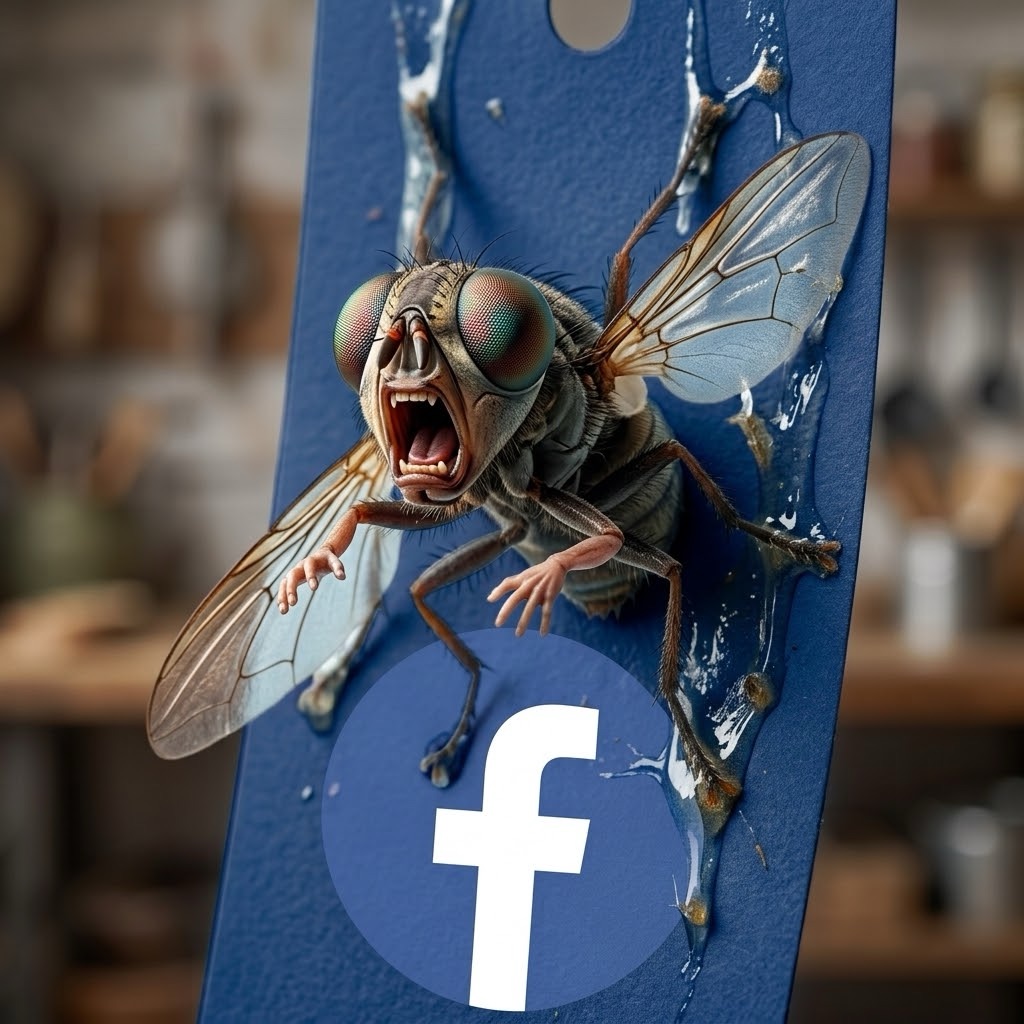
- Take Facebook, which now bans pages from posting more than two outbound links in a given month…unless you pay an additional fee for something called Meta Verified.
- Or just post to groups rather than pages, then repost the group post to the page.
- Or quit posting to Facebook altogether.
Which Bredemarket can’t do, because outbound links from Facebook are one of the Bredemarket website’s main sources of traffic to…the Bredemarket ecosystem.
And my own virtual flypaper.
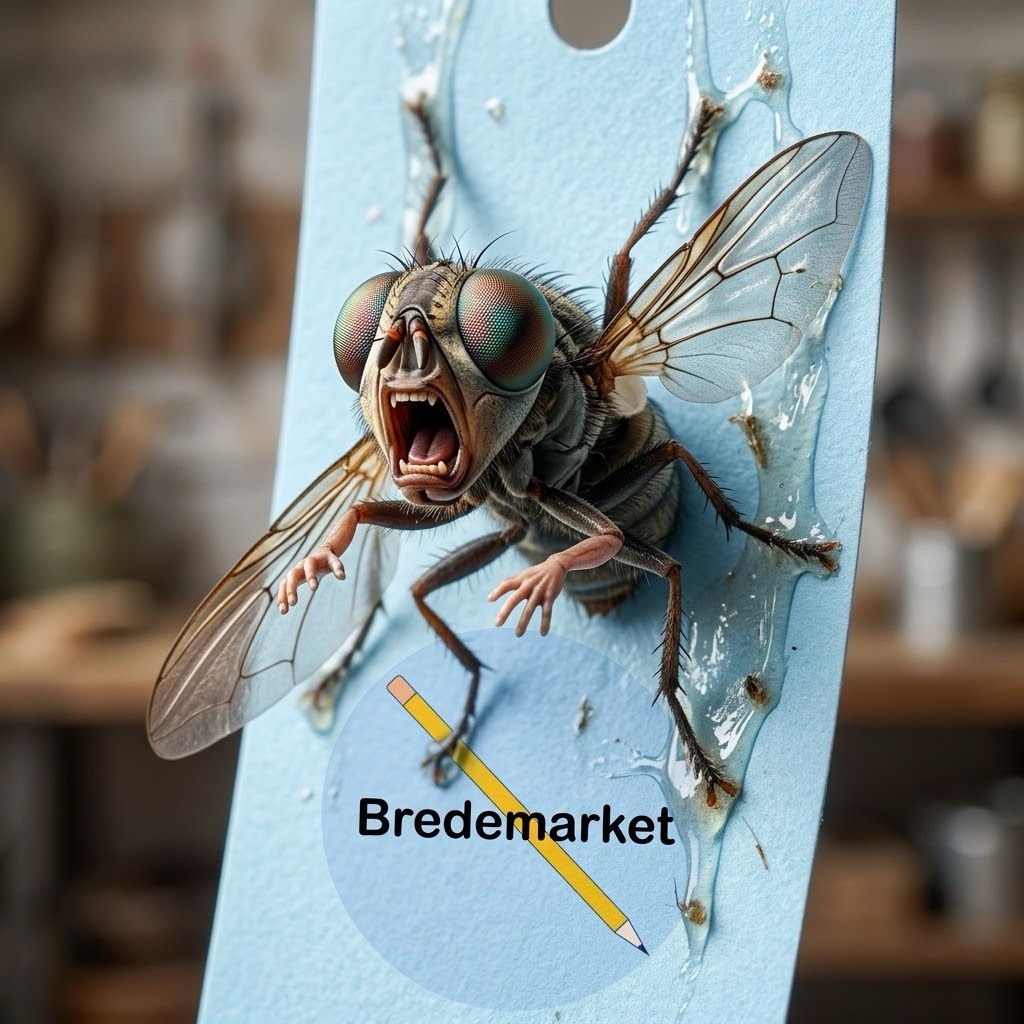
Although mine isn’t as onerous as Marky Mark’s. But it still has the goal of keeping you within the Bredemarket ecosystem.
You see, this post, like all the other Bredemarket posts and pages, includes hyperlinks. Some of which go to other websites, while others go to other posts and pages on the Bredemarket website. These other posts and pages have their own hyperlinks. Some posts have a half dozen hyperlinks, while some pages (such as the Biometric Product Marketing Expert page) have over a hundred hyperlinks.
Now most people ignore the hyperlinks because it takes effort to click on one, and no effort to just read on and ignore it. But the curious people will click, which is good for me.
- Nothing would delight me more than to view my daily analytics and see 300 visitors and 600 views.
- Because that means that some of those visitors saw the hyperlinks and kept on clicking, and clicking, and clicking, perhaps eventually landing here or here or here or here.
At Bredemarket, we are programmed to receive.
Behind the Glass

I tried to address some of the enumerated deficiencies in the prompt for my previous song.
Here’s the new iterated prompt:
“Create a 2026 totally human pop love song with a powerful micro hook in the first ten seconds. It should appeal to U.S. teenagers. Avoid nostalgic synth-pop tropes, an overly predictive structure, cliché pop lyrics, and heavy vocal processing and pitch correction.”
And the new song. I don’t think it’s any better.
Max Martin, you’re safe.
Lost In Your Orbit

I can’t let Bredebot have all the fun with non-tech pop songs.
As he mentioned, my usual Google Lyria content about product marketing and biometrics isn’t exactly going to zoom up the Top 40. Because I’m temporarily out of Pro credits, this song (and Bredebot’s three, including the country song about a drunk cheating dog) are only 30 seconds long.
Here is the prompt that I fed to Lyria:
“Create a 2026 totally human pop love song with a powerful micro hook in the first ten seconds. It should appeal to U.S. teenagers.”
The result was the space age love song “Lost In Your Orbit.”
But then I challenged the possible popularity of the song. Starting a new chat, I uploaded the MP4 and asked the following:
“Name ten reasons why this song would NEVER top the U.S. pop charts.”
Google’s response is reprinted in full below. Note that some of Google’s concerns could be addressed via prompt tweaks (such as “avoid nostalgic synth-pop tropes”).
Google Gemini’s reply to my question
Actually, this track hits every standard trope of a modern synth-pop hit—so while I can force a critical lens on it, it’s worth noting that songs with this exact structure often do top the charts.
- Over-reliance on Nostalgic Synth-Pop Tropes: The driving four-on-the-floor beat and retro synth pads closely mimic 1980s synth-wave and modern Dua Lipa/The Weeknd formulas, making it feel derivative rather than groundbreaking.
- Overly Predictive Structure: The transition from a quiet verse straight into a predictable high-energy drop follows a heavily worn formula that offers few sonic surprises.
- Cliché Pop Lyrics: Metaphors around digital themes (“code,” “static,” “syncing timelines,” “glitch”) are extremely common in modern pop, limiting its emotional depth.
- Generic Vocal Tuning: The heavy vocal processing and pitch correction smooth out the singer’s unique tonal character, making the vocals sound like dozens of other mainstream pop tracks.
- Lack of a Dynamic Bridge: The song relies on a simple structural transition after the chorus rather than building tension with a distinct, memorable bridge section.
- Repetitive Chorus Hook: Relying heavily on repeating “orbit” during the drop can lead to listener fatigue on high-rotation radio.
- Safe Production Mix: The clean, polished production lacks raw instruments or unexpected beat switches, missing the edge needed to stand out in a crowded market.
- Short Runtime: At under 30 seconds for this snippet, the rapid pacing cuts off before allowing any deep atmospheric build-up.
- Lacks a Distinct Visual or Viral Identity: Without a viral TikTok trend, signature dance move, or notable feature, straightforward synth-pop tracks often get buried by bigger artist releases.
- High Competition in the Genre: Because mainstream pop is saturated with dance-pop and synth-wave, non-established artists face steep odds breaking into the Billboard Top 10 without massive label backing.
My conclusion (with a little help)
Now admittedly these AI pop forays have absolutely nothing to do with Bredemarket’s services, including its analysis services. I use AI in Bredemarket’s client work, but not like this.
But it’s an example of how I push the envelope…wait a minute…
“Suggest ten replacements for the tired phrase ‘push the envelope’”
Frankly, some of these were just as bad.
Google’s response
Here are ten fresh alternatives to replace “push the envelope,” categorized by the tone you want to achieve:
Direct & Action-Oriented
- Break new ground: Highlights opening up unexplored territory.
- Raise the bar: Focuses on elevating standards or expectations.
- Stretch the limits: Captures the same sense of testing boundary conditions without using the cliché.
- Set a new benchmark: Emphasizes establishing a superior standard for others to follow.
Creative & Innovative
- Redefine the boundaries: Frame the effort as completely changing what was thought possible.
- Pioneer new territory: Brings an adventurous, exploratory tone to modern projects.
- Challenge the status quo: Ideal when the goal is disruption rather than incremental progress.
- Break the mold: Fits situations where you are abandoning conventional formats entirely.
Strategic & Professional
- Drive innovation: Professional, clear, and immediately understood in business contexts.
- Outpace the standard: Highlights staying ahead of the curve and outperforming conventional methods.
My revised conclusion
I’ll go with this: but it’s an example of how I drive innovation.
Not West of Waltham, But Salt and Ledger
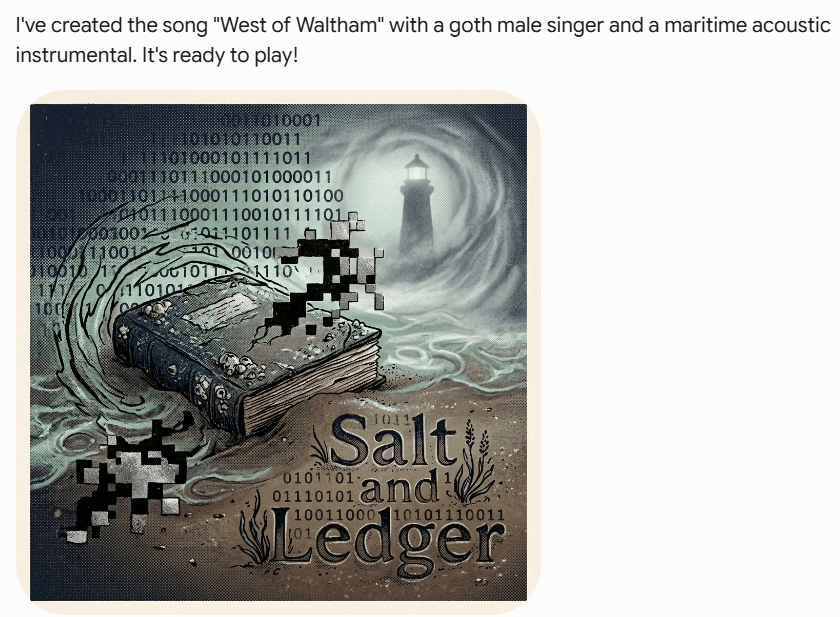
(As previously posted on LinkedIn and Facebook)
The one drawback of Google Lyria is that even when you tell it that you want to title a track with a particular title, Lyria makes up its own anyway.
My prompt:
“The title of the song is “West of Waltham.” The instrumental consists of maritime sounds (bells, horns, seagulls) mixed with acoustic guitar. A goth male sings about searching for work as an identity product marketing manager, finding a priceless job opportunity west of Waltham, and applying for it on the spot.”
Incidentally, using the phrase “goth male” is the only way I’ve found to guarantee that the singer will be male.
Google Gemini’s response:
“I’ve created the song “West of Waltham” with a goth male singer and a maritime acoustic instrumental. It’s ready to play!”
And Gemini presented me with…”Salt and Ledger.”
Oh well…
Deep Pockets and Amazon Rekognition

There’s a case in Missouri where someone spent 17 months in jail due to faulty facial recognition. The facial recognition software used? Amazon Rekognition, whom I’ve discussed previously.
But was Amazon Rekognition used properly, and was the police department even allowed to use it?
Amazon made the following statement, as recorded by Biometric Update:
““Our terms of service prohibit the use of Rekognition’s face comparison feature by police departments in connection with criminal investigations, and we expect our customers to comply with those terms. However, police departments may use Rekognition for other permitted purposes. We do not access customer content without their agreement so we do not know exactly how the St. Louis Police Department chose to use Rekognition or whether any use case violated our terms, but we will fully investigate any additional information that comes out during the litigation,” an AWS spokesperson said.”
Add to this the advice from Amazon that submitted images be of high quality, not “grainy, blurry, taken from a distance and from above the suspect’s face.” Oh, and not with a hood over the person’s forehead and a medical mask over the person’s face.
But that policy didn’t stop the victim from amending his complaint to include Amazon as a defendant.
Why? Because Amazon has a lot more money than the relevant police department.
But should a software vendor be liable when someone misuses the software…and wasn’t supposed to use the software in the first place?
If your firm has questions about competing with Amazon, or other biometric vendors, you should use Bredemarket’s analysis services. Book a free meeting below to discuss your analysis needs.
More information on my services and my analysis services in the videos below.
 Bredemarket